Exhibitant insights

Get practical ideas for your next campaign or show

Join our newsletter for advice on reaching B2B buyers, planning outreach, and getting more from trade shows.

B2B lead generation

Ideas for prospect research, outreach, and follow-up.

Trade show exhibits

Tips for booth design, graphics, and show preparation.

Project Management

6 Key Steps to Crafting a Comprehensive Trade Show Timeline

Master trade show success with a detailed timeline: plan, coordinate vendors, assign tasks, and manage paperwork.

Creating an effective trade show timeline is a critical task that can shape the success of your event.

Proper planning can mean the difference between a smooth-running show and a logistical nightmare. Here is how I would approach it: by breaking down the timeline into manageable steps, you can keep your team organized and focused.

Let’s face it, trade shows involve countless moving parts, from vendor coordination to managing the finer details of paperwork.

It’s all about aligning these elements to function seamlessly together.

If your team is equipped with a comprehensive timeline, you can reduce the stress and chaos that often accompany these complex events.

Understanding how to distribute responsibilities effectively is key to avoiding last-minute surprises. Each team member and vendor must be clear on their roles to contribute to a successful event.

I’ll cover how delegating tasks and monitoring progress can lead to a more organized and productive trade show experience.

After reading this article, you will be able to draft a clear, actionable timeline.

This will help make sure all aspects of your trade show are covered from setting goals and coordinating with vendors to managing important paperwork.

Let’s get started on crafting that smooth timeline to make your trade show a success.

Key Takeaways:
  • Start planning six months in advance for optimal results.
  • Define clear roles and responsibilities for team members.
  • Coordinate vendor schedules to avoid last-minute conflicts.
  • Review all paperwork and contracts for accuracy.
  • Allocate buffer time for unexpected delays or issues.

Start by making a detailed plan about six months before the trade show.

Clearly assign roles and responsibilities to make sure everyone on your team knows their tasks.

1. Establish Your Trade Show Goals

Before diving into the logistics, start by clearly defining your trade show goals.

Knowing what you want to achieve will guide every decision, from booth design to marketing strategy.

Ask yourself what specific outcomes will signify success for your company: Is it generating leads, building brand awareness, or launching a new product?

1. Establish Your Trade Show Goals — 6 Key Steps to Crafting a Comprehensive Trade Show Timeline

Once you’ve established these primary objectives, break them down into measurable targets.

For instance, if lead generation is your goal, determine a specific number of qualified leads you’ll aim to capture.

This specificity not only sharpens your focus but also makes later performance reviews clearer and more actionable.

As you set these goals, keep your broader business objectives in mind.

Align them with company priorities to make sure they contribute meaningfully to your overall growth strategy.

While ambitious goals can be motivating, it’s critical to balance aspiration with realistic expectations based on past performance and available resources.

One common mistake is setting too many goals, leading to diluted efforts and outcomes. Focus on two to three key objectives and consider creating supporting goals that reinforce your primary targets.

This approach helps maintain clarity and strengthens your ability to communicate your plans internally, energizing your team around shared achievable objectives.

Before finalizing your goals, solicit feedback from stakeholders such as sales and marketing leaders.

This inclusive process not only enriches your goal-setting but also fosters buy-in from essential team members. With clear, targeted goals, you’ll lay a solid foundation that will make subsequent steps, like crafting your timeline and coordinating with vendors, more purposeful and effective.

2. Draft an Initial Timeline

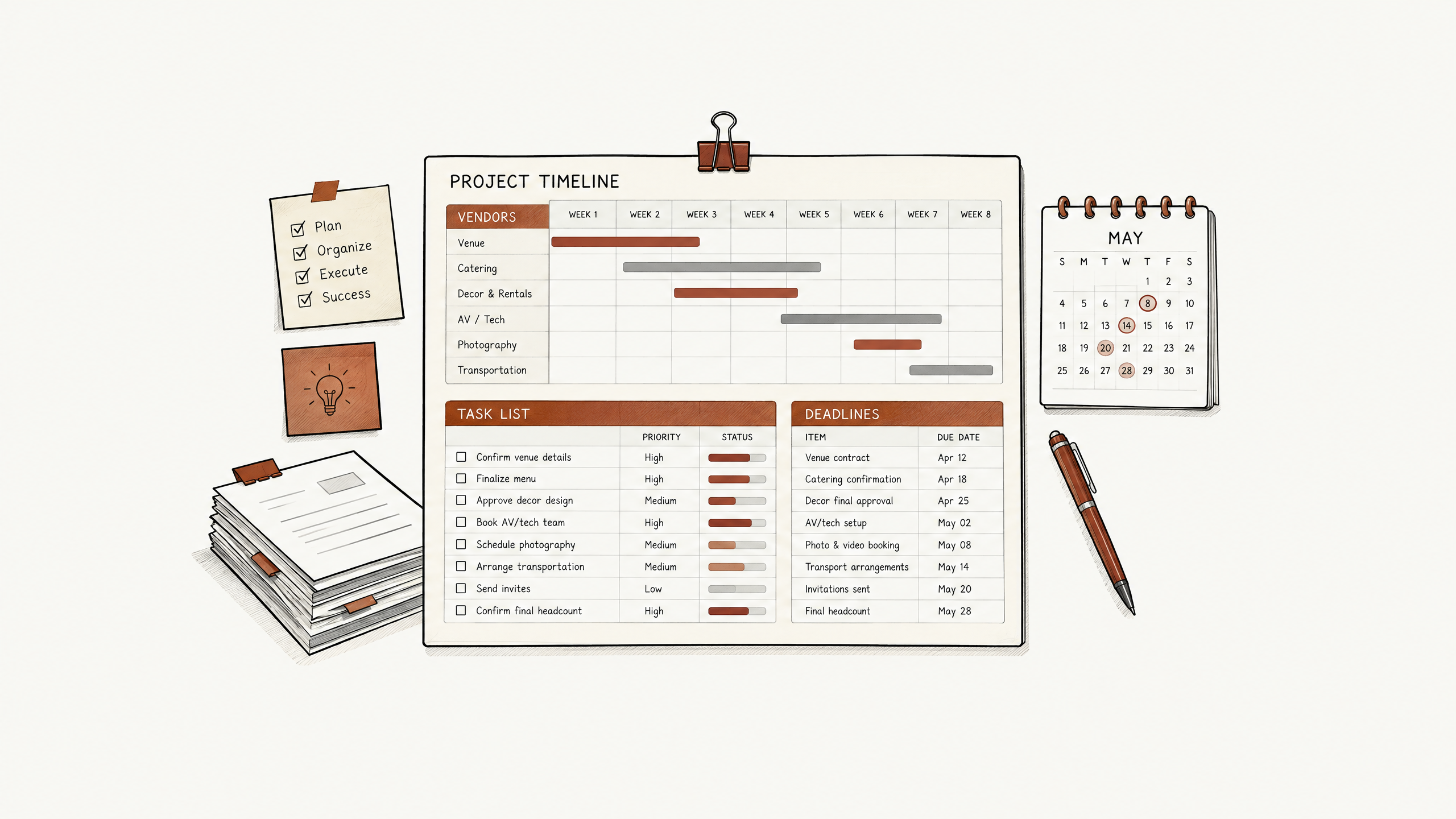
Creating a solid roadmap starts with a detailed initial timeline. This is a critical step in organizing a successful trade show and will serve as the backbone for your entire project.

Begin by identifying all significant milestones and deadlines that your team will need to meet leading up to the event.

Focus on breaking down tasks into manageable components, ensuring nothing is overlooked.
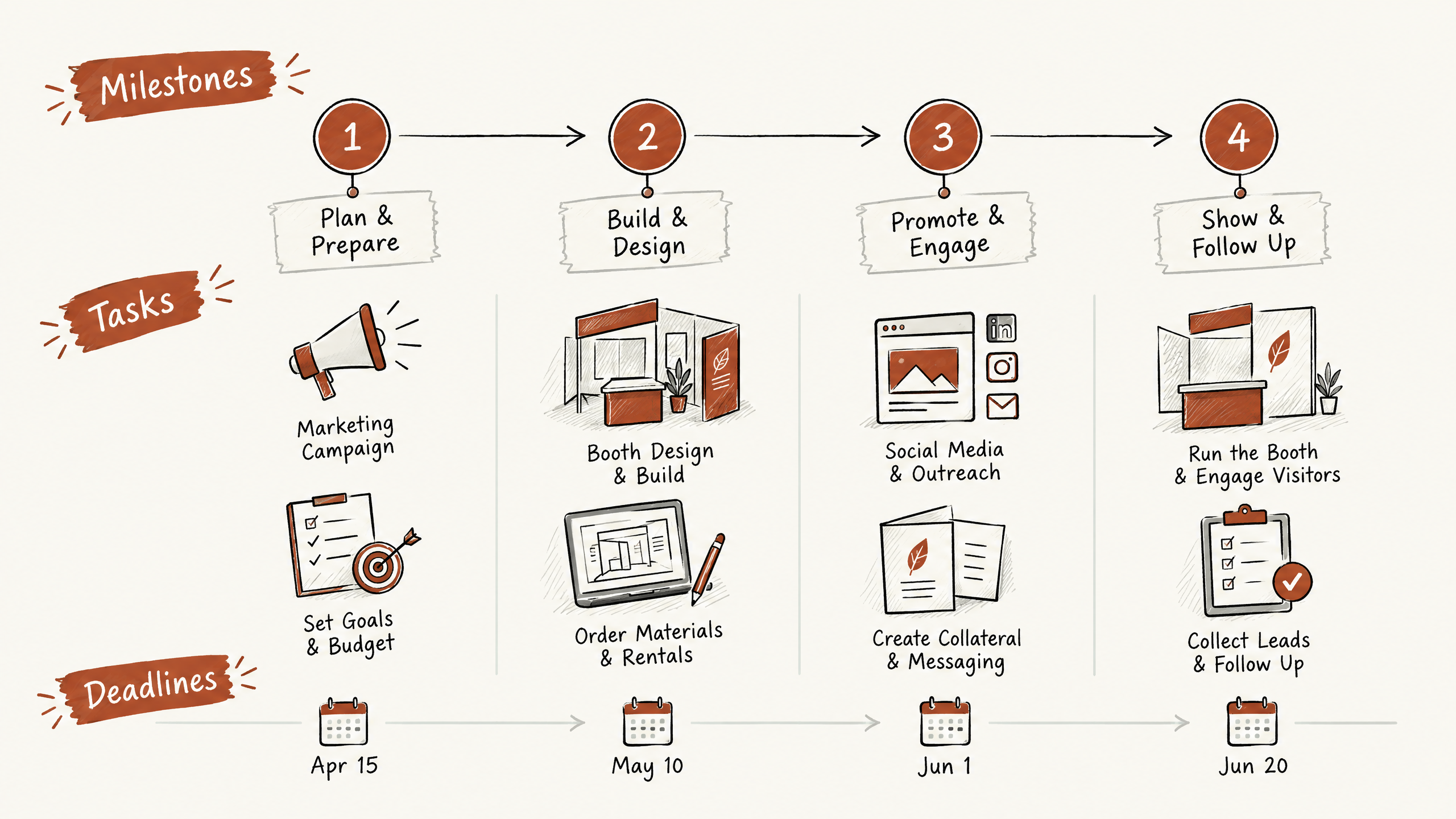
2. Draft an Initial Timeline — 6 Key Steps to Crafting a Comprehensive Trade Show Timeline

An effective timeline helps maintain a high level of preparedness and reduces the risk of last-minute issues.

To construct your timeline, outline each key phase, such as marketing planning, booth design, and logistics. Estimate realistic durations for tasks and set specific deadlines.

Incorporating input from team members with relevant experience can make sure accuracy and highlight any missing steps.

Remember, an initial timeline is a living document; it will undergo adjustments as the project evolves, but starting with a comprehensive plan provides a clear path forward.

For a hypothetical scenario: Suppose you’re planning a trade show scheduled six months from now. Break down your timeline into monthly segments.

The first month could focus on finalizing the budget and exhibitor registration.

The second month might involve initiating marketing campaigns and creating booth design concepts. Each subsequent month would then address more detailed aspects, like shipping logistics or staff training.

Regularly revisiting and refining this timeline will keep your team aligned and focused on priorities.

A common mistake is to draft an overly optimistic timeline that fails to account for potential delays or revisions. For instance, vendor coordination or unforeseen design changes might require more time than initially anticipated.

Always pad your schedule with contingency time to address such challenges. By proactively identifying potential bottlenecks, you create a timeline that not only guides the team but also offers some flexibility.

Draft an initial timeline that incorporates these considerations, and you’ll set the stage for a well-executed trade show. It provides structure, clarity, and a collaborative baseline for assessment as you progress.

With everything laid out clearly from the start, your trade show project is positioned for success.

3. Identify and Assign Responsibilities

A successful trade show hinges on effective teamwork and clear responsibility assignment. Start by mapping out every task associated with your event.

Include pre-show arrangements, on-site activities, and post-show evaluations.

This comprehensive list will serve as the foundation for determining who does what.
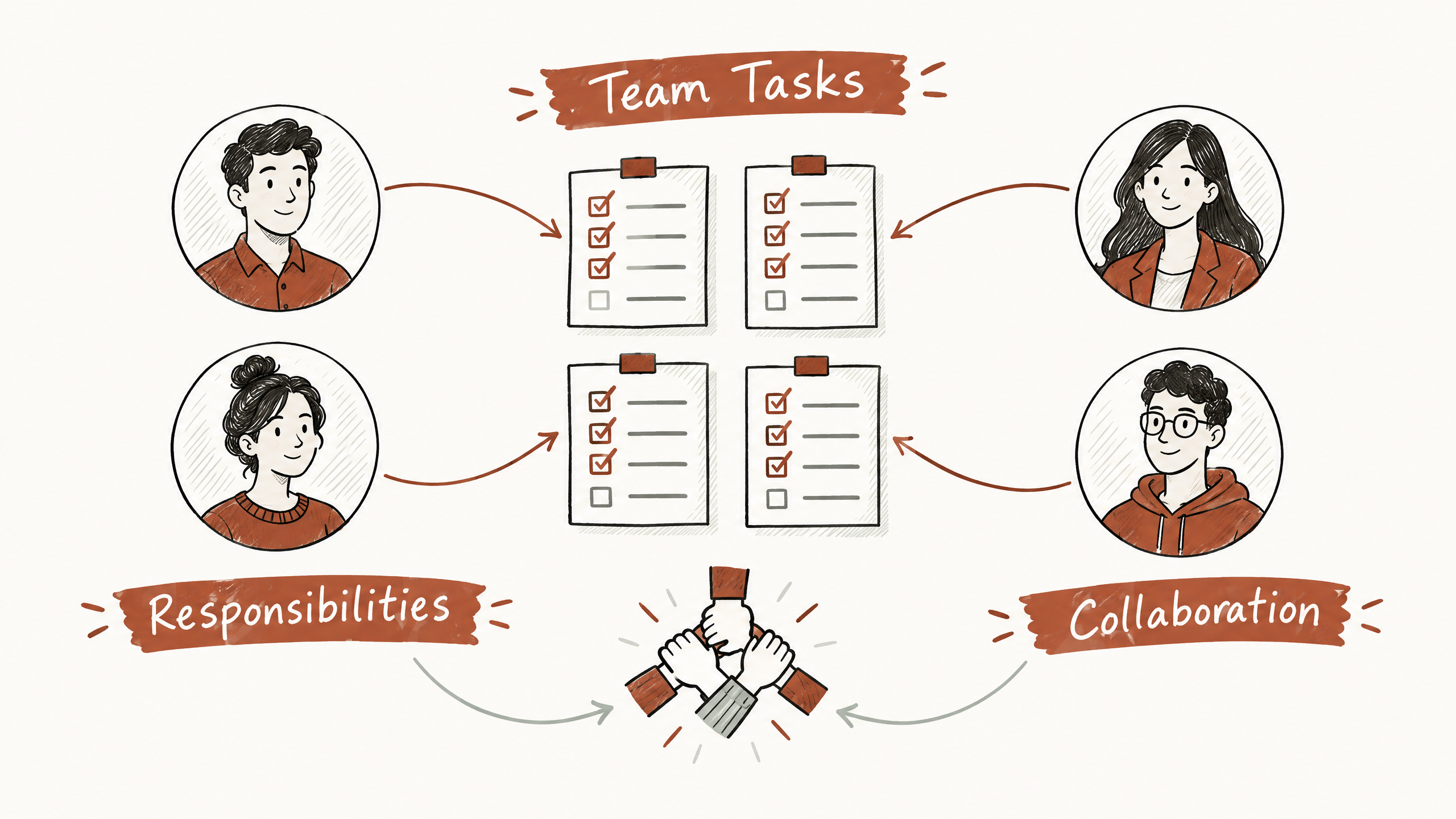
3. Identify and Assign Responsibilities — 6 Key Steps to Crafting a Comprehensive Trade Show Timeline

Assigning the right task to the right person is crucial. Match each task to a team member’s skills and availability.

For example, let your most organized team member handle the logistics of booth setup, while your communications expert crafts messaging and oversees social media.

This ensures tasks are managed by those best suited to them, increasing efficiency.

Create a responsibility matrix to visualize assignments.

This simple chart can outline tasks, deadlines, and team member accountability. Following these assignments, hold a meeting to discuss each person’s role and how their work will contribute to the broader goal.

You can also identify potential overlaps or gaps in coverage during this meeting.

Be mindful of common pitfalls.

A frequent misstep is the ambiguous delegation of responsibilities, which can lead to dropped tasks.

Avoid this by being explicit about expectations and setting up a chain of command for issue escalation.

Review assignments regularly, especially if a team member’s availability changes. This adaptability keeps your trade show project on track.

For assistance in creating or refining these roles, consider Exhibitant‘s expertise in tailoring trade show strategies to fit your team.

Whether crafting initial plans or refining roles, our experience can guide your process. Assigning clear responsibilities not only builds accountability but lays a solid foundation for a successful event.
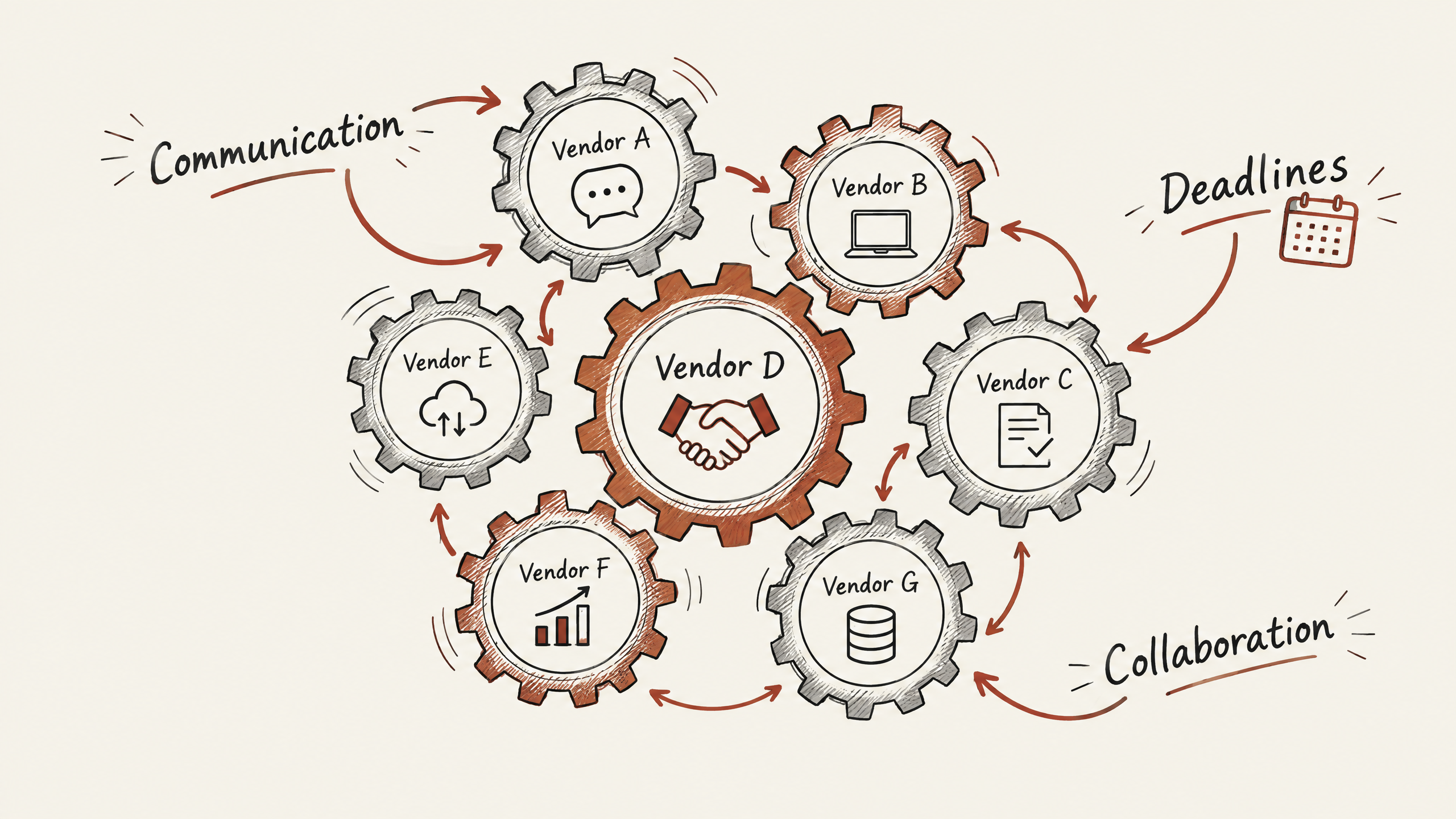
4. Coordinate with Vendors and Partners

Working successfully with vendors and partners can be pivotal for a smooth trade show experience.

Begin by developing clear lines of communication.

This involves setting up regular check-ins and having a designated point of contact for each vendor: this approach helps preempt issues before they become major obstacles.

4. Coordinate with Vendors and Partners — 6 Key Steps to Crafting a Comprehensive Trade Show Timeline

To make sure every partner is aligned with your timeline, share an early draft that includes key deadlines and deliverables.

This gives them ample time to schedule accordingly and resolve any potential conflicts in advance.

Be prepared to adjust your timeline based on critical feedback, especially where multiple vendors need to sync their activities.

Create a checklist of deliverables for each vendor, clearly outlining what they need to provide and by when.

Assign internal resources to manage each vendor relationship and verify that necessary deposits and payments are timely.

A common mistake is underestimating the time for logistical coordination, such as delivery and setup factor in buffer time.

Remember that vendors are more than service providers.

Treat them as partners by keeping the communication channels open and establishing mutual respect. A cooperative atmosphere can result in vendors aligning more closely with your goals, potentially leading to more accommodating terms or valuable insights.

Should any issues arise, this collaborative foundation allows for a smoother resolution process, mitigating stress as the trade show approaches.

5. Manage Trade Show Paperwork

The array of paperwork involved in trade shows can be daunting. Early and organized management ensures nothing slips through the cracks.

Start by gathering all required documents.

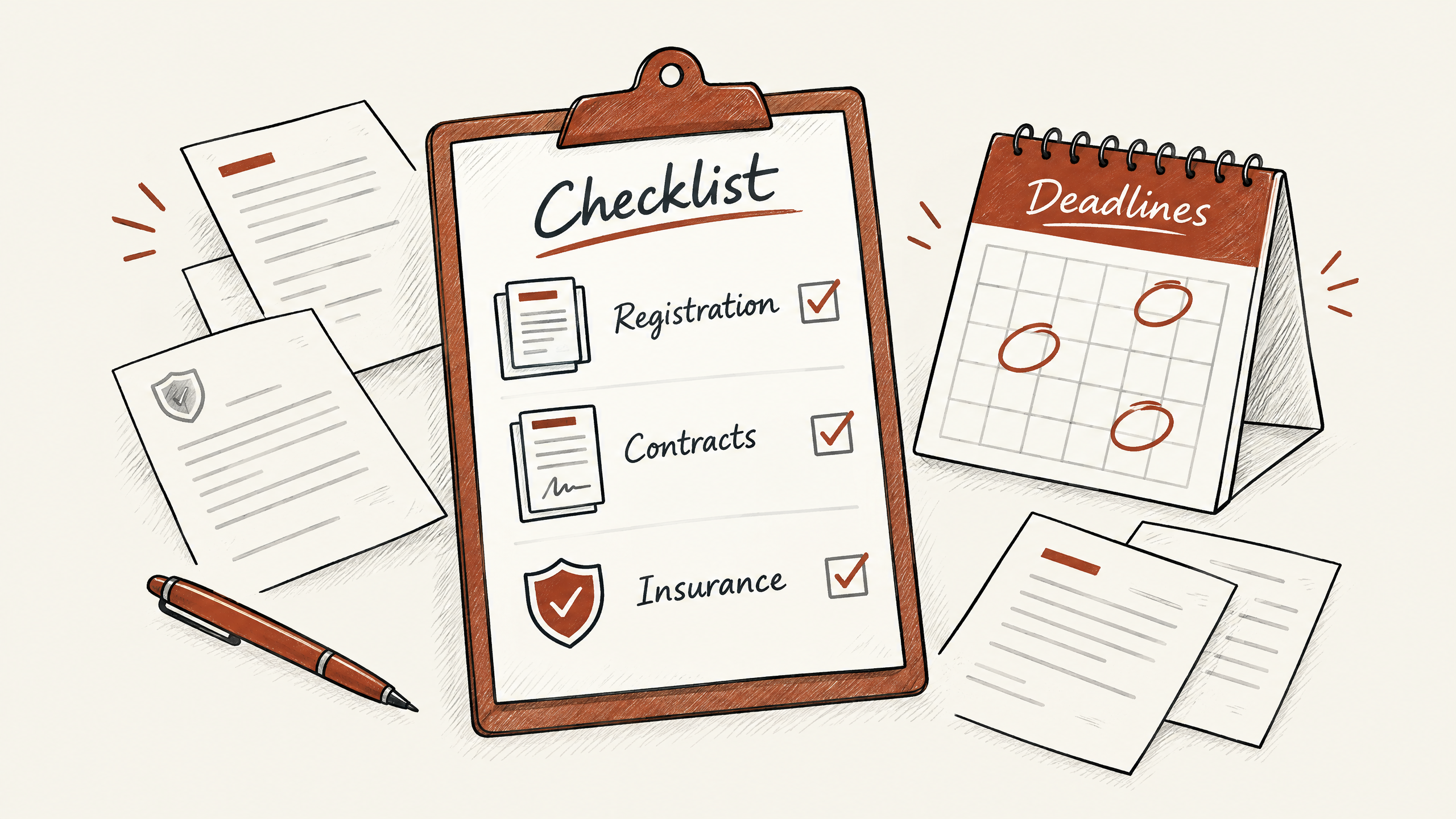
Common items include registration forms, contracts, and insurance certificates.

5. Manage Trade Show Paperwork — 6 Key Steps to Crafting a Comprehensive Trade Show Timeline

Allocate enough time for completion and submission to avoid last-minute stress. Missing a deadline could cost your company its spot at the show or worse, your investment.

Staying on top of paperwork can prevent unnecessary headaches.

Create a checklist of required documents, noting deadlines and any associated fees.

As new requirements surface, update the checklist. Here is a sample listing of common paperwork items:

  • Exhibitor registration forms
  • Booth rental agreements
  • Insurance certificates
  • Shipping labels and instructions
  • On-site service requests

Assign a team member to track each form’s submission status, ensuring accountability.

This allows for swift follow-up on any pending issues.

Avoid the common mistake of assuming everything is in order without double-checking.

Even experienced teams can overlook an essential document in the hustle and bustle of event prep.

An often-overlooked step is verifying receipt of submissions.

Confirm that forms have been received and are complete.

Bright Expo’s contact may assure you everything is alright, but evidence is always more reassuring.

As a practical example, allow three weeks for filling out and submitting initial paperwork, and set reminders two weeks before final deadlines. In case of unexpected queries, this buffer can make a difference.

Encourage proactive communication with trade show organizers to clarify any ambiguous paperwork requirements.

6. Monitor Progress and Adjust as Needed

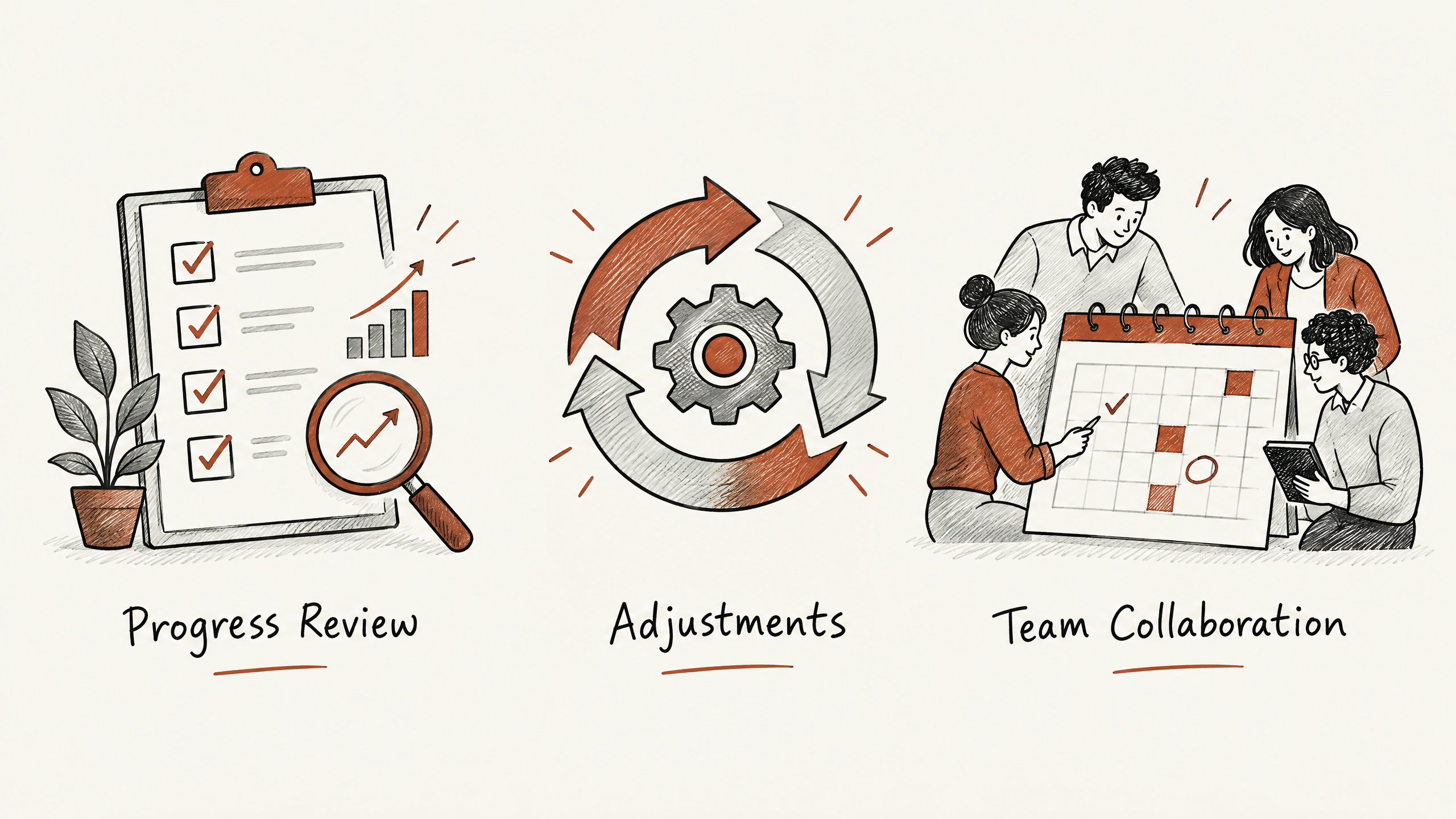
Once your trade show timeline is set and responsibilities assigned, the next step is to actively monitor progress at every stage.

Regular check-ins with your team and vendors make sure that tasks are completed on schedule and that any potential disruptions are addressed promptly. Monitoring progress does not simply mean watching deadlines; it involves evaluating if the tasks are being executed as planned with the expected quality.

To keep things on track, I suggest setting up a systematic review process.

6. Monitor Progress and Adjust as Needed — 6 Key Steps to Crafting a Comprehensive Trade Show Timeline

This could include weekly meetings where you discuss progress, challenges, and any changes in scope or requirements.

Be ready to make adjustments when necessary.

Maybe a vendor is running behind, or perhaps an element of your exhibit requires tweaking based on new data or feedback.

Quick, informed decisions can help you steer the project back on course with minimal disruption.

Let’s look at a common scenario: your graphics vendor informs you that a key material will be delayed by a week.

Here, your team needs to decide whether to find an alternative material, renegotiate delivery timelines, or shift other parts of the schedule.

Maintaining flexibility is crucial in this kind of situation.

Exhibitant supports B2B lead generation through streamlined vendor coordination, ensuring your exhibits are ready on time and meet quality standards, even when adjustments are needed.

A mistake many make is sticking rigidly to their original timeline, assuming that a small misstep will self-correct.

However, relying on this can lead to accumulated delays or unexpected logistical challenges.

Keep an eye on deliverables, and don’t hesitate to communicate with all involved parties to realign expectations if necessary. This proactive approach helps avoid crises and keeps your trade show project running like a well-oiled machine.

Wrapping Up

You’ve now laid out a structured roadmap for your trade show project.

By setting clear trade show goals, drafting an effective timeline, and coordinating with vendors, your approach has the foundation for success. Each step contributes to a smooth execution, from managing paperwork to tracking progress.

This not only makes the experience less stressful but also enhances the opportunity to meet your business objectives.

Wrapping Up — 6 Key Steps to Crafting a Comprehensive Trade Show Timeline

As you move forward, keep the principles you have explored in mind.

Focus on maintaining open communication with your team and partners.

This ensures everyone is aligned and improves the likelihood of hitting your targets.

Regularly reviewing your plan and adjusting as the situation evolves will keep you agile and responsive. This preparation and adaptability are your keys to turning your trade show vision into a reality.

The next step is to take your comprehensive timeline and responsibilities checklist and start implementing them for your upcoming event.

With these tools in hand, you are equipped to manage a successful trade show, providing value to both potential buyers and your organization.

Embrace each part of the process and you’ll find the experience not only rewarding but also a significant contributor to your business’s growth.

Need a booth plan?

Turn show goals into a practical exhibit path

Share your footprint, timeline, and priorities. Our team can help shape the booth direction, graphics, and project support.

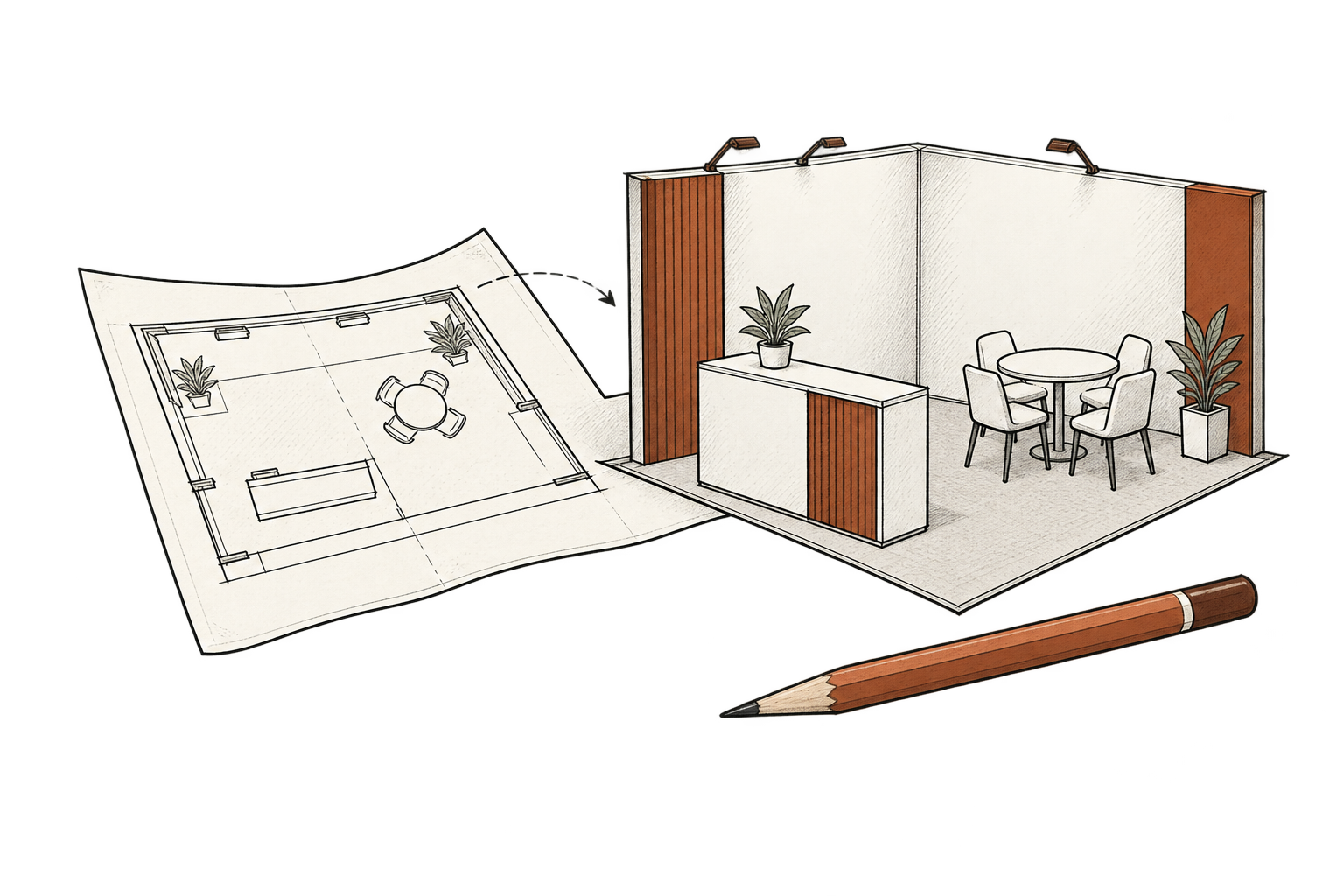
Hand-drawn booth floor plan and exhibit with cedar accents

Contact our team

Tell us who you want to reach

Tell us about your business, the buyers you want to reach, and what you want to achieve. Whether you need more sales conversations, stronger marketing, or a trade show presence, we’ll help you identify where to focus and what support makes sense. Together, we can shape a practical plan around your priorities, budget, and timeline.

info@exhibitant.com

Tell us what you need

A few details will help us make the most of our conversation.