 Lorena G.
Planning an island booth design can be a challenging yet rewarding task for any exhibit manager. The key is to focus on booth size and use this space to its full potential.
Your booth is a direct representation of your brand, so getting the design right is critical to attracting and engaging visitors.
Every detail, from the layout to the final touches, can have a major impact on your exhibition success.
Good planning sets the foundation for creating a booth that not only attracts visitors but also supports your business goals. It’s important not to underestimate how much these design choices matter when preparing for your next event.
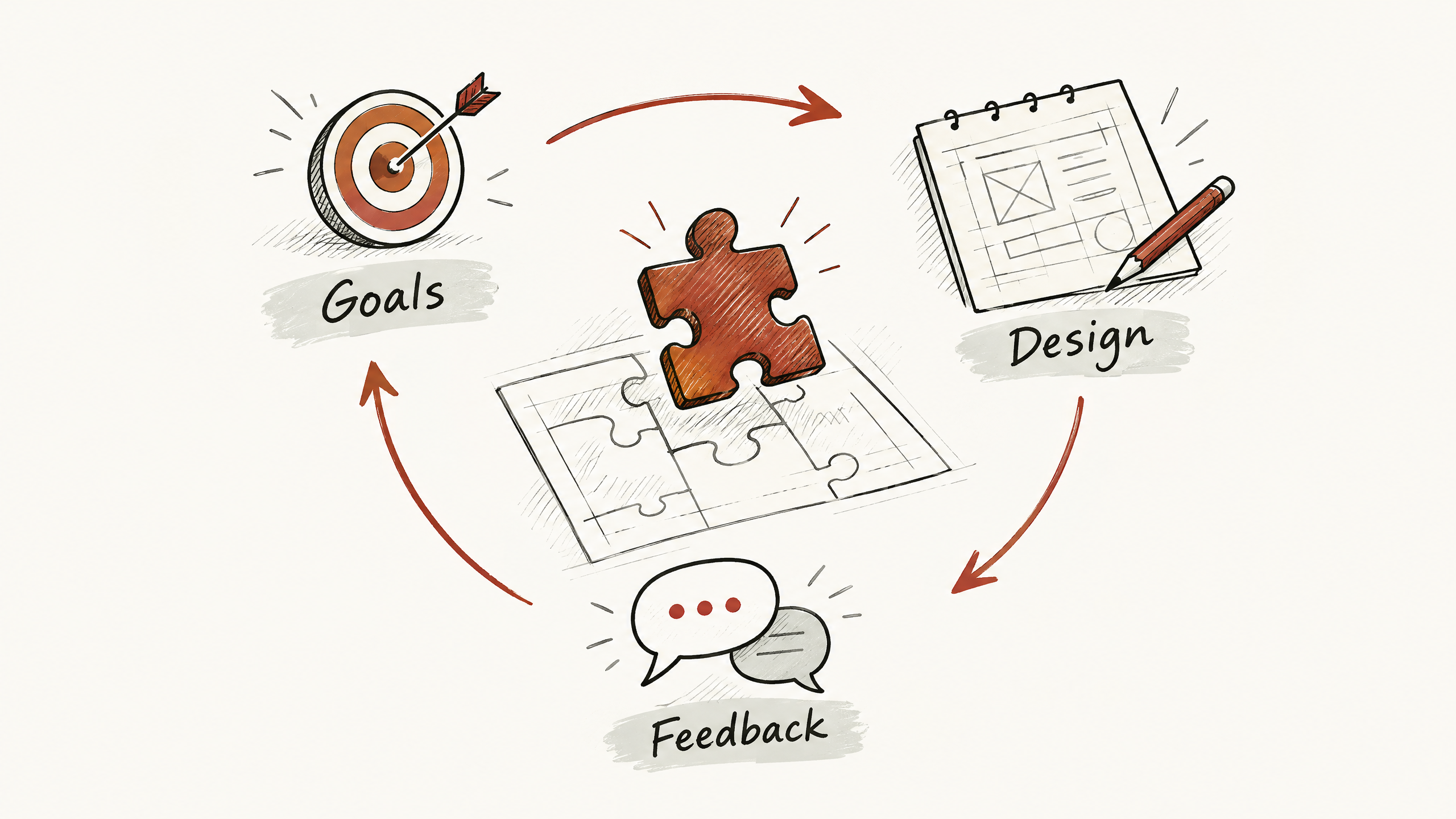
Here is how I would approach it: begin by clearly defining what you hope to achieve with your booth.
Are you showcasing products, generating leads, or increasing brand awareness?
Each objective demands its own design strategy.
With clear goals in mind, you can tailor your approach to meet the needs of your specific audience.
After reading this article, you will be well-prepared to design an island booth that efficiently utilizes space, engages visitors, and aligns with your wider goals.
I will walk you through six essential factors to support your planning and decision-making process, enabling you to create a booth design that makes a lasting impression.
- Optimize booth layout for smooth visitor flow.
- Ensure brand visibility from multiple angles.
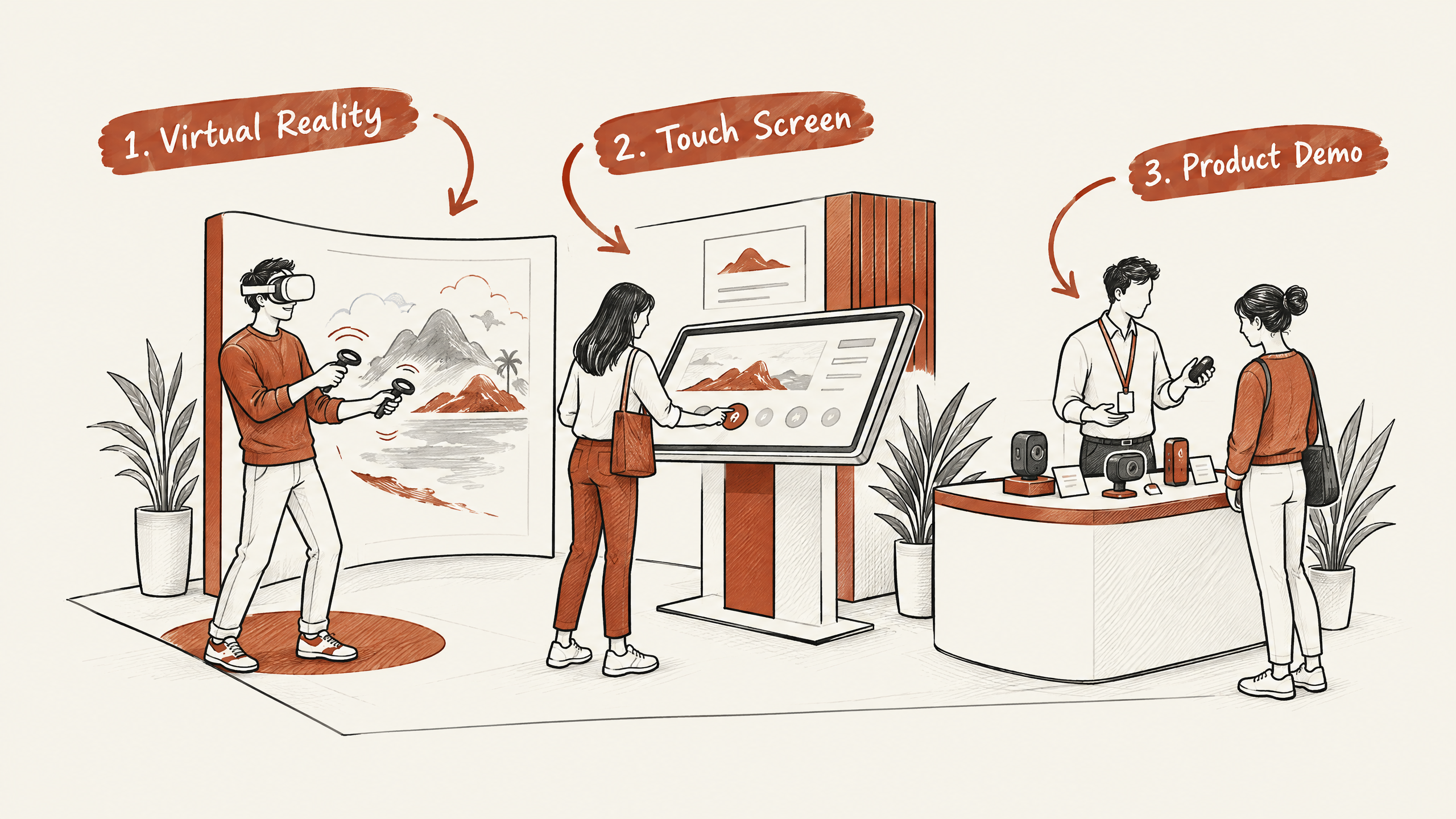
- Incorporate interactive elements to engage visitors.
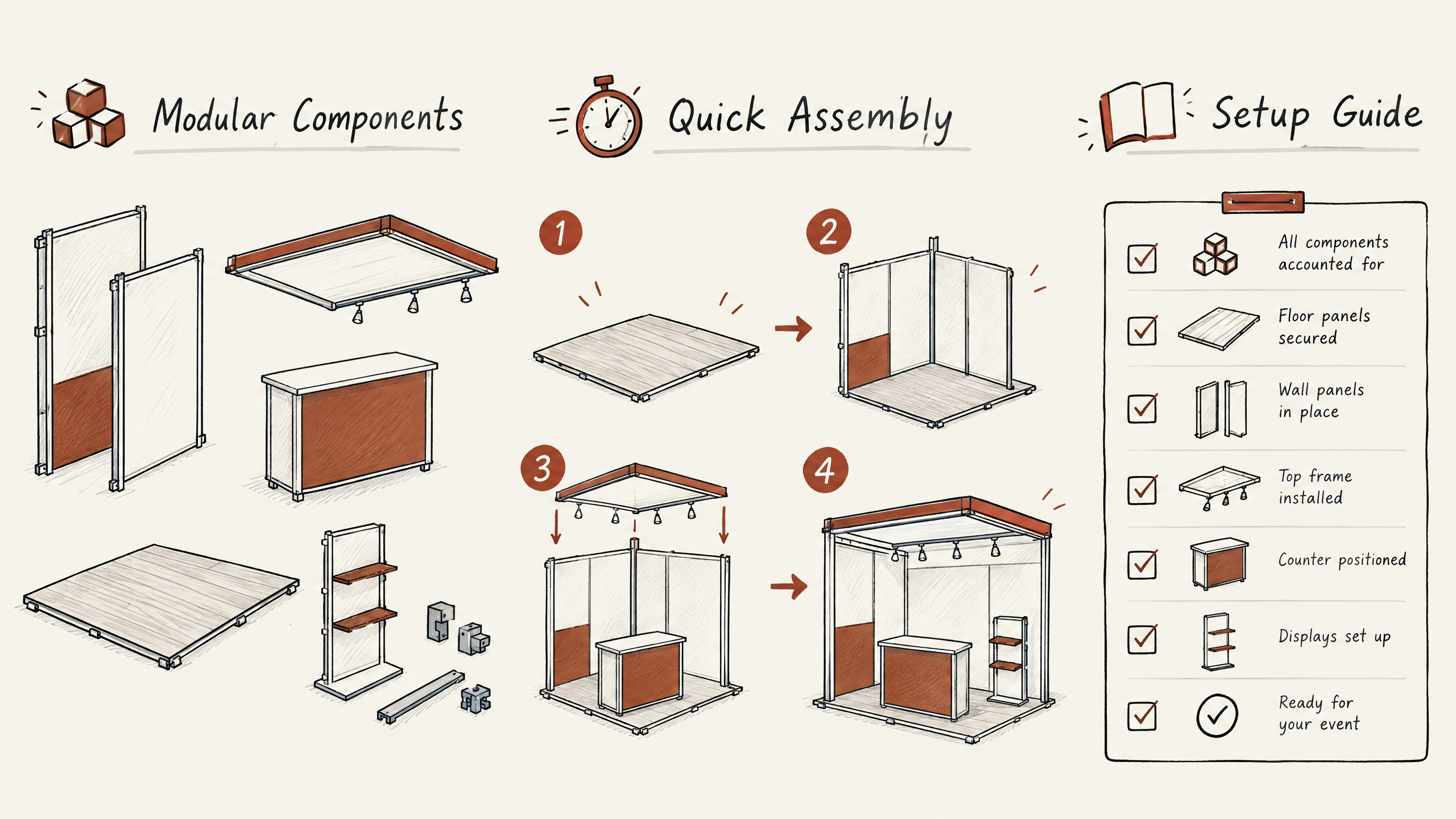
- Plan for efficient setup and teardown.
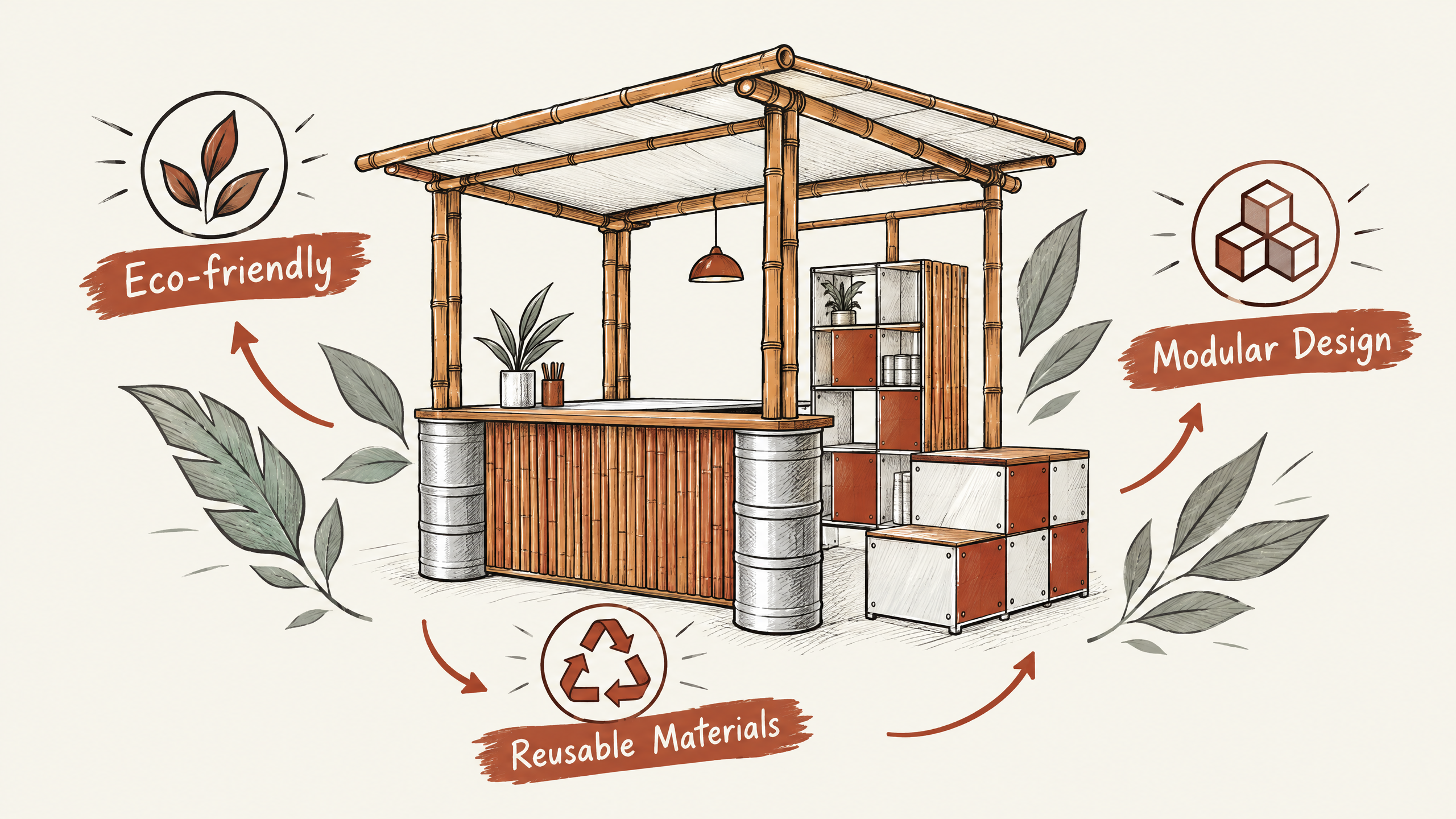
- Consider sustainability in materials and design.
With these factors in mind, you can create an island booth design that encourages visitor engagement and showcases brand visibility.
As you plan, make sure to prioritize efficiency and sustainability for a successful event setup and teardown.
1. Define Your Objectives and Audience
Creating an effective island booth design begins with understanding your primary objectives for exhibiting at the trade show.
These objectives serve as the foundation for every decision you’ll make regarding booth design.
Whether you’re looking to launch a new product, build brand awareness, or generate leads, knowing your goals will help you plan the booth’s layout and features accordingly.
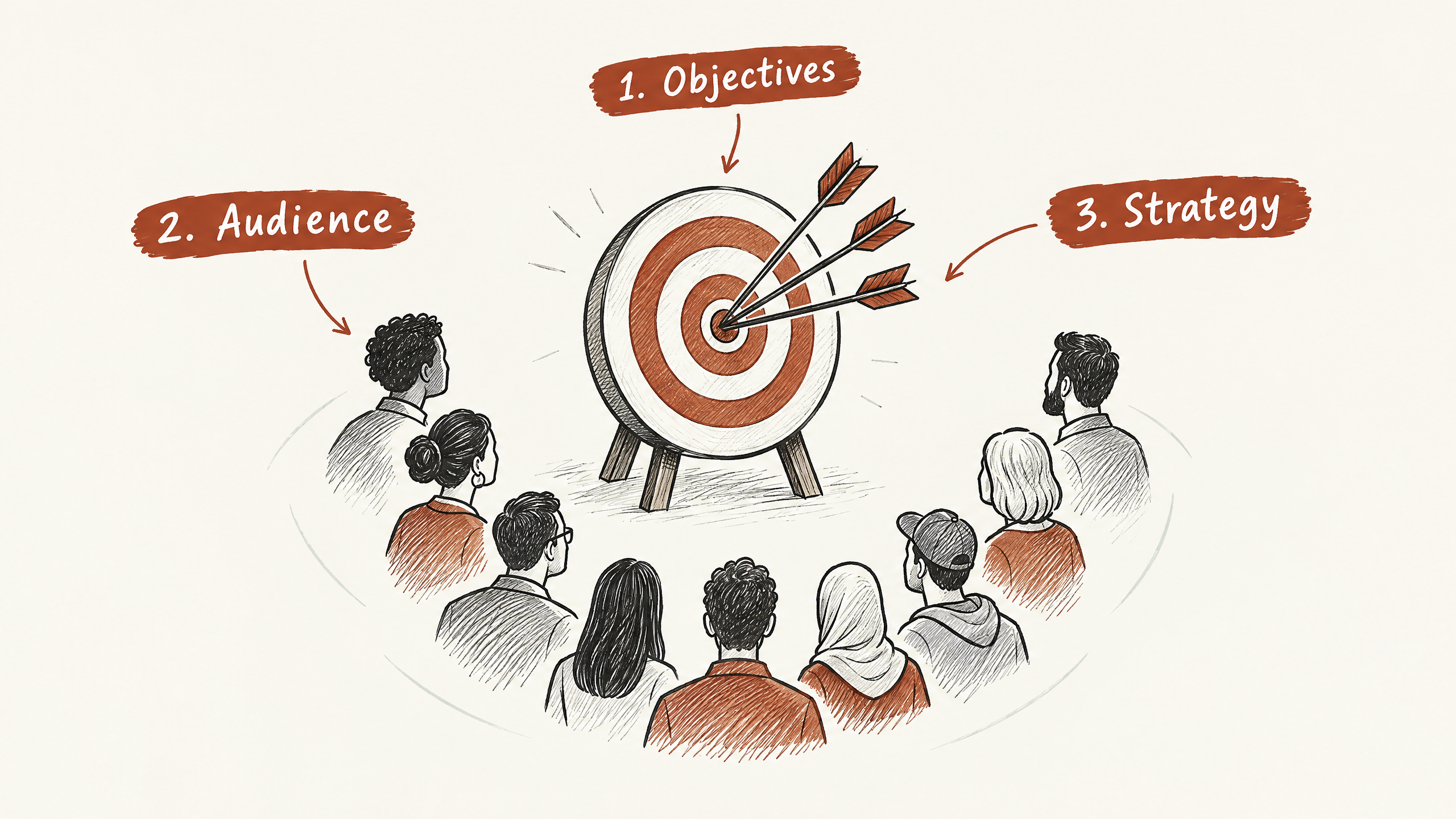
Once objectives are clear, the next step is identifying your target audience. Understanding who you’re trying to attract will influence everything from design aesthetics to the interactive elements incorporated into your booth.
Are you targeting top-level executives or hands-on product users?
This answer will impact the design language and elements you choose.
To effectively define your audience, consider compiling buyer personas. These are detailed profiles that provide insights into demographic information, interests, and pain points of your prospective visitors.
Developing these personas helps tailor your messaging and design to engage your ideal client effectively.
Important: Defining your objectives and understanding your target audience are crucial to designing a focused and impactful island booth that truly engages your ideal clients.
One common mistake is designing a booth that tries to appeal to everyone, leading to a generic and unfocused presence.
Instead, focus on specifics that resonate with your target audience.
For instance, if your objective includes generating valuable leads, incorporate spaces for deeper discussions or presentations to spark meaningful conversations.
After defining objectives and audience, set measurable goals that reflect what success looks like for your team.
Whether it’s the number of leads captured or the level of engagement in product demos, having clear metrics in place will guide design choices and post-show evaluations.
2. Improve Booth Layout for Visitor Flow
Designing an island booth that effectively manages foot traffic is crucial for capturing attention and engaging visitors.
The right layout can lead to meaningful interactions, but a poorly planned one might discourage potential leads.
Always prioritize a design that encourages smooth visitor flow.
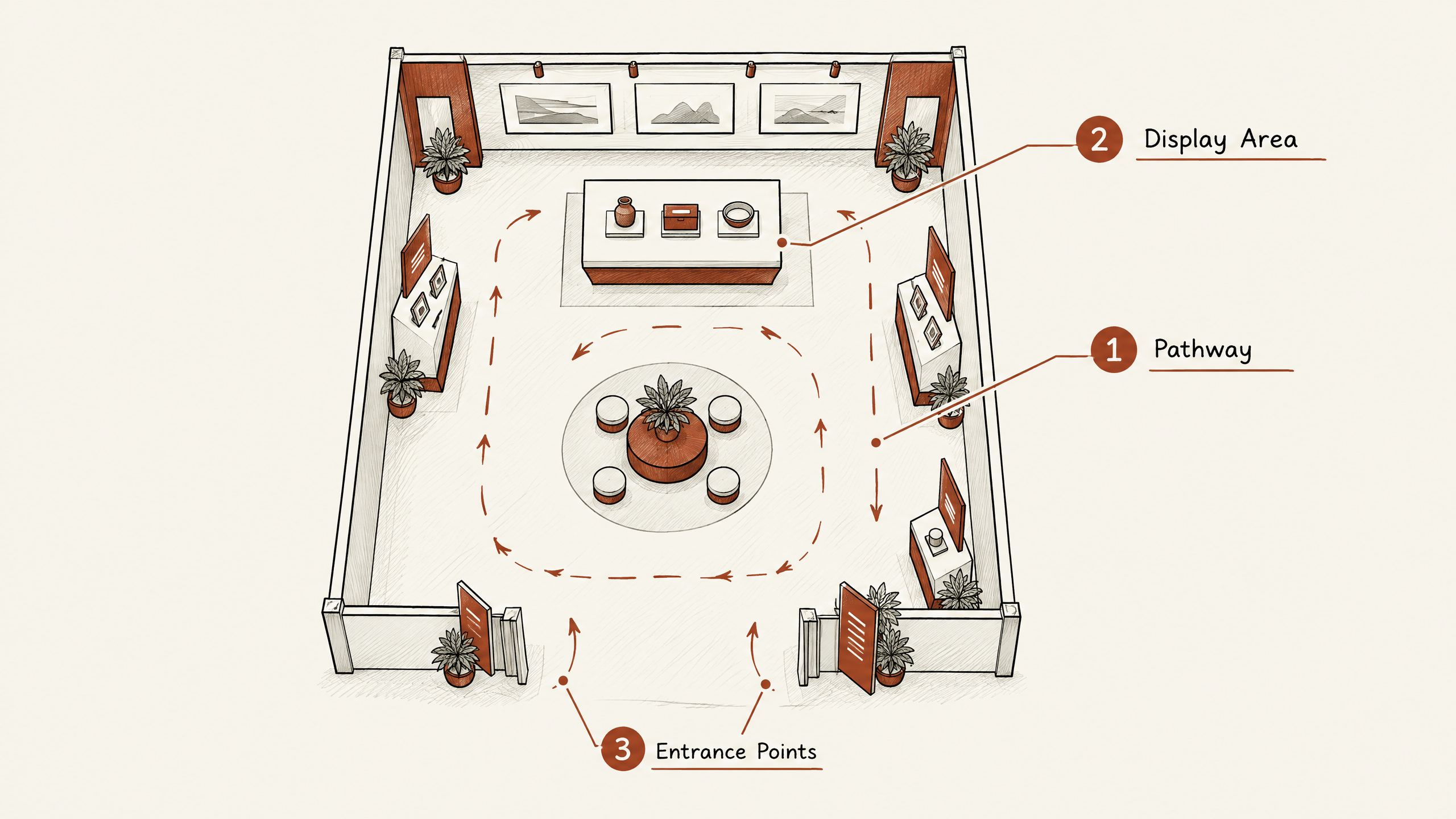
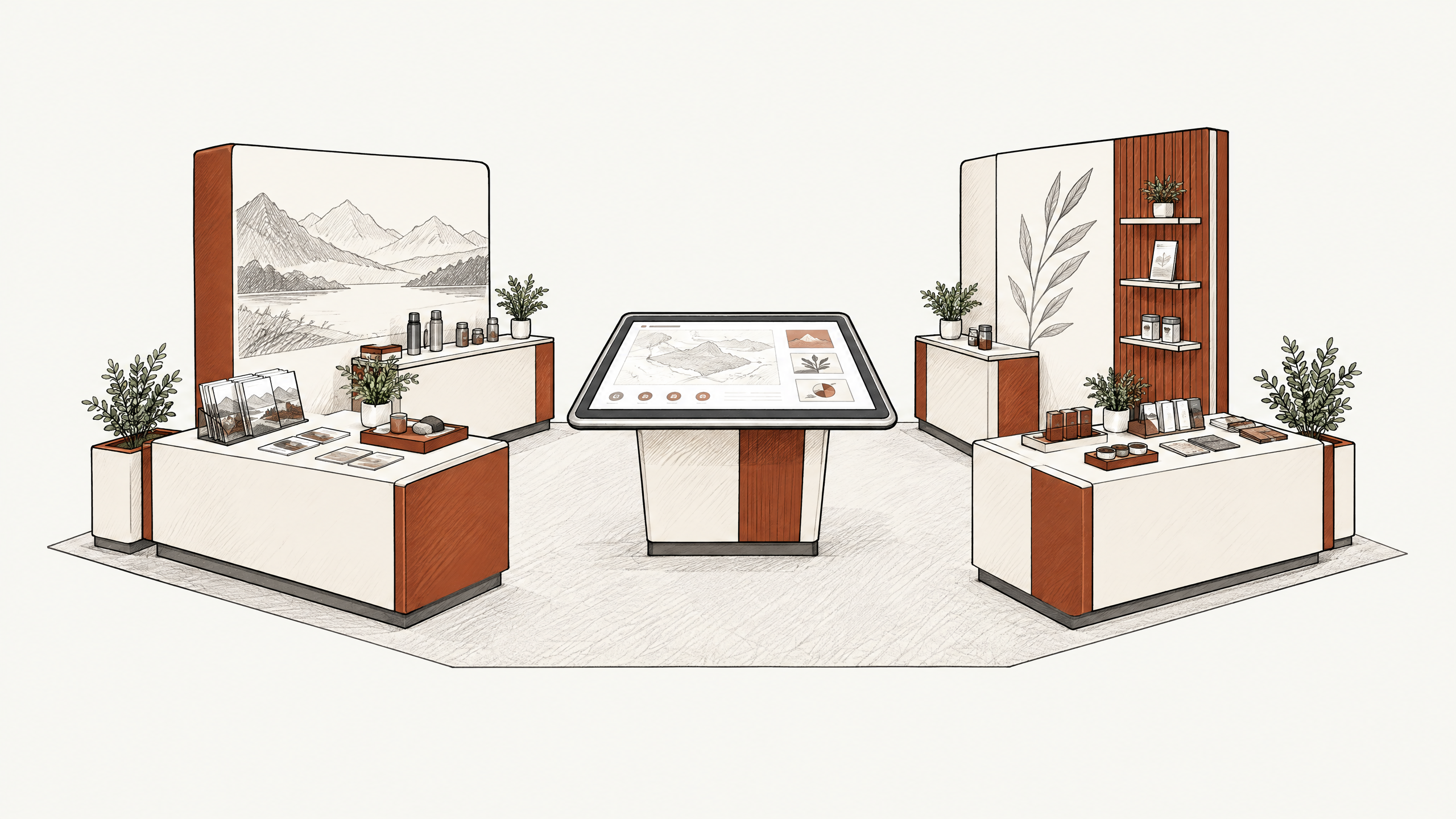
First, understand the significance of an open design. An island booth with entrances on all sides welcomes guests from any direction, maximizing access.
Keep the central space relatively open with strategic areas dedicated to product displays or interactions. Avoid cluttering this space with unnecessary obstacles.
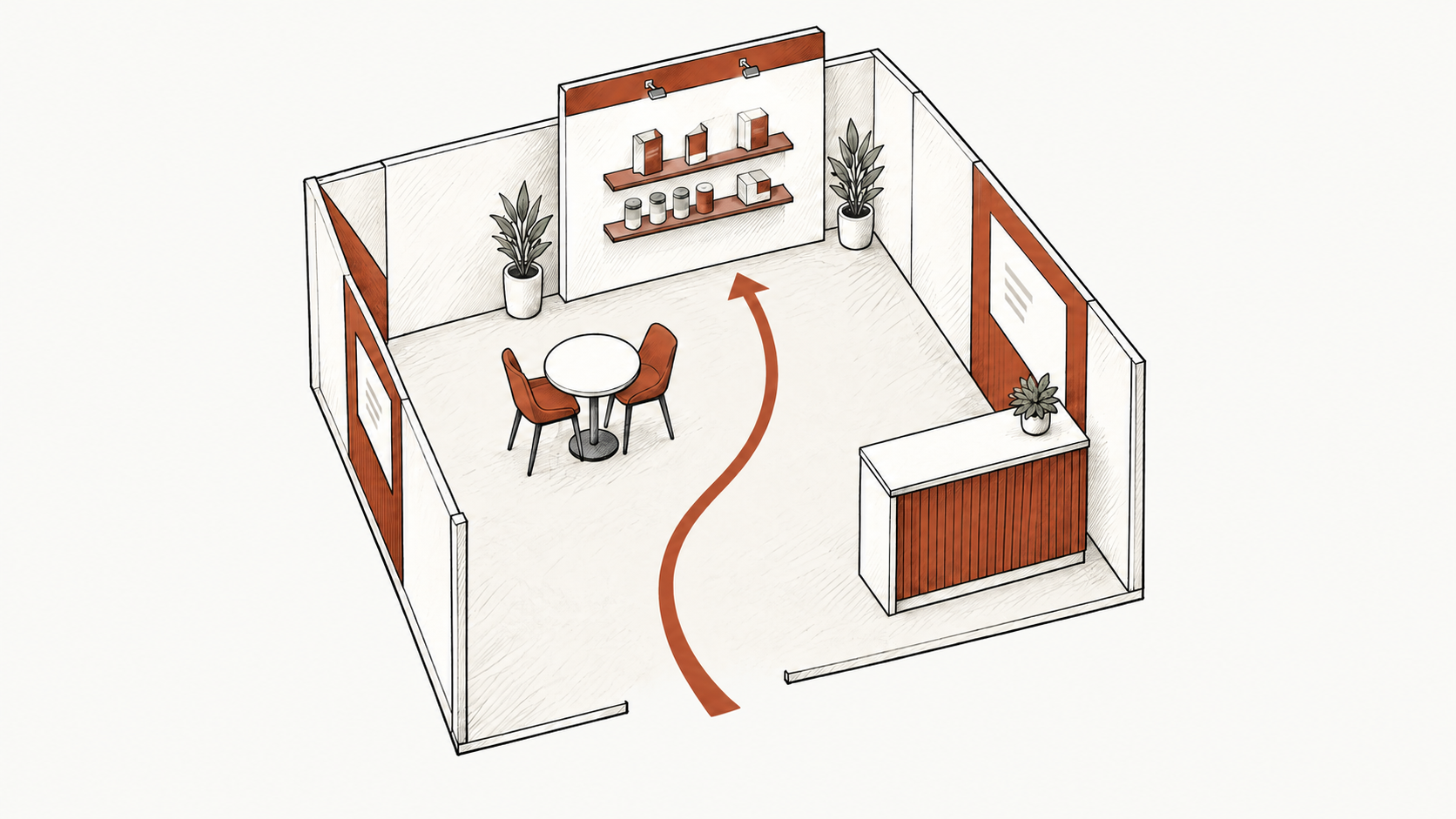
When designing your booth, consider creating clear walkways.
A well-planned path guides visitors through your space, ensuring they see key displays.
Use visual cues like carpet lines or signs to subtly direct traffic. This not only enhances the visitor experience but also makes it easier for your team to engage with guests.
Having key stations or focal points is another critical aspect.
Designate areas for demonstrations, seating, or information to hold visitors’ interest.
These should be easily accessible, without causing bottlenecks.
When arranged thoughtfully, stations provide natural flow points, guiding visitors while allowing conversation.
Consider a hypothetical example: at a tech trade show, your booth includes four entrance points with a demo station at each.
These stations have ample space for visitors to watch and interact without blocking pathways. This arrangement facilitates smooth movement and encourages more interactions with your team.
Be mindful of the tradeoff between openness and display space.
While an open design invites visitors, you also need sufficient surfaces for showcasing products or materials.
Balance accessibility with ample space for displays so your message doesn’t get lost.
Remember, optimizing your booth layout for visitor flow isn’t just about aesthetics.
It’s a strategic decision that directly impacts engagement levels and lead generation.
Careful planning here can set the stage for a successful trade show experience.
3. Enhance Brand Visibility from All Angles
When planning an island booth, one crucial factor is ensuring that your brand is visible from all sides.
Given the open nature of island booths, every angle should capture the attention of visitors. Start by strategically positioning your company logo and key messaging at various heights across the booth.
Incorporating towering signage or a central display that extends high above the booth can help draw attention from afar.
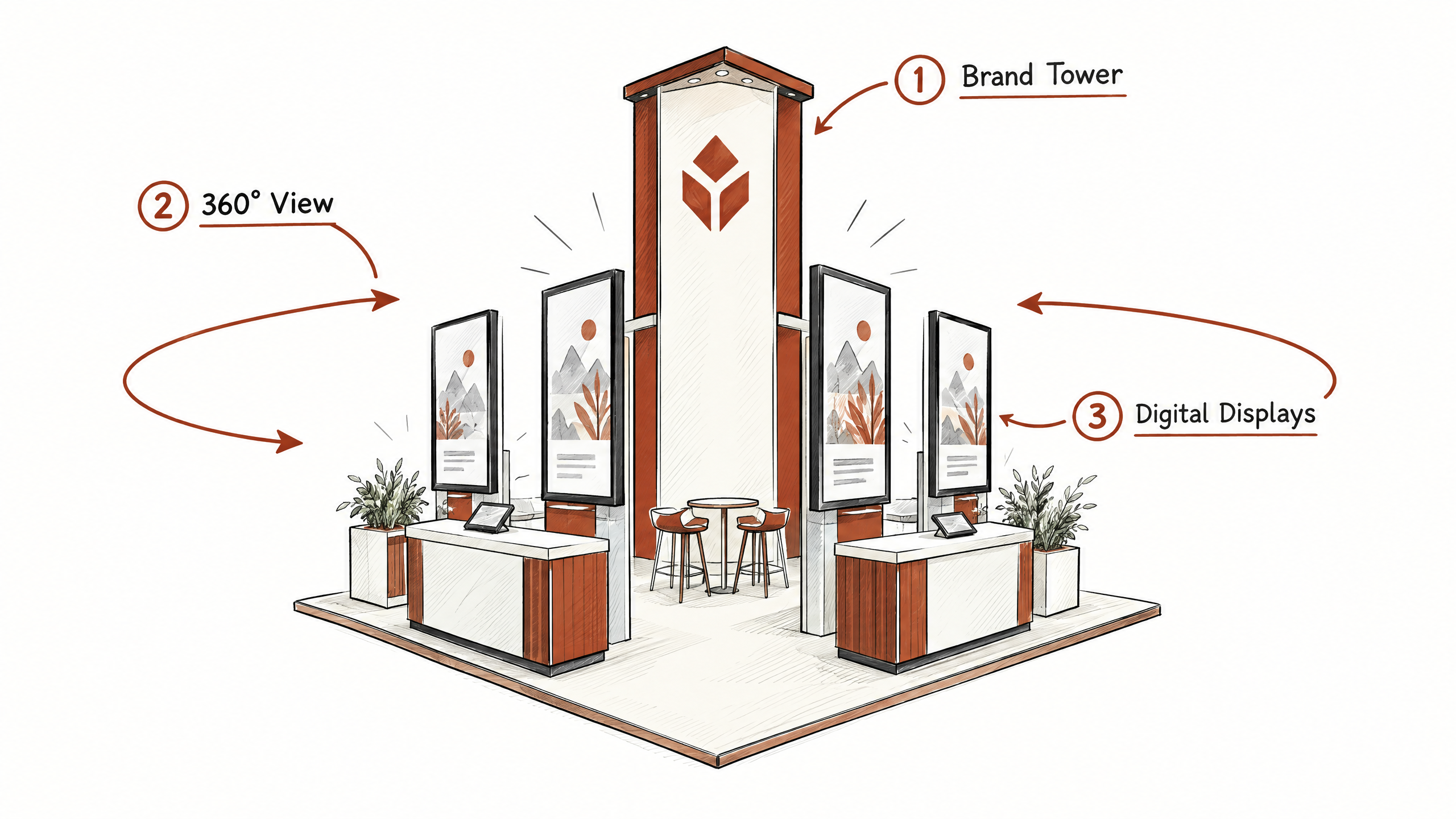
Beyond vertical displays, think about the horizontal space too.
Use banners or digital screens around the perimeter to maintain a consistent brand presence from different directions.
This multifaceted approach ensures your booth isn’t just seen but also memorable.
For example, LED screens facing multiple aisles can display dynamic content that engages attendees and reinforces key messages.
Another technique is using lighting to highlight your brand elements.
Pro Tip: To enhance your booth’s visibility at a trade show, position your logo and key messaging at various heights and use lighting to highlight brand elements without causing glare.
Well-placed spotlights can enhance your booth’s visual appeal and make your branding more prominent. This added visibility can be a powerful draw in a bustling trade show environment.
Be mindful of creating a balance between effective lighting and avoiding glare or shadows that can detract from your displays. Working closely with skilled designers and providers, like Exhibitant, helps align your brand’s story with these visual strategies.
However, enhancing visibility goes beyond just being seen.
The goal is to be seen for the right reasons. Avoid overloading your booth with too many elements that can confuse visitors or dilute your message.
Focus on what makes your brand stand out and communicate that clearly and concisely from all viewpoints. This approach will lead to stronger brand recall and engagement with trade show attendees.
 Louie J.