Component condition notes
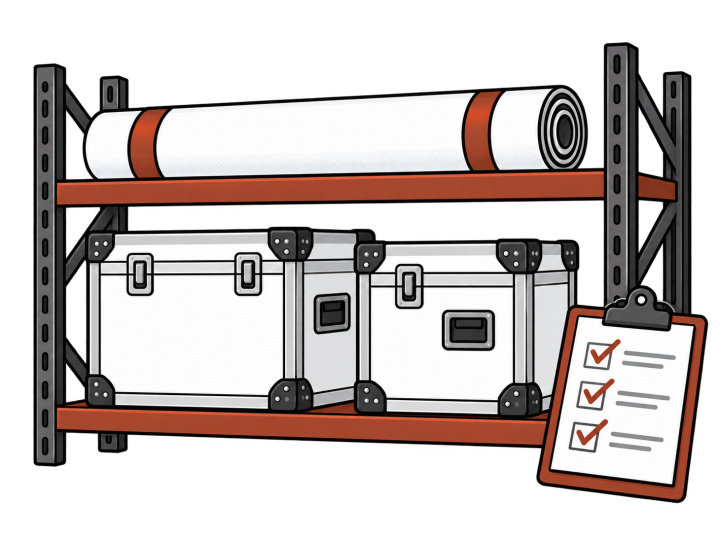
The available observations on frames, hardware, and other agreed components after the event. Record specific issues so the next team can assess the right item.
Post-show report
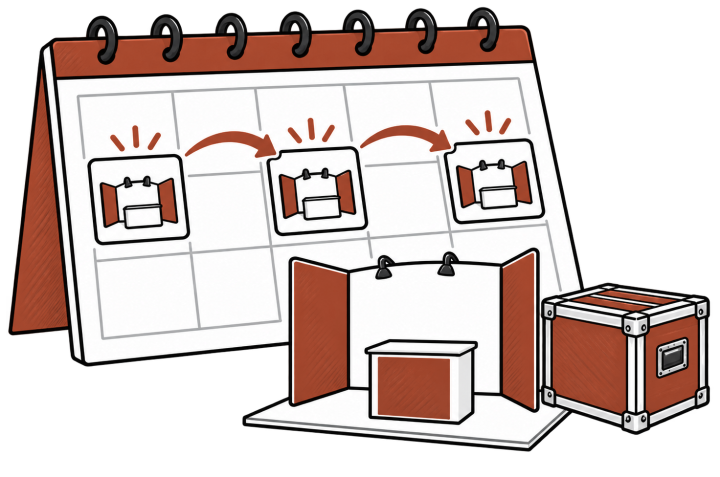
Shows end fast. Without a clean report, the next event starts with guesswork about missing panels, damaged frames, or outdated graphics. We document booth condition, repack status, and refresh priorities while the show is still fresh.

Ways to work together
Compare the scope of each approach, including the decisions and inputs your team will own. The proposal confirms the services and responsibilities you choose.
Document the agreed component and repack observations after one event.
Your part: Provide access to the relevant assets or reliable documentation and identify the next-show owner.
Use the report as the handoff between dismantle, storage, and the next event plan.
Your part: Confirm priorities and approve separately quoted repairs or replacements before the next shipping deadline.
Who it helps
Use Post-Show Report where it supports a specific business need. These starting points help us choose the right work and identify the information your team needs to provide.
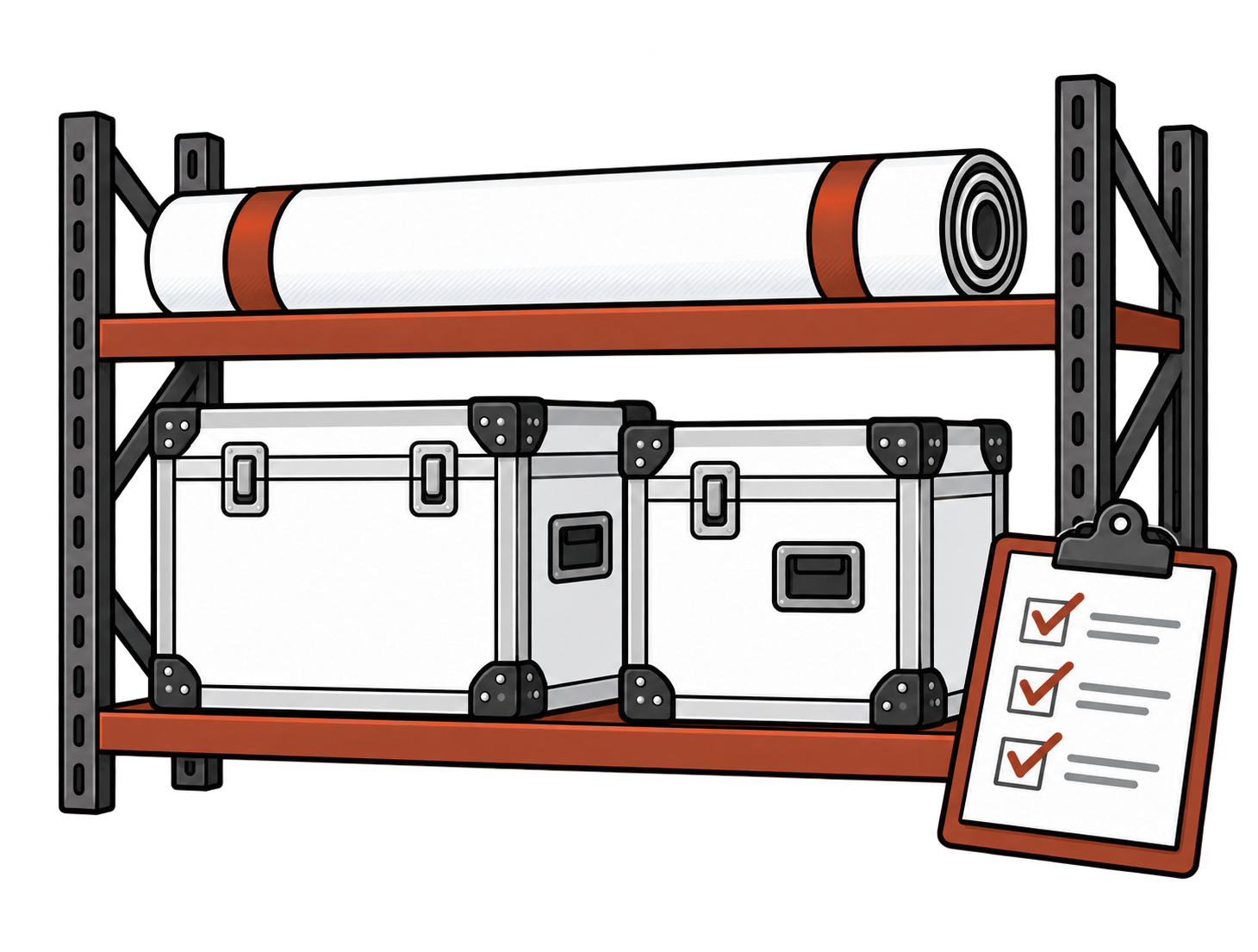
Capture what is known about condition and completeness while the event context is still available.
Bring dismantle, freight, and receiving observations into a clearer next-step record.
Turn condition notes into decisions about what can be reused and what needs attention before packing again.
Group condition findings by the action needed and the next show date, so your team can plan maintenance and replacement work.
How it works
Follow the work, decisions, and responsibilities at each stage. We agree the actual schedule around your scope, approvals, and the dependencies that affect delivery.
Agree what will be documented and where the information will come from.
Record the agreed component, graphic, and repack information.
Connect observations to practical repair, replacement, or investigation decisions.
Send the report into the storage and next-show planning process.
The stages show the working sequence, not a guaranteed turnaround. Your proposal confirms the included work, review points, and timing. External approvals and separately scoped services can affect the schedule.
Quality and controls
Use specific review points to catch gaps and keep the work connected to the approved brief. Each check needs the right information and a person who can make the decision.

The handoff
Useful work needs a usable handoff. Agree the outputs, supporting information, and ownership so the next stage can move forward with a clear starting point.
The agreed observations and available supporting information about hardware, graphics, and components.
Missing items, repack differences, or records that need reconciliation before the next release.
Recommendations and decision requirements for repair, graphics, storage, and the next event scope.
This service documents operational condition and next-show needs. It is distinct from marketing ROI analysis. Inspection coverage and evidence are agreed, and repairs or replacements require separate authorization.
Scope and pricing
The proposal connects your requirements to deliverables, responsibilities, fees, and terms. Review the initial work, ongoing needs, and connected services together.

Compare the approaches
Both can support an event review, but they answer different questions and use different evidence.
| What to consider | Post-show condition report | Campaign reporting |
|---|---|---|
| Main question | Post-show condition report What condition are the booth assets in, and what needs attention? | Campaign reporting What did the marketing activity contribute to inquiries and sales? |
| Evidence | Post-show condition report Component observations, graphic condition, inventory, and repack information. | Campaign reporting Campaign sources, analytics, inquiry records, and available CRM outcomes. |
| Next action | Post-show condition report Repair, replace, investigate, store, or prepare assets for reuse. | Campaign reporting Adjust campaigns, improve follow-up, or address measurement gaps. |
Frequently asked questions
Find practical answers about getting started, approvals, scope, costs, and what happens after delivery.
8 questions about getting started.
The Post-Show Report service focuses on booth condition, graphics, missing items, repack, and next-show preparation. Campaign Reporting covers marketing activity and available sales outcomes. We can connect the services in a broader program while keeping their evidence and deliverables distinct.
We can assess the available assets, photos, crew notes, and records before confirming the scope. The report must distinguish direct observations from supplied information. Missing access or incomplete documentation may limit what can be verified.
Plan the reporting scope before dismantle where possible, so the relevant observations and documentation can be collected. If the show has already ended, share what is available and where the assets are. Access and missing records can affect what the report is able to confirm.
A focused scope can document selected components, graphics, or inventory questions. Identify the decision you need to make and the evidence available. The report should state its coverage clearly so a review of one issue is not mistaken for a complete assessment of the entire booth.
Start with the information in the preparation checklist: booth inventory and component references; event and dismantle details; available photos and crew notes; receiving and crate contents information; known missing or damaged items; next-show date and decision owner. You do not need a finished specification to discuss the project. Identify what is confirmed, what is still undecided, and any deadline or budget constraint that could change the recommended scope.
Yes, when the responsibilities and handoffs are clear. Identify who supplies information, who implements each part, and who has final approval. We define the work our team owns and the dependencies retained by others. That helps avoid duplicate effort, conflicting instructions, and assumptions about services that no one has agreed to provide.
We can use the first discussion to identify the gaps and decide what can be clarified early. Missing facts, access, specifications, or approvals may prevent later work from starting. Bring the materials you have and explain what is uncertain, so preparation can be sequenced around the decisions that matter.
Start by sharing the previous scope, relevant materials, and what went wrong. We can review whether the issue involved requirements, execution, handoff, or expectations. A new supplier alone is not a guarantee of a better outcome. The useful next step is an agreed brief, clear responsibilities, and review points that address the actual problem.
After the show
Share your goals, current materials, and timing. We will review the Post-Show Report requirements, identify open decisions, and agree a practical scope with your team.
info@exhibitant.com