An audience and campaign plan
Segments, campaign purpose, content priorities, and a sending cadence agreed around your existing audience. Distinguish subscribers, customers, and leads whose relationship with your business may differ.
Email Marketing
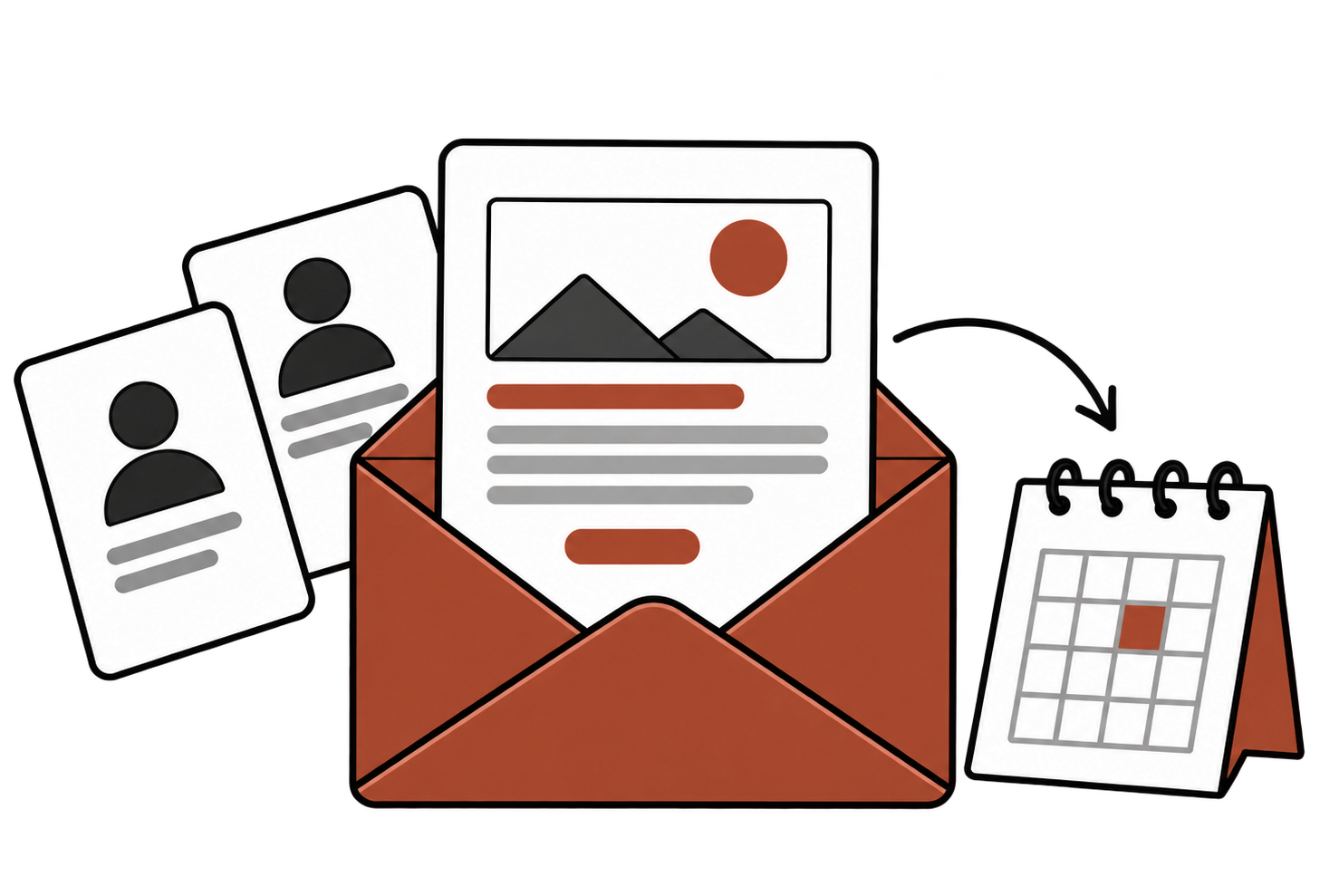
We build email campaigns for the people already connected to your business. Use newsletters, event invitations, product updates, and nurture sequences to give subscribers a useful reason to stay in touch.
Ways to work together
Compare the scope of each approach, including the decisions and inputs your team will own. The proposal confirms the services and responsibilities you choose.
Prepare a specific announcement, event invitation, or reusable email system.
Your part: Confirm the recipient source, approve content, and identify who handles replies.
Plan and deliver an agreed calendar of useful communications.
Your part: Supply timely updates and approval. Your team owns commercial replies and subscriber relationship decisions.
Who it helps
Use Email Marketing where it supports a specific business need. These starting points help us choose the right work and identify the information your team needs to provide.
Give customers relevant product information, practical updates, or a reason to reconnect when their needs change.
Connect a show, webinar, or product announcement to people who already know your business, using a clear invitation and next step.
Plan a useful sequence around common questions while keeping ownership of active sales conversations clear.
Plan segments around relevant interests or customer needs, using the data and preferences available in your list.
How it works
Follow the work, decisions, and responsibilities at each stage. We agree the actual schedule around your scope, approvals, and the dependencies that affect delivery.
Understand the relationship, data, and purpose behind the proposed campaign.
Develop the calendar, copy, and layouts around useful content.
Review recipients and the finished message before the agreed send.
Use available results to choose the next content and segment improvements.
The stages show the working sequence, not a guaranteed turnaround. Your proposal confirms the included work, review points, and timing. External approvals and separately scoped services can affect the schedule.
Quality and controls
Use specific review points to catch gaps and keep the work connected to the approved brief. Each check needs the right information and a person who can make the decision.

The handoff
Useful work needs a usable handoff. Agree the outputs, supporting information, and ownership so the next stage can move forward with a clear starting point.
Approved copy, layouts, relevant template guidance, and the segments or campaigns they belong to.
The list owner, preference handling, exclusions, and who approves recipient selection for future messages.
Available campaign results, replies needing attention, and content recommendations for the next planned send.
This service serves existing audiences. Cold prospect outreach belongs to B2B Lead Generation. Agree recipient selection, sending responsibilities, content volume, platform fees, and any nurture automation before work starts.
Scope and pricing
The proposal connects your requirements to deliverables, responsibilities, fees, and terms. Review the initial work, ongoing needs, and connected services together.

Compare the approaches
Choose the service around the relationship with the recipient and the purpose of the conversation.
| What to consider | Email marketing | B2B lead generation |
|---|---|---|
| Audience | Email marketing Subscribers, customers, and existing leads connected to your business. | B2B lead generation Researched companies and contacts that match an agreed prospecting brief. |
| Purpose | Email marketing Share updates, invite participation, and nurture an existing relationship. | B2B lead generation Start a relevant business conversation with a potential new buyer. |
| Preparation | Email marketing Audience history, list preferences, useful content, and a sending calendar. | B2B lead generation Buyer research, account exclusions, an outreach offer, and a sales reply owner. |
Frequently asked questions
Find practical answers about getting started, approvals, scope, costs, and what happens after delivery.
8 questions about getting started.
This service focuses on subscribers, customers, and existing leads. New prospect outreach is a different engagement under B2B Lead Generation. Share the list source and intended use so we can assess the appropriate approach before preparing a send.
We review the platform, access, existing templates, and features needed for the campaign. Keeping the current system may be practical if it supports the agreed work. Any migration or new tool subscription needs its own decision and scope.
Often they can share visual patterns, but their content and calls to action may differ. We review the planned messages before defining reusable layouts. The template should make routine production easier while still allowing a useful hierarchy for an invitation, announcement, or longer customer update.
Review the source, relationship, preferences, and available platform history before scheduling a campaign. An old list should not be treated as a ready audience without that context. The initial plan can identify preparation needs and whether additional list work is required before sending.
Start with the information in the preparation checklist: audience sources and list owner; sending platform and access owner; campaign purpose and content priorities; brand files and existing templates; preferences, suppressions, and exclusions; approval contact and reply owner. You do not need a finished specification to discuss the project. Identify what is confirmed, what is still undecided, and any deadline or budget constraint that could change the recommended scope.
Yes, when the responsibilities and handoffs are clear. Identify who supplies information, who implements each part, and who has final approval. We define the work our team owns and the dependencies retained by others. That helps avoid duplicate effort, conflicting instructions, and assumptions about services that no one has agreed to provide.
We can use the first discussion to identify the gaps and decide what can be clarified early. Missing facts, access, specifications, or approvals may prevent later work from starting. Bring the materials you have and explain what is uncertain, so preparation can be sequenced around the decisions that matter.
Start by sharing the previous scope, relevant materials, and what went wrong. We can review whether the issue involved requirements, execution, handoff, or expectations. A new supplier alone is not a guarantee of a better outcome. The useful next step is an agreed brief, clear responsibilities, and review points that address the actual problem.
Email Marketing
Share your goals, current materials, and timing. We will review the Email Marketing requirements, identify open decisions, and agree a practical scope with your team.
info@exhibitant.com