A destination and route plan
Review whether the shipment goes to a facility, advance warehouse, or directly to the show. Connect the choice to published receiving requirements and your installation schedule.
Shipping & freight logistics
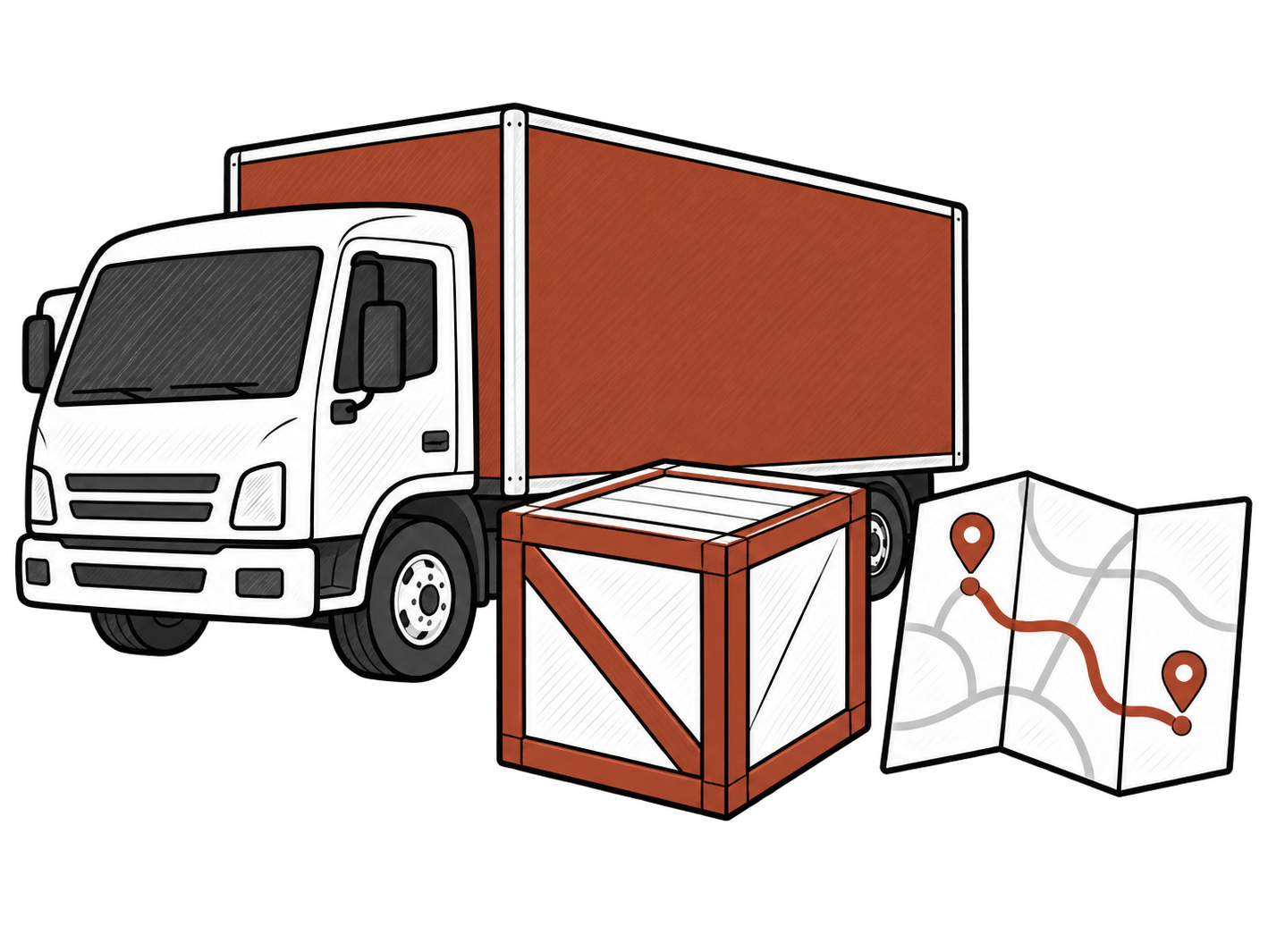
Shipping is part of the booth plan, not an afterthought. We confirm whether your booth ships to your facility or direct to show, coordinate crate specs and labels, and flag venue receiving requirements before production finishes.
Ways to work together
Compare the scope of each approach, including the decisions and inputs your team will own. The proposal confirms the services and responsibilities you choose.
Coordinate the route and handoff for a specific inbound or outbound move.
Your part: Provide accurate crate information, addresses, and the published receiving instructions.
Coordinate agreed inbound and return movements with production and installation.
Your part: Approve routing and costs, and keep receiving and dismantle contacts available. Venue handling is separately identified.
Who it helps
Use Shipping & Freight Logistics where it supports a specific business need. These starting points help us choose the right work and identify the information your team needs to provide.
Plan shipping from the actual receiving requirements rather than treating the show opening date as a delivery deadline.
Keep the inventory, labels, and destination information connected when components travel together or on separate routes.
Resolve where the booth goes after dismantle and who confirms that the shipment is ready for collection.
Coordinate revised crate counts, weights, and destinations with the booking and labels before the shipment is ready to leave.
How it works
Follow the work, decisions, and responsibilities at each stage. We agree the actual schedule around your scope, approvals, and the dependencies that affect delivery.
Review event instructions, origins, destinations, and receiving options.
Collect accurate shipment specifications and connect them to pack-out.
Align carrier arrangements with the receiving and installation plan.
Connect the return or onward shipment to dismantle and repack where included.
The stages show the working sequence, not a guaranteed turnaround. Your proposal confirms the included work, review points, and timing. External approvals and separately scoped services can affect the schedule.
Quality and controls
Use specific review points to catch gaps and keep the work connected to the approved brief. Each check needs the right information and a person who can make the decision.

The handoff
Useful work needs a usable handoff. Agree the outputs, supporting information, and ownership so the next stage can move forward with a clear starting point.
Origins, destinations, crate specifications, labels, and the agreed routing information.
Relevant timing, booth details, contacts, and access requirements for the carrier and show team.
The included outbound destination, collection dependencies, and responsibilities after dismantle.
Carrier transport, venue material handling, labor, and storage are distinct services. Routing and timing depend on shipment readiness, carrier availability, and event instructions. The quote identifies included moves and separate charges.
Scope and pricing
The proposal connects your requirements to deliverables, responsibilities, fees, and terms. Review the initial work, ongoing needs, and connected services together.

Compare the approaches
The correct choice depends on the published event instructions, production readiness, and handling costs.
| What to consider | Advance warehouse | Direct to show |
|---|---|---|
| Timing | Advance warehouse Use the event's advance receiving period and specified warehouse address. | Direct to show Match the direct receiving window and venue access requirements. |
| Coordination | Advance warehouse Confirm labels, warehouse acceptance, and the next move to the booth. | Direct to show Coordinate carrier arrival with show receiving and the installation plan. |
| Cost review | Advance warehouse Review freight and the applicable warehouse or handling charges. | Direct to show Review freight, venue handling, and any timing-related service requirements. |
Frequently asked questions
Find practical answers about getting started, approvals, scope, costs, and what happens after delivery.
8 questions about getting started.
Yes. We review the event's receiving instructions, production schedule, shipment details, and installation needs. Advance warehouse and direct-to-show delivery have different timing and handling requirements. The decision should be based on the specific event rather than a universal preference.
Provide crate count, dimensions, weights, origin, destination, readiness date, and receiving contacts. We also need the show name, booth number, and published move-in and move-out instructions. Inaccurate or incomplete specifications can change both feasibility and cost.
Yes, using the best available shipment specifications and a clear readiness schedule. Provisional dimensions and weights must be identified and confirmed before the relevant booking decisions. Production changes can affect the shipment, so the logistics owner needs updated information rather than relying on an early estimate indefinitely.
Identify which crates and components belong to each event or configuration, with accurate destinations and receiving contacts. The routing plan should keep those allocations visible. Mixed inventory adds coordination needs, especially when parts are shared or the shipments leave and return on different dates.
Start with the information in the preparation checklist: show name, venue, and booth number; published receiving and move-in windows; origin and destination addresses; crate count, dimensions, and weights; pack-out date and receiving contacts; return or next-show destination. You do not need a finished specification to discuss the project. Identify what is confirmed, what is still undecided, and any deadline or budget constraint that could change the recommended scope.
Yes, when the responsibilities and handoffs are clear. Identify who supplies information, who implements each part, and who has final approval. We define the work our team owns and the dependencies retained by others. That helps avoid duplicate effort, conflicting instructions, and assumptions about services that no one has agreed to provide.
We can use the first discussion to identify the gaps and decide what can be clarified early. Missing facts, access, specifications, or approvals may prevent later work from starting. Bring the materials you have and explain what is uncertain, so preparation can be sequenced around the decisions that matter.
Start by sharing the previous scope, relevant materials, and what went wrong. We can review whether the issue involved requirements, execution, handoff, or expectations. A new supplier alone is not a guarantee of a better outcome. The useful next step is an agreed brief, clear responsibilities, and review points that address the actual problem.
Freight planning
Share your goals, current materials, and timing. We will review the Shipping & Freight Logistics requirements, identify open decisions, and agree a practical scope with your team.
info@exhibitant.com