
 Louie J.
Managing trade show shipping deadlines can be quite complex, especially with so many factors involved. I’ve spent years navigating these logistics, and the importance of a timely and smooth shipping process is something I can’t emphasize enough.
Think about the chaos that arises when shipments arrive late.
Not only does it disrupt the setup, but it can also put your team in a stressful position and impact the entire event experience. My primary goal is to help you avoid such situations by managing your shipping timelines effectively.
From my perspective, a well-planned shipping schedule is the backbone of successful trade show logistics.
There are key strategies that can make the entire process far less daunting and keep everything on track. Each of these strategies not only streamlines operations but also reduces stress for your team and ensures your exhibits are ready on time.
In this article, I’m sharing eight essential tips that have proven helpful in mastering trade show shipping deadlines.
By the end, you’ll have the practical tools and insights needed to handle your shipping logistics efficiently and with confidence.
- Start planning shipping schedules months ahead to avoid last-minute issues.
- Choose a reliable logistics partner familiar with trade show timelines.
- Use digital tools for real-time tracking of shipments.
- Prepare for potential delays with contingency plans.
- Communicate shipping details clearly with all team members.
Choose a logistics partner with trade show experience for a smoother shipping process.
Use digital tools to keep track and adjust plans in real-time.
1. Plan Your Shipping Schedule Early
Planning your shipping schedule well in advance is a crucial step in managing trade show logistics.
Begin setting your timeline as soon as your participation is confirmed.
By doing this, you can identify key deadlines and make sure ample time for potential adjustments.
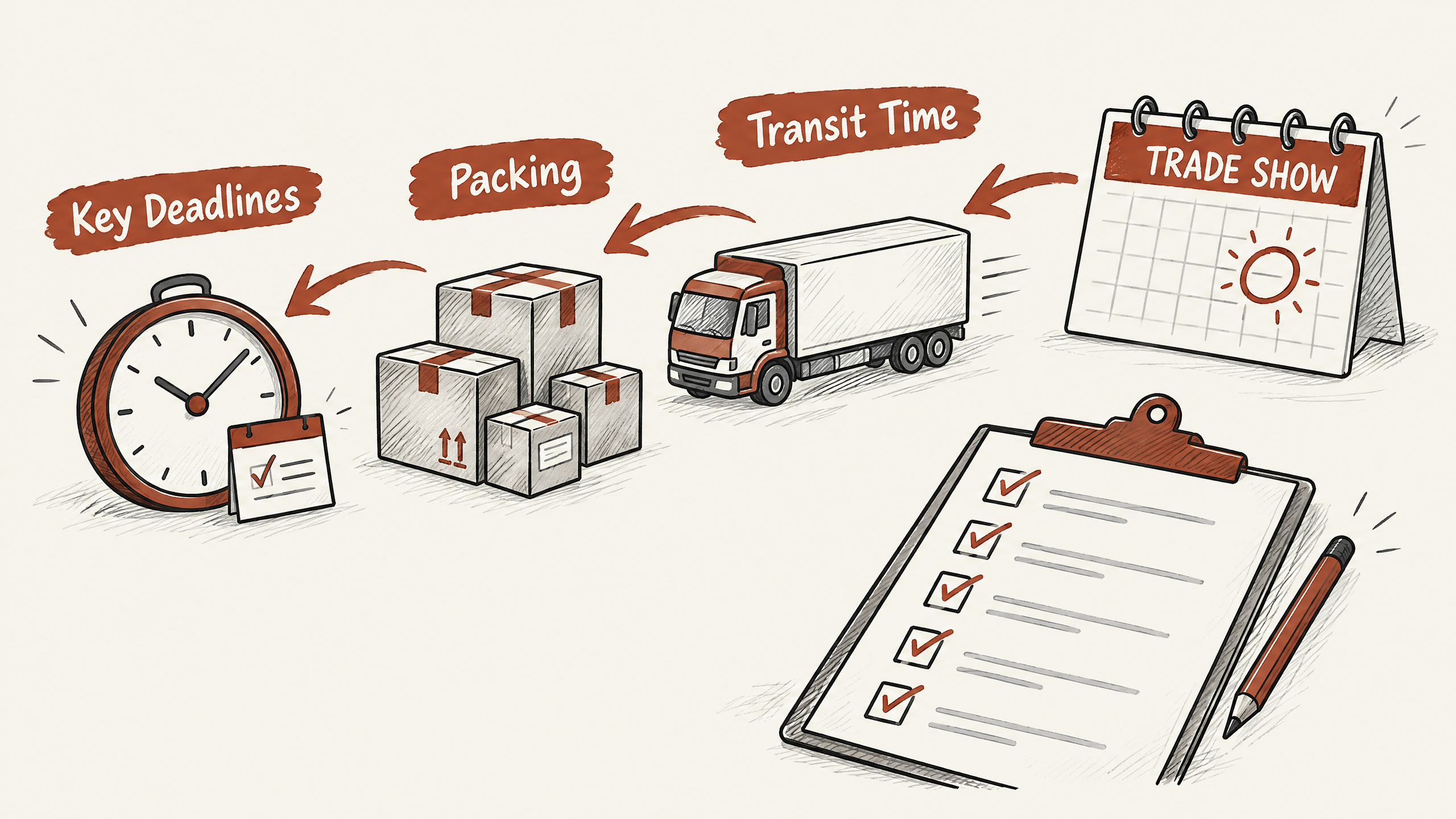
Early planning helps you avoid last-minute rushes, which often lead to oversights and errors.
To build an effective schedule, work backward from the event date to determine necessary lead times for each task. Consider the time needed for packing, labeling, carrier selection, and transit.
Allow extra time for unforeseen circumstances, such as weather disruptions or customs delays.
This proactive approach provides a buffer against disruptions, mitigating the risk of late shipments.
For a concrete example, if a trade show is scheduled for July 15th, begin your planning by early May. This gives your team two months to finalize logistics.
During this period, key tasks might include selecting a shipping partner, acquiring necessary permits, and preparing booths and materials.
Making these arrangements well in advance ensures a smoother shipping process when the time comes.
Be mindful of trade-offs between cost and speed.
Expedite shipping options may incur higher expenses but provide peace of mind for tight deadlines.
Align decisions with your budget and priorities to find a balance that meets your needs. Early planning empowers your team to respond to changes effectively, maintaining control over logistics.
2. Understand Venue and Carrier Requirements
One of the foundational steps in managing trade show logistics is to fully understand both venue and carrier requirements.
Every venue has its own unique set of rules regarding shipping and receiving.
These can include delivery times, dock usage, and even packaging standards. Missing these specifications can lead to delays or penalties.
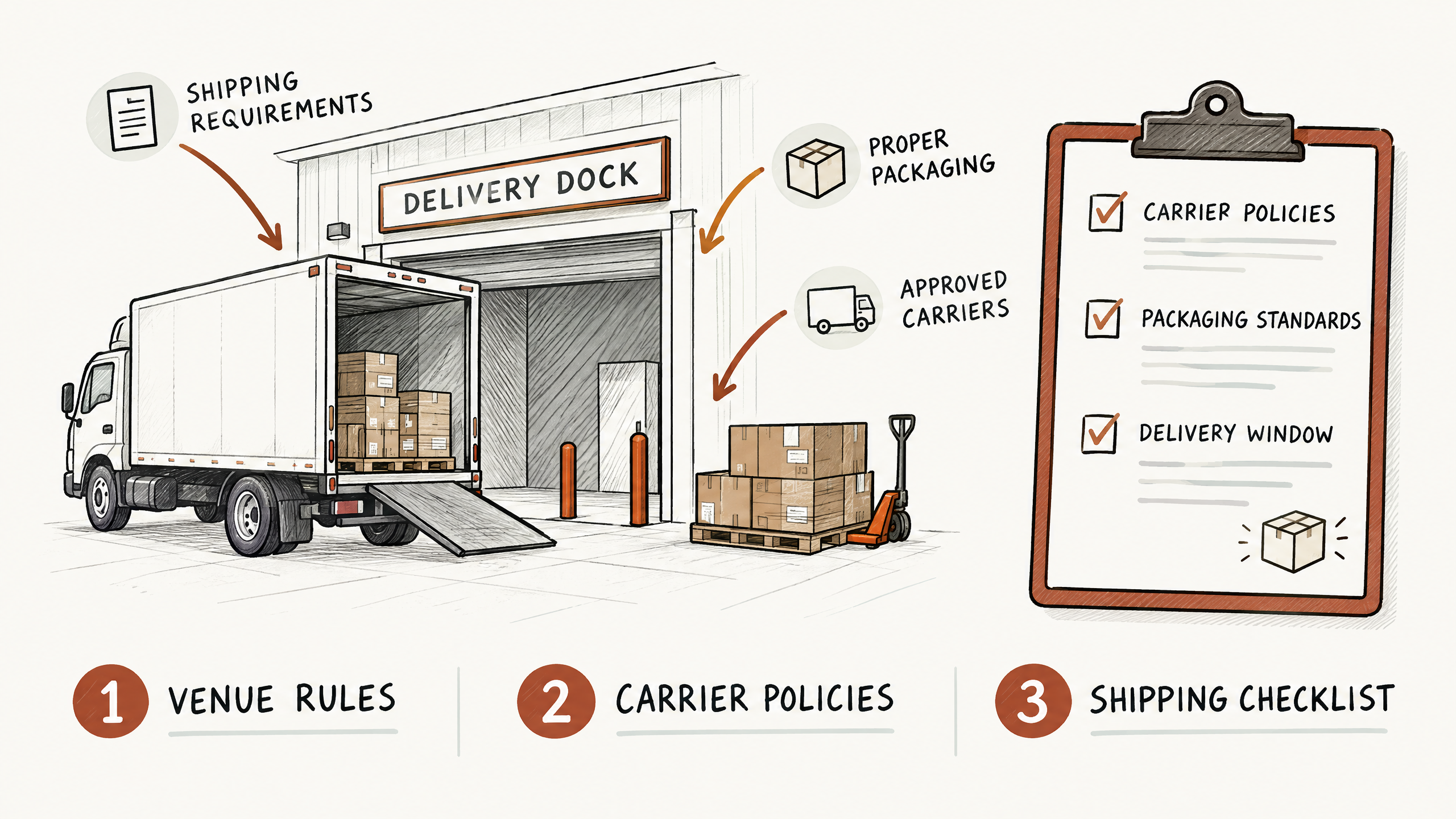
Begin by thoroughly reviewing any materials provided by the event organizers.
Often, these guidelines are detailed in exhibitor manuals.
If something is unclear, contacting the event coordinator directly can save time and trouble down the line.
Carrier requirements are equally crucial. Different carriers have varying policies on maximum allowed weights, dimensions, and labeling.
Choose a carrier that aligns with your shipping needs and timelines. Ignoring these factors can lead to miscommunications, missed pickups, or even damage to your materials.
Most carriers offer detailed shipping guides that outline the required information, which can help prevent last-minute surprises.
Important: Missing venue or carrier requirements can lead to delays, penalties, or unexpected fees, so it’s crucial to prepare a detailed checklist in advance.
To illustrate the importance of this, imagine your team is shipping a new product display to a trade show.
You plan to use a carrier with a strict dimension limit, but your display exceeds it slightly.
Failure to adjust beforehand could result in an unexpected fee or a need to find an alternative carrier last minute.
As for the venue, if your delivery arrives outside of their specified hours, you might face storage charges or miss critical setup windows.
A helpful strategy is to create a checklist as part of your pre-show preparations.
This list should include venue access times, loading dock dimensions, required permits, and carrier-specific criteria. Periodically reviewing this checklist can help keep the team aligned and make sure no critical detail is overlooked.
A common mistake is assuming all venues and carriers operate the same way. Instead, treat each event as unique, and adjust your logistics plan accordingly.
3. Choose the Right Logistics Partner
Selecting a reliable logistics partner is crucial for managing trade show shipping deadlines.
The right partner will help make sure that your materials arrive on time and in good condition.
When searching for a logistics company, consider their experience in handling trade show shipments specifically.
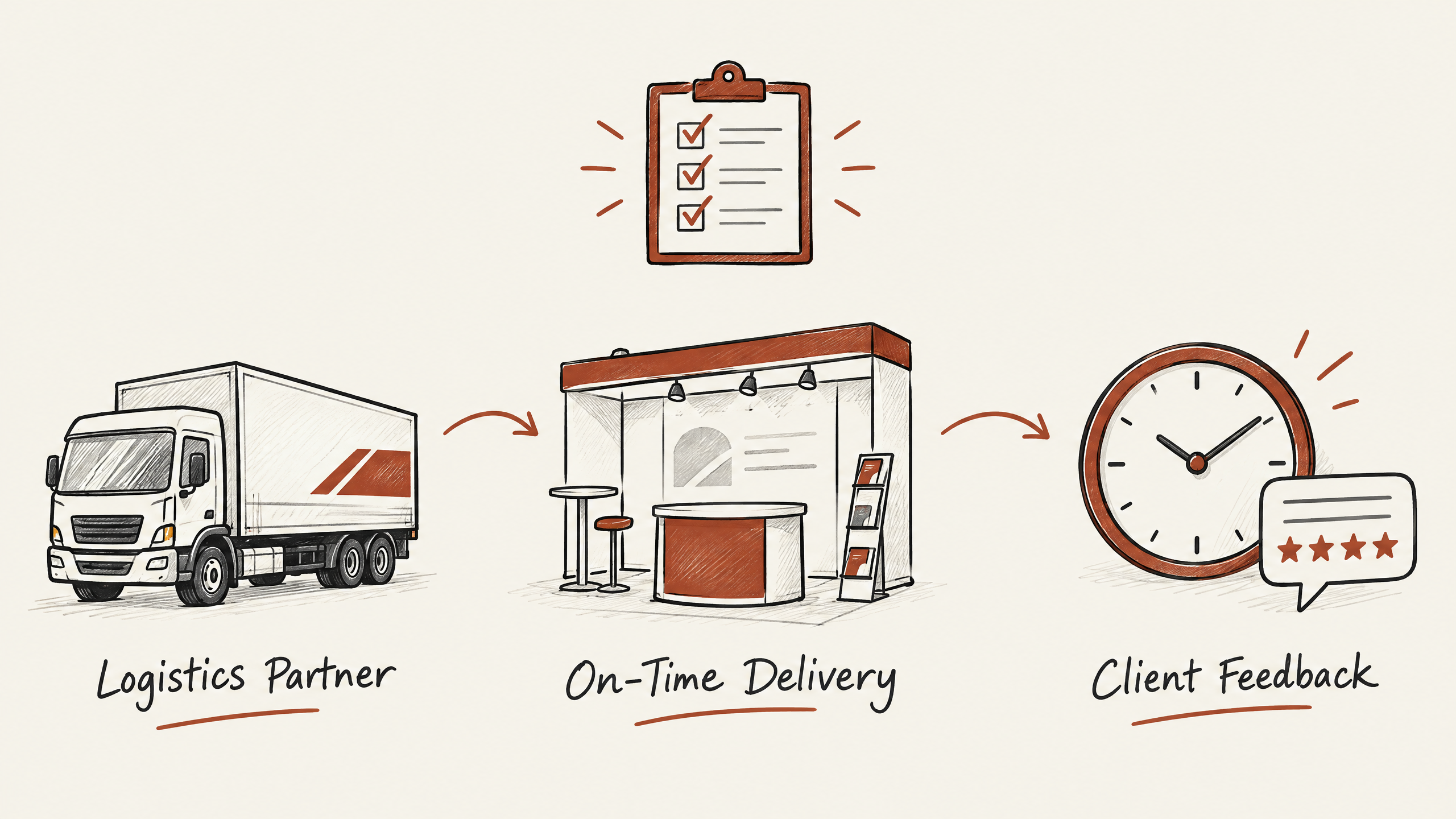
This specialized knowledge can make a significant difference in anticipating potential pitfalls.
Check if the logistics partner has a strong track record with trade show logistics, including working with the same venues you plan to exhibit at.
This familiarity can expedite processes and reduce unexpected delays. Ask for references and, if possible, contact past clients to get firsthand feedback on their experiences.
Pricing structures and service levels also play a vital role. Evaluate whether their cost aligns with your budget while offering adequate services like real-time tracking and end-to-end visibility.
A logistics partner that provides comprehensive service packages can simplify many aspects of shipping, alleviating the burden on your team.
You should also assess their communication skills, ensuring they’re responsive and proactive.
This is important especially if adjustments or urgent decisions need to be made during shipment.
Poor communication can lead to misunderstandings that could delay your timeline. At Exhibitant, we emphasize the importance of solid communication, which aligns well with the standard you’d want from a logistics partner.
- Look for partners with venue-specific experience
- make sure they offer flexible service and pricing
- Prioritize consistent and clear communication
By taking these factors into account, you can choose a logistics partner that supports your trade show objectives effectively.
This decision not only impacts your shipping schedule but also the overall success of your participation in the event.
4. Improve Packaging for Efficiency
When it comes to trade show shipping, how you package your materials can significantly impact costs and efficiency.
Proper packaging minimizes damage and maximizes the use of space, which in turn reduces shipping costs.
To start, use lightweight but durable materials that shield your items from potential transit damage. Avoid overly bulky containers, as they can increase both weight and dimensional shipping costs.
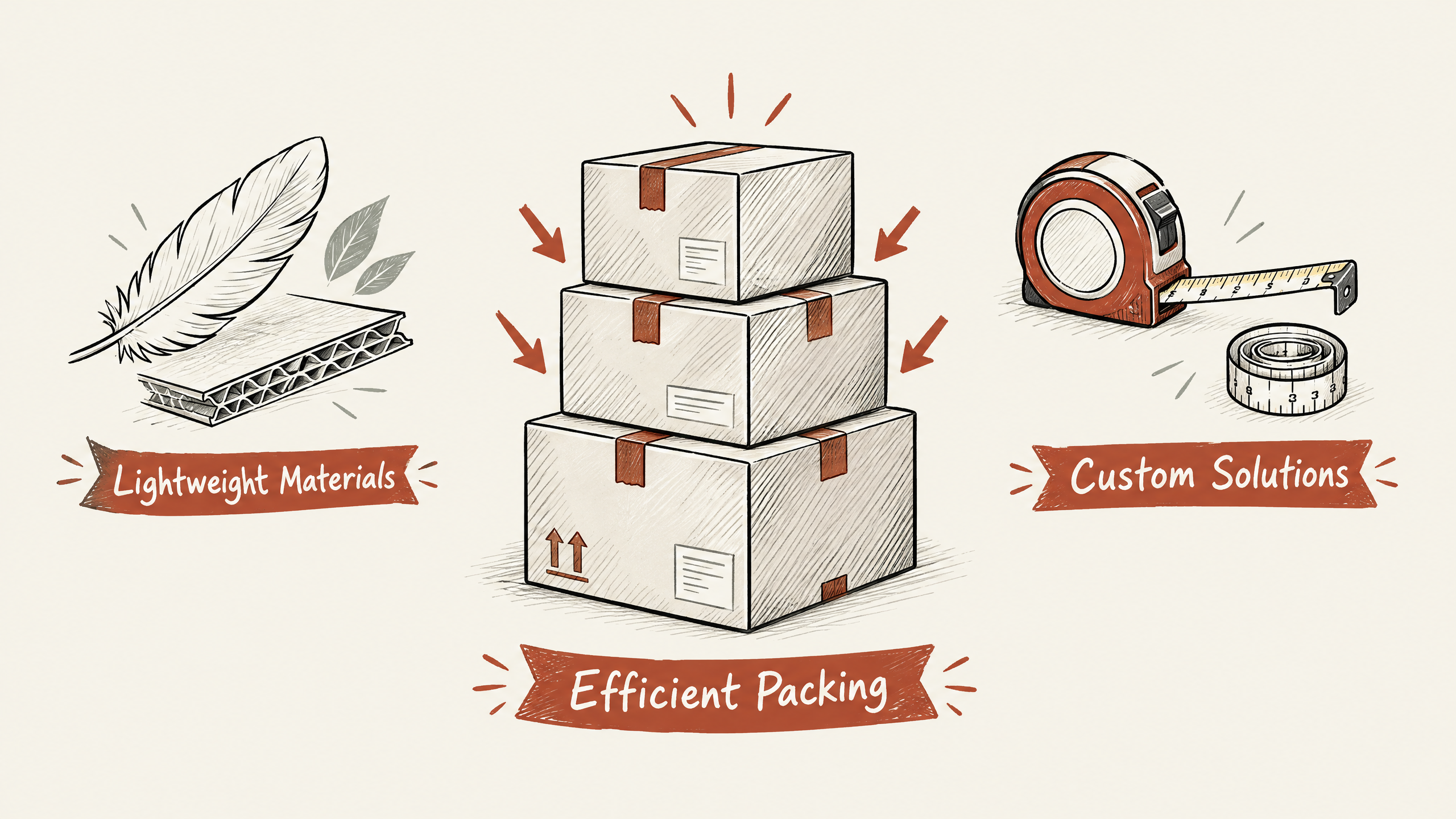
Consider using custom packaging solutions tailored to your specific products.
This approach can minimize wasted space, reduce the need for filler materials, and lower overall shipping weight.
Additionally, modular designs that allow for stacking can enhance space utilization without compromising the safety of your materials. If you are shipping various items, a mix of crates, pallets, and smaller boxes can improve space and transit cost.
Be mindful of how your materials are packed for easy unloading and setup.
This can be achieved by labeling boxes clearly and organizing them based on booth layout and assembly sequence.
A common mistake is to pack heavier items on top of lighter ones, which can cause damage during transit.
Pro Tip: To get the most out of trade show shipping efficiency, use lightweight, custom-sized packaging tailored to your products to reduce shipping weight and minimize unused space.
Always balance weight across containers and follow the ‘heavy on bottom, light on top’ rule to protect your materials.
As a hypothetical example, consider a company shipping electronic displays and promotional materials.
By selecting lightweight, custom-sized crates for the displays and modular, stackable boxes for brochures, they find they can reduce freight weight by 15%.
This results in significant shipping cost savings.
Evaluate your own needs and packaging options to identify where adjustments might be made.
Packing efficiency is a critical component that affects both budget and success on the show floor. Review your strategy after each event to find areas for improvement.
You’ll gain valuable insights that can simplify operations for future trade shows, making your team’s efforts more effective and cost-efficient.







 Lorena G.