 Lorena G.
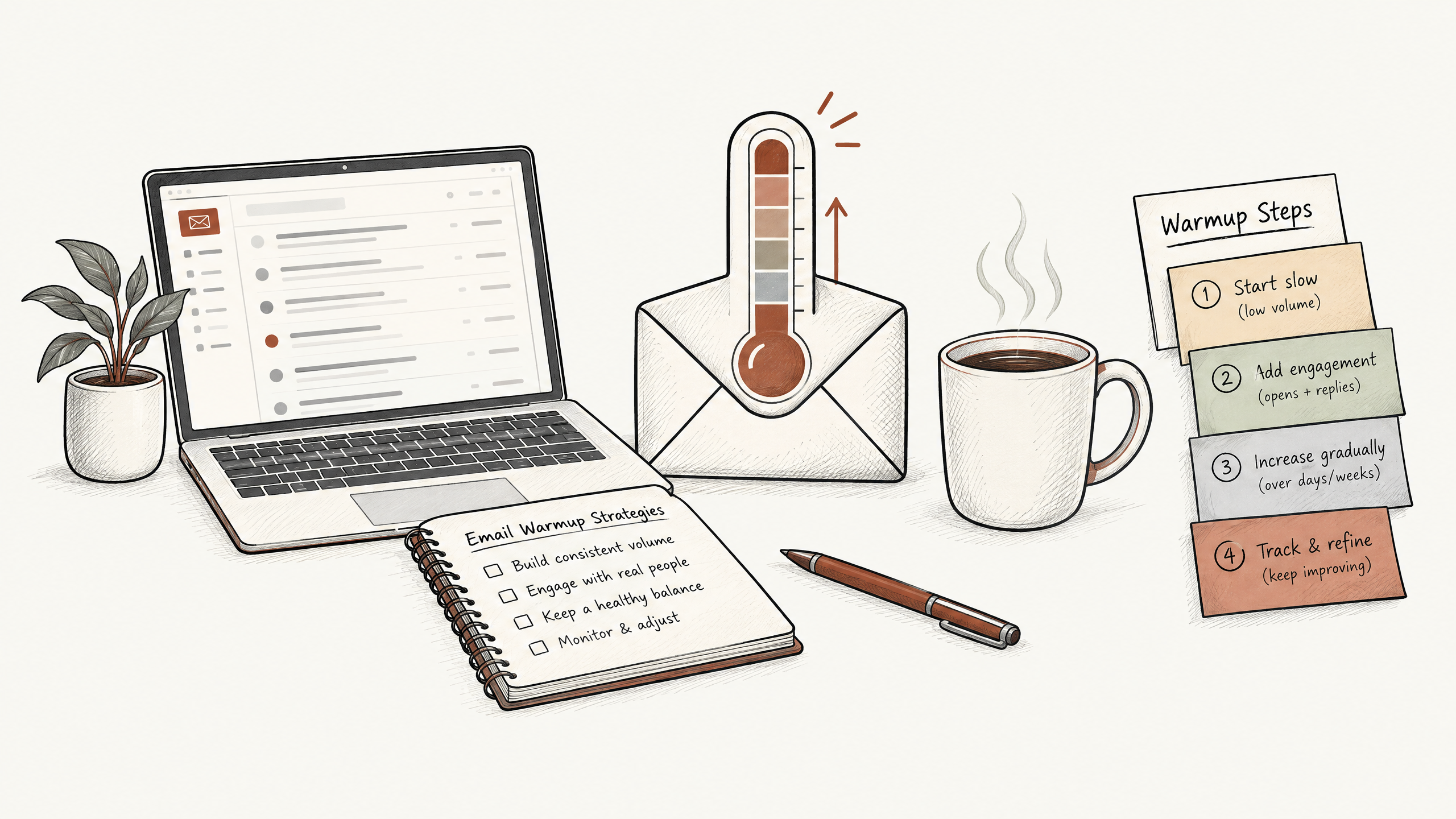
Email warmup means gradually introducing sending activity while checking authentication, delivery, and recipient feedback.
Before launching an outbound campaign, check that your sending setup works and your audience has a clear reason to care.
Start with a controlled launch that lets you investigate problems before sending more.
Gradual sending and automated warmup exchanges are different processes, and their results need separate evaluation.
This process involves genuine engagement and strategically managing factors like email volume and recipient targeting.
As you create your email warmup strategy, keep in mind the importance of authentication and careful monitoring.
Check authentication, review your audience, and exclude people who have asked you to stop contacting them.
Throughout this article, I will walk you through the six essential steps for warming up your emails before launching cold outreach.
You’ll learn to authenticate your emails, manage your audience efficiently, and adjust your sending volume based on reliable feedback from your metrics.
Use these steps to decide when your campaign is ready for a small, monitored launch.
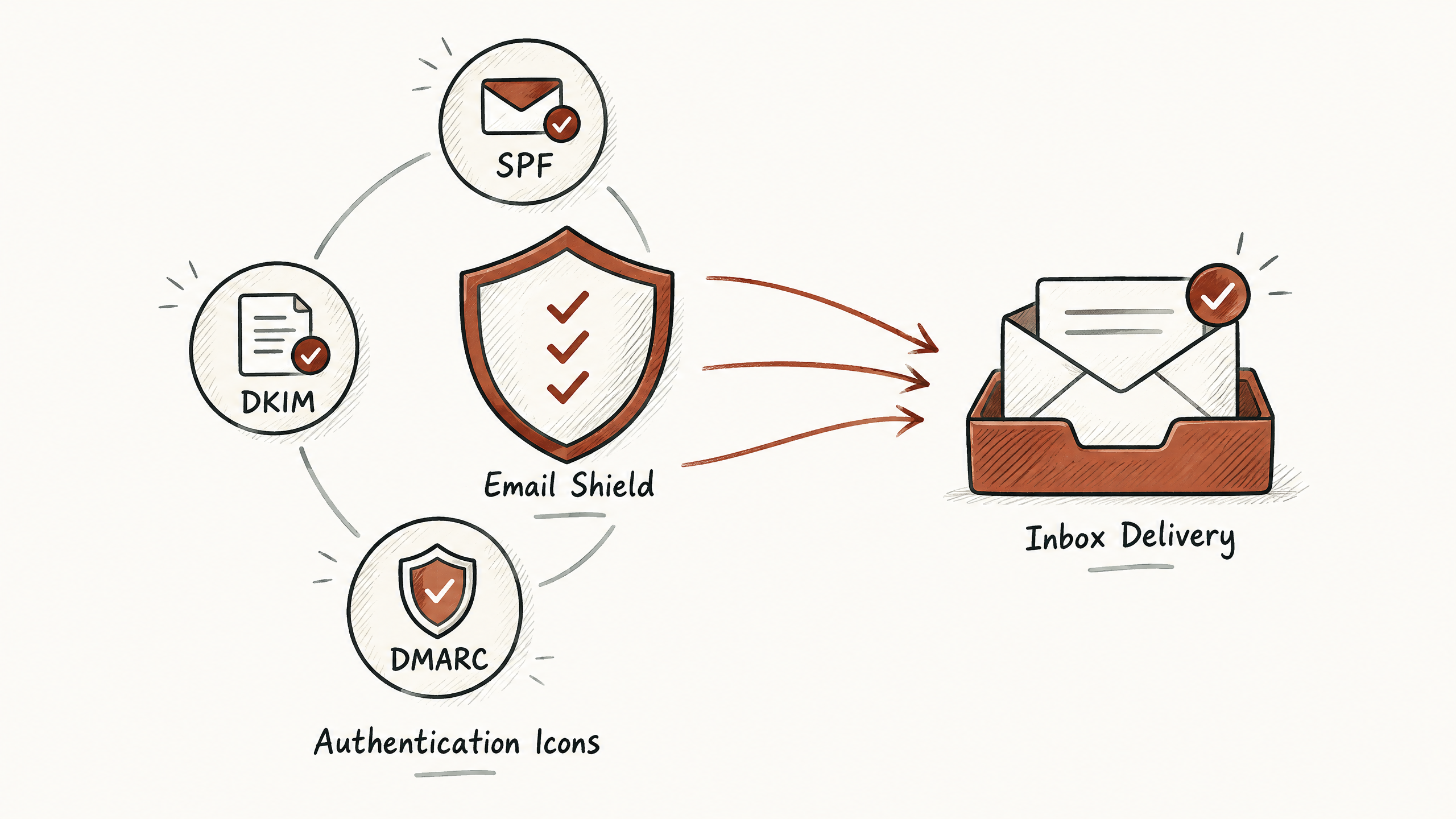
- Authenticate emails with SPF, DKIM, DMARC to boost deliverability.
- Identify and suppress opt-outs and hard-bounces before sending.
- Start with low, consistent email volume to test systems.
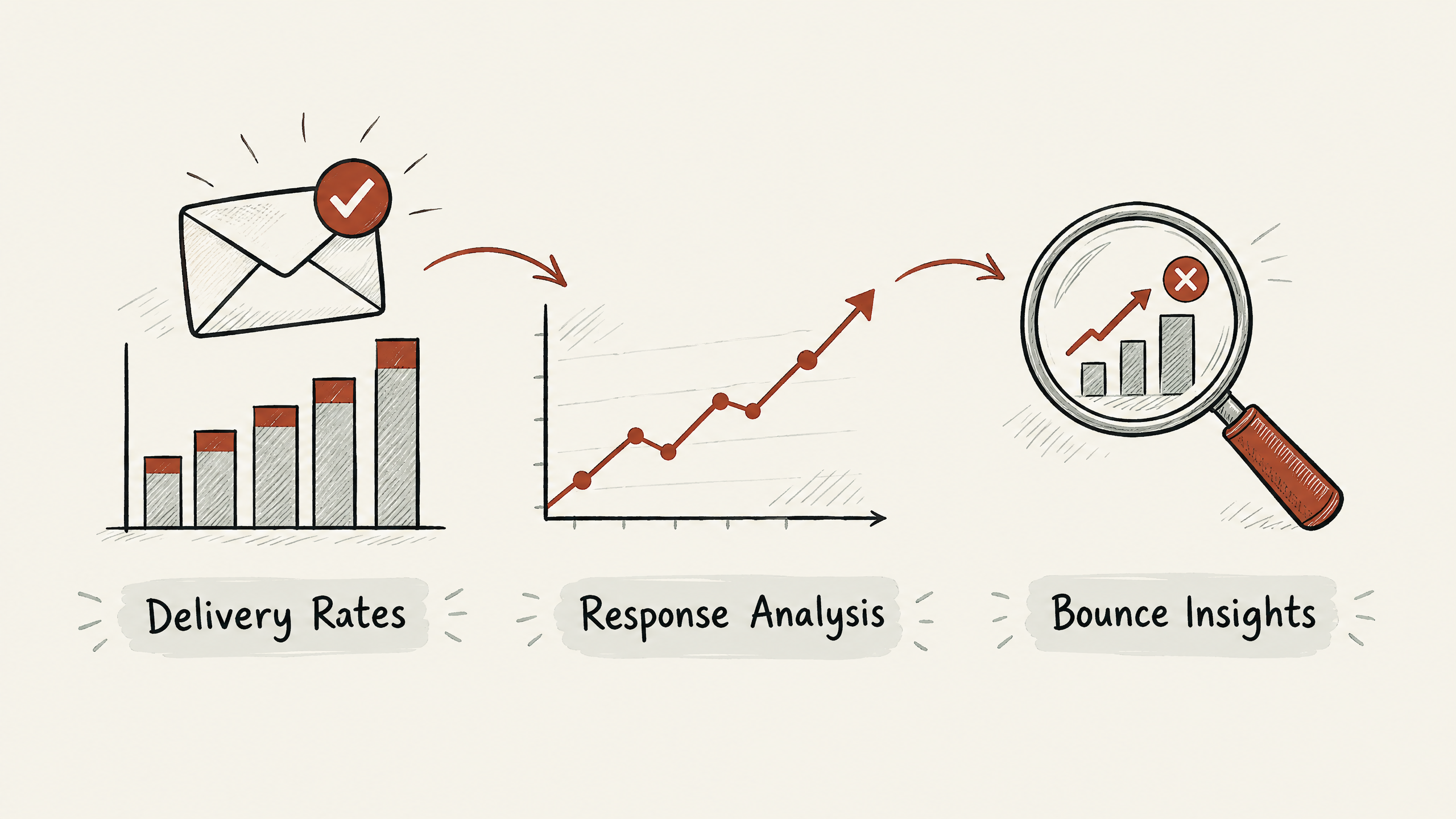
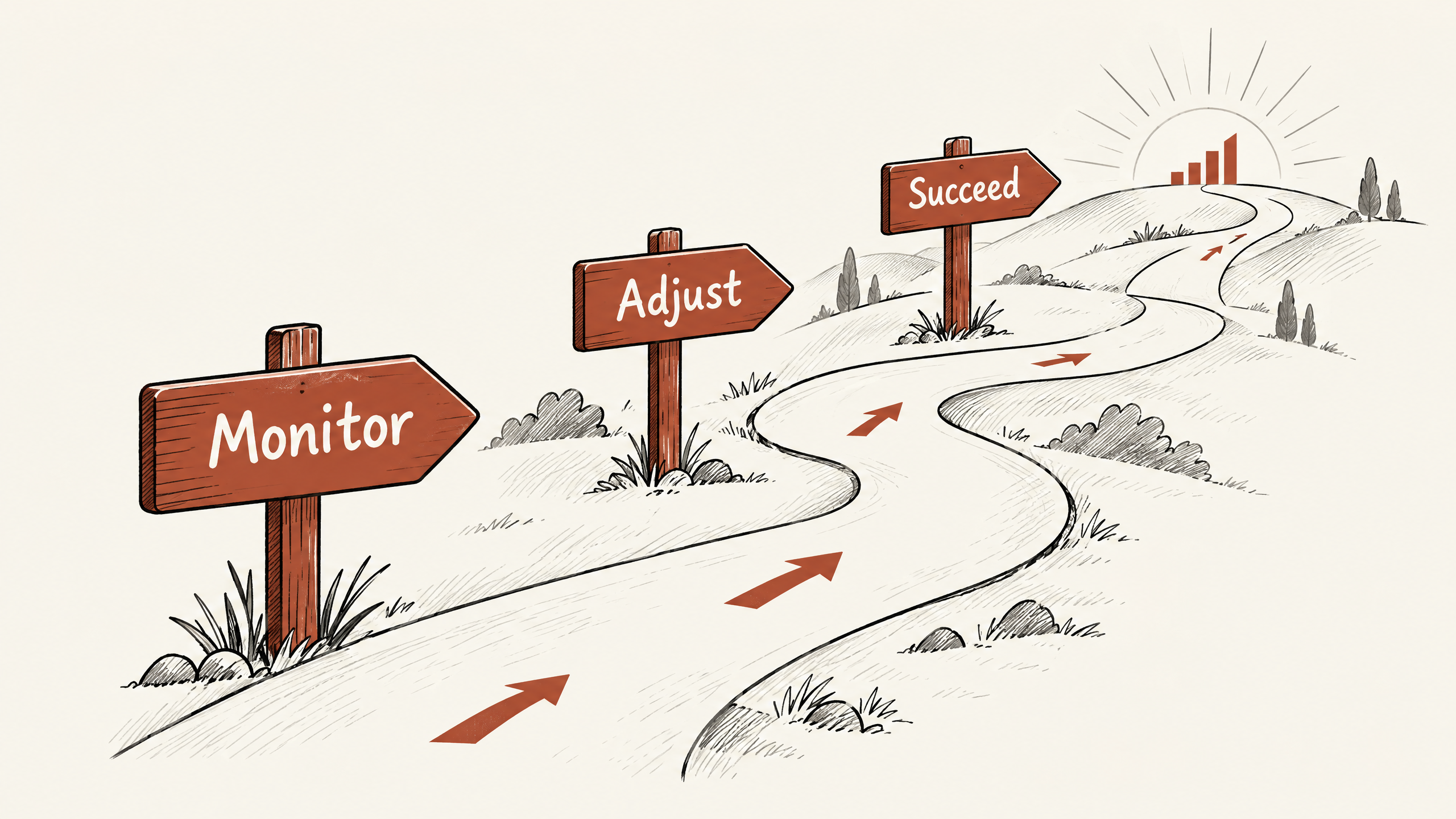
- Monitor delivery rates and adjust based on real interactions.
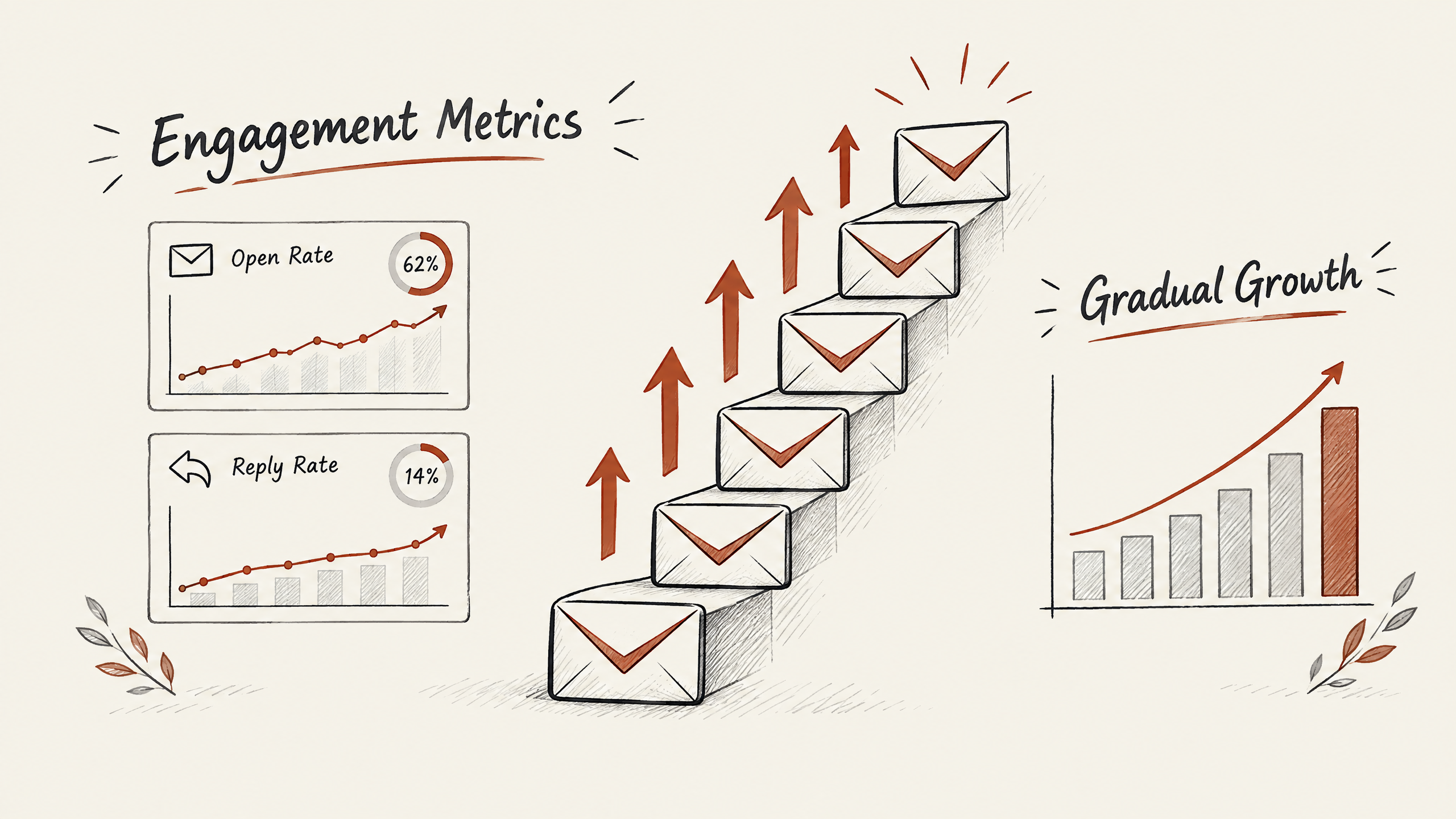
- Gradually increase volume as engagement and reputation improve.
Take these steps before launching your email outreach. Authenticate emails with SPF, DKIM, and DMARC.
Make sure you suppress opt-outs and hard-bounces.
Then use this foundation to monitor delivery rates and adjust your strategy.
1. Authenticate Your Emails for Deliverability
Before diving into cold email outreach, it’s crucial to authenticate your emails to improve deliverability and build sender reputation.
Authentication helps receiving systems verify your mail, but it does not guarantee inbox placement. Google explains its sender requirements.
SPF (Sender Policy Framework) allows you to specify which mail servers are permitted to send email on behalf of your domain.
This can help prevent unauthorized senders from using your domain for spam or phishing attacks.
DKIM (DomainKeys Identified Mail) works by adding a digital signature to the headers of your emails. This signature verifies that an email genuinely comes from your domain and has not been tampered with in transit.
Properly configured, DKIM adds to your sender credibility, making it less likely your emails will be marked as spam.
DMARC passes when SPF or DKIM passes with a domain aligned to the visible From address; its policy covers messages that fail DMARC.
Important: Check SPF, DKIM, and DMARC using a message sent through your campaign platform. Passing authentication does not guarantee inbox placement.
By using DMARC, you can receive reports about authentication failures, helping you to monitor and secure your domain’s email practices.
Once you’ve set up these authentication measures, it’s a good idea to test them thoroughly. Use tools like mail-tester services to see if your emails pass SPF, DKIM, and DMARC checks.
Regularly monitor your domain’s sending reputation and make adjustments as needed to maintain a strong standing.
Improvements here not only increase your deliverability but also lay a solid foundation for engaging with potential B2B prospects effectively.
2. Identify Your Audience and Manage Opt-Outs
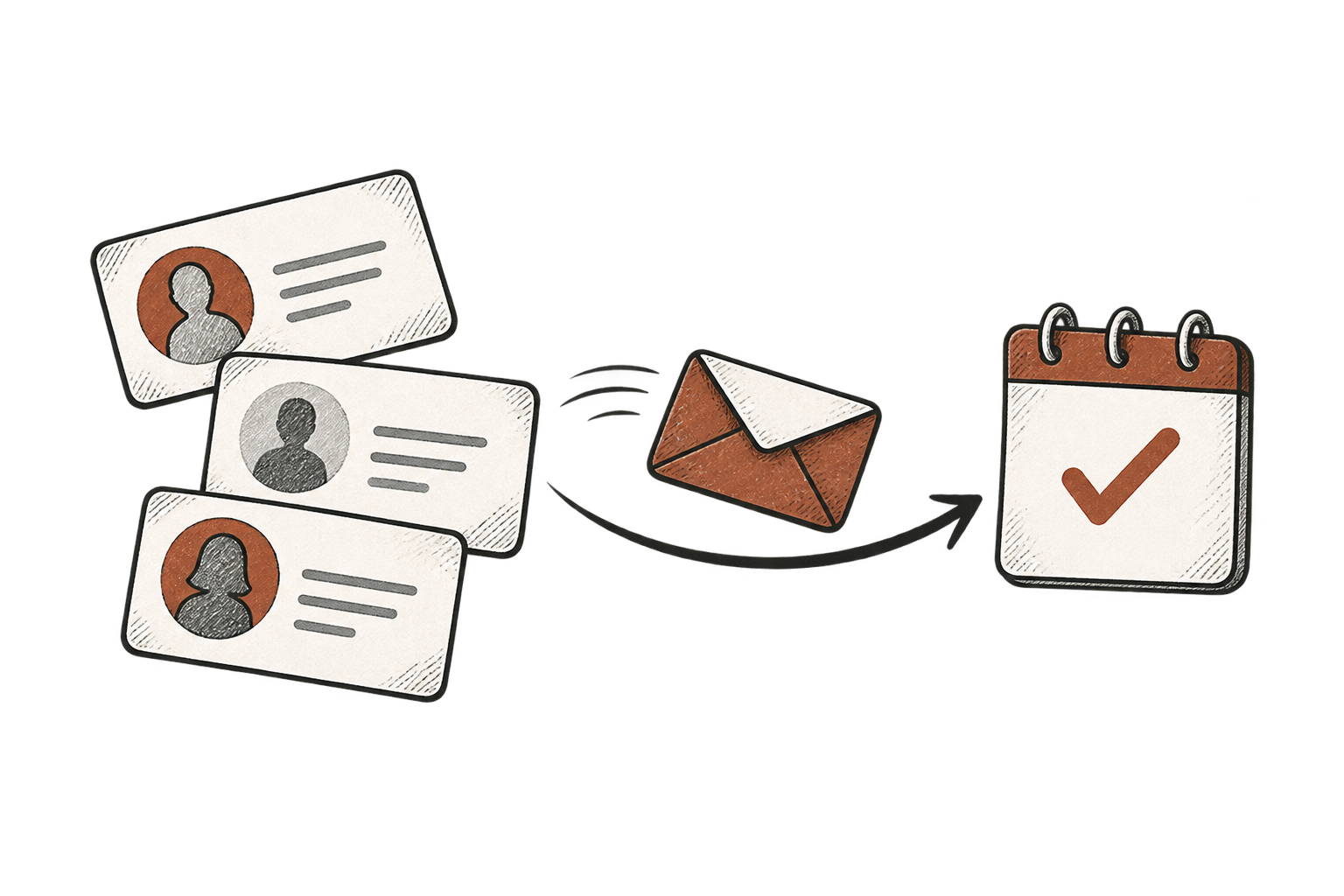
Before launching a cold email outreach campaign, it’s crucial to identify your target audience.
Understanding who you are reaching ensures that your messages are relevant and tailored to their needs.
Start by defining your ideal customer profile based on specific criteria like industry, company size, or job title.
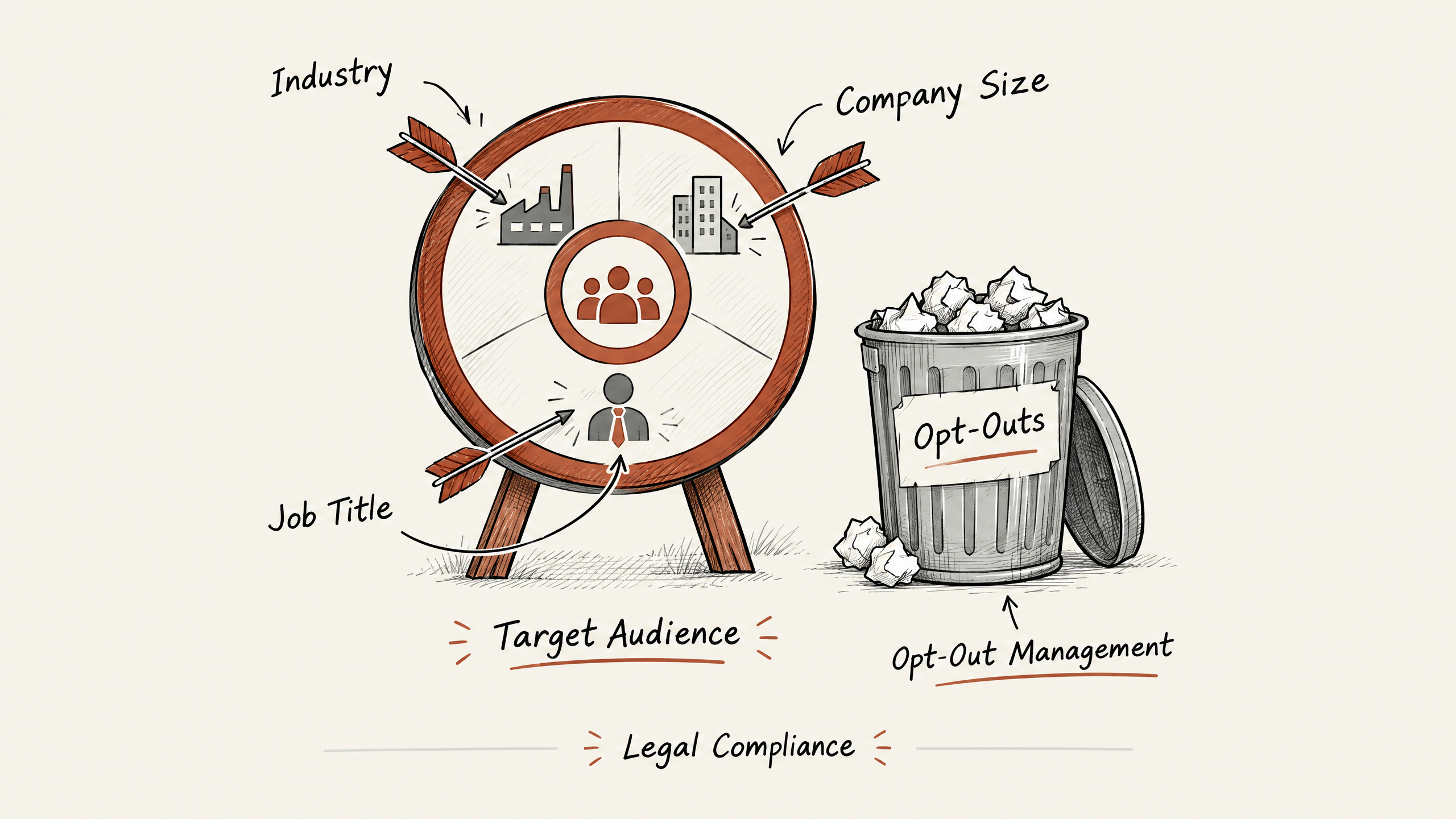
This helps narrow down recipients to those most likely to engage with your offer.
Once your audience is identified, managing opt-outs is vital for compliance and deliverability.
Be diligent about removing anyone who has unsubscribed or opted out of communication.
Apply opt-outs across your outreach tools so a later import or another campaign cannot add those recipients back.
Maintaining a clean email list lowers the risk of complaints that can damage your sender reputation.
Think of audience identification and opt-out management as foundational elements for successful outreach.
Pro Tip: Keep opt-outs in a shared suppression list so another campaign or a later import cannot contact them again.
Overlooking these steps can lead to high spam complaints or wasted efforts on uninterested leads.
Suppress an address after a hard bounce; investigate temporary deferrals separately before deciding whether to retry.
To execute this efficiently, evaluate contacts for relevance and verify their email addresses.
However, remember that just because an address is valid doesn’t mean you have explicit permission to contact.
Check your provider’s sending rules and remember that careful targeting does not establish recipient permission.
Keep suppression records available to every campaign that uses the same contact data.
3. Start with a Low, Consistent Email Volume
When beginning a cold outreach campaign, it’s crucial to start with a low and consistent email volume. This strategy helps protect your sender reputation while establishing credibility with internet service providers (ISPs).
Sending a high volume of emails too quickly can trigger spam filters, leading to poor deliverability rates and damaging your domain’s reliability.
Keep sending patterns consistent and watch delivery results before increasing volume.
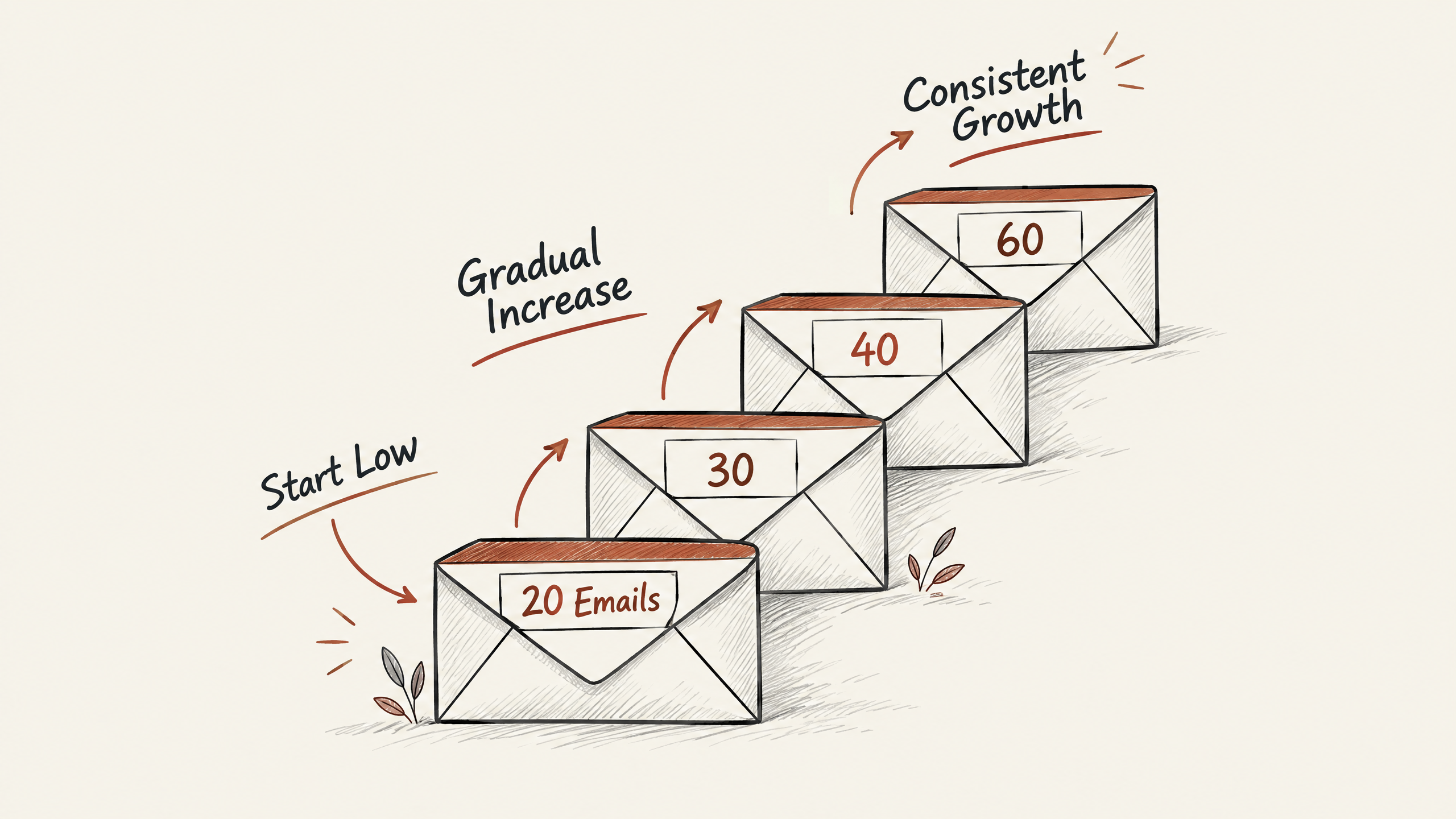
For example, launch to a small, relevant segment and review delivery problems and responses before expanding. Choose your pace from observed results and provider guidance; neither domain age nor a fixed countdown proves readiness.
Review genuine replies alongside delivery errors and complaints; tracked opens alone are unreliable because privacy features can load content automatically.
To keep track, document each increase and the outcomes, ensuring adjustments are backed by evidence.
If engagement drops or bounces rise, reduce volume temporarily and investigate the cause.
Exhibitant helps clients structure their B2B lead generation process, ensuring sound strategies throughout their email outreach campaigns.


 Louie J.