 Lorena G.
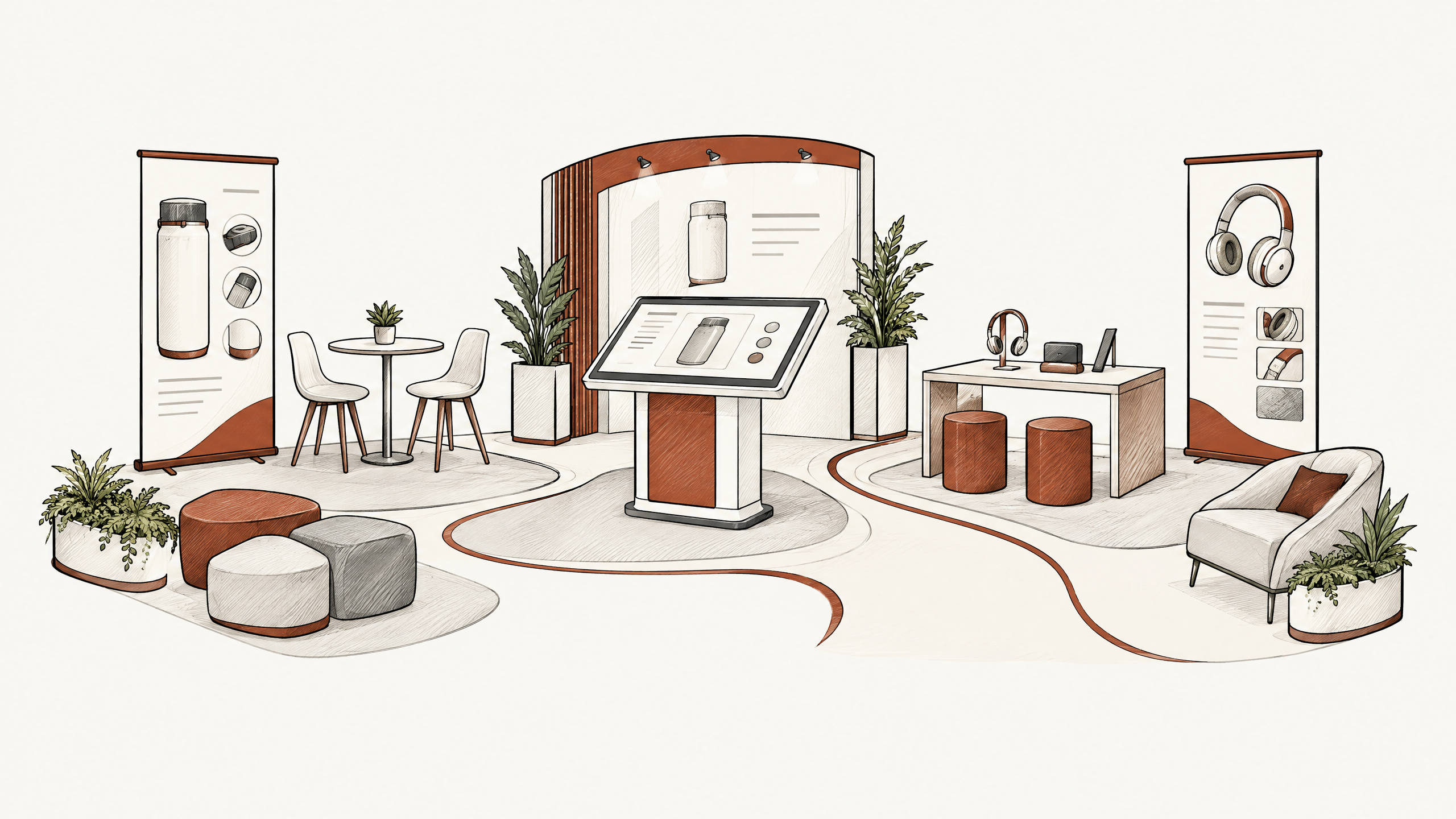
Designing a trade show booth can be a challenging task. The right layout and design elements can greatly impact your booth’s ability to attract attendees and engage them meaningfully.
Here is how I would approach it: by focusing on some key strategies, you can transform your booth into a vibrant and inviting space.
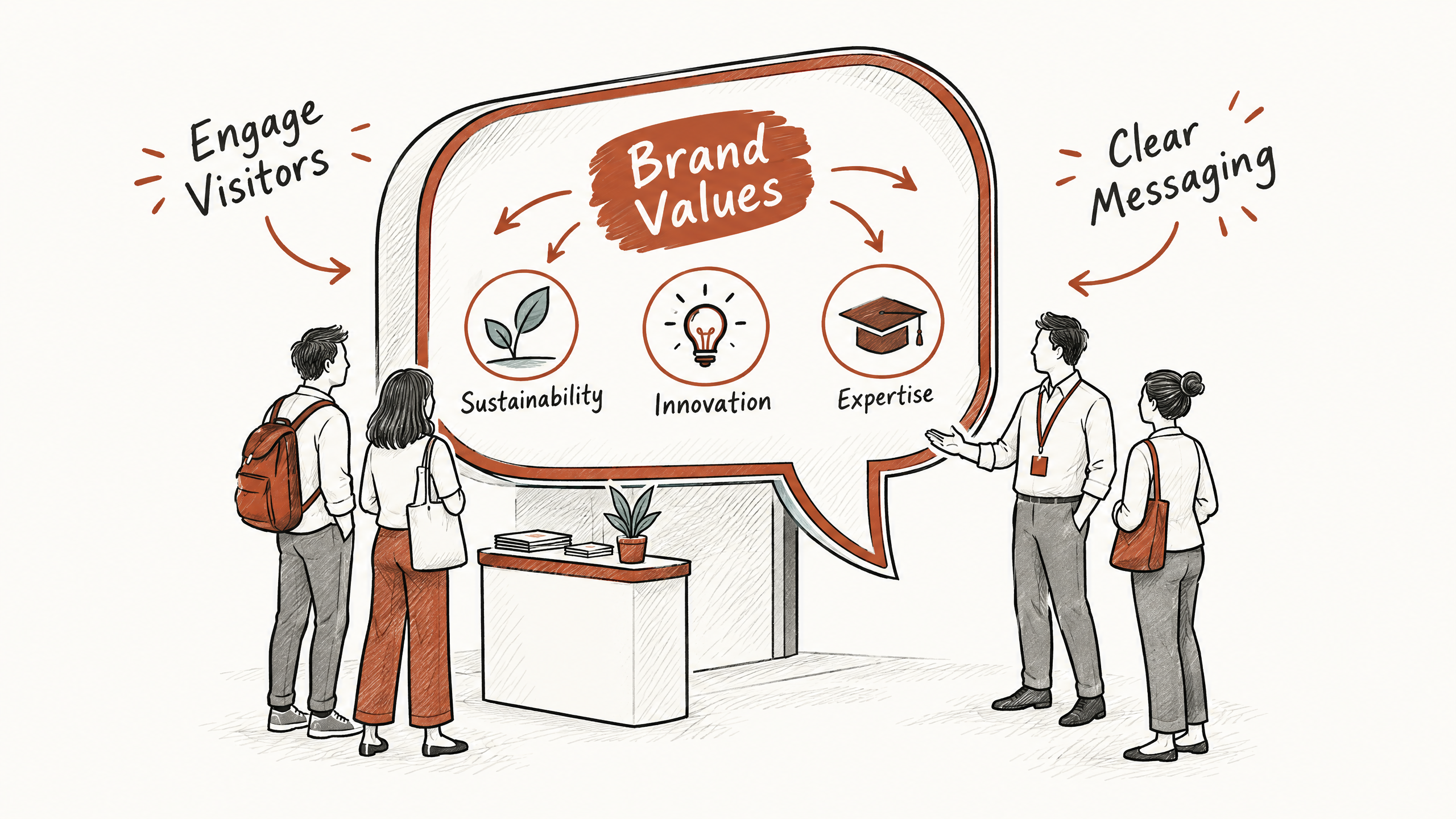
Imagine your booth as the physical embodiment of your brand’s message at a trade show.
Every design choice should work toward enhancing that message. From how you plan your layout to the strategic use of vertical space, each decision plays a vital role in shaping a visitor’s experience.
Interactive elements can add an engaging layer to your booth design, inviting attendees to participate and experience your brand firsthand.
In this way, integrating interactive features is more than just a trend; it’s a meaningful avenue for deeper connection. These elements, paired with well-thought-out traffic flow, can guide visitors naturally through your space.
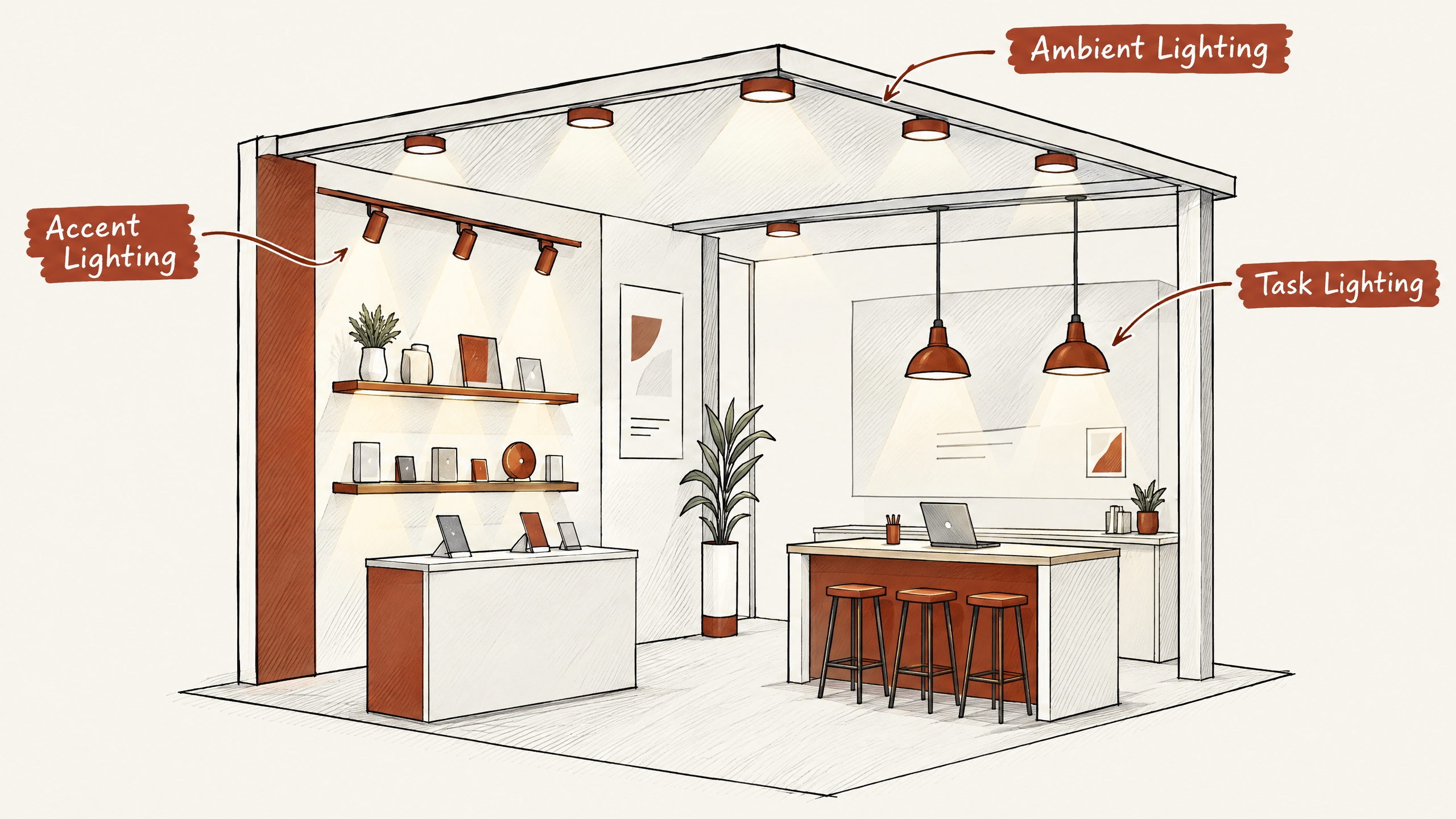
Effective booth design also involves smart choices about how to display your core messages and use resources like lighting creatively. After reading this article, you will gain six strategies to refine your booth design.
These strategies will help attract attendees and keep them interested and informed about your offerings.
- Prioritize clear pathways for efficient visitor traffic.
- Utilize vertical space to maximize booth impact.
- Incorporate interactive elements to engage attendees.
- Optimize lighting for enhanced visibility and attraction.
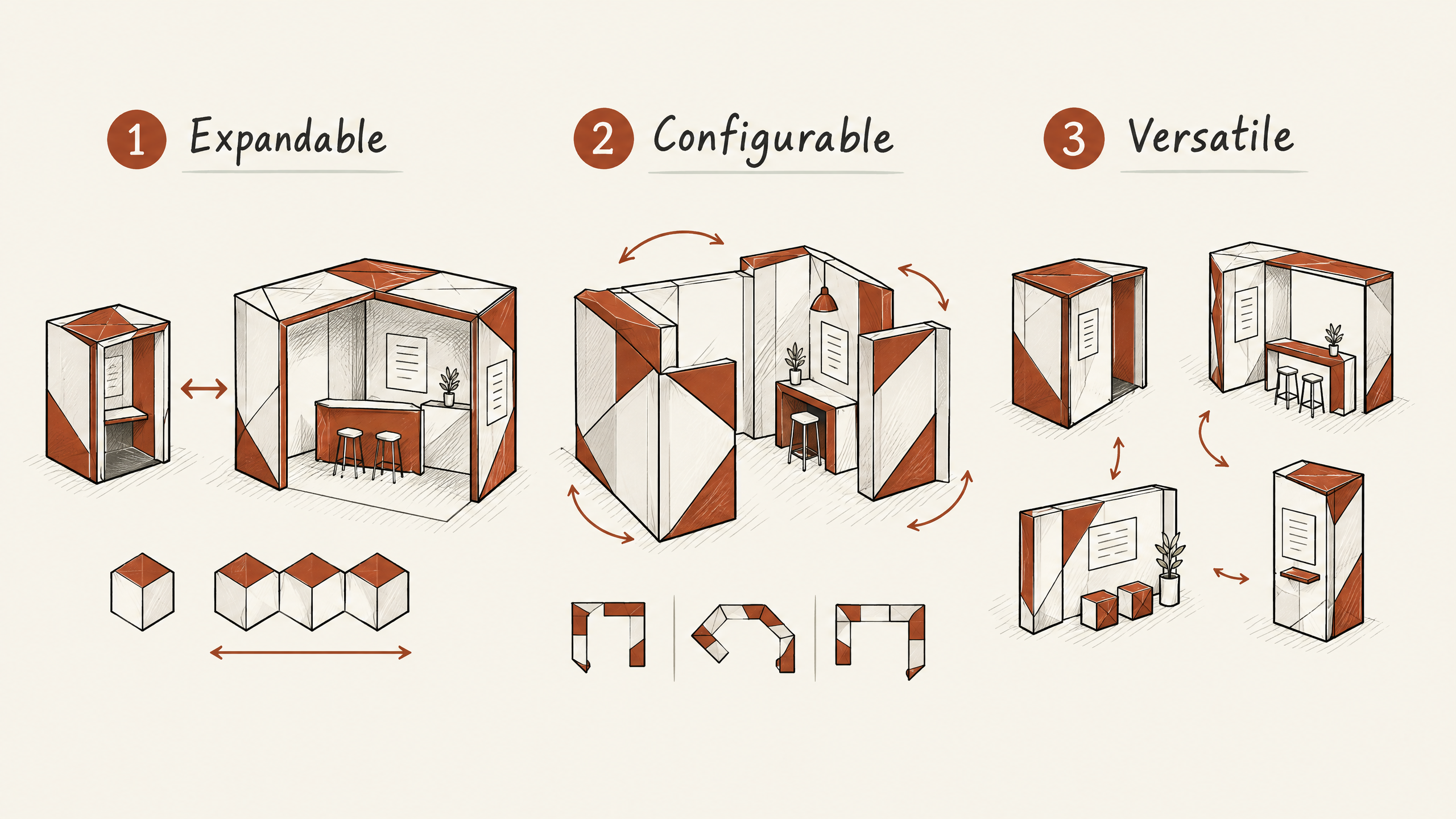
- Use modular designs for flexible booth configurations.
Consider how these strategies can help you create a more engaging and efficient trade show experience.
By incorporating these elements, you can design a booth that truly stands out.
1. Plan Your Layout for Optimal Traffic Flow
When designing your trade show booth, one of the most crucial factors to consider is traffic flow.
An optimized layout not only enhances the attendee experience but also increases the likelihood of meaningful interactions with potential clients.
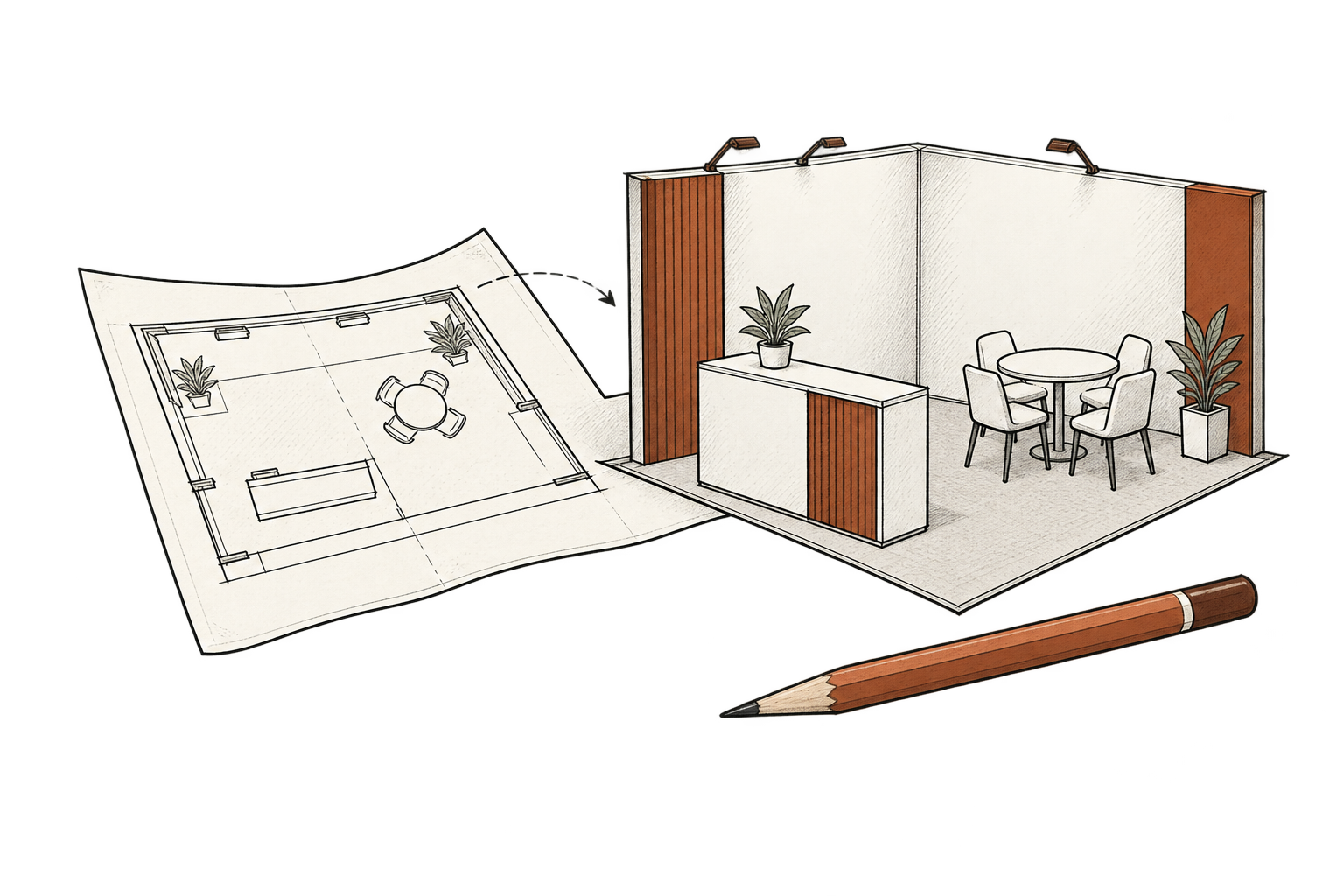
Start by assessing your exhibit space, noting the entry and exit points, and planning for ease of movement.
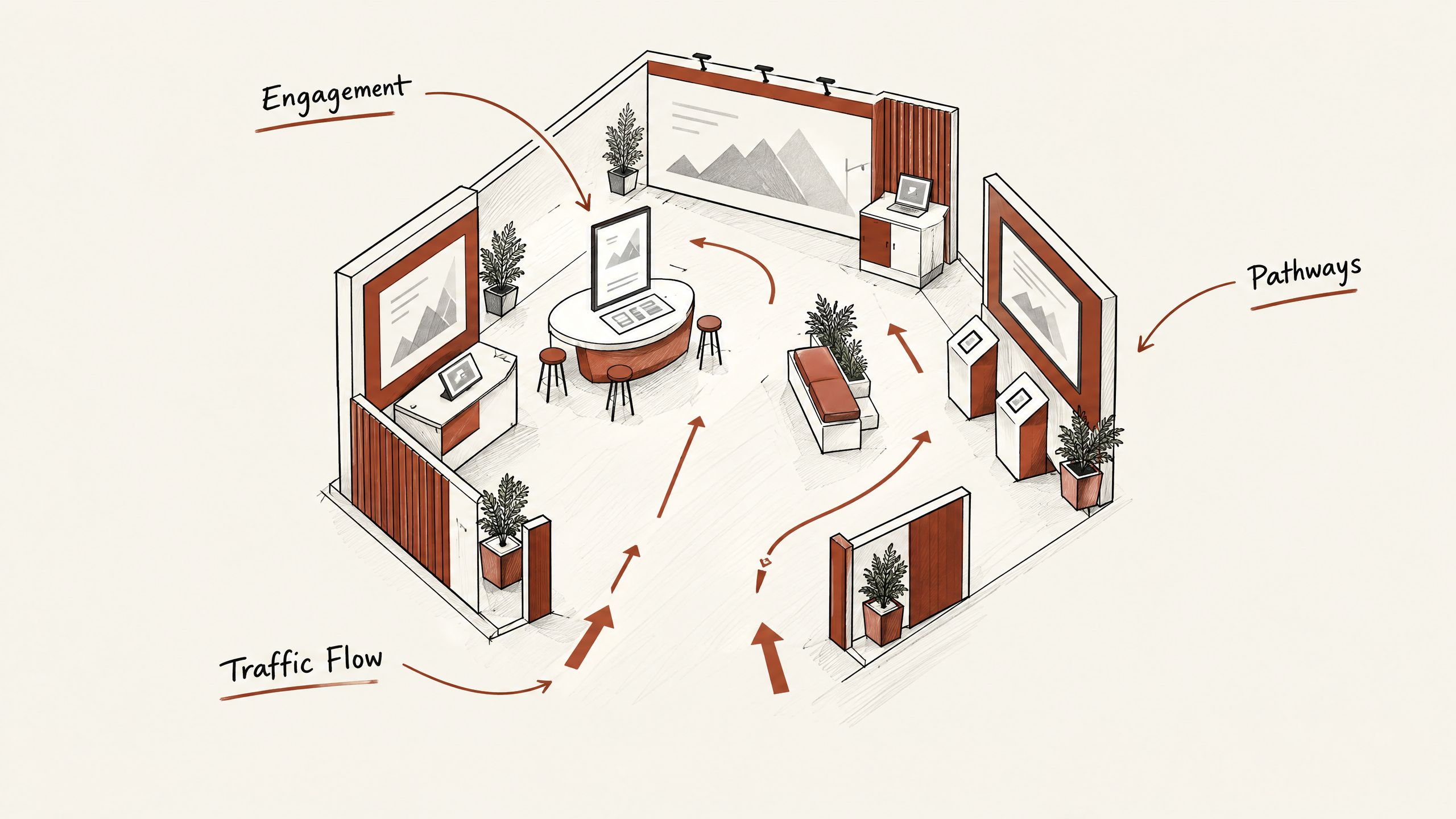
Prioritize an open and inviting entrance to attract traffic and encourage attendees to step inside.
Avoid obstructive barriers that can limit access or visibility.
Use strategic pathways to guide attendees toward interactive displays or key products, creating a natural flow through the booth.
This encourages exploration and keeps visitors engaged longer.
Visual marking tools like carpet colors or illuminated pathways can subtly direct traffic and highlight focal areas. Allocate adequate space at check-in points or product demos to prevent congestion.
Testing your layout with your team before the event ensures that it works in practice.
In a hypothetical example, a team might work with a 10×20-foot booth with a single entrance. Here, they could place a welcoming reception at the front, flanked by product displays on each side.
Introducing a central pathway that leads to a demo area at the back can make sure smooth visitor flow and get the most out of engagement.
Remember, the design should support your goals, such as highlighting a product launch or providing smooth access to sales representatives for lead generation.
2. Use Vertical Space for Maximum Impact
When it comes to exhibiting at a trade show, maximizing every inch of your booth is vital. In many cases, booths are confined to a predetermined footprint on the floor.
However, one area that often goes underutilized is vertical space.
By thinking upwards, you can create a more dynamic and eye-catching display.
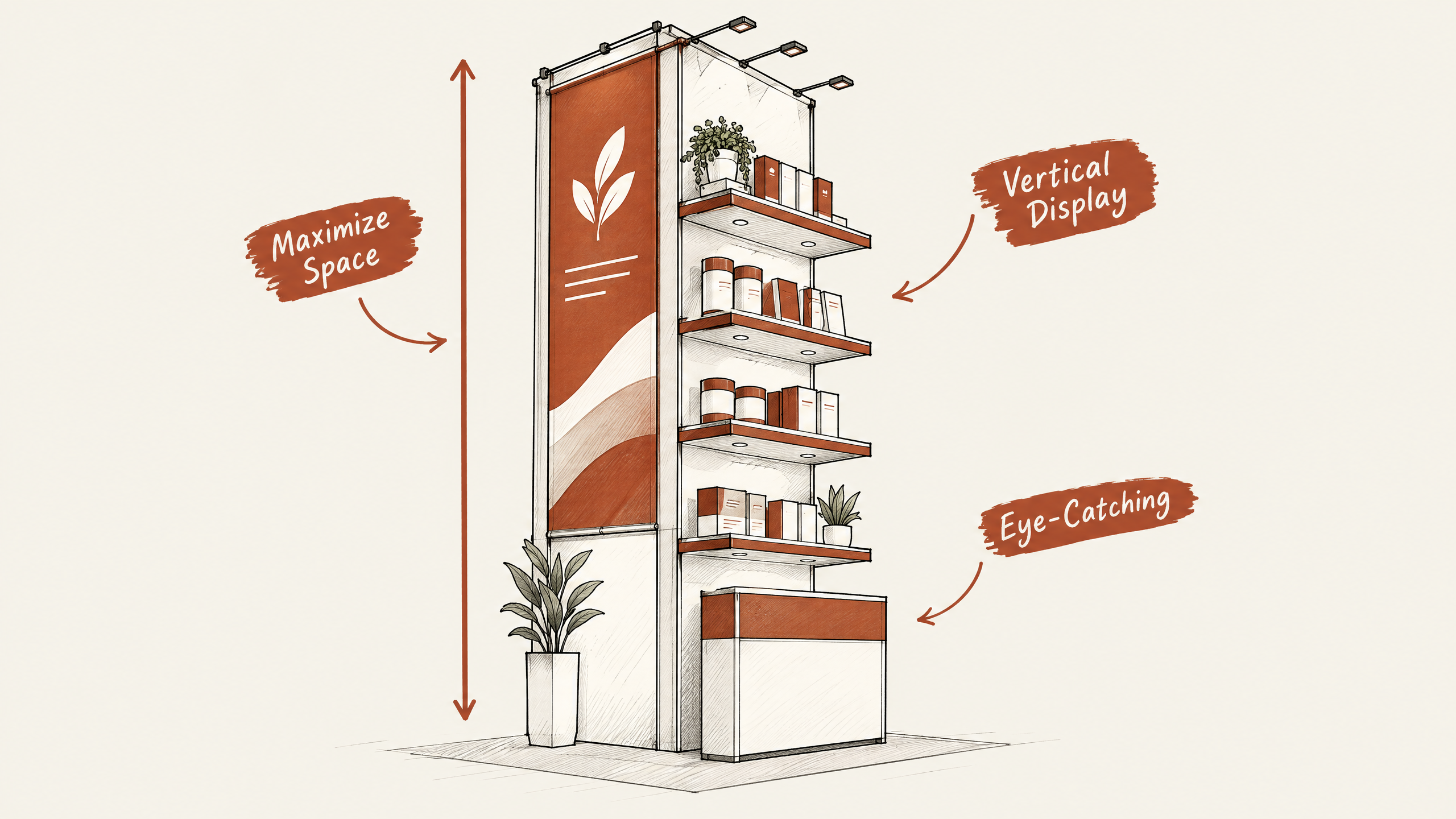
Start by evaluating the ceiling height of your trade show venue.
This will determine how much vertical space you have to work with.
Using vertical space can range from tall signage and banners to building multi-level displays.
You avoid crowding the booth floor while still creating a strong visual presence.
The trick lies in balancing high visibility without overloading the visual experience.
A common mistake is overstating the vertical elements which can overwhelm or obscure brand messaging.
An appealing way to use vertical space is by incorporating hanging structures or lighting fixtures. These elements invite attendees by drawing their eyes upwards and creating a focal point.
Important: Utilizing vertical space in your trade show booth can dramatically enhance visibility, but it’s crucial to make sure all suspended elements are securely supported for safety.
Place your brand logo or a key product high up so it can be seen from afar.
Such strategic placements can attract visitors from across the venue, making your booth more accessible to passersby. This leads to another consideration: keeping the installation secure. make sure any suspended elements have proper support because stability is crucial in high-traffic environments.
Let’s look at a hypothetical scenario: Your team is promoting a new product line at a large convention center.
The ceiling height is 20 feet, offering considerable vertical room. You could use this to suspend a large, branded sphere above your booth.
Additionally, hanging banners can delineate sections within your area, such as product demonstrations and meeting spaces.
These choices not only improve your footprint but also enhance visibility and invite curiosity from participants on the exhibit floor.
Remember, creativity with vertical space can help your booth stand out. Key considerations include structural restraints, branding clarity, and strategic placement.
By harnessing vertical elements effectively, you can make a lasting impression on potential clients and partners alike.
3. Integrate Interactive Elements to Engage Attendees
To create an engaging trade show exhibit, interactive elements are a crucial component.
They not only draw attendees but also encourage them to spend more time at your booth.
By providing a hands-on experience, you can make your product or service more memorable and initiate meaningful conversations.
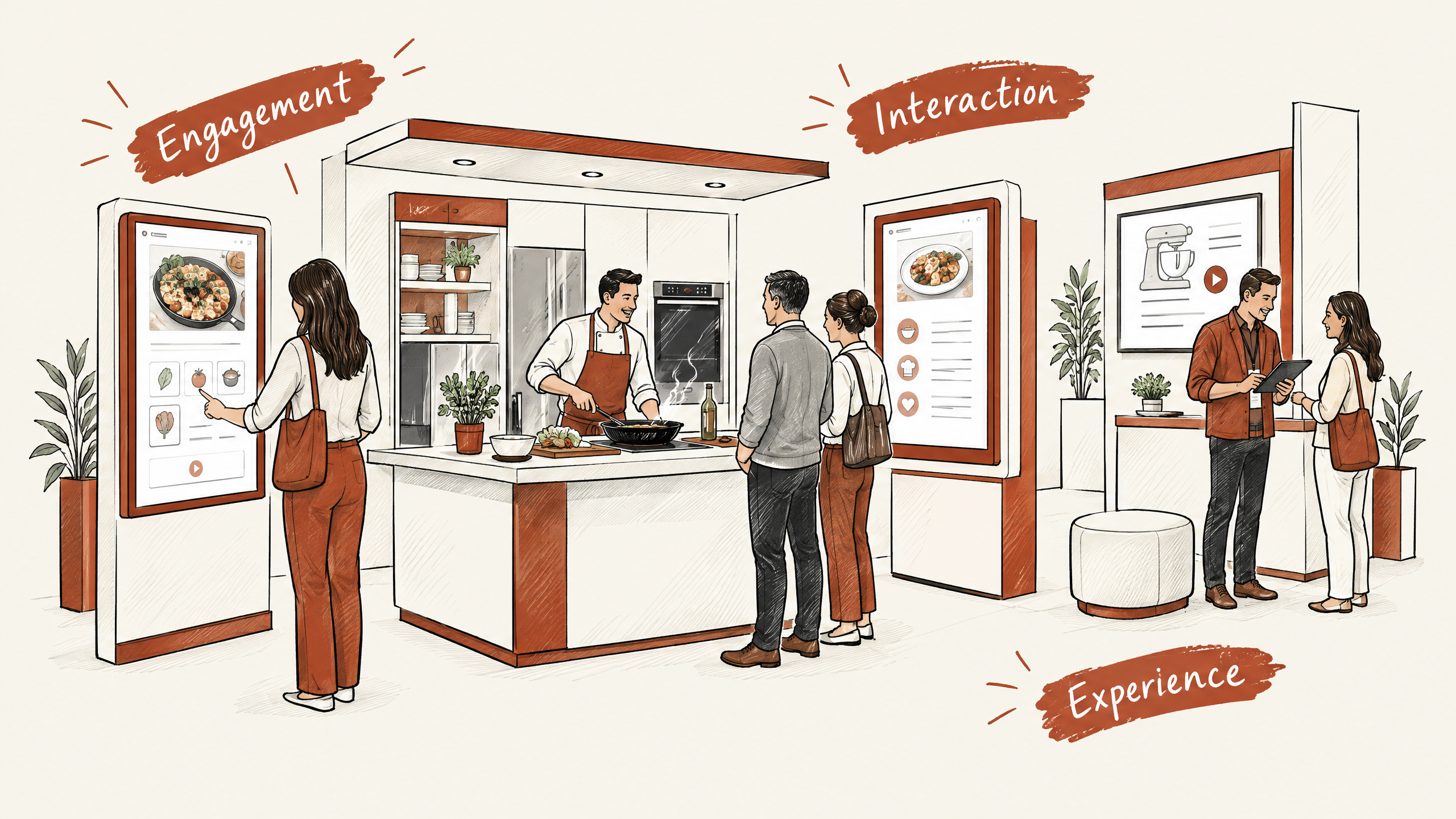
Start by considering a product demonstration station where visitors can try your offering themselves.
For instance, if you manufacture kitchen appliances, set up a working kitchen station where attendees can use the product.
This real-life application helps potential buyers see the value of your products firsthand.
Another option is to incorporate digital touchscreens for an immersive experience.
Depending on your industry, these screens can feature interactive quizzes, product catalogs, or virtual tours.
This technology not only captivates visitors but also allows them to explore at their own pace.
Budget constraints may limit the extent of digital elements weigh this against potential engagement benefits to decide.
Virtual reality (VR) experiences can offer an innovative way to show complex solutions. While this may not be suitable for every budget, if you’re in a tech-oriented field, VR can differentiate your display.
Consider renting VR equipment for the event to minimize costs while still offering an innovative experience.
When adding these interactive elements, align them with your overall brand messaging to make sure consistency.
It’s about drawing visitors in and leaving a lasting impression that aligns with your company’s identity and goals.
Work closely with your exhibit design team to brainstorm and incorporate these features smoothly.
At Exhibitant, we help companies determine which interactive components will resonate most with their audience and fit their budget and goals. Tailoring interactive elements to your target demographic and ensuring ease of use is essential for a successful engagement strategy.
 Louie J.