 Louie J.
When you’re planning your trade show booth, the size and layout you choose can significantly impact your event’s success.
I’ve noticed that many exhibitors grapple with these decisions, especially with the wide variety of options available.
Your booth should effectively represent your brand and engage visitors. This is why focusing on these elements is so crucial to your planning.
Start by determining your booth size, as this often sets the stage for everything else. Your decision here will influence costs, staffing, and the types of features you can incorporate.
Understanding your goals and budget will help you choose the right size to meet your needs without overstretching resources.
A booth that’s too small may stifle your visitor engagement, while one that’s too large might spread your team too thin.
The layout is equally important because it affects visitor flow and interaction. An intuitive layout allows guests to move easily, explore, and engage with your displays.
You want a design that reflects your brand identity and enhances the overall visitor experience. I recommend planning your layout carefully to guide guests through your message seamlessly.
Consider how different element placements might draw attention or invite interaction.
In this article, I’ll walk you through key steps and tradeoffs when planning your booth size and layout. You’ll better understand how to assess your booth needs and create a functional, inviting, and brand-aligned space that captivates your audience.
Let’s explore into these essential considerations, ensuring your next trade show presence is both impactful and memorable.
- Choose booth size based on event goals and audience.
- Prioritize layout for easy navigation and engagement.
- Ensure design aligns with your brand identity.
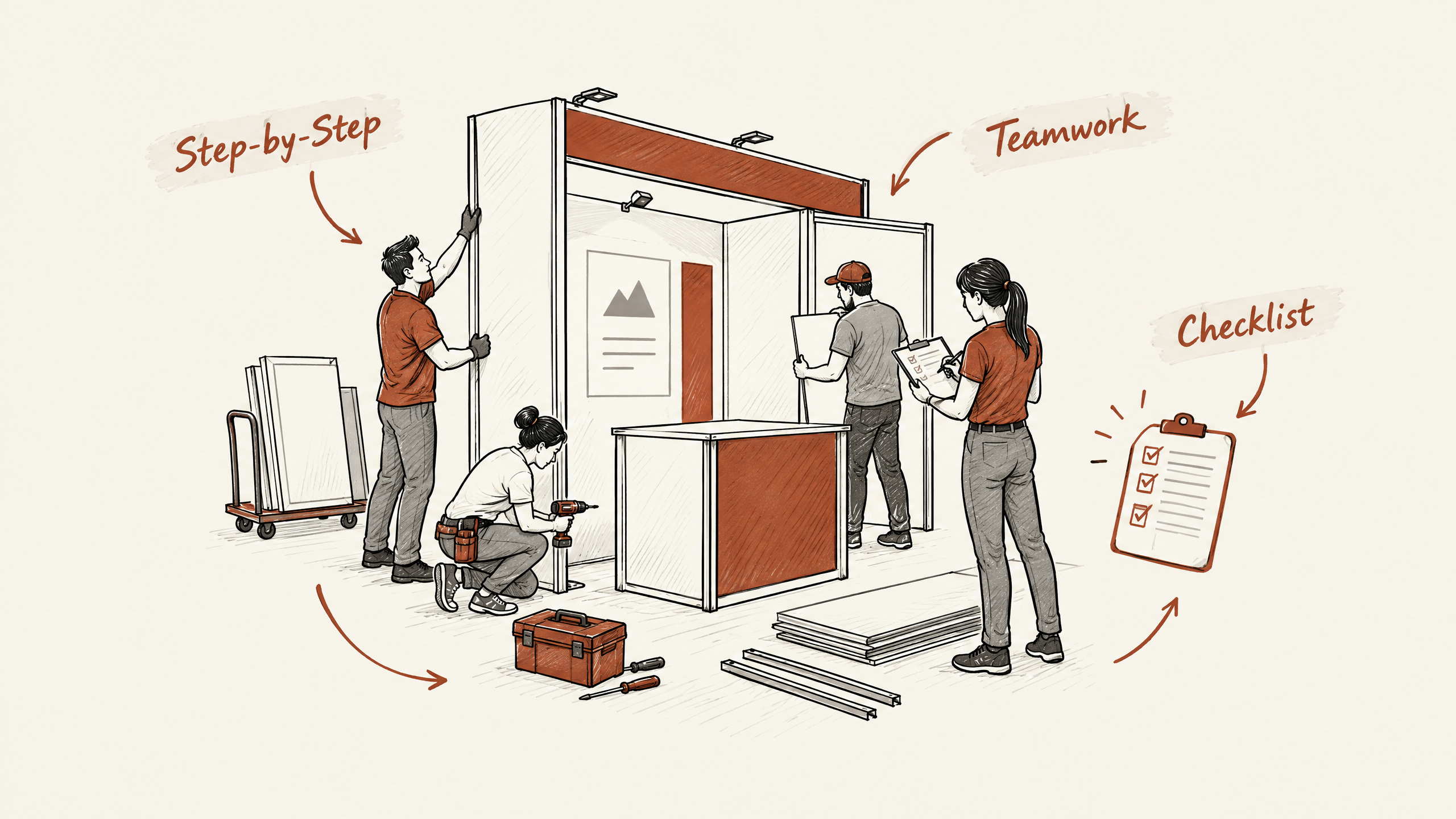
- Consider logistics for setup and dismantling.
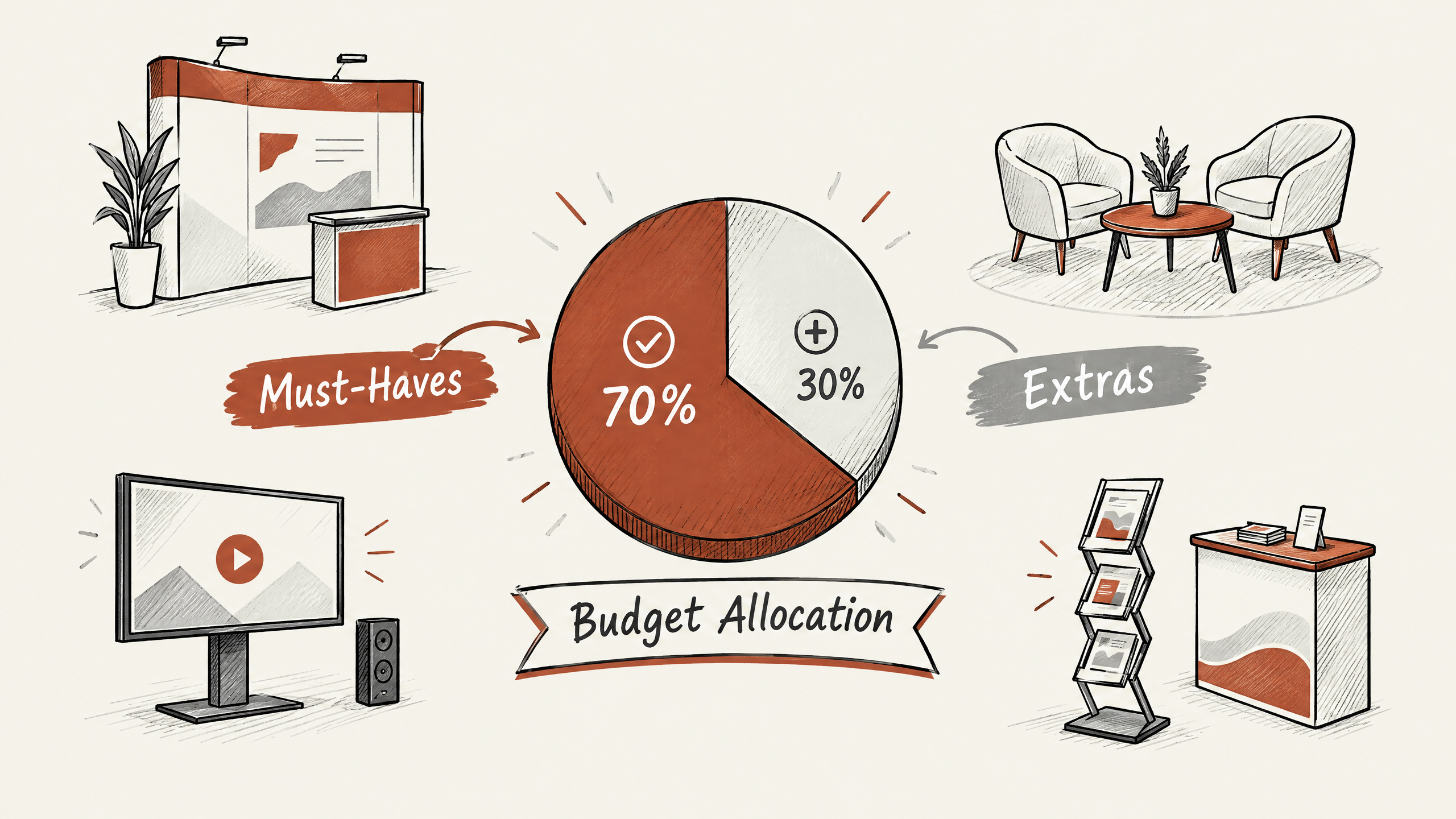
- Evaluate budget constraints when planning booth features.
Pick a booth size that fits your event goals and audience.
Make sure your layout lets people move easily and engage with your space.
Your booth’s design should reflect your brand identity.
Plan for the logistics of setting up and taking down the booth.
Keep your budget in mind when choosing booth features.
1. Determine Your Booth Size
Deciding on your booth size is the foundational step in planning your trade show exhibit.
This decision directly influences layout, budget, and logistics.
Begin by assessing your specific objectives: Are you aiming to launch a product, broaden brand awareness, or foster relationships with key partners? Each goal may necessitate a different booth size.
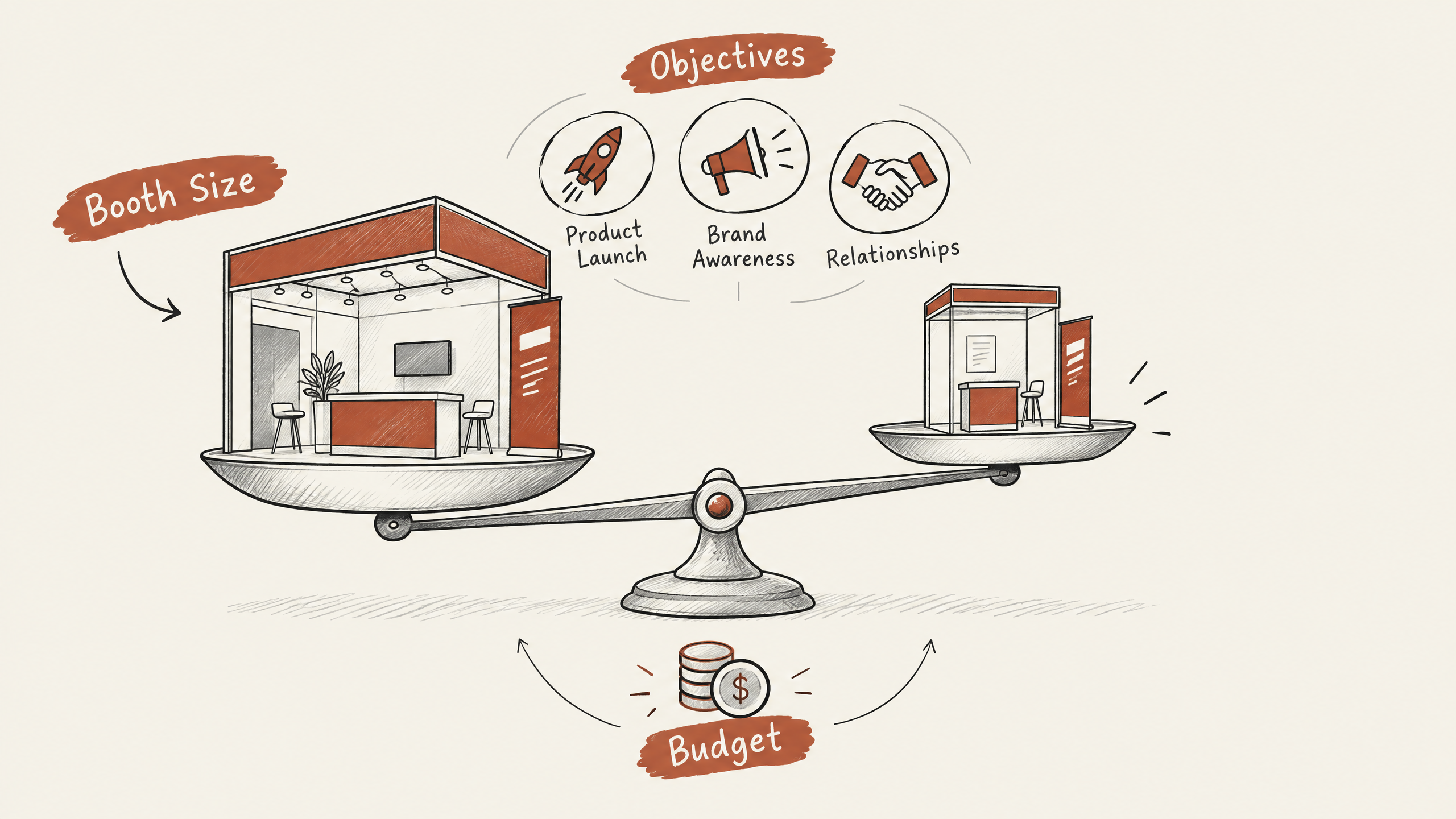
For example, if you’re planning a product launch, a larger space might be essential to accommodate demonstrations and audience gatherings.
On the other hand, if building relationships is the priority, a smaller, more intimate space may foster one-on-one interactions.
Next, consider your budget limitations.
While larger spaces offer more room for creativity, they’re also more expensive.
Weigh the benefits of increased visibility and the potential to attract more visitors against the higher costs.
A strategic decision balances your desired impact with financial constraints.
Also, review the event’s layout and typical traffic patterns.
A smaller booth in a high-traffic area can have as much impact as a larger booth in a less visited section.
Achieving a prime location might compensate for a smaller footprint.
Here’s an example to illustrate: Assume your team has identified a major trade show with high attendance.
Your primary goal is to launch a new product. Allocating a sizable portion of the budget for a large booth near the entrance could help capture early attention.
This strategic positioning, coupled with dynamic presentations, enhances your launch’s success.
Remember to allocate time for internal discussions and decisions. make sure decision-makers agree on goals and budget allocation.
This clarity forms the backbone of a successful trade show plan.
2. Improve Layout for Visitor Flow
Creating an efficient layout for your booth can significantly impact visitor engagement and interaction. A well-thought-out design ensures that your space is welcoming, easy to navigate, and encourages potential customers to explore what you have to offer.
Start by considering how attendees will enter and move through the space.
Clear signage and an open entrance invite guests in, while designated pathways guide them to key product displays or interactive areas.
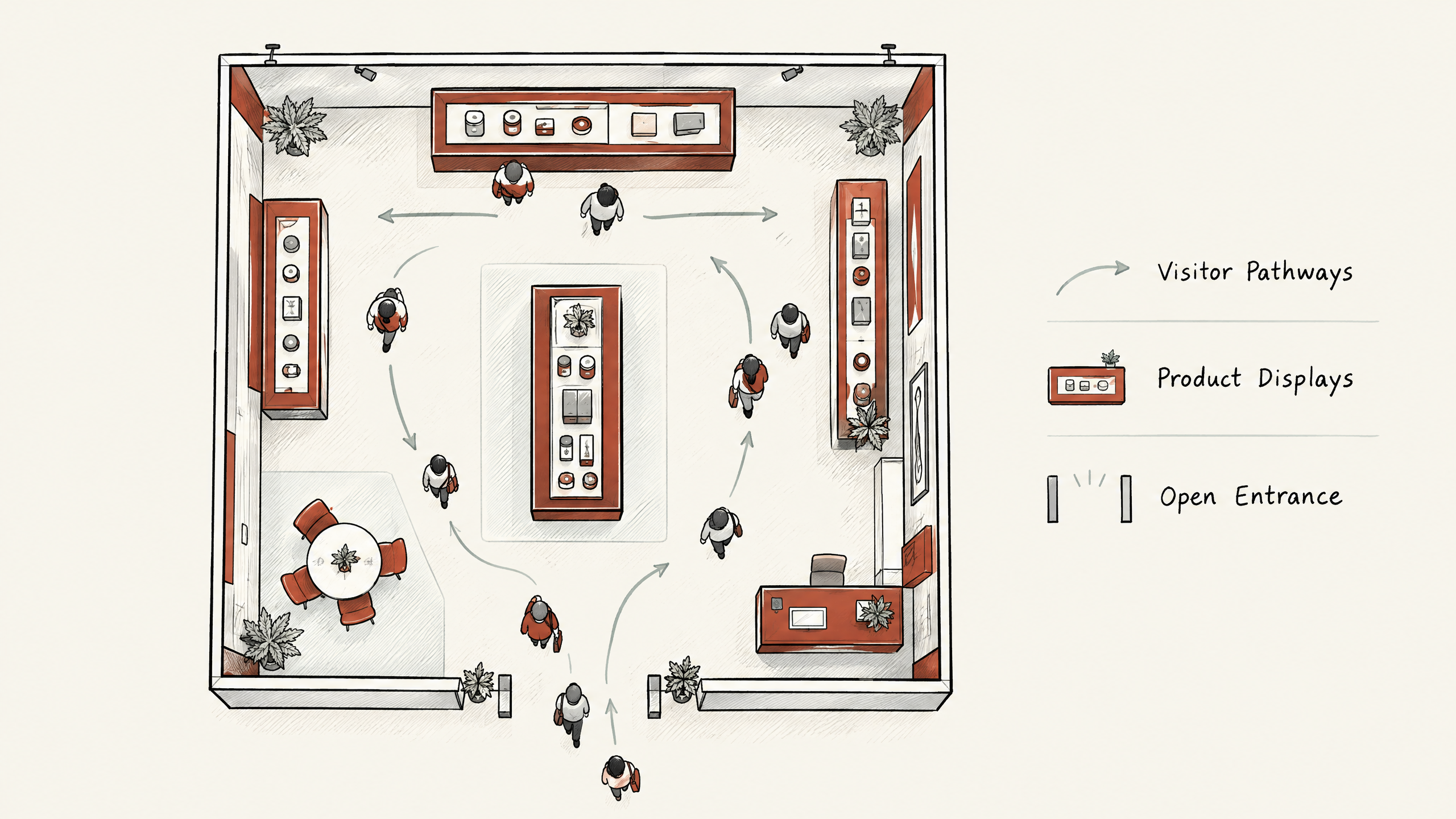
When designing the flow, balance between open space and functional elements is essential.
An overcrowded booth can deter visitors, making it difficult for them to appreciate your displays.
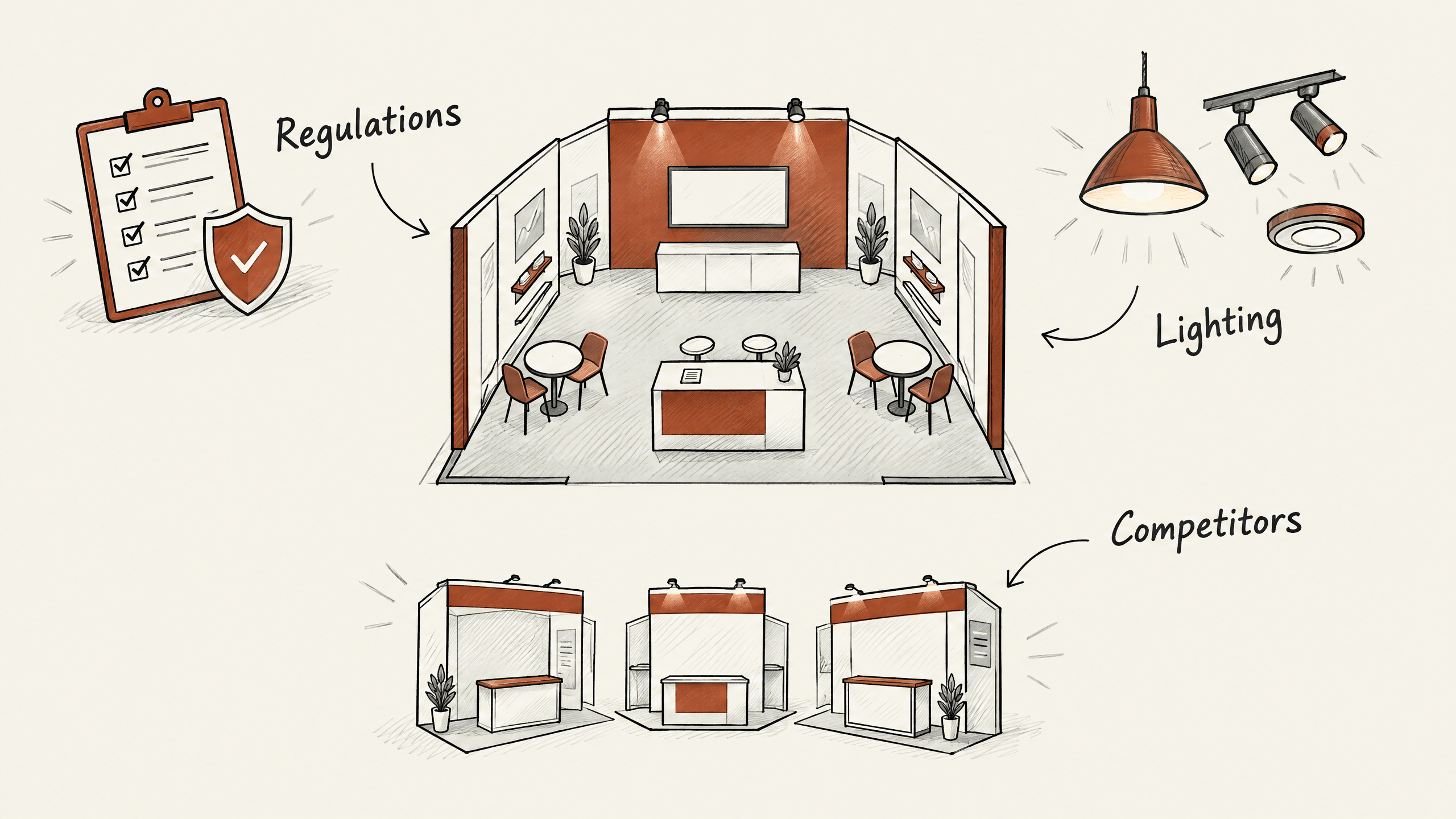
Conversely, too much empty space might give the impression that there’s little to engage with. Arrange your layout to lead visitors naturally from one feature to the next, using cues such as lighting or flooring differences to subtly guide them.
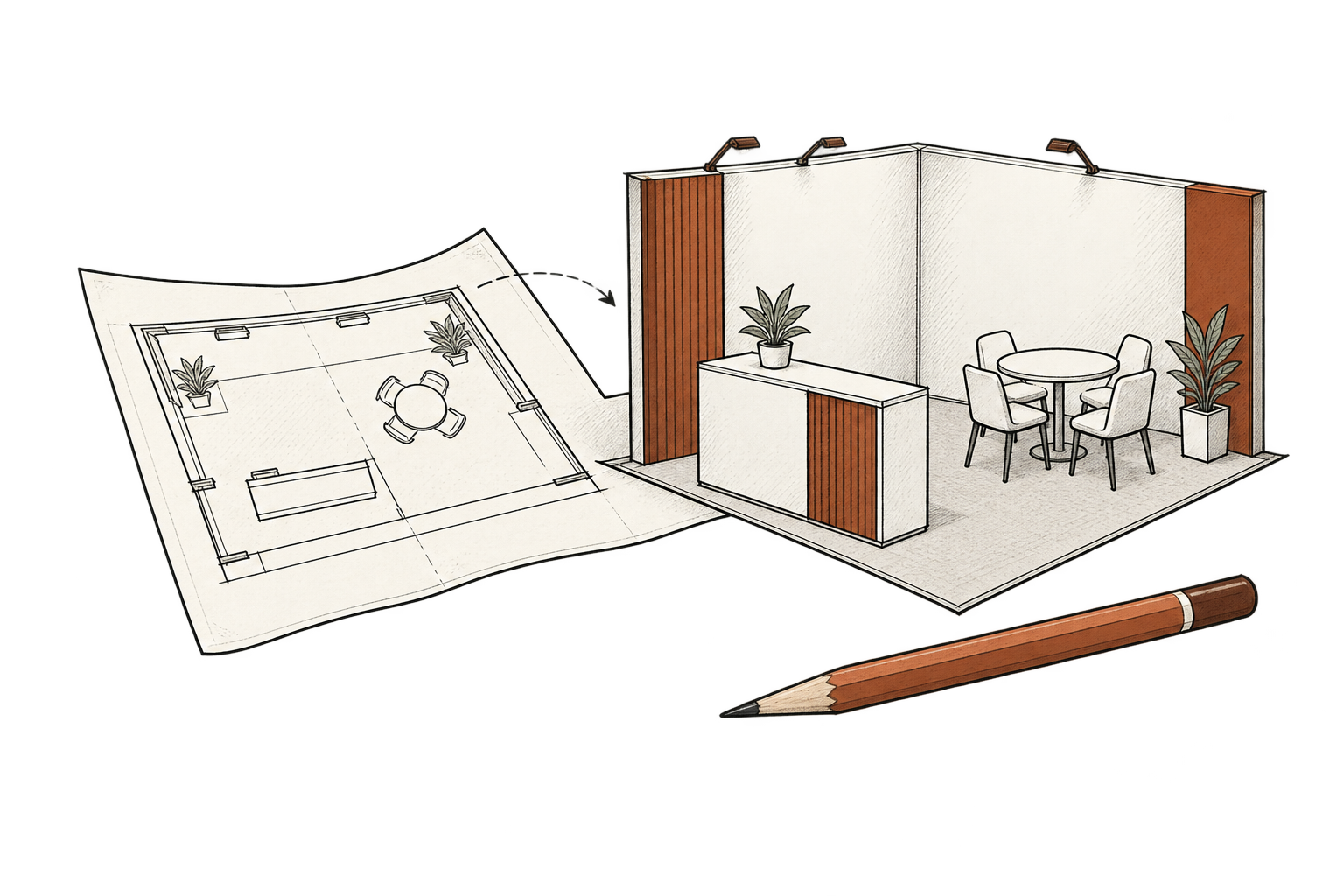
To practically plan your layout, create a scaled floor plan outlining each feature’s placement.
Consider traffic patterns and make sure that there are clear pathways where visitors can comfortably move or gather. If your booth includes interactive elements, place them at strategic points where they won’t cause bottlenecks.
Be mindful of ADA compliance, ensuring that paths are accessible for all.
A common mistake is neglecting to incorporate rest areas or quiet spaces within the booth.
Important: An overcrowded booth can deter visitors and hinder engagement, so carefully balance open space with functional elements to encourage exploration and interaction.
Providing places to sit or small areas to pause can keep visitors engaged longer.
This comfort helps in converting casual browsers into interested leads, as they feel more willing to spend time in your space.
Adjusting layout to include these elements requires compromise, often reducing some display size: however, it adds to the overall visitor experience.
By carefully considering and planning your booth’s layout, you make sure an engaging experience for prospects. Take time to walk through your draft layout yourself, or have others provide feedback on potential traffic challenges.
With practice, optimizing layout for visitor flow becomes second nature.
This aligns well with Exhibitant‘s expertise in designing inviting and efficient trade show booths.
Start crafting your booth layout with these principles, and you can enhance visitor engagement at your next event.
3. Align Design with Brand Identity
To create a meaningful and memorable trade show experience, your booth design must be in harmony with your brand identity.
Every element of your booth should reflect the essence of your brand, from color schemes to messaging.
Consistent branding helps reinforce your company’s values and messages, creating an immediate visual connection for first-time visitors and loyal clients alike.
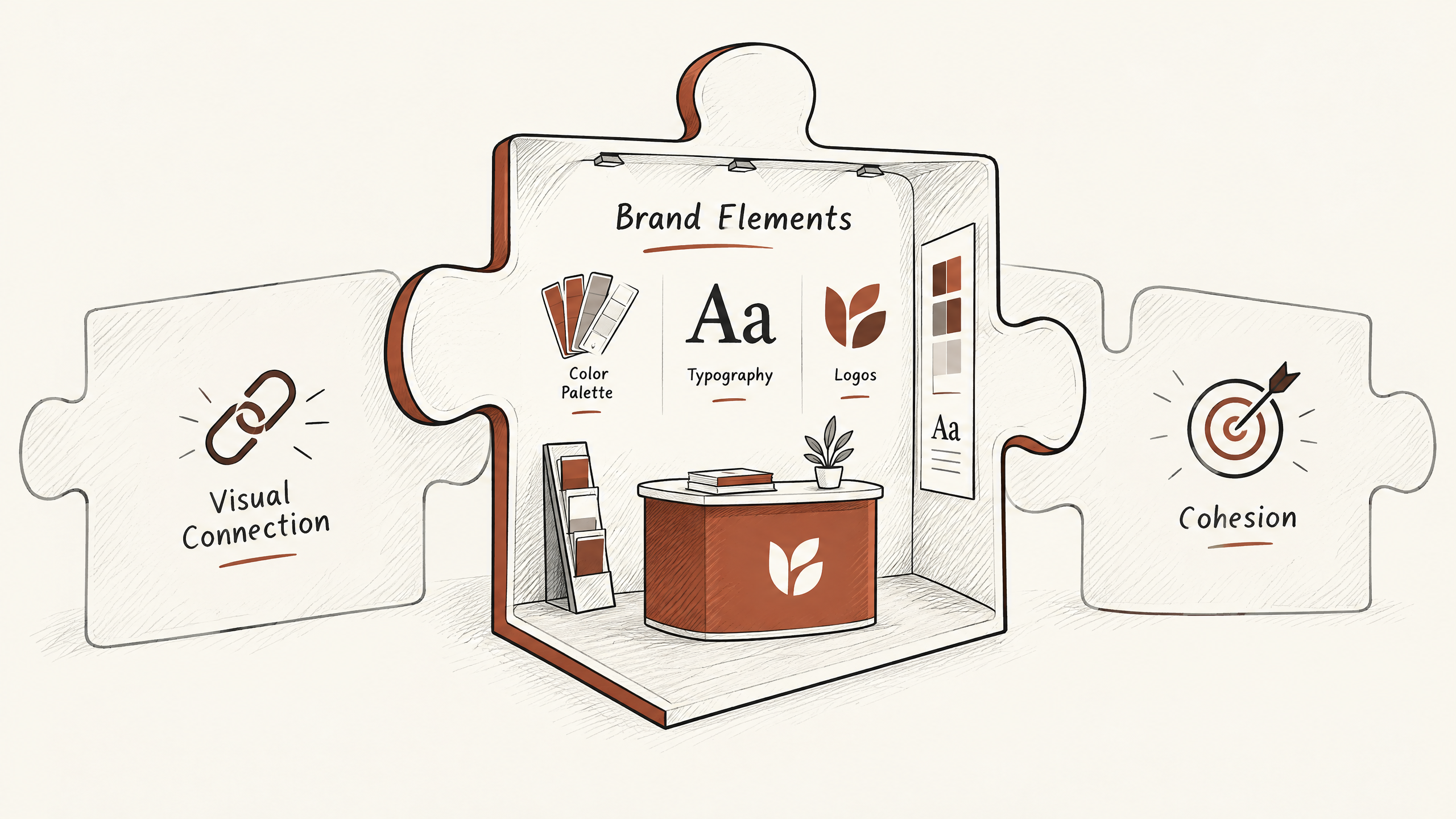
A practical way to start is by pinpointing the core elements of your brand’s visual identity.
These may include specific color palettes, typography, and logos.
Integrating these elements into your booth design will make your space instantly recognizable and on-brand. Additionally, consider how your booth layout and graphics visually communicate your brand’s story, ensuring they align with the brand’s tone and style.
When deciding how to show your products or services, think about how to portray your brand’s unique selling points.
Interactive displays or digital kiosks can highlight your brand’s strengths in an engaging way.
However, it’s important to remain consistent with the language and tone you use in other marketing materials. Conflicting messages can confuse attendees and dilute your brand presence.
One common mistake is focusing solely on aesthetics. While striking visuals are important, they should not come at the expense of functional design.
The booth should welcome visitors and facilitate meaningful interactions, which involves more than just looking appealing. make sure your design includes areas for presentations, product demonstrations, or meetings that align with your brand ethos.
In a hypothetical scenario, imagine a tech startup with a sleek, modern brand image.
Their booth could feature clean lines, minimalist design, and interactive screens to reflect their modern technology.
The use of innovative materials and lighting can further echo the brand’s forward-thinking nature. By aligning the booth design this way, the company can create a cohesive brand experience that communicates their identity effectively.
 Lorena G.