
Exhibitant insights

Get practical ideas for your next campaign or show

Join our newsletter for advice on reaching B2B buyers, planning outreach, and getting more from trade shows.

B2B lead generation

Ideas for prospect research, outreach, and follow-up.

Trade show exhibits

Tips for booth design, graphics, and show preparation.

Exhibit Design

6 Innovative Exhibit Design Ideas to Attract More Attendees

Explore creative exhibit design ideas to enhance your trade show presence and draw in more visitors.

Designing an exhibit that attracts attendees is both an art and a science.

Your booth layout and design decisions significantly impact the flow of traffic and the engagement with your audience. Here is how I would approach crafting an exhibit that captures attention and keeps visitors interested.

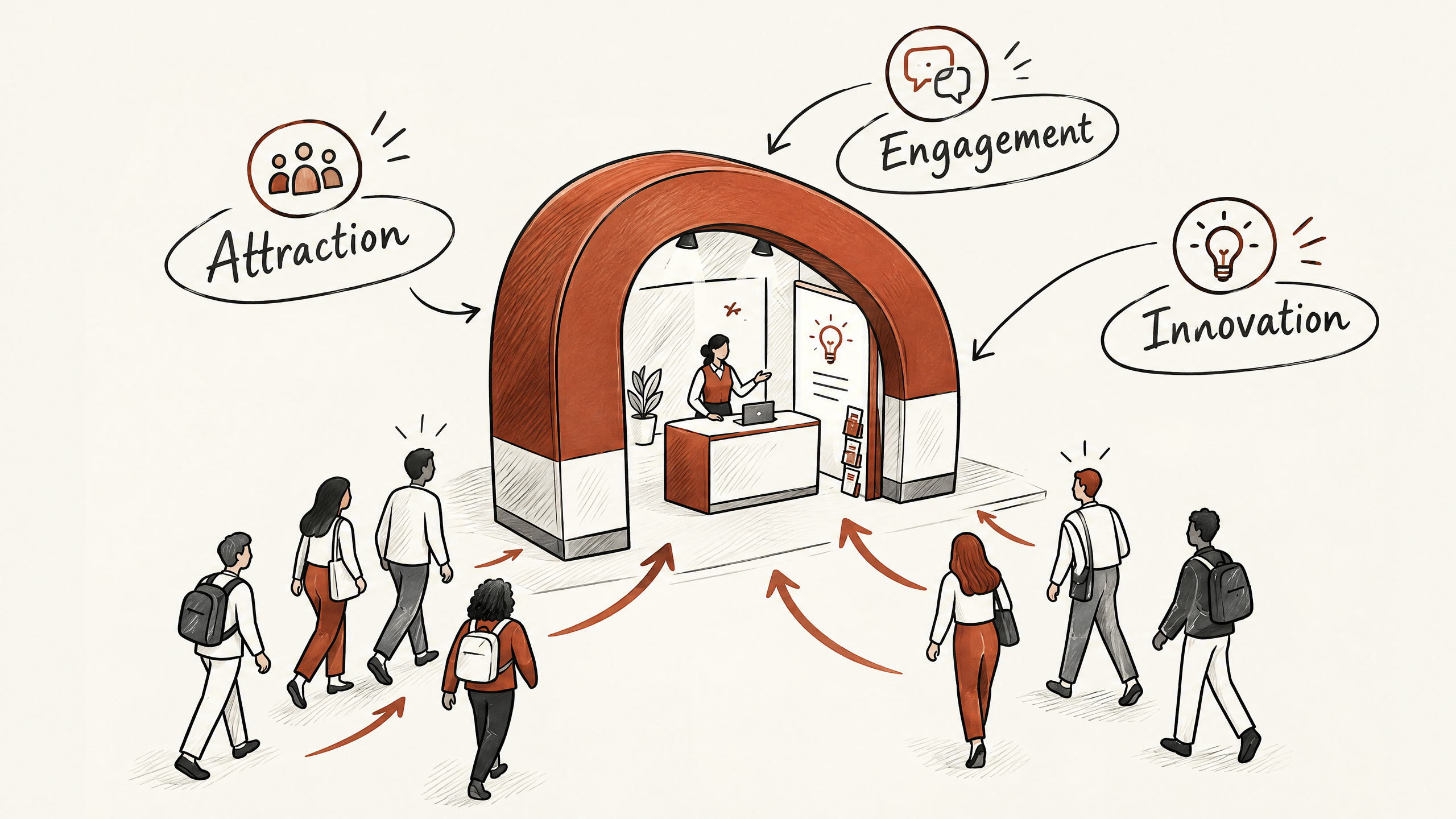
First, it’s crucial to plan your layout for optimal traffic flow.

This means thinking strategically about where and how attendees will move through your space.

Choose a design that directs visitors naturally and allows them to interact meaningfully with your booths.

Once you have a solid plan for traffic flow, bold colors can make a visual impact that attendees won’t forget quickly. Choosing the right color palette helps attract people to your booth and sets the mood for their experience.

By following these innovative ideas, you’ll develop an exhibit design that not only draws in attendees but also keeps them engaged throughout their visit.

I will walk you through practical tips and insights you can apply to enhance your exhibit effectively.

Key Takeaways:
  • Optimize booth layout for seamless traffic flow.
  • Use bold colors to create visual impact.
  • Incorporate interactive elements for engagement.
  • Leverage technology to captivate attendees.
  • Design with sustainability in mind.

By focusing on layout, bold colors, and interactive elements, you can draw more attendees to your booth.

Embracing technology and sustainability will further enhance your exhibit’s appeal.

1. Plan Your Layout for Optimal Traffic Flow

When it comes to trade show booth design, the layout is critical to achieving optimal traffic flow.

A well-thought-out layout ensures that attendees can navigate the space easily, engaging with your displays and stopping for meaningful conversations.

The flow of traffic should guide attendees through a curated journey, highlighting key features and products along the way.
1. Plan Your Layout for Optimal Traffic Flow — 6 Innovative Exhibit Design Ideas to Attract More Attendees

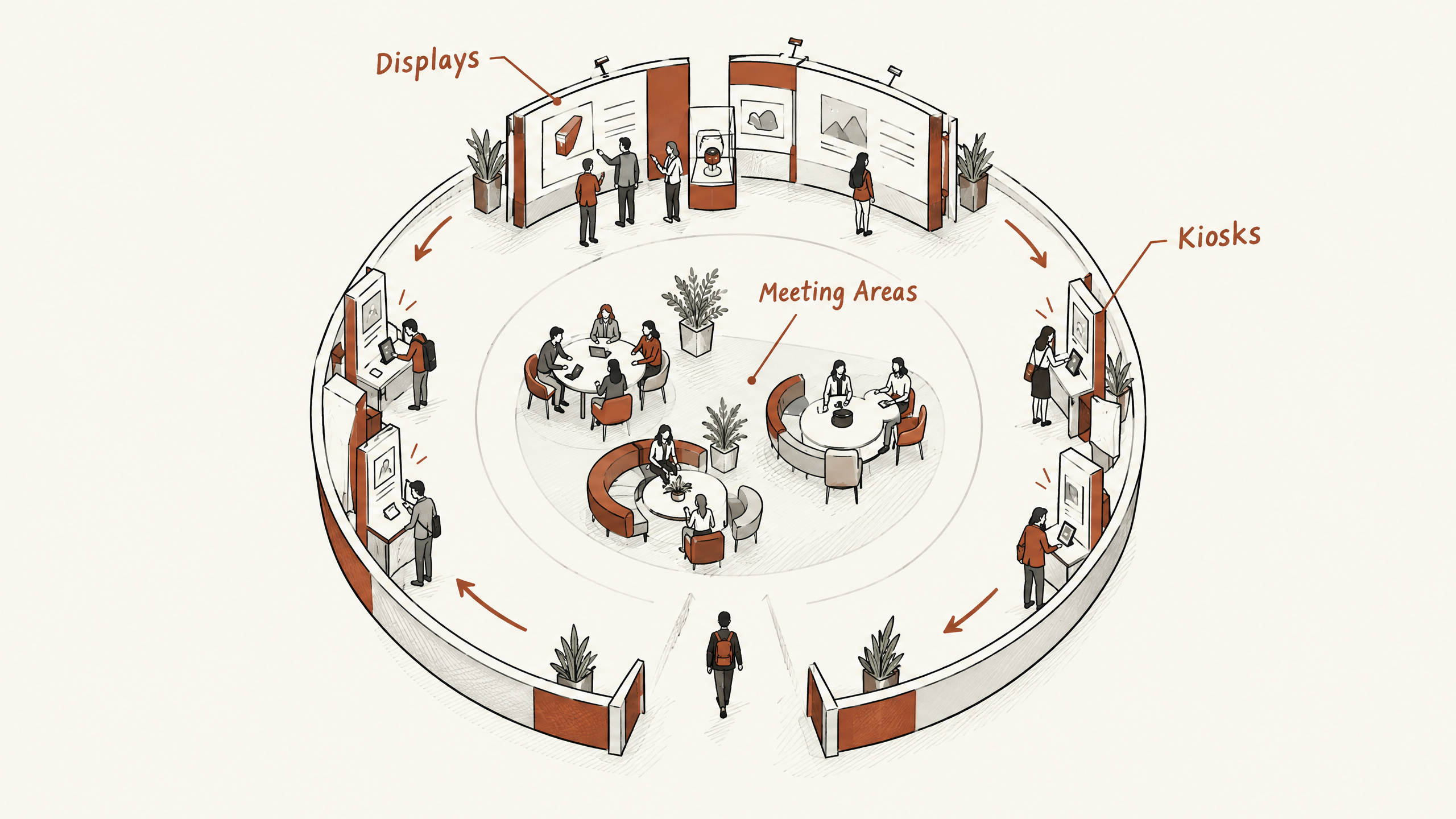
Begin by identifying the main sections you want to highlight within your booth, such as product displays, informational kiosks, and meeting areas.

Arrange these sections to create a natural pathway for attendees. One effective technique is using a circular flow that encourages visitors to return to the starting point, ensuring nothing is missed.

To do this, consider the entry and exit points: these should be clearly marked and accessible.

In making your decisions, think about the footprint of your exhibit space. Larger footprints give you more freedom to design a more complex path, while smaller booths require you to be intentional about what’s included and where.

For smaller spaces, a single loop common in grocery stores can help guide attendees in one direction while maximizing their exposure to your offerings.

It’s important to avoid bottlenecks that can frustrate attendees and impede their experience.

Keep aisles wide enough for people to pass comfortably, and think about how groups may gather around popular exhibit areas.

Consider also the strategic placement of staff to facilitate the smooth movement of traffic, offering assistance and information as needed.

To evaluate your layout plan, walk through the space as if you’re an attendee.

This exercise will help you identify any potential issues before the event takes place.

Remember that the goal is to create an intuitive flow that enhances engagement and maximizes exposure to key information.

Keep in mind that the layout should accommodate changes and adjustments based on feedback during the show.

Flexibility is a strength; it allows your team to refine the experience in real-time, ensuring that your booth remains effective in attracting and retaining interest.

2. Choose Bold Colors to Make a Visual Impact

Choosing the right colors for your trade show exhibit can significantly affect how attendees perceive your brand.

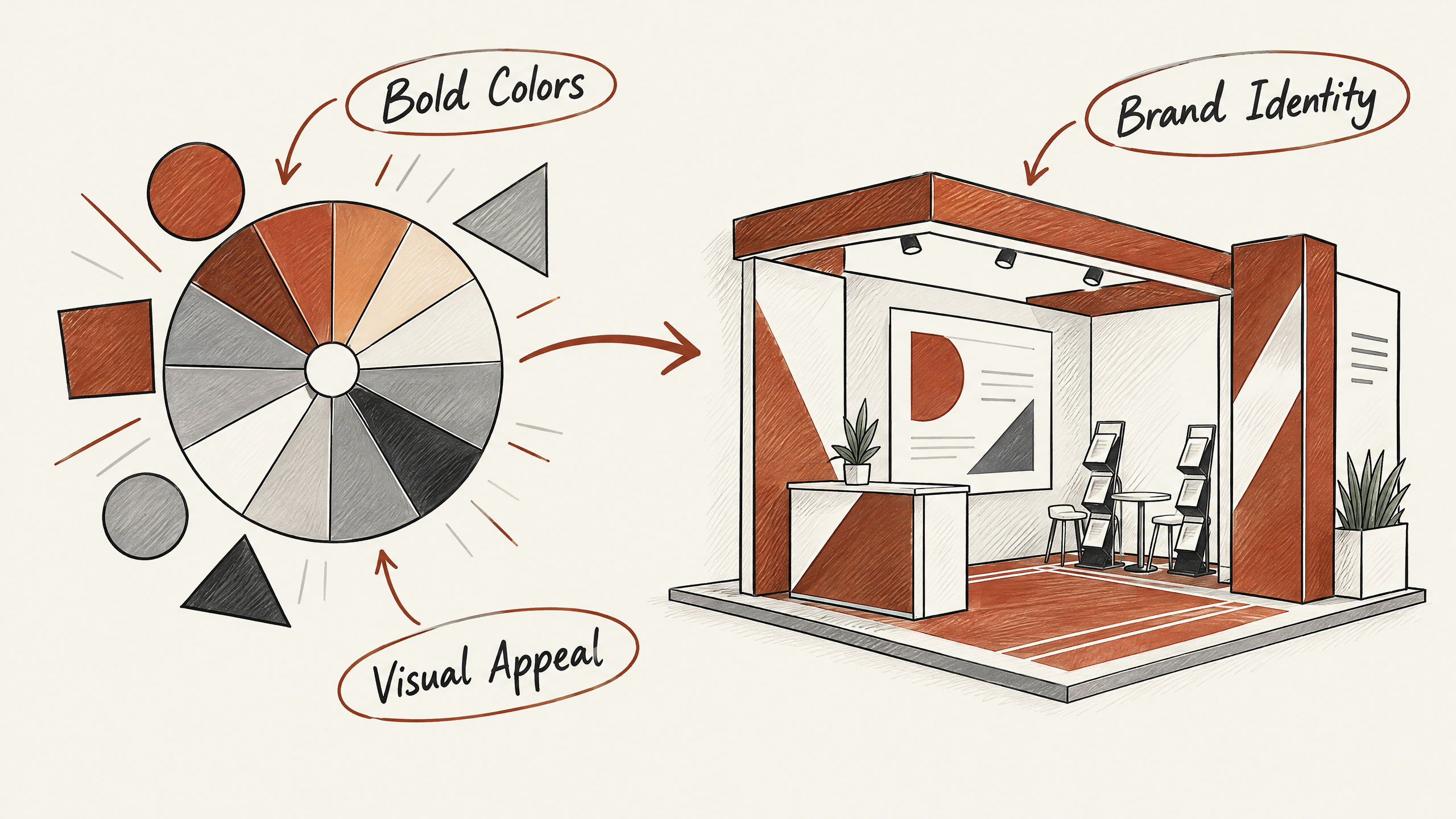
Bold colors serve as an effective tool to draw attention and evoke strong emotional responses. When selecting colors, focus on those that complement your brand while creating a contrast that is visually striking.

Use a color wheel to find complementary colors that will help your booth stand out from the crowd.
2. Choose Bold Colors to Make a Visual Impact — 6 Innovative Exhibit Design Ideas to Attract More Attendees

A practical way to select your color scheme is to start with your company’s primary brand color and then expand the palette by incorporating bold accent colors.

These accents could be used in specific design elements, such as signage, flooring, or digital displays, to make sure your booth creates an engaging visual appeal. Balance is key in order to avoid overwhelming attendees with too many bold colors.

Let’s look at a hypothetical scenario: imagine your company colors are blue and grey, which might feel a bit subdued on their own.

By adding a bright, contrasting color like orange or yellow, you create a vibrant contrast that draws the eye. Use these colors strategically on your centerpiece displays or in signage to maintain visual interest without overpowering your brand identity.

Another important consideration is the effect of lighting on color appearance.

Colors can seem different under various lights, so it’s worthwhile to test your color choices in similar lighting conditions to the trade show to see how they’ll appear.

This step ensures your bold color choices meet your expectations and attract your desired audience when illuminated.

Choosing bold colors is not just about aesthetics it’s about creating an experience.

At Exhibitant, we understand the importance of color in exhibit design and offer guidance to make sure your booth is visually impactful and aligned with your brand strategy.

Work closely with designers to achieve a cohesive look that complements your marketing goals.

3. Integrate Interactive Elements for Engagement

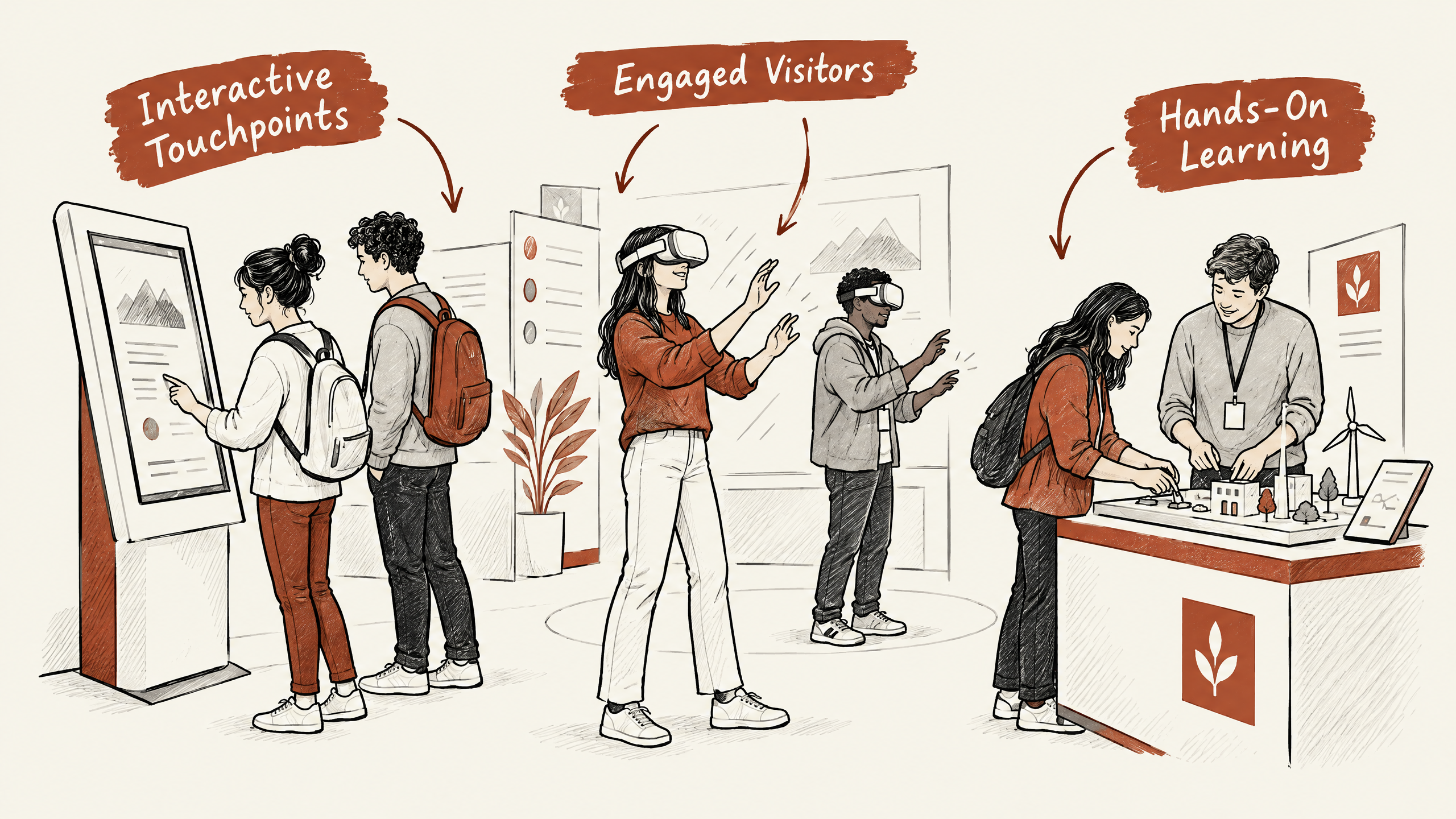
To truly engage attendees, it’s important to integrate interactive elements into your exhibit design. Interactive experiences not only capture attention but also encourage potential clients to spend more time at your booth, increasing the likelihood of meaningful connections.

By fostering a hands-on experience, your visitors can directly engage with your products and services, forming a memorable impression.

A well-designed interactive exhibit might include touchscreen displays that allow users to explore product features, watch demos, or access white papers and testimonials.
3. Integrate Interactive Elements for Engagement — 6 Innovative Exhibit Design Ideas to Attract More Attendees

This can create a dynamic learning environment that adjusts to each visitor’s interest level. Another option is to provide virtual reality experiences that transport attendees into a simulated environment where they can interact with your products or services in a new and engaging way.

Consider including a live demonstration area in your booth.

It allows visitors to see your products in action, ask questions, and gain firsthand experience.

This not only increases engagement but also positions your team as knowledgeable experts in your field.

It’s essential to make sure staff are well-trained to facilitate interactive activities smoothly.

They should be engaging, ready to answer questions, and able to guide attendees through the experience.

An example of an interactive element is a gamification strategy. Create a challenge or game that encourages participants to interact with your products or services.

For instance, a digital quiz that tests knowledge about your industry can lead to a prize.

Such activities can enhance attendee engagement, generate excitement, and provide valuable insights into their interests.

The tradeoff in using interactive elements is ensuring they are not too complex or intimidating for attendees.

Simplicity and ease of use should be top priorities to prevent overwhelming your audience.

Additionally, technical issues can detract from the experience, so thorough testing and preparation are crucial.

When incorporating interactive elements, remember they should align with your overall objectives and complement other aspects of your exhibit.

By thoughtfully integrating interactive experiences, you can effectively capture attention, foster engagement, and leave a lasting impression on attendees.
4. Use Technology to Captivate Attendees

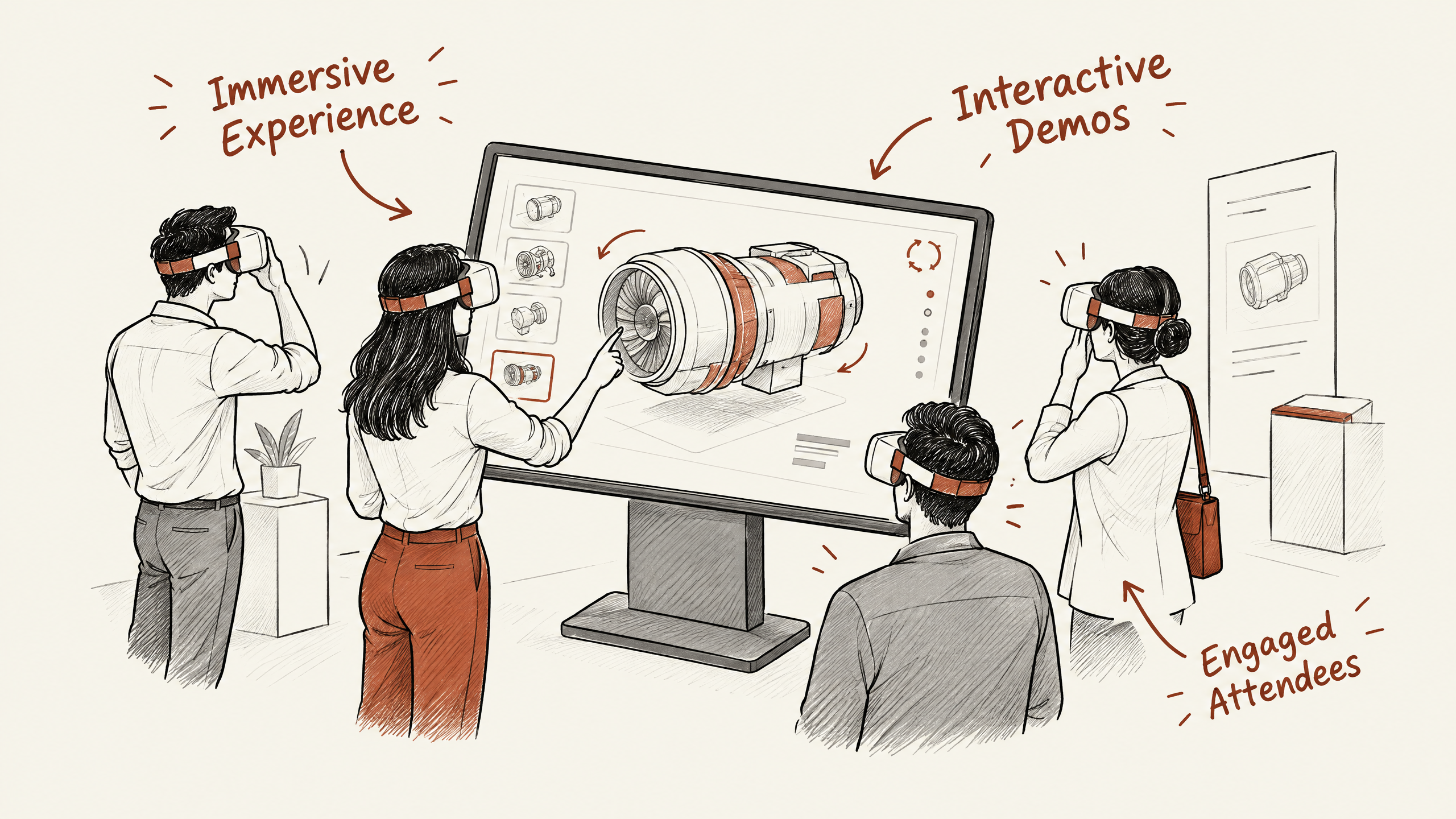
Incorporating the right technology into your exhibit design can be a big improvement for attracting and retaining attendees.

When used effectively, technology not only draws attention but also provides unique ways to show your products or services.

This could mean incorporating anything from touchscreens and virtual reality experiences to augmented reality displays.

4. Use Technology to Captivate Attendees — 6 Innovative Exhibit Design Ideas to Attract More Attendees

The goal is to create an immersive experience that leaves a lasting impression.

Your team should consider how to integrate technology meaningfully within the booth.

For instance, touchscreens can provide self-guided tours or demos of your products, allowing attendees to engage at their own pace. make sure the technology aligns with your brand message and truly enhances the attendees’ experience, rather than serving as a flashy distraction.

I suggest planning for the technical requirements early to make sure a smooth execution. This includes considering power needs, internet connectivity, and space allocations for devices.

A common pitfall is underestimating these factors, leading to technical glitches that can detract from the overall experience. Having a dedicated team member to manage these elements can keep everything running smoothly and allow you to focus on interactions with potential clients.

To illustrate, imagine a tech company showcasing a new product line. They could set up a virtual tour that demonstrates the features and benefits of each product.

Attendees could immerse themselves in the details before talking to a team member, creating a more informed and engaged conversation.

At Exhibitant, we understand the challenges and opportunities in integrating technology into trade show exhibits.

Our skilled team assists in creating strategic exhibit designs that incorporate technology to boost attendee engagement and support your marketing goals.

5. Design with Sustainability in Mind

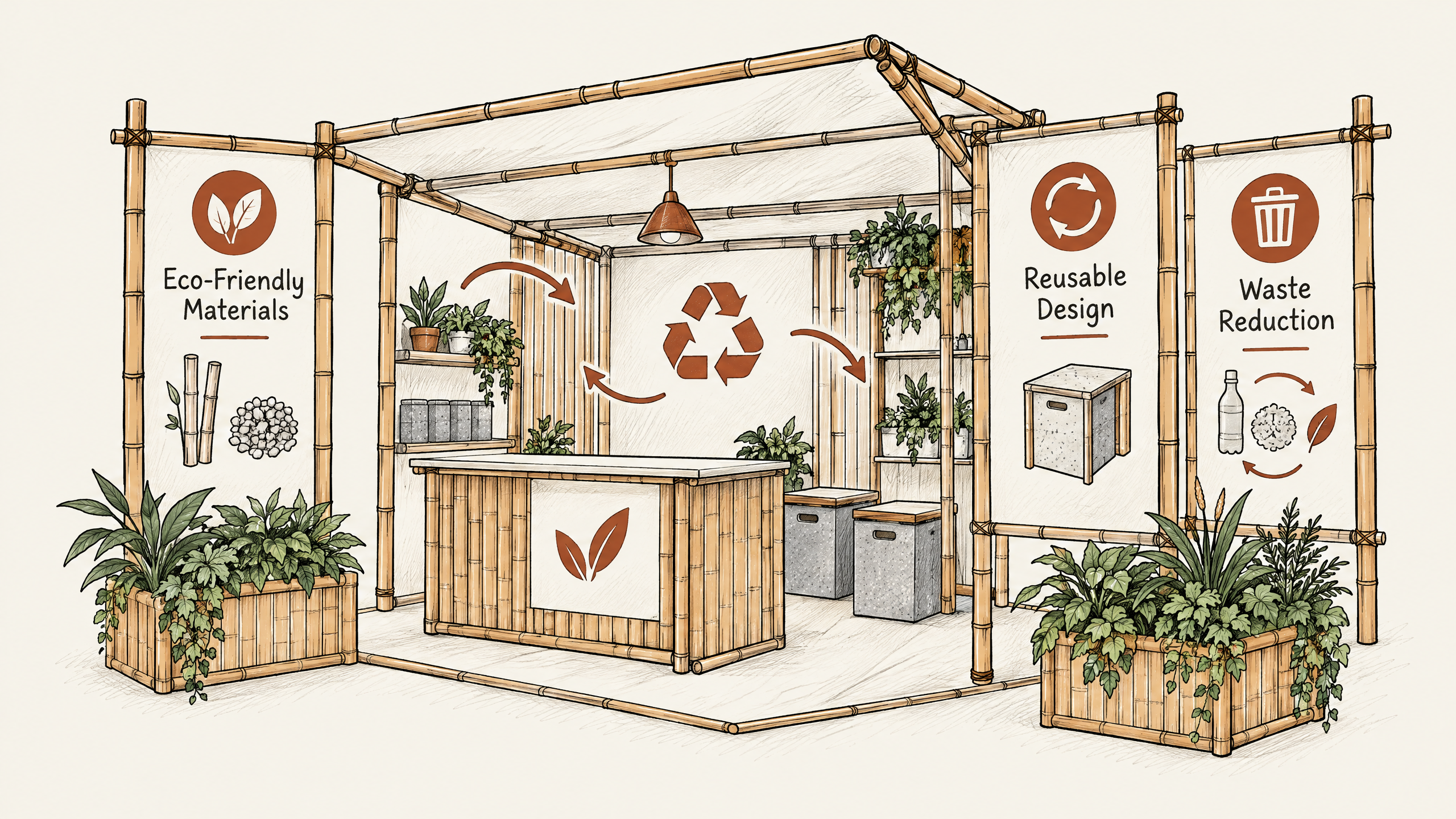
Designing a trade show exhibit with sustainability in mind is becoming increasingly important. Your team can create a booth that resonates with clients who value environmental responsibility.

By adopting sustainable practices, you can reduce waste, lower costs, and enhance your brand image. Determine which elements can be reused or recycled rather than relying on single-use materials.

For instance, consider using materials like bamboo, recycled plastic, or aluminum.

5. Design with Sustainability in Mind — 6 Innovative Exhibit Design Ideas to Attract More Attendees

Each of these options offers a durable and eco-friendly alternative to traditional materials.

You can also focus on modular designs that allow for flexibility and reuse in future exhibits.

This not only supports the environment but can also make setup easier and more efficient.

Another critical component is ensuring that the exhibit’s energy consumption is minimized. Incorporate energy-efficient lighting, such as LED lights, which use significantly less power than conventional options.

Solar panels can also be a viable choice in some venues, providing a renewable energy source to power parts of your exhibit.

A hypothetical scenario might help illustrate potential savings: assume your booth’s annual power cost is $500.

By switching to LED lights, you may reduce this figure by about 80%, saving $400 each year. Though exact figures depend on many factors, the potential benefits of sustainable design are compelling.

One potential tradeoff is the initial investment when selecting sustainable materials and technology.

However, these costs may be offset by long-term savings in energy and material costs. Transparency with your audience about your eco-friendly choices can foster a positive connection by highlighting your commitment to environmental stewardship.

Avoid greenwashing, which can damage credibility, by ensuring genuine, significant actions support your claims.

To summarize, consider the following practical steps to design an eco-friendly exhibit:

  • Choose durable, sustainable materials that can be reused
  • use energy-efficient lighting options
  • Incorporate renewable energy sources when possible
  • Design modular displays for future flexibility
  • Communicate your sustainability efforts honestly

In weaving sustainability into your booth design, you can not only potentially reduce costs but also appeal to attendees who prioritize environmental considerations.

This approach reflects a growing trend in the industry towards responsible and thoughtful exhibiting.

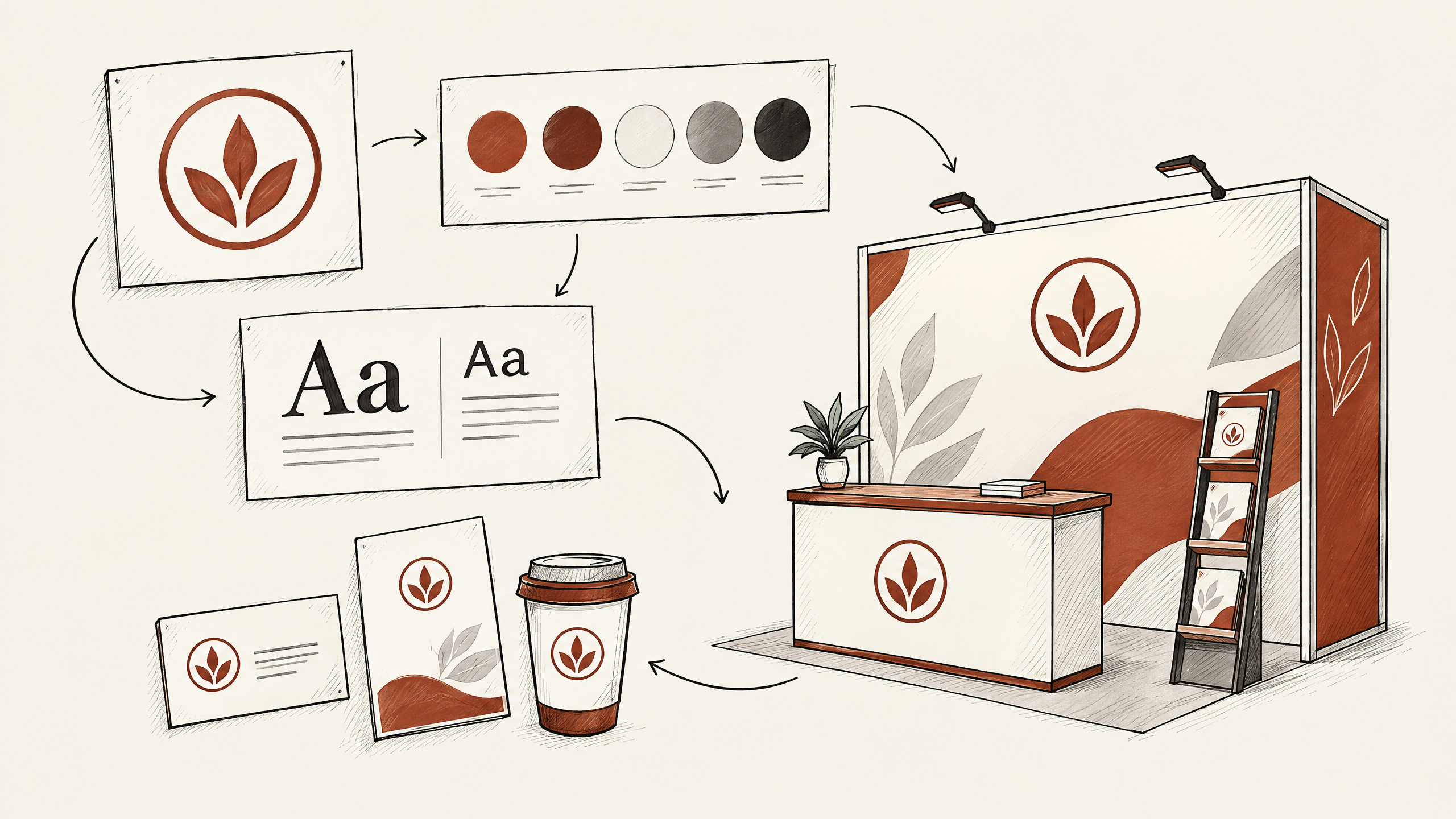
6. Incorporate Branding Consistently Throughout

A cohesive brand experience begins with embedding your branding elements consistently across your exhibit.

Every detail matters, from the larger structural components to the smaller accessories. Start by defining the key brand attributes you want your booth to convey.

Is it innovation, reliability, or perhaps luxury?

6. Incorporate Branding Consistently Throughout — 6 Innovative Exhibit Design Ideas to Attract More Attendees

This will guide the selection of everything from color schemes and materials to fonts and imagery.

Once you’ve distilled the essence of your brand, apply it consistently throughout the booth design.

Use your brand’s logo, colors, and fonts at every touchpoint.

This includes the booth’s exterior, banners, digital displays, and even employee attire.

Keeping these elements uniform ensures that attendees can easily recognize and retain your brand’s message.

While consistency is crucial, be careful not to overdo it.

A booth that is too cluttered with logos and brand messages can overwhelm.

Instead, balance is key.

You might use a large logo on one prominent wall while keeping other elements more subdued.

A well-placed logo can be more effective than an overabundance of them.

For a practical example, imagine your company specializes in eco-friendly products.

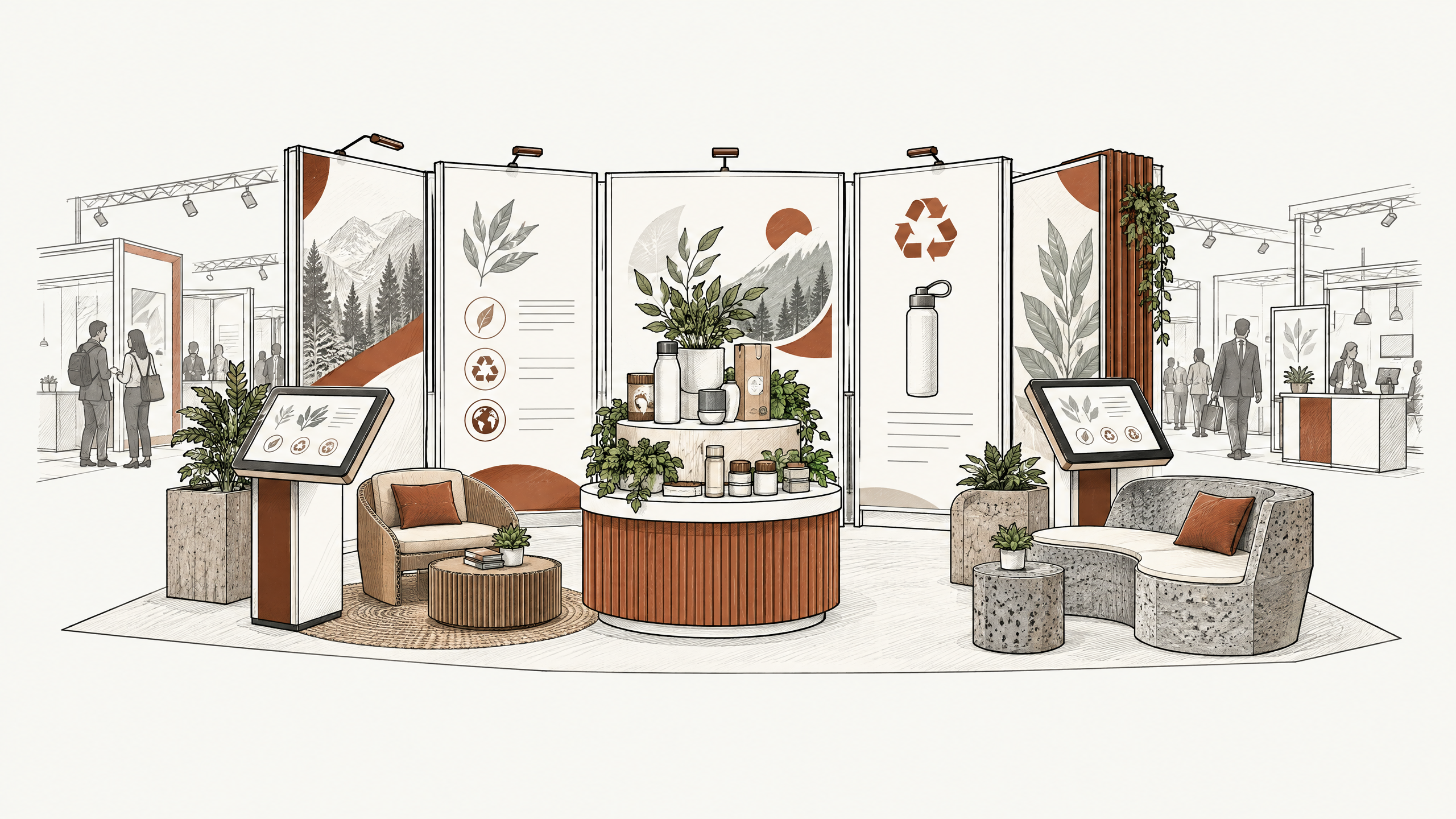
Opt for sustainable materials that reflect your brand’s values. Use earthy tones and textures throughout the space to create a natural feel.

This approach not only showcases your products but reinforces your commitment to sustainability, aligning with the brand’s story.

Remember, the objective is to create an inviting space that conveys your brand’s message effortlessly.

With careful planning and attention to detail, you can maintain a consistent brand presence that attendees will find memorable and engaging.

Final Words

By embracing these innovative exhibit design ideas, you’re setting the stage for enriching interactions with your attendees.

Each design choice, from layout planning to the strategic use of technology, plays a key role in shaping visitors’ experiences at your booth. It’s about crafting an environment that not only attracts but also significantly engages.

Your next step is to review your current exhibit approach and identify areas where these ideas can be integrated. As trade shows are dynamic settings, keeping your exhibit fresh and inviting is essential.

Final Words — 6 Innovative Exhibit Design Ideas to Attract More Attendees

A well-designed booth not only reflects your brand’s personality but effectively communicates its value.

Taking action on these insights will position you as a forward-thinking presence in the trade show environment.

Stay open to evolving design trends and continuously seek ways to enhance your exhibit.

This proactive mindset will serve as a cornerstone for your success in future exhibitions.

Need a booth plan?

Turn show goals into a practical exhibit path

Share your footprint, timeline, and priorities. Our team can help shape the booth direction, graphics, and project support.

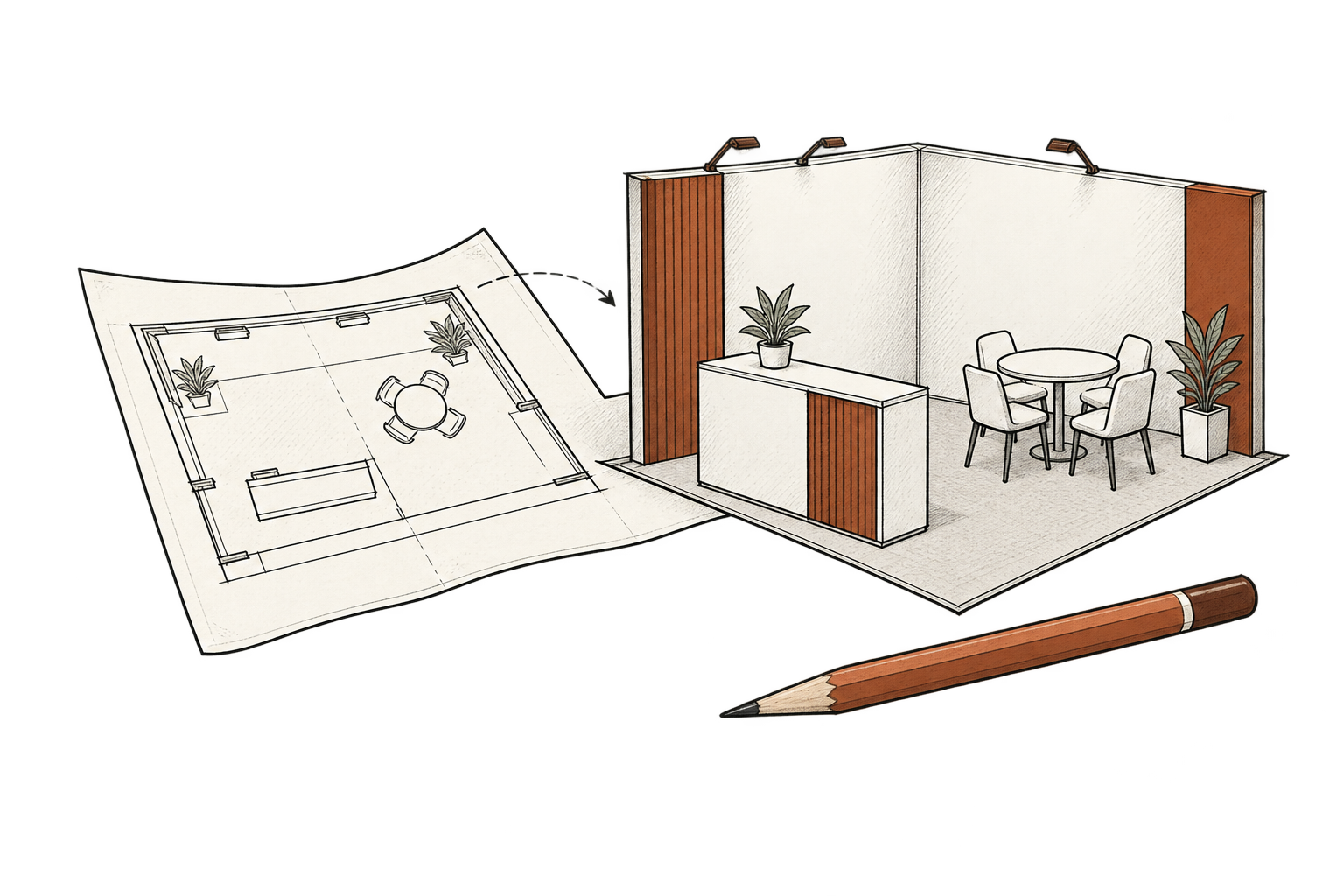
Hand-drawn booth floor plan and exhibit with cedar accents

Contact our team

Tell us who you want to reach

Tell us about your business, the buyers you want to reach, and what you want to achieve. Whether you need more sales conversations, stronger marketing, or a trade show presence, we’ll help you identify where to focus and what support makes sense. Together, we can shape a practical plan around your priorities, budget, and timeline.

info@exhibitant.com

Tell us what you need

A few details will help us make the most of our conversation.