 Louie J.
Handling the dismantle of your trade show booth can feel overwhelming, especially after the excitement of the show itself.
You’ve invested in creating a stunning booth, and now it’s time to take it all down efficiently.
From my experience, following a few key practices can ease this process significantly.
We at Exhibitant have helped countless teams simplify their booth dismantling with straightforward tips.
It’s not just about tearing it all down it’s about doing so in an organized, safe, and effective manner.
With proper planning, you can make quick work of this task while avoiding common pitfalls.
I’ve found that organizing tools and clearly defining roles ahead of time can save both headaches and time. Coordinating with on-site labor and working with venue-specific rules will also smooth your path.
Efficient booth dismantling relies on getting these aspects right.
By reading on, you’ll gain a clear plan for tearing down your trade show booth with minimal fuss and maximum efficiency. I’ll walk you through each step so you and your team are ready to tackle the booth dismantle with confidence.
- Organize dismantle tools and materials before the event.
- Assign clear roles for booth dismantle tasks.
- Coordinate with on-site labor for efficient tear-down.
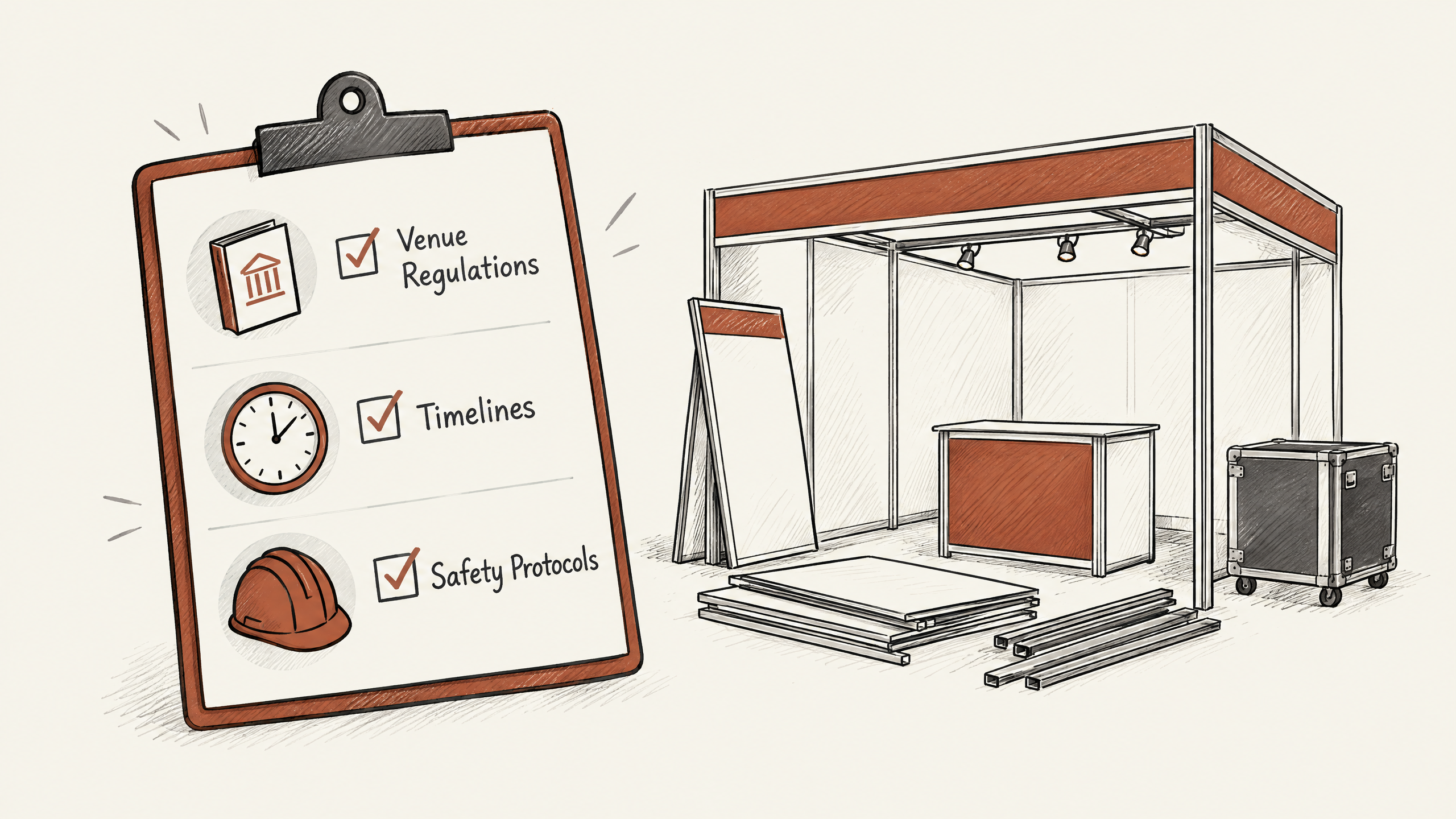
- Schedule dismantle around the venue’s timeline and regulations.
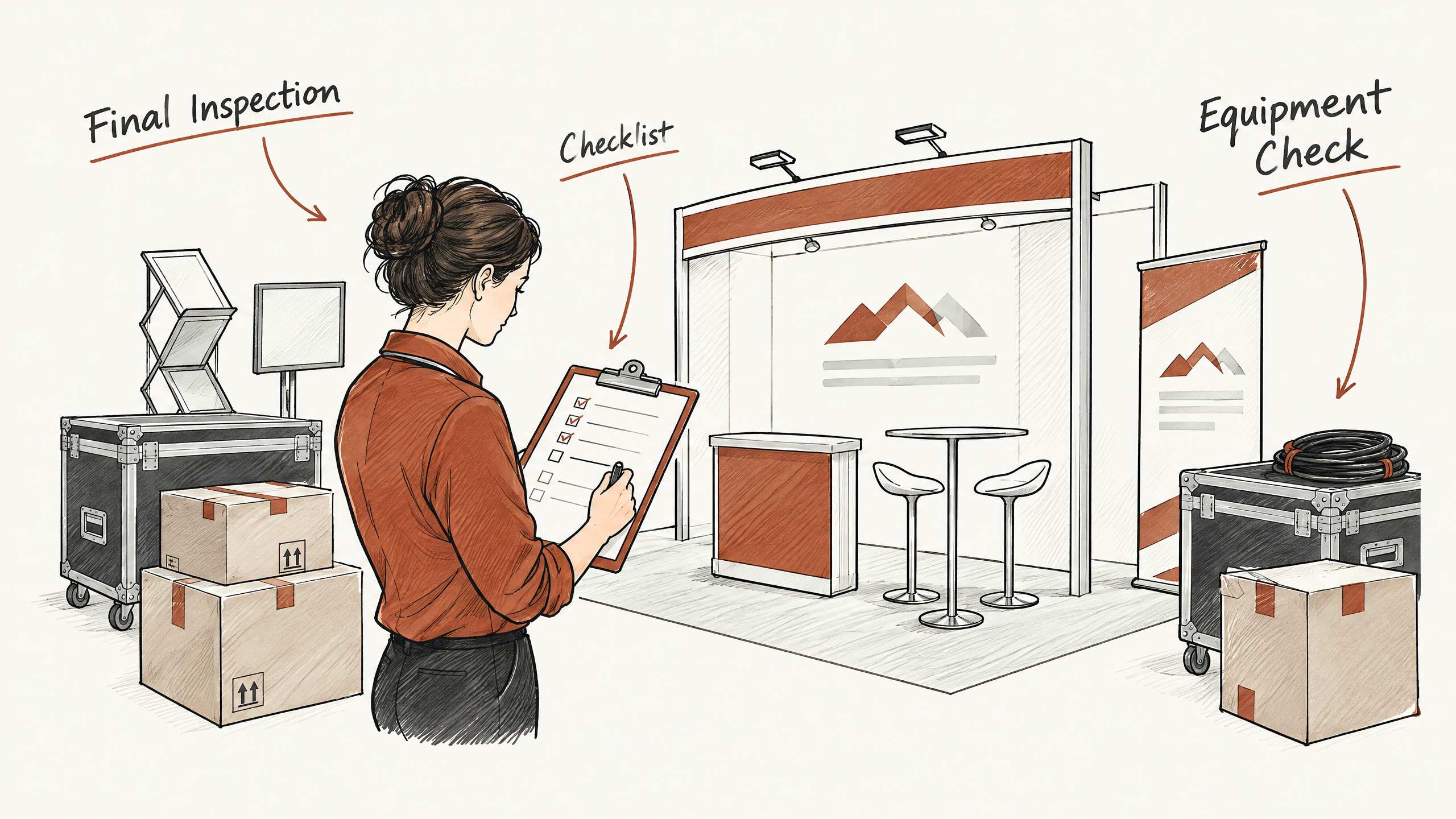
- Conduct a final walk-through to ensure no items are left behind.
Planning for a smooth booth dismantle ensures your team leaves the venue on time and avoids fees.
Start by focusing on organization and coordination to simplify the entire process.
1. Organize Your Tools and Materials
When preparing for a trade show booth dismantle, you must start with a thorough organization of tools and materials.
A well-prepared toolkit is essential for an efficient and stress-free teardown. Before the event, compile a list of all required items, including hand tools, packing materials, and protective gear.
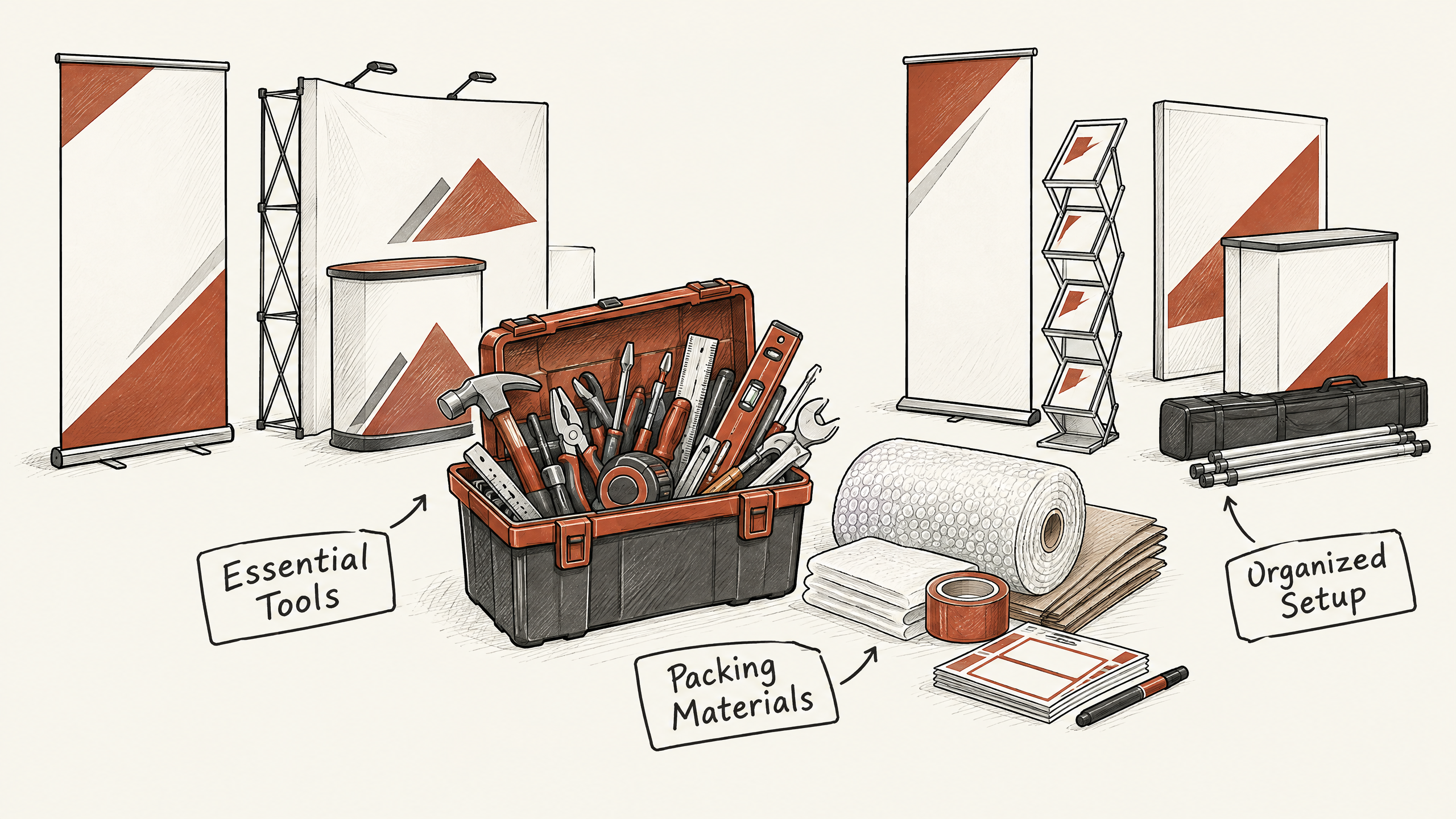
This step ensures you have everything you need at hand, minimizing delays and last-minute scrambles.
I recommend keeping essential tools in a portable case for easy access.
Standard tools might include screwdrivers, wrenches, pliers, and utility knives.
Depending on your specific booth setup, you might also need drills or specialized equipment.
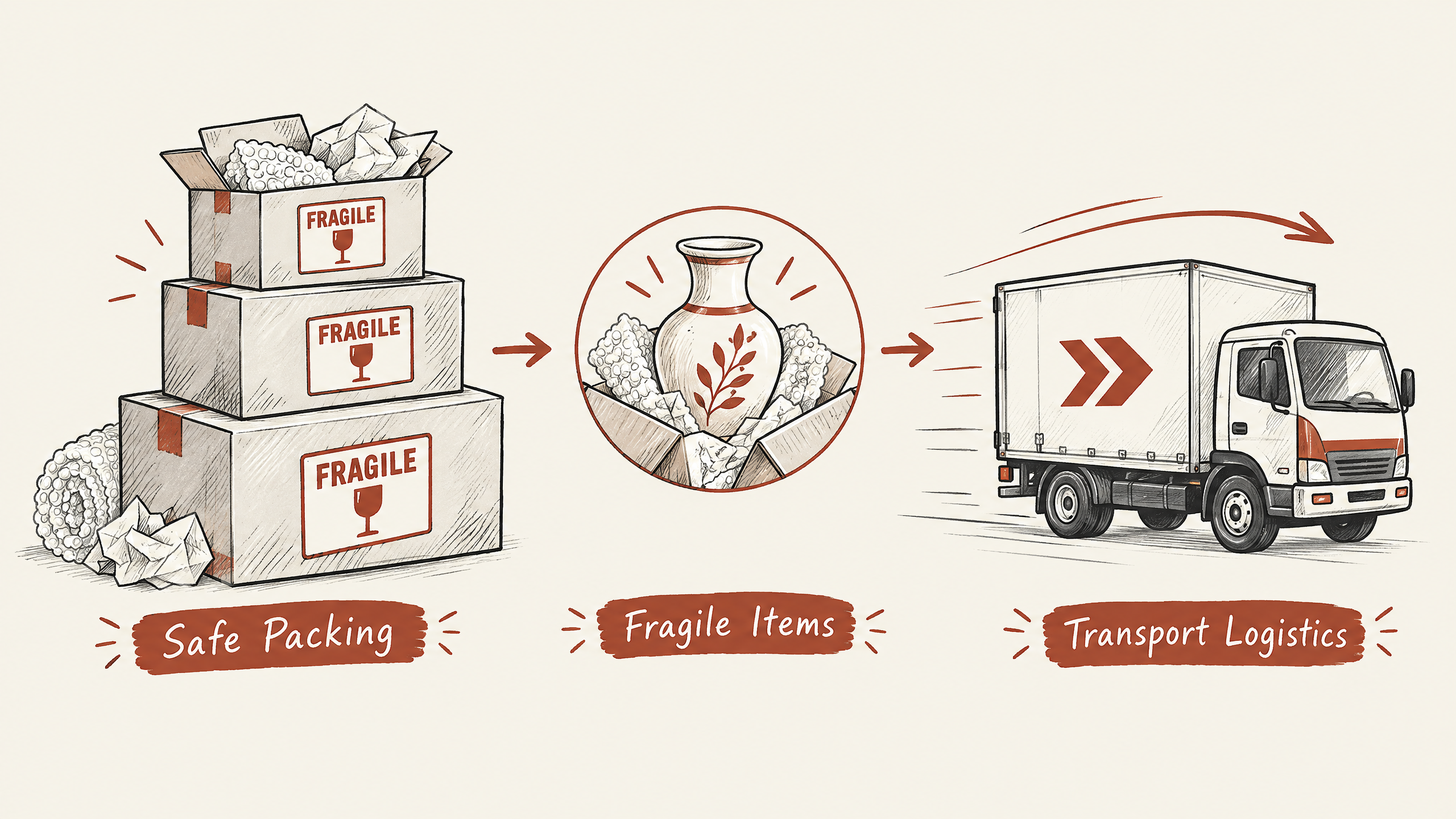
Additionally, make sure you have enough labels, bubble wrap, and sturdy boxes to pack booth components safely.
Another important step is to inventory components before dismantling begins.
Have a checklist to verify that every item is accounted for both at the start and the end of the show. This avoids misplaced parts and helps maintain your inventory.
A successful inventory method can be as simple as a spreadsheet or an asset management app on a smartphone.
One common mistake is overlooking redundant or broken tools before you start.
Test every tool beforehand to confirm it works correctly and replace any damaged items.
By taking these steps, your team can dismantle the booth efficiently and effectively, leaving more time for other crucial tasks.
If you’re handling a large-scale dismantle, engaging a professional service like Exhibitant‘s end-to-end solutions could be beneficial.
We help with everything from labor coordination to packing strategies, letting you focus on strategic aspects rather than logistical hurdles.
2. Assign Clear Roles and Responsibilities
With trade show dismantling, assigning clear roles and responsibilities is crucial. This strategy not only ensures efficiency but also minimizes confusion.
Start by identifying the skills and strengths of your team members, then align these with the dismantle tasks.
Create a list that includes tasks like packing, equipment handling, and overseeing logistics.
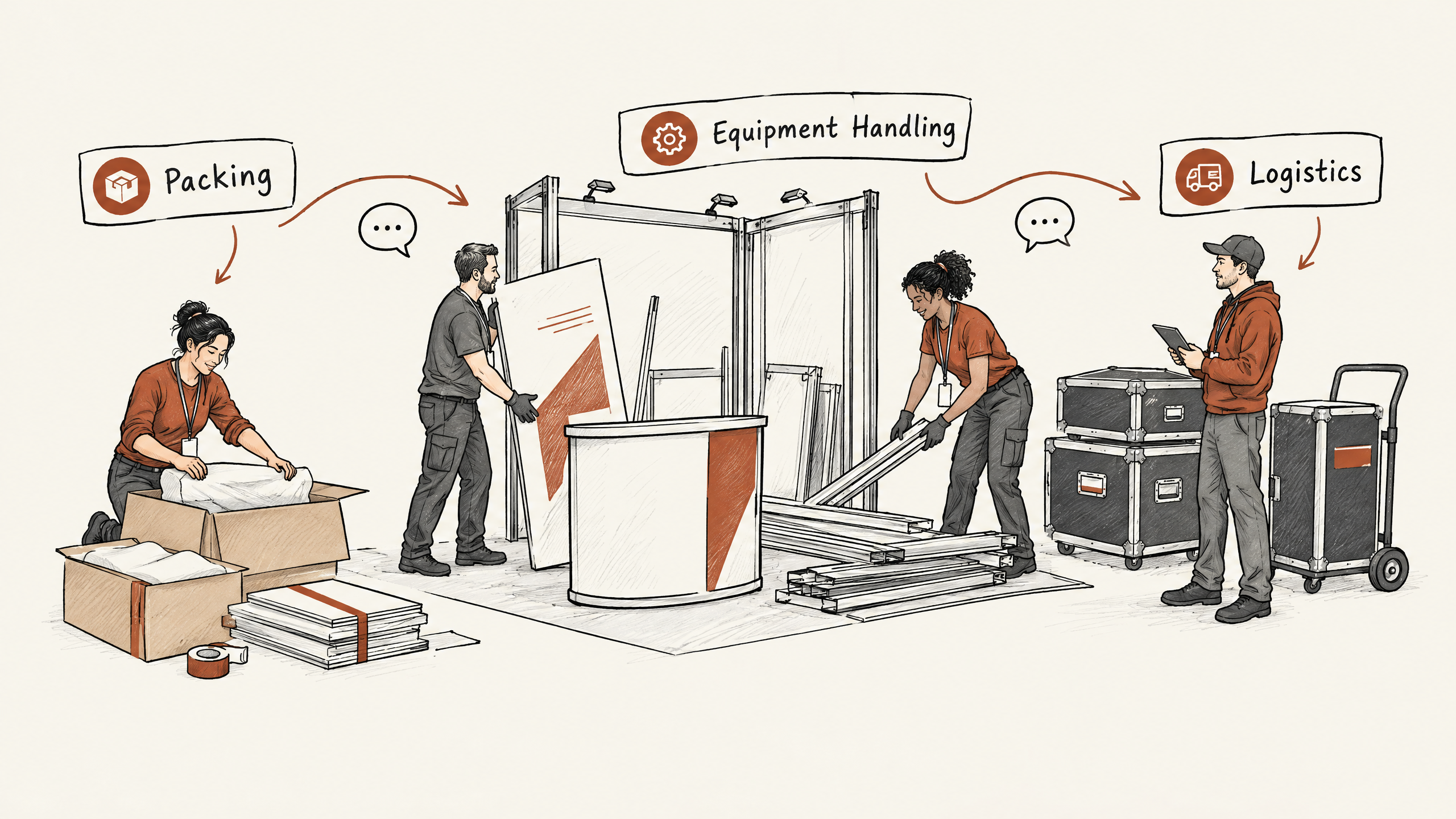
Next, schedule a short meeting before dismantle day.
Use this time to confirm everyone’s role and clarify expectations. This meeting will prevent misunderstandings and help each team member understand their specific role, reducing downtime.
For larger teams, designate a lead to coordinate efforts and address any issues during the process.
An example scenario: If your booth involves complex lighting, assign this to someone experienced in handling such equipment.
Meanwhile, someone else can manage the packing of delicate displays.
Having specialized roles like these promotes a more orderly and safe dismantle process.
One common mistake is overloading a single individual with too many tasks.
It can lead to burnout and errors. Balance workloads by ensuring that no one person is responsible for multiple critical areas.
Clearly defined roles foster accountability and efficiency, ensuring that the team operates smoothly under time constraints.
3. Coordinate with on-Site Labor Teams
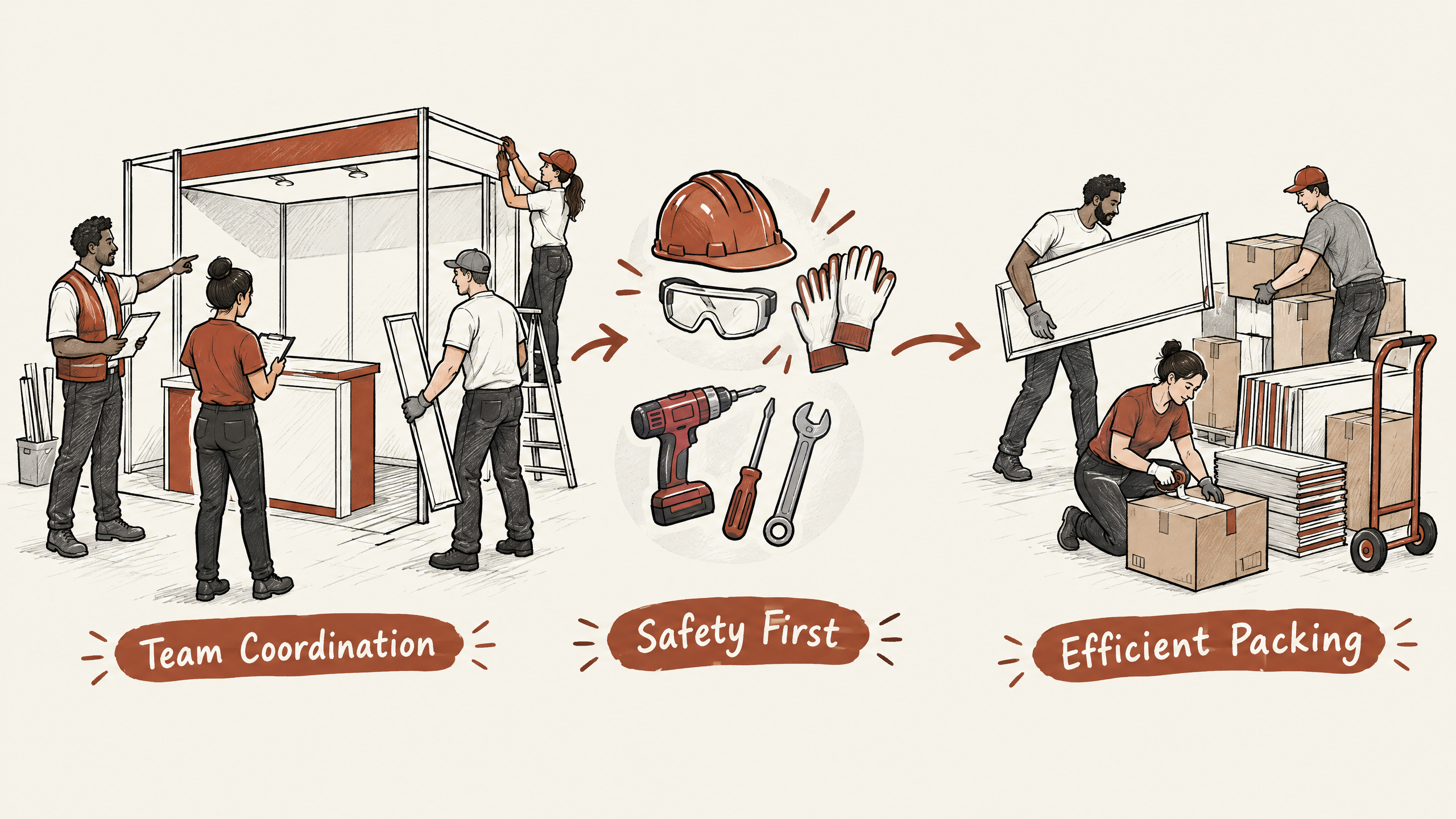
To make sure a smooth booth dismantle, coordinate closely with on-site labor teams.
These teams are often the backbone of a successful tear-down process, handling tasks that require heavy lifting and technical knowledge.
Start by identifying the team leader and establishing a clear communication channel.
This will allow you to address any last-minute questions or issues directly.
By using Exhibitant‘s trade show services, your team can also gain additional insights into efficient labor practices for booth dismantling.
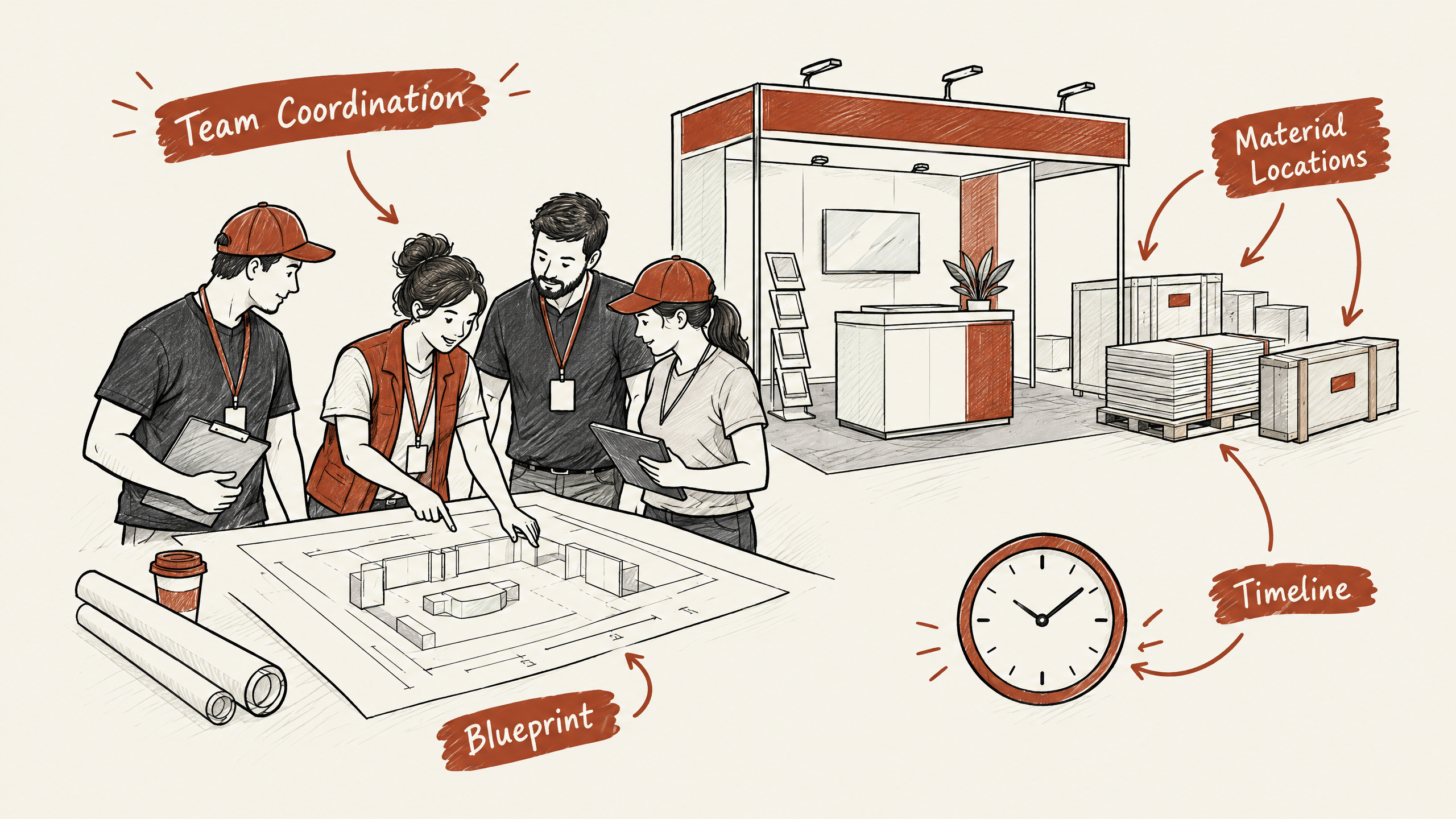
Before beginning the dismantle, provide your labor team with a detailed plan.
This plan should highlight specific tasks, material locations, and any special handling instructions.
It’s important to include a timeline as well, ensuring each phase of the dismantle stays on track. Be prepared to adjust the plan if unforeseen circumstances arise.
Communication is key here; frequent updates will help the team work more cohesively and effectively.
A common mistake is underestimating the time needed for each task or expecting labor teams to plan independently.
Important: Effective coordination with on-site labor teams is crucial to make sure a smooth and damage-free booth dismantling process.
Avoid this by facilitating a pre-dismantle meeting.
Use this opportunity to outline the expectations and confirm all necessary tools and supplies are available.
This meeting should also address potential constraints, such as venue regulations or shared space limitations, which can impact labor efforts.
To improve efficiency, set up a checklist that can be used on-site.
This list might include:
- Identifying priority dismantle areas
- Confirming availability of required equipment
- Assigning team members to specific tasks
My experience suggests that when each team member knows their responsibilities and has a guide, the dismantling process becomes signficantly smoother.
Effective coordination with labor teams ensures booth dismantling is not only efficient but also minimizes the chance of damage to components.
 Lorena G.