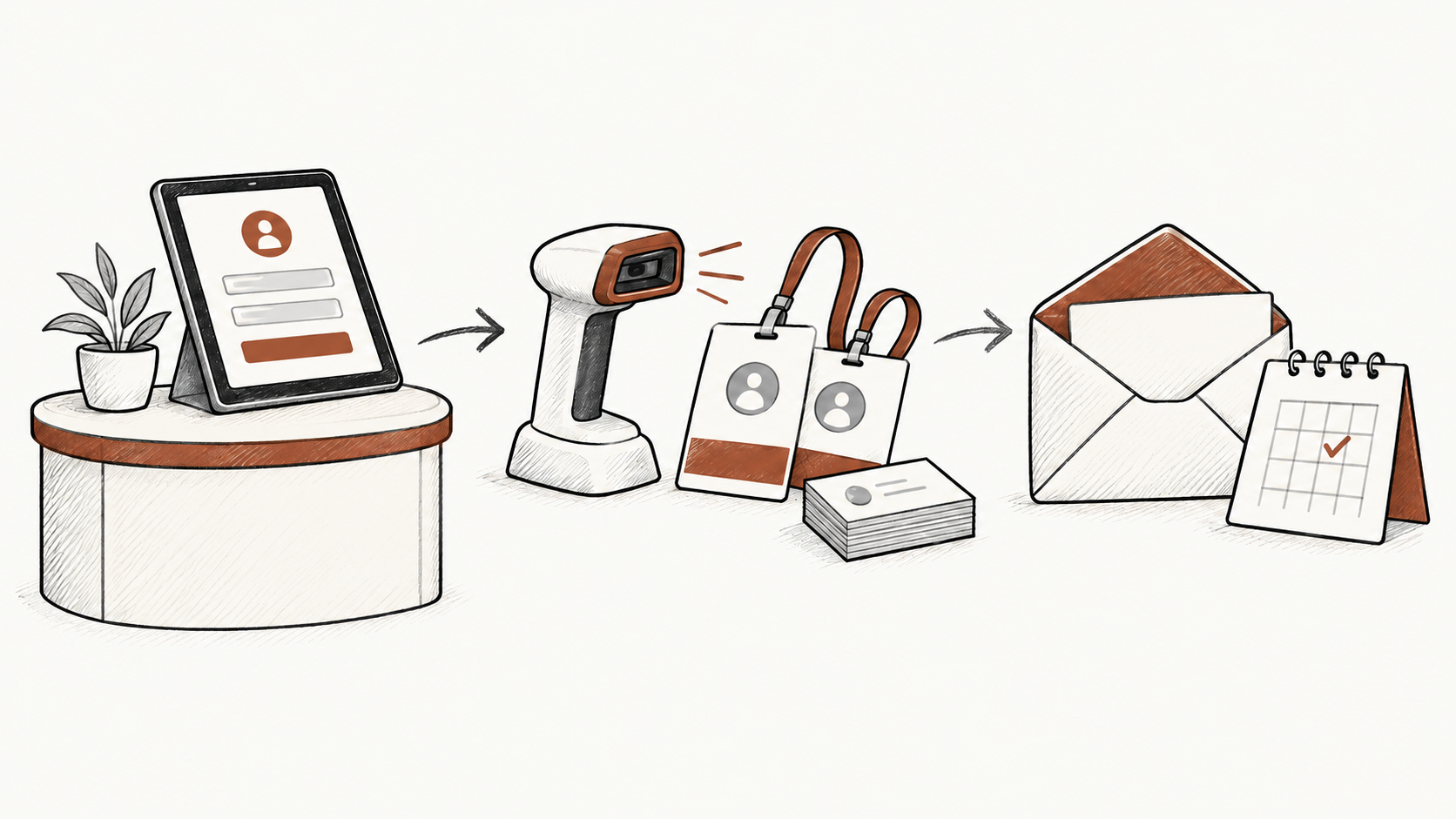
Planning a trade show can feel like a daunting task, especially when you’re faced with countless details to manage.
Here’s how I would approach it: start by acknowledging the essential aspects that will guide you or your team to put together a successful strategy. Ensuring you have a well-structured plan makes all the difference.
Our experience at Exhibitant shows that breaking down your planning process into comprehensible steps is crucial.
By addressing the right components, you or your team can transform a complex event into a cohesive and productive experience. This planning not only helps prevent last-minute chaos but also aligns team efforts towards a common goal.
In this article, we’ll identify the seven critical components that form the backbone of any successful trade show checklist.
From defining tangible objectives to coordinating staff roles, each part plays a key role in the bigger picture. By focusing on these elements, your trade show preparation will be more effective and organized.
By the end of this read, you’ll have a clear path forward for creating your own trade show planning checklist.
We aim to provide you with the tools needed to make informed decisions, ensuring your event is as successful as possible.
Let us guide you through practical steps to elevate your trade show planning strategy.
Key Takeaways:
Set clear objectives to guide all planning efforts.
Develop a realistic budget covering all expenses.
Create a detailed timeline with key milestones.
Select strategic booth locations for maximum visibility.
Design an engaging booth to attract attendees.
Planning a trade show involves setting objectives, creating a budget, and managing a timeline.
Focus on booth location and design to draw attendees.
1. Define Your Trade Show Objectives
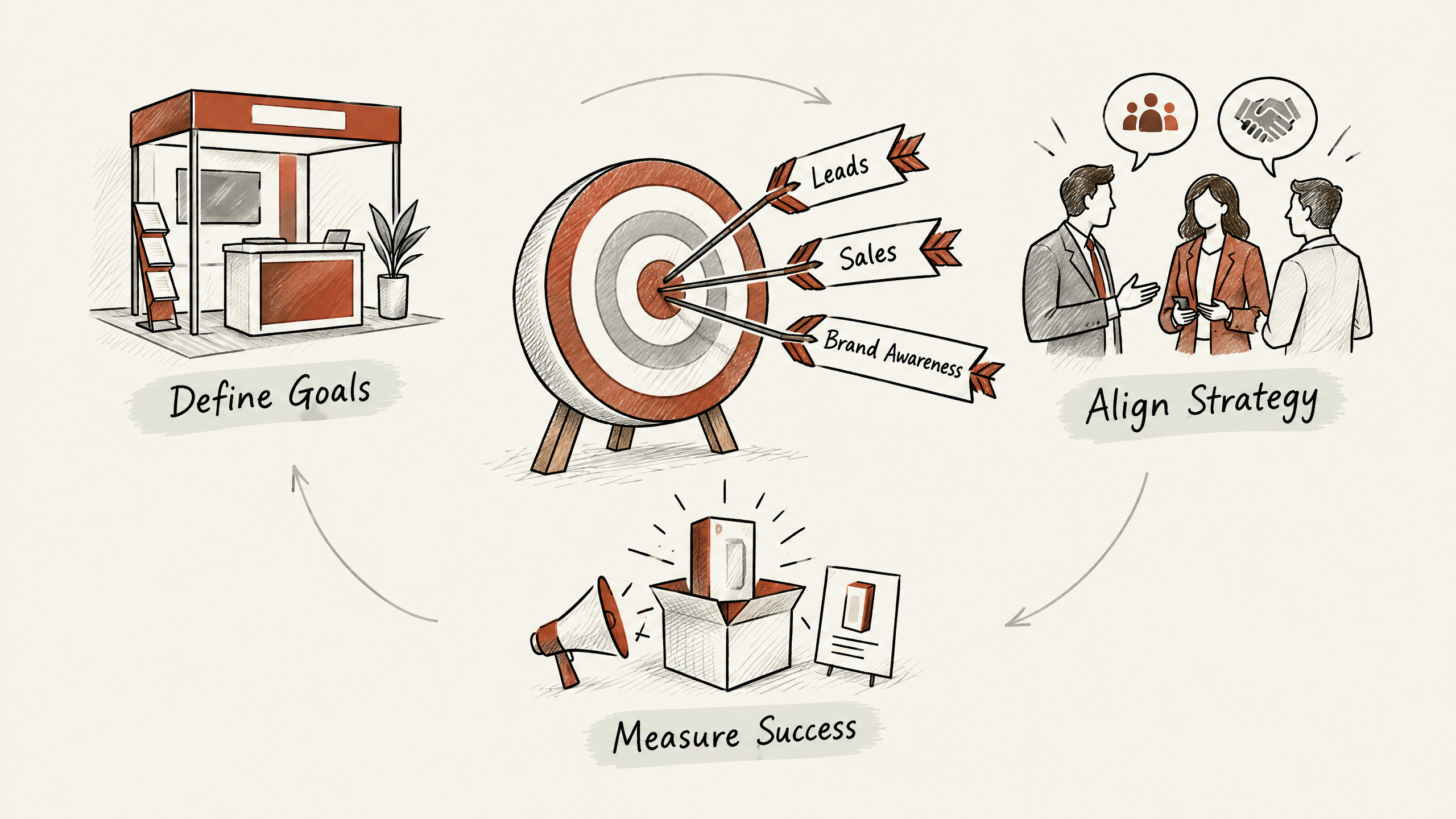
To start your trade show planning with a clear direction, it’s crucial to define specific objectives for your event participation.
Whether you aim to generate leads, launch a new product, or strengthen brand awareness, having clear goals will guide your decisions and actions throughout the process.
Begin by identifying what success means for your company at the trade show.
This could be a certain number of qualified leads, direct sales, or networking opportunities. Defining these metrics allows your team to focus their efforts and measure outcomes effectively.
Without a clear target, it’s difficult to determine if your trade show participation yields positive results.
Another important aspect is considering how your goals align with your overall marketing strategy.
Are you looking to penetrate a new market or maintain your position in an existing one?
This alignment ensures that your trade show efforts support larger business objectives and facilitates better KPI tracking.
Important: Defining clear trade show objectives and aligning them with your marketing strategy ensures your team can measure success and stay focused on meaningful goals.
Once you have outlined your objectives, communicate them with your team. Everyone involved should understand and work towards these targets.
A common mistake is failing to make sure alignment, leading to mixed messages and suboptimal results at the event.
In our hypothetical scenario, let’s assume a company plans to introduce a new software product at the show.
The primary objective might be to generate 200 qualified leads, with a secondary goal of scheduling 50 follow-up meetings.
With specified objectives like these, the team can strategize activities centered around lead generation and follow-ups. To do this effectively:
Define key messages and talking points that engage your target audience
Set milestones for lead generation before, during, and after the event
Develop a post-show follow-up plan to convert leads into sales
With clear objectives and a unified team, your trade show strategy will be more cohesive and impactful in achieving your goals.
2. Establish a Realistic Budget
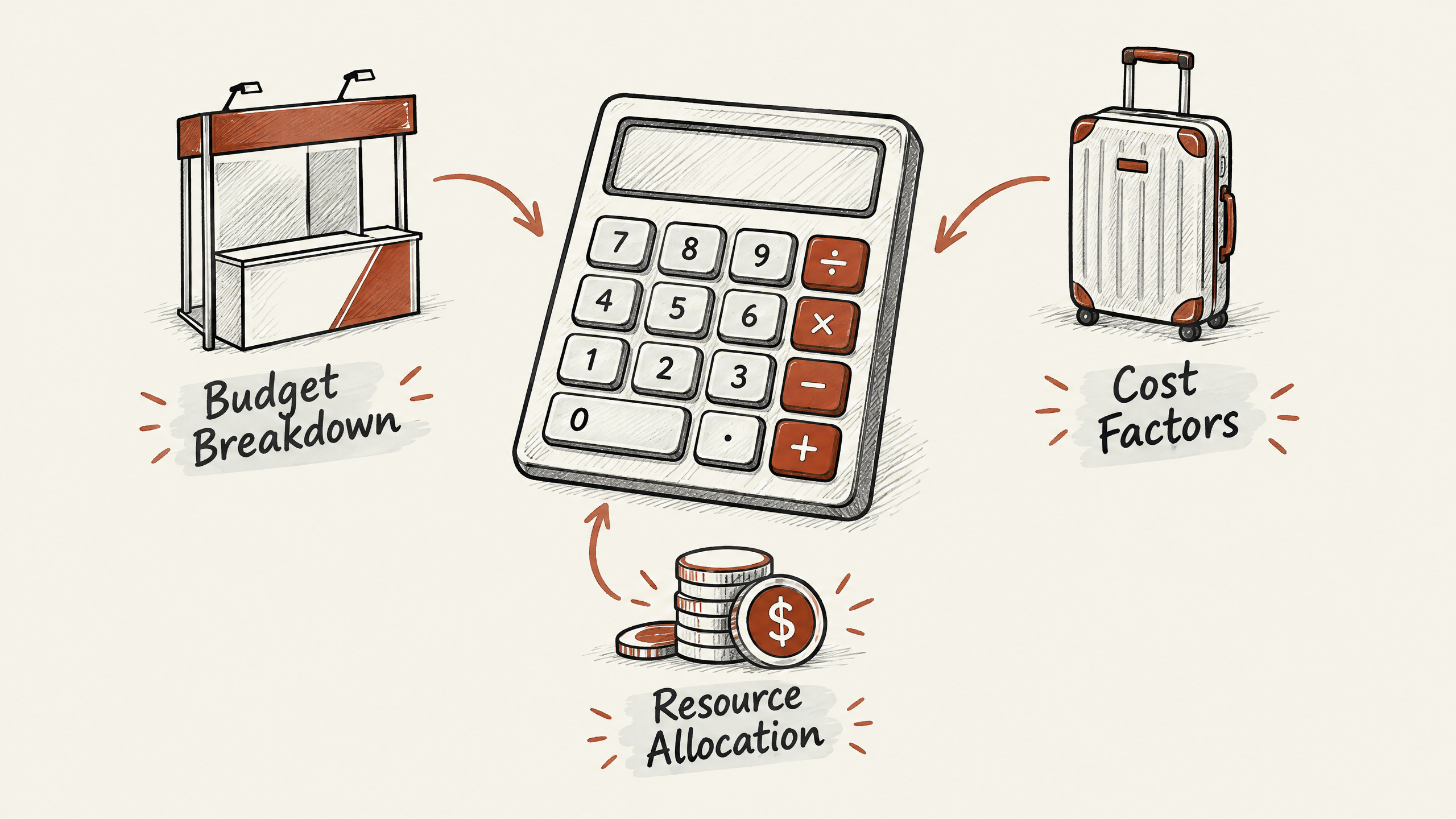
Allocating the right resources begins with establishing a realistic trade show budget.
To start, list every potential cost involved, from booth rental to promotional materials.
A well-planned budget ensures you won’t face surprises that could strain your finances.
First, consider the booth space and design.
These are usually the most significant expenses.
Research the pricing of different booth spaces at your chosen event and decide on a design that aligns with your objectives.
Balance attractiveness with cost-effectiveness an overly elaborate booth could deplete funds needed elsewhere.
Next, include travel and accommodation costs. If your team is traveling, you need to factor in transport, lodging, and meals.
Consider travel times and distance, as these could significantly affect costs.
Ignoring this step might result in inflated expenses that derail your expected spending.
Don’t overlook marketing and promotion.
Pro Tip: When planning your trade show budget, allocate a contingency fund to manage unexpected expenses without derailing your overall spending plan.
Whether online campaigns or printed materials, marketing is vital in generating interest before and during the event. Allocate a specific portion of your budget to make sure your message reaches the right audience effectively.
Finally, plan for unexpected costs.
Contingencies are crucial in mitigating unforeseen expenses.
Set aside a percentage of your budget as a buffer this helps manage unexpected fees or last-minute necessities without panic.
For a hypothetical scenario, let’s assume your budget is $20,000.
Allocate $7,000 for booth design, $5,000 for travel, $4,000 for marketing, and reserve $2,000 for unexpected costs.
This division varies based on specific needs, yet it provides a solid framework to guide your allocations.
Creating an accurate budget not only aligns your trade show efforts with financial resources but also facilitates smarter decision-making.
Communicate this budget with your team to make sure clear expectations and a unified approach to spending, helping to achieve your trade show goals effectively.
3. Develop a Comprehensive Timeline
Creating a comprehensive timeline is vital for successful trade show planning.
Without one, you risk missing deadlines, scrambling at the last minute, and failing to coordinate smoothly with your team. Start by identifying key milestones based on your trade show objectives and budget.
This sets the groundwork for everything to follow.
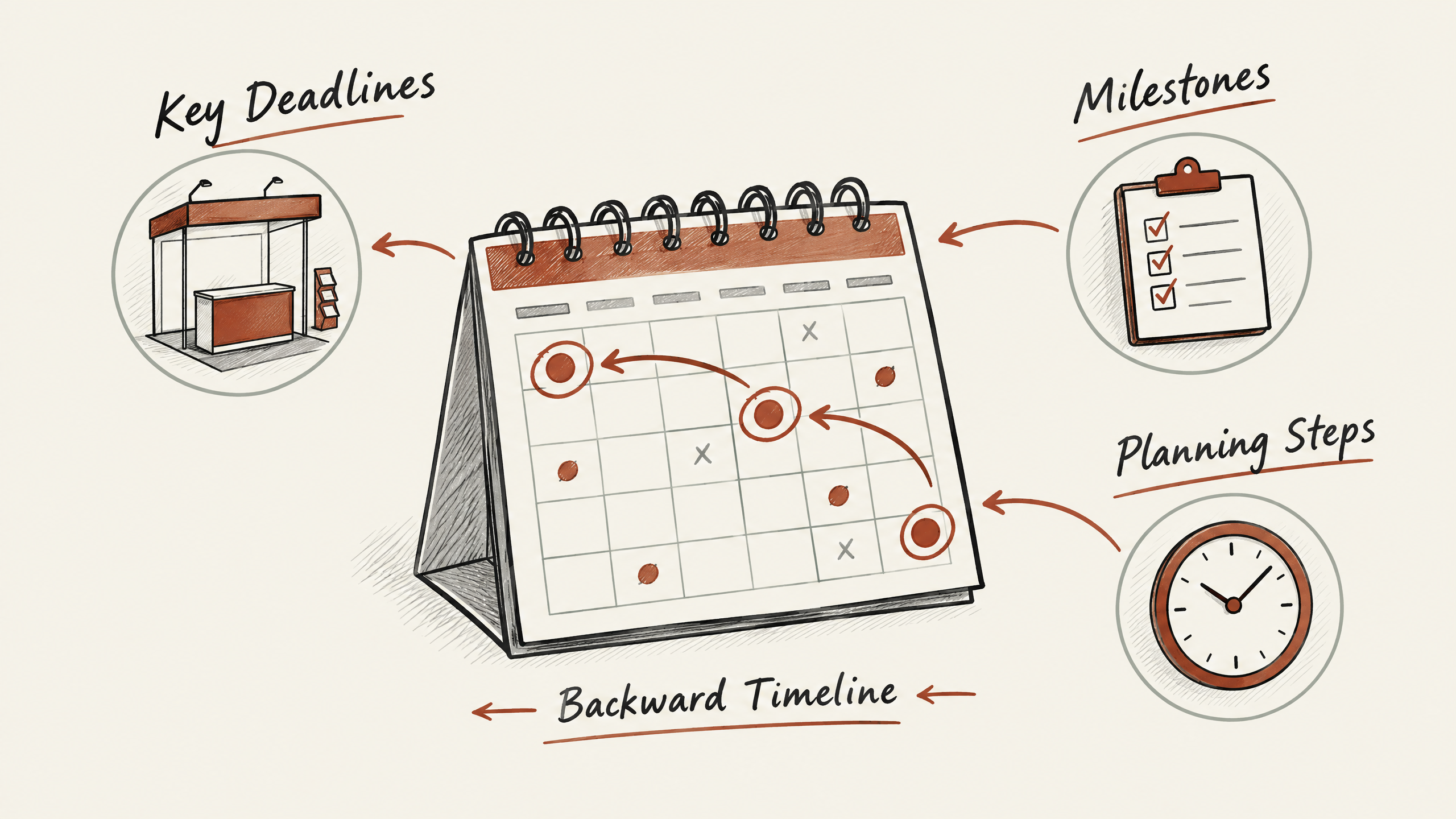
Begin by pinpointing all critical deadlines.
These include registration dates, booth design submissions, marketing campaigns, and product shipment cutoffs. Work backward from the trade show date to make sure adequate time for each task.
A misstep here could jeopardize your whole presence.
In a hypothetical scenario, let’s assume the trade show is six months away. You’d want to finalize the booth design four months out and begin marketing efforts three months prior.
This timeline is just an example, but it underlines the need for strategic planning every step of the way.
Important: Without a comprehensive timeline, you risk missing crucial deadlines and encountering last-minute chaos, which can jeopardize your entire trade show presence.
Breaking tasks down by week or month, and assigning responsibilities to specific team members, ensures that everyone knows their role and timeline. Use tools like Gantt charts or shared calendars to keep the team aligned.
Communication is crucial for tracking progress and making adjustments as needed.
A common mistake is underestimating the time required for approvals and adjustments. Plan buffers for each step to handle unexpected delays, especially from external vendors or team decisions.
Having these safety nets helps avoid last-minute chaos and maintains overall momentum.
Tradeoffs may exist, such as sacrificing some creative booth elements to meet deadlines.
Balance creativity with practicality to develop a timeline that fulfills your trade show goals without overwhelming your team.
4. Select the Right Booth Location
Choosing the ideal booth location can significantly impact your trade show success. The location influences foot traffic, visibility, and your overall effectiveness at the event.
Start by examining the trade show’s floor plan.
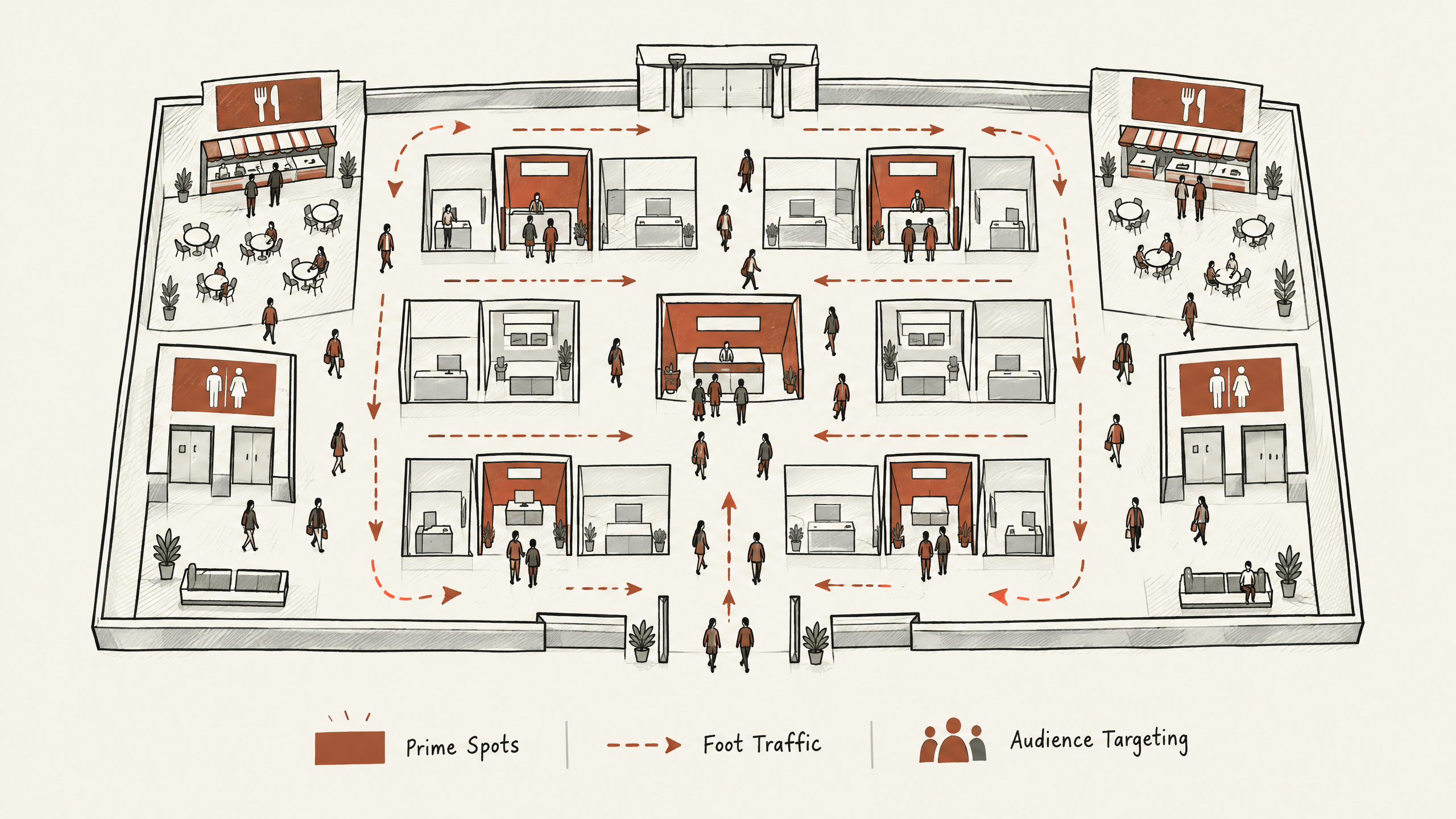
High-traffic areas, entrances, and corners are typically prime spots that can attract more visitors.
However, if these areas are too costly or already taken, consider locations close to popular exhibitors or near amenities like food courts or restrooms.
It’s also important to know your target audience and their habits.
If your audience tends to gather around specific types of booths or needs particular services, situating yourself nearby can be advantageous.
Evaluate how your booth location fits within the show’s theme or sector grouping.
Being positioned among complementary businesses can enhance networking opportunities and make it easier for potential clients to seek you out.
Pro Tip: Consider choosing a booth location near popular exhibitors or amenities like food courts, balancing visibility and cost to get the most out of visitor engagement.
While securing a high-traffic spot sounds ideal, consider the trade-offs.
A corner booth may offer more visibility, but it might also come with higher costs. Similarly, being near a noisy area like a demo stage could distract from your message.
Weigh the increase in exposure against potential downsides. You will need to balance your budget constraints with the location options available.
Once you’ve selected your preferred location, reach out to Exhibitant to help negotiate terms or explore creative solutions for maximizing your booth placement.
By leveraging our experience in trade shows, you can find a spot that aligns with your goals and optimizes your presence. Ownership of the location decision often falls to the marketing or event management team, with approvals needed from senior stakeholders.
Engage early to receive the backing you need for your chosen site.
5. Design an Engaging Booth
Creating an engaging booth is central to capturing attention and driving meaningful interactions at a trade show.
Your booth must not only be visually appealing but should also convey your brand’s message clearly and effectively.
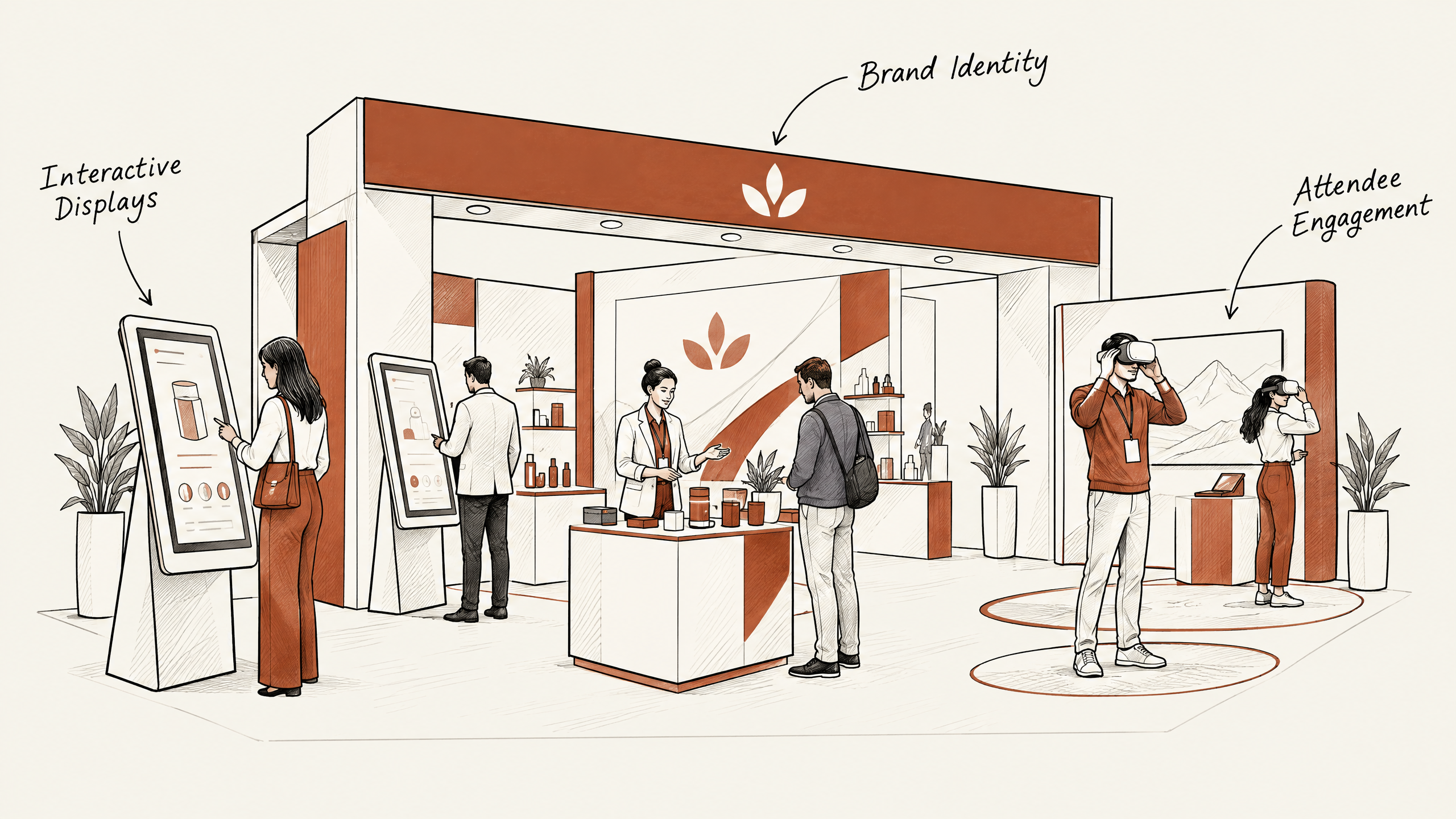
Start by crafting a unified design that reflects your company’s identity.
Use consistent colors, logos, and imagery that align with your brand.
This ensures that your booth is both memorable and instantly recognizable to attendees.
Include interactive elements that invite participation and further engagement.
Consider elements like touchscreens, product demos, or VR experiences that allow visitors to immerse themselves in your offerings.
Providing such interactive opportunities can set your booth apart, making the experience more memorable.
Balance is key: while modern technology can attract visitors, it should not overshadow your core messages or products.
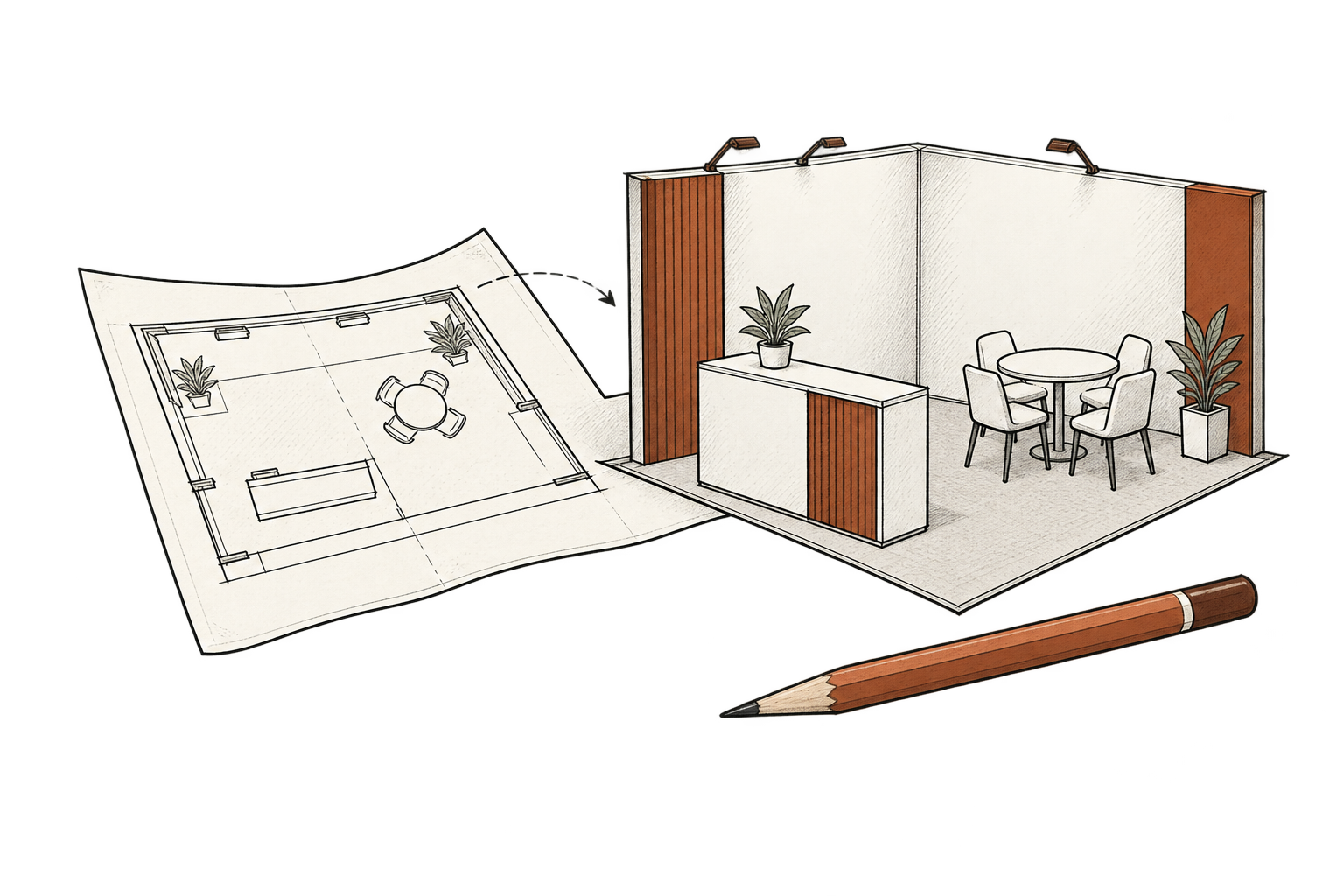
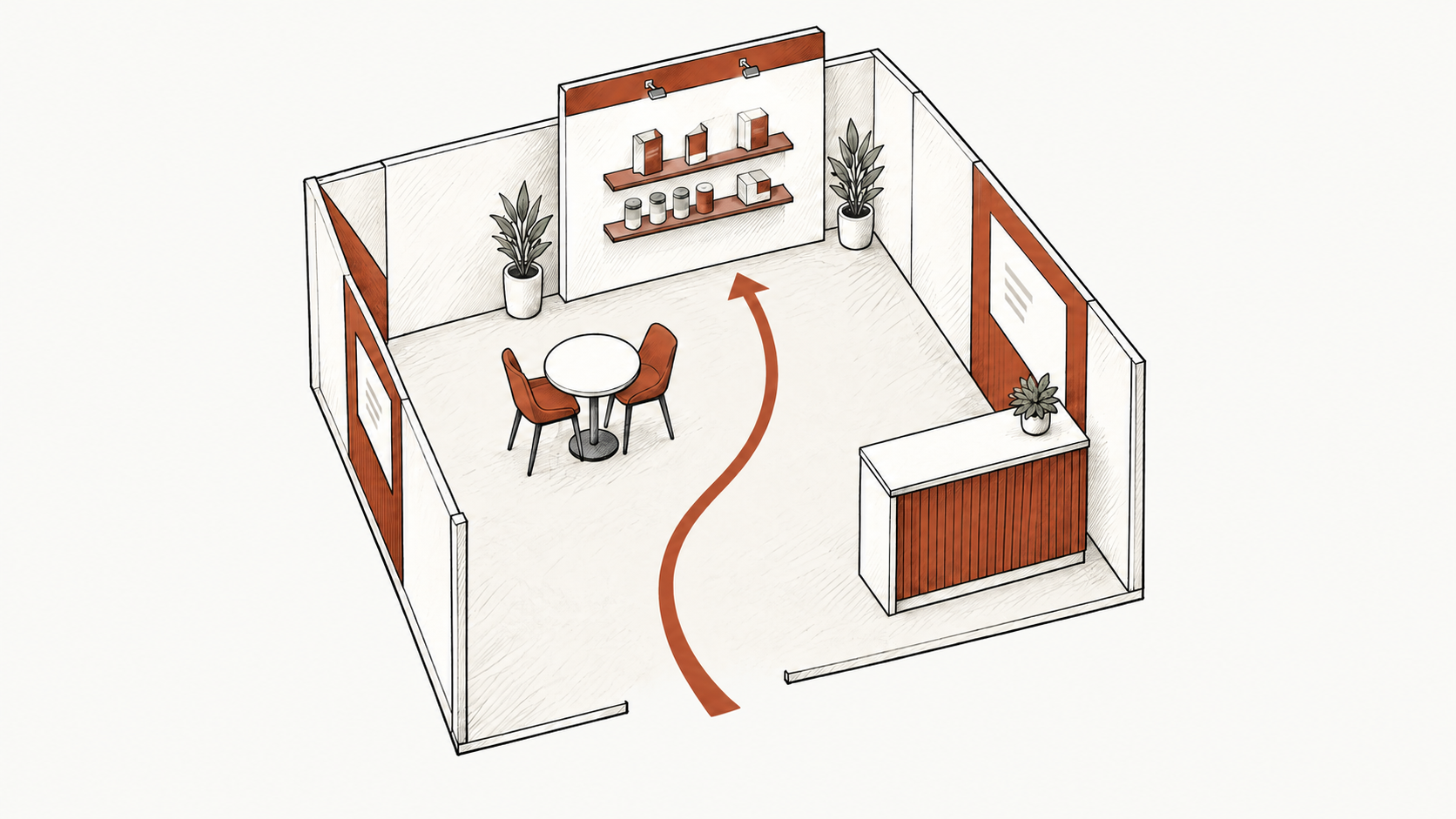
The layout of your booth is another critical aspect. make sure an open, welcoming space where attendees feel comfortable to walk in and engage with your team.
Avoid overcrowding the booth with excessive furniture or promotional materials, as a cluttered space can deter guests from entering.
Instead, focus on creating clear pathways and distinct areas for product displays or informational sessions.
Important: Incorporating interactive elements like touchscreens or VR experiences can make your booth memorable, attracting visitors and encouraging deeper engagement with your brand.
A well-thought-out layout facilitates smoother interactions.
Let’s illustrate these principles with a hypothetical example.
Suppose you represent a tech firm launching a new wearable device.
Your booth might feature sleek backlit panels displaying your product’s core benefits.
Include an interactive demo station for attendees to try the device firsthand and a seating area for in-depth consultations.
This setup not only showcases your product but encourages extended engagement through hands-on experiences and personal connections.
Remember that the booth design also needs to match the timeline and budget established earlier.
Planning in advance allows you to order custom materials and avoid last-minute compromises.
Engage your design team early and review progress regularly to make sure the booth aligns with your broader objectives.
Involve decision-makers to secure approval on key elements before finalizing.
6. Plan Your Promotional Strategy
Crafting an effective promotional strategy is crucial for maximizing your trade show investment.
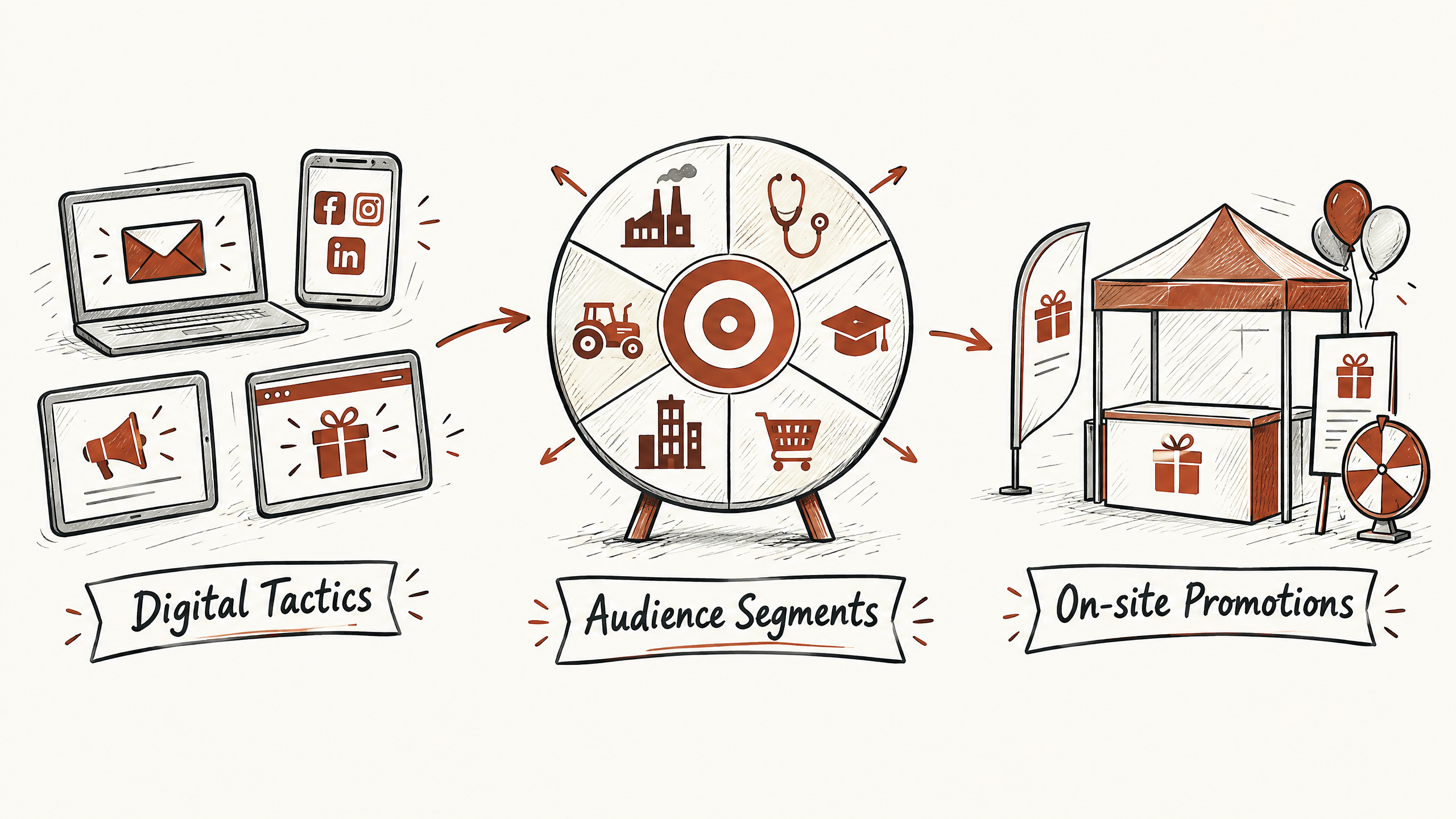
First, identify the audience segments that are most relevant to your offerings. This will help tailor messages that resonate.
For example, if your product serves multiple industries, segment your audience by industry and craft specific communications for each group.
Your promotional plan should encompass both digital and physical tactics.
Incorporate email campaigns, social media posts, and digital ads to create buzz leading up to the event.
During the show, use on-site promotions like contests or giveaways that attract foot traffic to your booth.
Timing is a critical factor in your strategy.
Start your outreach efforts early, ideally several months before the event, to give potential customers ample time to schedule meetings.
Pro Tip: To get the most out of your trade show investment, start your promotional outreach several months in advance, tailoring messages to specific audience segments and industries for greater resonance.
As the event approaches, ramp up the frequency and urgency of your messaging to reinforce attendance commitments.
While promoting your trade show presence, avoid the common pitfall of focusing solely on product features.
Highlight the benefits and solutions your product offers to create a compelling narrative.
A balanced message that includes customer success stories or case studies can provide real-life context.
Include a specific call-to-action in each promotional piece, such as inviting attendees to schedule a demo or visit your booth for an exclusive offer.
With clearly defined objectives and a comprehensive promotional plan, your team can attract the right attendees who are primed for engagement and sales discussions.
7. Coordinate Staff Roles Effectively
Effective coordination of staff roles is crucial to make sure your trade show runs smoothly and meets its objectives.
Each team member should know their specific duties and how they contribute to your overall strategy.
Begin by assessing the skills of your team to decide who is best suited for each role.
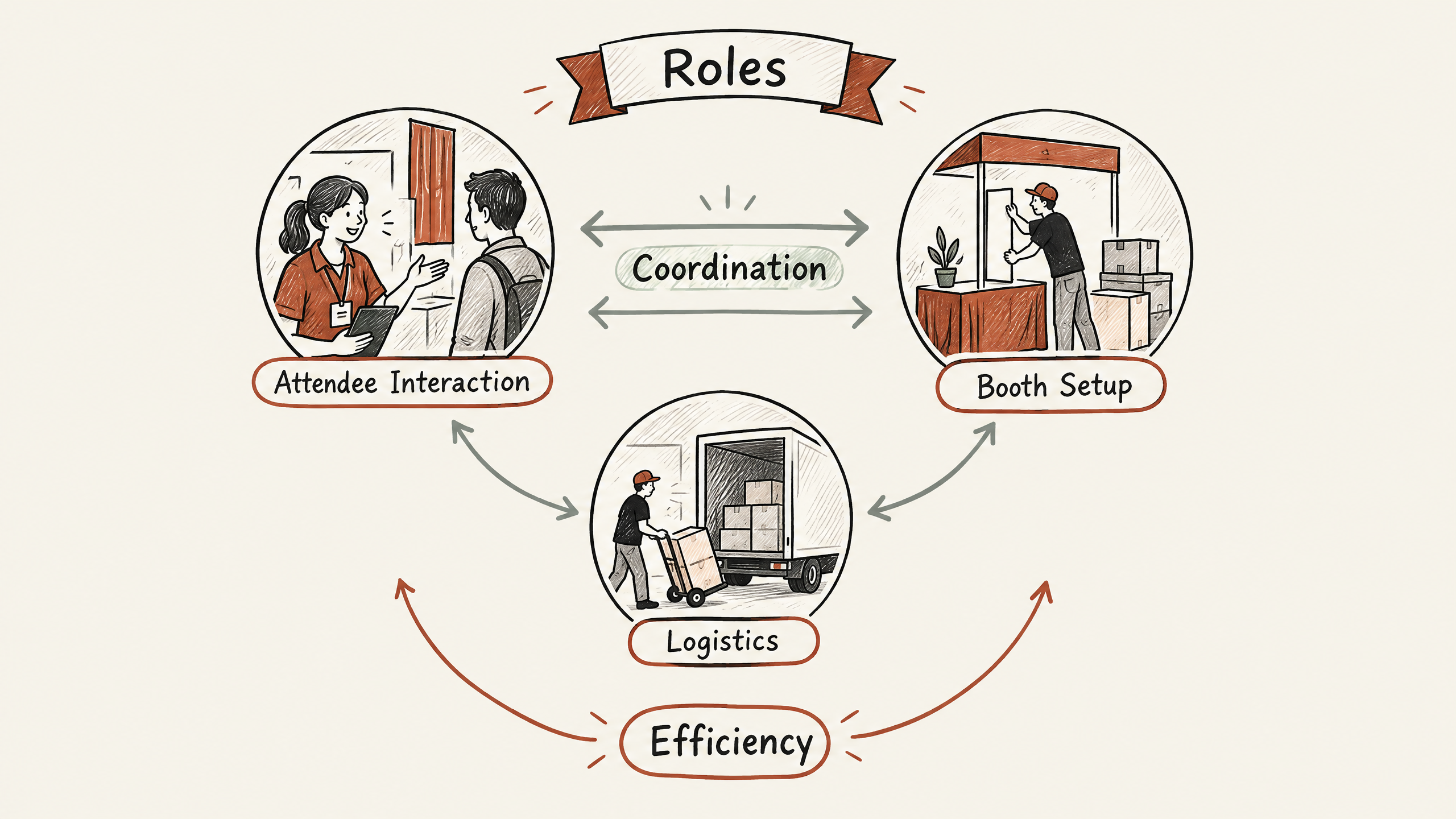
For instance, identify who will handle attendee interactions, who will manage the booth setup, and who will be responsible for logistics. Assign each role based on expertise and experience.
A common mistake is assuming that everyone will naturally find their tasks. Instead, assign clear responsibilities before the event.
This minimizes confusion and boosts efficiency.
Create a clear schedule that outlines the timelines and shifts for all staff members. It’s important that everyone knows their working hours and breaks to maintain consistent booth staffing.
Additionally, prepare a quick reference guide for staff, detailing common FAQs and essential talking points.
This ensures uniformity in communication across your entire team.
Schedule a pre-show briefing to provide updates on your objectives and run through potential scenarios.
Allow space for questions and feedback. This step fosters team alignment, enabling everyone to respond effectively to varied situations during the show.
Exhibitant‘s expertise in trade show planning can support efficient team coordination, helping you execute a smooth event day.
Final Words
Wrapping up your trade show planning is not the end of the journey. It’s the beginning of a stable foundation for your future success.
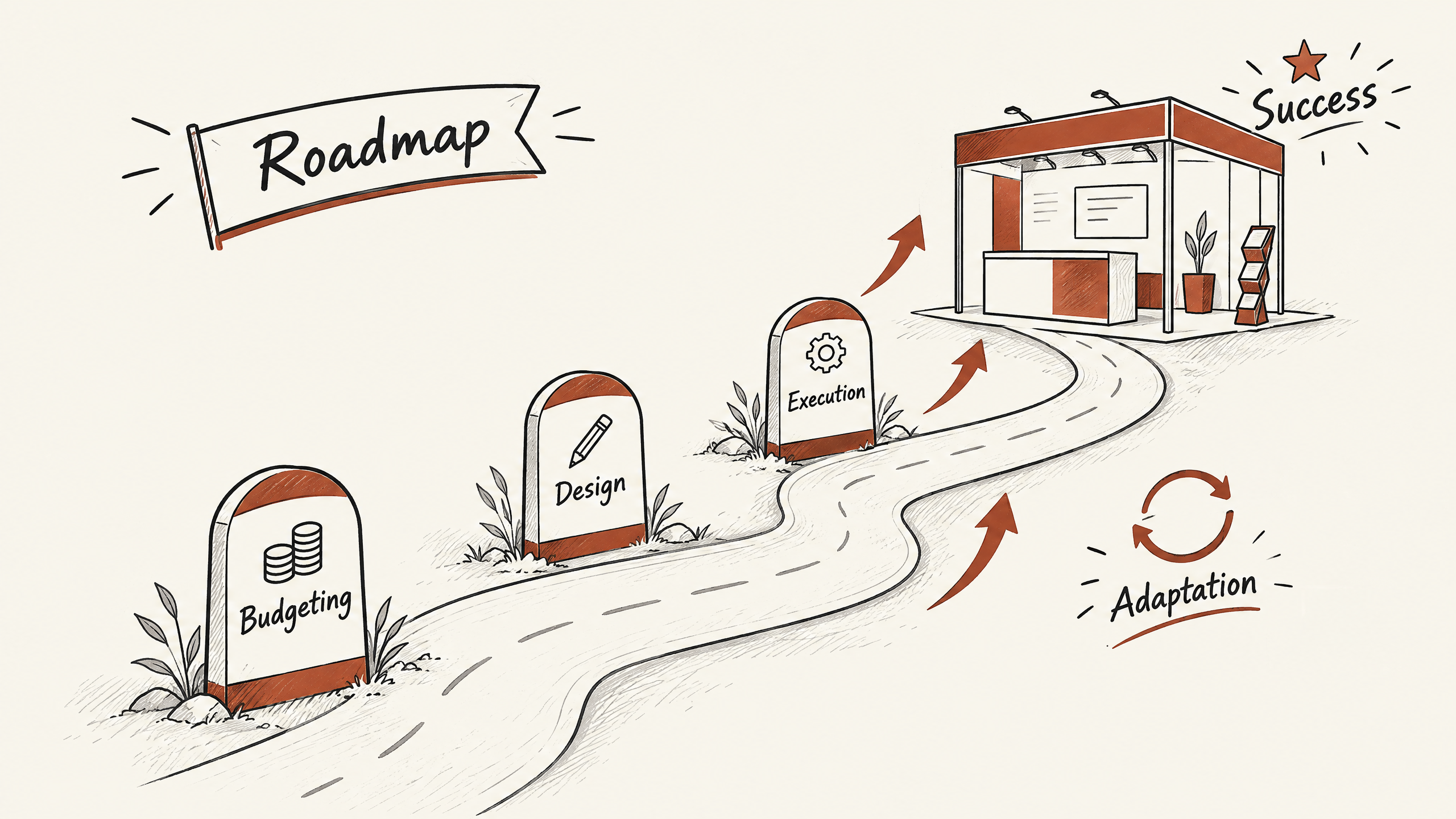
You’ve crafted a clear roadmap, aligned your team, and set the stage to engage potential clients. Each decision, from budgeting to booth design, will play a critical role in how you present your brand.
Now that you have this checklist, the next step involves action and execution.
Begin by ticking off each item, maintaining focus on your goals, and adapting as needed.
Your trade show is a valuable opportunity to connect and grow.
Keep this checklist as a living document that evolves with each trade show experience.
This reflection and adaptation will make sure you remain competitive and relevant in your industry.
Need a booth plan?
Turn show goals into a practical exhibit path
Share your footprint, timeline, and priorities. Our team can help shape the booth direction, graphics, and project support.
Keep planning
More exhibit guidance
Keep exploring practical advice on booth planning, marketing, and getting more from your next show.
Tell us about your business, the buyers you want to reach, and what you want to achieve. Whether you need more sales conversations, stronger marketing, or a trade show presence, we’ll help you identify where to focus and what support makes sense. Together, we can shape a practical plan around your priorities, budget, and timeline.
 Louie J.
 Lorena G.