Creating an effective layout for your island booth can be challenging and rewarding. A well-designed booth can attract more visitors, provide a better experience, and leave a lasting impression.
Here is how I would approach the task of optimizing your island booth layout.
An island booth’s open and accessible design gives you the chance to engage attendees from multiple angles.
However, without a strategic layout, this advantage can quickly become a missed opportunity. It’s crucial to align your booth’s design with your presentation goals.
With careful planning, you can transform your island booth into a dynamic and engaging space. Making strategic choices in design and flow will help you communicate your brand’s message more effectively.
I’ll share actionable steps to get the most out of your space.
By the end of this guide, you’ll be equipped with specific tips to refine your island booth’s layout for better engagement and impact.
Whether it’s adjusting the traffic flow or enhancing your brand presence, these insights will offer the practical advice you need to decide and execute confidently.
Key Takeaways:
Plan your booth layout to guide attendee flow and interaction.
Use vertical elements to make your booth visually striking.
Incorporate technology for interactive and dynamic presentations.
Ensure clear, consistent branding across all booth elements.
Provide comfortable spaces for private meetings and discussions.
Planning your booth layout ensures a smooth attendee flow and enhances interactions.
Consider visual impact, interactive tech, and spaces for private chats to create the ideal environment.
1. Plan Your Layout Strategically
When designing your island booth, strategic planning is crucial to make an impact and engage potential buyers.
Unlike other booth types, an island booth gives you the freedom to engage visitors from all sides.
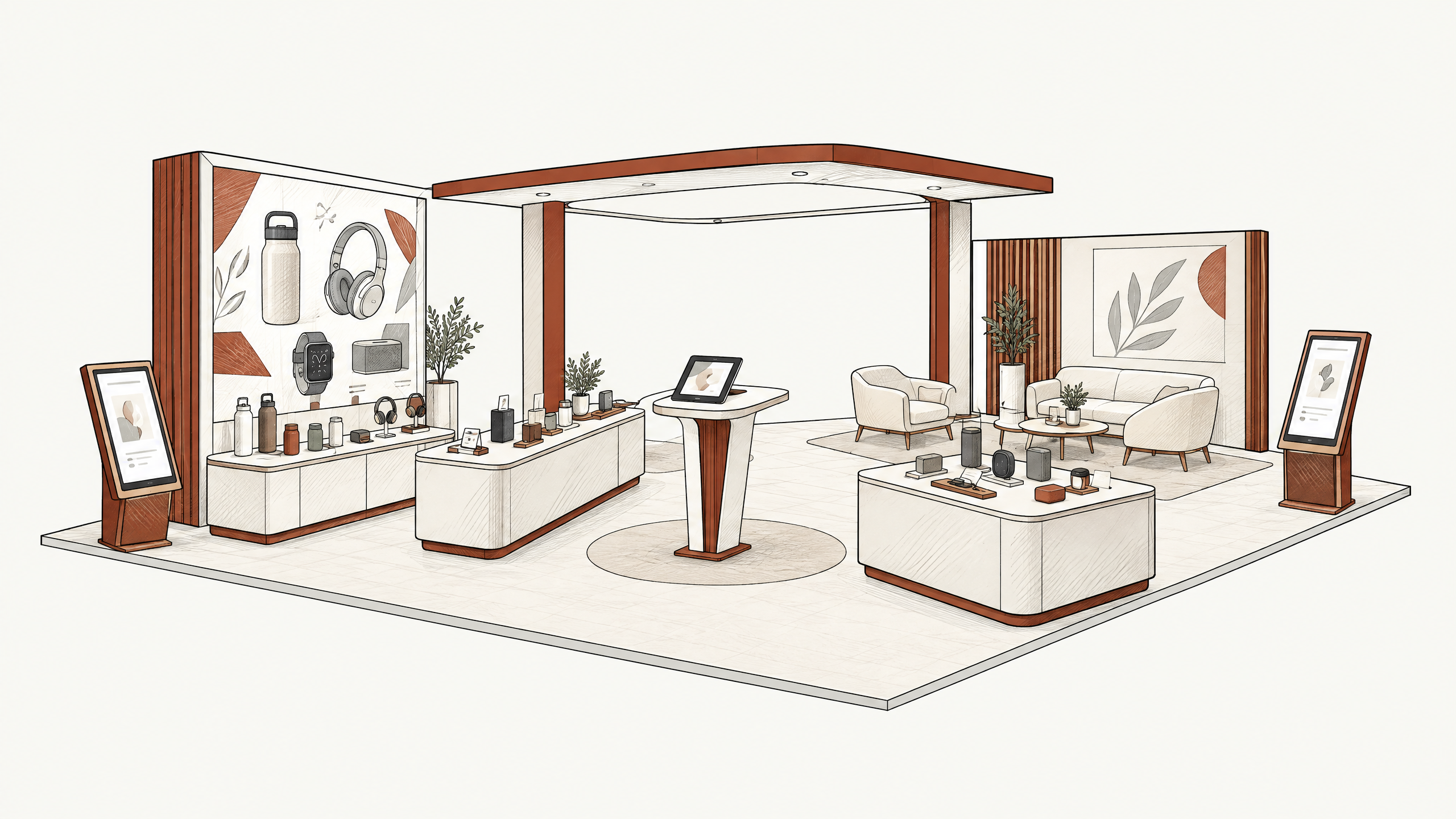
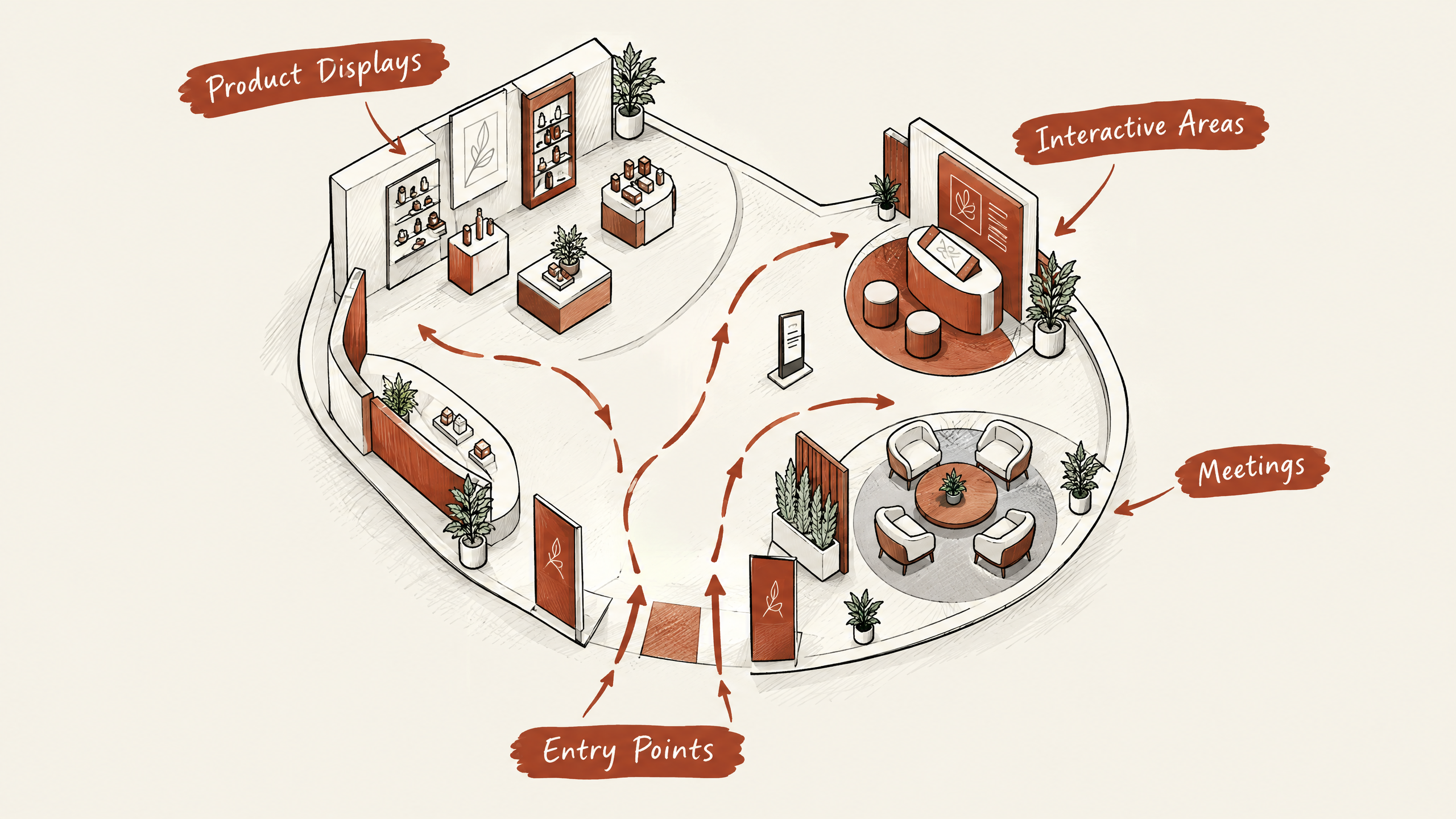
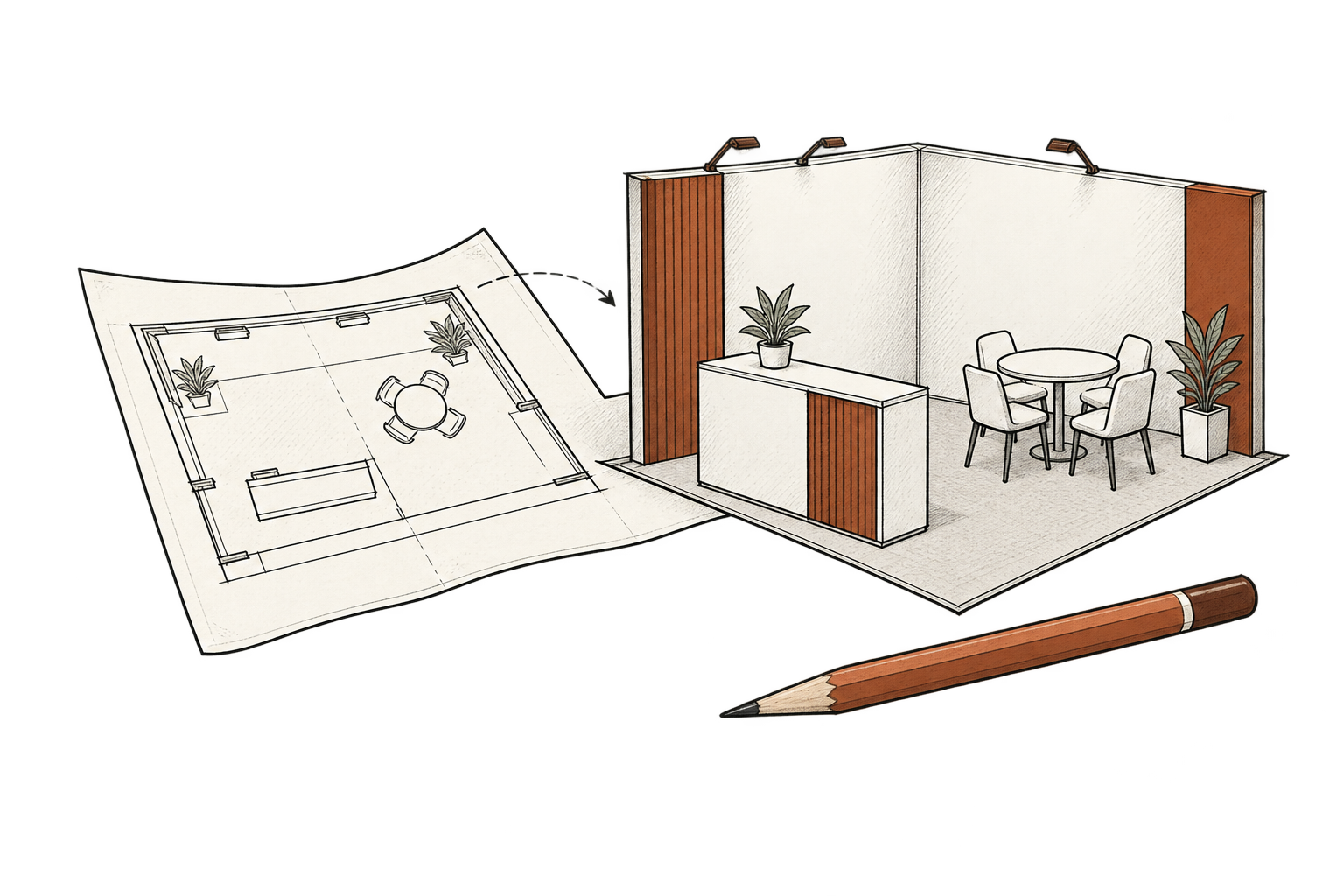
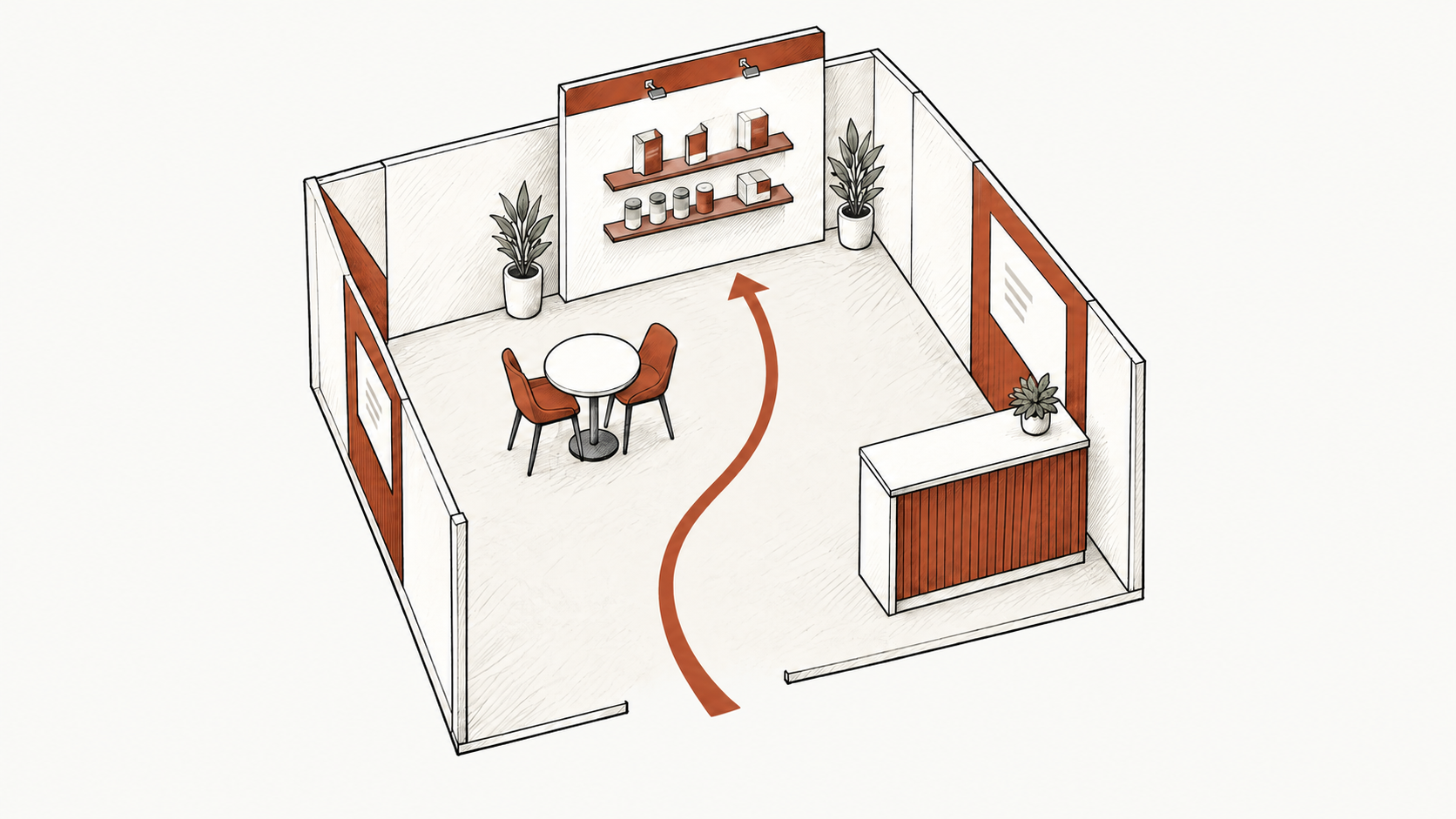
To effectively use this advantage, map out your layout by predefining key zones: entry points, product displays, interactive areas, and meeting spots.
Thoughtful placement maximizes both visibility and visitor engagement.
A useful approach is to sketch a layout with these critical zones, focusing on how foot traffic will naturally flow through your space. Identify which areas of the booth are ideal for draws like product demos or presentations.
This flow planning not only enhances user experience but also effectively controls traffic movement, making it easier for your team to engage with attendees.
As you plan, coordinate with your sales and marketing teams to align on objectives.
This collaboration ensures that the booth’s layout helps meet your business goals.
Think about where to position your most eye-catching elements, including screens, interactive displays, or large branding visuals. Prioritize sections that naturally capture attention, like corners or central displays, to emphasize your primary offerings.
One common mistake is to overcrowd the space with too many elements, which can lead to a cluttered appearance that’s overwhelming for visitors.
Instead, maintain a balance between a functional structure and open space. This setup invites attendees in and keeps them comfortable and engaged longer.
Aim for a simple, yet innovative design to stand out and create a memorable visitor experience.
By planning your layout strategically, you lay the groundwork for a successful trade show presence that captivates your audience, facilitates meaningful interactions, and showcases your brand effectively.
Start with the big picture and refine based on the unique goals and features of your booth design.
2. Get the Most Out of Vertical Space
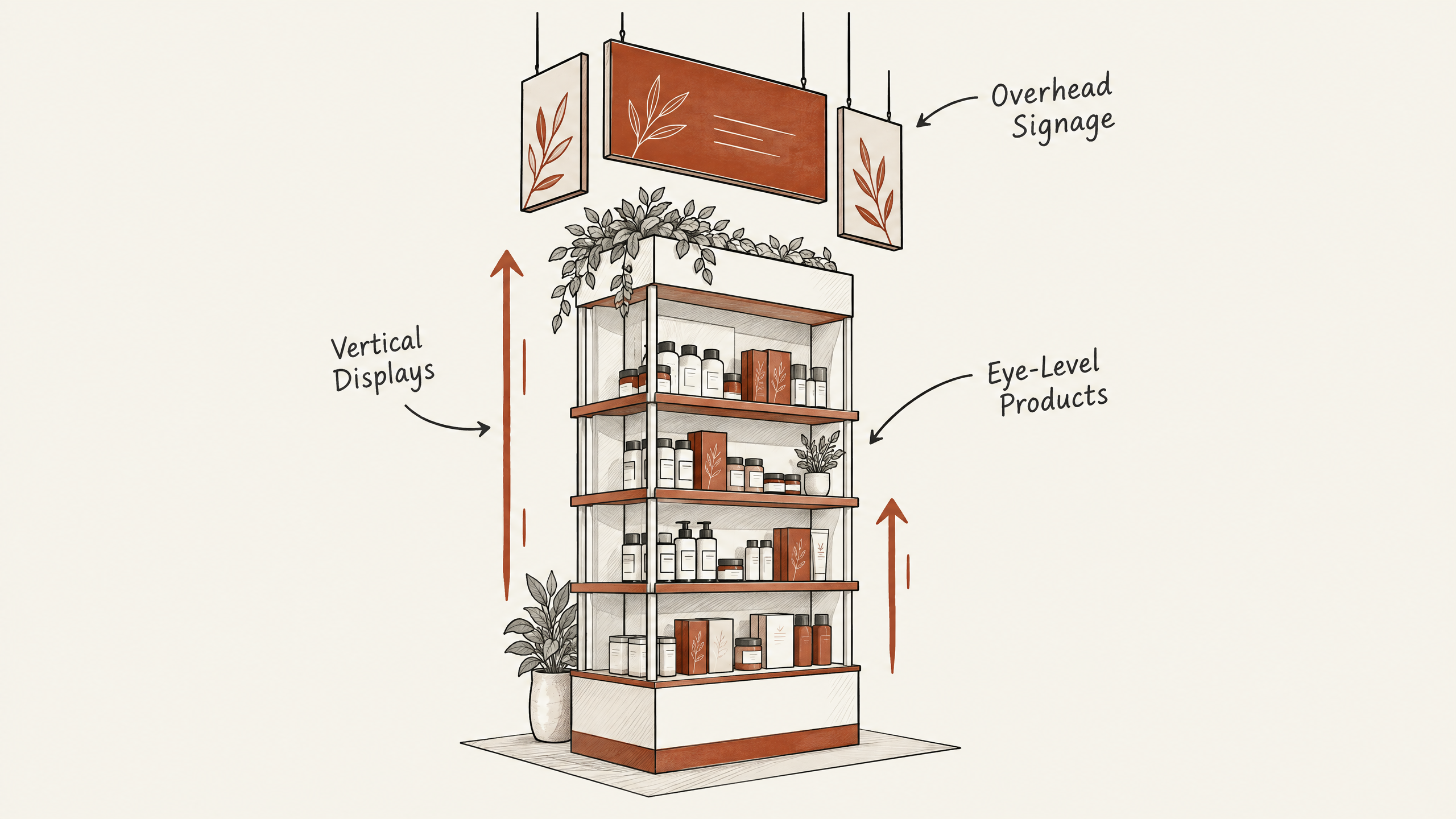
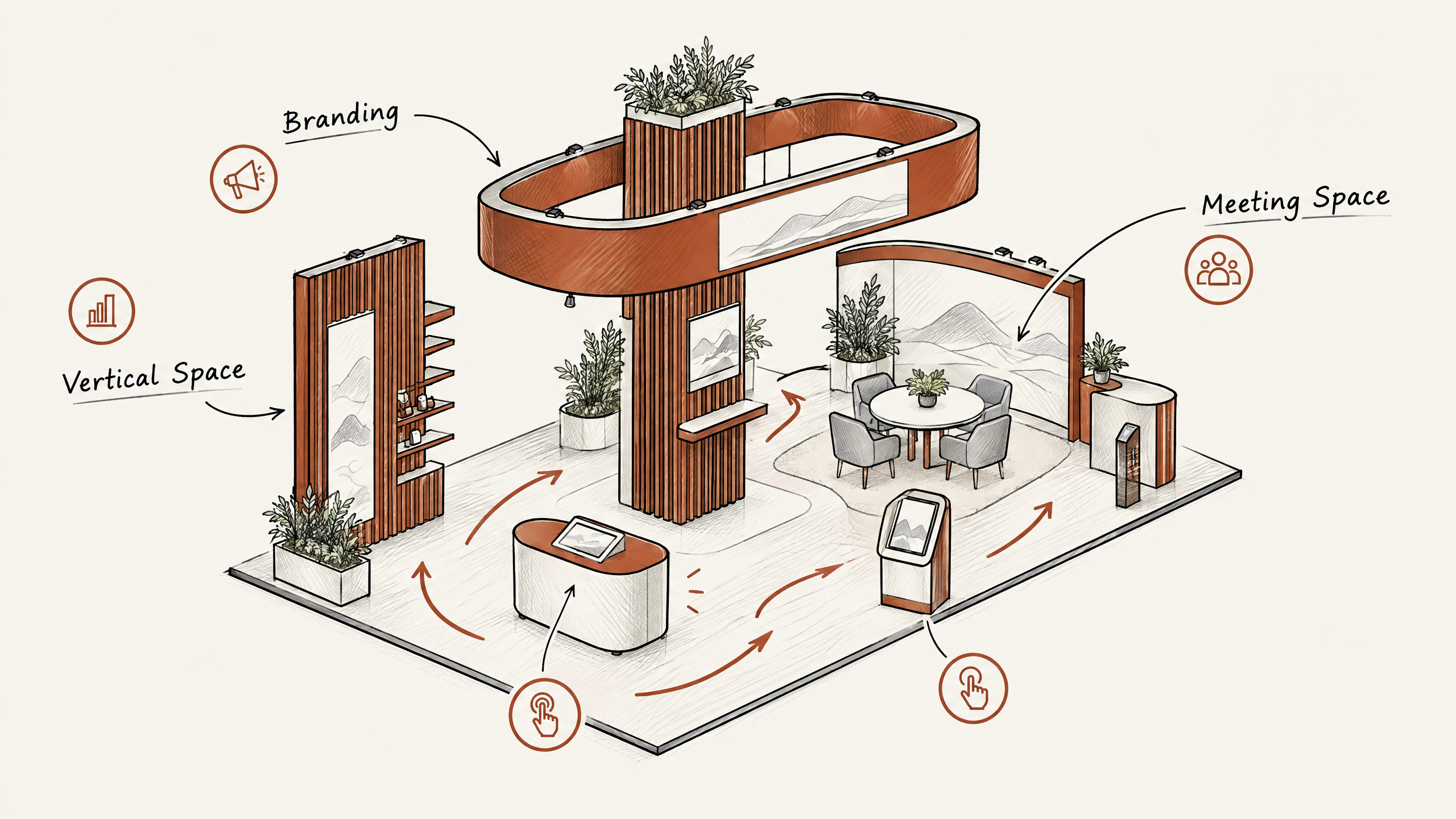
When designing an island booth, it’s easy to focus on the floor layout and overlook the importance of vertical space. Utilizing height effectively allows you to stand out amidst a sea of booths, drawing attention from afar.
Tall structures or signage can make even a smaller booth feel more expansive.
Consider installing overhead lighting or suspended banners to create eye-catching displays that attract visitors from different angles within the exhibit hall.
Strategic use of vertical elements can serve both functional and aesthetic purposes.
Tall shelving units not only add storage opportunities but also show products at eye level.
This can transform underutilized spaces into valuable zones for marketing materials.
When choosing materials and structures, pay attention to weight and stability to avoid safety issues or high setup costs.
Collaborating with an experienced partner like Exhibitant can help navigate these potential pitfalls, ensuring your booth design adheres to venue regulations.
While making the most of vertical space, it’s crucial to maintain visual balance. Avoid crowding the upper sections with too many signs or decorations, as this can overwhelm visitors and dilute key messages.
A well-placed, bold graphic at a significant height can draw attention to a product or brand message, guiding the audience naturally towards your booth.
3. Incorporate Interactive Technology
Incorporating interactive technology into your island booth can revolutionize the visitor experience. This choice transforms traditional exhibits and keeps your booth engaging and memorable.
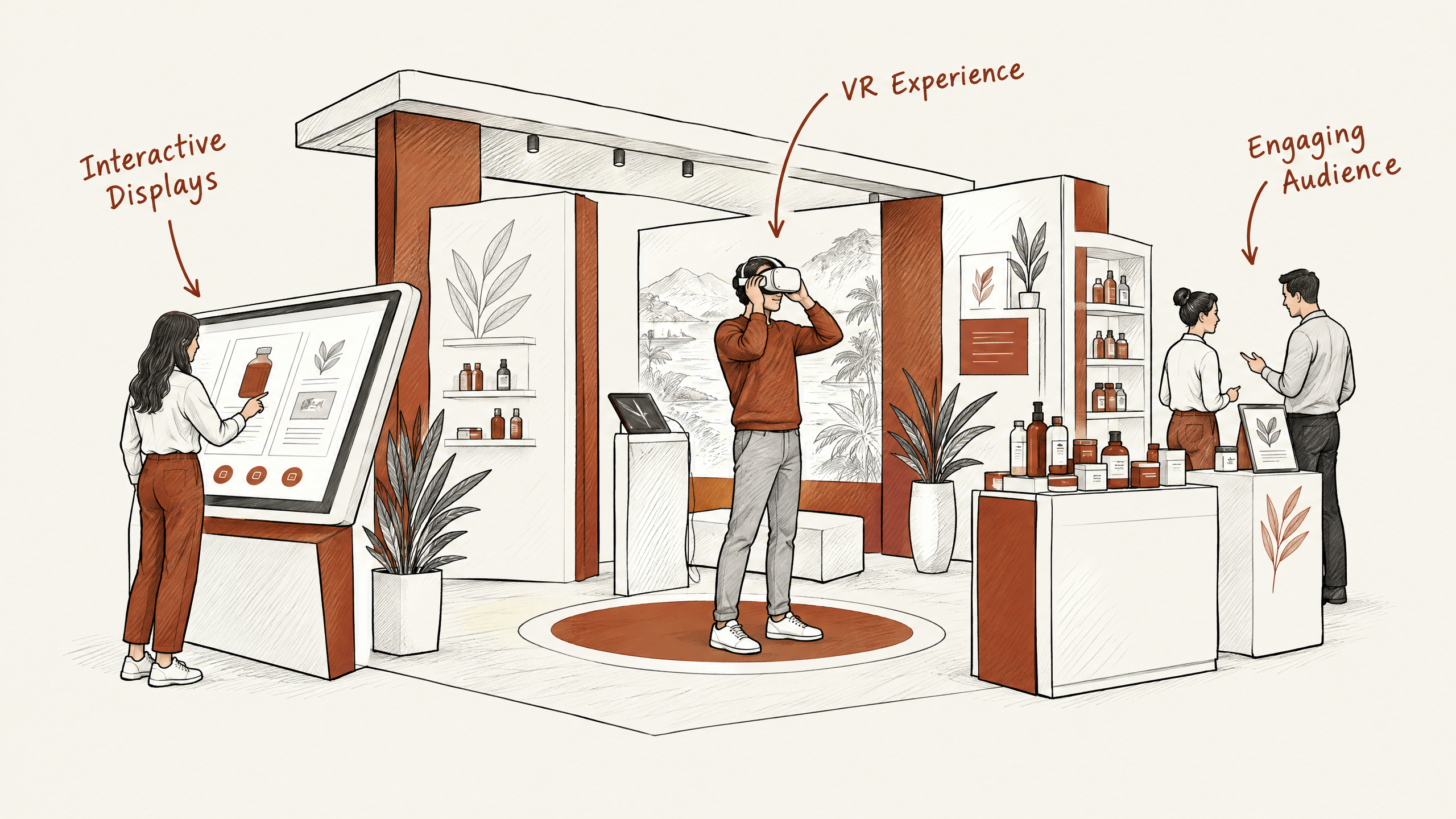
Interactive displays, virtual reality (VR) equipment, or touchscreens can capture attention and drive engagement.
When choosing technology, align it with your audience’s interests and your brand goals.
For instance, at a tech-focused trade show, a virtual reality demonstration might be effective in showcasing advanced product features.
This technique not only draws visitors but also provides a memorable hands-on experience with your offerings.
Planning this setup requires logistical consideration.
Equipment placement should allow multiple guests to comfortably engage at once, avoiding crowding. Software compatibility is another critical factor ensuring your tech integrates seamlessly with your existing tools can save headaches.
Consistent staff training on this technology is necessary for smooth operation and troubleshooting on the show floor.
A potential pitfall is investing heavily in complex technology without a clear purpose.
Expensive gadgets must aid in communicating your message, not just stand out visually.
Always have clear objectives for each interactive element, whether gathering leads, educating on product features, or entertaining and building brand loyalty.
With thoughtful integration of interactive technology, your island booth becomes a hub of activity and learning.
As visitors actively participate, the likelihood of them remembering your brand after the event substantially increases. Always balance novelty with relevance to create a focused and meaningful experience around your product or service.
4. Consistent and Clear Branding
Effective branding is crucial for any island booth.
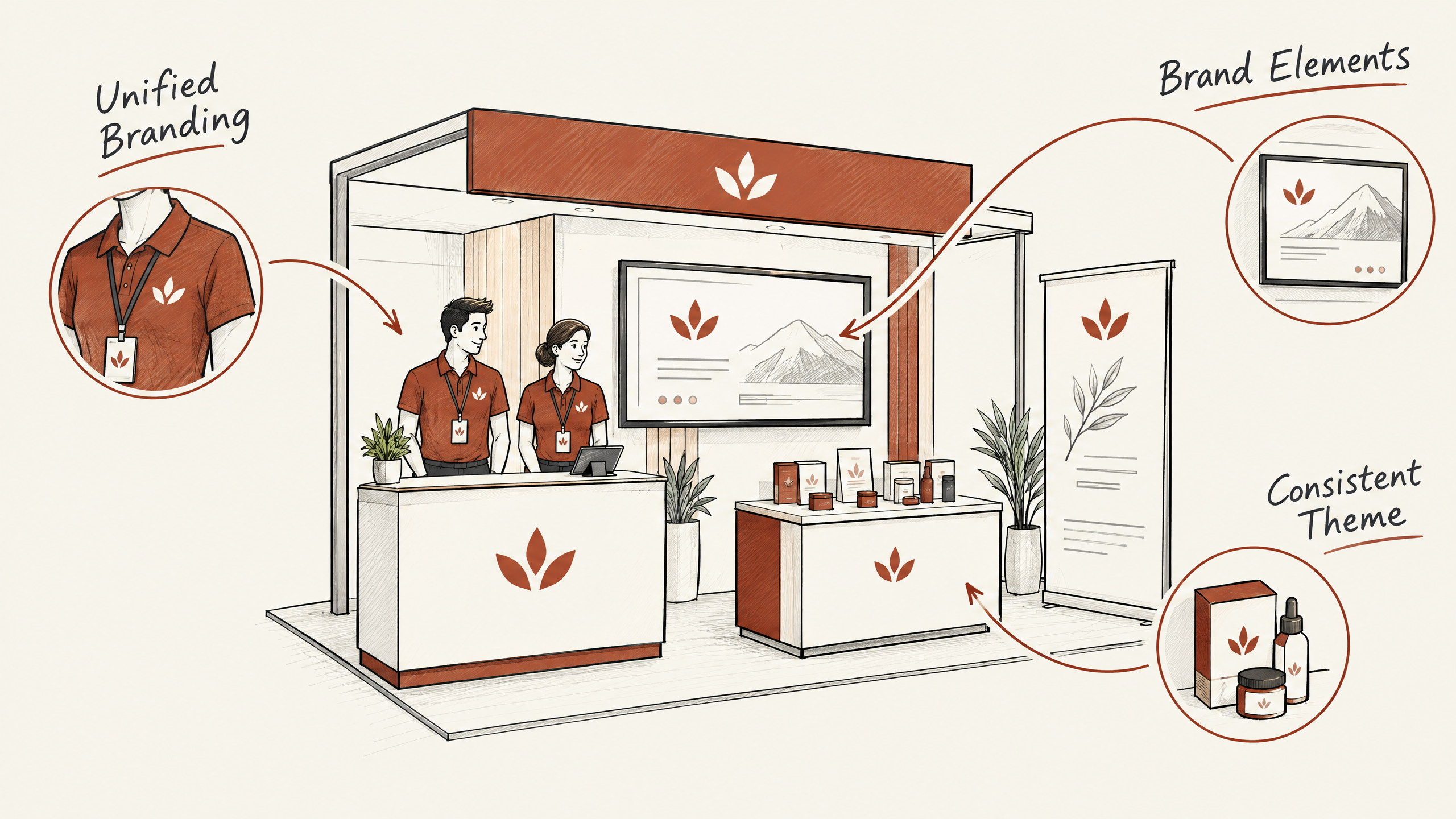
A consistent and clear design helps reinforce your company’s identity and message. Your booth should show your brand’s colors, logo, and typography.
These elements must be seamlessly integrated into both the exterior and interior areas of the booth.
A mistake many businesses make is neglecting cohesion. Every visual element should feel part of a unified whole.
This helps attendees immediately recognize and associate your booth with your brand.
For example, your digital displays, product showcases, and staff attire should maintain the same branding themes.
Consistency helps reinforce your message at a glance.
Consider a hypothetical tech company, “Innovate,” exhibiting at a trade show.
“Innovate” uses a bold electric blue as its primary color, with sleek black and white as complementary shades.
Every aspect of their booth, from the banners to the floor graphics, features this color scheme.
This helps make sure that participants walking past immediately identify the booth with “Innovate”.
While branding should be visually present, avoid overwhelming visitors with too much content.
Prioritize key messaging. make sure that essential information, like your company name and tagline, is prominently displayed without cluttering the space. Striking this balance enhances brand recall without causing visual fatigue.
For successful branding, collaborate with your graphic design team early.
They can develop the booth visuals in line with your marketing goals. Engage stakeholders, like marketing directors and branding teams, for feedback and approvals.
This prevents disjointed presentations. Strong brand presence can elevate engagement and leave a lasting impression.
5. Design for Easy Traffic Flow
A well-designed island booth must allow for smooth traffic flow. This ensures that visitors can comfortably navigate your space and engage with your displays or representatives.
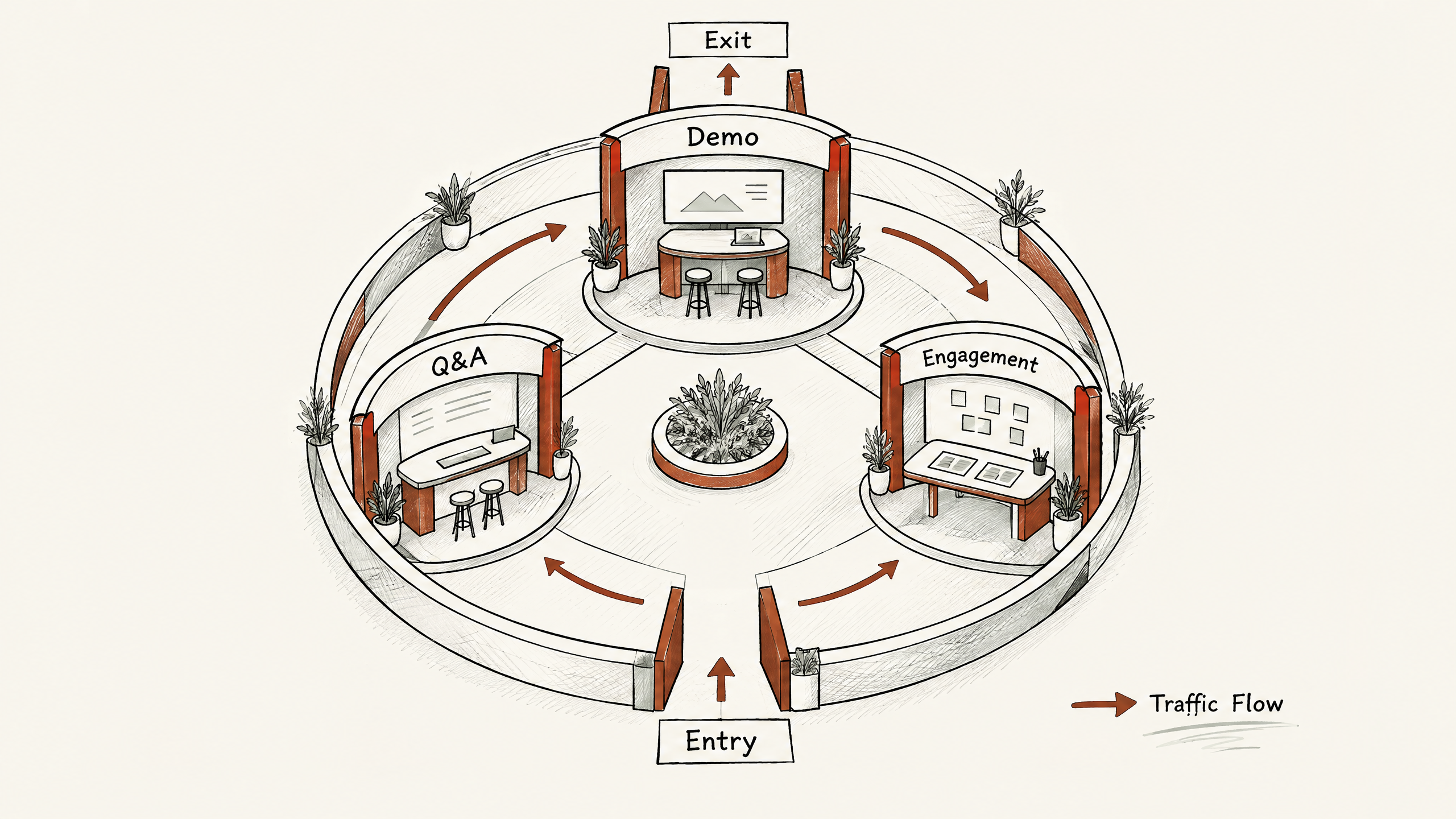
Begin by identifying the main entry and exit points to your booth.
Position your key attractions or interactive elements within these pathways. This will encourage visitors to move naturally through your exhibit.
Consider implementing a circular or loop layout to maintain flow.
Think of your booth as a series of semi-connected stations rather than one large space.
Each station should have a clear purpose. For example, one station might feature a product demo, while another could host a Q&A or presentation area.
This approach distributes visitors evenly and prevents crowding around a single area.
Use visual cues like floor markings or strategic furniture placement to subtly guide visitors.
Avoid creating dead ends or overly narrow paths that can lead to congestion.
Instead, use open spaces to foster a sense of movement and accessibility.
If there are areas where visitors often cluster, such as near screens or demos, make these spaces larger to accommodate more people comfortably.
During the show, assign team members to monitor the flow. They can assist in directing visitors and adjusting elements to relieve bottlenecks.
An example would be moving table displays slightly to widen a path.
Designing for traffic flow is not just about the layout on paper.
It requires observation and flexibility to adapt to real-time conditions.
Remember, easy navigation enhances the attendee experience and maximizes engagement.
Prioritize visitor comfort and accessibility, and they are more likely to spend time in your booth.
A thoughtful layout not only attracts attention but also retains it, giving you more opportunities to make meaningful connections.
6. Create Inviting Meeting Spaces
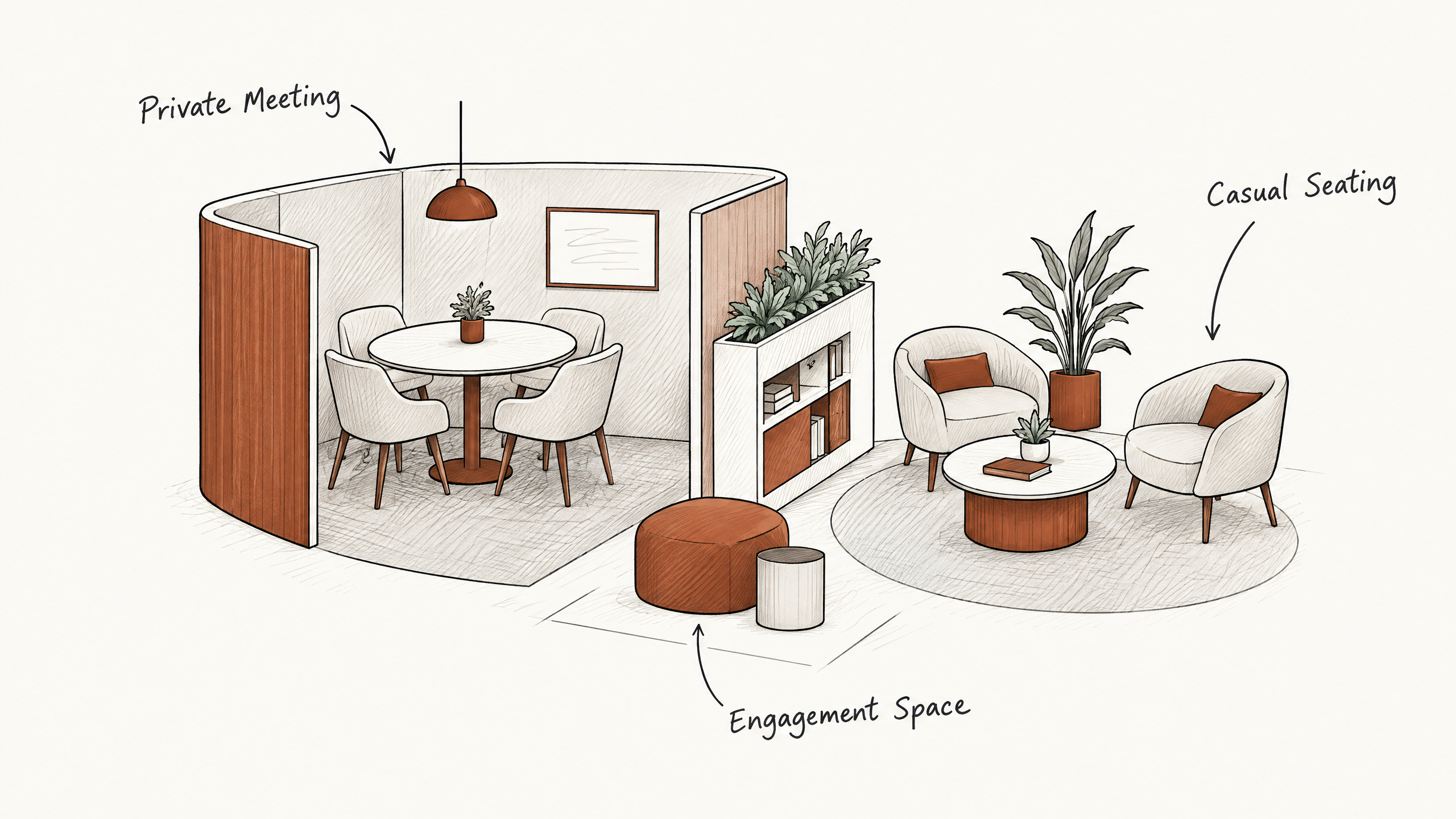
When designing an island booth, it’s crucial to include meeting spaces that invite attendees to sit down and engage in conversation. These spaces should be strategically placed within the booth to offer a sense of privacy while remaining accessible.
Consider the types of conversations you expect: private discussions might need secluded areas, whereas quick chats could happen in a more open setting.
For more formal meetings, plan for semi-enclosed areas that include seating and a small table. This setup can help facilitate deeper engagement and allows team members to conduct detailed presentations or negotiate deals without distractions from the surrounding bustle.
It’s often a good idea to have casual seating areas, too. Use smaller tables with seats arranged in a circle or semi-circle for informal gatherings.
This can help break down barriers and make conversations feel more relaxed and friendly.
Look at the furniture choices carefully, as these can influence the atmosphere and functionality of your meeting spaces.
Comfortable seats make a difference, but they should also align with the overall theme and branding of your booth for a unified look.
Don’t overlook small touches like coffee tables or padded chairs that can add a level of comfort.
Lighting plays a significant role as well.
Use soft lighting in meeting areas to create a welcoming vibe that draws people in. The goal is to make attendees feel valued and comfortable, encouraging them to spend time at your booth.
Keep accessibility in mind. These meeting spaces should be easily identifiable and reachable without disrupting traffic flow.
This encourages attendees to enter and stay longer, increasing the likelihood of building meaningful connections during the show.
Always weigh the need for privacy against the accessibility of these spaces to find the right balance.
7. Evaluate and Adjust Post-Show
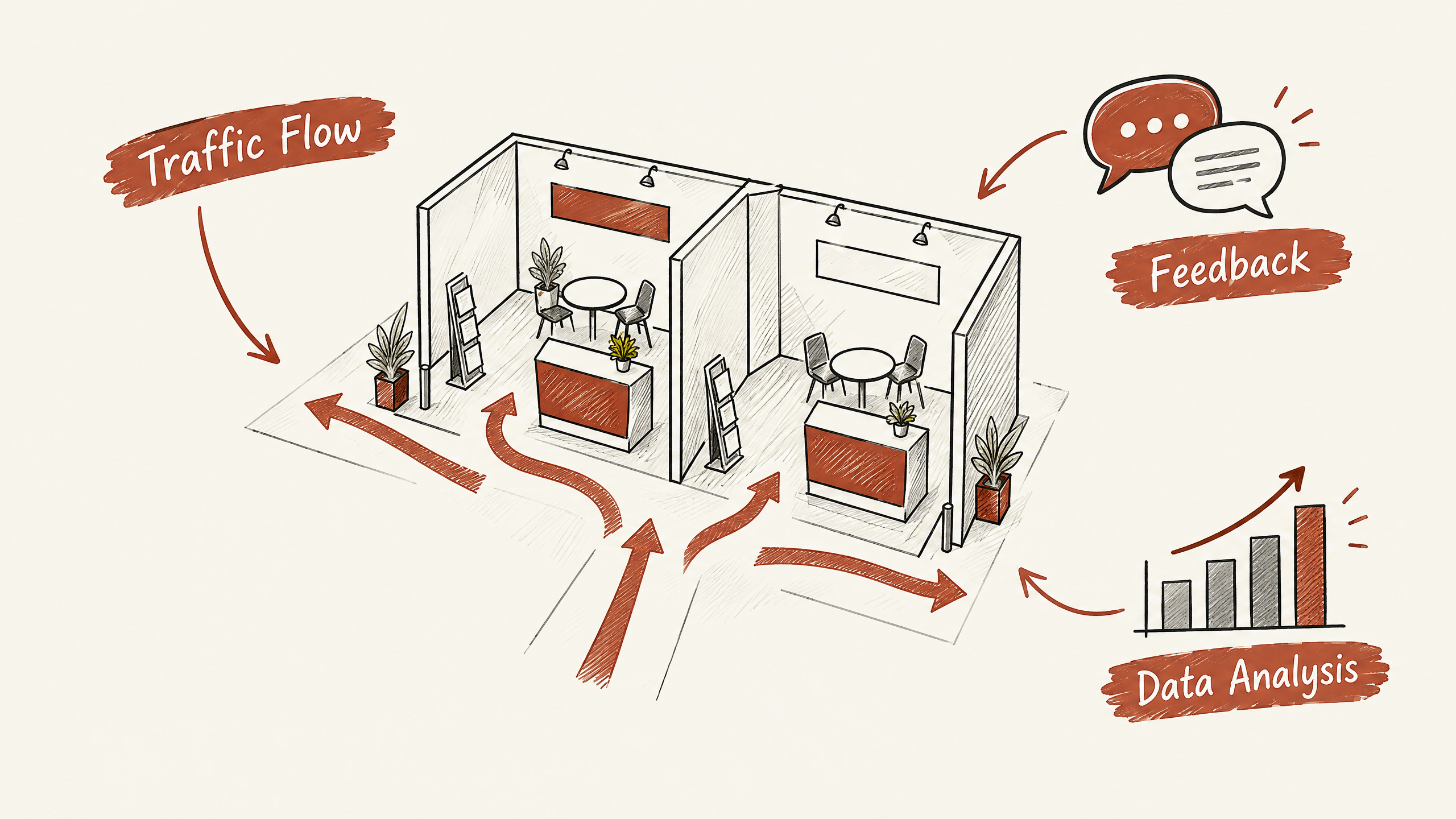
After the trade show ends, it’s important to evaluate the performance of your island booth layout.
This involves gathering feedback from your team and attendees about what worked and what didn’t. Ask questions regarding traffic flow, the effectiveness of meeting spaces, and how well the booth represented your brand.
Analyze the data collected during the event, including metrics like visitor count and engagement levels.
Compare these numbers to your pre-show goals to identify any gaps. This understanding will help you pinpoint areas for improvement.
Adjustments can range from rearranging elements for better access to investing in more interactive technology.
Post-show assessments should lead to an actionable plan for future events. List specific changes you aim to use next time.
Updates may include new signage, repositioned displays, or even tweaks to the booth’s overall design. Document these plans in detail, ensuring they’re ready for reference when strategizing your next exhibition.
Exhibitant can assist in refining your booth decisions by providing tailored insights and strategies based on our trade show expertise.
Use this as a springboard for future success.
A thoughtful evaluation process not only prepares you for the next show but also ensures you’re continually improving your trade show presence.
Before You Go
As you prepare to put all these tips into action, take a moment to reflect on how each element contributes to a cohesive and effective island booth.
By combining strategic planning, attention to vertical space, interactive elements, and clear branding, your booth will stand out in the trade show environment.
Designing for smooth traffic flow and creating inviting meeting spaces adds to the overall experience for attendees.
This thoughtful design approach enhances your booth’s functionality and appeal.
Once the show concludes, adjust and refine your strategies based on observations and results to continuously improve your setups.
Turning these insights into actionable steps is essential.
Begin by reviewing your current booth layout and identifying areas that could benefit from these improvements. With each event, your goal is to increase engagement and drive better results.
By focusing on these comprehensive strategies, you’re well on your way to creating a booth that not only attracts but engages and converts potential clients.
Need a booth plan?
Turn show goals into a practical exhibit path
Share your footprint, timeline, and priorities. Our team can help shape the booth direction, graphics, and project support.
Keep planning
More exhibit guidance
Keep exploring practical advice on booth planning, marketing, and getting more from your next show.
Tell us about your business, the buyers you want to reach, and what you want to achieve. Whether you need more sales conversations, stronger marketing, or a trade show presence, we’ll help you identify where to focus and what support makes sense. Together, we can shape a practical plan around your priorities, budget, and timeline.
 Lorena G.
 Louie J.