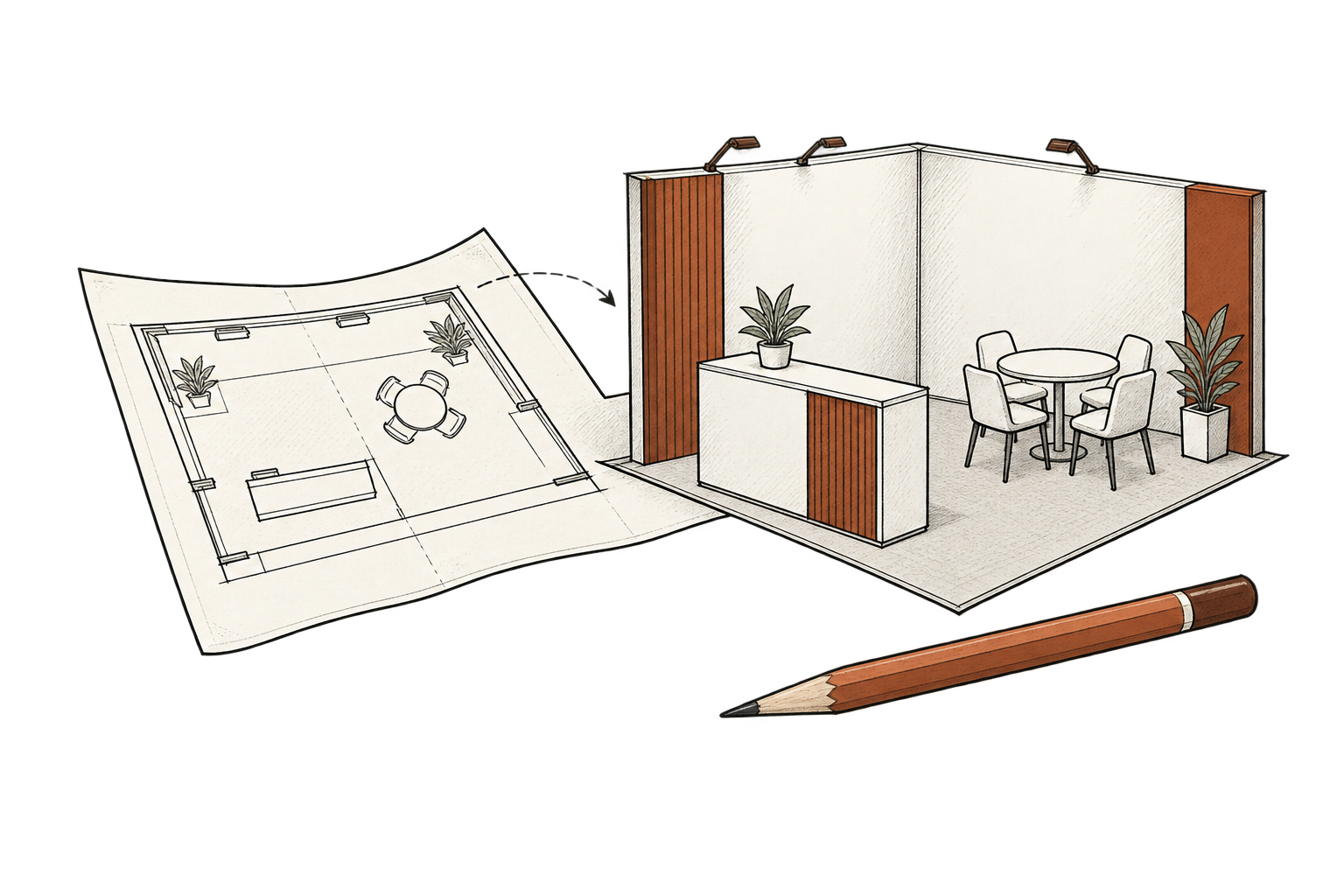
Crafting an effective layout starts with understanding the journey you want visitors to experience. You want them to feel welcomed and intrigued.
Think of your booth as a stage, showcasing a performance that highlights your brand’s best features.
I’ve been in countless trade shows, each unique, yet the really successful ones always have layouts that command attention. But how do you ensure yours does too?
Will it be memorable?
Here, I’ll explore into six key steps that I believe are crucial when setting up your trade show booth layout. It’s about laying the groundwork right from the start, establishing a plan that works like a well-oiled machine.
Key Takeaways:
Prioritize the attendee’s perspective when planning booth layouts.
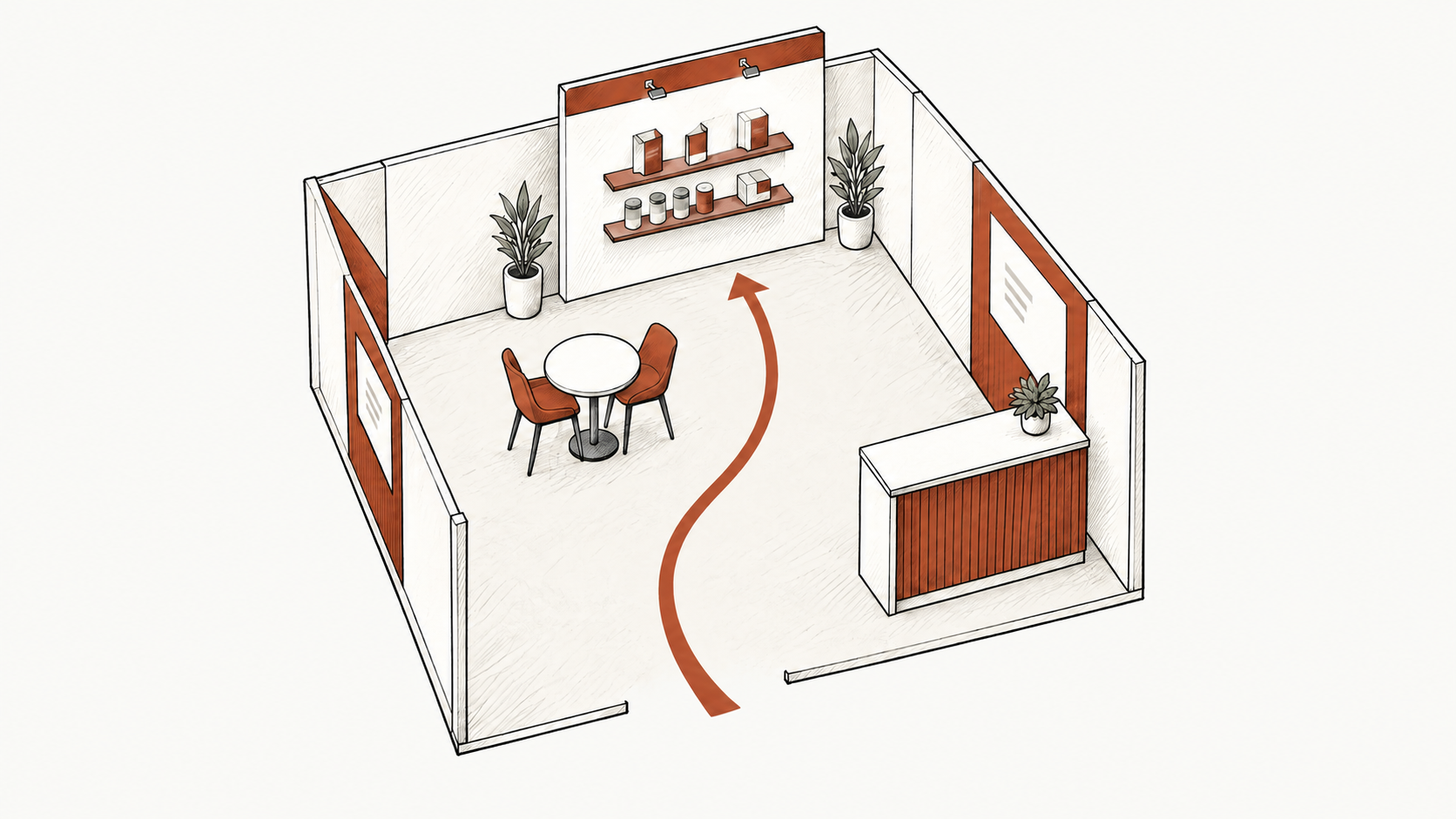
When designing your booth, understanding traffic flow is essential. The space should allow for smooth movement.
You need to consider how attendees will enter, explore, and exit your booth without feeling cramped.
Think about using curved or circular paths rather than straight lines.
Circles can guide visitors through, almost like a gentle current leading them on a journey.
Ensure entrances and exits are clearly defined.
Allow space for groups to gather without blocking pathways.
Provide resting spots like benches if your booth is particularly large.
By really focusing on traffic flow, you not only enhance the visitor’s experience but also increase the time they spend engaged with your content.
2. Define Engagement Zones
Designating distinct engagement zones in your booth is essential.
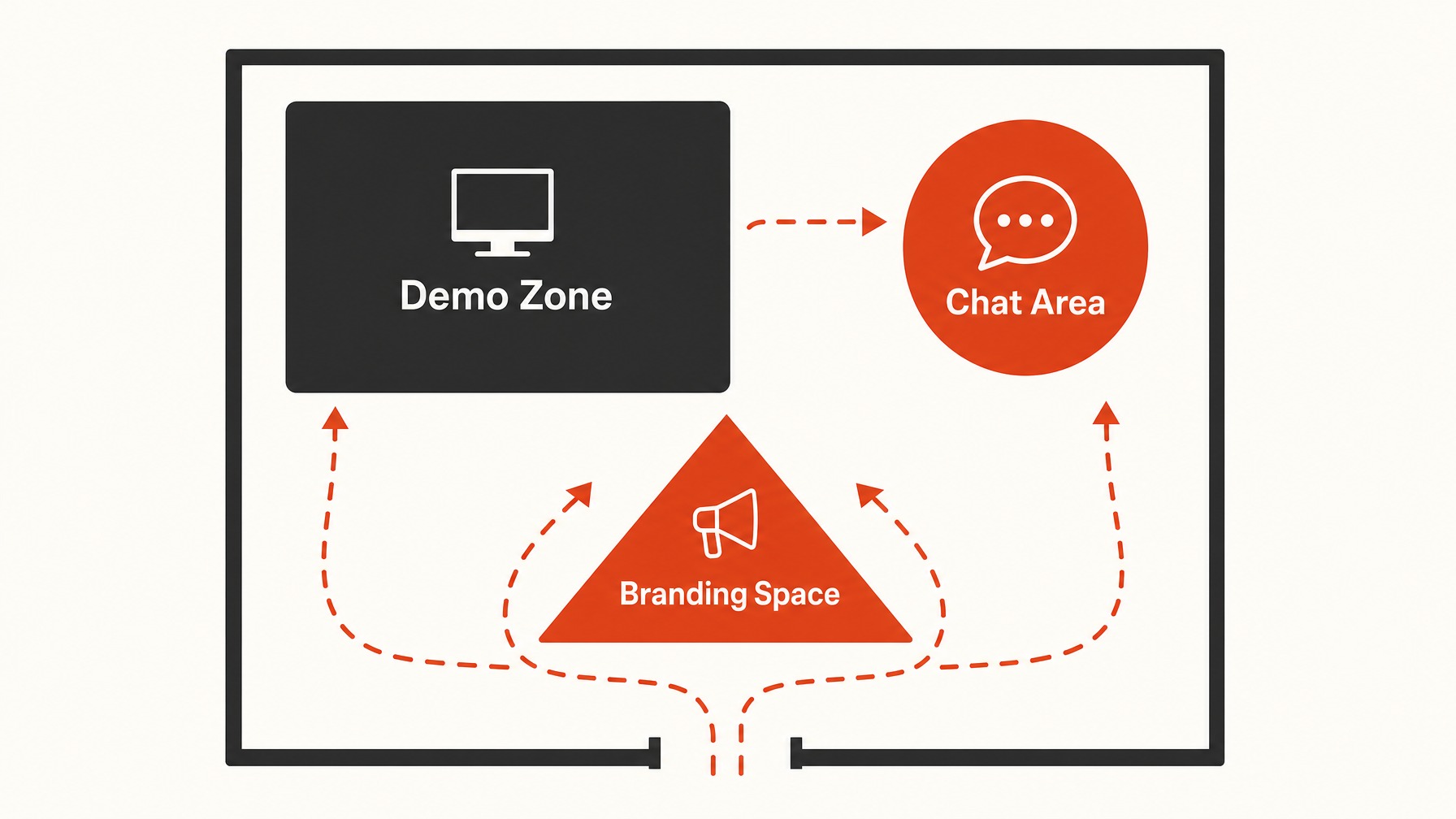
This involves sections for product demonstrations, interactions, and even casual conversations.
I’ve seen booths where everything is crammed together, diluting the impact. Instead, look to create zones, like a well-plotted map highlighting points of interest.
Set aside space for active demos.
Design informal areas for customer chats.
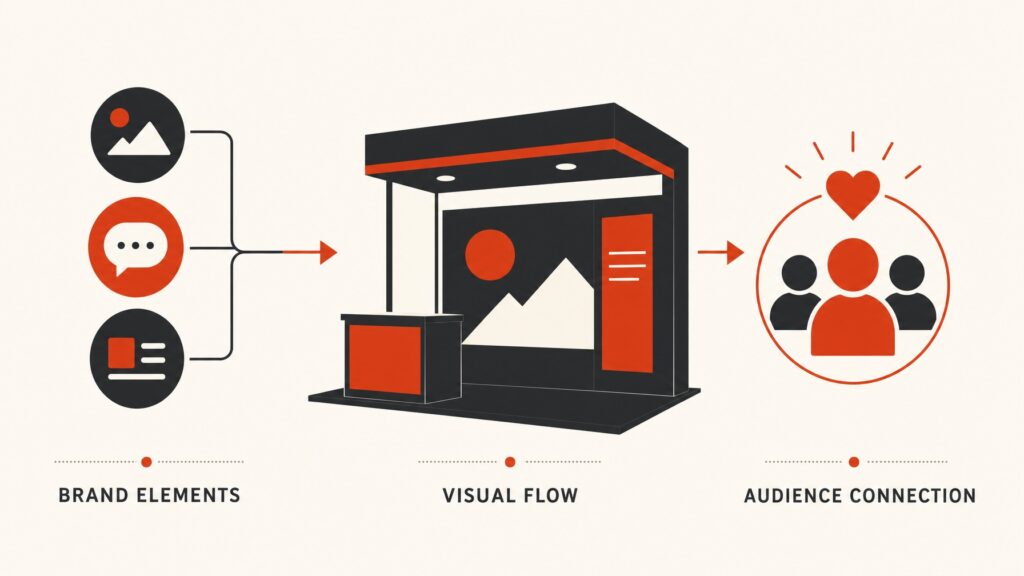
Include a visually engaging area for branding.
A varied setup not only captivates but also helps manage foot traffic, allowing attendees to navigate more freely.
3. Utilize Vertical Space
One thing often overlooked in booth design is the vertical space. Many times, exhibitors focus too much on the ground plan.
But the sky or rather, the ceiling is the limit.
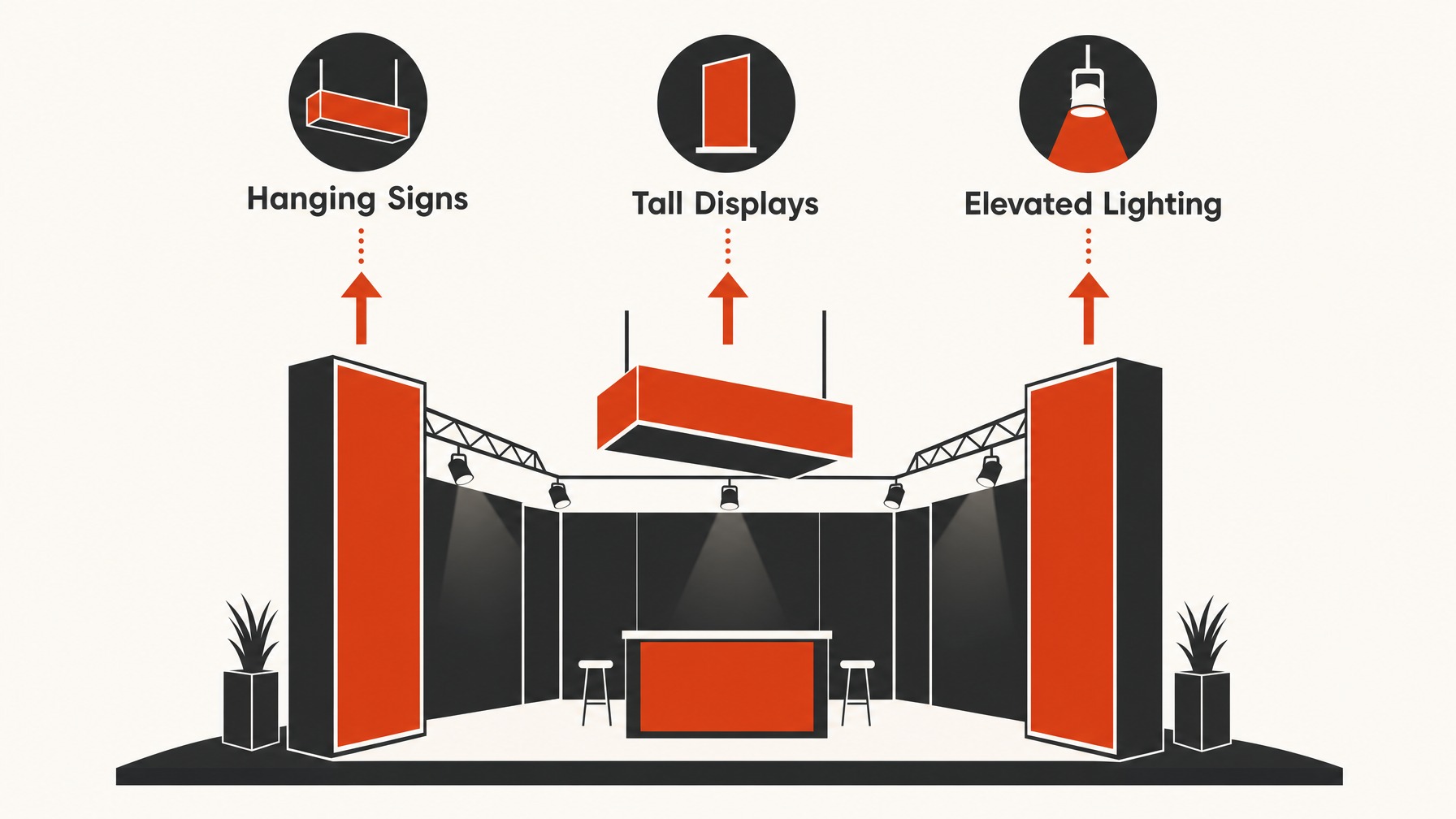
Using vertical space can be like adding volume to a symphony, enhancing overall impact. Consider hanging large branded signs or banners for visibility from afar.
Invest in towering displays that draw eyes upward.
Use tall shelving for product displays.
Incorporate elevated lighting to highlight areas.
Ultimately, using height effectively can make the space feel larger and more inviting.
4. Choose Materials Wisely
When it comes to your booth, the materials you choose say a lot about your brand.
They can either enhance or hinder your layout.
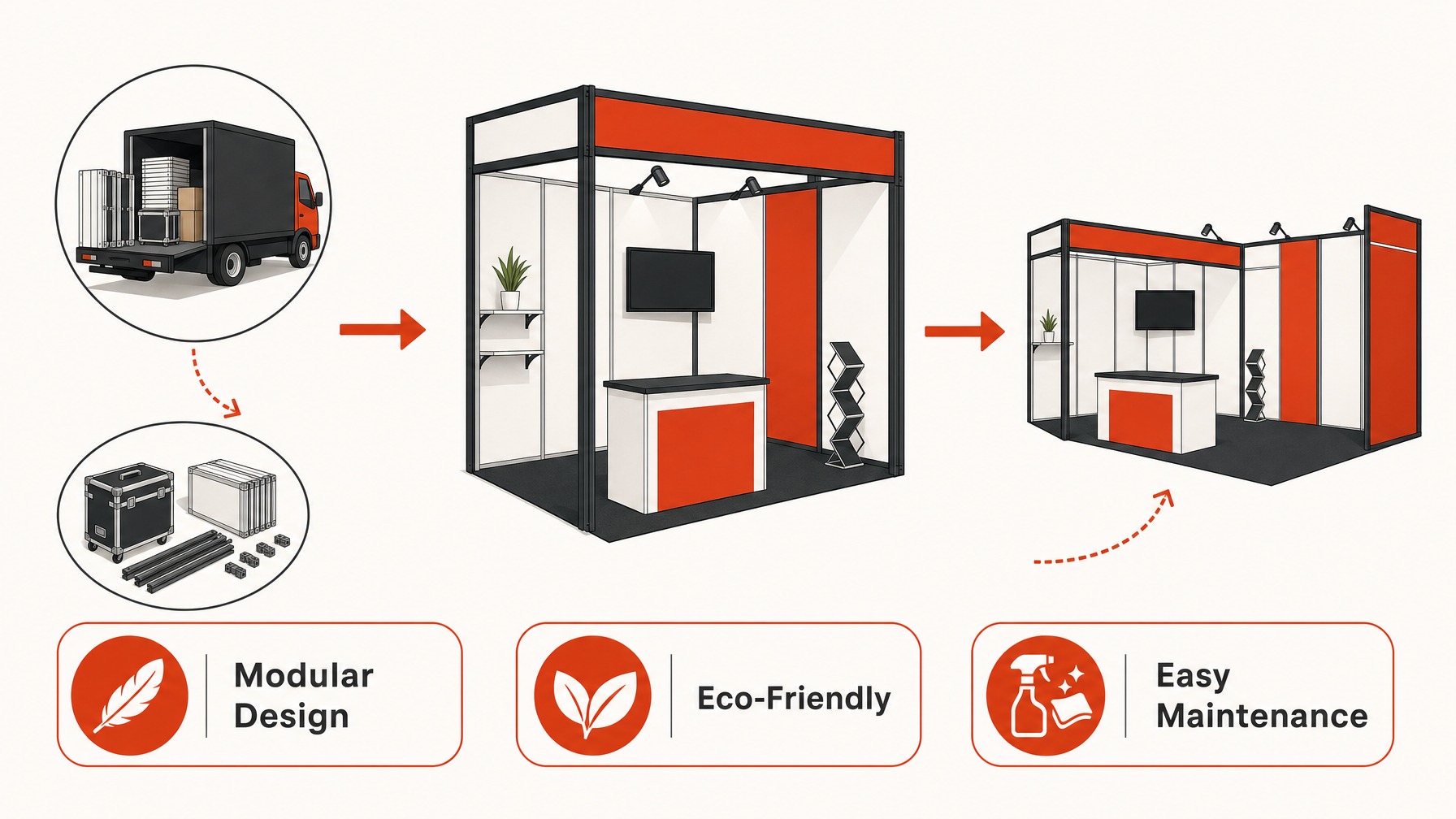
In my experience, adaptable and lightweight materials are like a Swiss army knife they offer multiple benefits.
They are easier to transport and install, saving you time and money.
Consider modular structures for flexibility.
Choose materials that are easy to clean and maintain.
Opt for eco-friendly options to boost sustainability.
When materials align with logistical needs, it streamlines the entire setup and breakdown process, allowing more time for what truly matters: engaging with attendees.
5. Integrate Technology Thoughtfully
In today’s digital age, technology is a cornerstone of any effective booth. It should be an integral part of your layout strategy.
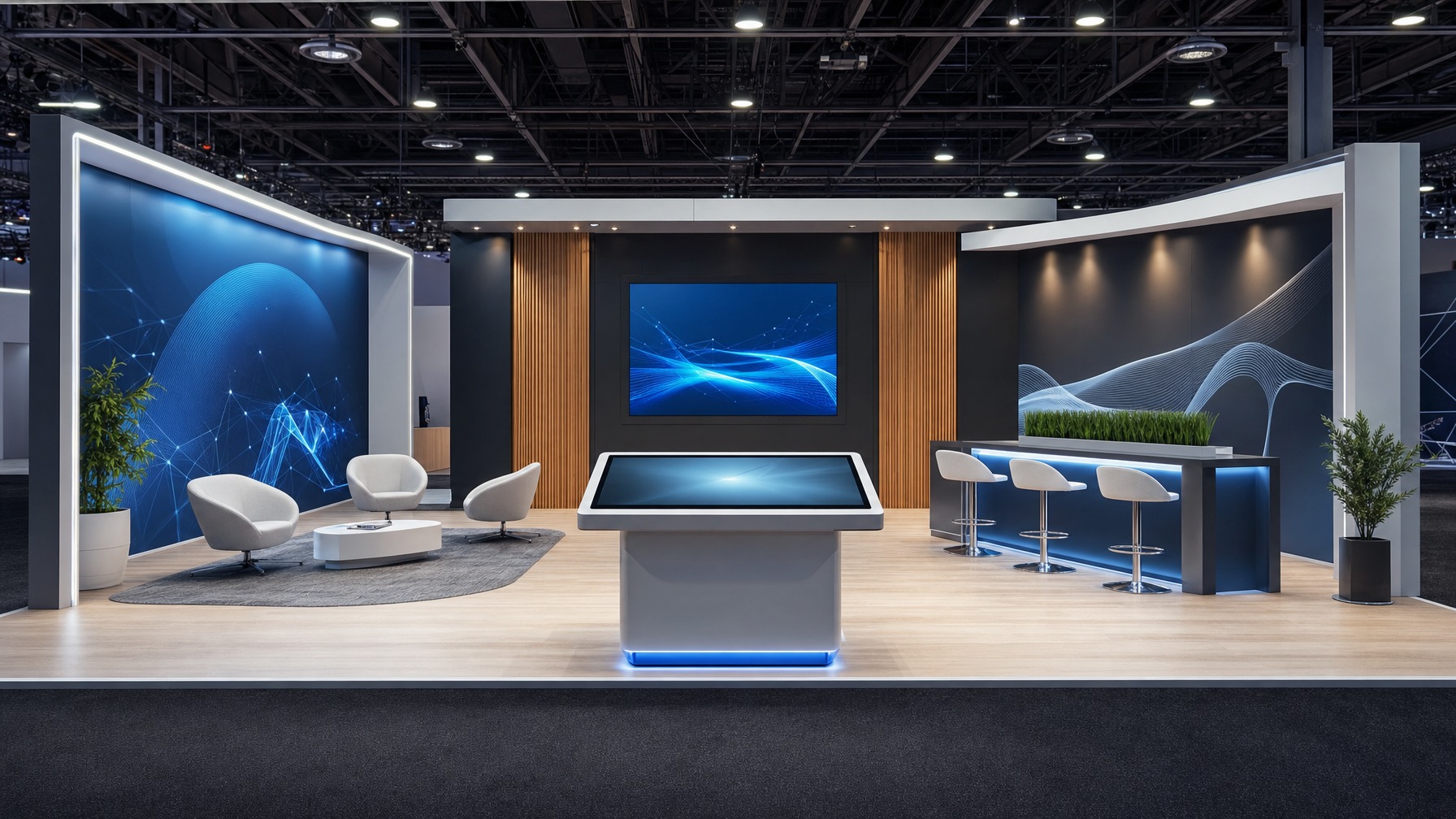
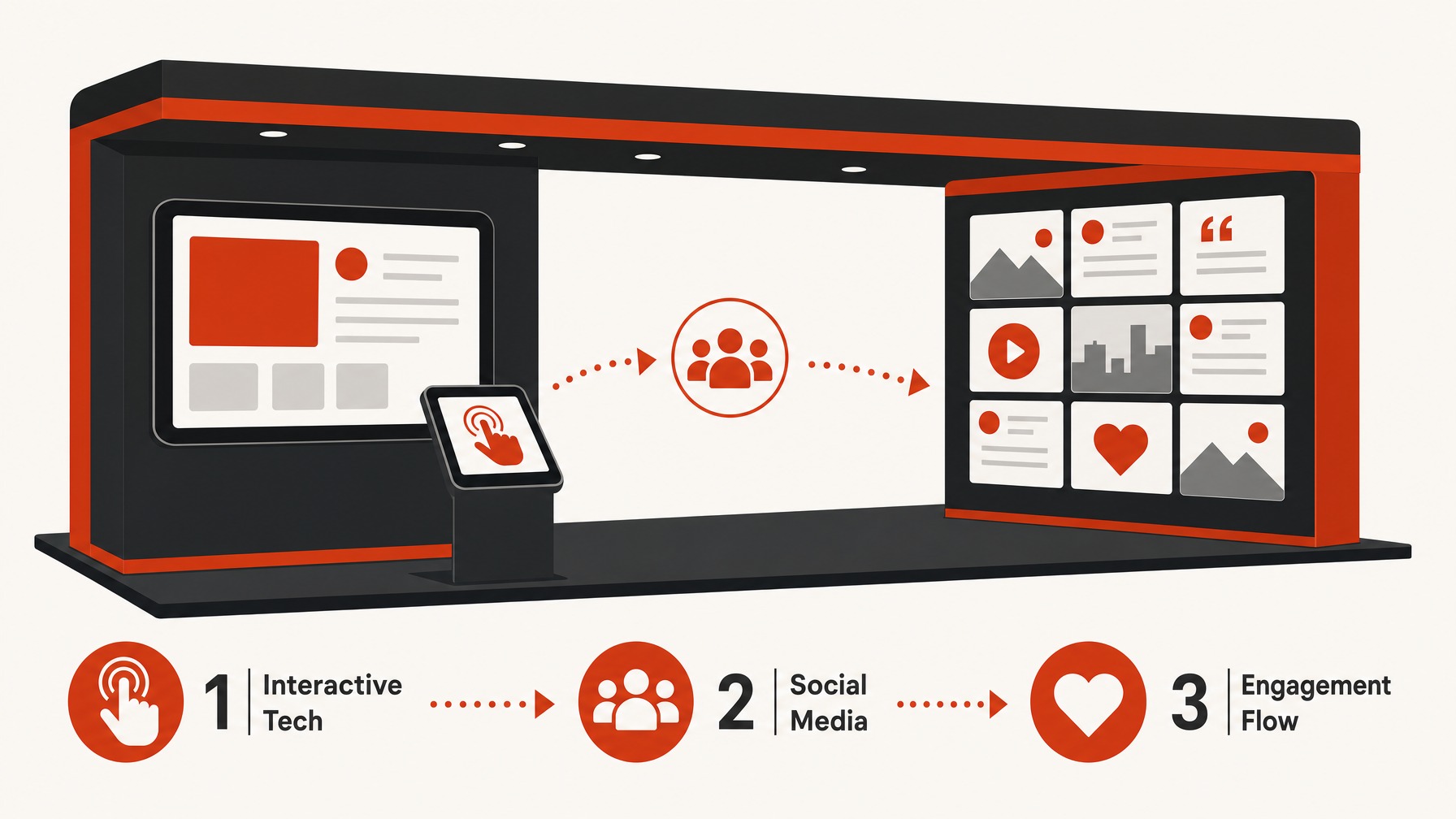
Interactive screens or AR experiences can be like magnets, drawing people in while providing key information.
I’ve seen booths where technology is just tacked on, almost as an afterthought.
This is a missed opportunity.
Position tech displays where they’ll naturally catch eyes.
Use touchscreens to offer personalized content.
Integrate social media walls to boost online engagement.
However, the balance is crucial. Technology should enhance rather than overshadow the human element of your engagements.
Tell us about your business, the buyers you want to reach, and what you want to achieve. Whether you need more sales conversations, stronger marketing, or a trade show presence, we’ll help you identify where to focus and what support makes sense. Together, we can shape a practical plan around your priorities, budget, and timeline.
 Louie J.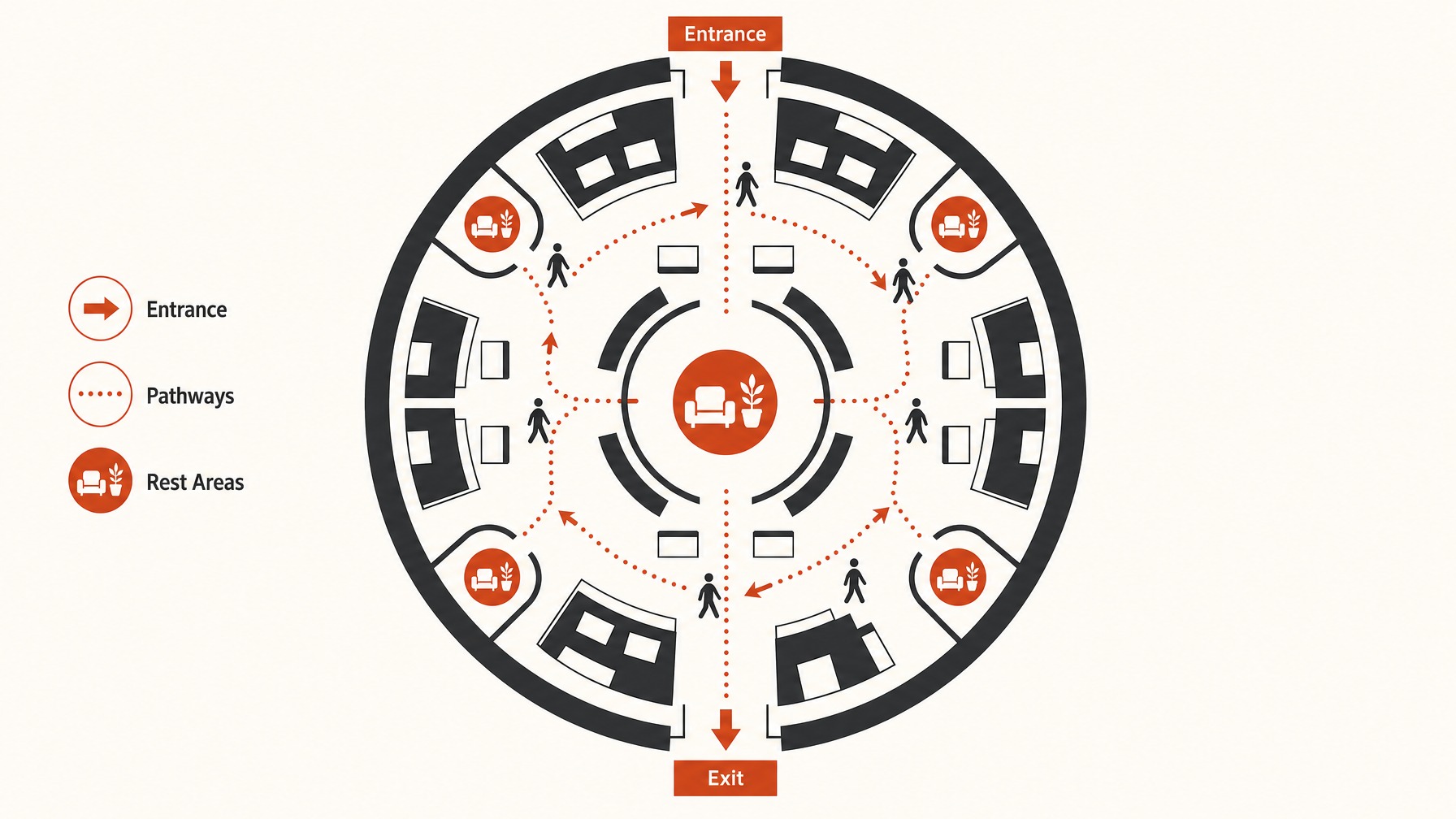
 Lorena G.