 Louie J.
From what I have seen on the trade show floor, the choice of a booth type can greatly impact your company’s visibility and engagement.
It’s fascinating how some companies meticulously pick their structure to align with not just practical needs, but strategic goals as well.
Every booth has its unique edge, yet also distinct challenges that exhibitors must navigate.
With so many configurations available, selecting the right booth can feel overwhelming at times, especially when trying to weigh costs against potential benefits. Inline booths might suit a small exhibiting space, while eye-catching island booths take advantage of a more central location.
I’ve often seen businesses struggle to decide on their approach and change their preferences with evolving needs.
Knowing how each booth type can serve your specific goals helps create a well-thought-out plan that resonates with your audience.
Something that comes up a lot is how exhibitors use modular setups to stay adaptable, which can be indispensable when facing dynamic environments.
Taking the time to understand these possibilities will help design a space that aligns with your branding and outreach objectives.
Today, I want to cover the six most popular trade show booth types and explore their unique benefits from the simplicity of inline booths to the dynamic presence of double-decker setups.
Let’s explore into the nuances and strategies behind each style.
- Optimize small spaces with modular booths to maximize flexibility.
- Island booths offer 360-degree visibility for engaging multiple audience fronts.
- Peninsula booths blend accessibility and openness for dynamic interactions.
- Inline booths suit budget-conscious exhibitors with straightforward designs.
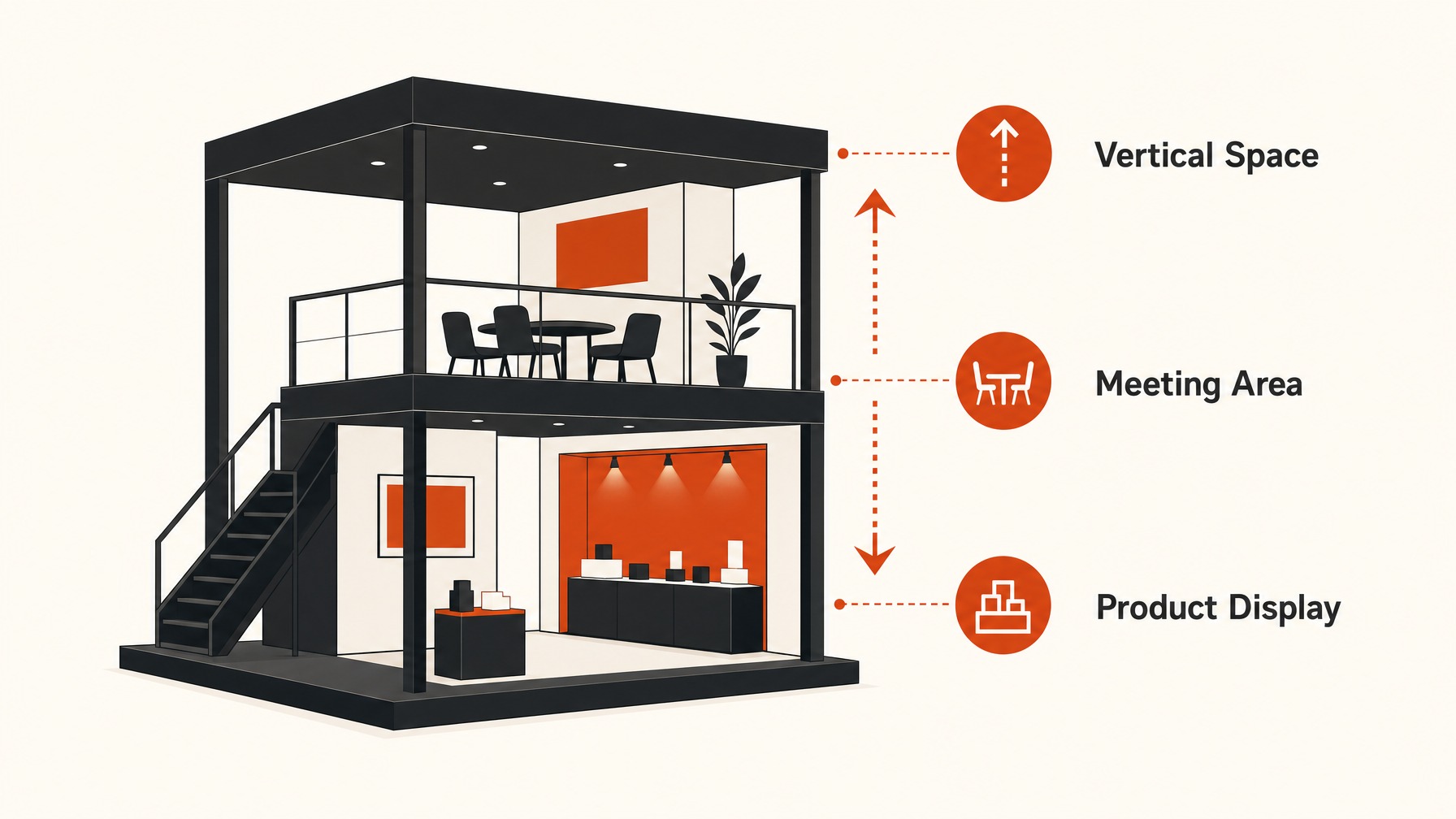
- Double-decker booths provide extra space for meetings and presentations.
You’ll learn how to use these booth types to your advantage.
There’s a lot more to think about, like setup ease and audience interaction.
Each booth type has its own set of strengths that can fit your specific needs.
Keep reading to see which option might be the best fit for you.
1. Inline Booths: Simple Yet Effective
From what I have seen, inline booths are often the workhorses of trade shows, because they are straightforward but can be surprisingly powerful when designed and utilized correctly.
These booths typically line up in a row alongside other exhibitors, and while this might seem limiting, it actually provides a unique opportunity to create an engaging, focused environment within a tighter space.
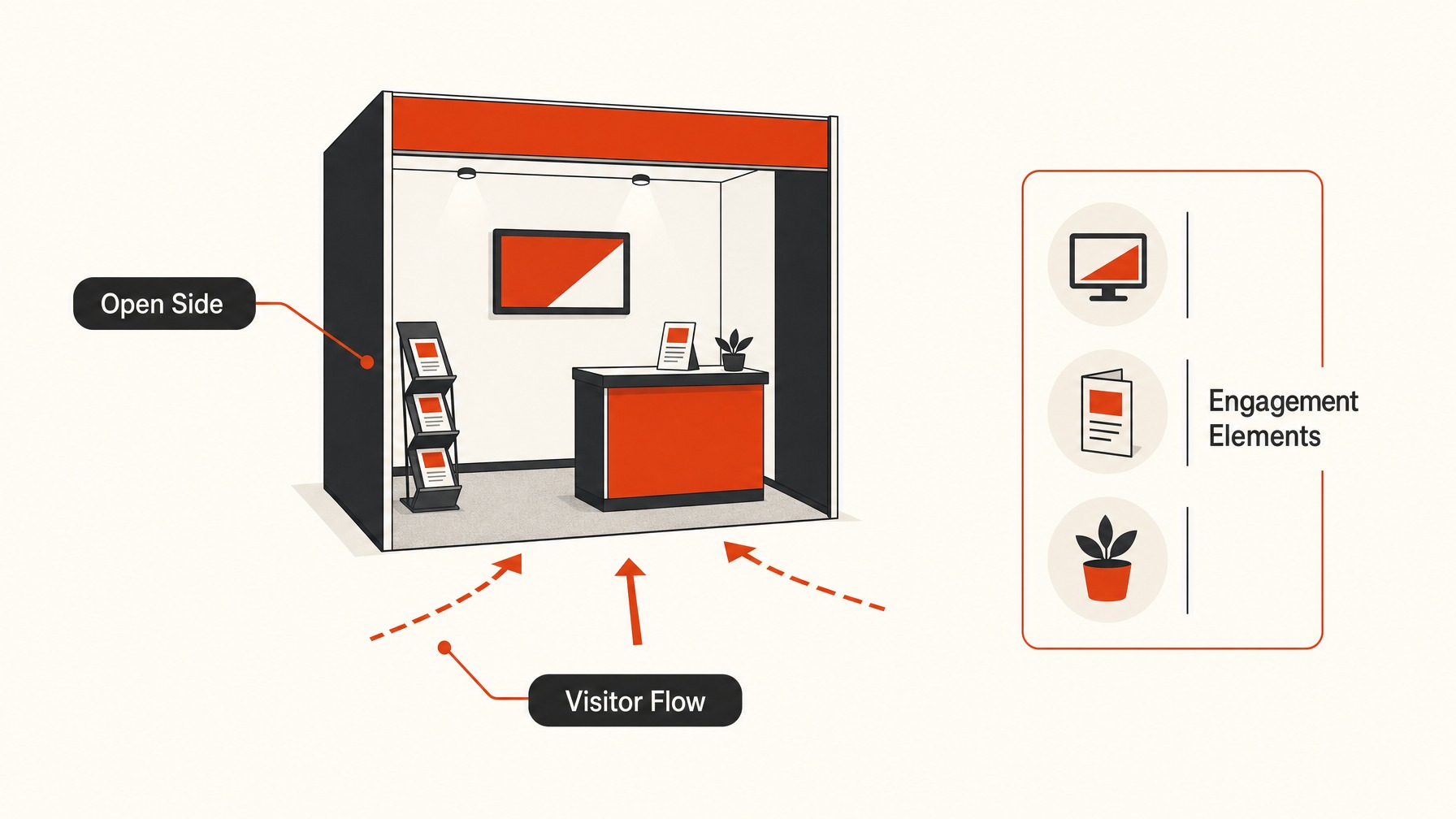
The biggest thing with inline booths is how efficiently they make use of their limited area. With one open side facing the aisle, visitors naturally approach from a direct path, making them easy to capture and engage with quickly.
Choosing a clean design and strategic placement of interactive elements can help make sure attendees’ attention isn’t scattered across too many elements at once.
This type of booth also offers the advantage of cost savings, as inline booths generally have lower prices than larger configurations.
Because of the reduced space and structural demands, they are perfect for smaller companies or those looking to manage their exhibition budgets effectively.
Yet, even with a small footprint, these booths can still feature striking graphics, bold branding, and interactive technology to draw in crowds.
One thing most exhibitors end up doing successfully in inline booths is maximizing their vertical space.
This approach often involves incorporating tall banners, overhead signage, or digital displays that rise above the booth to capture attention from a distance.
Clever use of lighting can also play a critical role in making the booth stand out, drawing attention from the often crowded showroom floor to what really matters.
What we have seen work really well is to have a clear and compelling messaging strategy that focuses on the core offerings of the brand.
Since engagement time can be limited, it’s crucial that attendees know right away what the company is about and why it matters to them.
From my experience, the exhibitors who succeed with inline booths usually have a strong hook and are prepared with concise talking points for every interaction.
Ultimately, inline booths prove that bigger isn’t always better in the trade show world. With strategic design decisions and focused attendee engagement approaches, they can serve as effective platforms for generating leads and building brand awareness.
They provide a compact space that demands creativity and innovation in attracting potential clients and making lasting impressions.
2. Peninsula Booths: Open and Inviting
When we’re talking about the peninsula booth design, what stands out is its openness on three sides. This setup creates an inviting atmosphere that attracts attendees like a magnet.
From what we have seen, exhibitors who invest in a peninsula booth often report heightened interaction with visitors, since attendees can approach from multiple directions.
The natural layout of a peninsula booth encourages the integration of engaging elements like interactive displays or live demonstrations. By allowing easy access from three sides, these booths serve well at trade shows where engagement and visibility are critical.
One thing most exhibitors end up doing is accentuating their brand messaging by using the central wall of the peninsula for bold graphics. This can be a very effective strategy.
The Exhibitant team has seen numerous companies choose peninsula booths when they aim to combine a large presence without the footprint of an island booth.
It’s particularly effective in venues where space is at a premium but you still want to create an impression that has depth and interactivity.
The additional space lets you add seating areas or consultation zones for more intimate interactions, making it much easier to manage large visitor groups.
Important: You should consider a peninsula booth if you want an inviting space with high engagement potential, where visitors can approach from multiple directions.
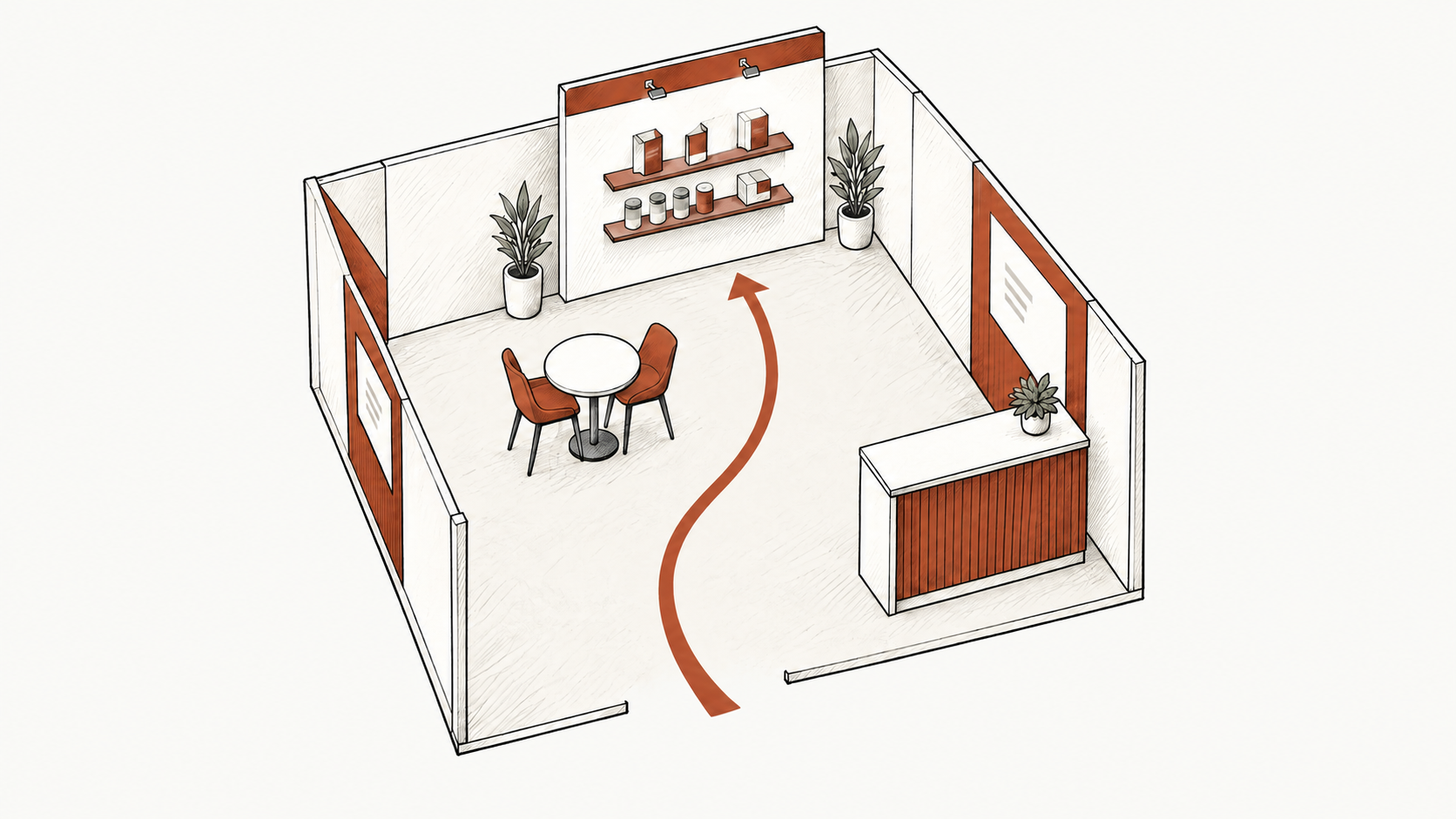
One of the underestimated advantages is how a peninsula booth can balance traffic flow inside the exhibition hall.
When placed strategically, it can direct attendees from busier areas towards more curated experiences that your brand offers.
Here at Exhibitant, we tend to recommend this setup for businesses looking to show multiple product lines without overwhelming their audience.
Overall, this type of booth offers a compelling blend of openness and functional space management.
3. Island Booths: Visibility from All Angles
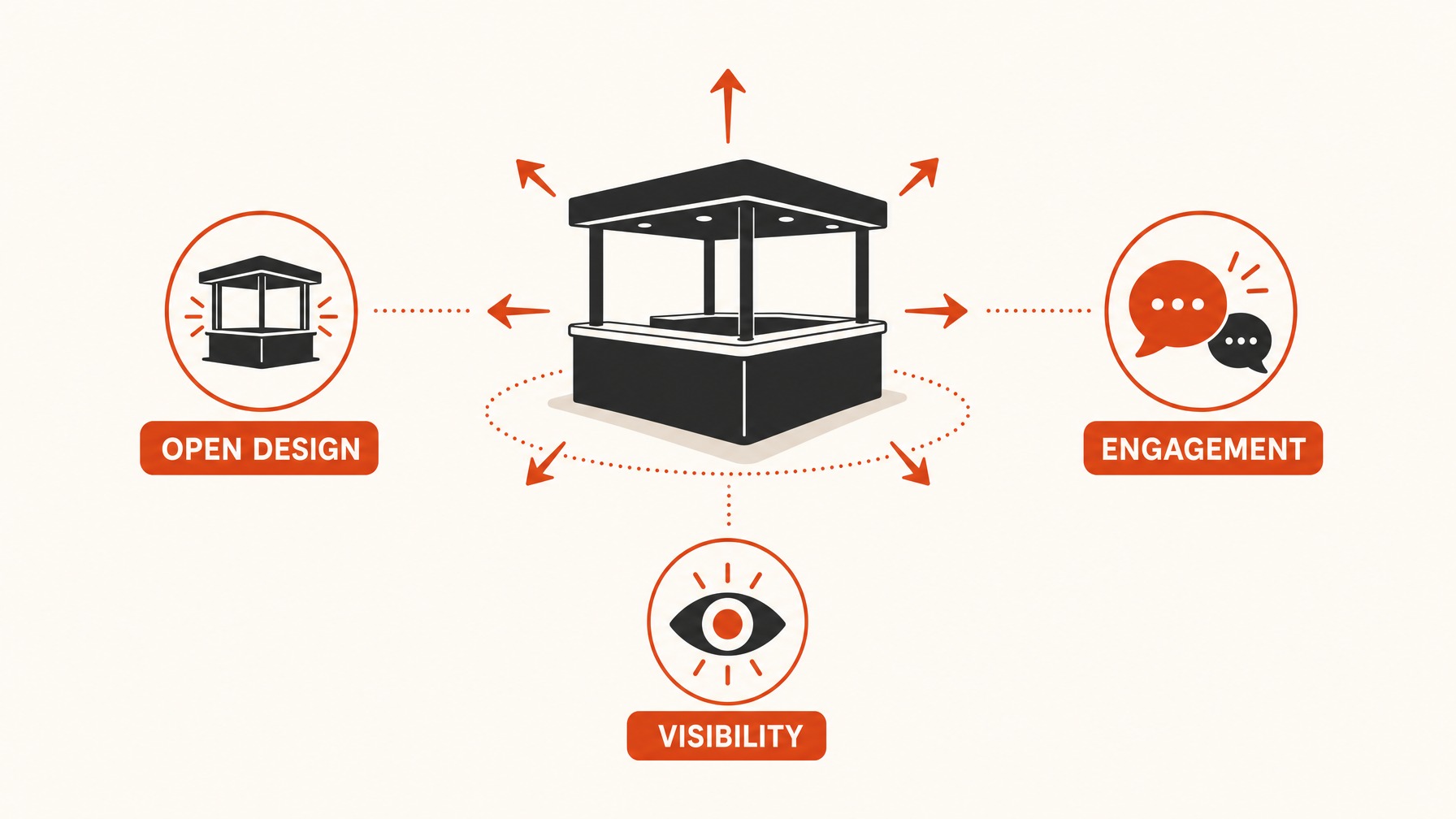
Island booths are truly the kings of the trade show, offering an unparalleled level of visibility and accessibility from every direction.
Because these booths are open on all sides, they provide a unique opportunity for visitors to engage with your brand from any approach, making it easier to capture interest and generate leads. What I have seen work really well with island booths is the ability to use the space innovatively, without the constraint of walls or backdrops that limit attendee interaction.
This flexibility encourages an open and inviting atmosphere where conversations can naturally flow.
From a design perspective, island booths allow for creative freedom.
Exhibitors can craft immersive experiences that draw in attendees, utilizing striking visuals and interactive elements that can be seen from afar. The optionality to include large graphics, multimedia displays, or live demonstrations ensures that your booth is a standout attraction.
Something that comes up a lot is the importance of ensuring every aspect of the booth reflects your brand’s identity, thereby reinforcing brand recognition within the bustling trade show environment.
When it comes to traffic flow, an island booth excels in directing foot traffic from all sides, providing a more dynamic interaction space.
These booths are not restricted by neighboring exhibitors, which means your messaging isn’t confined or obstructed, offering a 360-degree view that maximizes exposure.
I would say the biggest thing here is creating an accessible and welcoming space where attendees feel compelled to stop and investigate.
One thing most exhibitors end up doing is integrating open seating areas or product demonstration zones to keep attendees comfortably engaged. From what I have seen, the ones that get it right usually focus on a balanced design that blends practical function with eye-catching aesthetics.
This approach not only enhances visitor experience but also promotes longer engagement times, increasing the chances of successful business interactions.
In terms of logistics, island booths do require a larger investment and planning time due to their size and complexity. However, the payoff can be significant when employed effectively, offering a prestigious and dominant presence that smaller booths simply can’t achieve.
When an island booth is well-executed, the potential for increased brand awareness, lead generation, and networking opportunities is vast, making it a worthy consideration for your next trade show.
 Lorena G.