 Louie J.
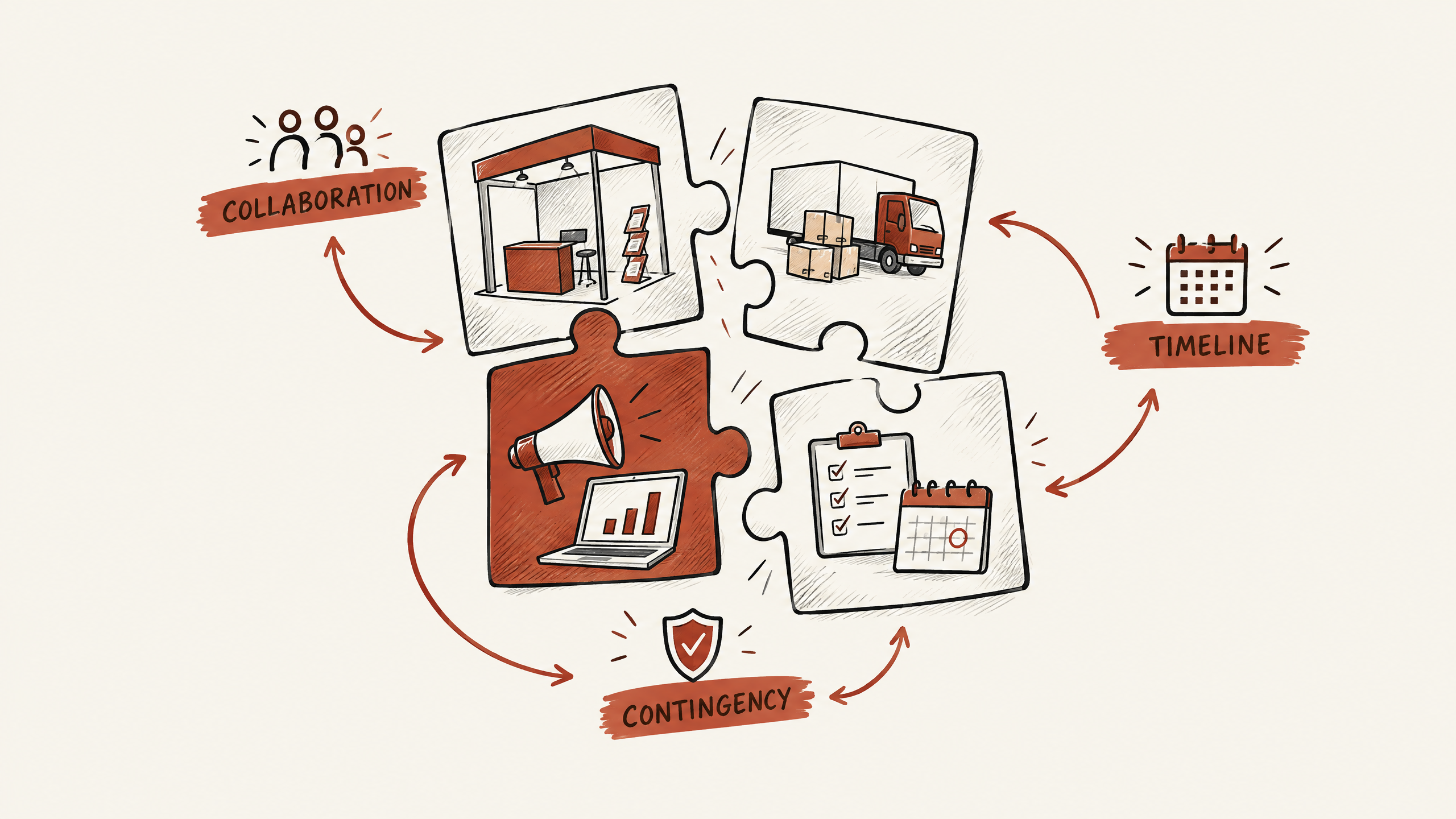
Coordinating multiple vendors for a trade show can feel like juggling while riding a unicycle.
Each vendor plays a crucial role in your event’s success, and any slip-up can lead to chaos.
My first step is to focus on establishing clear communication channels to avoid mix-ups.
A smooth coordination process requires defining roles and responsibilities for each vendor involved.
This ensures everyone knows what they’re doing and can prevent costly overlaps or missed tasks.
With each vendor aligned on their duties, your team can create a unified project timeline that keeps everyone moving toward the same goal.
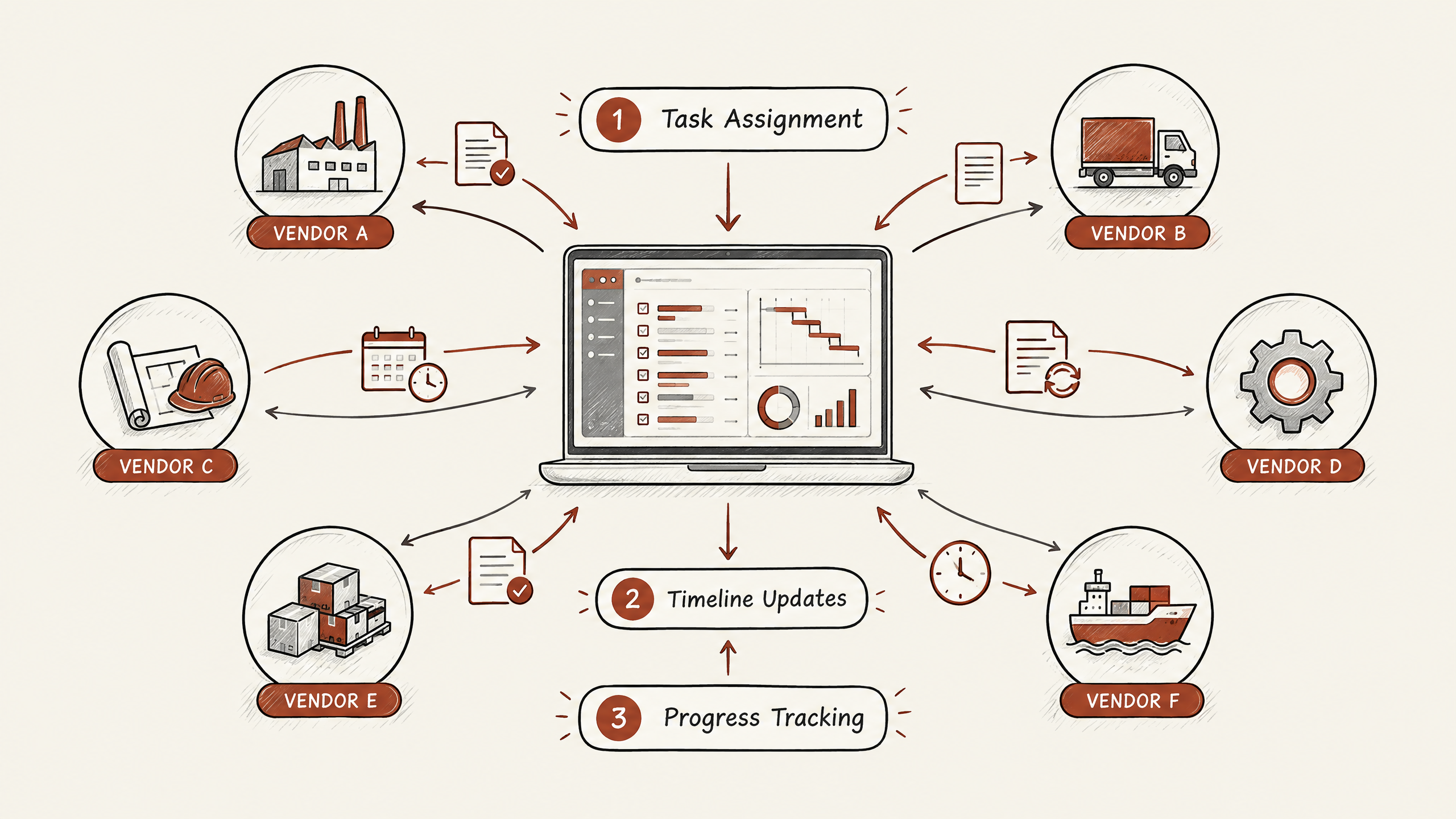
Using solid project management tools is something I recommend highly.
These tools can act like glue, holding all the moving parts of your trade show together. They help you track progress and manage tasks efficiently, offering peace of mind as deadlines approach.
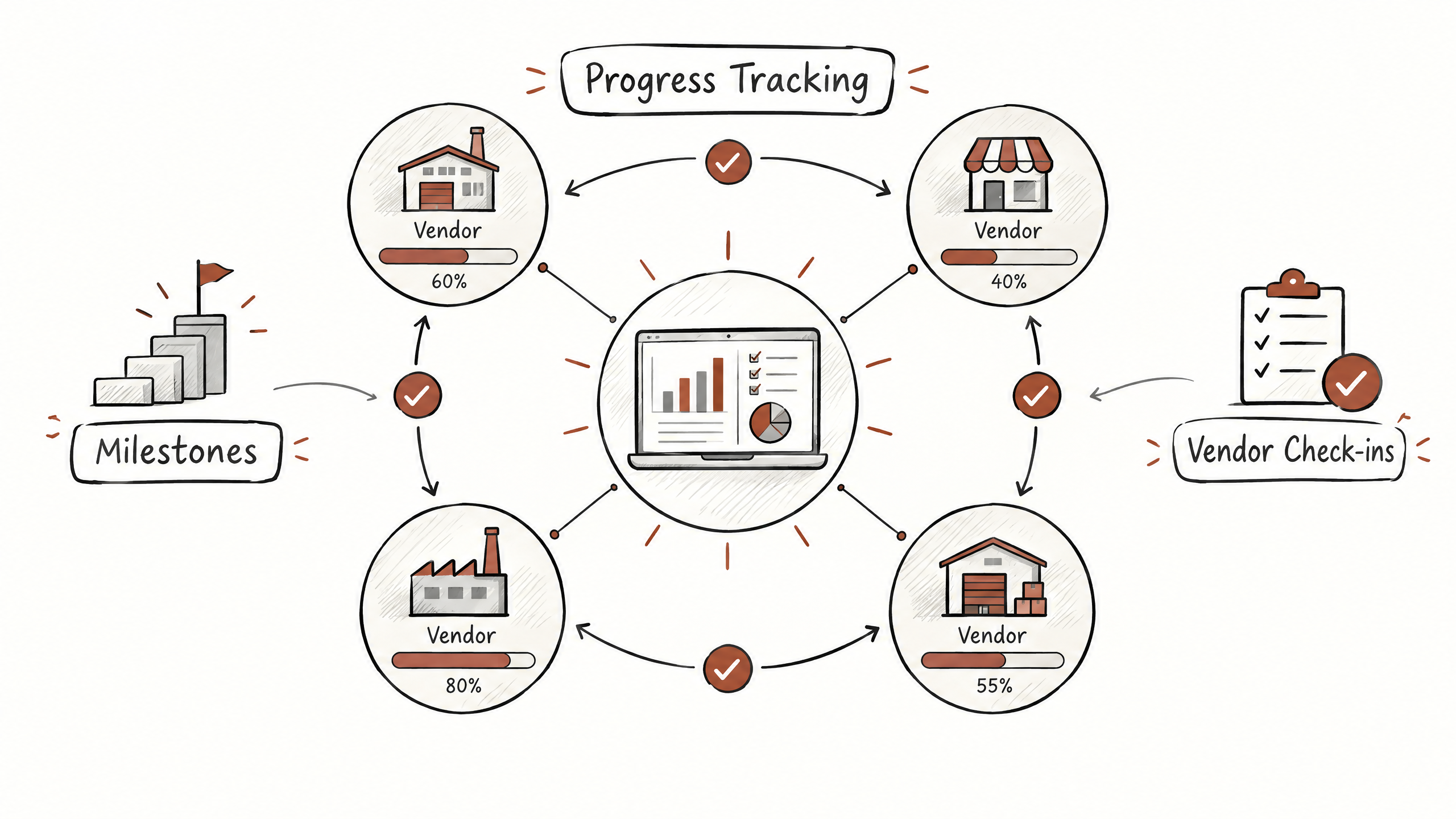
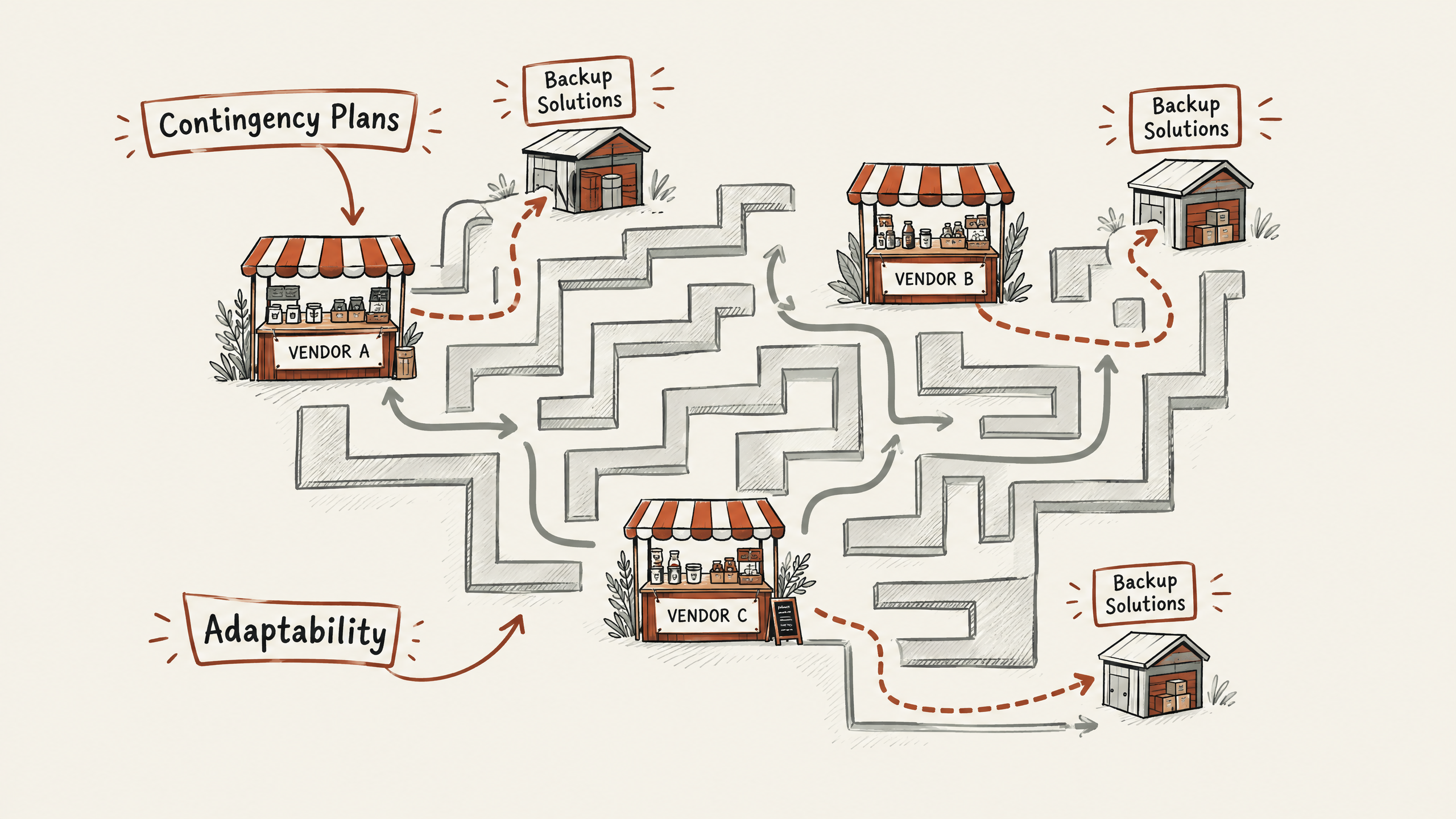
After honing these techniques, you’ll not only be prepared for trade show challenges but also for unexpected issues. Regular monitoring of vendor progress and having a plan for contingencies solidify your coordination efforts.
By the end of this guide, you’ll have the strategies you need to effectively manage multiple vendors with confidence.
- Establish a clear communication plan with all vendors.
- Define responsibilities and timelines collaboratively.
- Use project management tools for seamless coordination.
- Regularly monitor progress against deadlines.
- Have contingency plans for unexpected vendor issues.
Establishing a clear communication plan and defining responsibilities with your vendors will set a solid foundation.
Using project management tools and monitoring progress regularly helps you stay on track.
1. Establish Clear Communication Channels
The success of coordinating multiple vendors for a trade show largely depends on having clear communication channels in place.
Effective communication ensures that everyone is on the same page and reduces the chances of misunderstandings or delays. Without a structured approach, managing different stakeholders becomes chaotic and time-consuming.
Start by selecting the right communication tools that suit your team and vendors.
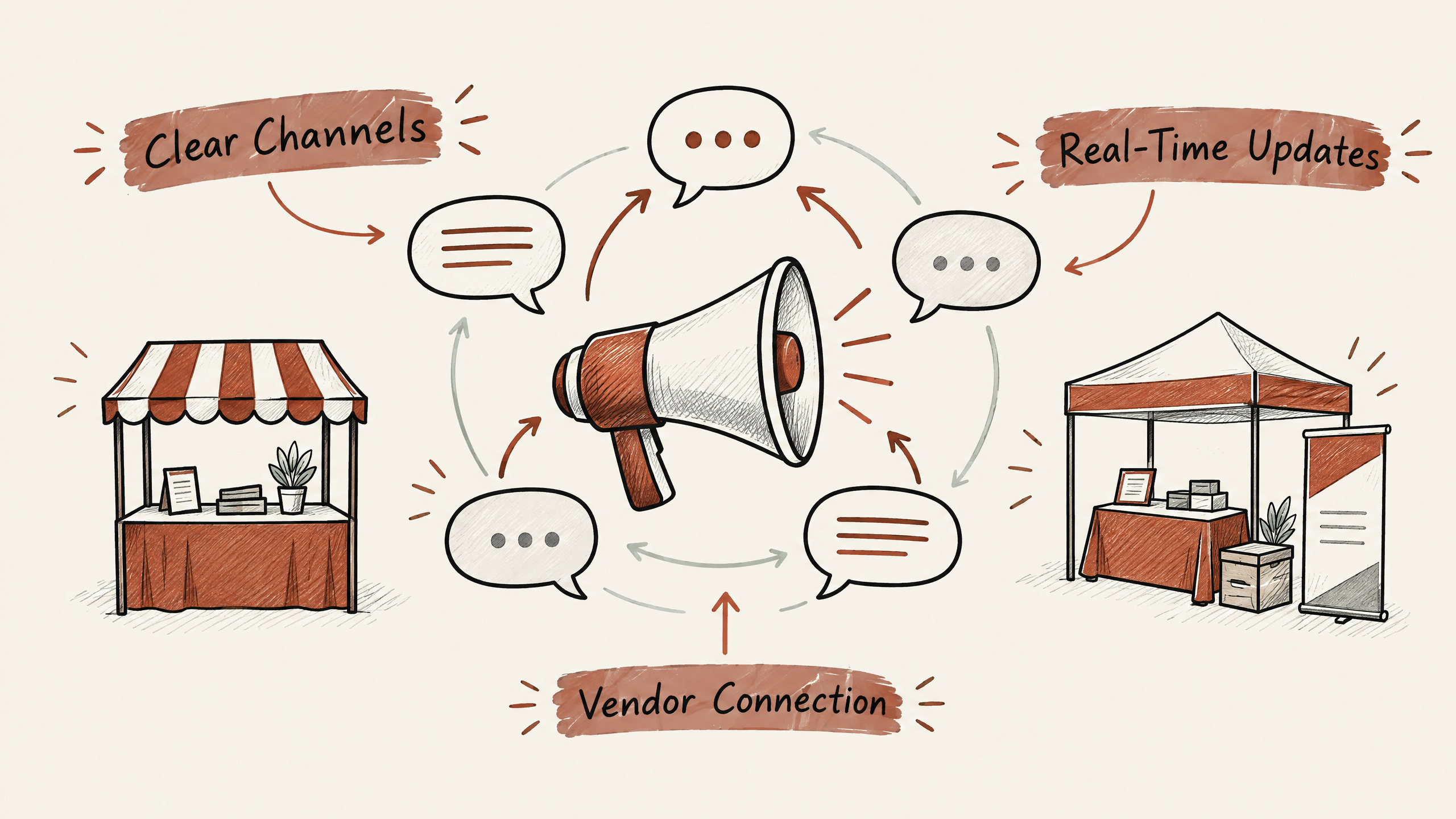
This could be a project management platform, email, or even regular phone calls.
The key is to make sure that everyone is comfortable and familiar with the chosen method. Exhibitant recommends using tools that allow for real-time updates so that nothing falls through the cracks.
Once you have decided on communication tools, it’s essential to set up regular check-ins.
These meetings can be weekly or bi-weekly, depending on the project’s complexity and timeline. Structured check-ins allow you to address issues proactively and keep the project’s momentum.
Pro Tip: Choose a single communication tool that allows for real-time updates, and assign a dedicated point of contact to minimize misunderstandings and make sure smooth coordination with vendors.
Assign a point of contact in your team who will be responsible for coordinating with vendors directly. This minimizes communication breakdown and ensures consistency.
A common mistake is to overcomplicate communication channels with too many tools or stakeholders involved.
Instead, focus on simplicity and clarity. Limit communication pathways to those most necessary, and encourage vendors to reach out promptly with any concerns.
The goal is to maintain an open and direct line of communication that facilitates problem-solving and collaboration.
By laying down clear communication paths early in the project, you and your team can efficiently manage multiple vendors while staying aligned with your trade show objectives. This proactive approach helps in delivering a cohesive and successful event.
2. Define Vendor Roles and Responsibilities
Before you start coordinating with vendors for a trade show, it’s crucial to define clear roles and responsibilities for each vendor. This step ensures everyone knows what is expected of them and who to contact for specific needs.
Begin by listing each vendor involved in the show, such as booth designers, logistics companies, or caterers. Clearly outline the tasks each vendor is responsible for, like booth setup or food service.
A detailed breakdown prevents overlapping duties where multiple vendors think they’re handling the same task, which can lead to confusion and mistakes.
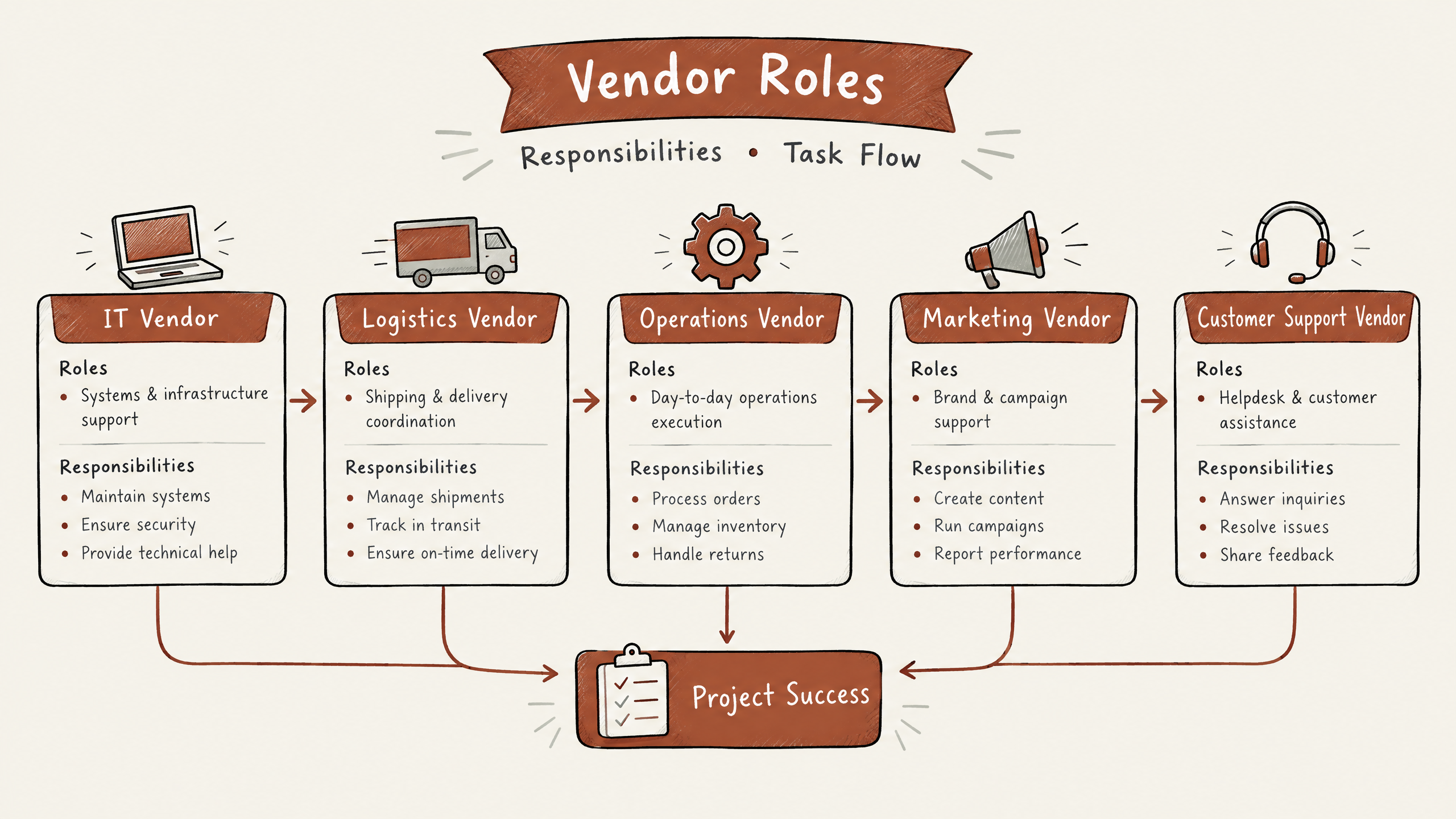
A common mistake is assuming all parties understand their roles without written confirmation, leading to gaps in service or preparation.
For example, if you’re working with a booth designer and an AV company, specify that the designer handles structural elements while the AV company installs and tests audio-visual equipment. This separation of duties helps to prevent misunderstandings.
An effective method to achieve this is using a shared document or project management tool to assign and track these responsibilities.
This document should be accessible to all relevant parties so anyone can verify their obligations at any time.
The consensus on roles should come after a collaborative meeting where each vendor can provide input.
This meeting is also a chance to address any concerns or resource constraints vendors may have.
By making a concerted effort to align expectations, you can avoid last-minute surprises during the event setup phase.
Taking such precautionary steps allows for a smooth transition from planning to execution.
3. Create a Unified Project Timeline
A unified project timeline is crucial for successfully managing multiple vendors during trade shows. This timeline acts as a roadmap, outlining the key milestones and deadlines each vendor must meet to make sure a smooth event execution.
Begin by gathering the schedules and timelines from all vendors involved, such as booth design, promotional materials, and logistical support.
To create a unified timeline, engage with each vendor to understand their specific needs and lead times. For example, a booth designer may require final approval on the design a month before the event, while the technical team needs a week for on-site setup.
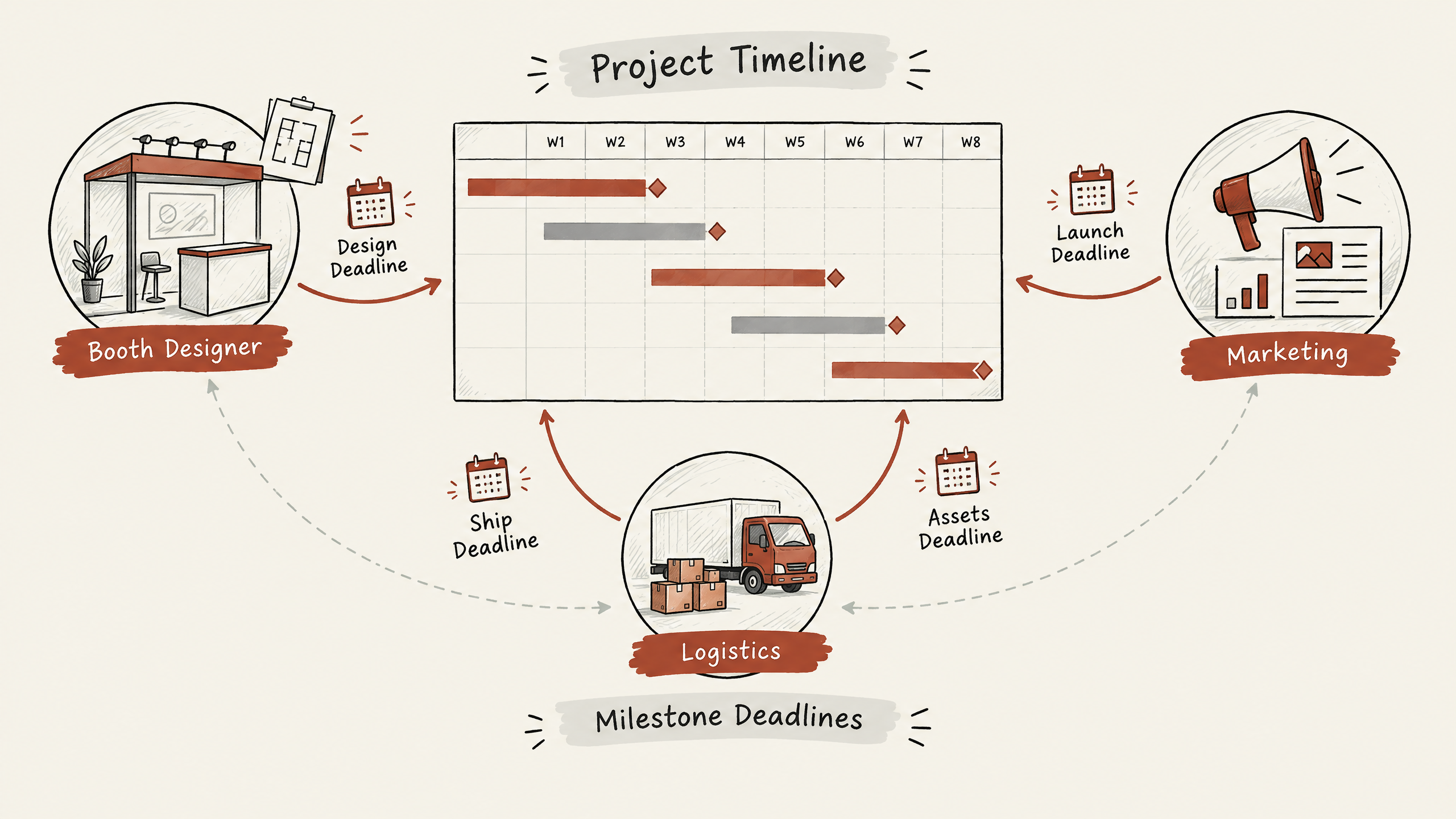
Fit these individual timelines together, thus ensuring no conflicts or bottlenecks occur. A Gantt chart or timeline software can visualize how tasks overlap and where critical dependencies exist.
A concrete example would be integrating shipping logistics with on-site installations.
If materials need to be shipped from a vendor to the venue, plan the arrival at least a day before setup begins.
This buffer accounts for potential delays in shipping.
The unified timeline helps vendors synchronize their efforts, so no team waits on another.
When finalizing the timeline, account for buffers and contingencies.
A common mistake is not allocating enough time for unexpected delays.
For instance, if the electrical setup takes longer due to unforeseen site issues, lack of buffer time could disrupt the entire schedule. Include 10%-20% extra time for each task, depending on its complexity and vendors’ reliability.
This proactive approach reduces stress and the risk of last-minute chaos.
Communication is essential as well.
Share this timeline with all team members and vendors so everyone understands their responsibilities and deadlines. Regular updates and reviews of the timeline make sure that everyone stays on track and any changes or delays are addressed promptly.
This structured framework aligns the entire project team, enhancing coordination and the chances of a successful trade show.


 Lorena G.