As you prepare for your next trade show, defining your booth goals becomes one of the most crucial steps in ensuring you achieve maximum impact.
It’s important to focus on specific targets that align with your broader marketing plans.
From what I have seen, clear goal-setting is not just about attracting visitors; it’s about fostering meaningful interactions that support your business objectives.
Quite often, businesses find themselves overwhelmed by the sheer number of activities involved in trade show planning.
That’s why setting clear goals is a significant step towards managing this complexity effectively. A well-defined plan can guide your efforts and help you use resources more effectively, so you see better results.
I would say that one aspect frequently overlooked is the importance of data in tracking success.
Defining goals with measurable metrics not only gives you an objective look at how the event went but also provides valuable insights for future planning.
Something that comes up a lot is the need for ongoing team engagement to keep everyone aligned with these goals and strategies.
Today, I want to cover the key steps to clarify and set your trade show booth goals to make each event more impactful and aligned with your overall marketing strategy.
Key Takeaways:
Identify your primary trade show objectives.
Align booth goals with overall marketing strategy.
Set measurable and achievable targets for success.
Utilize data analytics for goal tracking.
Adjust strategies based on post-show feedback.
Identifying and setting the right goals can make all the difference for your trade show event.
You’ll want to see how aligning these goals with your marketing strategy can boost your booth’s success.
In the sections ahead, you’ll find practical tips on using data analytics to track progress and improve outcomes.
There’s also advice on how to use feedback to refine your future strategies.
1. Clarify Your Primary Objectives
One thing most exhibitors end up doing is jumping into trade shows with a vague idea of their objectives. From what I have seen, the ones that get it right usually have a clear understanding of their primary objectives before setting foot at the venue.
Are you at the show to generate qualified sales leads, bolster brand awareness, network with potential partners, or perhaps launch a new product?
Pinpointing these goals is crucial in driving your strategy forward with precision.
I would say the biggest thing here is really honing in on what matters most to your business in the context of the show.
The Exhibitant team has seen countless booths suffer from a lack of focus because they failed to define their primary objectives.
This clarity allows you to allocate resources more effectively, design your booth more strategically, and engage with attendees in ways that are consistent with these predefined goals.
When planning, it’s helpful to create a short list of priorities these priorities serve as the foundation for every design and staffing decision you will make. For instance, if product launch is a priority, you might focus on booth spaces that highlight demonstrations and interactions.
Identifying your key priorities also aids in avoiding the pitfall of trying to accomplish too much at once.
Overextending your resources dilutes effectiveness and muddles your messaging.
What we have seen work really well is targeting a few specific, high-impact objectives that align with your overall business strategy. Having clearly defined goals at the outset provides a roadmap for your interactions at the event, making it easier to measure success afterward.
By understanding what success looks like beforehand, you’ll be able to tailor your approach as needed to achieve the best outcomes possible.
2. Align Goals with Marketing Strategy
One thing most exhibitors end up doing flawlessly is aligning their trade show goals with overarching marketing strategies.
This ensures a cohesive message across all channels and reinforces your brand’s core identity.
When your goals are in sync with your marketing initiatives, you not only simplify efforts but also magnify their impact on your audience.
From what I have seen, the ones that get it right usually bring their marketing and sales teams together early in the planning process.
Collaborative discussions between teams help in crafting goals that reflect priority marketing objectives like brand awareness, lead generation, or customer retention.
This alignment eliminates the guesswork, providing well-defined targets for the team to aim for during the event.
Something that comes up a lot is companies aiming for consistency in messaging, visuals, and engagement tactics both in and out of the booth.
Important: You must align your trade show goals with your overall marketing strategy to make sure consistency and enhance outcomes both during and after the event.
Rather than working in silos, integrated strategies often lead to better results since everyone focuses on the same goals.
For example, if your marketing strategy is focused on boosting new product launches, your trade show goals should include specific tactics for highlighting those products.
This might mean designing your exhibit space to show new offerings or training your staff to emphasize product benefits.
By ensuring that your booth goals support larger marketing goals, you can measure success not just on engagement at the event, but on longer-term outcomes like sales or partnerships.
A strategic focus can differentiate your brand from the crowd and lead to a more successful trade show experience.
3. Establish Measurable Success Metrics
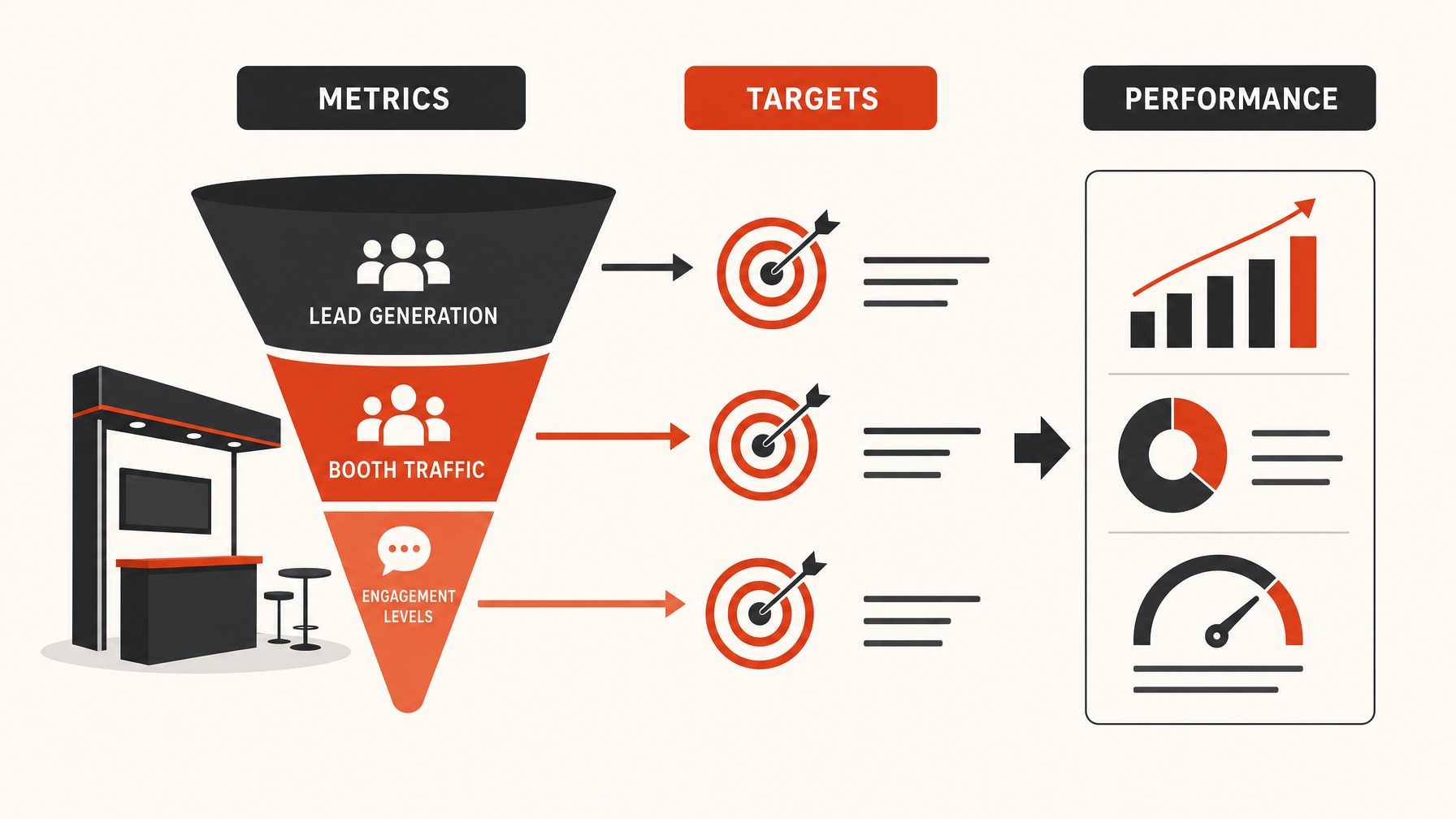
A key factor in defining your trade show booth goals is to establish measurable success metrics that drive decision-making and gauge performance. Metrics like lead generation, booth traffic, and engagement levels offer quantifiable insights into what works well.
From what I have seen, those who get this right usually end up designing their booth strategy in a more focused way.
These metrics act not only as benchmarks but also as guides for resource allocation and strategic improvements to future exhibits.
What we have seen work really well is setting specific targets for each metric, whether it’s increasing qualified leads by a certain percentage or elevating social media interactions during and after the event.
I would say the biggest thing here is aligning these metrics with your broader marketing and sales objectives.
This approach ensures you’re not just tallying numbers, but actually supporting strategic growth goals.
Another level to this is segmenting your success metrics to account for both quantitative and qualitative aspects. While numbers offer immediate clarity, qualitative metrics like brand sentiment and customer feedback can offer insights that numbers alone can’t capture.
A well-rounded approach gives you a more comprehensive view of your success and areas for improvement.
Something that comes up a lot is the temptation to set overly detailed metrics, which can blur focus and hinder agile decision-making.
Instead, opt for a manageable set of core metrics that provide clear insights into your performance. This is where Exhibitant comes in we provide integrated exhibit strategies and booth systems tailored for genuine, results-oriented show success.
Acting as an exhibit partner rather than just a vendor, we make sure your metrics align with your ultimate business objectives and facilitate an environment for learning and growth.
4. use Data for Goal Tracking
What we have seen work really well is when exhibitors effectively use data-driven insights to track their goals both during and after the event. Data isn’t just numbers; it’s a powerful tool that can provide accurate feedback on your booth’s performance.
From real-time lead capture statistics to booth traffic analysis, metrics offer a comprehensive picture of how well you’re meeting your objectives.
One thing most exhibitors end up doing is relying heavily on data analytics platforms that integrate seamlessly with their existing CRM systems.
This approach ensures that all information gathered from the trade show floor is automatically updated and easily accessible for immediate assessment by the sales and marketing teams.
From what I have seen, the ones that get it right usually employ a mix of quantitative and qualitative data to monitor their success. While quantitative data such as the number of leads and customer interactions are crucial, qualitative insights gathered from customer feedback can offer deeper understanding and context.
The ability to track real-time data is particularly beneficial, as it allows exhibitors to make informed decisions during the show.
For instance, if foot traffic is not hitting expected targets, rapid adjustments to booth layout or staff engagement tactics can be made on the spot.
It’s also important to not underestimate the potential of integrating social media analytics with your goal-tracking efforts.
Pro Tip: Use a smooth integration between your CRM and analytics platforms to track real-time data, enabling immediate adjustments that get the most out of your trade show impact.
Engagement metrics from social platforms can provide additional layers of insight into your brand’s reach and the resonance of your message with attendees.
One thing we often observe is the tendency to focus solely on the end results at the expense of ongoing data collection.
Continuous monitoring throughout the event can offer vital, real-time insights that inform and enhance interactions, ultimately driving better results.
By leveraging data effectively, you’re not just enhancing your goal-tracking efforts but also setting up a foundation for making data-informed decisions at future events.
Goal tracking through data doesn’t just stop at the end of the trade show; it also provides historical data for post-event evaluations, allowing you to refine strategies for upcoming exhibitions.
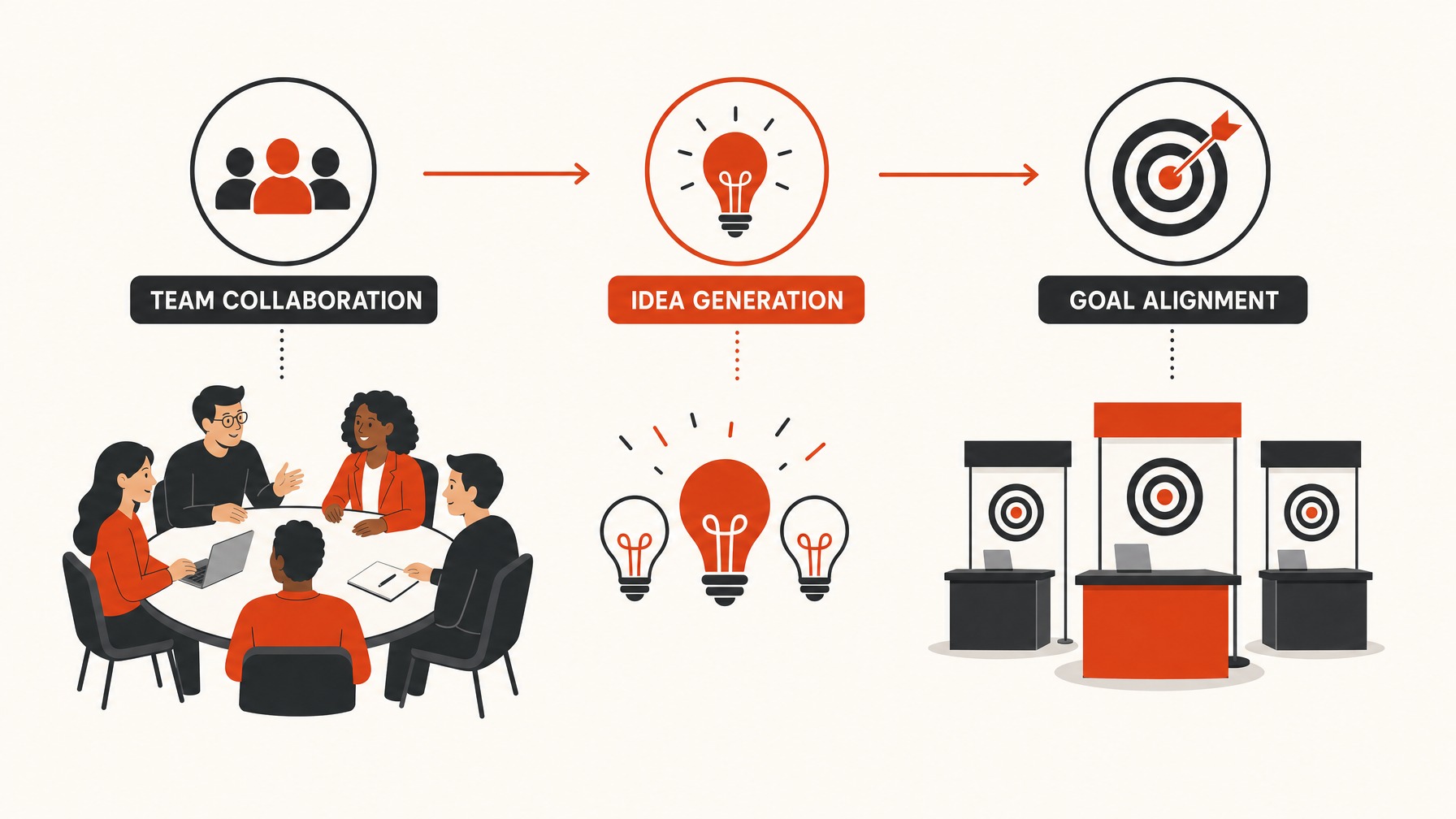
5. Engage Your Team in Goal Setting
One thing most exhibitors end up doing is involving their team early on in the goal-setting process. This approach not only taps into diverse perspectives but significantly boosts the entire team’s commitment to achieving these goals.
From what I have seen, the ones that get it right usually encourage a collaborative atmosphere where ideas freely flow and grow.
You want everyone on the same page, understanding the rationale behind each target. When team members feel included, they’re more likely to offer insights or even better approaches to reaching these targets.
A powerful tactic is to hold brainstorming sessions where everyone can contribute their thoughts and expertise.
I have observed that these sessions often lead to more realistic and achievable goals. After all, who better to know what is feasible than those who will be actively bringing those goals to life?
This isn’t just about generating ideas but also aligning the team with the overall marketing strategy. Having each team member contribute can also lead to higher levels of engagement and accountability during the event.
Another aspect worth considering is assigning roles and responsibilities that match individual strengths.
When each person understands their part in the broader objective, the likelihood of successful goal accomplishment increases. This doesn’t just enhance performance but also fosters a more motivated and coordinated team atmosphere.
What we have seen work really well is to continuously revisit these goals and roles throughout the planning phase.
A dynamic review process helps preempt any potential issues and keeps everyone aligned.
Finally, providing regular feedback during and after the event reinforces dedication and allows for improvement.
Your team will appreciate knowing how their efforts impacted the overall success, and this can drive even more dynamic participation in the future.
Engaging your team in this way becomes a cycle of positive reinforcement, leading to better strategic planning for future events.
6. Adapt Strategies Post-Event
After the trade show wraps up, many exhibitors jump straight into summarizing the event’s outcomes without fully analyzing what’s next.
A key component of continuous improvement is adapting strategies post-event based on the data collected.
What we have seen work really well is a thorough post-show assessment that pinpoints both successful tactics and areas that need enhancement.
This approach opens up opportunities to refine your methods, which can lead to a more impactful presence in future events.
One thing most exhibitors end up doing is reviewing their initial goals and evaluating how well they were achieved. Look closely at metrics that mattered most, such as lead quality, engagement levels, and competitor comparisons, to understand what drove the most success.
Sometimes, you may find that certain messaging or booth elements resonated more effectively with the audience, which can be fine-tuned for subsequent shows.
From what I have seen, those who actively involve their entire team in this review process gain valuable insights.
Each team member brings a unique perspective that can shed light on overlooked details or emerging trends.
Important: You should conduct a thorough post-show assessment to refine strategies, enhance future event impact, and make sure team alignment with business goals.
Incorporate these insights into a comprehensive debriefing session, encouraging open discussion about which tactics to retain, modify, or abandon.
A useful approach to simplify future adaptations is to document these findings systematically, building a playbook of sorts.
This playbook should detail what strategies were employed, the outcomes achieved, and notes on what could be tweaked or entirely revamped for the next event.
Effectively adapting strategies post-event not only strengthens future performance but also bolsters team confidence and alignment.
Something that comes up a lot is the need to communicate these adaptations across the board so that everyone is on the same page. This might include initiating fresh training sessions or updating event manuals to reflect these newfound insights.
Acknowledging where improvements are needed and acting on them ensures your trade show strategies remain agile and aligned with broader business objectives, setting the stage for ongoing success.
The Bottom Line
Setting clear, strategic goals for your trade show booth is crucial to ensuring that all your efforts lead to maximum impact.
It’s not about just having a presence, but about actively engaging with the audience and collecting valuable data that feeds directly into your overarching marketing strategy.
What we have seen work really well is marrying your trade show goals with measurable metrics, and then tracking them meticulously.
Trade shows are dynamic environments that require careful preparation and targeted focus.
Engaging your entire team in the goal-setting process can be a big improvement, bringing in diverse perspectives and ensuring alignment towards a common target.
If done correctly, goal setting doesn’t just guide your activities during the event, but also informs post-event adaptations needed for future improvement.
The importance of agility cannot be overstated, given the rapid pace and competitive nature of these events.
Adapting your strategies post-event is integral to refining your approach, making each subsequent event more successful than the last.
With everything planned and data-driven, you can move forward with the confidence that you are not simply reactive, but strategically proactive.
Understanding and applying these principles makes the difference between a booth that merely occupies space and one that generates real, tangible results aligned with your marketing agenda.
From what I have seen, the exhibitors that consistently meet and surpass their trade show goals are those who treat the process as part of a larger, cohesive business strategy.
With a focus on thoughtful planning, collaboration, and measurement, your trade show endeavors can powerfully impact your business growth trajectory.
Proper execution of these steps allows you not just to show your brand, but to truly extend its reach.
Need a booth plan?
Turn show goals into a practical exhibit path
Share your footprint, timeline, and priorities. Our team can help shape the booth direction, graphics, and project support.
Keep planning
More exhibit guidance
Keep exploring practical advice on booth planning, marketing, and getting more from your next show.
Tell us about your business, the buyers you want to reach, and what you want to achieve. Whether you need more sales conversations, stronger marketing, or a trade show presence, we’ll help you identify where to focus and what support makes sense. Together, we can shape a practical plan around your priorities, budget, and timeline.
 Lorena G.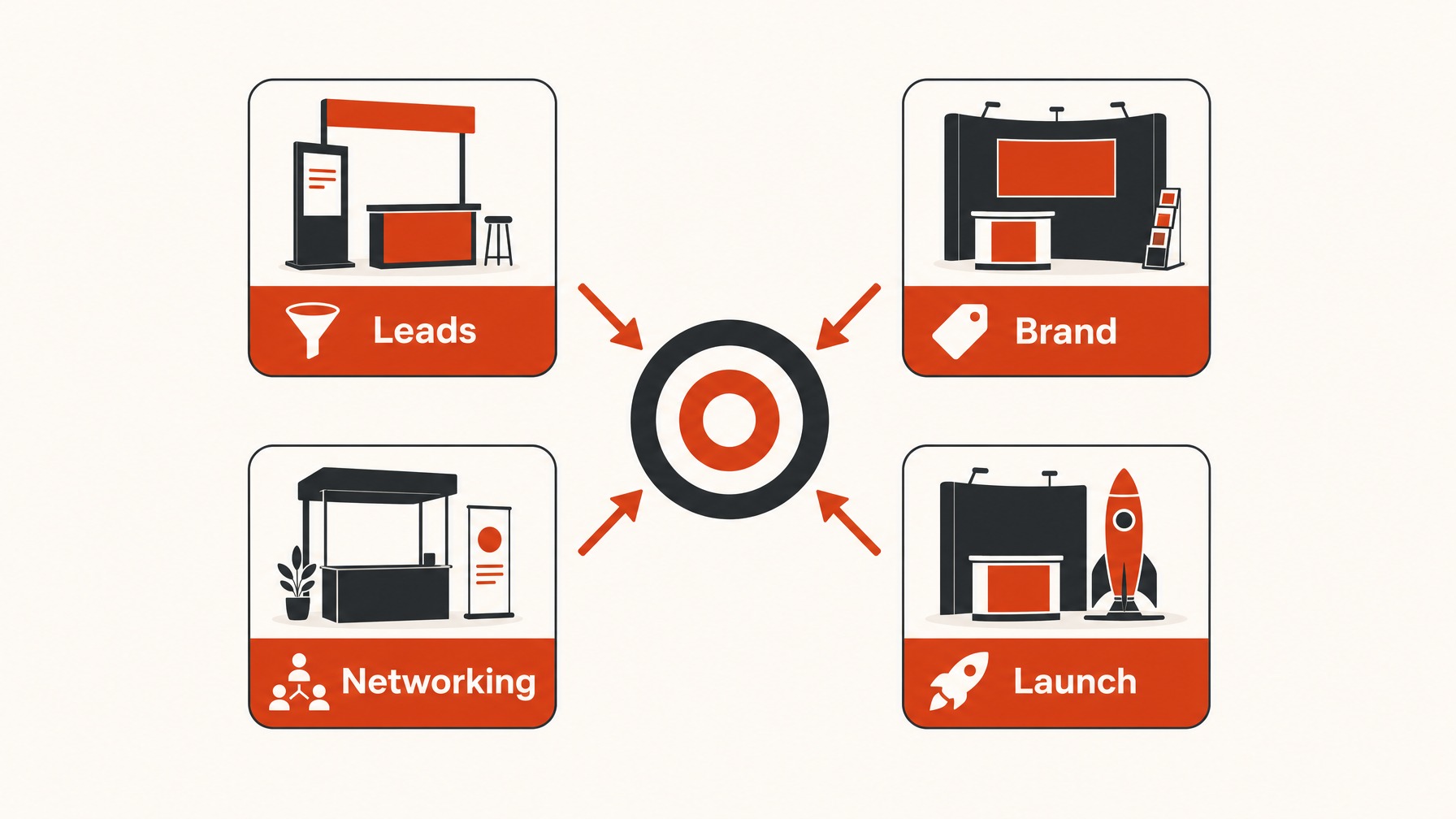

 Louie J.