
 Lorena G.
Creating a sustainable social media content calendar can be challenging.
It plays a pivotal role in maintaining your brand’s online presence. Balancing engagement and frequency often leaves teams puzzled about where to begin.
Missing the mark here can leave your channels lacking consistency.
Starting with a clear understanding of your social media goals is vital.
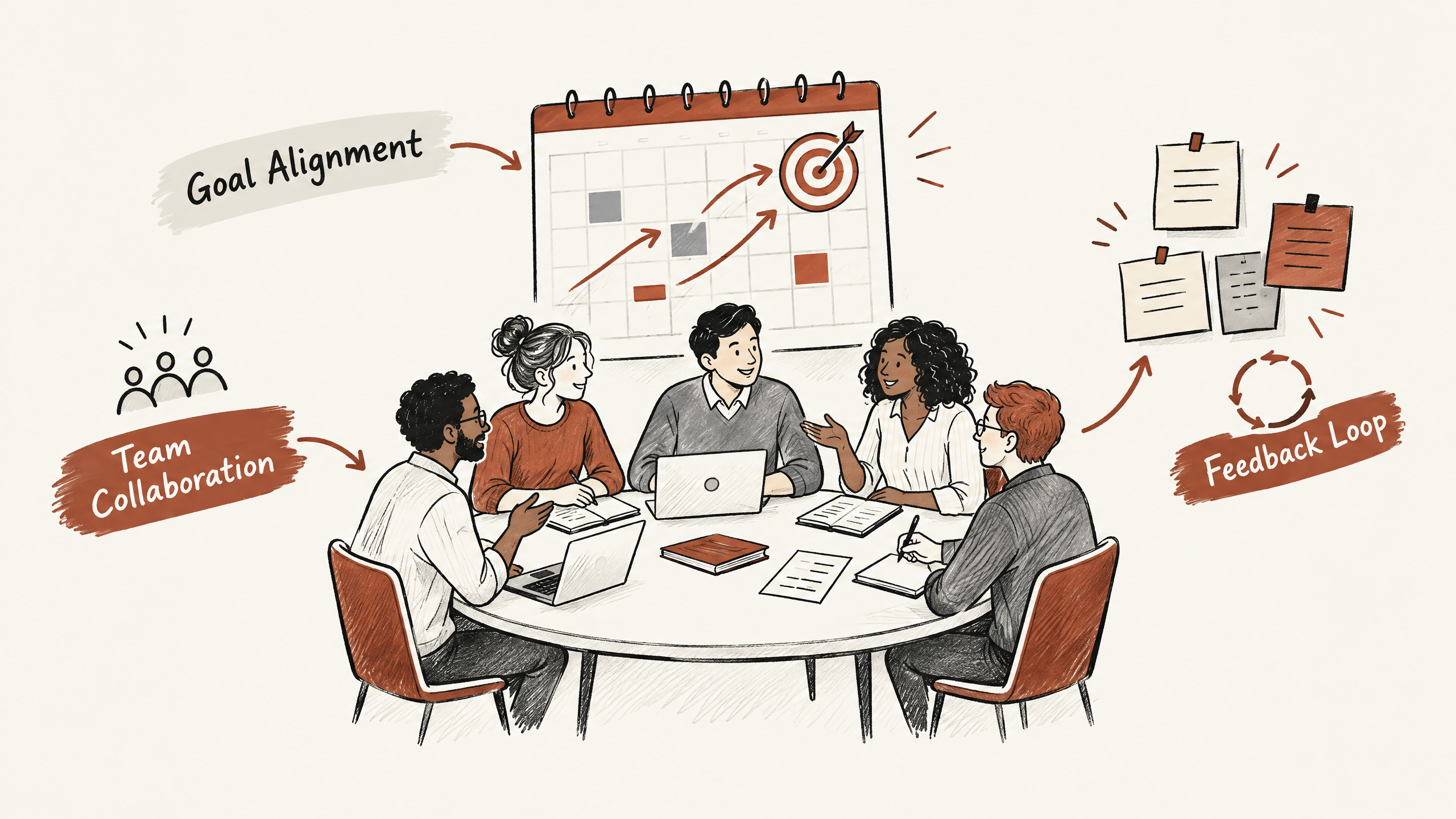
Knowing what you aim to achieve helps align your content with broader business objectives.
This clarity sets the stage for a well-organized calendar.
Understanding your audience forms the backbone of effective social media content creation.
Examining their preferences ensures your efforts resonate with them, avoiding wasted resources.
The quality and relevance of your posts will directly impact engagement and brand loyalty.
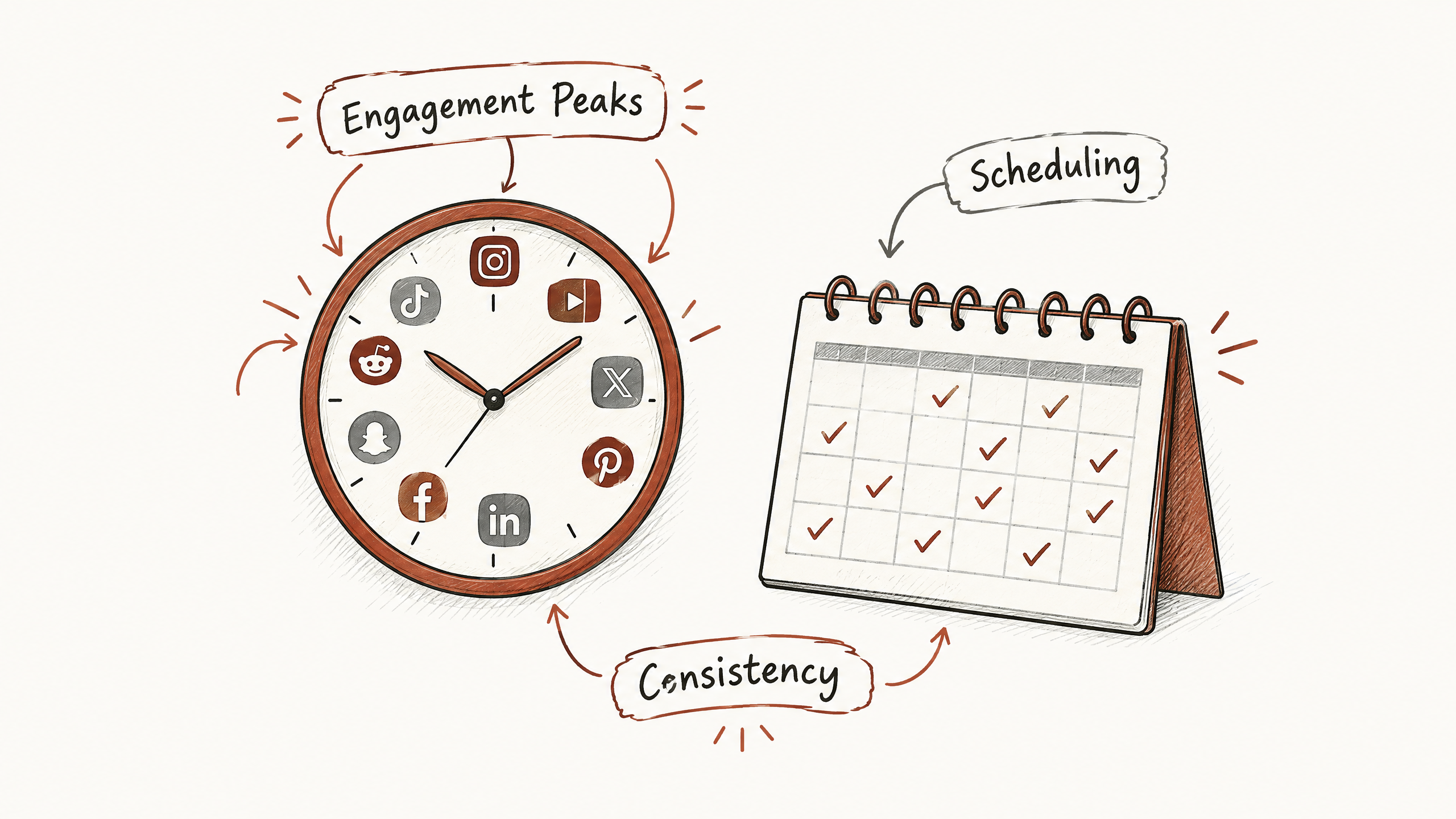
Crafting the right mix of content types and establishing a consistent posting schedule are crucial steps.
They help you deliver engaging content that fits your audience’s expectations.
Without a structure, your social media strategy could falter.
By the end of this article, you’ll be equipped to design a content calendar that supports your business goals.
You’ll know how to balance creativity and consistency, evaluating what works and what doesn’t.
Let’s build a strategy that adapts with your audience’s needs.
- Identify content types that resonate with your audience.
- Set realistic goals for content frequency and timing.
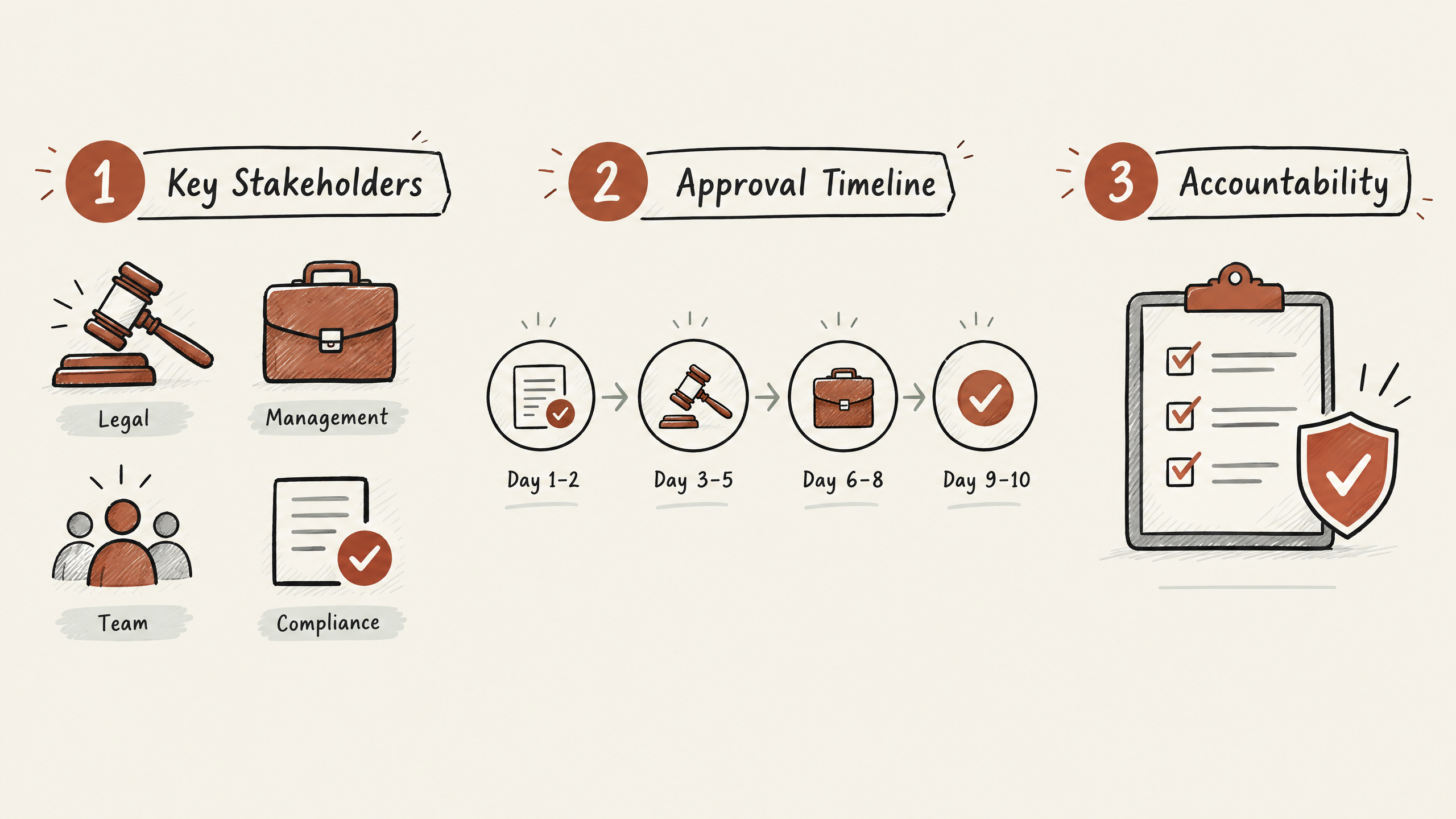
- Develop a content approval workflow to streamline publishing.
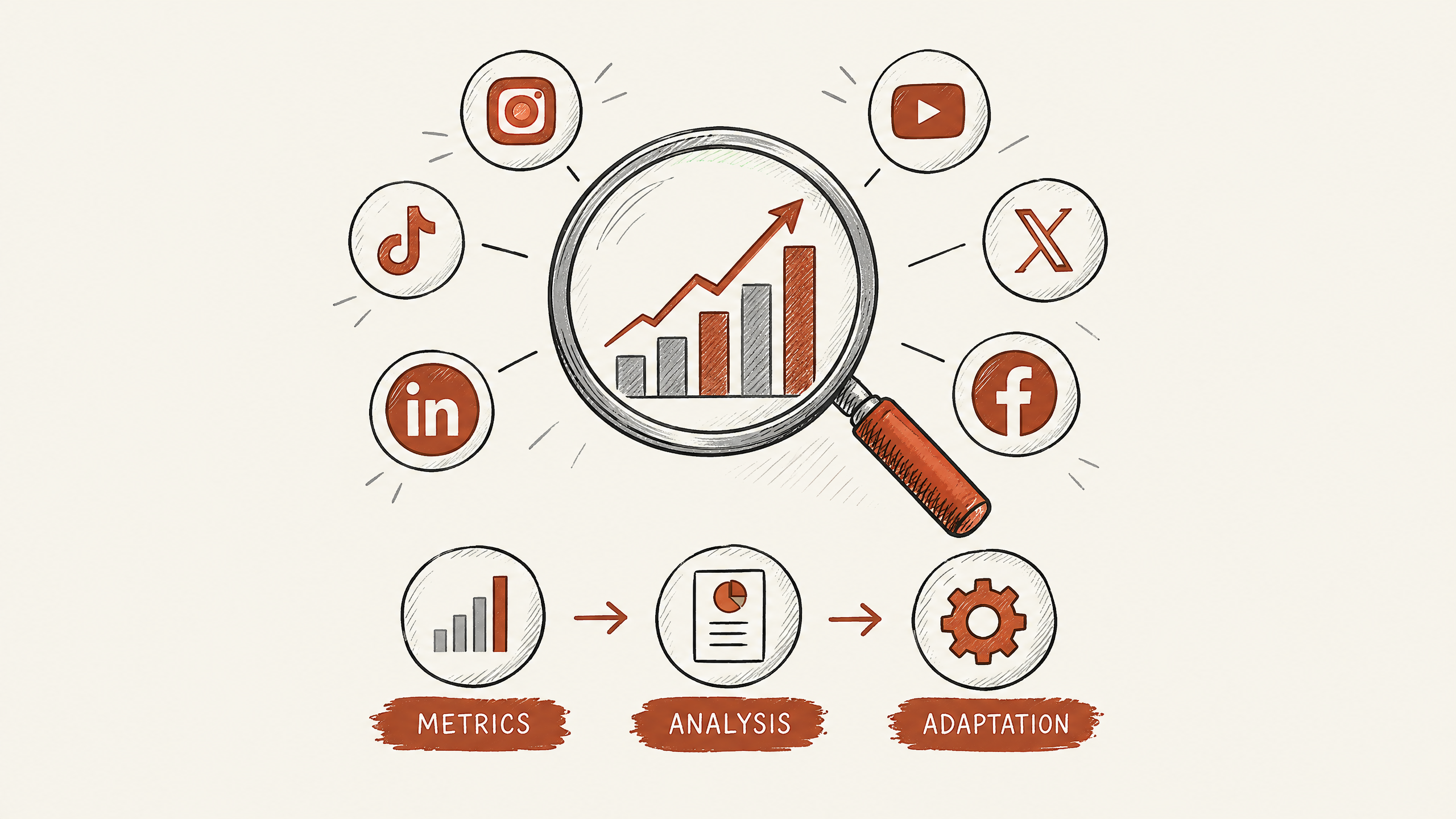
- Use analytics to refine your content strategy.
- Regularly review and adjust your calendar as needed.
Focus on these steps to build a sustainable content calendar.
You’ll make sure your team publishes relevant and timely content, guiding you to refine your strategy effectively.
1. Define Your Social Media Goals
Before diving into content creation and post scheduling, it’s essential to define clear goals for your social media strategies.
Understanding what your company aims to achieve will shape everything from the type of content you post to the metrics you track.
For marketers, goals could range from increasing brand awareness to generating leads or driving website traffic.
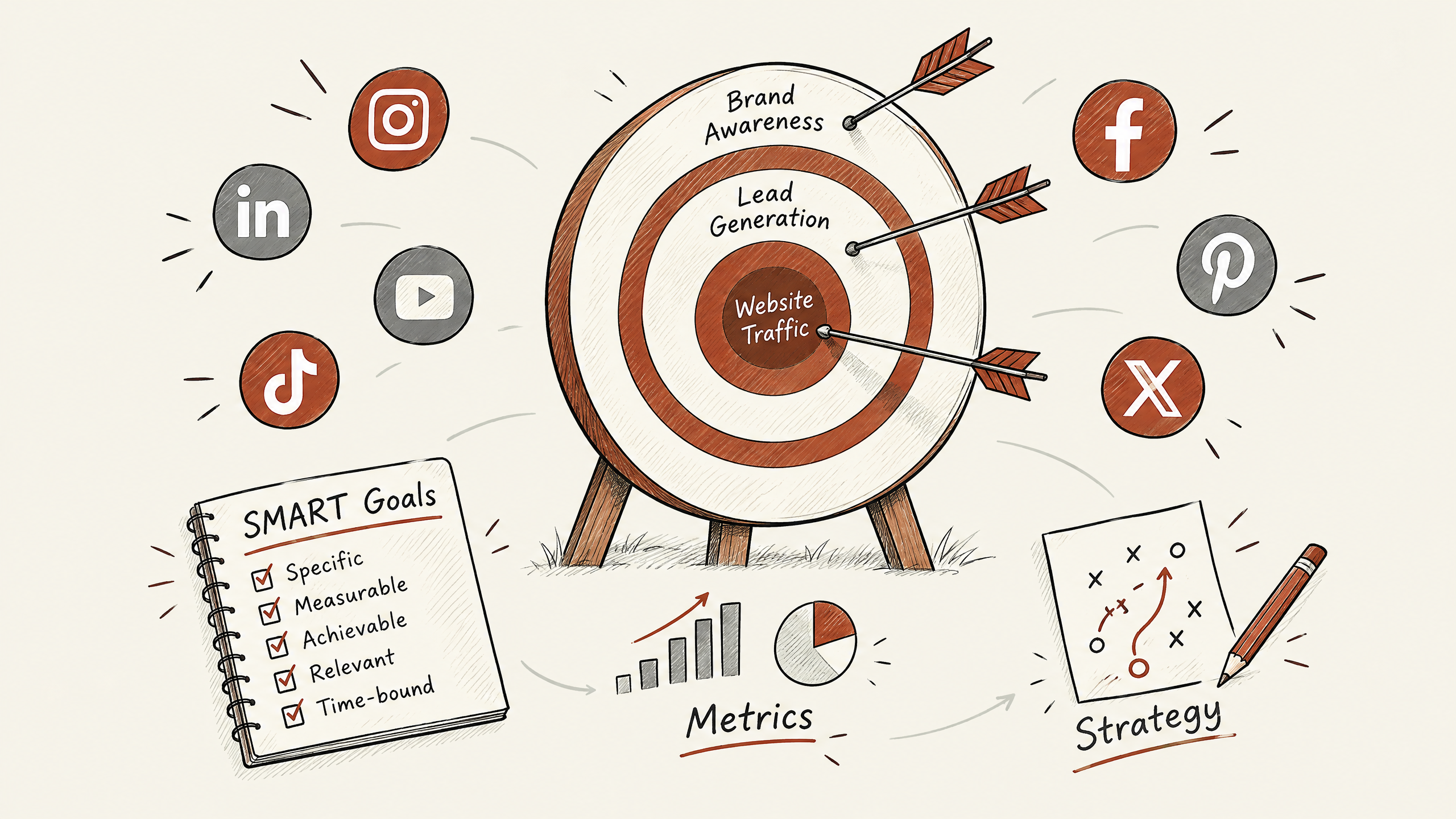
It’s important to have specific and measurable goals.
For instance, rather than just aiming to “increase engagement,” you might set a goal to “boost post interactions by 20% over the next quarter.” This clarity helps in crafting a more targeted social media plan and facilitates measuring success.
When defining your goals, remember to align them with your organization’s broader objectives.
If your company focuses on thought leadership, your social media efforts might emphasize content that showcases expertise and insights.
Establishing this connection ensures that social media activities support your overall business strategy.
Moreover, consider the resources available within your team. If time is limited, prioritizing a few key goals may lead to more substantial results than spreading yourself too thin.
Clarify roles and responsibilities to simplify efforts; for example, designate who will create content, who will engage with the audience, and who will oversee analytics.
In a hypothetical example, imagine a B2B software company aiming to increase demo sign-ups by 15% this quarter. The goal focuses efforts on creating educational content that highlights features, alongside targeted campaigns to reach specific industry sectors.
With defined objectives, you can plan your content calendar more effectively. At Exhibitant, our approach focuses on helping companies like yours align marketing strategies with business goals.
2. Analyze Your Audience’s Preferences
To effectively schedule social media content, you need to start by understanding your audience’s preferences.
By getting to the heart of what your audience craves, you can tailor your content to increase engagement, driving better results.
The first step in analyzing audience preferences is to dig into your analytics platforms. This data can reveal the demographics, interests, and behaviors of those who are already interacting with your content.
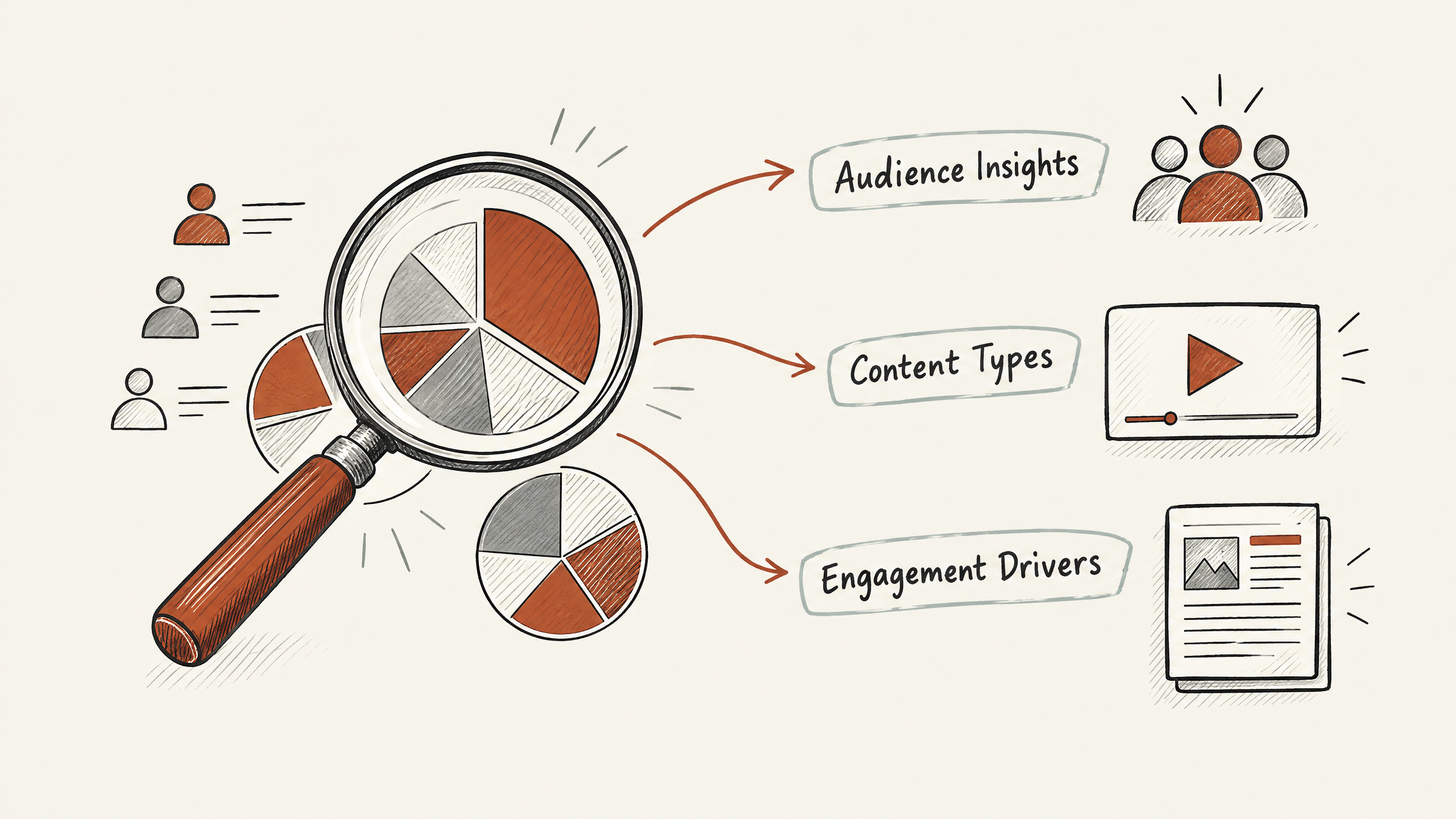
To make this information actionable, categorize the data into segments such as age, gender, location, and user behavior. For businesses targeting a youthful demographic, you might find video content resonates more significantly.
Conversely, a more professional audience may gravitate towards informative articles.
In addition to quantitative data, qualitative insights are also valuable.
Engage with your followers directly through surveys or polls.
Asking open-ended questions about what content they find most useful or enjoyable can illuminate preferences that numbers alone may miss.
Creating audience personas based on your findings is a practical way to summarize the diversity of your audience in a way that is easy to reference.
Establishing fictional profiles representing different audience segments can assist in customizing content to meet varied interests.
Remember, the preferences of your audience might not remain static. It’s necessary to periodically reassess and adjust your approach.
This way, you can adapt your strategy in response to shifting trends and keep your content relevant.
make sure your analysis is ongoing to stay in tune with your audience and adjust your strategy as preferences evolve.
3. Choose the Right Content Types
To build a sustainable social media content calendar, you must align your content types with your brand’s objectives and your audience’s needs. Start by assessing the variety of formats available to you, such as videos, images, infographics, and text-based posts.
Each type offers unique opportunities to engage your followers, but not every format will be suitable for every brand.
Once you’ve identified potential content types, evaluate their alignment with your social media goals.
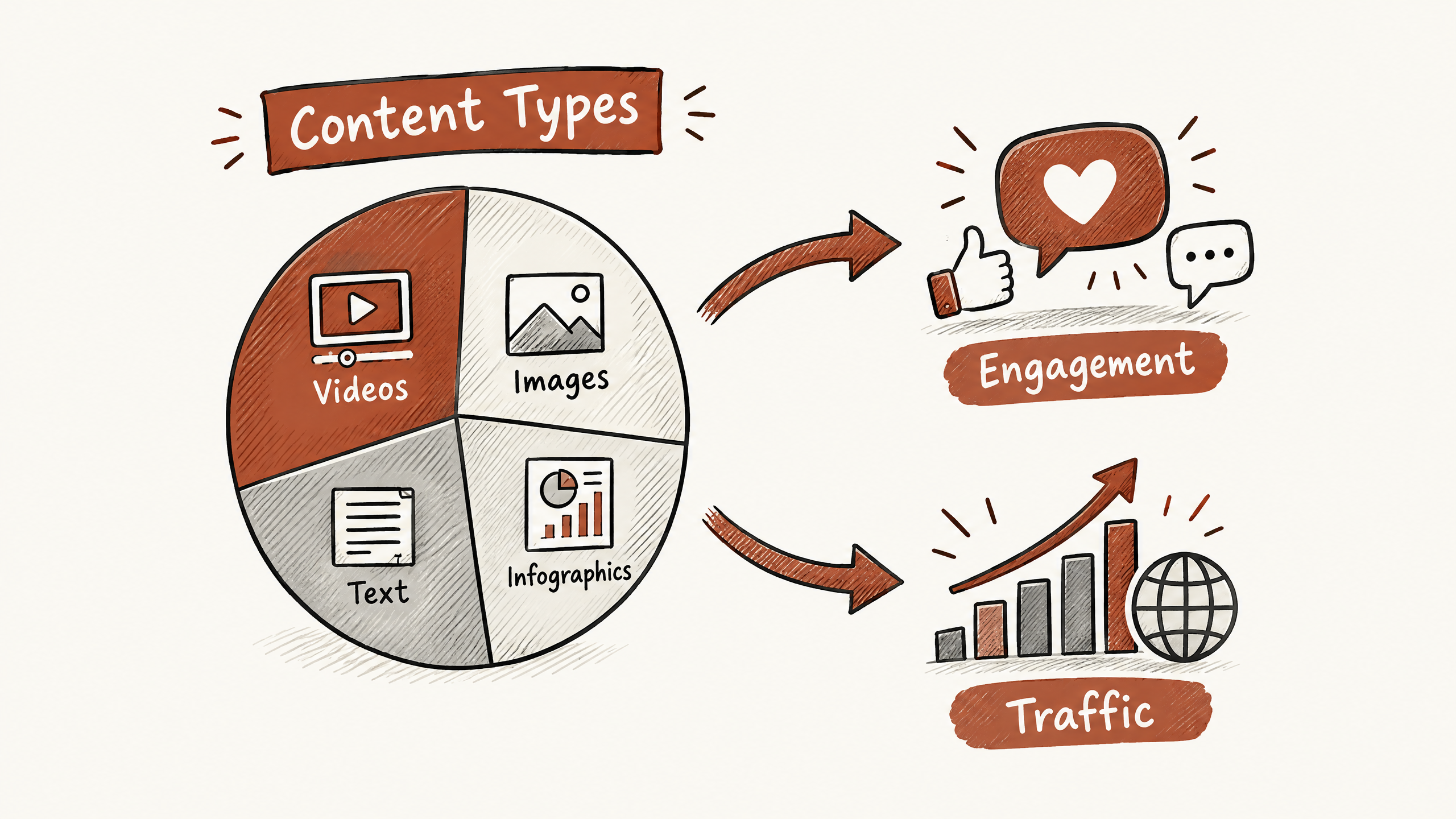
For instance, if driving traffic to your website is a primary goal, you might prioritize blog posts and infographics, as they often perform well in this area. Alternatively, if boosting engagement is your objective, consider more interactive formats, like live videos or polls.
Next, examine the resources available to your team and determine if there are any budget or time constraints that may limit content production. For some businesses, creating high-quality video content might be too costly or time-intensive.
In such cases, emphasizing static images or infographics can still yield excellent results while remaining within budget.
Pro Tip: Choose content types that align with your brand’s goals, evaluate resource constraints, and use analytics to refine your strategy for maximum engagement.
To illustrate these decisions, imagine a hypothetical B2B company aiming to increase brand awareness in the software industry. They might focus on creating engaging LinkedIn content like industry-related infographics or how-to articles.
While videos can be powerful, in this scenario, the team may prioritize visuals that are more cost-effective and still appropriate for their target audience.
Keep in mind that the key to a successful content calendar is balance. use a mix of content types to maintain interest and versatility. Use analytics tools to track which formats resonate most with your audience, allowing you to adapt your strategy over time for improved results.
Know when to experiment with new formats, and when to reinforce successful ones.


 Louie J.