Exhibitant insights

Get practical ideas for your next campaign or show

Join our newsletter for advice on reaching B2B buyers, planning outreach, and getting more from trade shows.

B2B lead generation

Ideas for prospect research, outreach, and follow-up.

Trade show exhibits

Tips for booth design, graphics, and show preparation.

Booth Strategy

6 Key Strategies for Effective Messaging at Your Trade Show Booth

Master compelling booth messaging strategies to captivate and engage your audience effectively.

In the bustling environment of a trade show, crafting effective messaging at your booth can set you apart from competitors.

With countless booths vying for attention, capturing and holding the interest of attendees is both an art and a science. Here is how I would approach it: strategic messaging that resonates with your audience and complements your booth design is crucial.

The key to effective messaging lies in its clarity and relevance.

Your team must define a core message that aligns with your brand’s values and goals.

This message should be clear and concise, ensuring that even a passing attendee understands what you represent.

Your booth is more than just a physical space; it’s a vessel for your message.

Aligning your booth design with the core message reinforces your brand and captures attention.

This includes everything from color schemes to interactive displays. Each element should support your communications strategy seamlessly.

As we explore deeper into the strategies, you’ll learn how to tailor your messaging to different audiences and improve through post-event evaluations.

I will walk you through techniques to create a compelling booth experience that leaves a lasting impression on attendees.

Key Takeaways:
  • Define clear, concise booth messaging for visitor engagement.
  • Align booth design with your brand’s core message.
  • Leverage interactive elements to enhance message retention.
  • Train staff to communicate your message consistently.
  • Evaluate messaging effectiveness post-event for improvements.

Define a clear message and connect with your booth visitors.

Align your booth design to reinforce your brand’s message effectively.

Use interactive elements for better message retention.

Make sure staff communicate the message consistently to visitors.

Evaluate messaging success after the event for improvements.

1. Define Your Core Message

Defining your core message is essential for any trade show booth strategy.

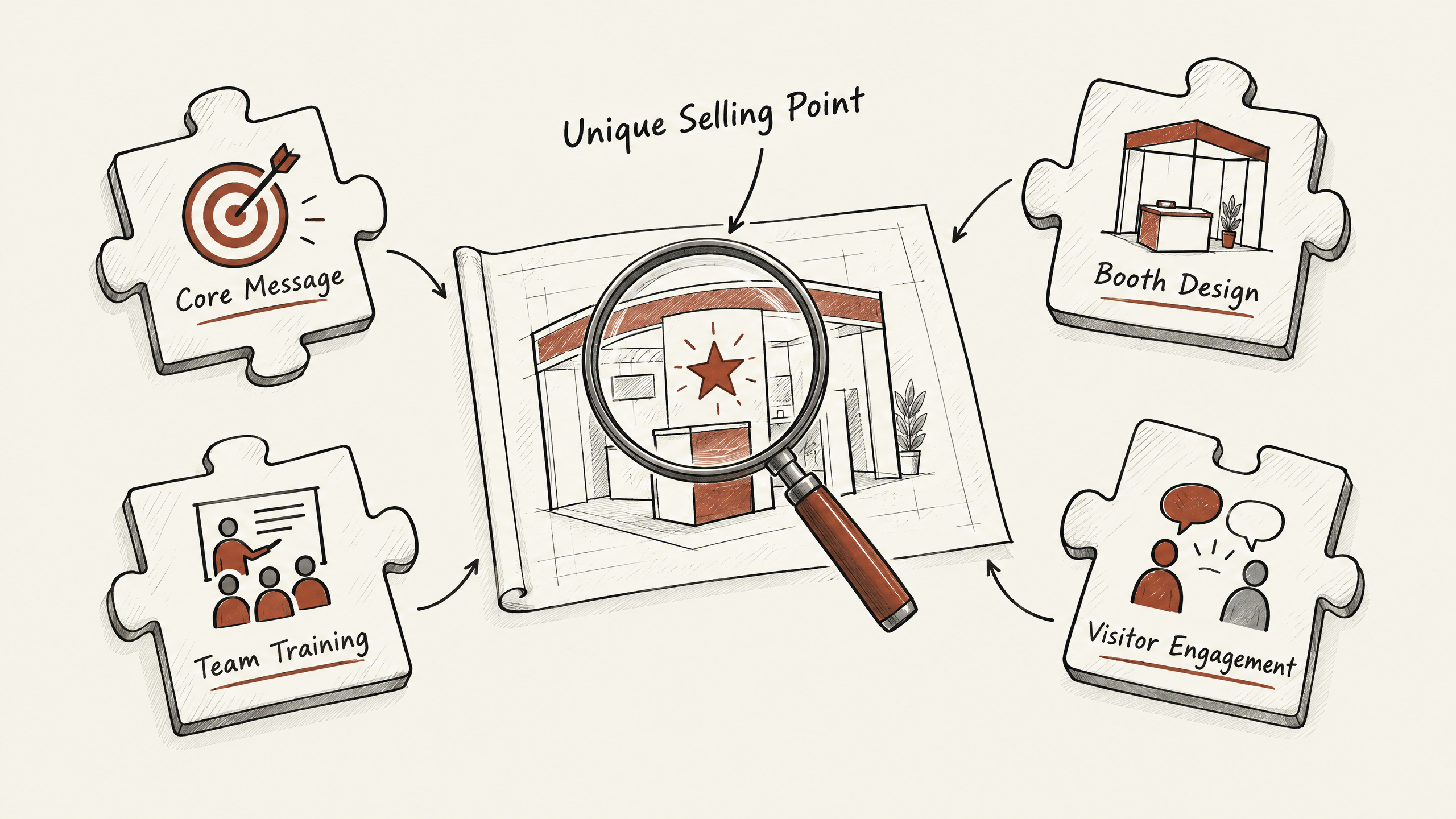
It acts as the blueprint for every decision you make, from booth design to team training. A clear and concise message tells visitors who you are, what you offer, and why they should engage with your booth.

Without a defined message, efforts can become scattered, leading to missed opportunities and unclear communication.
1. Define Your Core Message — 6 Key Strategies for Effective Messaging at Your Trade Show Booth

To create an effective core message, start by identifying your unique selling point.

What sets your company apart from competitors?

Whether it’s a modern product, exceptional customer service, or industry expertise, focus on what consistently defines your brand. Work with your marketing and sales teams to make sure alignment this coordination can prevent mixed messaging and strengthen the overall impact.

Another consideration is your target audience.

Your message should resonate deeply with the specific buyer personas you’re trying to attract.

For example, if your target audience is primarily tech-savvy decision-makers, incorporate industry-specific jargon and highlight innovative features. Conversely, if you’re engaging with a general audience, keep the language accessible and focus on broader benefits.

Once your core message is clear, document it and share it across your team. Everyone associated with the booth designers, marketers, and sales reps should understand and embrace this message.

Pro Tip: make sure your core message is simple and focused on one key idea; this hooks your audience quickly and enhances clarity across all booth communications.

Clear documentation ensures that all materials, from graphics to brochures, consistently communicate the same idea, enhancing familiarity and trust.

A common mistake is overloading the core message with multiple ideas.

The objective is not to tell your entire brand story but to hook the audience quickly.

Simplify and focus on one primary idea.

This directs visitors’ attention more effectively, allowing for a more memorable encounter.

Take a step back and ask: Does this message encapsulate what makes us special in just a few words?

Share this draft with trusted colleagues or, when needed, engage with an agency like Exhibitant for expert guidance. Their experience in messaging and booth strategy can provide valuable perspectives and help refine your communication efforts further.

2. Align Booth Design with Messaging

Your booth’s design must reflect and reinforce your core message.

This consistency helps create an immediate and lasting impression on attendees. Begin by assessing how your booth’s colors, textures, and materials can visually communicate your brand’s primary message.

For instance, if your company emphasizes sustainability, consider using environmentally friendly materials and nature-inspired colors in your booth design.
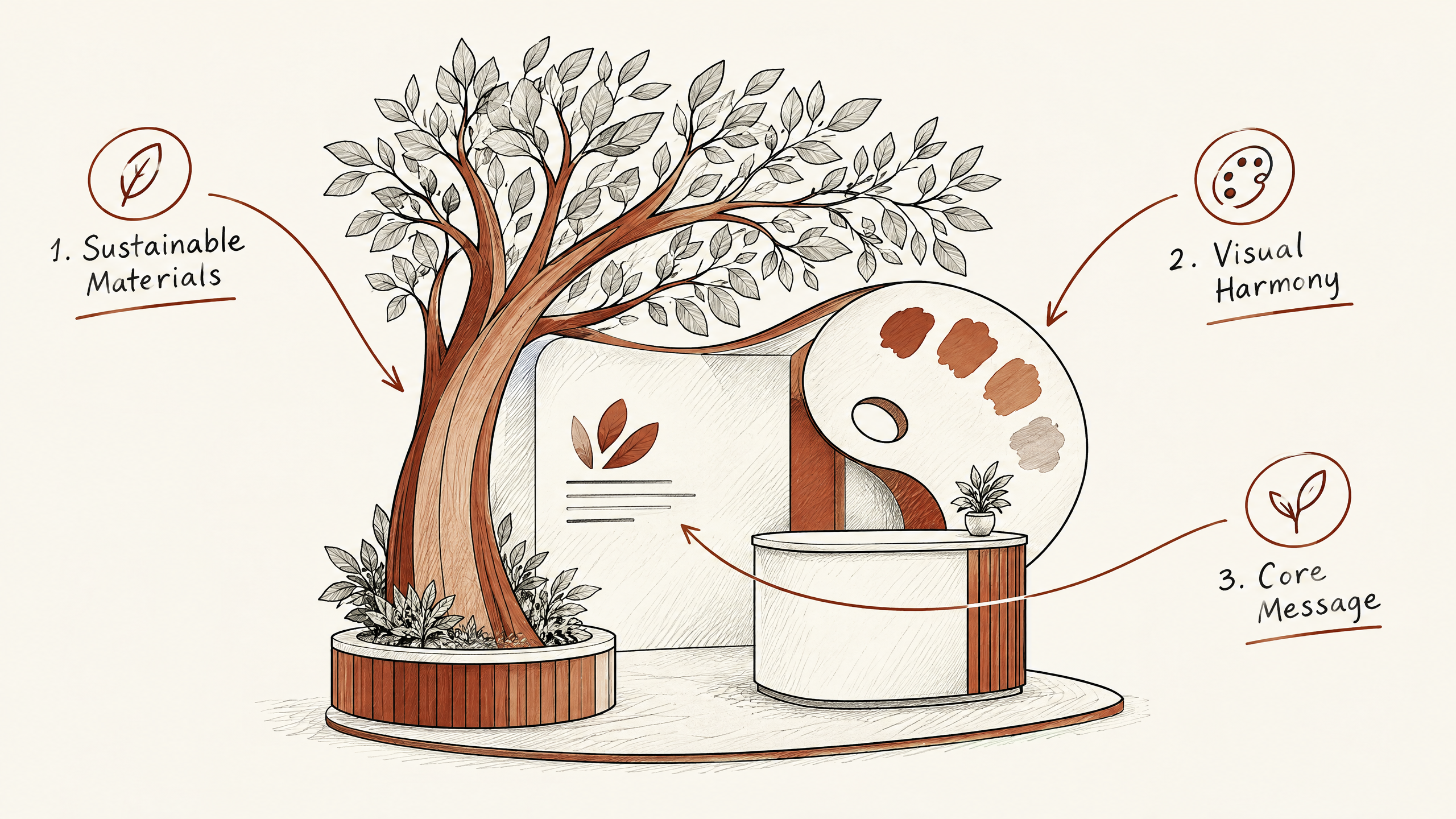
2. Align Booth Design with Messaging — 6 Key Strategies for Effective Messaging at Your Trade Show Booth

When planning your booth, involve both your marketing and design teams to make sure that the visual aspects align with your marketing strategy.

It is crucial that they work together to create an experience that is both visually appealing and on message. A common mistake here is treating booth design and messaging as separate entities.

By ensuring the two are intertwined, you can create a more cohesive experience.

Consider elements like signage, digital displays, and lighting.

Make sure your texts and graphics are easily readable and situated at eye level.

This placement draws attention and reinforces the messaging you want to deliver.

Important: Aligning your booth’s design with your core messaging is crucial to creating a cohesive and memorable experience for attendees, merging visual appeal with strategic intent.

For example, if your core message revolves around innovation, using bold graphics and dynamic lighting can emphasize that theme.

Bear in mind that budget constraints often play a role in design decisions. Prioritize areas that have the most impact on communicating your key message.

Sometimes, simpler designs with clearer messaging resonate better than extravagant setups that dilute the brand’s story.

Remember to test your booth design in a mock setup prior to the event.

This run-through allows you to adjust elements as needed.

Testing ensures that the booth’s design truly aligns with your core messaging and is cohesive overall.

By harmonizing your booth design with your message, you set the foundation for a memorable visitor experience.

3. Use Interactive Elements

Incorporating interactive elements into your trade show booth can create a dynamic and engaging experience for attendees.

This approach gives potential clients a reason to stop by and explore, leading to opportunities for deeper interaction with your brand.

Interactive elements capture attention and make your booth stand out from others competing for the same audience.
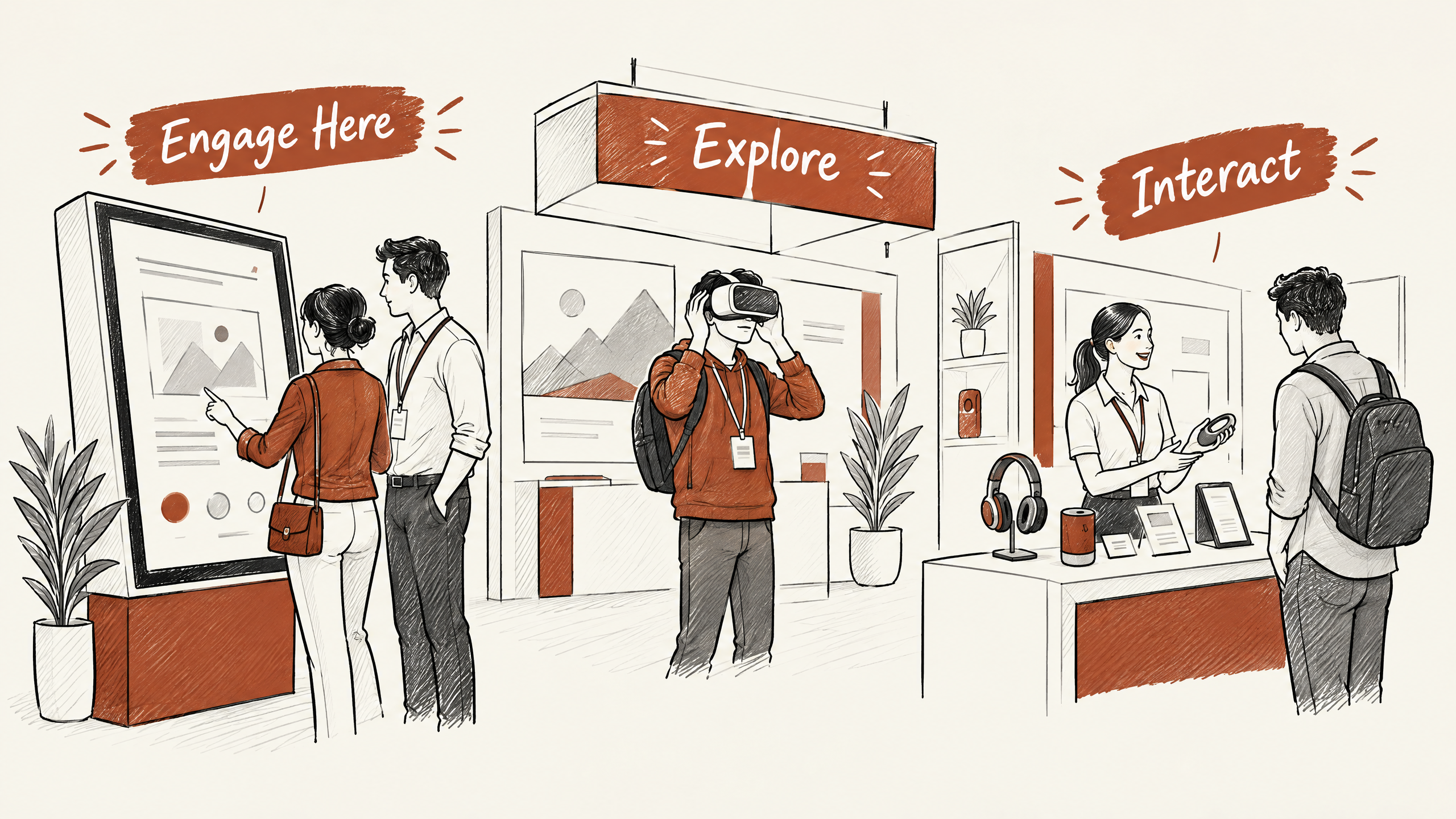
3. Use Interactive Elements — 6 Key Strategies for Effective Messaging at Your Trade Show Booth

To start using interactive elements, first consider what fits your brand message and goals. Options can include touch screens, virtual or augmented reality experiences, and interactive product demos.

For example, a tech company might show their software through a hands-on tutorial at a kiosk, allowing attendees to engage directly.

Choose elements that provide value and direct engagement, as this will leave a lasting impression.

While interactive elements can boost engagement, it’s important not to overdo it.

Avoid clutter that distracts from your core message.

Exhibitant can help create an integrated strategy that balances interactivity with your booth design, ensuring your space is both effective and engaging.

When planning your interactive elements, make sure they are easy for attendees to use and understand.

This requires clear instructions and intuitive design.

The goal is to enhance the attendee experience, not confuse or frustrate them.

Providing a smooth interaction increases the likelihood of positive conversations about your brand during and after the event.

Remember, interactive elements also generate valuable data. Capture attendee interactions to understand what resonates and where potential leads show interest.

This insight can be invaluable when refining future marketing strategies.
4. Train Your Team Effectively

An engaged and knowledgeable team is crucial to delivering effective messaging at your trade show booth. Your staff is the face of your company; they communicate your brand’s value and offerings to potential clients.

It’s important to prepare them thoroughly and provide all necessary resources and information.

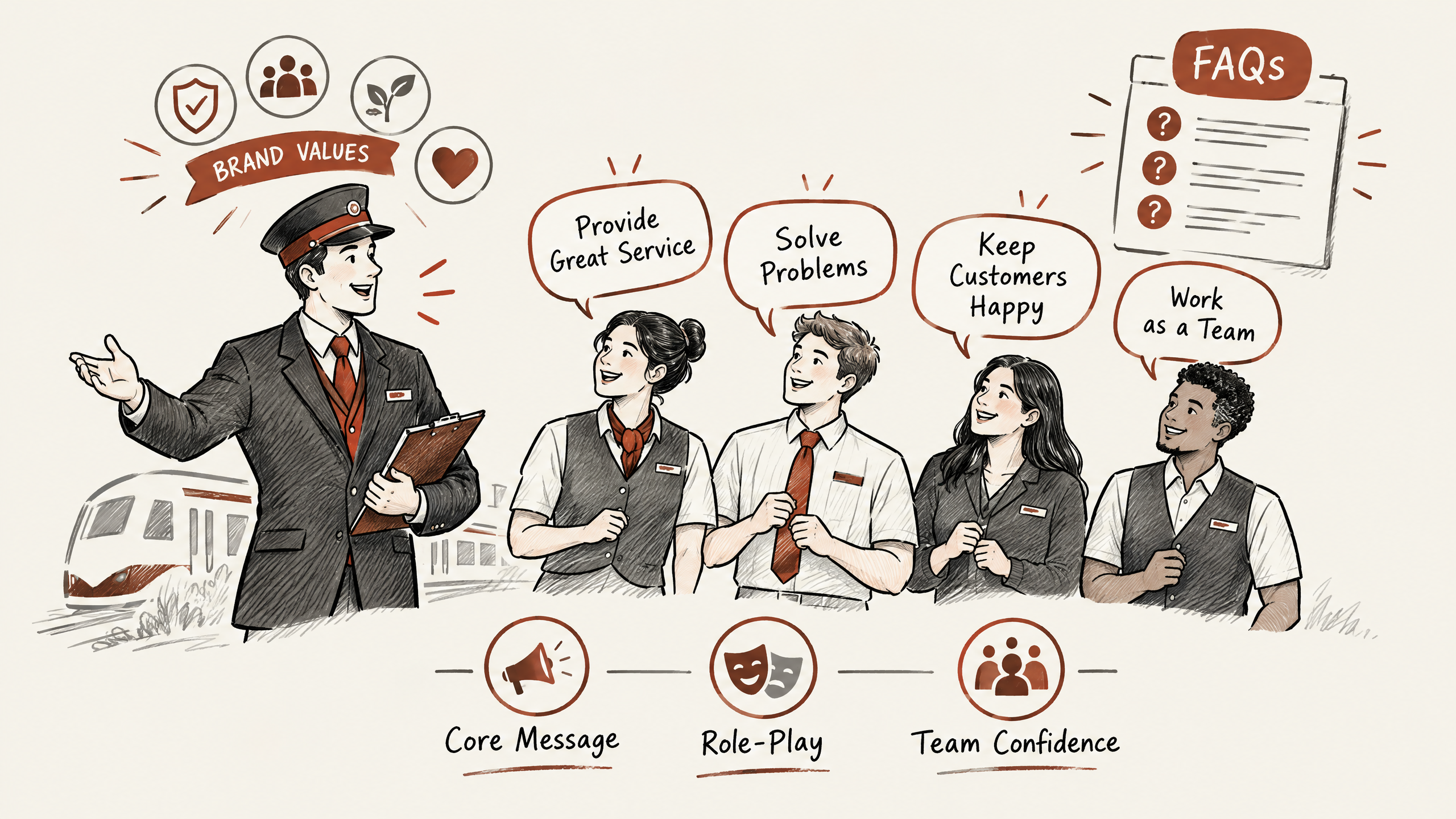
Begin by conducting a kickoff meeting and sharing your core message, emphasizing its importance and implications for various audiences.

4. Train Your Team Effectively — 6 Key Strategies for Effective Messaging at Your Trade Show Booth

One useful strategy is to create a training guide that outlines key talking points, brand values, and frequently asked questions.

This guide serves as a quick reference tool during the show. Incorporate role-play sessions where team members practice pitching and handling questions so they feel confident and prepared.

Additionally, outline communication goals and encourage team members to use their unique skills to connect with attendees authentically.

While training, be clear about task ownership and approval processes.

Define who handles specific inquiries and who has decision-making power for on-the-spot requests.

Pro Tip: Create a concise training guide with key talking points and role-play scenarios to make sure your team confidently communicates your brand’s value and handles inquiries effectively.

Avoid common mistakes like overloading your team with too much information all at once. Instead, focus on the most important elements that align with your core message.

Also, keep communication channels open during the event for any adjustments or support needed, allowing quick responses to any unexpected challenges.

Suppose your team is introducing a new software solution. make sure they understand the software’s features and have stories or examples to illustrate its impact.

Arm them with knowledge about competitors to highlight your solution’s unique benefits.

Taking the time to educate and support your team in this way maximizes trade show success and builds genuine connections with prospects and customers.

5. Improve Messaging for Different Audiences

Crafting compelling messaging for diverse audiences is essential for any trade show booth. Approaching different segments requires a nuanced understanding of their needs and preferences.

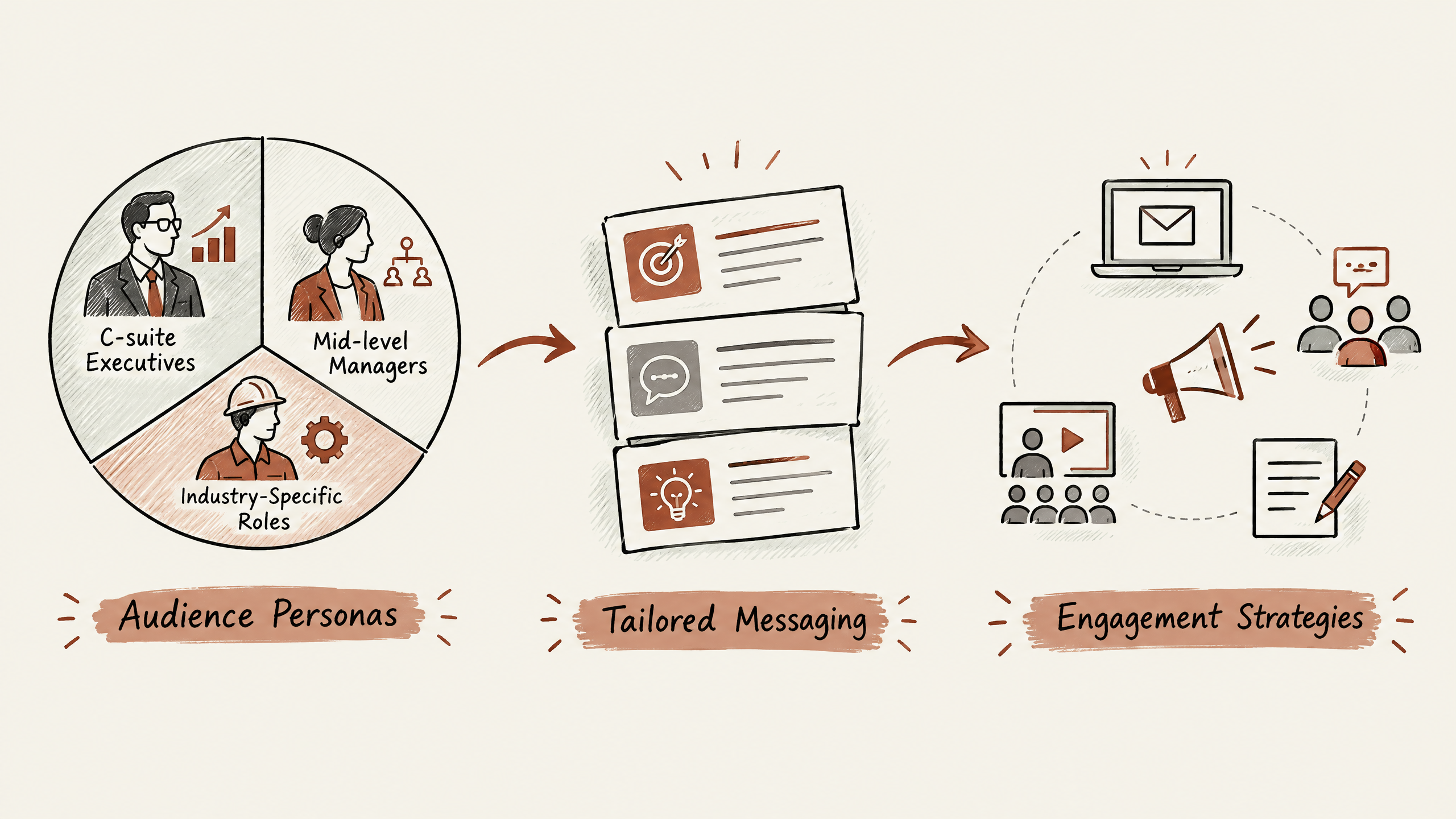
Segment your audience based on factors like industry, role, and purchasing power, then tailor your messaging to address their unique challenges and goals.

One effective way to segment your audience is by creating persona profiles.

5. Improve Messaging for Different Audiences — 6 Key Strategies for Effective Messaging at Your Trade Show Booth

For instance, the messaging you use for a C-suite executive interested in long-term strategic goals should differ from that aimed at a mid-level manager focused on immediate operational efficiencies.

By identifying these personas, you can develop specific talking points that resonate with each group, enhancing engagement and impact.

Customization goes beyond just verbal communication. make sure your visuals and collateral also align with the expectations of your varied audiences.

Suppose you have a target audience interested in sustainability.

In that case, incorporate eco-friendly themes and data points into both your presentation materials and booth graphics to capture their attention more effectively.

Here’s a checklist to help improve your messaging for different audiences:

  • Identify core personas: Who are you speaking to? C-suite, managers, or technical staff?
  • Develop tailored content: Craft unique messaging for each persona group.
  • Align visuals with messaging: make sure booth graphics and materials support your tailored messages.

One tradeoff in audience-specific messaging is the potential for dilution. It’s crucial to maintain a unified brand voice despite tailoring your approaches.

Consistency breeds brand recognition.

Avoid deviating too far from your core message, even when customizing for different audiences.

Another common mistake is assuming that all audiences respond to the same communication channels.

Where possible, use diverse engagement methods such as interactive demos for hands-on learners and white papers for those interested in data-driven content.

Identifying the preferred medium and method of communication for each audience can significantly enhance your booth’s effectiveness.

6. Evaluate and Improve Post-Event

After the trade show concludes, taking the time to evaluate the effectiveness of your booth messaging is crucial for future success.

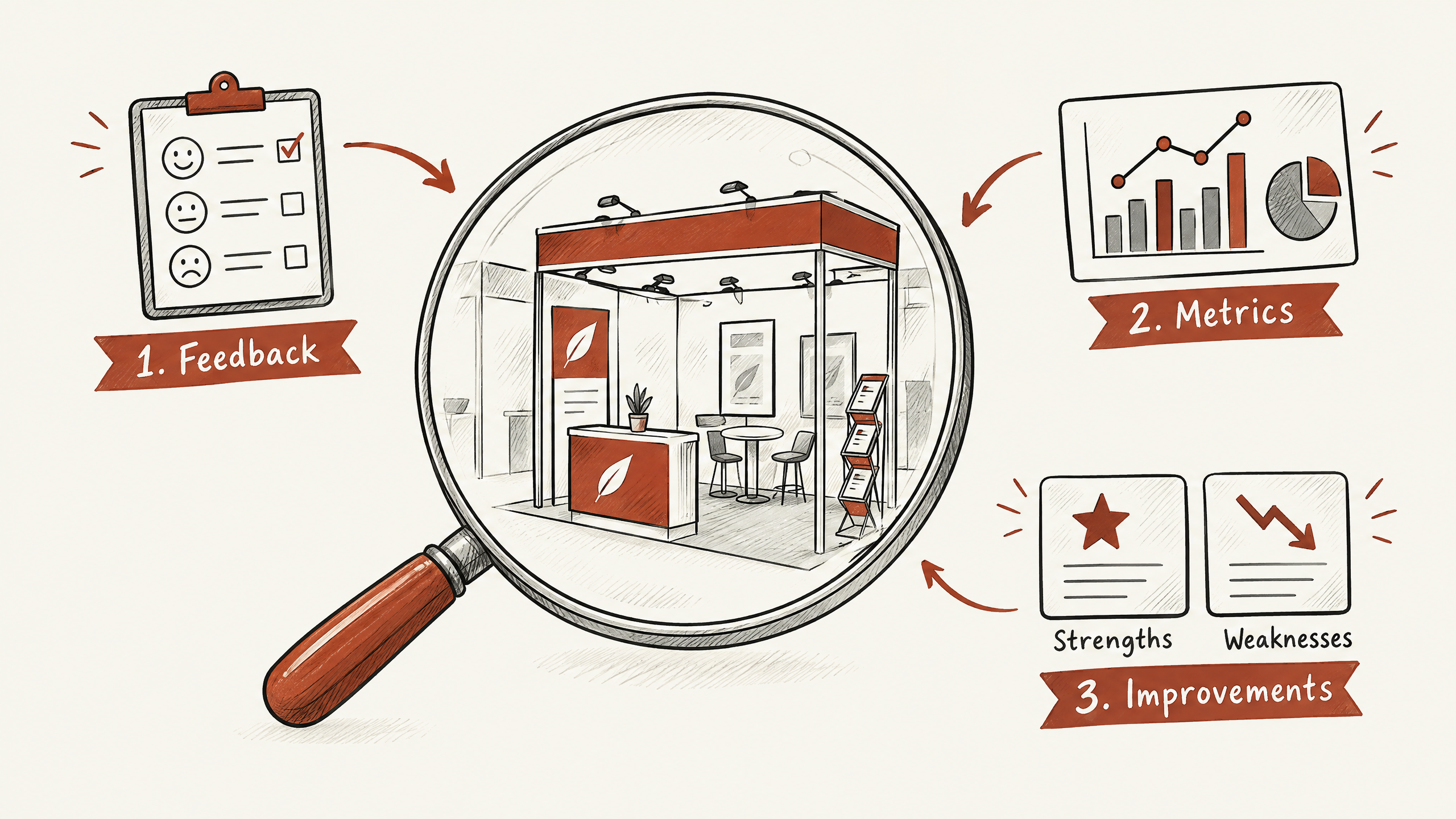
Begin by collecting feedback from both your booth staff and visitors.

This provides insights into what resonated and what fell short.

6. Evaluate and Improve Post-Event — 6 Key Strategies for Effective Messaging at Your Trade Show Booth

Consider using follow-up surveys or feedback forms to gather structured responses.

Analyze the visitor engagement metrics to assess which aspects of your messaging drew the most attention.

Look at foot traffic, time spent at the booth, and interactions with specific exhibits.

These metrics can highlight strengths and reveal areas needing improvement.

Next, review the performance against your initial objectives.

If your goal was to generate leads, compare the number of qualified leads secured to your expectations.

If brand awareness was the focus, assess the reach and visibility of your booth. Identifying these elements helps in understanding the overall impact of your messaging strategy.

Compile a report summarizing these findings, including any feedback, engagement data, and performance analysis. Use this report to facilitate a team debrief where you discuss successes and areas for improvement.

This collaborative discussion can spark ideas for adjustments and enhancements to your messaging strategy.

Finally, develop an action plan based on your findings.

This plan should prioritize changes for the next event, whether they are adjustments to your core message, booth design, or staff training.

Clearly outline who will own each task and establish timelines for implementation, ensuring that improvements are effectively integrated into future strategies.

The Bottom Line

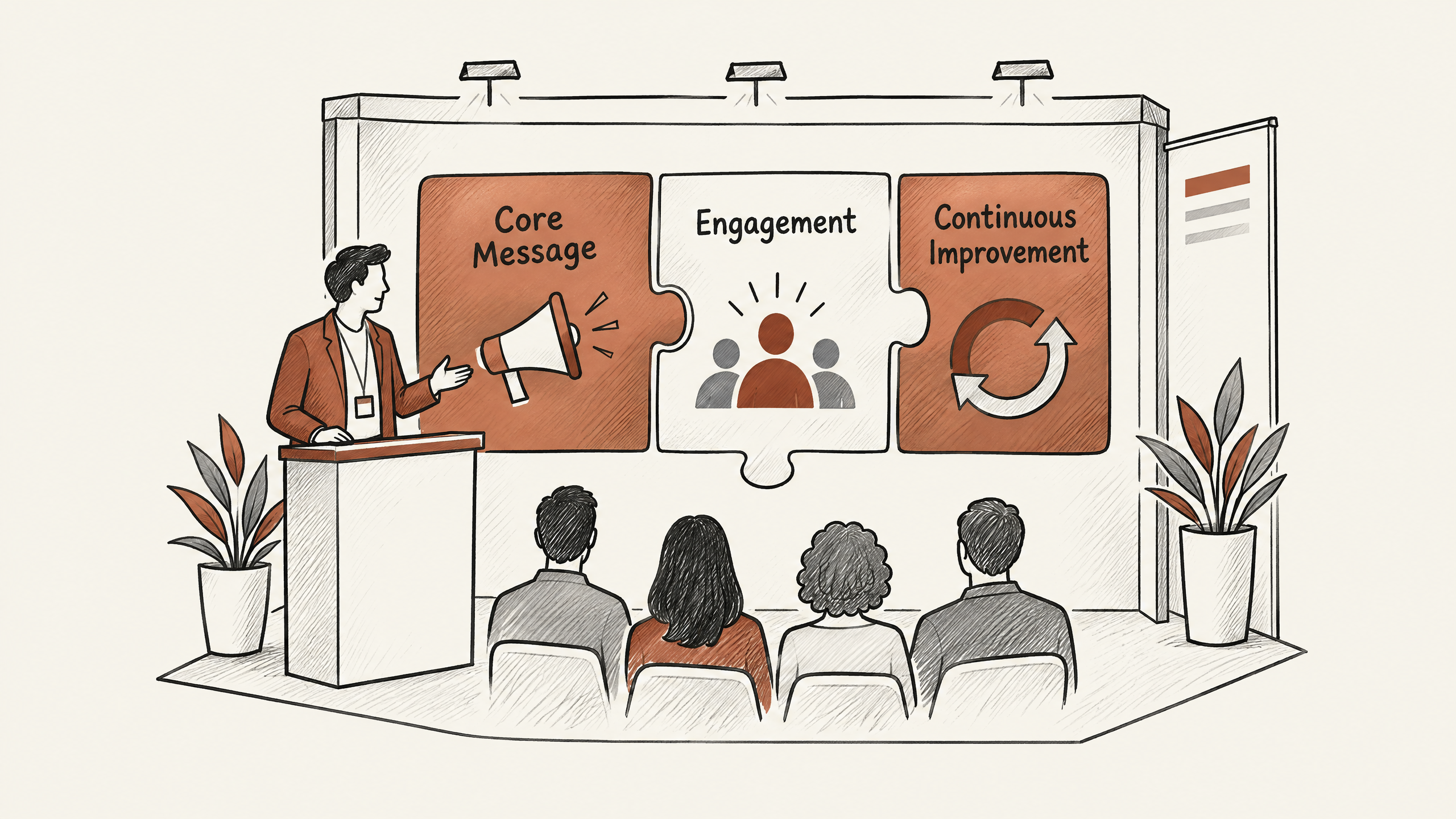
The success of your trade show booth hinges on strategic messaging that resonates with your audience. By defining a core message, aligning your booth design, and engaging prospects through interactive elements, you create a cohesive experience that leaves a lasting impact.

A well-trained team can adapt your messaging to different audiences, ensuring that everyone walks away with a clear understanding of your value.

Post-event evaluations help refine future strategies, allowing you to continuously improve.

The Bottom Line — 6 Key Strategies for Effective Messaging at Your Trade Show Booth

As you prepare for your next trade show, focus on these elements to achieve effective communication and boost your booth’s performance.

Prioritizing these strategies will pave the way for more meaningful connections and successful business outcomes.

Take these insights to your team, align them with your goals, and start planning for your next event with confidence.

Need a booth plan?

Turn show goals into a practical exhibit path

Share your footprint, timeline, and priorities. Our team can help shape the booth direction, graphics, and project support.

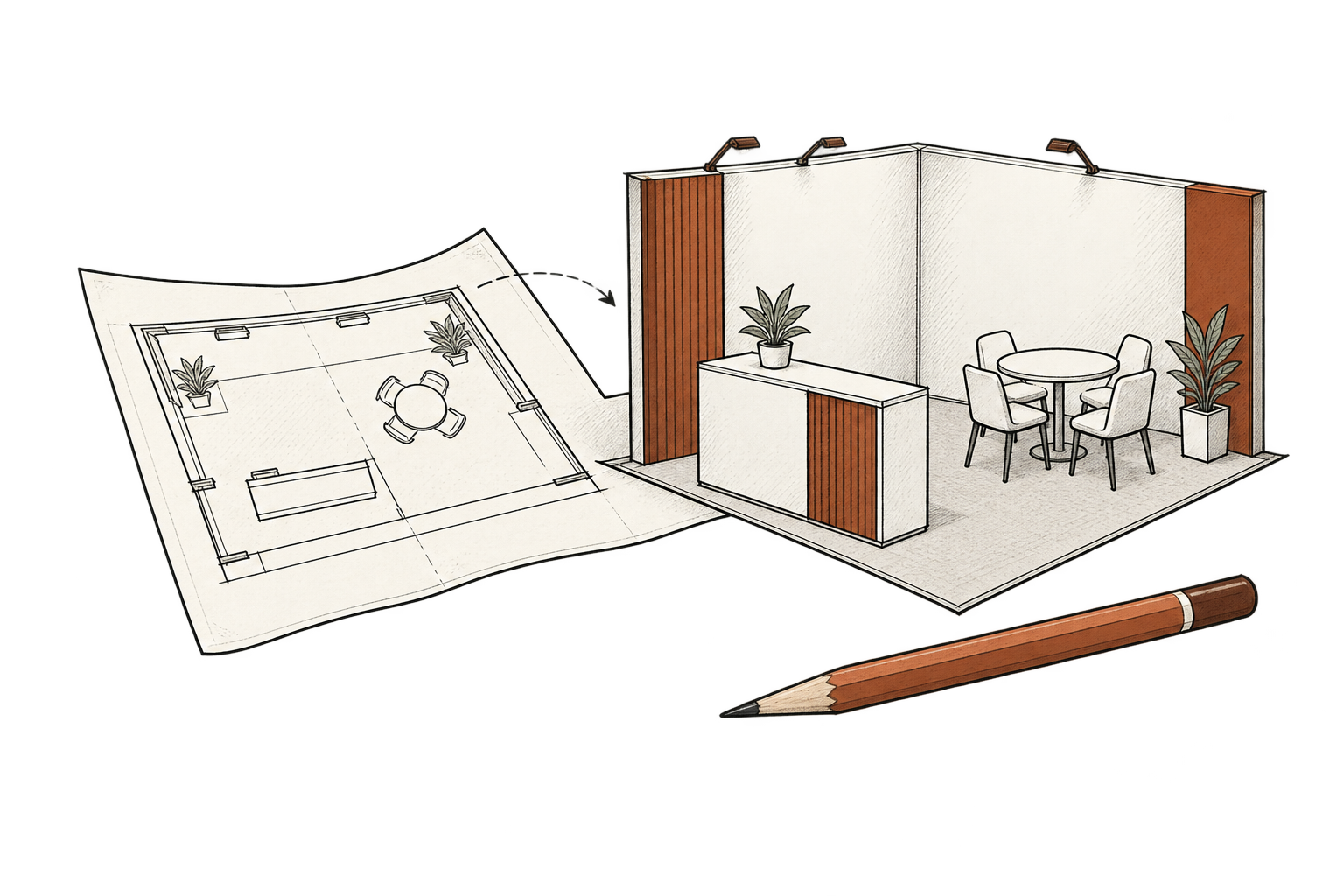
Hand-drawn booth floor plan and exhibit with cedar accents

Contact our team

Tell us who you want to reach

Tell us about your business, the buyers you want to reach, and what you want to achieve. Whether you need more sales conversations, stronger marketing, or a trade show presence, we’ll help you identify where to focus and what support makes sense. Together, we can shape a practical plan around your priorities, budget, and timeline.

info@exhibitant.com

Tell us what you need

A few details will help us make the most of our conversation.