Choosing the right booth size for your trade show can significantly impact your brand’s presence and success.
The decision between a 10×10 and a 10×20 booth is more than just about space; it’s about making strategic choices that align with your goals.
From what I’ve seen on the floor, figuring out which size will truly serve your needs can be a nuanced decision.
When you’re weighing your options, something that comes up a lot is how your trade show objectives dictate your booth choice.
Do you want to focus on intimate interactions, or are you aiming to display a wide range of products?
Trade shows are a whirlwind of activity, and your booth size plays a crucial role in how your brand stands out amidst the competition.
In my experience, there’s an art to balancing your budget constraints with the potential return on investment you can achieve from a larger booth space.
Smaller booths may be more budget-friendly, but larger ones can offer unique advantages in terms of visibility and visitor engagement.
This choice often hinges on how you envision your brand’s presentation and the kind of impact you aim to make.
Today I want to cover some key considerations that are crucial when deciding between a 10×10 and a 10×20 booth for your next trade show. These insights could help steer your decision and set you up for a successful event.
Key Takeaways:
Evaluate your trade show objectives before selecting booth size.
Consider your budget limitations and potential ROI.
Design flexibility varies between 10×10 and 10×20 booths.
Assess visibility and foot traffic advantages of each size.
Understand how booth size impacts staffing needs.
You’ll find that picking the right booth size isn’t just about fitting into a space.
It’s about balancing your goals, budget, and how you want to stand out.
Each booth size offers different ways you can engage with visitors.
Keep reading to get practical tips and insights from industry experts to make the best choice.
1. Defining Your Trade Show Objectives
The first step in deciding between a 10×10 or a 10×20 booth is to clearly define your trade show objectives.
What we have seen work really well is starting with a detailed understanding of what you hope to achieve by participating.
Are you aiming to generate new leads, strengthen existing client relationships, or perhaps introduce a new product or service to the market? Your objectives will significantly influence the booth size that makes the most sense for your specific needs.
One thing most exhibitors end up doing is prioritizing an approach that fits their strategic goals, which helps in determining the best allocation of resources.
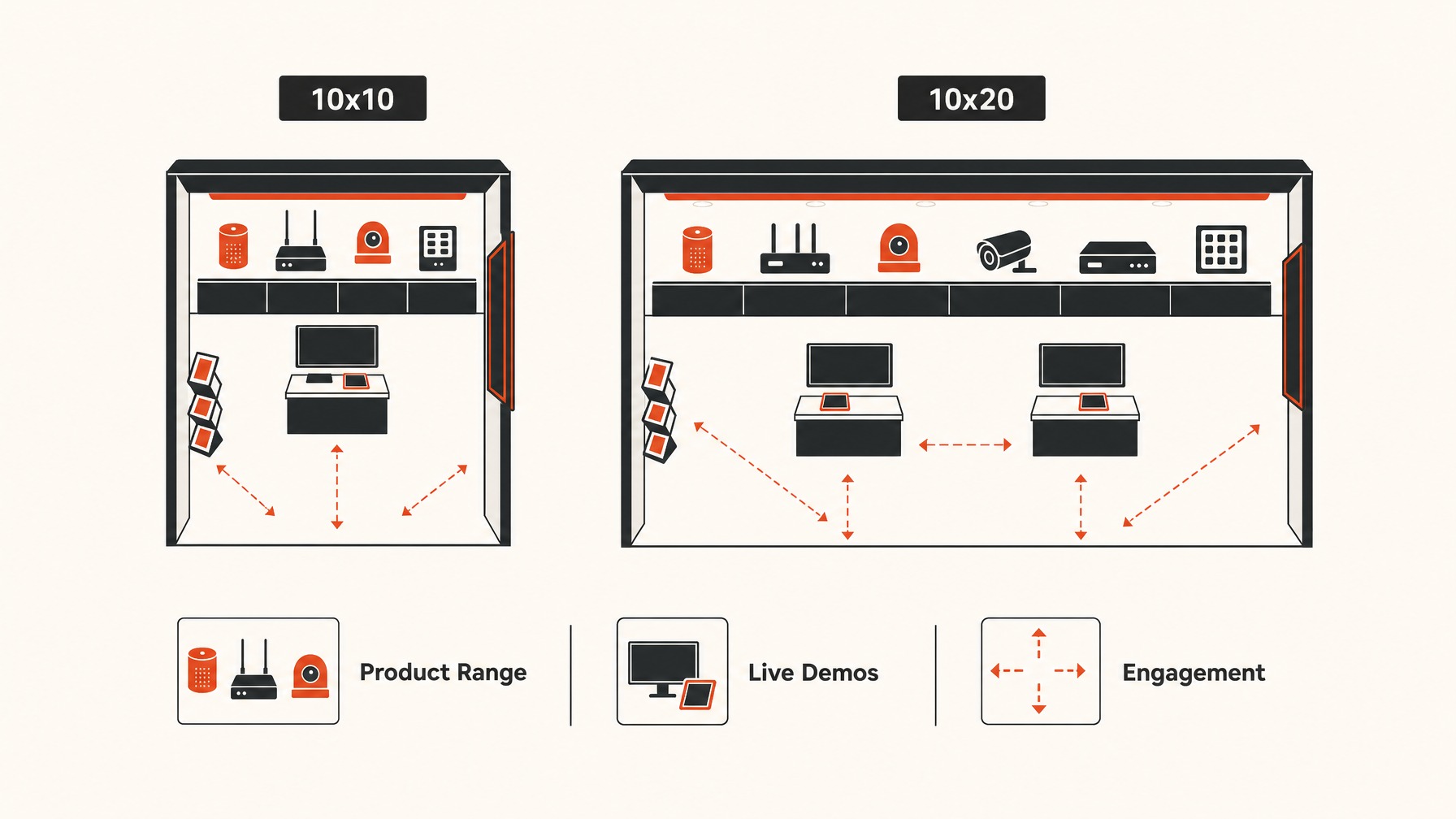
For instance, if the goal is to debut a new product and you require space for demonstrations, a larger booth like a 10×20 might be more appropriate.
On the other hand, if your focus is on networking and lead generation, a well-designed 10×10 booth could suffice.
Keep in mind that your objectives should not only dictate the booth size but also guide design, layout, and the overall experience you’re offering.
It’s essential to align your objectives with the expectations of your target audience at the show.
Something that comes up a lot is the need to tailor your booth to meet attendee interests, as this affects both engagement and interaction quality.
From what I have seen, the ones that get it right usually see higher returns on their trade show investments.
By focusing on understanding and defining clear objectives, you’ll be better equipped to decide the ideal booth size, making it a strategic part of your overall trade show plan.
2. Budget Constraints and Potential ROI
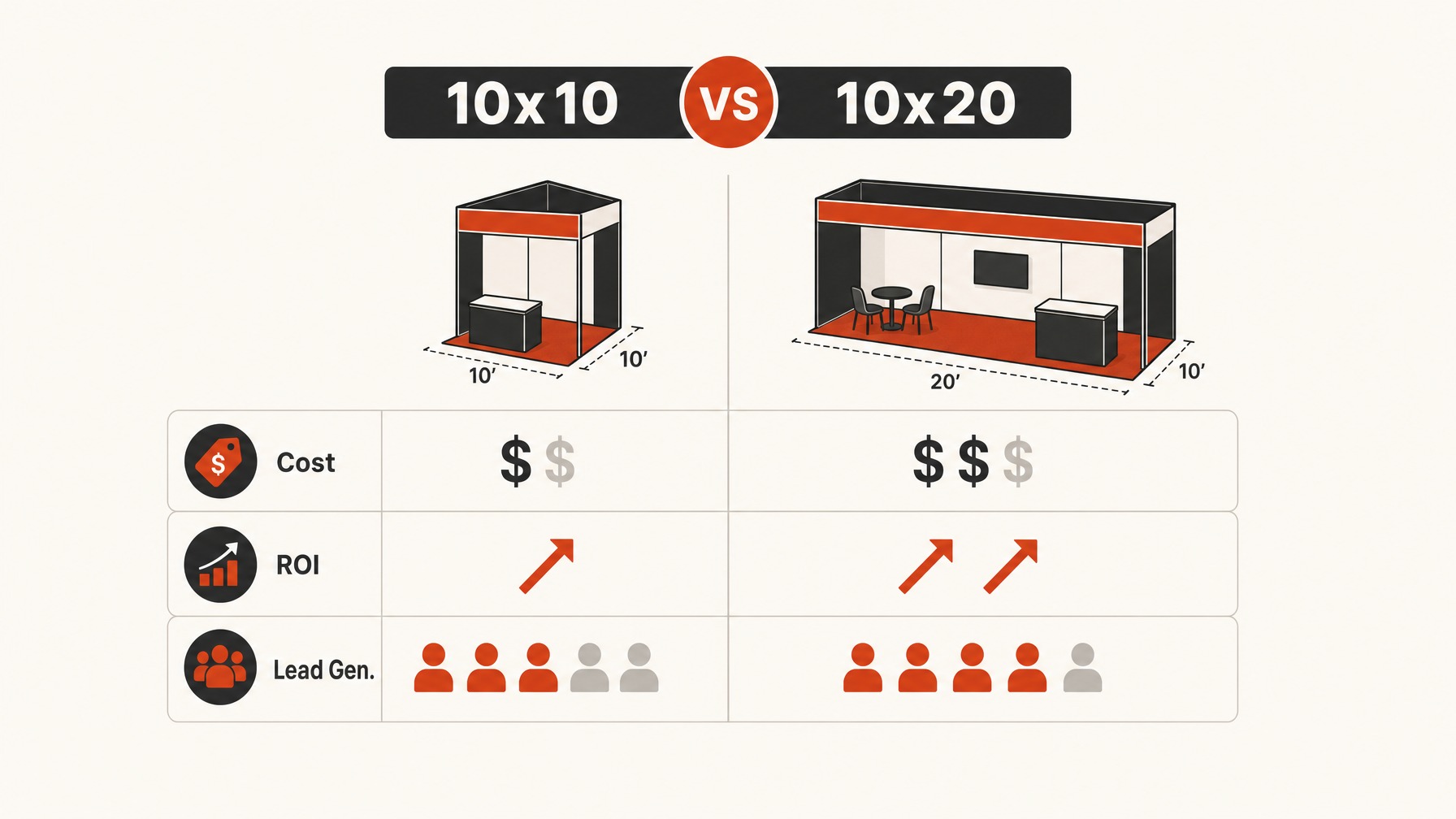
When deciding between a 10×10 and a 10×20 booth, budget constraints are often at the forefront of the discussion.
A larger booth space naturally demands a more significant investment, which makes it crucial to weigh the potential return on investment. What we have seen work really well is when exhibitors calculate the anticipated ROI beforehand, factoring in how the booth size could influence lead generation, sales, and brand exposure.
This means evaluating not only the price of the booth space but also the additional costs associated with a larger footprint, such as increased logistics and potentially more staff.
From what I have seen, the ones that get it right usually start by connecting their budget limitations with their trade show strategies.
One thing most exhibitors end up doing is projecting how many additional leads or sales a larger booth might generate.
That approach helps them assess whether the extra expense aligns with the expected outcomes.
Pro Tip: Before upgrading to a 10×20 booth, meticulously calculate how the increased investment could lead to more quality leads and sales, matching these with your budget constraints.
The key here is to realistically forecast potential revenue, which might be influenced by booth location, traffic patterns, and the broader exhibit design.
Something that comes up a lot is how companies sometimes overlook the hidden costs tied to a more expansive booth. Just because a 10×20 booth offers more space doesn’t necessarily mean it guarantees a higher impact if the cost-to-benefit ratio doesn’t align.
For many, it’s not just about having more room; rather, it’s about using that space to its utmost potential to attract and engage visitors.
The difference in costs should ideally correspond to a tangible difference in how you attract more and higher-quality interactions.
Ultimately, the goal should always be striking a balance between your financial capabilities and the strategic value the extra space is likely to provide.
3. Design Flexibility and Creativity
Design flexibility is something that can be greatly affected by the choice between a 10×10 and 10×20 booth.
A larger booth, in a sense, offers more room to let your creativity shine, providing opportunities for intricate designs that can captivate the audience.
That being said, from what I have seen, the most innovative designs can also emerge from smaller spaces due to the necessity of optimizing every inch.
One thing most exhibitors grapple with is striking the right balance between creative appeal and branding clarity.
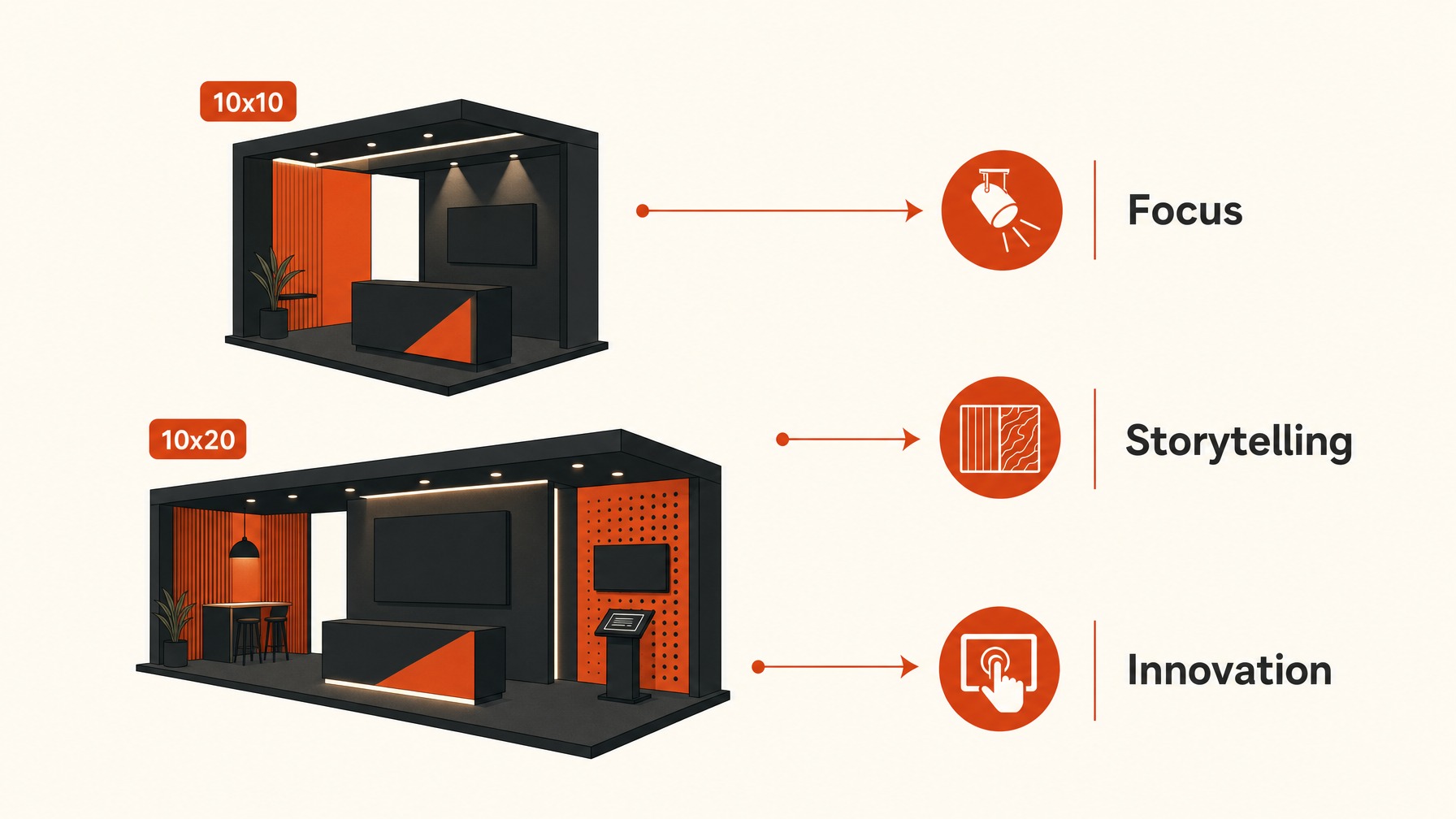
The smaller 10×10 booth can amplify a focused brand message when designed thoughtfully, while a 10×20 space can offer additional areas for branded storytelling. Elements such as unique lighting, textured backdrops, and interactive elements often benefit from the added square footage of a larger booth, drawing visitors into an immersive experience.
However, it’s important not to overlook how a smaller booth forces design discipline, a quality the Exhibitant team often emphasizes during consultations. The constraint of a compact space can lead to more innovative layouts and design elements by requiring clarity and focus.
Yet, both sizes present opportunities for modular designs, incorporating multifunctional elements that adapt to changing needs throughout the event.
Something that comes up a lot is the importance of design consistency with overall marketing strategy, regardless of booth size.
Modular stands, dynamic displays, and digital components such as interactive screens can be integrated creatively to engage attendees. Ultimately, the success of your booth’s design depends on how well it can entice visitors to explore further while communicating your brand’s key messages effectively.
4. Visibility and Foot Traffic
When debating between a 10×10 and 10×20 booth, something that comes up a lot is visibility and how much foot traffic each size can attract.
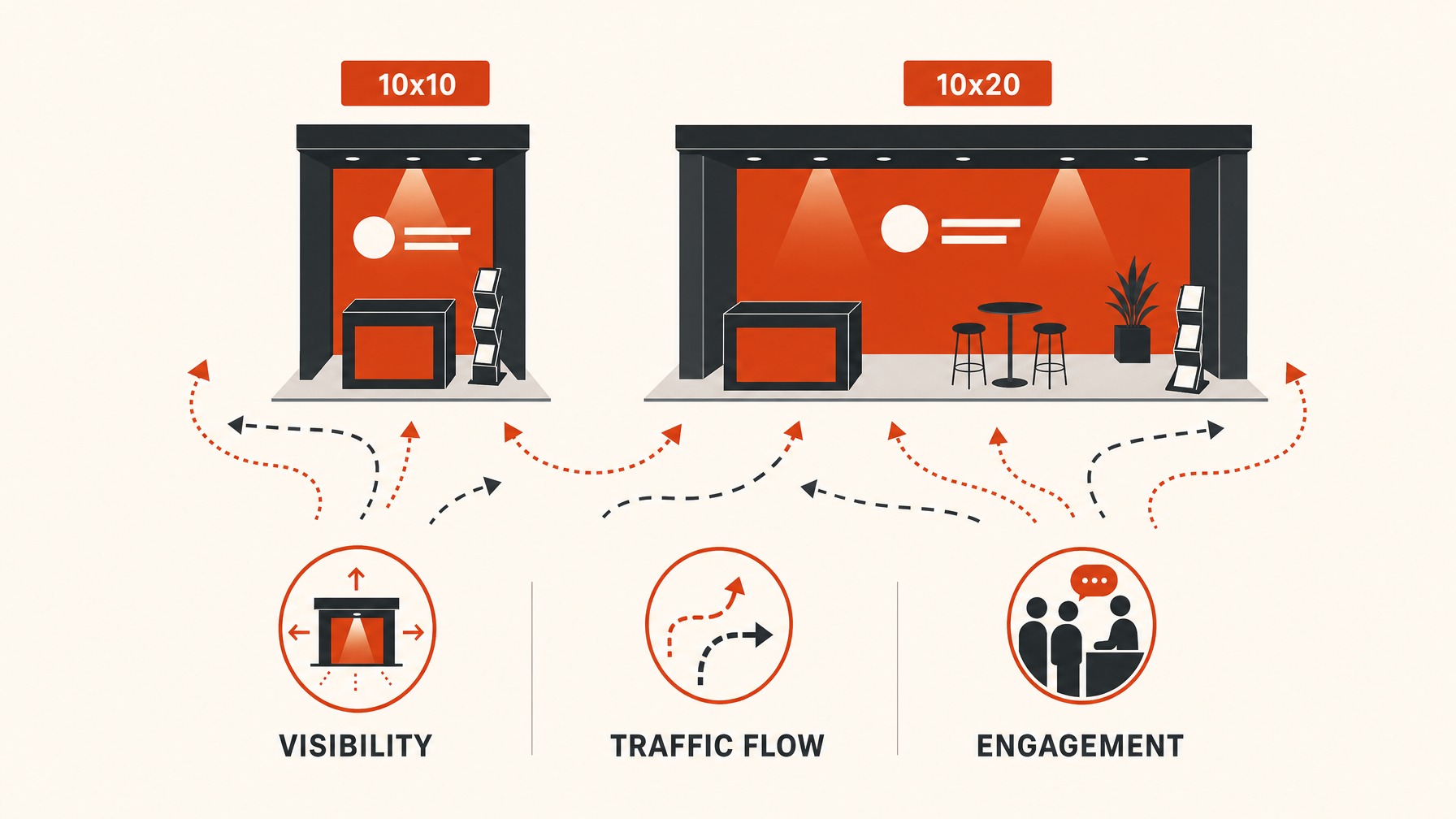
What we have seen work really well is using the larger space to create more opportunities for attendees to stop and engage, as a 10×20 booth naturally allows for greater visibility from multiple directions.
While a 10×10 booth can be strategically positioned to catch eyes, a 10×20 booth offers more flexibility to enhance your visibility through creative design elements and promotional materials.
From what I have seen, the ones that get it right usually insist on placing their brand messaging front and center of the booth space.
This isn’t to say the smaller booths can’t attract significant traffic; one thing most exhibitors end up doing is aligning their exhibit design with high-traffic areas such as entrances or main aisles to compensate for less surface area.
The added space of a 10×20 booth also allows for incorporating interactive elements like product demos and videos that naturally draw attendees in and encourage them to linger longer.
I would say the biggest thing here is to assess the show layout and foresee where attendees are likely to congregate.
Important: Opting for a 10×20 booth increases your visibility and foot traffic, allowing for more engaging interactions with potential leads.
A 10×20 booth can be designed to attract attention from multiple angles, effectively maximizing your presence and capturing the interest of passersby.
On the other hand, a 10×10 booth requires more strategic positioning and imaginative exhibit design to compete with larger setups.
If you’re at a show where your target audience is particularly dense, being directly in their path with a 10×20 can mean a significant boost in booth traffic. This increased exposure allows for not only better brand recognition but also more meaningful interactions with potential leads.
Your decision should hinge on how these visibility advantages align with your event goals and target audience engagement strategies.
5. Staffing and Logistics
When deciding between a 10×10 and a 10×20 booth, the staffing requirements and logistical demands are quite different and should be thoroughly assessed.
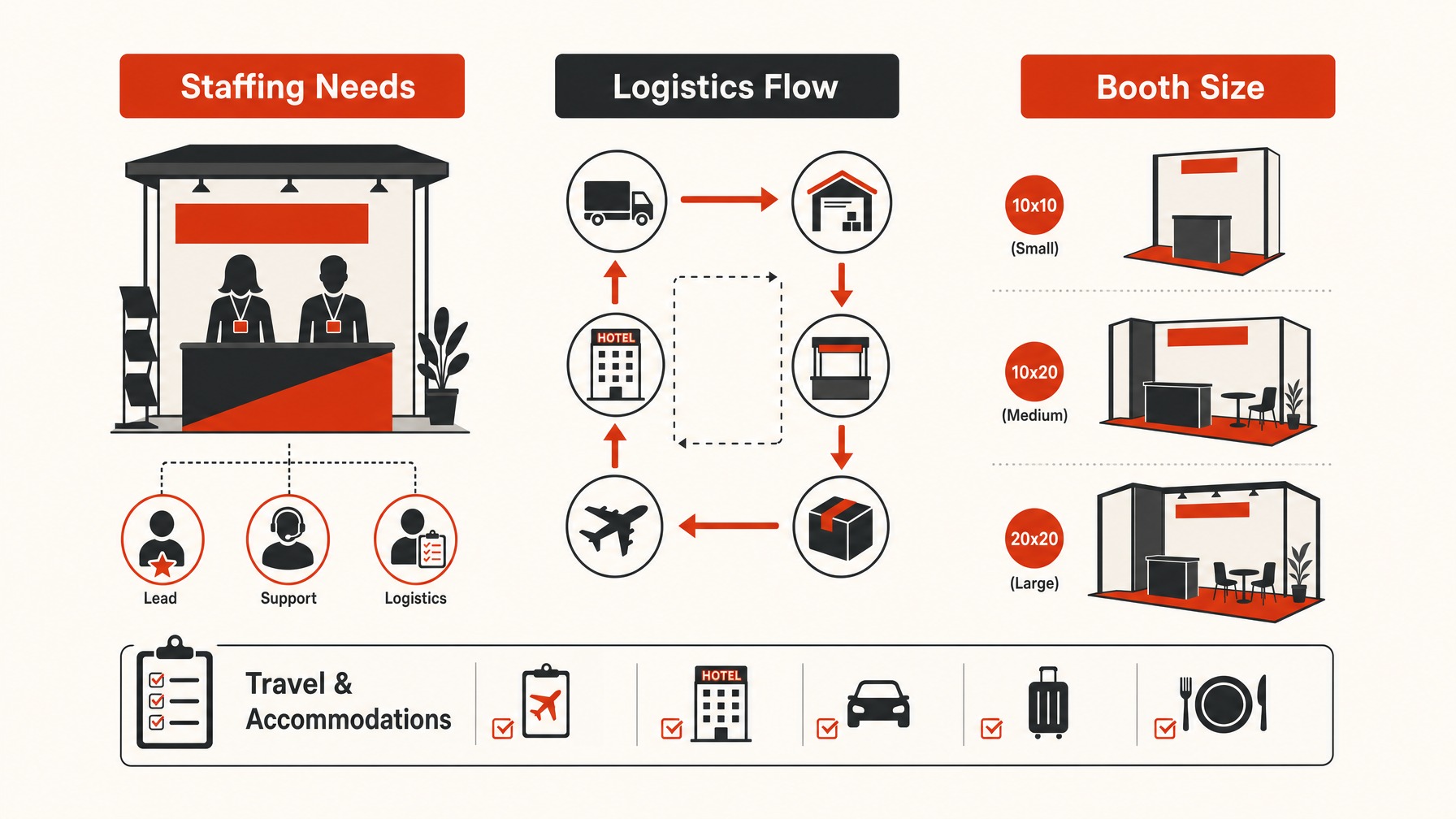
A smaller 10×10 space might only require a couple of knowledgeable staff who can manage interactions comfortably without feeling overwhelmed.
Meanwhile, a 10×20 booth not only allows for additional product displays but also typically requires a larger team to maintain optimal visitor engagement and answer queries promptly.
The larger footprint introduces some interesting logistical challenges that you might not face with a more compact booth. Coordinating travel, accommodations, and schedules for a bigger team means logistics take on a life of their own, demanding more precise planning than ever.
Having more booth staff also implies the need for a well-thought-out rotating shift schedule to make sure coverage doesn’t dip, especially during high traffic periods.
A logistical aspect that shouldn’t be ignored is storage and transportation, which significantly affects the booth setup and dismantling process.
A 10×20 booth setup could entail transporting more materials and modular components, leading to increased shipping costs and longer installation times. From my experience, many exhibitors find that it’s crucial to balance having adequate staff on-hand without exceeding budgetary constraints or logistical capacity.
One thing that’s often overlooked is the importance of training your additional staff members to function effectively as a cohesive unit. Training becomes even more critical when you have multiple team members operating in a larger space, as consistent messaging and smooth visitor experience provide the foundation for successful trade show participation.
For what it’s worth, those who prepare thoroughly in training often see smoother operations in larger booths.
Another factor is integrating technology smoothly, such as lead capture tools or presentation devices, which sometimes requires additional staff focus and logistical support.
Larger booths may offer more opportunities for interactive experiences, but they need specialized personnel to manage these technologies efficiently. This can necessitate creating dedicated roles focusing on tech responsibilities, further complicating the staffing model but potentially offering greater rewards when executed well.
6. Product Display and Demonstration
When selecting between a 10×10 and a 10×20 booth, one consideration that frequently comes up is how you can effectively show and demonstrate your products.
From what I have seen, the size of your booth directly impacts your ability to create engaging experiences for your audience. A 10×20 booth typically provides more room for live demonstrations, allowing you to show a broader range of products or explore into more detailed presentations.
This expanded space can facilitate interaction and engagement, allowing attendees to experience your offerings more tangibly.
On the other hand, a 10×10 booth requires a more strategic approach to fit the same level of product engagement in a smaller footprint.
Exhibitors need to prioritize their top products and use dynamic display techniques to grab attention.
Integrating technology like interactive screens or virtual reality can allow you to enhance product visibility even in a cramped space.
The goal is to leave attendees with a lasting impression of your brand’s innovation and capabilities.
The decision between these two sizes often boils down to understanding how each option aligns with your product marketing strategy.
If showcasing a large array of items or intricate machinery is key to your success, a larger footprint might provide the best platform. However, if budget constraints or other factors limit you to a smaller booth, focus on making every inch work for you.
This is where Exhibitant comes in, offering tailored exhibit strategies and booth systems designed to get the most out of your space regardless of size. Acting as a true exhibit partner, Exhibitant supports you with comprehensive show support that aligns with your unique booth ambitions.
What It All Comes Down To
The choice between a 10×10 and a 10×20 booth really depends on having a comprehensive understanding of your overall strategy and specific goals for the trade show. From what I’ve observed, the exhibitors who have the most success are those who weigh factors like budget constraints, design flexibility, and product display opportunities carefully while aligning them with their objectives.
What often gets overlooked is how much each booth size will impact staffing logistics and the resulting dynamics of lead interaction and engagement.
Additionally, one thing to keep in mind is the potential for increased visibility and foot traffic with a larger booth, but only if you can effectively capitalize on that extra space. Effective use of that space can make a significant difference in how you’re perceived by attendees.
Ultimately, what we’ve seen work well is grounding your decision in a strong understanding of how space choice will directly support your trade show objectives. The operational details such as logistics and staffing are also important, as is making a practical assessment of what level of product demonstration is feasible in the space you choose.
As I see it, the ultimate consideration should be aligning booth size with your brand’s story, ensuring consistency in attendee experience from one event to the next.
There’s an art to balancing budgetary considerations with aspiration, and getting that mix right is part of what defines good trade show strategy.
Whatever your final decision, aim to use the booth as a catalyst for meaningful interactions that can drive long-term brand engagement and business opportunities.
Wrapping up a conversation like this, it’s worth focusing on creating a booth that not only captures attention but also perfectly encapsulates your brand at every scale.
Need a booth plan?
Turn show goals into a practical exhibit path
Share your footprint, timeline, and priorities. Our team can help shape the booth direction, graphics, and project support.
Keep planning
More exhibit guidance
Keep exploring practical advice on booth planning, marketing, and getting more from your next show.
Tell us about your business, the buyers you want to reach, and what you want to achieve. Whether you need more sales conversations, stronger marketing, or a trade show presence, we’ll help you identify where to focus and what support makes sense. Together, we can shape a practical plan around your priorities, budget, and timeline.
 Lorena G.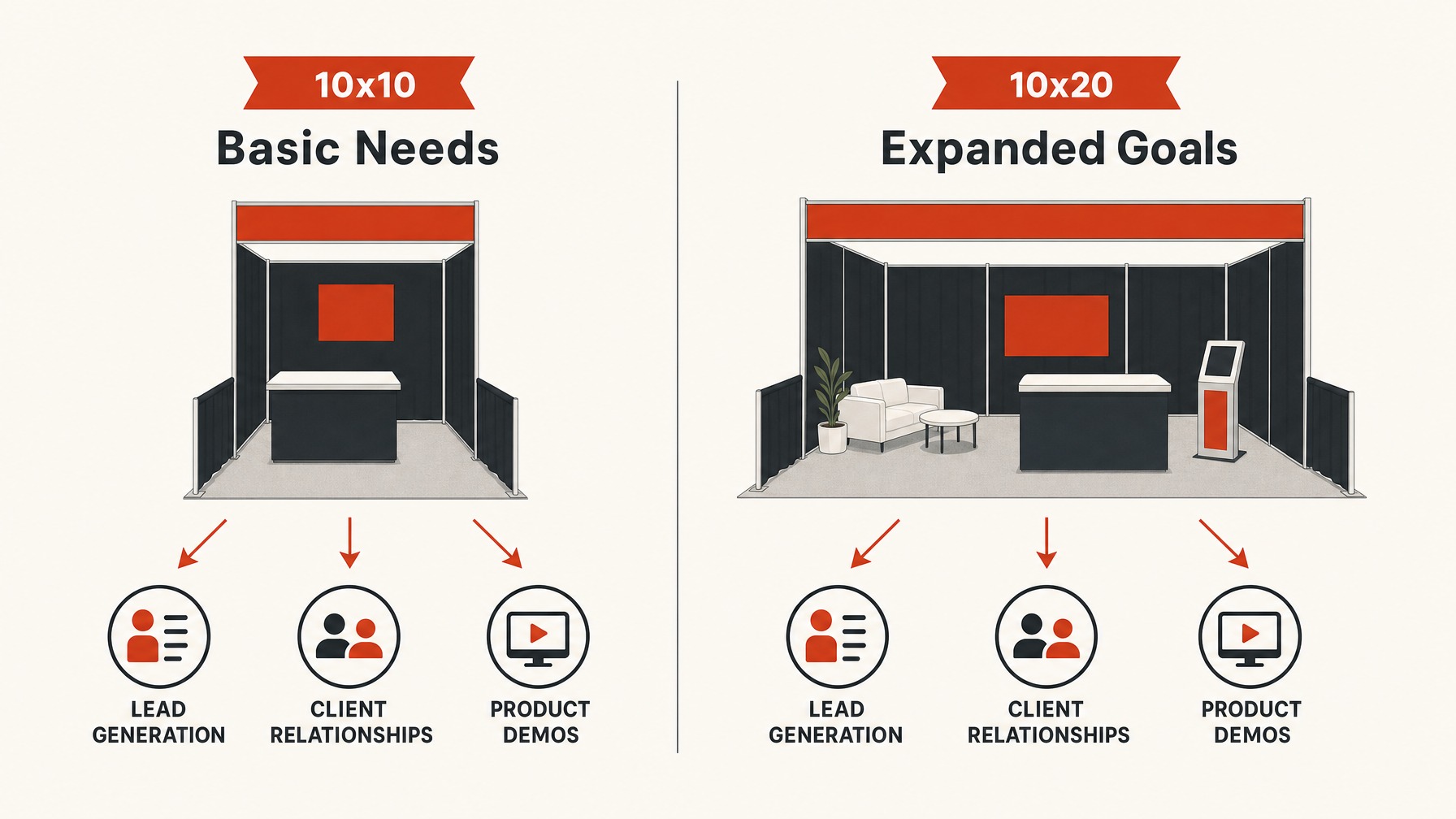
 Louie J.