 Louie J.
Coordinating the setup and dismantle of an exhibit can be complex. These tasks are vital to the success of any show, impacting the experience of both your team and attendees.
I’ve seen how a well-organized process can save time and trouble.
To approach this effectively, preparation is crucial.
Starting early and planning your layout are key.
Even a simple booth can become challenging without a clear vision from the outset.
Selecting a suitable installation team also requires thoughtful consideration, as their skills directly affect the smoothness of the setup and tear-down process.
As your efforts unfold, coordinating with venue staff is essential. They can provide crucial support, helping you manage access, utilities, and logistics during those busy hours on the show floor.
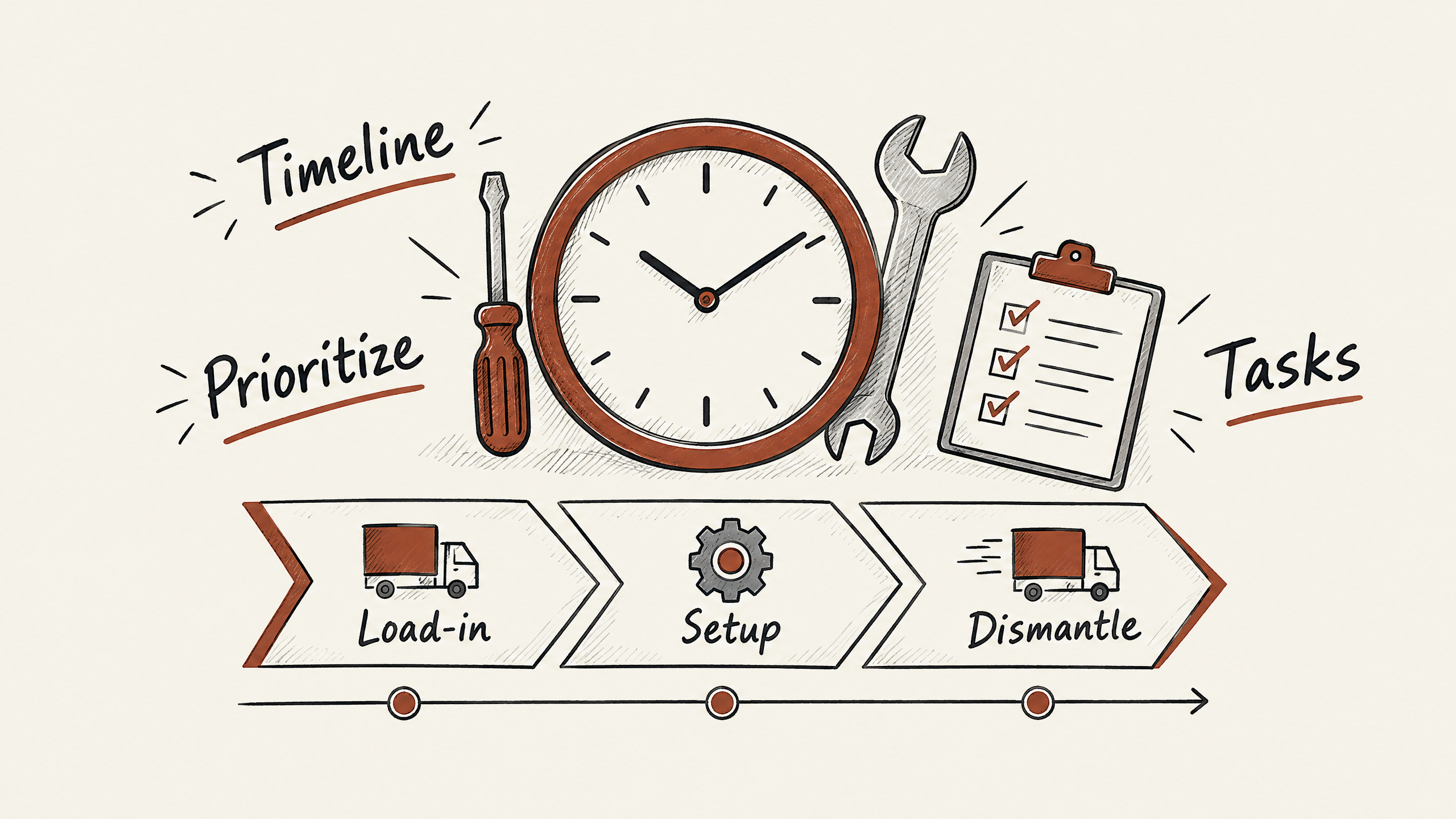
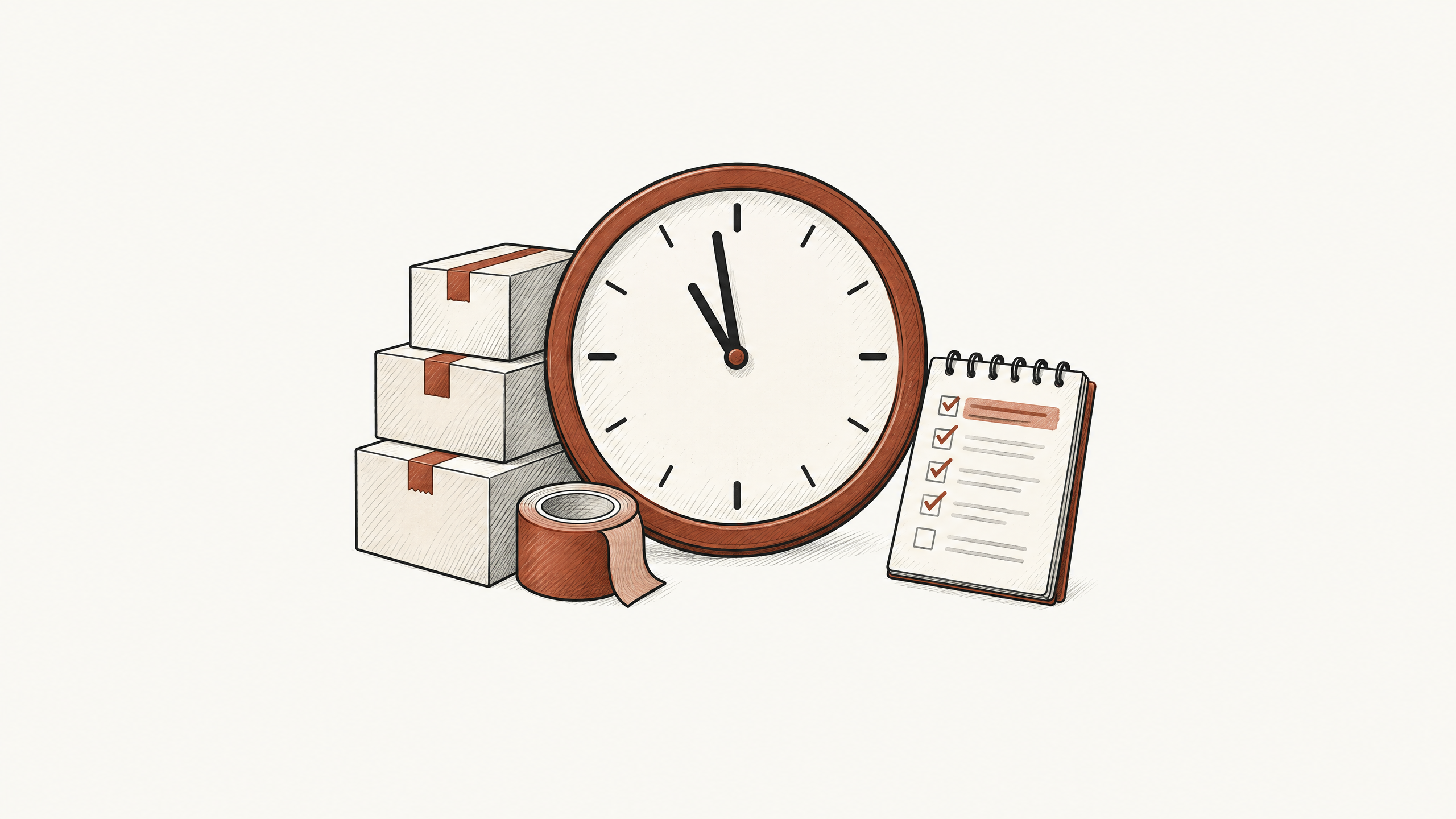
This cooperation must be paired with good time management to avoid rushes and make sure every activity progresses on schedule.
After reading this article, you’ll be equipped to organize your setup efficiently and address common installation challenges. From checklist creation to team management, these steps will guide you toward a smooth exhibition setup and dismantle experience.
- Plan booth layout early to avoid last-minute changes.
- Choose reliable installers with trade show experience.
- Coordinate closely with venue staff for smooth operations.
- Allocate enough time for setup and dismantling tasks.
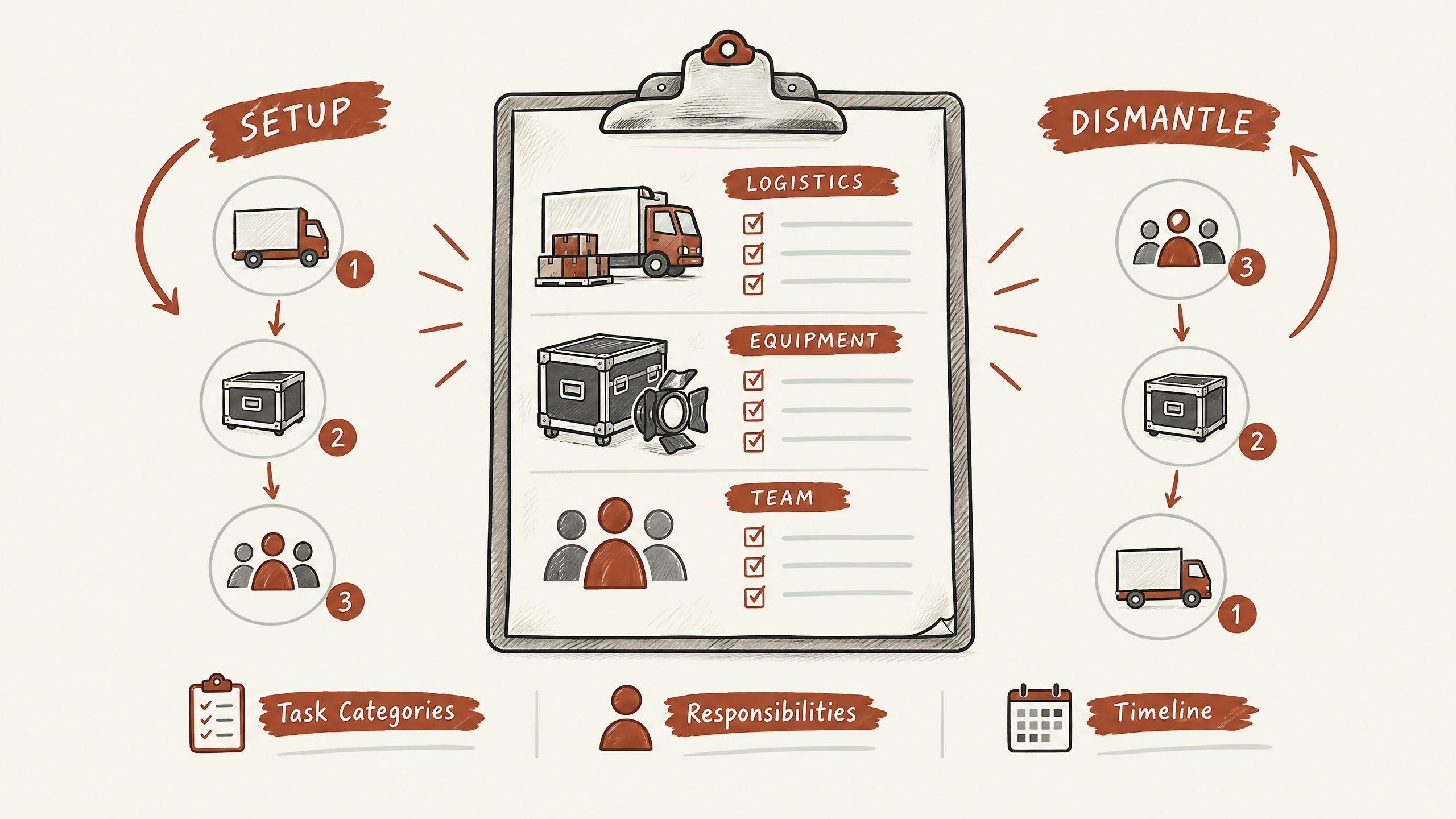
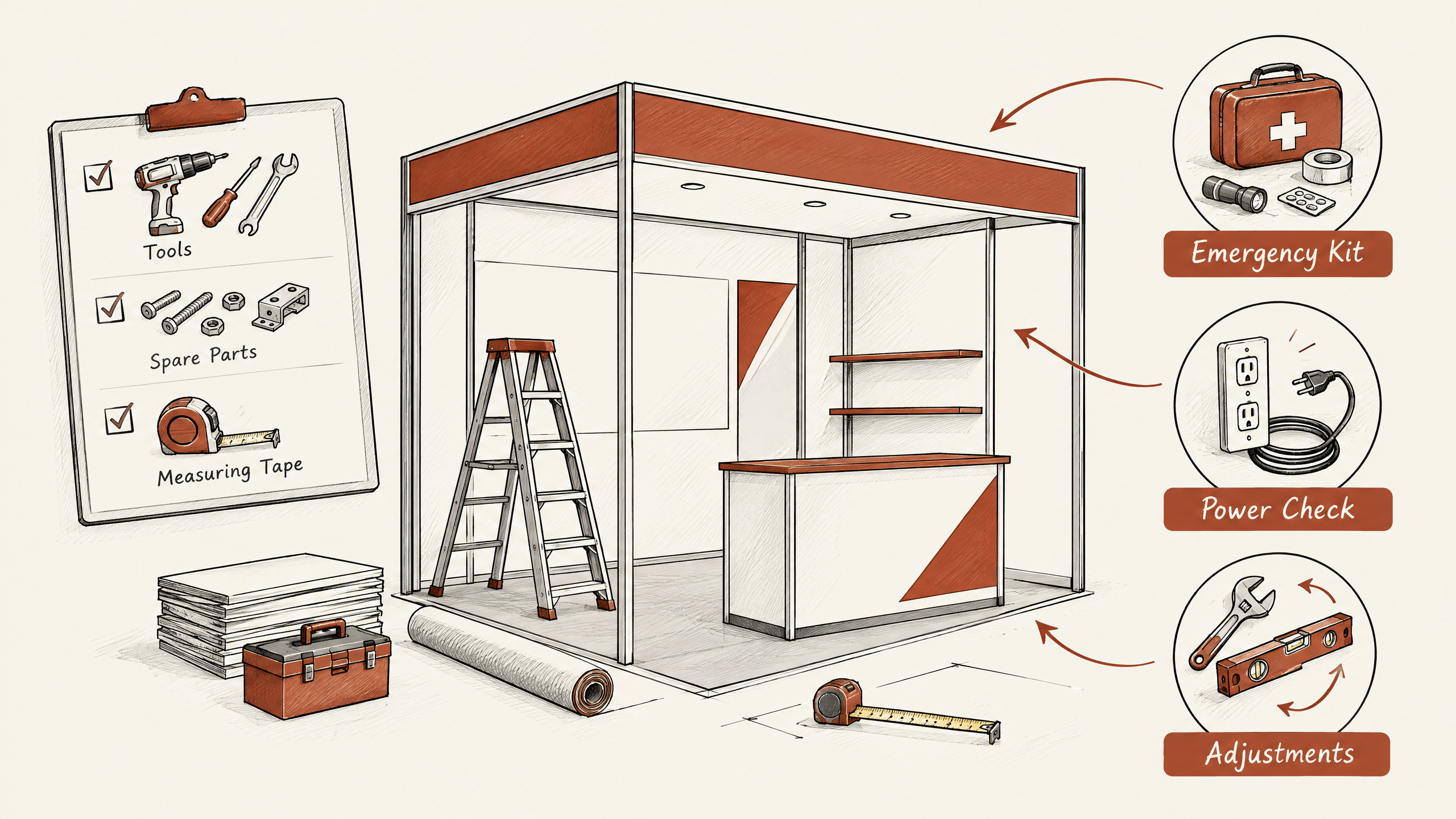
- Create detailed checklists for setup and tear-down.
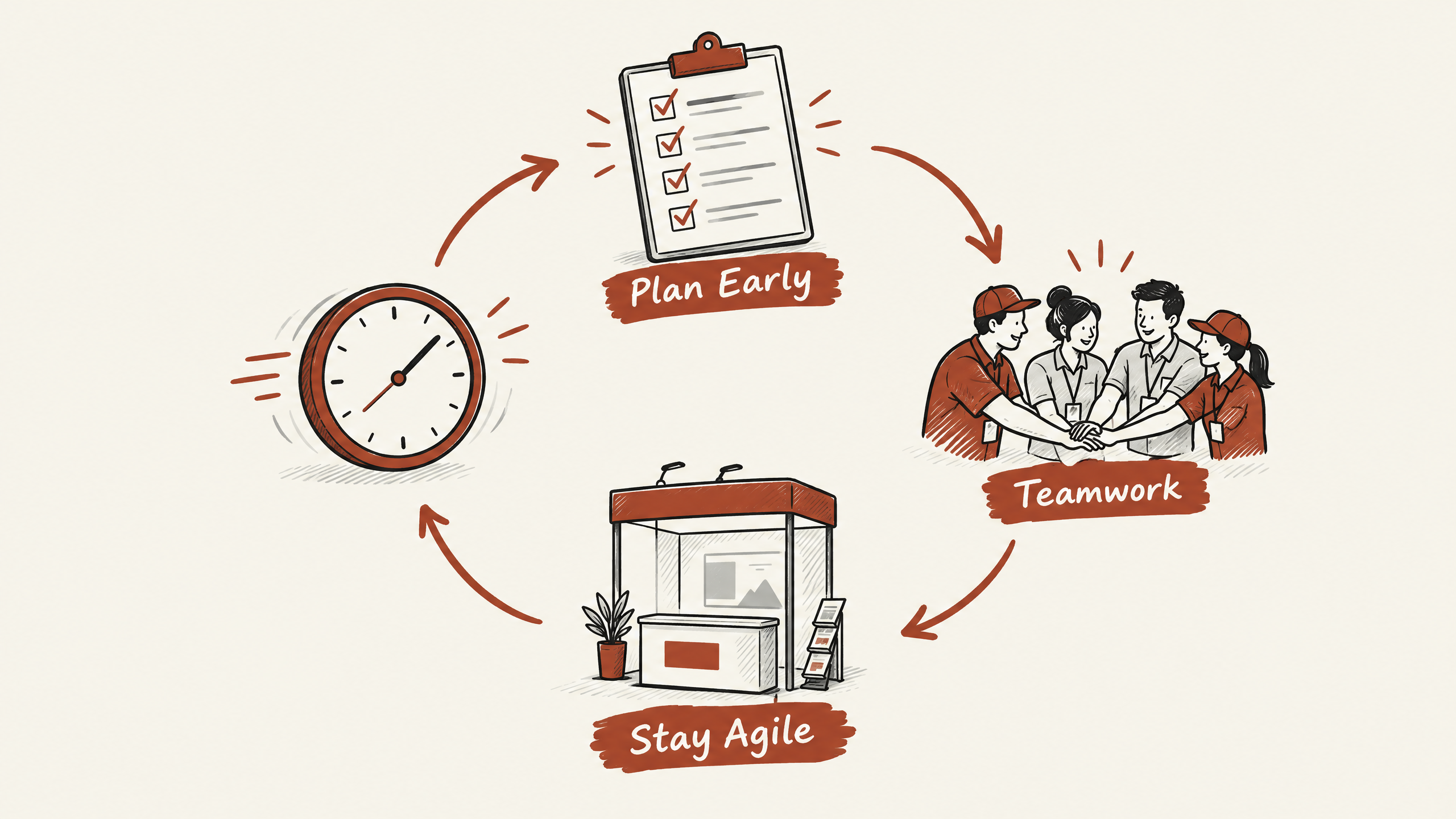
After reviewing these takeaways, consider how they can help you improve the efficiency of your exhibit planning and execution.
Focus on these strategies to make your next event smooth and stress-free.
1. Plan Your Layout Early
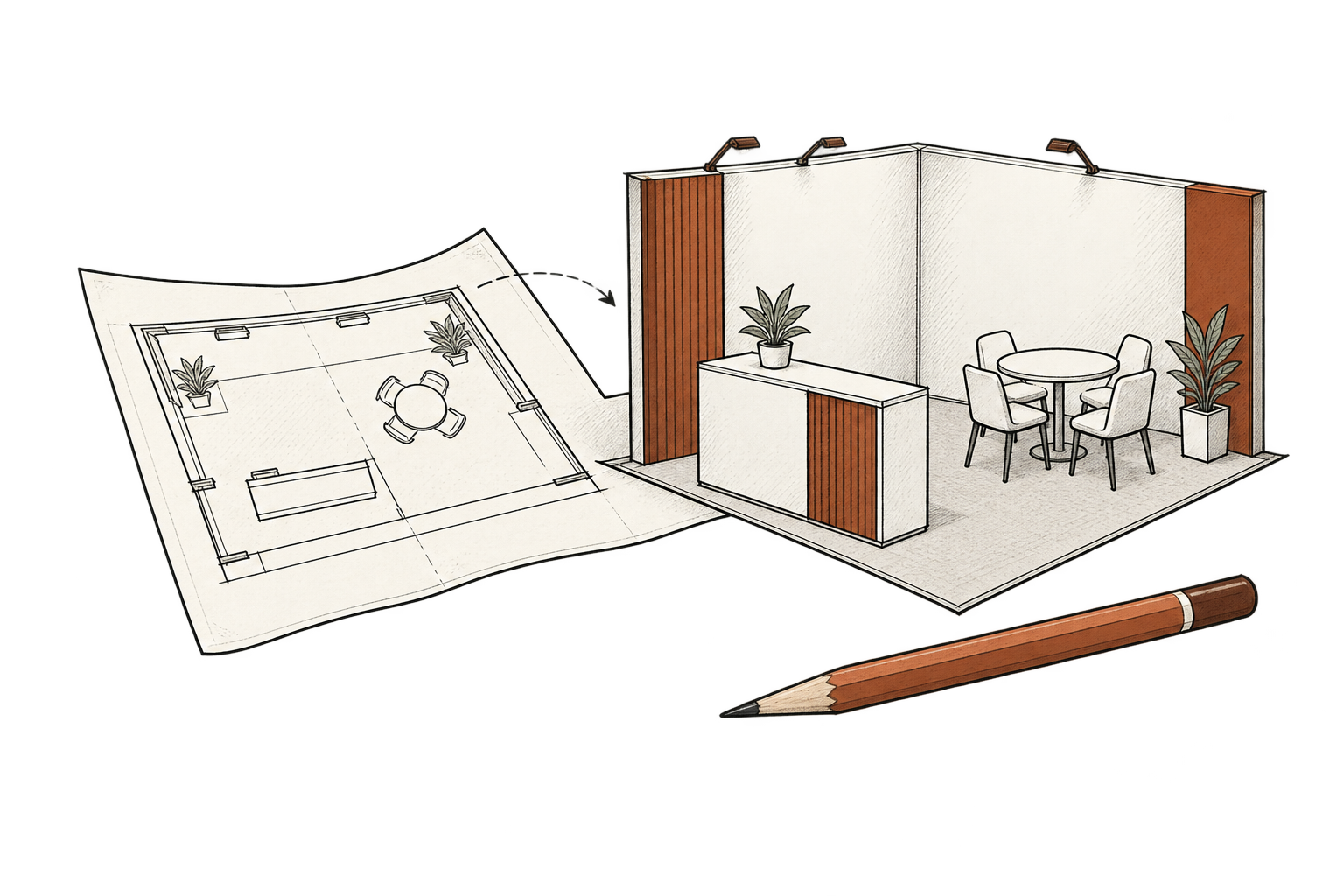
Long before the exhibit takes shape on the show floor, planning your layout is crucial.
An early start gives teams adequate time to address potential constraints and allows for a smoother execution.
For marketing directors and trade show teams, defining the exhibit’s goals is the first step.
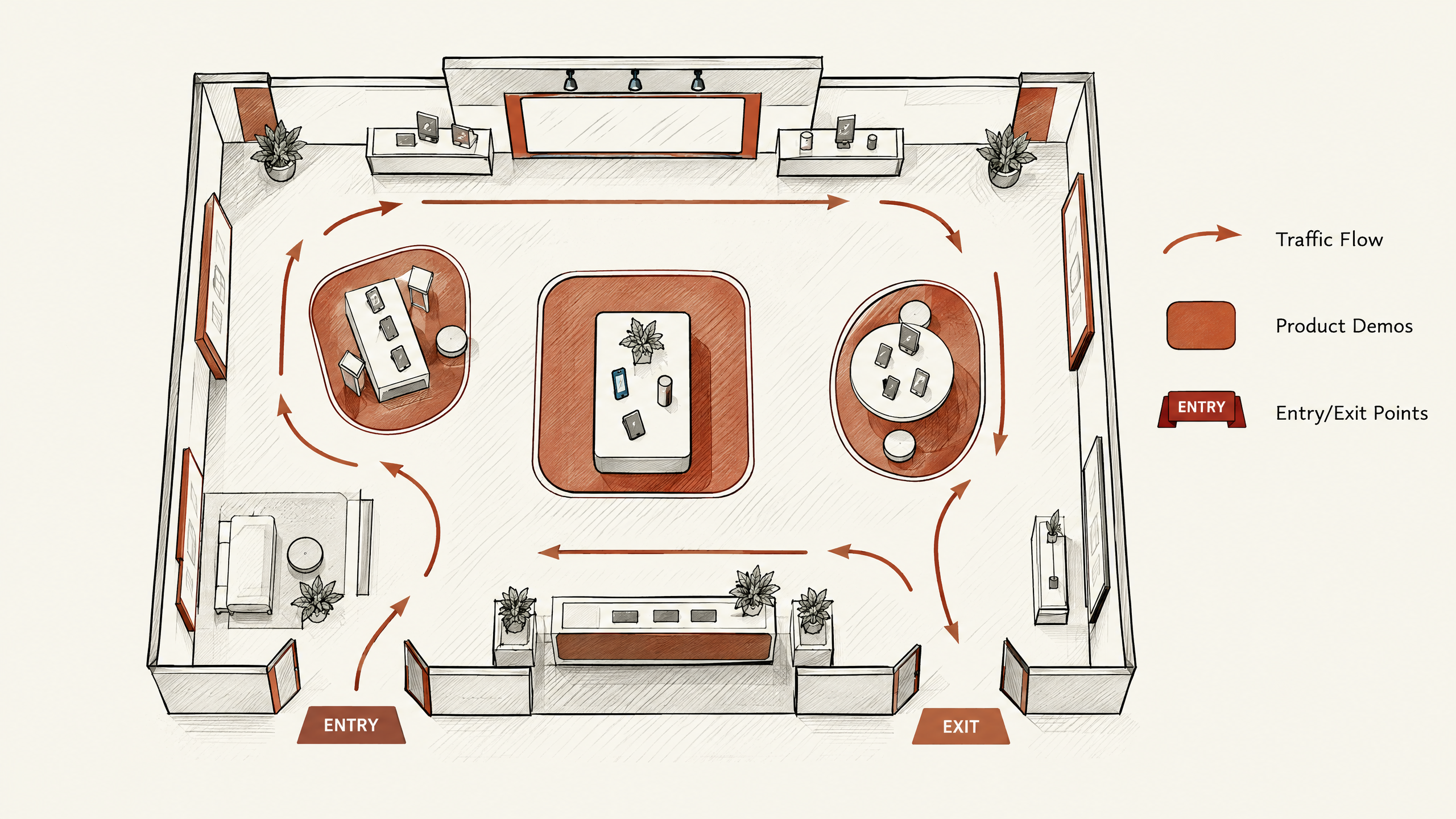
This includes understanding what you want to achieve and how your layout can support those goals.
Think about the flow of traffic within your booth.
Entry and exit points, product display areas, and seating arrangements should be logically placed to guide attendees seamlessly through the space.
I suggest sketching multiple configurations and testing them against your objectives to identify the most effective design.
For example, if your goal is to demo new products, make sure you designate enough space for demo stations. A common mistake is underestimating the space needed for high-traffic activities, which can lead to a cramped environment.
Important: Plan your exhibit layout early to address potential constraints and make sure a smooth execution by sketching multiple configurations and involving key stakeholders in the process.
Aim for a balance between open areas and interactive zones, while keeping accessibility in mind.
Once your layout is finalized, collaborate closely with designers and builders to make sure feasibility.
This stage may reveal practical limits that require you to refine your design further. Involving key stakeholders early in the process ensures their buy-in and decreases the likelihood of last-minute changes that could disrupt the timeline.
Finally, consider working with an agency like Exhibitant to refine and visualize your layout.
We can assist in creating a virtual representation of your booth, offering adjustments to improve space.
With a well-planned layout, you will be better equipped for a smooth exhibit setup and a successful trade show presence.
2. Choose the Right Installation Team
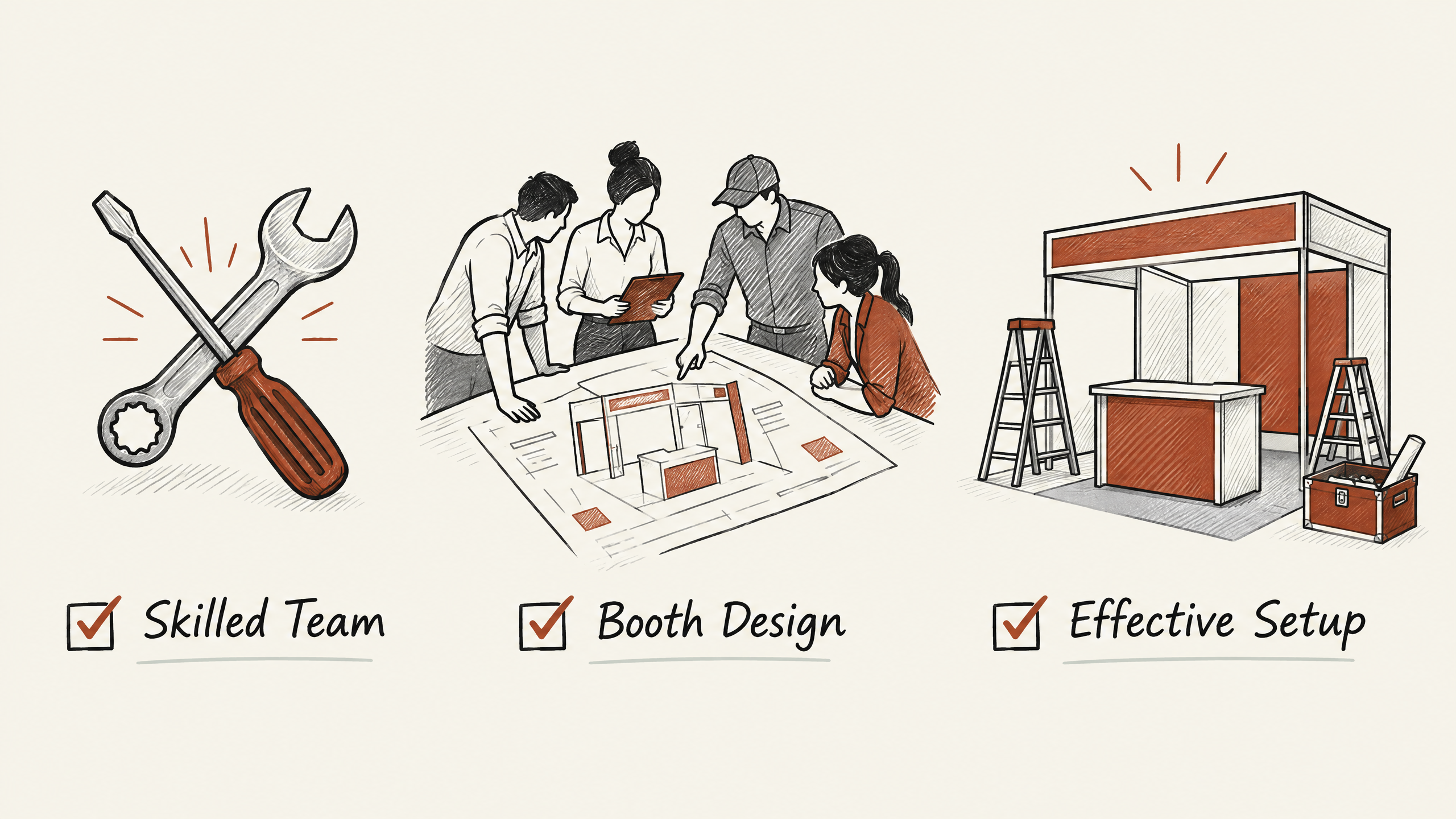
When selecting an installation team, you need skilled professionals who understand both your booth design and the trade show environment.
The right team will make sure your booth is set up effectively and dismantled efficiently, minimizing disruptions and avoiding costly mistakes.
Begin by evaluating the team’s past experience and expertise, particularly with setups comparable to yours. A team familiar with your industry’s typical booth requirements can anticipate and address potential challenges.
Request references and examine case studies from previous projects.
Look into their track record in terms of reliability, timeliness, and problem-solving skills. This is crucial for ensuring a smooth installation process.
Consider the logistics and vendor limitations involved in your specific event.
Some venues may require union labor or have restrictions on who can perform certain tasks. Working with an installation team familiar with these constraints helps prevent unexpected delays or compliance issues.
Communication is key; make sure the team understands these limitations and can adapt as needed.
Another important factor is their ability to collaborate seamlessly with your internal team.
You want an installation crew that can take direction and provide input without causing friction. Look for crews that offer a project manager who will act as your point of contact, ensuring consistent communication.
Imagine preparing for a tech conference, where timing and precision are critical. You’d select an installation team that specializes in the tech industry, with a successful history of handling delicate setups.
This would include a project manager who knows the venue’s requirements and can guarantee compliance with all guidelines.
Addressing these factors ensures your installation and dismantling tasks will be completed efficiently, on schedule, and with minimal stress.
3. Coordinate with Venue Staff
Coordinating with venue staff is a crucial step in ensuring a smooth exhibit setup and dismantle process.
These team members are familiar with the venue’s logistics and can provide valuable insights into floor plans, loading dock access, and any specific venue rules or restrictions. Connecting with them early can help you anticipate potential challenges and incorporate their guidance into your plan, which helps prevent last-minute changes that could disrupt your schedule.
Since some venues have strict timelines and guidelines for setup and dismantle, it’s important to establish clear communication channels with the staff.
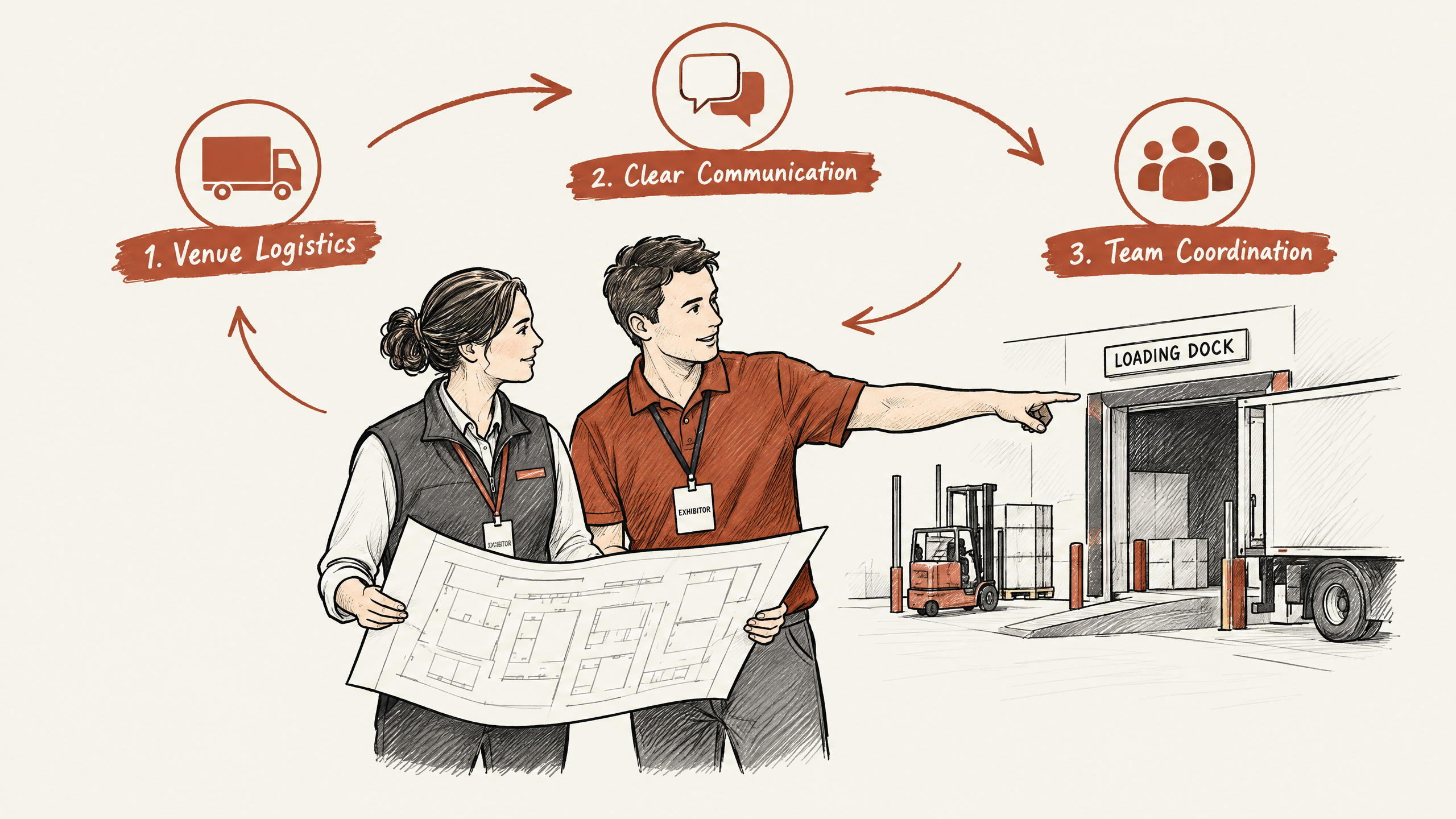
Assign a point person from your team who will be responsible for interacting with the venue’s representatives. This individual should be prepared to relay any important information back to your team and handle any issues that arise onsite.
Having a concrete understanding of setup logistics not only helps you stay compliant with venue requirements but also allows for a more efficient process. For example, a venue might have specific requirements for rigging or weight limits for certain areas of the floor.
Knowing these details allows you to adjust your plans accordingly, saving time and potentially avoiding costly disruptions in the schedule.
A practical approach is to provide venue staff with your exhibit plans in advance for review.
This proactive communication ensures there are no surprises during the setup.
Through our exhibit support services, Exhibitant can assist in this coordination by facilitating early communication and ensuring all parties are aligned on expectations.
Keep in mind that engaging venue staff early in the process is a strategic move to enhance the overall efficiency of your exhibit setup.
The key is to prevent misunderstandings, facilitate a smooth installation, and address any concerns promptly.
By anticipating potential logistical constraints, your exhibit can be installed and dismantled smoothly, ensuring your focus remains on engaging with prospective clients.
 Lorena G.