Designing a trade show booth can be an overwhelming process, especially with the many of choices and decisions you need to make.
From selecting the right layout to embracing innovative technologies, each decision plays a crucial role in how your booth performs. I’ve seen countless exhibitors wrestle with the same questions time and again.
You’re not alone when you feel the weight of these decisions bearing down on you.
Something that comes up a lot is how to truly capture the attention of your target audience.
It’s fascinating to witness how exhibitors approach this challenge differently, yet the key often lies in asking the right questions before anyone starts sketching a design.
I would say that understanding the needs of your audience can serve as a rock-solid foundation for everything else you do.
Budget constraints often dictate creative direction, but that doesn’t mean creativity goes out the window.
From what I’ve seen at countless events, some of the most impactful booths are those built with carefully prioritized financial considerations.
Your budget will shape many decisions, like materials, design features, and even technological obligations.
Today, I want to cover the seven essential questions you should ask yourself before launching into booth design.
They’ll help you anchor your decisions, navigate potential pitfalls, and ultimately construct a booth that serves all your strategic goals.
Key Takeaways:
Identify target audience to tailor booth design effectively.
Determine booth goals to align design with objectives.
Assess budget constraints to prioritize design elements.
Consider booth location for optimal visibility and traffic.
Plan technology integration to enhance visitor experience.
You’ll want to stick around because there’s much more than just the basics.
Understanding how to work within your budget while still achieving a standout design is just one of the skills you’ll gain.
You’ll see why your location and the use of technology can make a world of difference.
Get ready for practical insights that you can use to make your booth a success.
1. Who is Your Target Audience?
Defining your target audience is one of the fundamental steps before you even think about booth design.
From what I have seen, the companies that succeed at trade shows are those that take the time to understand who they’re trying to reach.
Knowing your audience can completely change the way you decide on the booth layout, choice of graphics, interactive elements, and even the type of staff you need at the event.
Start by identifying whether your audience consists mainly of end consumers, business professionals, distributors, or perhaps a mix.
Each of these groups has different expectations and engagement styles when visiting exhibits. For example, business professionals tend to appreciate analytical data and solutions-based discussions, while end consumers usually look for engaging and visual exhibits.
What we have seen work really well is tailoring your presentation style to suit the specific needs and interests of your target audience.
Here at Exhibitant, we’ve noticed a significant increase in ROI when exhibitors align their booth design with the preferences of their audience.
If your focus is too broad or vague, you might end up with a booth that doesn’t captivate anyone. To narrow down your target, ask yourself questions like: What specific problems do they need solutions for?
What products or services are they currently using, and how does what you offer stand out?
Collecting detailed data about your audience can be a big improvement. Use pre-show surveys, past exhibiting data, and social media insights to paint a clearer picture.
Crafting a booth designed with the target audience in mind can significantly enhance booth traffic, engagement, and ultimately lead generation, helping you make the most out of your investment at the trade show.
2. What Are Your Primary Booth Goals?
One thing most exhibitors end up doing is identifying their primary booth goals well ahead of time, as this sets the direction for everything from design to staffing.
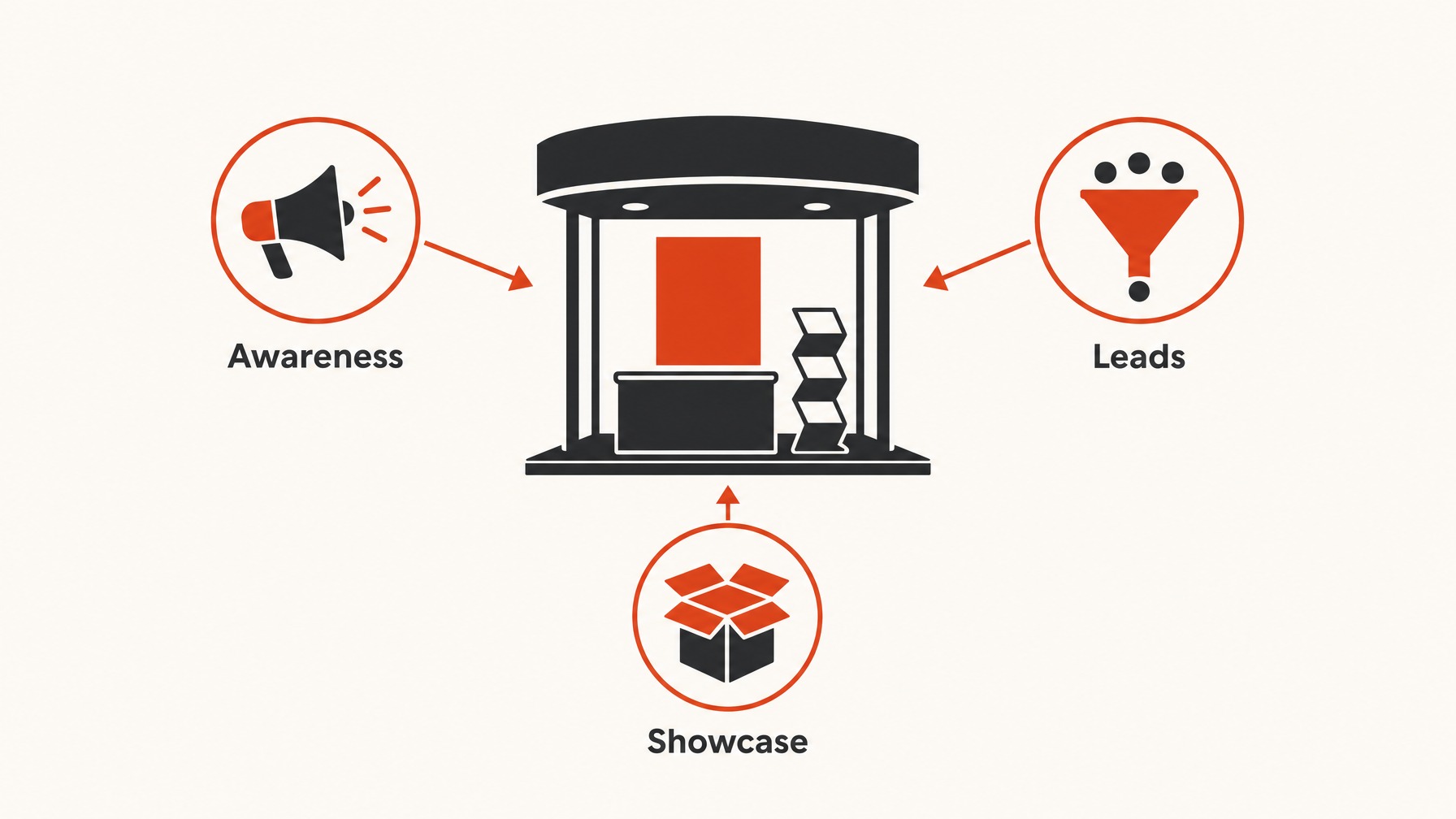
Before diving into the details of your booth design, it’s crucial to determine whether your main objective is to build brand awareness, generate leads, or perhaps show a new product.
What we have seen work really well is when companies consciously align their booth’s purpose with the broader marketing strategy of the organization.
From what I have seen, the ones that get it right usually tailor their booth experience to achieve these specific outcomes, whether it involves interactive demonstrations, eye-catching visuals, or engaging presentations.
Thus, focusing on what truly matters will help steer clear of trying to do too much and diluting the core message you wish to convey. Something that comes up a lot is the importance of having a clear understanding of your booth’s primary goals, as this clarity influences every subsequent decision during the planning process.
By setting focused objectives, exhibitors can craft a cohesive plan that guides attendees along a desired engagement path that resonates with their interests.
Specific goals will dictate everything from your booth’s layout to the type of promotional materials you might distribute. For instance, if your aim is to drive sales, designing for active engagement through product trials or consultations would be essential.
On the other hand, if showcasing innovation is a priority, interactive technologies could take center stage in your approach.
Think about tailoring your booth goals to fully integrate with your sales and marketing teams’ strategies to make sure a unified and impactful trade show presence.
So as you plan your booth, keep those primary objectives front and center.
Whether it’s crafting an innovative booth display or training your team to deliver a consistent on-brand message, aligning these efforts with your goals can significantly affect your trade show success.
3. How Much Budget Do You Have?
When planning your trade show booth, understanding how much budget you have is a key factor that directly influences your design choices and overall strategy.
Having clarity on your financial constraints will guide you in prioritizing essential elements and identifying potential opportunities for innovation.
One thing I’ve noticed is many exhibitors who allocate a substantial portion of their budget to immersive and eye-catching design often achieve better engagement.
However, this doesn’t mean you need to sacrifice quality for cost, as smart budgeting allows for creativity within any price range.
From what professionals often recommend, breaking down your budget into specific categories can be incredibly helpful in managing resources effectively.
You might want to divide it into booth construction, graphics, staffing, technology, marketing, and logistics.
Each component requires distinct attention to make sure you’re not only meeting your goals but also maintaining the integrity of your brand. What we have seen work really well is using a percentage-based approach to allocate funds.
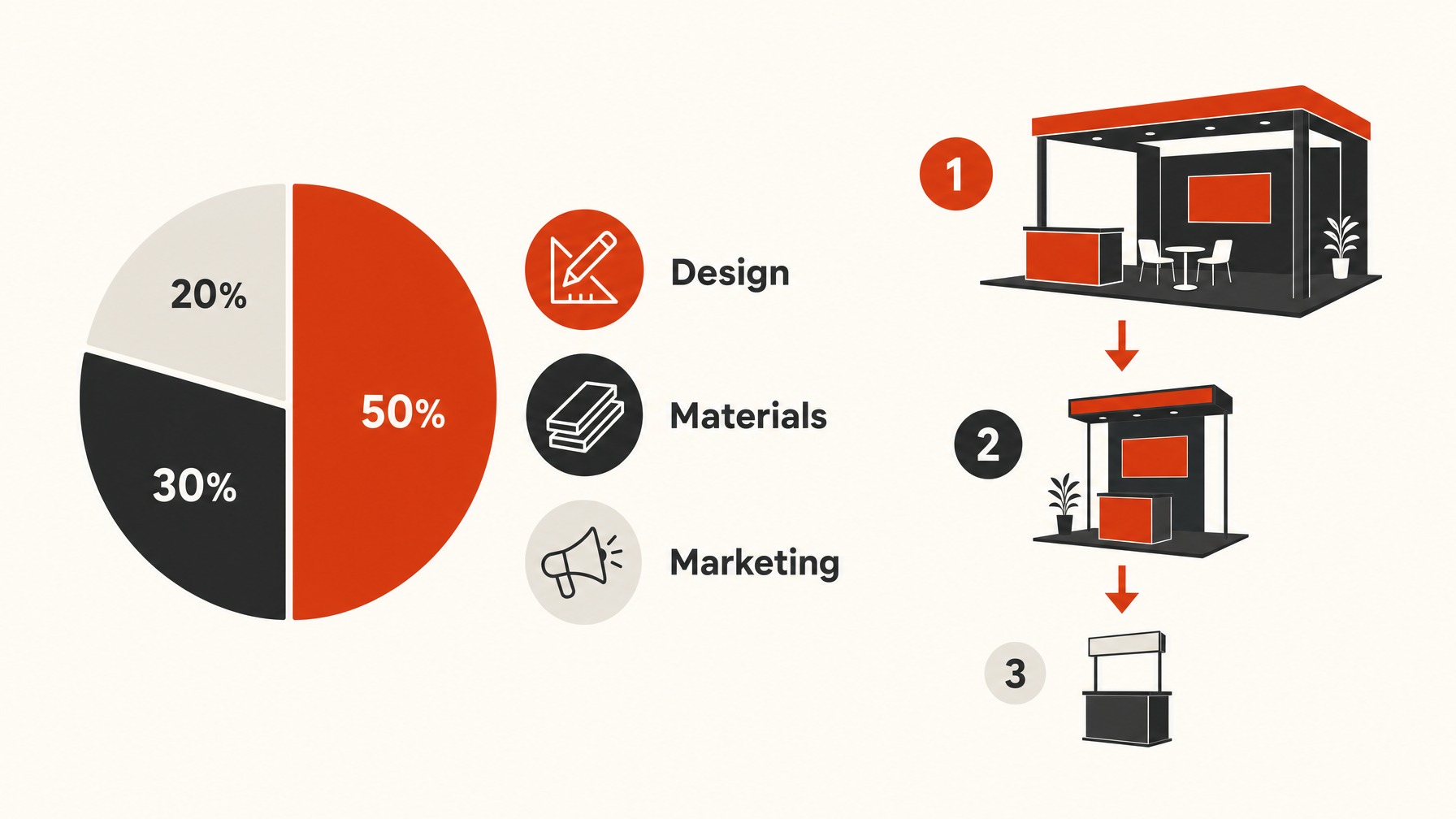
An approach like 30% for booth construction, 30% for marketing and giveaways, and the remainder for technology and logistics can provide a balanced strategy.
This way, you can avoid being caught off guard by unforeseen expenses, which happen more often than you’d expect in this industry.
One common piece of advice is to always account for hidden costs such as shipping, drayage, and labor charges. I would say the biggest thing here is to leave a portion of your budget flexible for last-minute changes or unexpected opportunities.
Knowing exactly how much you have available up front gives you the use to make informed decisions and potentially negotiate better deals. A well-planned budget is not just a guideline; it’s a powerful tool that can steer your project towards success.
This foresight often sets apart those who merely exhibit from those who make a lasting impact.
4. Where Will Your Booth Be Located?
Determining where your booth will be located involves much more than just knowing your booth number. Understanding the specific area or zone within the trade show floor plan is critical, as different locations can significantly impact your foot traffic and visibility.
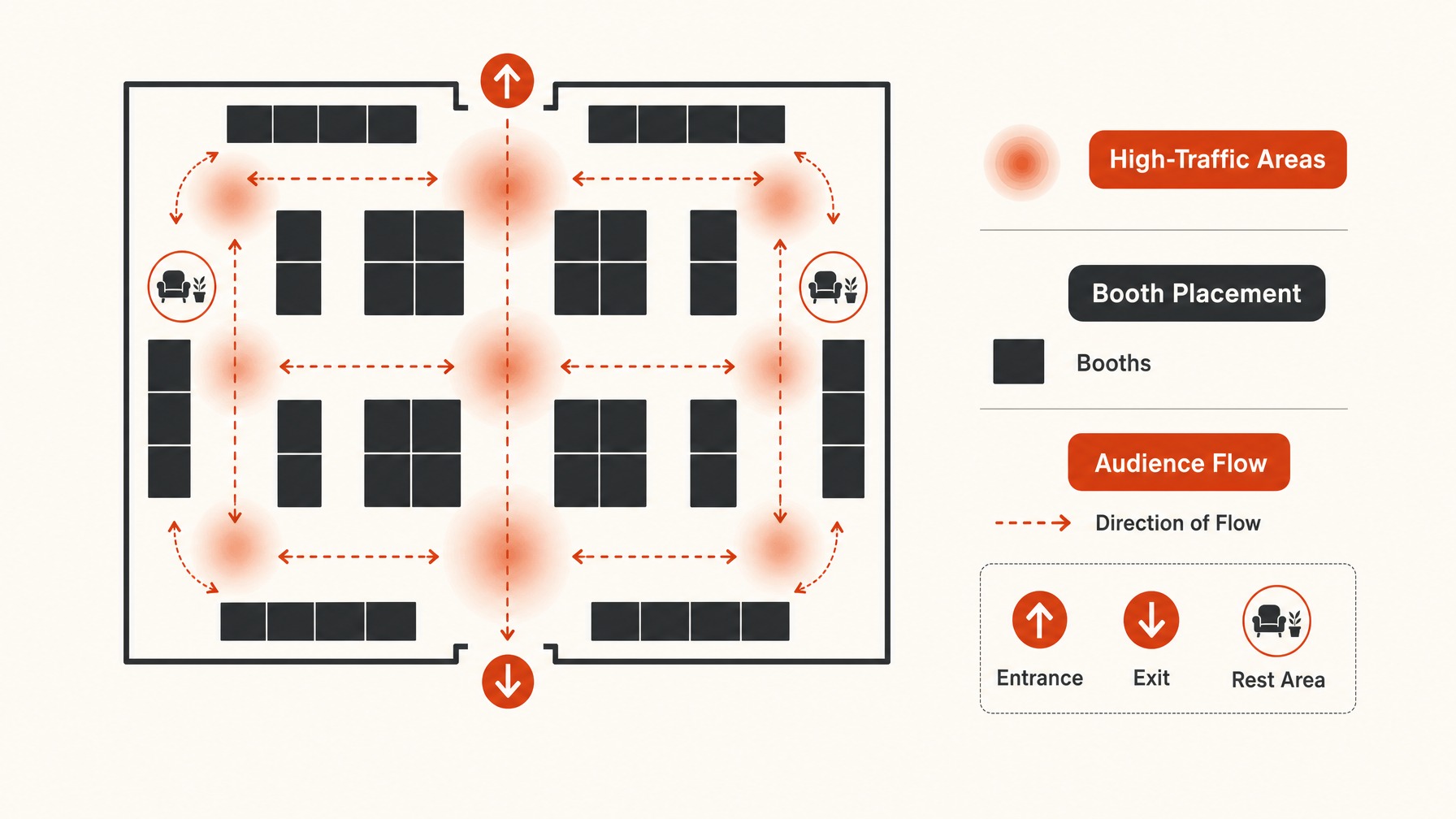
It is crucial to assess whether your booth is near high-traffic areas like entrances, exits, or rest areas, which can inherently drive more visitors your way.
Alternatively, being placed next to industry giants or on the main aisle provides fringe benefits due to the natural overflow of their audiences.
What we have seen work well is leveraging the show’s floor plan to identify key areas that align with your target audience’s path through the hall.
While it’s tempting to opt for cheaper locations at the edges, these might end up being a false economy due to the reduced exposure. One thing most exhibitors end up doing is negotiating their spot earlier, especially during returning exhibitor priority periods, to snag a better location.
This flexibility can often allow you to choose from more desirable and strategic positions.
From what I have seen, the ones that get it right usually consider logistical factors such as proximity to competitors and thematic zones which might complement their messaging.
Being aware of where your competition is located can offer opportunities or motivate a change, depending on how directly you want to compete for attention.
Additionally, it is important to review possible constraints, such as ceiling height restrictions or column obstructions, which could affect your booth design.
Something that comes up a lot is the need to identify whether there are any specific, unavoidable constraints in the contractual terms regarding booth placement that could affect or limit your display options.
Considering the strategic advantages of good placement, aligning your booth location with both promotional and logistical needs can truly improve your trade show experience and results.
Exhibitors who take the time to carefully analyze floor plans and confirm precise details proactively can secure a position that enhances their trade show presence.
Analyzing past event maps and attendee routes can offer valuable insights into the best locations aligned with your goals.
This diligence helps to make sure that your investment in the trade show provides measurable returns in terms of both visitor engagement and potential leads generated.
5. What Technology Will You Incorporate?
One thing that really gets event attendees’ attention is the thoughtful use of modern technology in your booth design.
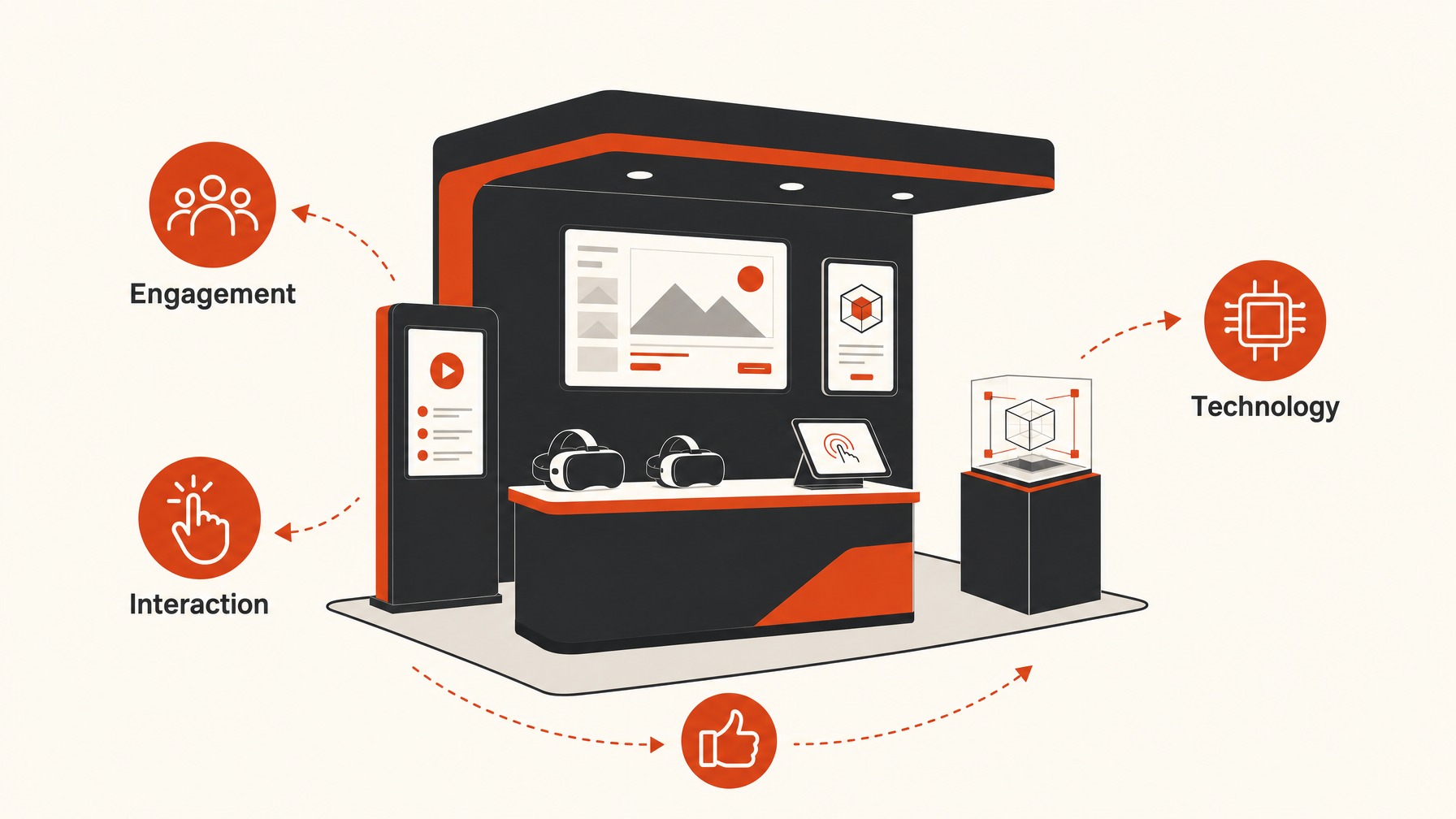
You can create an engaging experience by integrating interactive screens, virtual reality, or augmented reality features.
From what I have seen, exhibitors who incorporate high-impact technology solutions often find their booths buzzing with interest throughout the show.
Before selecting the technology, it’s crucial to think about how it aligns with your booth goals and overall messaging. Does the technology support your product demonstrations or enhance customer interactions?
Something that comes up a lot is ensuring ease of use, so attendees can smoothly engage with whatever tech you choose.
If attendees become frustrated or confused, the tech can become more of a hindrance than a help.
Consider the nature of your products and services when selecting technology to feature in your booth. For instance, virtual reality may offer a fantastic way to demonstrate a complex product in action.
Or, suppose your goal is to capture leads effectively. In that case, incorporating sleek, digital lead capture tools can simplify this process seamlessly.
It’s also worth considering, from what I have seen, the back-end support and bandwidth required to run these technologies smoothly.
Are you equipped to handle any potential glitches, or have you budgeted for an on-site technician?
Technical issues could be a stumbling block, so preparing for them in advance is wise. What I’ve noticed is that the right technology can elevate your presence and make your exhibit stand out.
6. How Will You show Your Brand?
One thing exhibitors often overlook is the critical role of cohesive branding in a trade show booth.
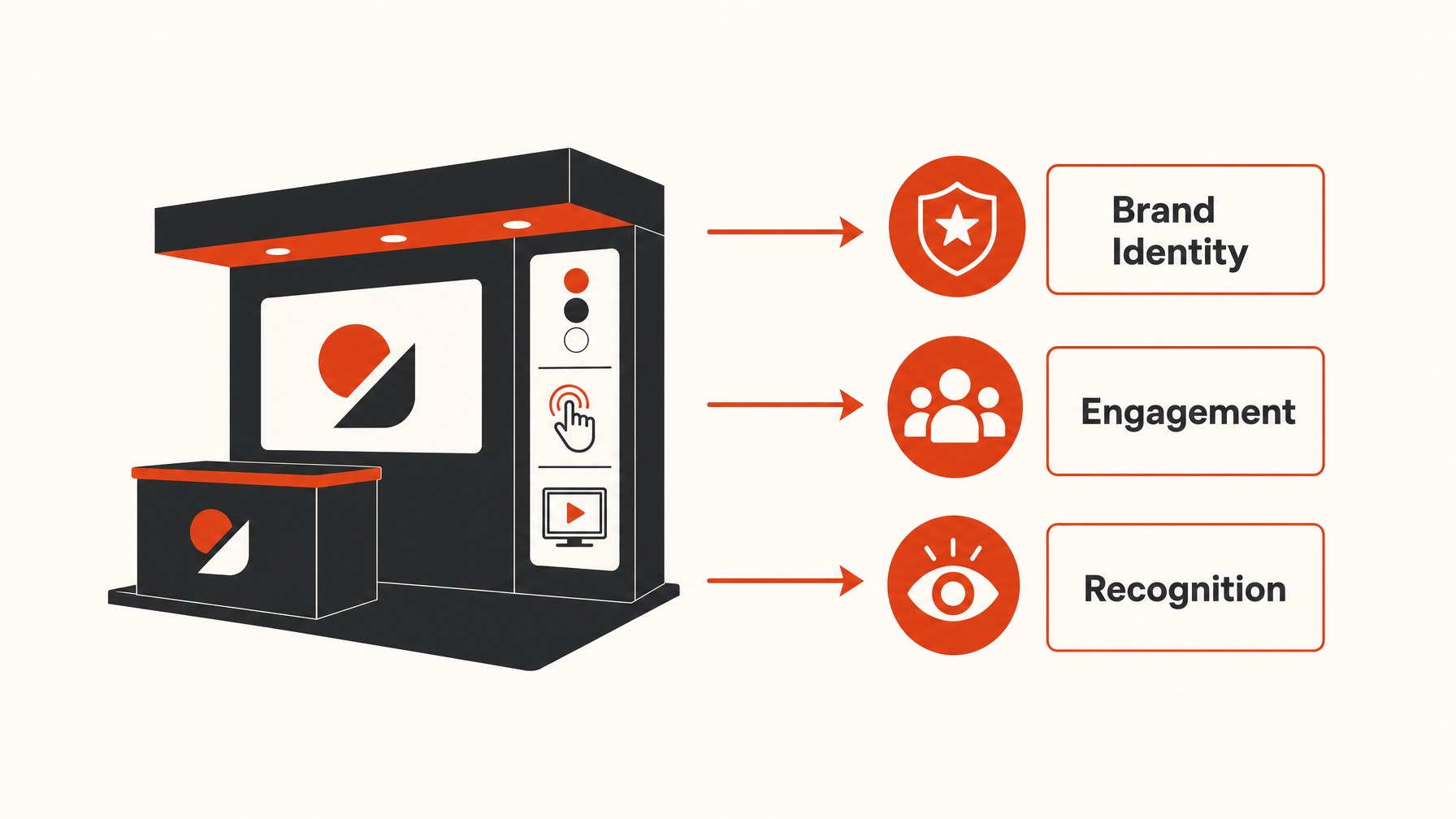
Your booth should serve as an extension of your overall brand identity, reflecting the core values and unique qualities that define your company. I would say the biggest thing here is integrating your company’s colors, logo, and messaging into every aspect of your booth design.
From what I have seen, using consistent branding elements can significantly increase brand recognition and leave a lasting impression on attendees.
What we have seen work really well is utilizing a mix of visuals and interactive elements to engage visitors while reinforcing your brand.
This means not only having well-designed banners and signage but also experimenting with innovative ways to show product demos or samples that align with your overall image.
Strong visuals like eye-catching displays or large digital screens can draw attention, but it is vital they all convey a unified message that resonates with your target audience.
While technology offers many possibilities, maintaining a balance between high-tech attractions and your traditional branding elements is essential to avoid overwhelming potential leads.
Something that comes up a lot is the need to tailor your booth’s messaging to fit the audience and the specific event you’re attending. We recommend adapting your tagline or promotional slogans to better speak to the distinct interests of event-goers, enhancing the booth’s relevancy and appeal.
In addition to visual branding, consider the overall sensory experience offered by your booth, such as sounds and scents, to create a complete and immersive brand encounter. Keep in mind, the importance of having knowledgeable staff who embody your brand is vital, as their interactions with attendees can reinforce or detract from your brand identity.
Ultimately, the key is creating a memorable and coherent representation of your business that attendees won’t easily forget. Aim to design a space where every touchpoint strengthens the brand narrative you wish to tell.
By focusing on a strategic brand show that prioritizes consistency and engagement, you set the stage for building lasting connections and drawing in qualified leads.
From my experience, exhibitors that focus on aligning their booth with their brand identity consistently see improved engagement and interest from the right audience.
7. How Will You Measure Success?
One thing most exhibitors end up grappling with is defining what success looks like for each trade show they attend.
It’s not just about the number of leads you gather; rather, it encompasses a variety of metrics, such as lead quality, engagement levels, brand visibility, and post-show follow-ups that translate into real business opportunities.
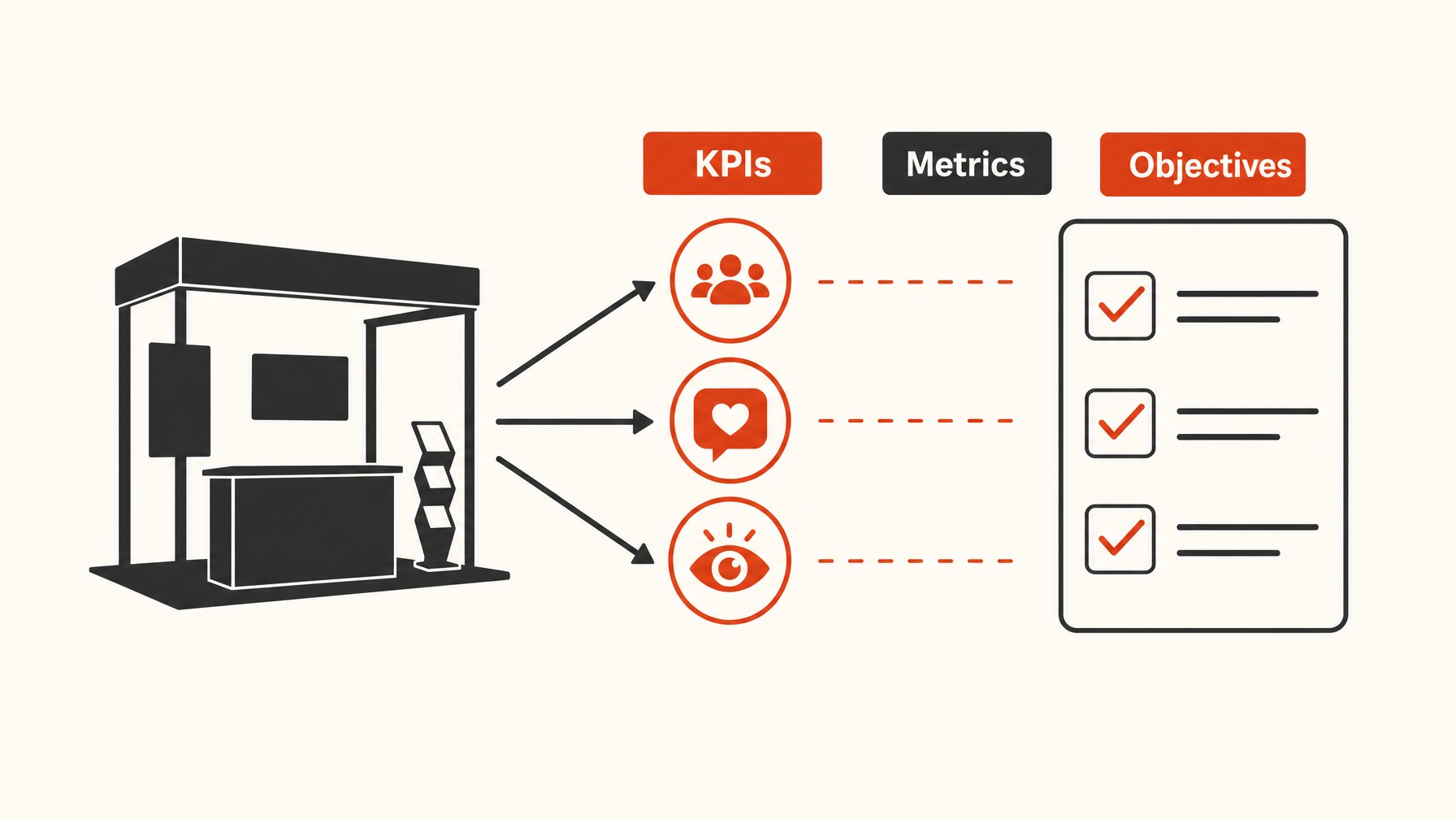
To make sure that you’re not leaving critical data on the table, it’s important to establish clear key performance indicators (KPIs) before you even step foot on the show floor.
From what I have seen, the ones that get it right usually begin by aligning their KPIs with broader business objectives.
For example, if your aim is to launch a new product, then metrics around product demonstrations, attendee interest, and feedback might hold more weight than simply counting business cards collected.
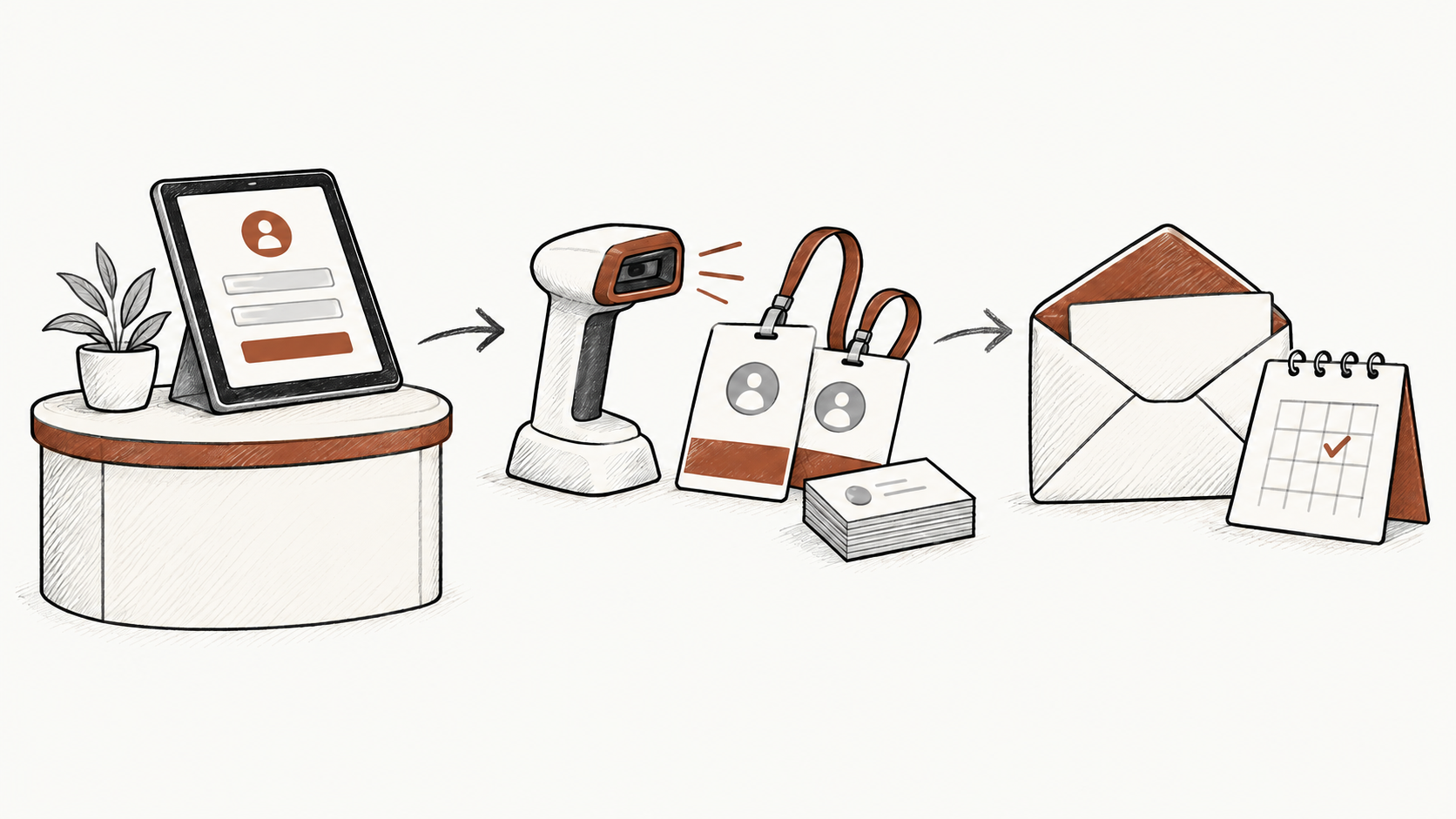
Attendee engagement can be tracked using technology like RFID badges or on-site surveys, providing quantifiable metrics to gauge how much interest your booth generated.
One factor often overlooked is the integration of lead tracking systems that seamlessly funnel collected information into your CRM.
Sophisticated systems not only capture data accurately but also enable real-time analysis so that your team can adjust tactics on the fly.
Post-show ROI assessments should try conversion rates from the leads captured, identifying which interactions were most successful and why.
If you’re wondering how to simplify your measurement techniques, Exhibitant might be just what you need, offering exhibit strategies, comprehensive booth systems, and dedicated show support to serve as an exhibit partner rather than just a display vendor. This full approach not only improves your onsite performance but also allows you to precisely measure your outcomes, ensuring that every show contributes meaningfully to your bottom line.
Wrapping Up
The biggest takeaway from our booth planning discussion is how crucial it is to align every aspect of your trade show strategy with your overarching business goals. What we’ve seen work particularly well for successful exhibitors is a keen focus on identifying actionable steps that move the needle.
From establishing clear metrics for success to understanding your target audience, each piece of the puzzle needs to contribute to a well-designed exhibit experience.
Bringing it all together involves more than just ticking off a checklist it’s about crafting a cohesive strategy that encompasses everything from budgetary constraints to optimal booth design.
Your team’s engagement and preparedness will often dictate the effectiveness of your booth.
Engaging with your audience using advanced technological solutions can help establish solid connections that extend beyond the event.
The insights we’ve shared about maintaining focus on strategic booth goals can help simplify the complexities involved in trade show preparations. The practical steps and questions raised are designed to provide clarity in decision-making and enhance the overall impact of your exhibit.
Consistent evaluation and adjustments to your strategies make sure that every trade show serves as a valuable learning experience.
Incorporating the right mix of innovation and strategy paves the way for achieving meaningful outcomes from your trade show investments.
As you move forward, integrating these insights into your planning process should be at the core of your approach.
With this knowledge, you can create memorable interactions and deliver a stellar brand message, setting the stage for continued success in future events.
Need a booth plan?
Turn show goals into a practical exhibit path
Share your footprint, timeline, and priorities. Our team can help shape the booth direction, graphics, and project support.
Keep planning
More exhibit guidance
Keep exploring practical advice on booth planning, marketing, and getting more from your next show.
Tell us about your business, the buyers you want to reach, and what you want to achieve. Whether you need more sales conversations, stronger marketing, or a trade show presence, we’ll help you identify where to focus and what support makes sense. Together, we can shape a practical plan around your priorities, budget, and timeline.
 Lorena G.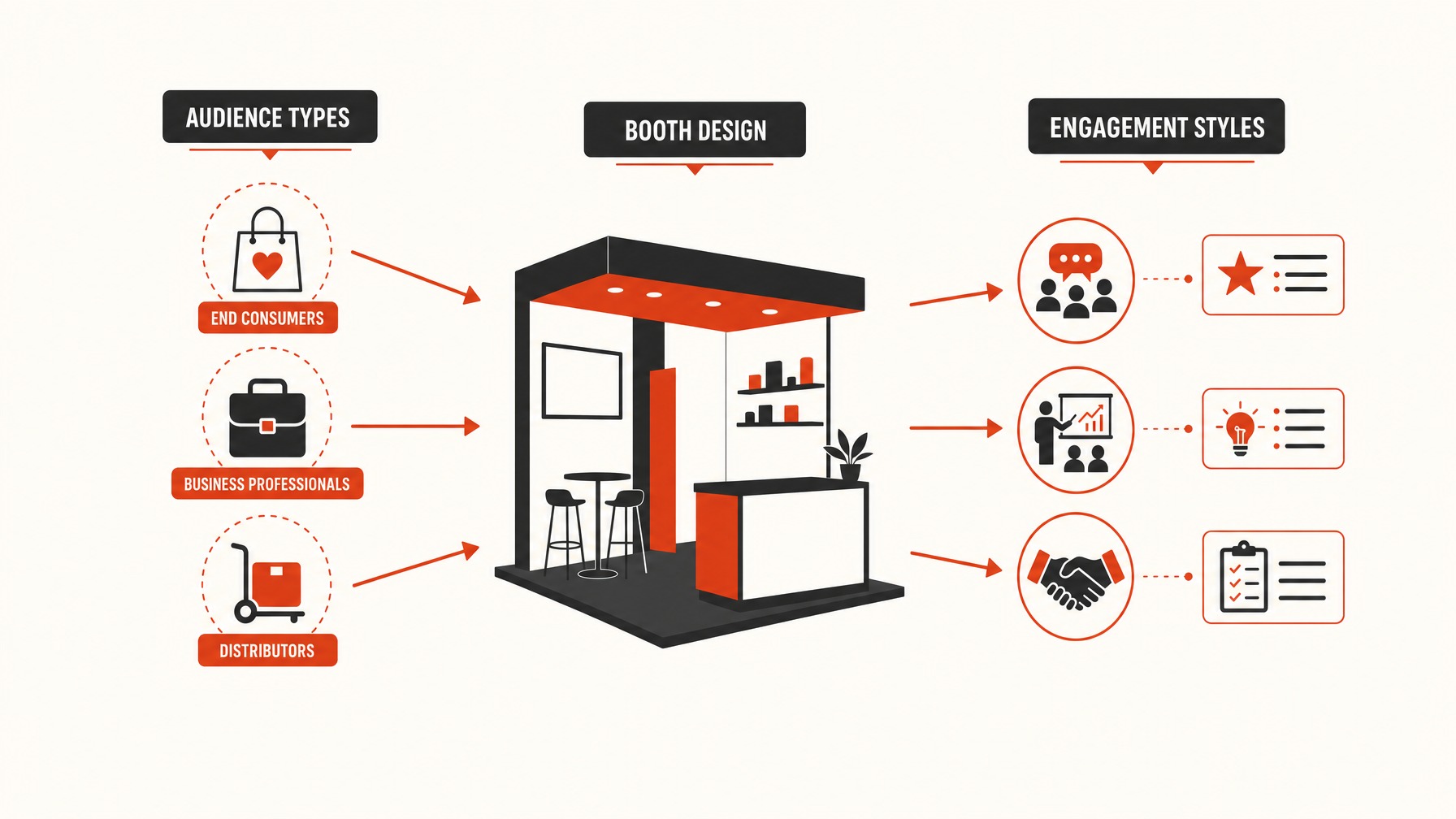
 Louie J.