From what I have seen, logistics is the backbone of every successful trade show exhibit.
Regardless of how inventive or eye-catching your booth design might be, if the logistics aren’t properly managed, the entire event can suffer.
It’s more than just transporting your booth materials; it’s about the finesse of coordinating multiple moving pieces.
A successful trade show exhibit hinges on more than just having an attractive display or engaging team on the floor. Something that comes up a lot is the importance of a strategic booth location, ensuring that your plan provides optimal visibility and foot traffic.
It’s these logistics elements that enable an exhibit to function smoothly and pull in your target audience.
Managing the logistics isn’t just about functioning smoothly during the show. I would say it’s about the unseen and detailed planning that takes place weeks or months before the big day.
From shipping and handling to coordinating with vendors and handling on-site challenges, these elements can make or break the experience.
The challenge lies in keeping all these elements in sync, which requires foresight, coordination, and an understanding of the unique needs of trade shows.
Today, I want to cover the six essential logistics elements that lay the foundation for a successful trade show exhibit, from booth layout to vendor communication.
Key Takeaways:
Prioritize booth location for maximum attendee traffic and visibility.
Ensure timely and cost-effective shipping to avoid on-site delays.
Plan efficient setup and teardown to optimize staff time.
Coordinate electrical and internet needs well in advance.
Maintain clear communication with all vendors for seamless execution.
You’ll find that handling a trade show booth is more than just setting up a table and display.
By focusing on key logistical elements, you can make sure your exhibit runs like a well-oiled machine.
Try the following sections to uncover detailed advice and practical tips that can make a real difference.
With the right groundwork, you can turn your next event into a smooth experience that stands out.
1. Strategic Booth Location and Layout
One thing most exhibitors end up doing is underestimating the importance of their booth’s location on the trade show floor.
A strategic booth location can be the difference between a bustling booth and being overlooked by attendees.
From what I have seen, the ones that get it right usually research the floor plan in advance and aim for high-traffic areas like entrances or near food courts. Another important aspect to consider is proximity to competitors, as sometimes being too close can dilute your brand’s message.
Here at Exhibitant, we tend to advocate for a balanced approach between busy areas and quieter zones, where quality interactions can flourish without the noise of main corridors.
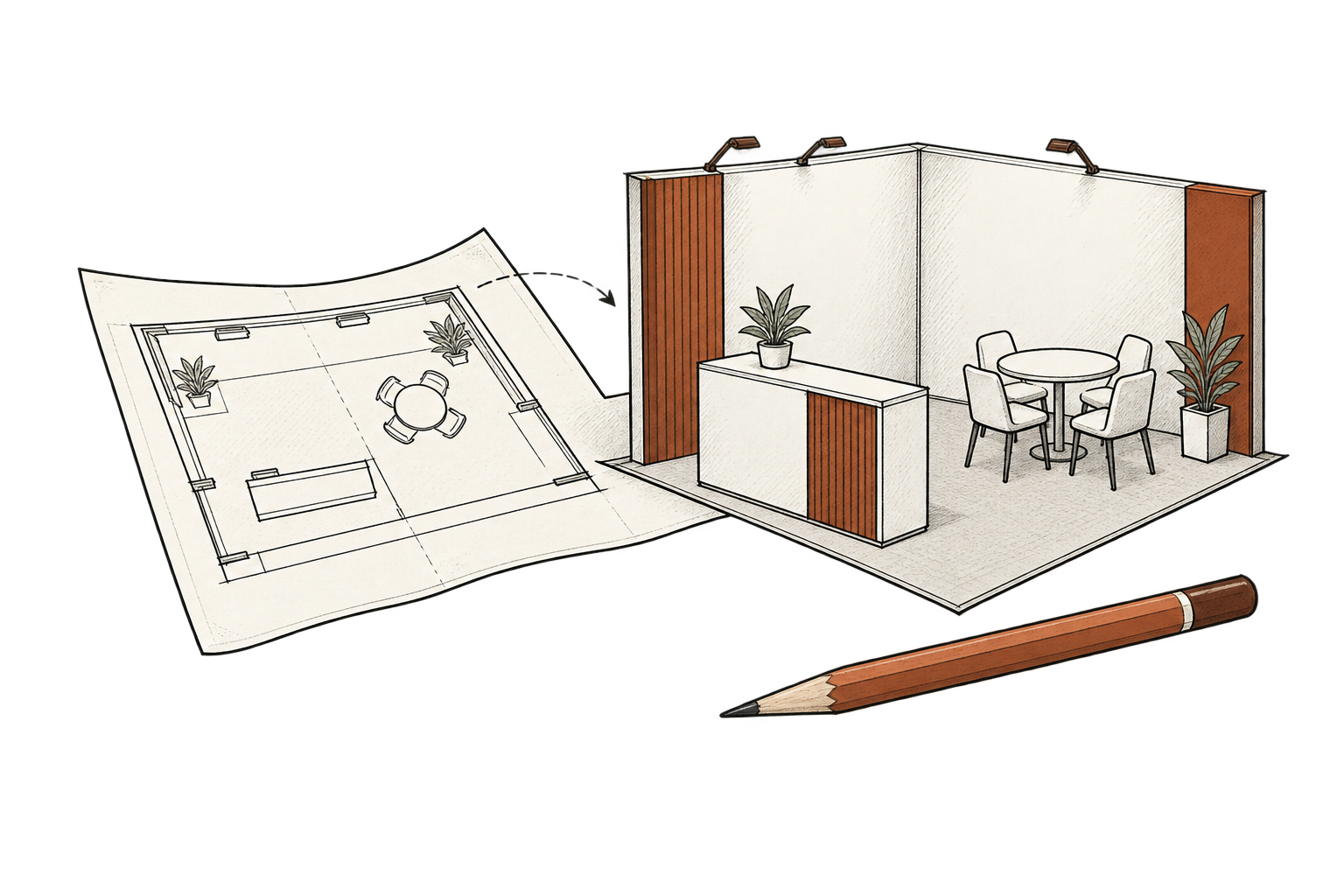
Your booth layout also plays a pivotal role in your success, and it’s not just about making it look appealing; it’s about designing it for maximum engagement.
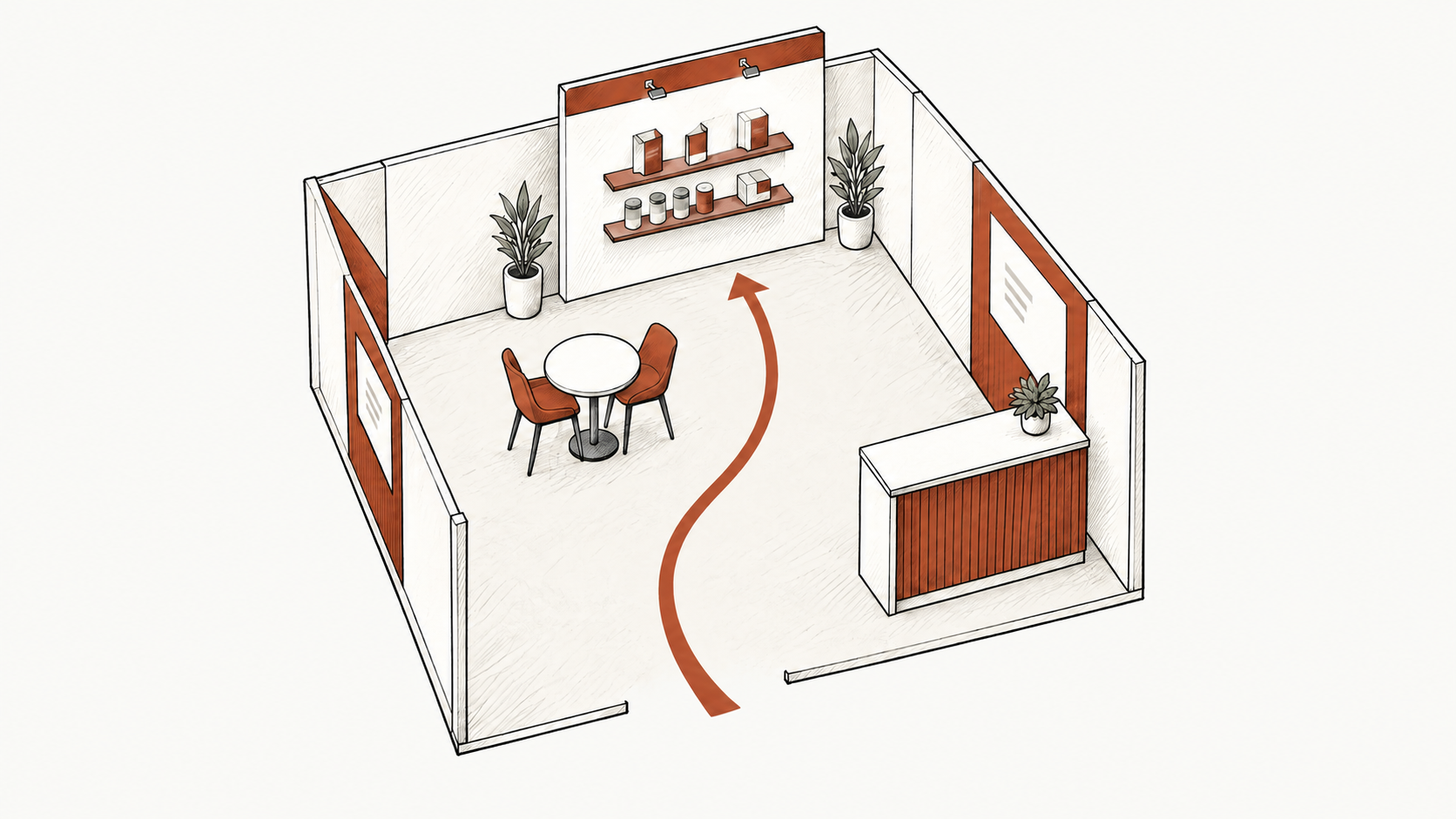
The Exhibitant team has seen that open layouts with inviting entrances entice more foot traffic and encourage visitors to enter rather than just stroll by.
Think about the flow and pathways within your booth to facilitate easy movement and interaction.
Creating a focal point with eye-catching displays can pull attendees in and keep them there longer, deepening their engagement with your offerings. Don’t underestimate the power of strategically placed furniture and interactive elements that lead attendees naturally through your story.
Visual hierarchy and well-defined zones for products, demos, and seating areas encourage a logical flow that enhances visitor experience.
Strategic booth location and layout are integral logistics elements that can significantly impact your trade show performance and ROI.
2. Efficient Shipping and Handling
When it comes to trade show logistics, shipping and handling can often make or break your event experience. From what we’ve seen, a lot of exhibitors get tripped up by unexpected delays and extra charges because they haven’t planned thoroughly.
One thing to focus on is choosing a reliable freight partner that has proven experience with trade show logistics; this can save both time and stress.
Smart exhibitors often start their shipping discussions weeks, if not months, in advance to secure ideal rates and avoid last-minute hassles.
Another important aspect is to clearly label all packages, specifying booth numbers and event details, so they arrive exactly where they need to be, resulting in a smooth setup process.
Also, proactively arranging for advance warehouse deliveries can ease the physical burden of moving materials during the chaotic setup day.
What we’ve noticed is that when everything is well-organized and properly documented, it safeguards against lost items or delayed deliveries.
Understanding the venue’s regulations and guidelines is another layer that should not be overlooked.
Important: To make sure a smooth trade show experience, you must plan shipping logistics well in advance, choose a reliable freight partner, and understand venue regulations.
This knowledge prevents complications when materials arrive, as some venues have specific freight requirements and handling fees.
Building a precise shipping timeline that aligns with these requirements ensures you meet all deadlines, contributing to a smooth execution of your plans. Another excellent practice seen by seasoned exhibitors is keeping track of arrival confirmations and communicating promptly with the freight carrier for updates.
Finally, don’t forget to plan your packing materials and equipment for the return trip.
Many exhibitors neglect this until the last minute, leading to unnecessary chaos and increased costs. Efficient handling doesn’t just start at the beginning of the event but extends into post-show activities as well.
Ultimately, a well-executed shipping strategy not only protects your materials but also maximizes your chance for a successful trade show presence.
3. Streamlined Setup and Teardown
From my experience, a successful trade show often hinges on how streamlined your setup and teardown processes are.
Many exhibitors find themselves spending valuable time on assembling their booth when they should be engaging prospects.
One thing most seasoned exhibitors do is meticulously plan their setup in advance.
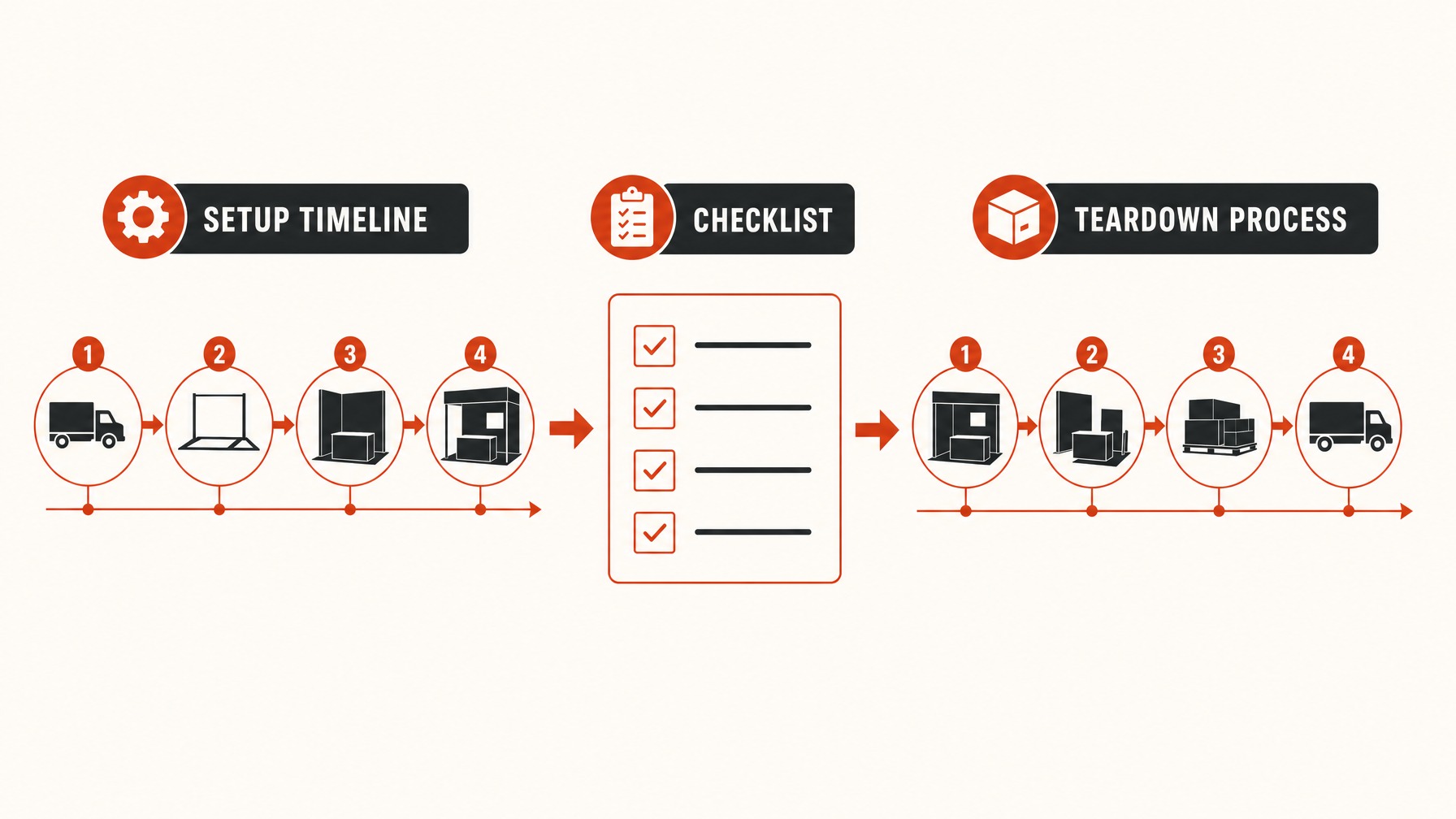
This involves creating a detailed schedule that outlines every step needed to get your exhibit up and running promptly. Efficient scheduling allows your team to focus on presenting rather than fumbling with equipment or displays.
Another tactic I’ve seen work remarkably well is preparing a comprehensive checklist of all the items and tasks required for setup and teardown.
This checklist should include time estimates for each activity, from unpacking to finalizing the booth structure.
Something that comes up a lot is the importance of training your staff to handle these logistics efficiently.
Your team should be well-acquainted with the materials and tools they’ll be working with.
What we have seen work really well is using lightweight, modular booth components that ease the physical burden of setup and teardown. From exhibit structures to lighting, choosing designs that promote agility is key.
High-quality, yet easily transportable materials, reduce not only the time spent on assembly but also the potential risk of damage or injury.
Moreover, packing equipment in a logical, easy-to-follow sequence can simplify the teardown process significantly.
One core component of this whole operation is effective communication among team members during both setup and breakdown phases.
Regular check-ins and clear division of responsibilities support a smooth and coordinated effort. Some of the more adept exhibitors also conduct a dry run at their own facility to identify any potential issues before hitting the show floor.
From what I have seen, the ones that execute perfectly are usually those who leave no room for improvisation in their process.
4. Ensuring Reliable Utilities and Connectivity
From what I have seen, ensuring reliable utilities and connectivity is one of those non-negotiable aspects of trade show success that often goes overlooked until it’s too late.
The most seasoned exhibitors will tell you that having a fail-proof plan for your electricity, internet, and other utilities is just as crucial as having an engaging booth design. Imagine the nightmare of setting up a dazzling digital display, only to find that the power outlets are too far from your booth or that the internet connection is spotty at best.
This is why pre-show walkthroughs and communication with venue tech teams are crucial steps that many overlook.
A common issue exhibitors face is the lack of consistent power supply, leading to disruptions during critical demos or presentations.
What we’ve seen work well is opting for a dedicated power line rather than relying on general outlet availability, which can often be unpredictable. Similarly, strong internet connectivity is a must, especially for exhibitors relying on digital leads capture or streaming demos.
I would say the biggest thing here is setting up a backup internet source, think mobile hotspot as an example, to protect against any unforeseen Wi-Fi outages.
Another thing that comes up a lot is the need for clean and well-managed cable arrangements.
Organizing cables might seem minor, but tripping hazards and clutter can tarnish an otherwise professional setup.
Pro Tip: Before the trade show, conduct a venue walkthrough with the tech team to test power and internet connections, setting up backup solutions if necessary.
I have seen exhibitors effectively use cable management systems to not only keep their spaces safe but also to maintain an uncluttered visual appeal.
Additionally, you really want to communicate your utility and connectivity needs clearly to the event’s tech support team well before the show.
Here’s a quick list of what you might think of when you plan for these essentials:
Check venue’s power distribution and arrange any extra electrical requirements.
Confirm internet access and arrange backup connectivity options.
Organize your cables effectively to prevent hazards.
Every experience I have had emphasizes how poor utility planning can undermine even the most innovative display efforts, affecting your brand’s presence at the event. One thing most exhibitors end up doing is arranging site checks during setup times to iron out any potential snags early.
In the end, it’s about being proactive and thorough, ensuring that technical hiccups don’t steal the spotlight from your carefully orchestrated exhibition plans.
5. Vendor Coordination and Communication
Effective vendor coordination is crucial for a smooth trade show experience, often separating the successful exhibitors from those who struggle during the event.
What we have seen work really well is starting the coordination process well in advance, establishing clear expectations and deadlines with each vendor involved.
From signage and furniture rentals to catering and promotional materials, each vendor must understand the timeline and specific requirements to deliver their services efficiently.
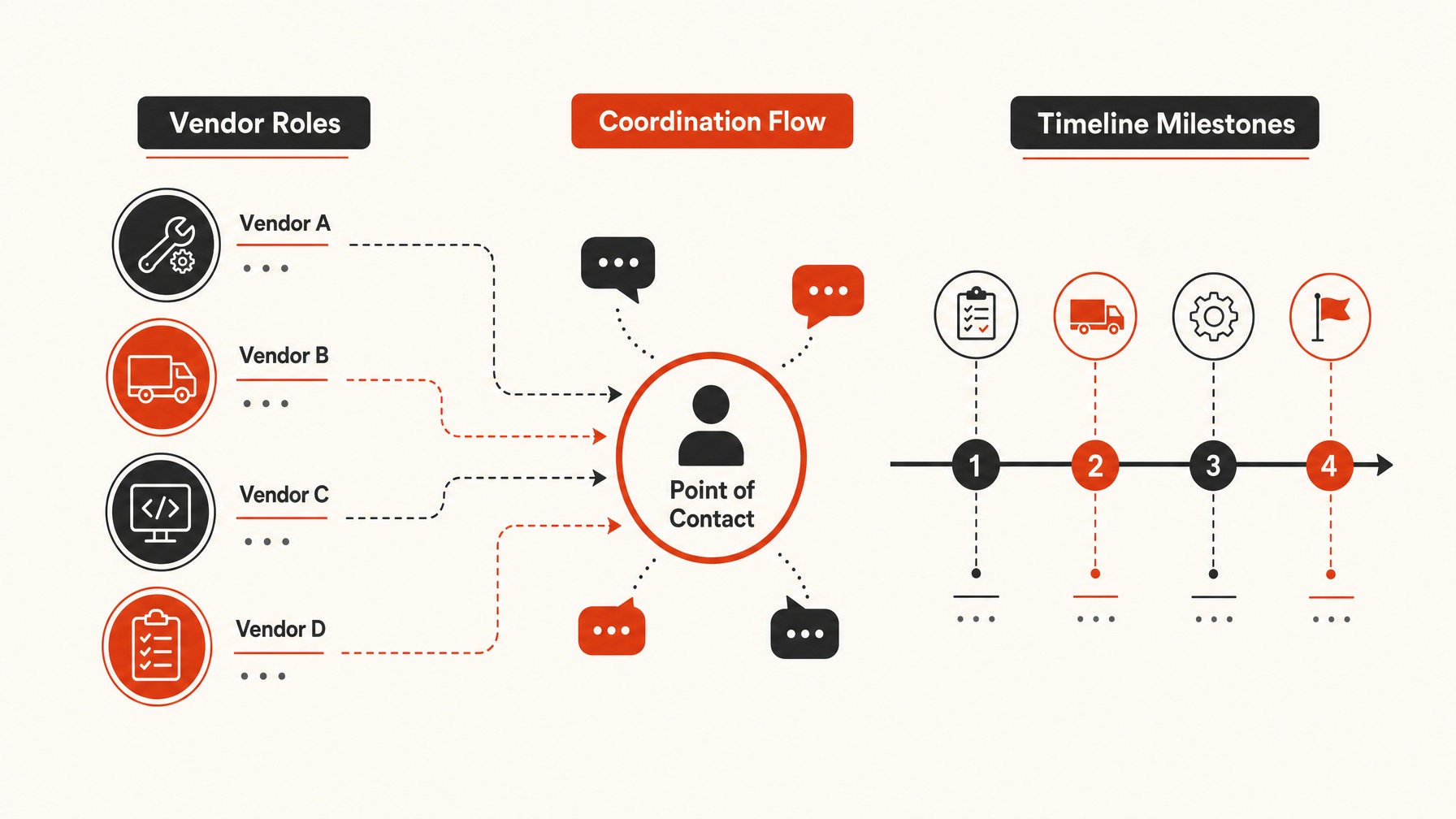
One thing most exhibitors end up doing is establishing a single point of contact for all vendor communications, which helps simplify the process and minimize misunderstandings.
This person can effectively manage all interactions, ensuring that each vendor is updated on any changes or additional needs that might arise as the event approaches. From what I have seen, the ones that get it right usually also maintain a detailed vendor communication log, capturing every conversation and adjustment made.
Another practice that pays off is conducting a pre-show meeting with all vendors to reconfirm the logistics, deliverables, and timing.
During this meeting, you can address any concerns and lay out a final plan for smooth execution.
Something that comes up a lot is the importance of having a contingency plan for each critical service, such as a backup for technical support or an alternative delivery schedule, to avoid any last-minute calamities.
An efficient vendor coordination strategy not only ensures timely deliveries but also impacts the overall quality and performance of your exhibit.
When each vendor knows their role and has a clear line of communication, the potential for mishaps minimizes significantly.
With a well-organized approach, your team can focus more on engaging with attendees and less on troubleshooting logistical issues during the show.
By building strong relationships and trust with vendors through clear and consistent communication, exhibitors can enhance the reliability and quality of their trade show presence.
I would say the biggest thing here is keeping open lines of dialogue, ensuring vendors feel integrated into your event’s success.
By doing so, you create an environment where vendors are more willing to go the extra mile when faced with unexpected challenges.
6. Managing On-Site Logistics Challenges
From what I have seen, the exhibits that stand out often do so because they adeptly manage on-site logistics challenges. The festival of energy and networking that is a trade show comes with its own set of unpredictable scenarios, like last-minute booth changes or equipment malfunctions.
What we have seen work really well is having a set of fallback plans for common issues.
Whether it’s a backup Wi-Fi solution or an extra power source, bringing some degree of redundancy can be a lifesaver.
One thing most exhibitors end up doing is working closely with their on-site team staff who truly understand the layout and quirks of the trade show floor can often pre-emptively solve problems before they spiral.
Loading dock delays or restricted access to the venue can impede even the best-laid plans, so I would say the biggest thing here is maintaining open communication with trade show organizers. From what I have seen, the ones that get it right usually establish a clear line of communication from the get-go.
This foresight allows for rapid adjustments in the face of common logistical snags.
A member of your team should always be assigned as the primary point of contact to deal with unforeseen issues.
Important: You must establish clear communication and designate a primary contact to swiftly manage unexpected logistical issues at trade shows.
This strategy ensures that everyone knows whom to turn to when a quick decision is necessary.
Something that comes up a lot is how versatile your staff has to be. Flexibility on the ground is crucial, whether it’s rerouting foot traffic due to unforeseen congestion or quickly changing the booth’s focal point to draw in a crowd.
Exhibitant understands these unique challenges on the trade show floor, offering exhibit strategy and support systems that are more than just digital layouts or modular furniture.
Our solutions act as full partnerships, designed to adapt swiftly and effectively to the dynamic nature of trade shows.
This multi-faceted approach not only deals with challenges head-on but also enhances overall performance and visitor engagement.
What It All Comes Down To
When wrapping up all the pieces necessary for a successful trade show exhibit, the core focus should always remain on smooth logistics management.
By now, you understand the immense value of strategic booth location, precise shipping schedules, and reliable utilities. Yet, these important aspects alone don’t guarantee success without a comprehensive logistical plan.
The real takeaway is that careful preparation drives the entire process, ensuring that nothing is left to chance during the fast-paced environment of any trade show. What we have often seen is that companies that meticulously organize and coordinate every logistical detail experience far fewer surprises on show day.
It’s critical for exhibitors to internalize the importance of effective communication with vendors and stakeholders, as this underpins every successful logistical operation.
From what I’ve observed, successful exhibitors also conduct thorough rehearsals of their setup and teardown processes, which minimizes time wasted and maximizes productivity on the event floor.
What we’ve found can make a huge difference is actively monitoring all aspects of the booth from start to finish, ensuring there are no last-minute mishaps.
Remember, the logistics of the event ultimately create a framework in which your staff can excel, your products can shine, and your brand can achieve its trade show objectives. Stay committed to refining these logistics each show as this will further enhance future effectiveness and ROI in this competitive arena.
Need a booth plan?
Turn show goals into a practical exhibit path
Share your footprint, timeline, and priorities. Our team can help shape the booth direction, graphics, and project support.
Keep planning
More exhibit guidance
Keep exploring practical advice on booth planning, marketing, and getting more from your next show.
Tell us about your business, the buyers you want to reach, and what you want to achieve. Whether you need more sales conversations, stronger marketing, or a trade show presence, we’ll help you identify where to focus and what support makes sense. Together, we can shape a practical plan around your priorities, budget, and timeline.
 Louie J.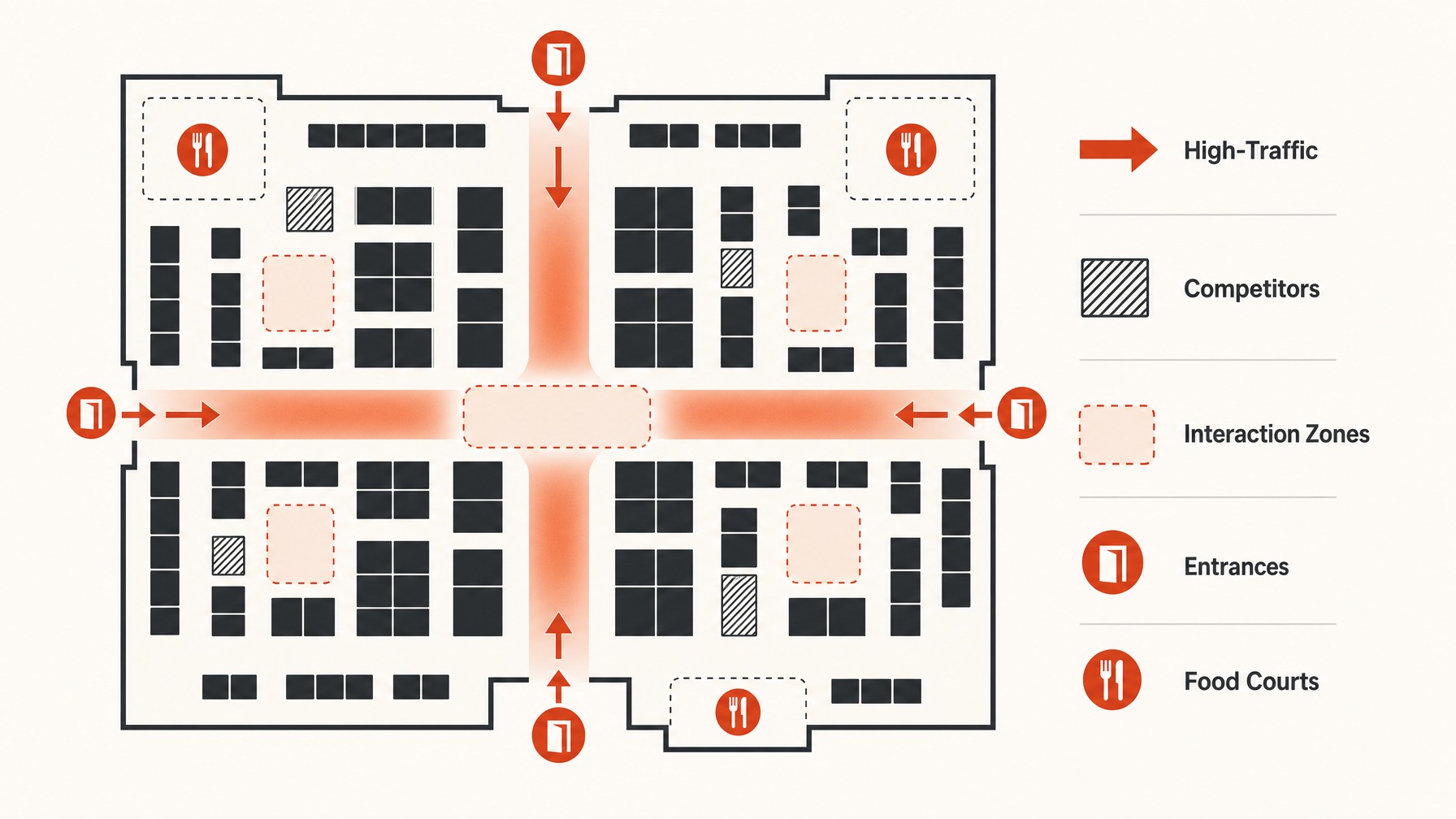

 Lorena G.