When you’re working with a 10×10 trade show booth, every square inch matters.
I’ve seen how exhibitors often view small spaces as a limitation, but they can actually be an incredible opportunity to hone in on creativity and innovation.
With the right approach, these compact booths can make an equally strong impact as their larger counterparts.
From what I’ve gathered across numerous trade shows, the key to success in smaller booths lies in the details. It’s about maximizing what you have and finding innovative strategies that make every element work in harmony.
Whether it’s through eye-catching displays or interactive experiences, small booths can still pack a powerful punch.
Something that comes up a lot is the importance of setting a clear focus.
By honing in on a few standout elements, you can create a memorable experience that lingers in attendees’ minds long after they’ve left the booth.
It’s not just about cramming as much as possible into the space; it’s about making deliberate choices that resonate.
Today, I want to cover seven creative ways you can transform your small 10×10 booth into a dynamic and inviting space.
Let’s explore how to get the most out of your impact with these tips.
Key Takeaways:
Leverage vertical space for eye-catching displays.
Incorporate interactive technology to engage visitors.
Use lighting strategically to highlight key features.
Streamline layout for smooth traffic flow.
Focus on memorable branding elements to stand out.
There’s a lot more to making your small booth shine than just setting up a table.
You’ll find practical tips to bring your booth to life and make it truly engaging.
We’ll explore into smart strategies that help you draw in visitors and keep them interested.
By reading on, you’ll uncover how to create a space that’s memorable and functional.
1. use Vertical Space for Impact
For a small 10×10 trade show booth, one strategy that makes a significant difference is utilizing the often-ignored vertical space.
I would say the biggest thing here is to think about your booth design in layers, using this third dimension to add depth and display content.
By installing vertical fixtures like shelving or digital displays, you can present your products or services eye-level, grabbing attention from a distance.
From what we have seen, exhibitors who get this right often manage to create a visually appealing setup without overwhelming the limited floor area.
The Exhibitant team has seen how effective it is to use vertical banners or signs to enhance brand visibility while keeping the ground space clear.
Something that comes up a lot is the element of height making the booth easily recognizable even in crowded exhibit halls.
Light structures like retractable banners or hanging signs can elegantly present your branding or key messages.
The objective is to capture attendees’ gaze immediately as they walk through the aisles, ensuring they are drawn towards your booth.
One thing most exhibitors end up doing is underestimating the value of high-rise installations that align with building regulations while serving a dual purpose of advertising and decoration.
Using vertical space strategically not only maximizes the visual appeal but also supports better organization and product display.
Innovatively designed wall mounts or shelving units can demonstrate products without occupying precious floor space, effectively turning vertical elements into functional and aesthetic components. Here at Exhibitant, we tend to see the most successful booth designs strike a balance between functional displays and attention-grabbing visuals.
With a creative approach to vertical space, a small booth can appear larger and more inviting, making it easier to engage with visitors and communicate messages effectively.
The take-home message is clear: when floor space is limited, think upwards to gain maximum impact.
This perspective shift may be the difference between blending into the background or making a bold, memorable impression.
2. Incorporate Interactive Technology
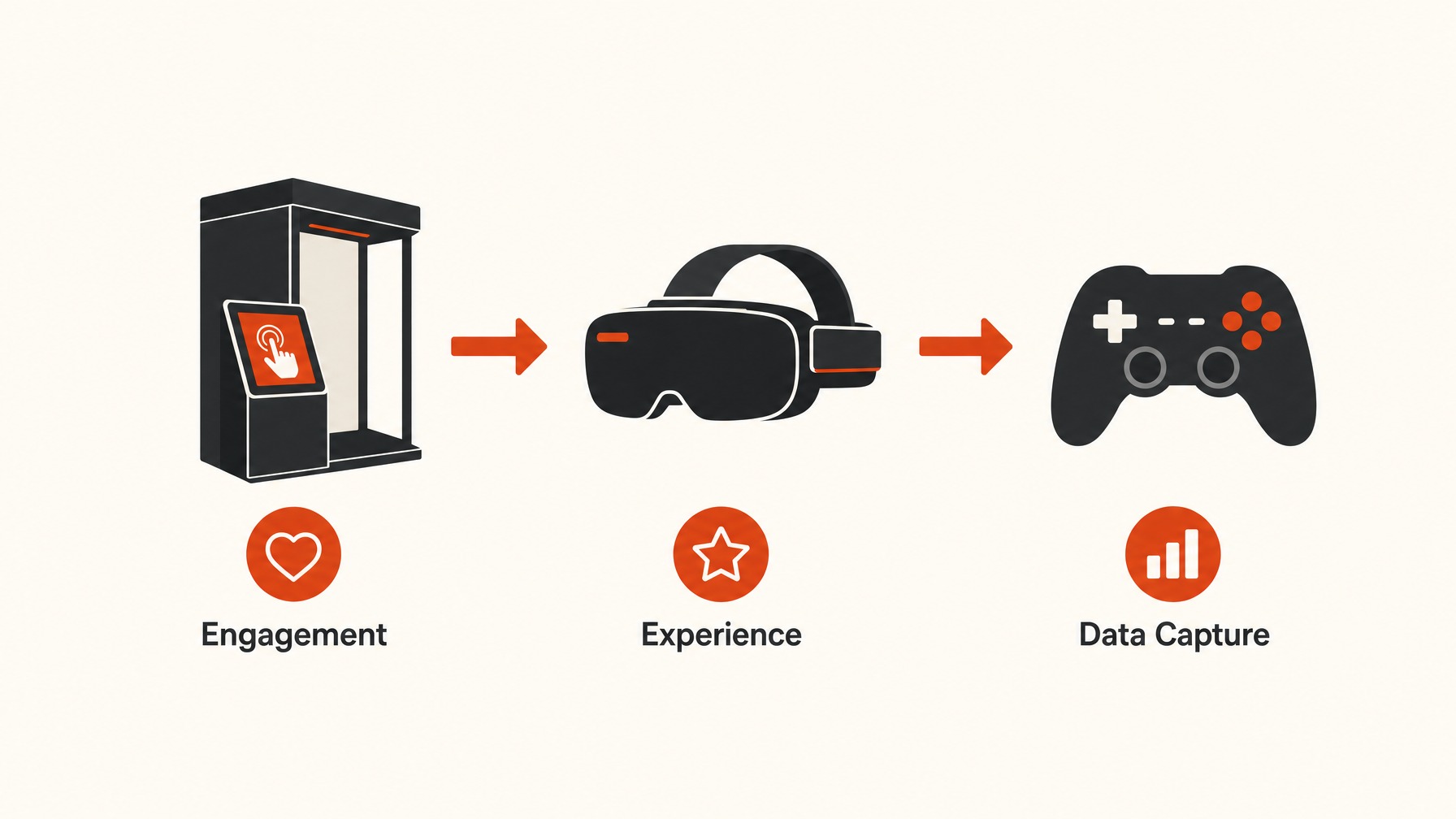
Incorporating interactive technology can transform a small 10×10 booth into a dynamic space that captivates attendees. From what I have seen, integrating touchscreens or interactive kiosks can not only attract visitors but also retain their attention longer.
These tools allow you to display product demos, host virtual Q&A sessions, or collect visitor data efficiently.
One thing most exhibitors end up doing is adding a simple game or poll feature that encourages familiarity with your brand.
An often successful strategy is using augmented reality (AR) or virtual reality (VR) to engage in a more immersive way.
Exhibitors who embrace these technologies usually find they can create experiences that go beyond the confines of their limited space. Another growing trend is using tablets or iPads for on-the-spot registrations, surveys, or even offering personalized product recommendations.
Something that comes up a lot is the convenience and flexibility this technology provides.
You essentially boost your booth’s functionality without needing additional physical space.
However, when you incorporate such technologies, keep in mind that it’s crucial to have tech-savvy team members available.
They need to assist with any troubleshooting issues and guide attendees who might not be familiar with the tech.
Understanding your audience’s comfort with technology influences how interactive your setup should be.
From what I have seen, the ones that get it right usually offer a blend of self-guided and assisted experiences, catering to different comfort levels.
Carefully choosing your tech integration will help make sure the experience feels smooth and invites more meaningful engagement.
3. Use Lighting to Highlight Key Features
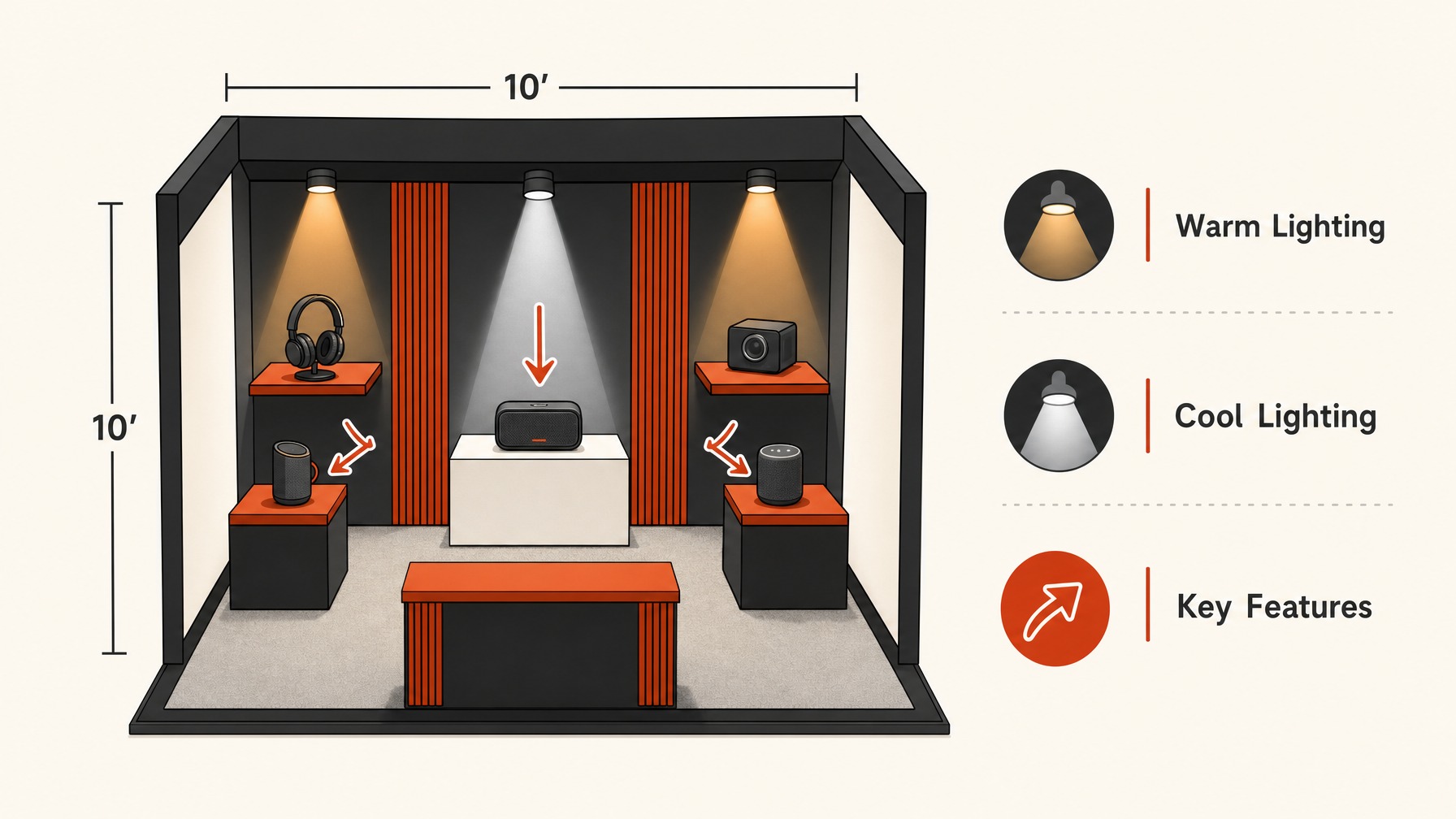
When working with a compact 10×10 booth, lighting can significantly enhance the overall presence and draw attendee attention.
What we have seen work really well is incorporating strategic lighting design to create a focal point on key features or products.
Using adjustable track lighting or spotlights can add depth and dimension, making certain elements stand out even in a crowded trade show floor.
An advantage of controlling your booth’s lighting is the ability to emphasize specific areas like backdrops, signage, or product displays. Something that comes up a lot is the choice of color temperature; warmer tones can create a welcoming environment, whereas cooler tones can feel modern and sleek.
From what I have seen, exhibitors who use LED lights can not only save on energy costs but also have more flexibility in design choices, as LEDs come in a wide range of colors and intensities.
One thing most exhibitors end up doing is layering their lighting solutions to achieve a balanced look.
By combining various lighting elements such as floor lamps, under-counter lights, and overhead fixtures, exhibitors can guide visitor attention across different points without overwhelming the small space.
Pro Tip: You should layer various lighting elements to guide attention and create a booth atmosphere that aligns with your brand’s identity and message.
This layered approach often pays dividends in terms of engagement, as it encourages attendees to explore the booth more thoroughly.
The biggest thing here is not to overlook the interactive effect that lighting has on the overall booth experience.
Well-lit booths not only attract more foot traffic but can also help create an atmosphere that aligns with your brand’s identity.
A lighting setup that reflects the mood and message of your company can be a subtle yet powerful tool in your trade show strategy.
4. simplify Layout for Traffic Flow
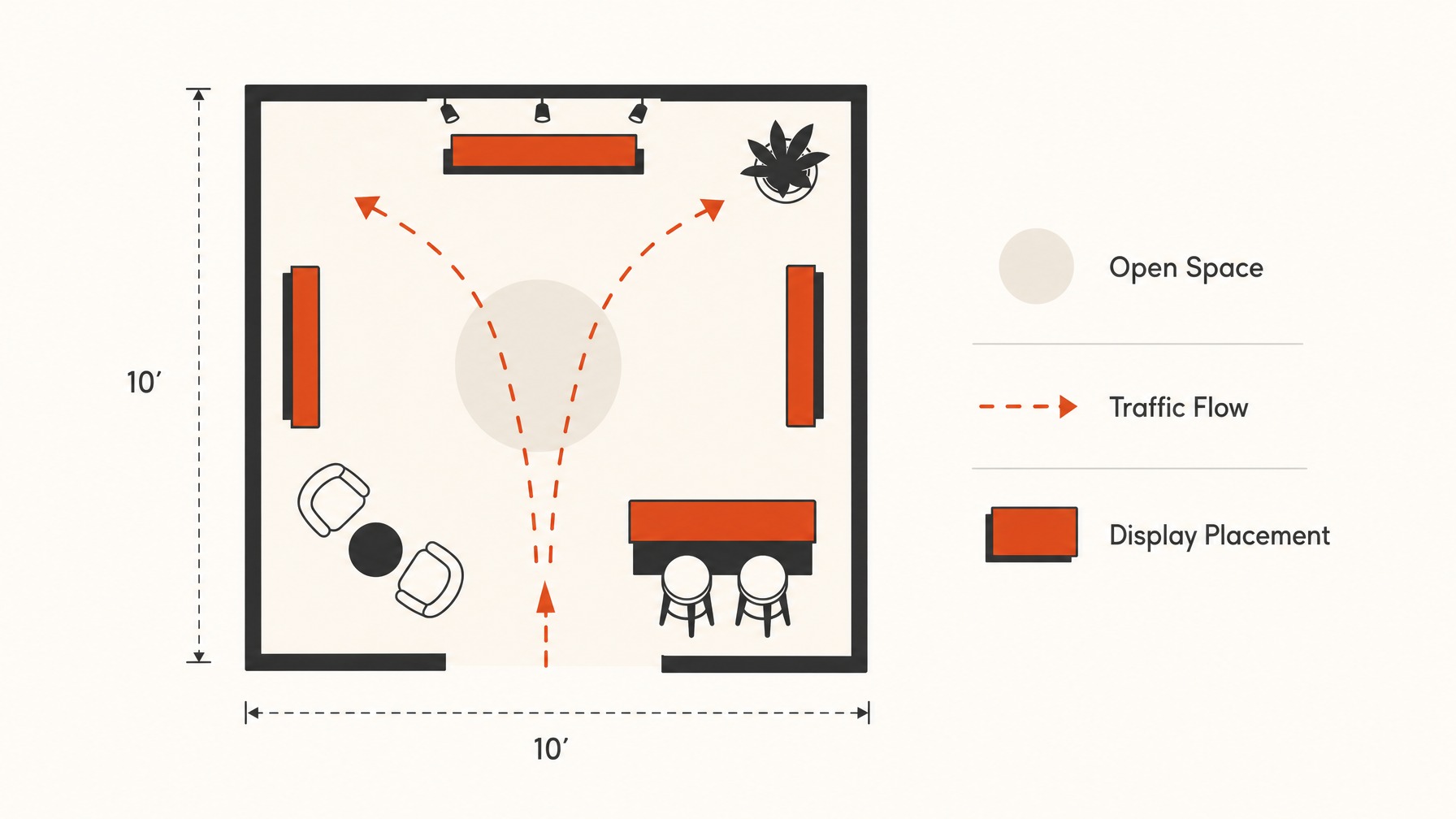
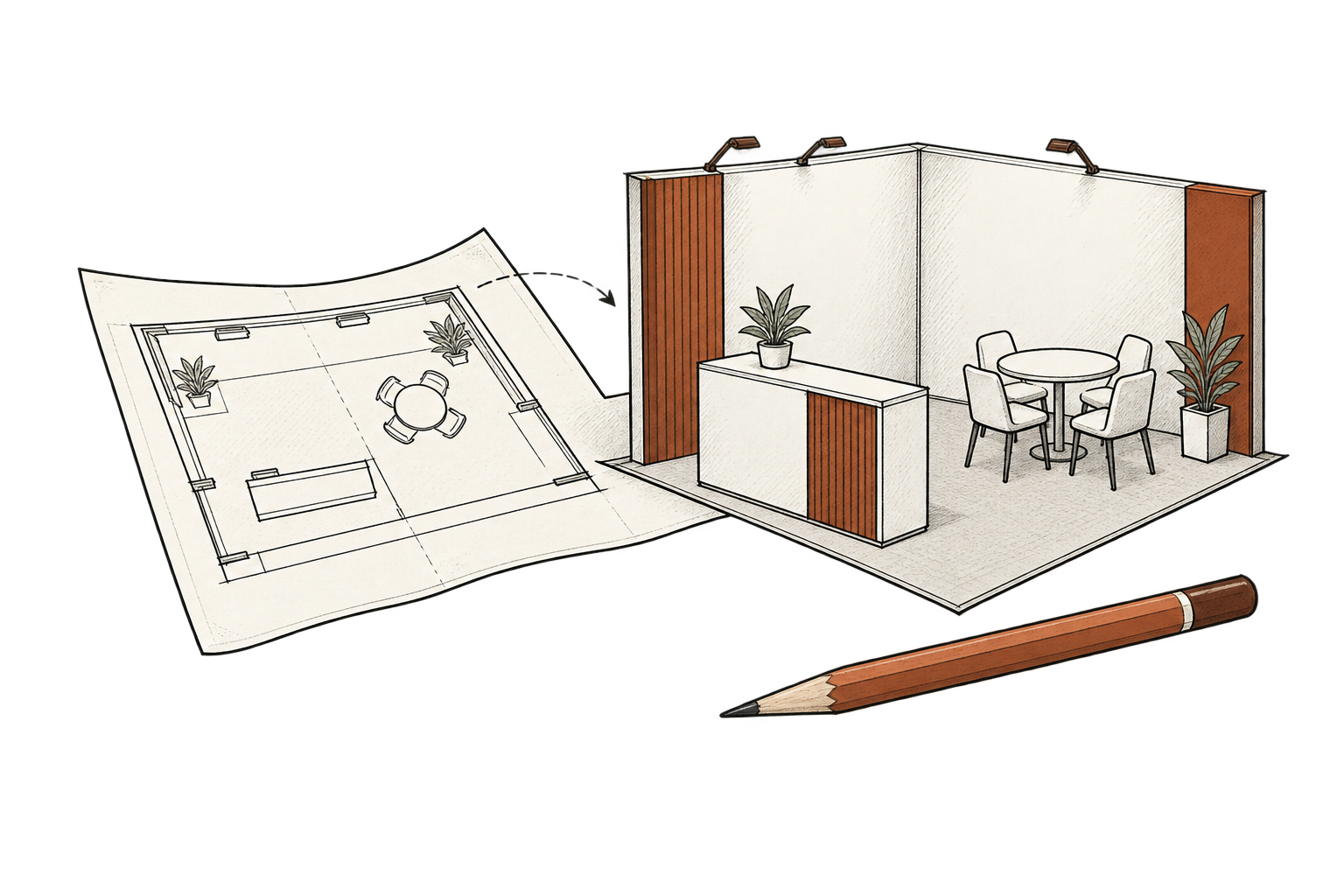
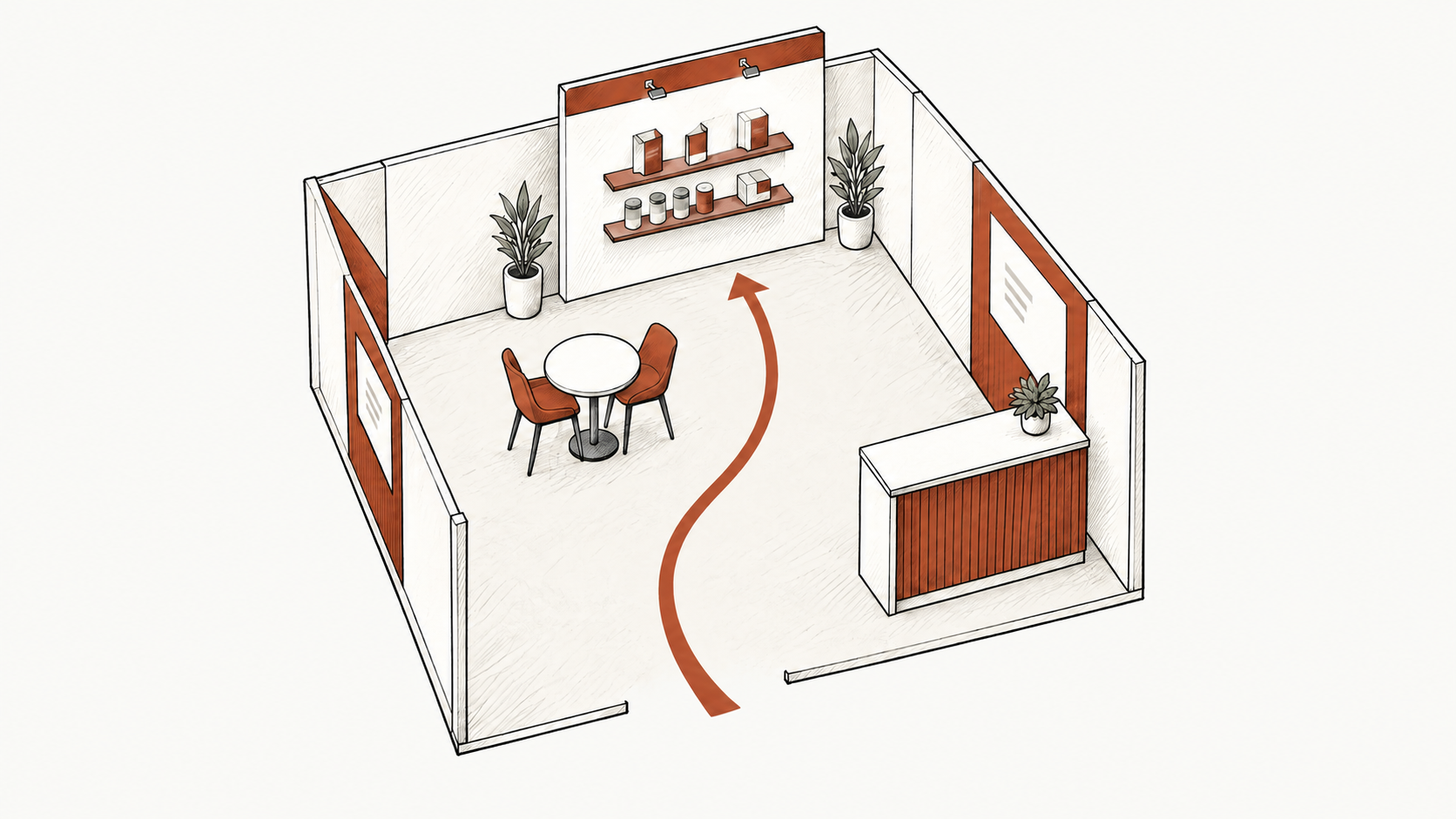
A critical component of a successful 10×10 booth is an efficient layout that optimizes traffic flow.
From what I have seen, the exhibitors nailing this tend to prioritize how attendees will move in and out of their space.
One common pitfall is cramming too much into a small booth space, leading to congestion and an overwhelming experience for visitors.
I would say the biggest thing here is to be intentional about creating enough open areas for effortless movement.
This involves strategic placement of furniture and displays, avoiding physical barriers that could potentially disrupt the smooth passage of foot traffic.
What often works well is arranging the booth with a clear path that encourages guests to naturally circulate without feeling trapped.
Consider placing eye-catching elements at key points to draw visitors along this path.
Items like interactive displays or product stations can serve dual purposes attracting attention and serving as natural waypoints. Incorporating functional elements like small counters or seating areas at the right spots also fosters a welcoming atmosphere.
Something that comes up a lot is the power of this approach in keeping the space inviting and engaging.
Exhibitant provides a wealth of exhibit strategy guidance, offering support that transforms your booth from simply a display area into a dynamic, visitor-friendly environment. Clients find that working with Exhibitant enhances the strategic layout aspects of their booths, ensuring they aren’t just functional, but also inviting and efficient for traffic flow.
5. Focus on Memorable Branding Elements
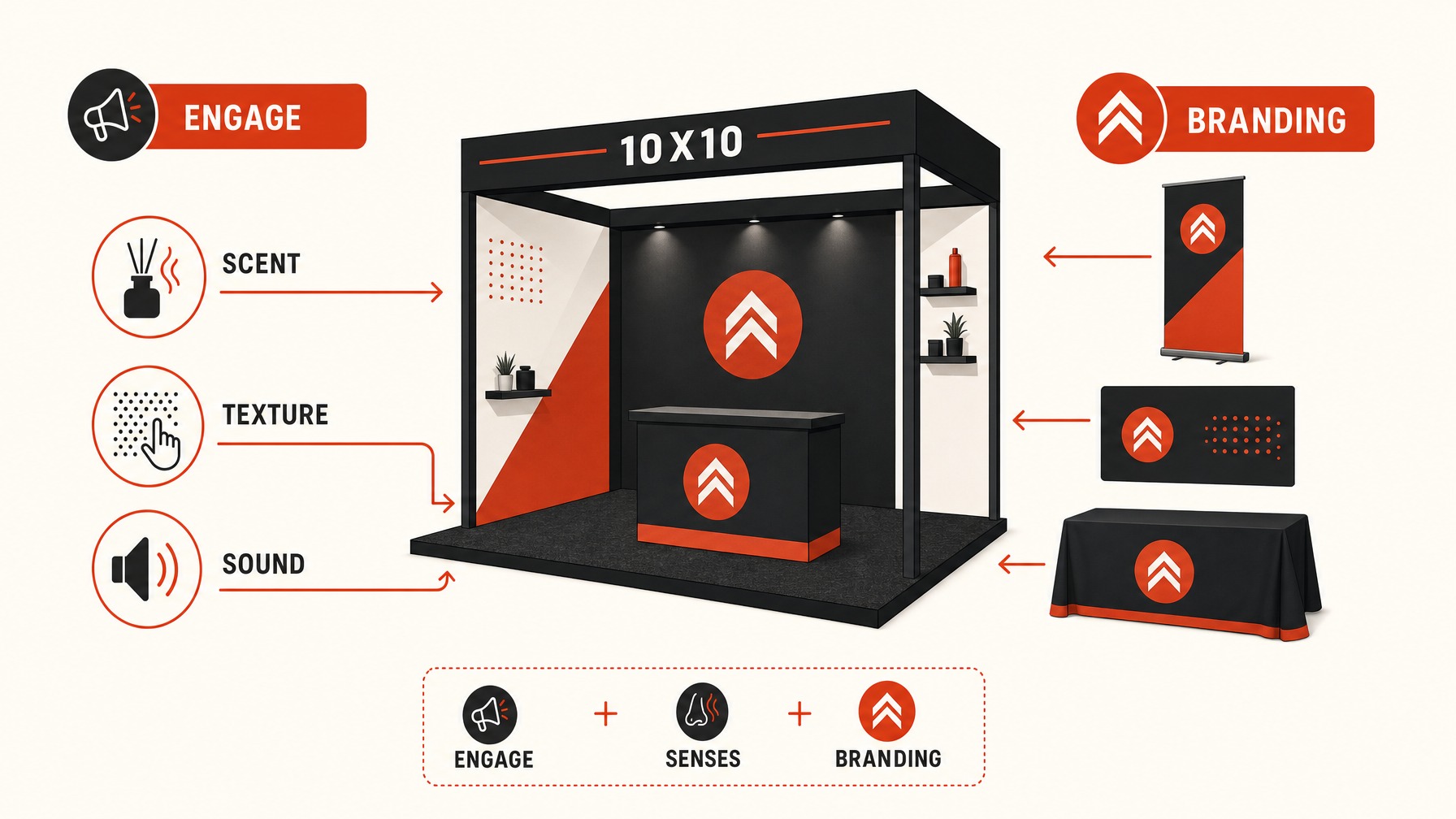
One thing most exhibitors end up realizing is that a small 10×10 booth must make a big impression in a limited space. What we have seen work really well is focusing on making your branding stand out with a few key elements that resonate with your audience.
From what I have seen, companies that invest in high-quality graphics and bold color schemes often command more attention and spark curiosity among attendees. Brand consistency throughout your materials from banners to business cards reinforces your message and ensures that no opportunity to engage goes unnoticed.
Something that comes up a lot is the importance of integrating sensory elements into your branding strategy.
Adding scents, unique textures, or even specific soundtracks can create a memorable multi-sensory experience that leaves a lasting impression.
I would say the biggest thing here is finding ways to invite attendees to interact with your brand in unexpected and delightful ways. You might explore the use of branded props and creative signage, which can also provide excellent photo opportunities keeping your booth relevant and memorable long after the show.
Ultimately, what differentiates the booths that get it right is their ability to balance bold design with cohesive storytelling.
This storytelling element invites your visitors to engage with the booth on a deeper level, connecting them to the brand narrative in a meaningful way.
When your visuals and messaging align seamlessly, you not only capture attention but build a foundation of trust and curiosity.
An impactful brand experience doesn’t just stop at the booth; it extends to the follow-up interactions that lead to sustained engagements.
6. use Smart Storage Solutions
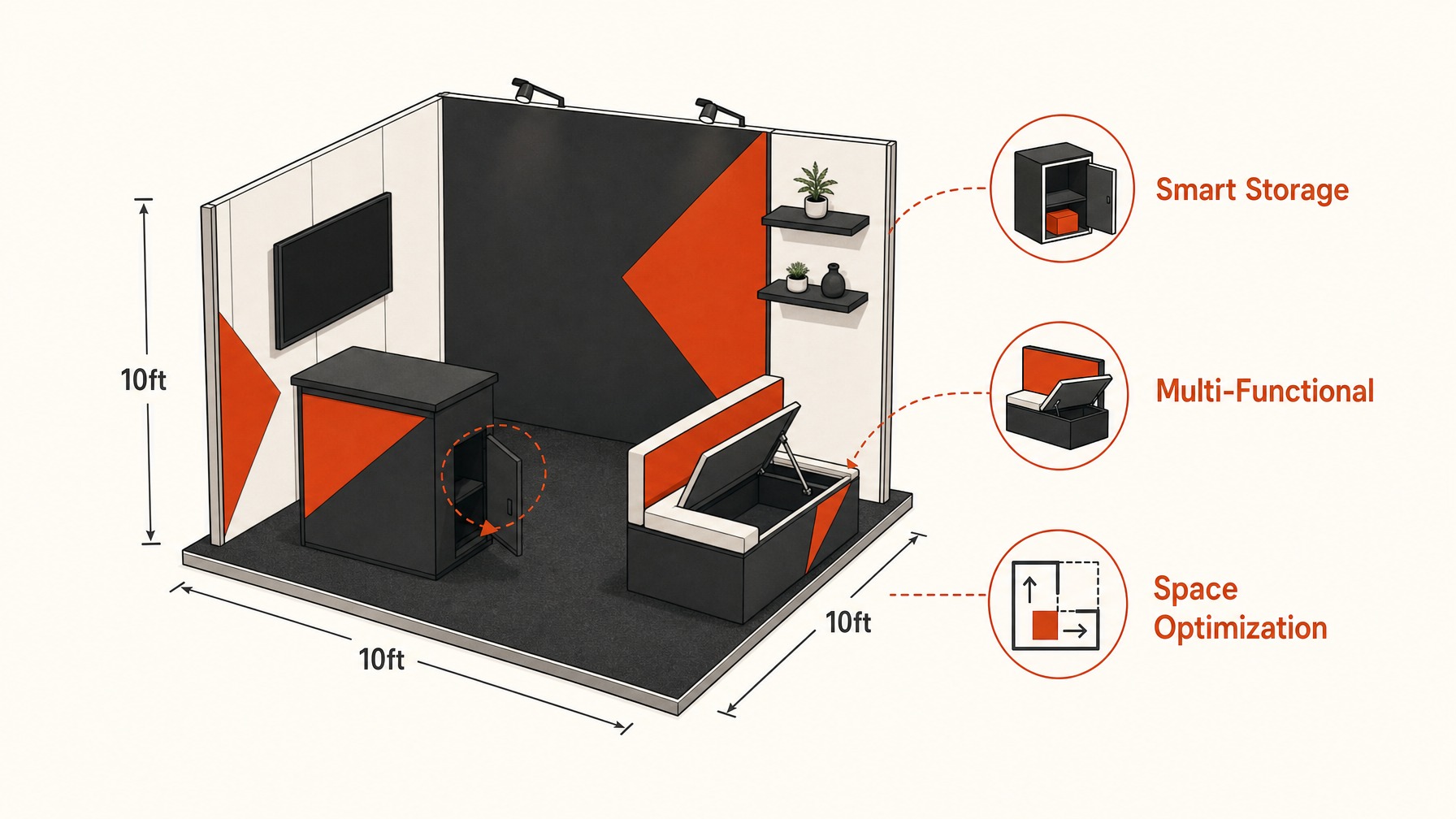
When you’re working with a compact 10×10 booth space, finding clever ways to store materials can significantly enhance your overall booth design. What I’ve seen from successful exhibitors is the strategic integration of storage components into their booth architecture.
By doing this, you not only keep the booth tidy but also get the most out of the available space for engaging with attendees. In small booths, every square foot counts, which is why having dedicated storage areas for brochures, swag, and personal items is crucial.
One thing most exhibitors end up doing is using multi-functional furniture that can double as storage units consider using podiums with hidden compartments or seating benches with storage beneath them.
These solutions not only help you stay organized but also eliminate the clutter that can detract from the professional appearance of your booth.
It’s also beneficial to have a plan for storing and managing cables and technology items, which often take up unnecessary space if left unchecked.
From what I have seen, another winning move is employing vertical storage, such as shelving on the walls, to keep items off the floor while still easily accessible.
Many exhibitors find that collapsible storage solutions, like bins that fold flat, can be a lifesaver for keeping miscellaneous items neatly tucked away when they aren’t needed.
With limited space, even the packaging your products come in could be used cleverly as part of the storage solution.
Another strategy involves carefully planning the flow of storage use, having a behind-the-scenes schedule for replenishing items at non-peak times to make sure minimal disruption.
Something that comes up a lot is the need to continuously monitor and maintain the organization, ensuring storage doesn’t become chaotic midway through the trade show.
Ultimately, smart storage solutions contribute to a streamlined, efficient booth operation, enhancing the attendee experience by allowing the focus to remain on your brand message and interactions rather than logistical challenges. Prioritizing storage solutions early in the design planning helps simplify on-site execution, creating a smooth experience for both staff and booth visitors.
7. Engage with Innovative Giveaways
One thing most exhibitors overlook is the strategic power of innovative giveaways to engage attendees and create brand recall.
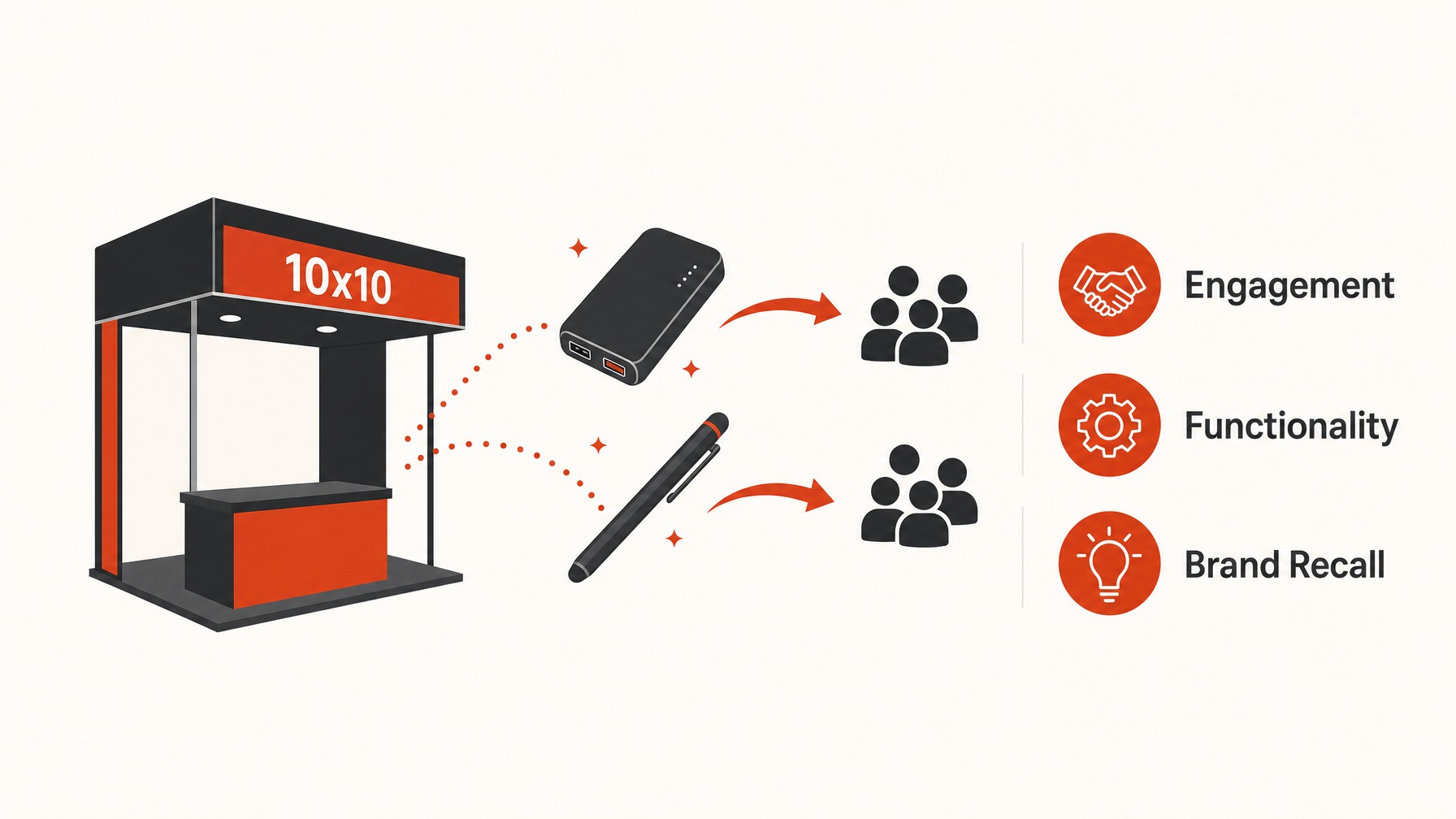
While pens and stress balls have been overdone, what seems to really capture attention are items that either connect directly to your brand or offer practical utility. We’ve seen success with tech-related giveaways such as branded portable chargers or stylus pens, especially at events with a digital or tech focus.
Such items not only feel more premium but also align with the needs of attendees who often rely heavily on technology throughout their day.
The key is to make sure that your giveaway is not just memorable but functional, so it continues to offer value long after the event has ended.
From what I have seen, the ones that get it right usually conduct a bit of research on their target audience to select items that resonate with their lifestyle or professional needs.
Think about creating a buzz with limited-edition or event-exclusive items that encourage early visits to your booth.
This approach not only increases foot traffic but also generates conversations around your brand in a natural, organic way.
Packaging also plays a critical role in how giveaways are perceived. A well-designed, branded package turns a simple item into a coveted keepsake.
You could pair this with a call to action that encourages recipients to share their thoughts on social media using a branded hashtag.
This not only extends the lifespan of your giveaway but also boosts your brand’s online visibility, effectively turning attendees into brand ambassadors.
Remember, the ultimate goal here is to create a sensory connection with your audience that translates into long-term brand loyalty.
The Bottom Line
When you’re working with a compact 10×10 trade show booth, the ultimate goal is not merely to make it fit your products, but to make it reflect your brand identity. What we have seen work really well is when companies use creative solutions to get the most out of both visual and practical aspects of their space.
Each strategy, whether it’s leveraging vertical space or incorporating interactive technology, contributes significantly to creating an engaging atmosphere.
From what I have seen, those who transform their booths into inviting hubs often achieve greater success in their trade show endeavors.
You should focus on identifying key elements that resonate with your audience and highlight them with purposeful design choices.
Smart layout decisions, effective lighting, and memorable branding elements all play important roles in enhancing your booth’s appeal.
One thing most exhibitors end up doing is underestimating the power of small touches, like smart storage solutions and innovative giveaways, which can leave lasting impressions on visitors.
When executed well, these elements not only help in drawing traffic but also foster meaningful interactions within your booth.
The result of incorporating these ideas is a well-rounded space that communicates the essence of your brand effectively.
I would say the biggest thing here is to approach each trade show with thoughtful planning and a willingness to adapt and innovate within your space constraints.
This mindset ensures that each booth setup is not just a function of area but a strategic reflection of your company’s goals and values.
Taking the steps we’ve discussed helps create a booth that is more than just an exhibit it becomes a dynamic part of your marketing strategy.
Need a booth plan?
Turn show goals into a practical exhibit path
Share your footprint, timeline, and priorities. Our team can help shape the booth direction, graphics, and project support.
Keep planning
More exhibit guidance
Keep exploring practical advice on booth planning, marketing, and getting more from your next show.
Tell us about your business, the buyers you want to reach, and what you want to achieve. Whether you need more sales conversations, stronger marketing, or a trade show presence, we’ll help you identify where to focus and what support makes sense. Together, we can shape a practical plan around your priorities, budget, and timeline.
 Lorena G.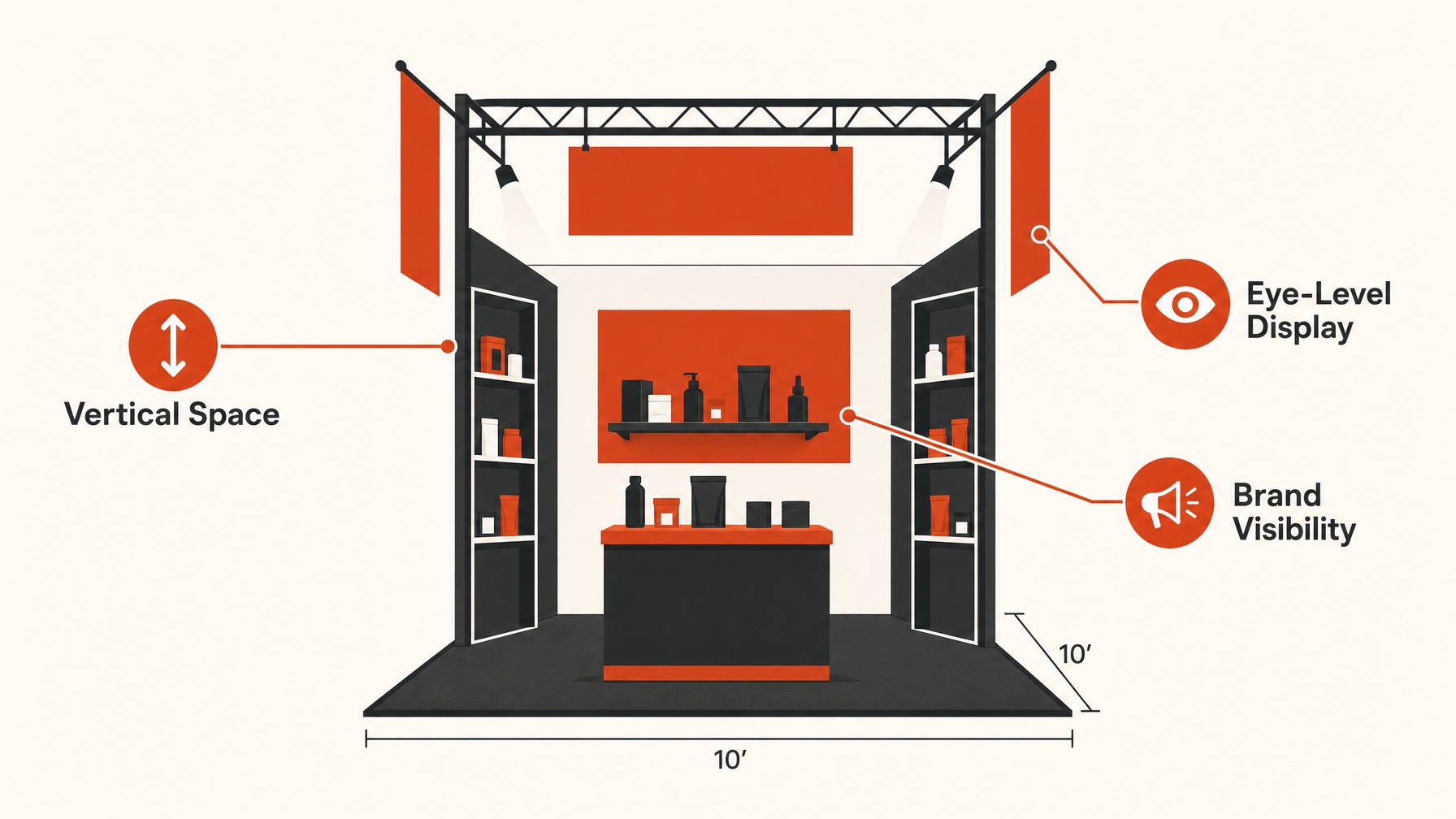
 Louie J.