Designing a large trade show booth can be both an exciting opportunity and a daunting task. The scale demands thoughtful planning, especially when creating a space that attracts attention and fosters meaningful interactions.
Here is how I would approach it: Start by knowing what is essential to your booth’s success.
Trade show booths are not one-size-fits-all; their dimensions and design significantly impact how visitors perceive and interact with your brand.
In these sprawling spaces, booth design must serve both form and function.
This requires careful consideration of layout, materials, and interactive elements to make sure a smooth and engaging experience.
You’ll need a pragmatic approach to designing a booth that highlights your message without overwhelming guests. Effective strategy can turn your square footage into a bustling hub of activity.
This involves strategic use of your brand elements and technologies to create points of interest and engagement throughout the booth.
Once we explore these seven practical tips for designing large trade show booths, you will be better equipped to make informed decisions about layout, materials, and interactive elements.
By the end of the article, you and your team will be prepared to transform a vast space into a cohesive and inviting environment that resonates with your audience.
Key Takeaways:
Plan booth layout for smooth visitor flow and engagement.
Incorporate brand elements to reinforce identity and message.
Utilize technology for interactive and memorable experiences.
Ensure materials are durable and transportable for easy setup.
Allocate space for private meetings without disrupting booth flow.
Incorporate your brand’s elements for a consistent message and use tech tools for interactive experiences.
Make sure materials are durable, yet easy to transport, to enhance booth setup.
1. Plan Your Layout for Smooth Flow
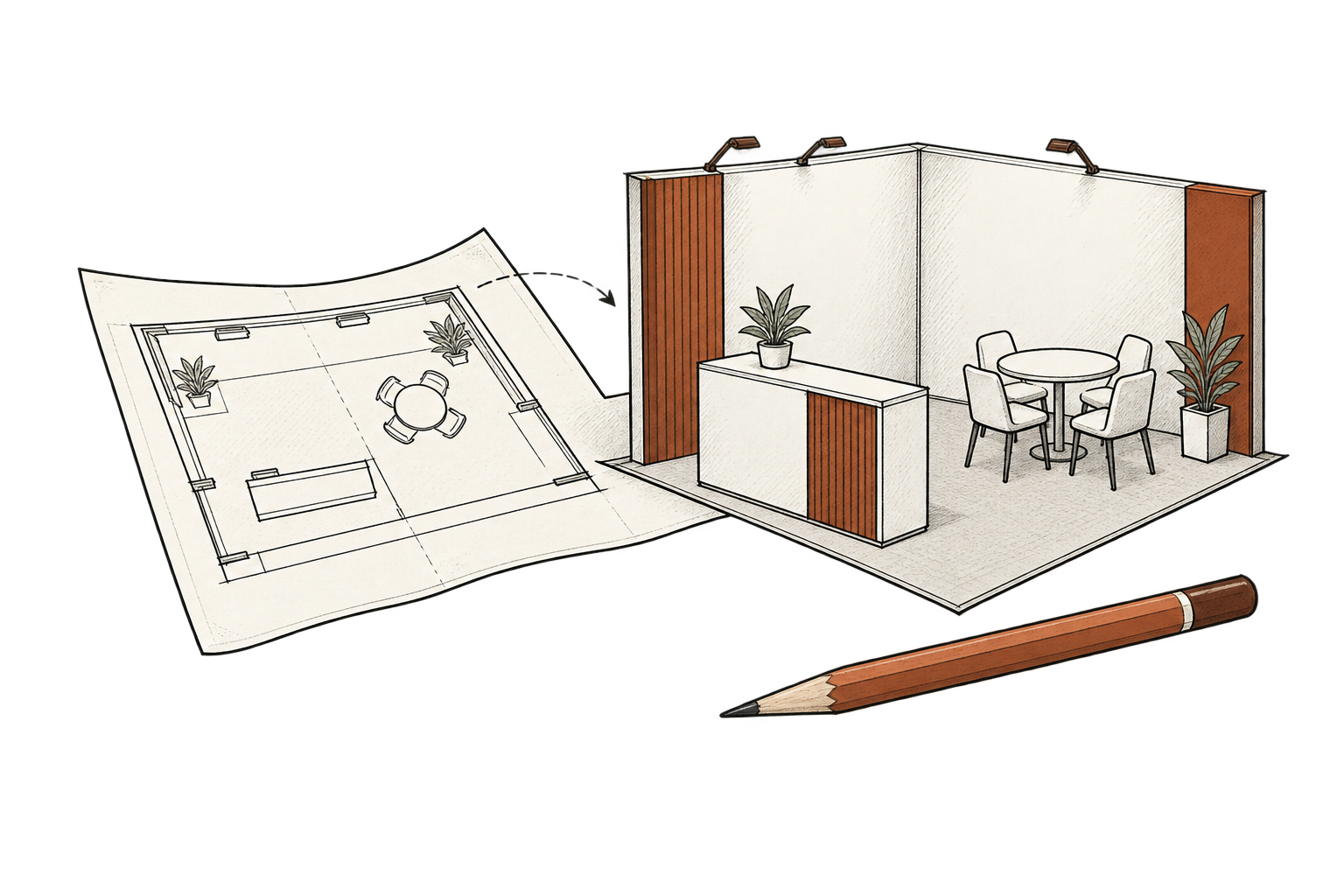
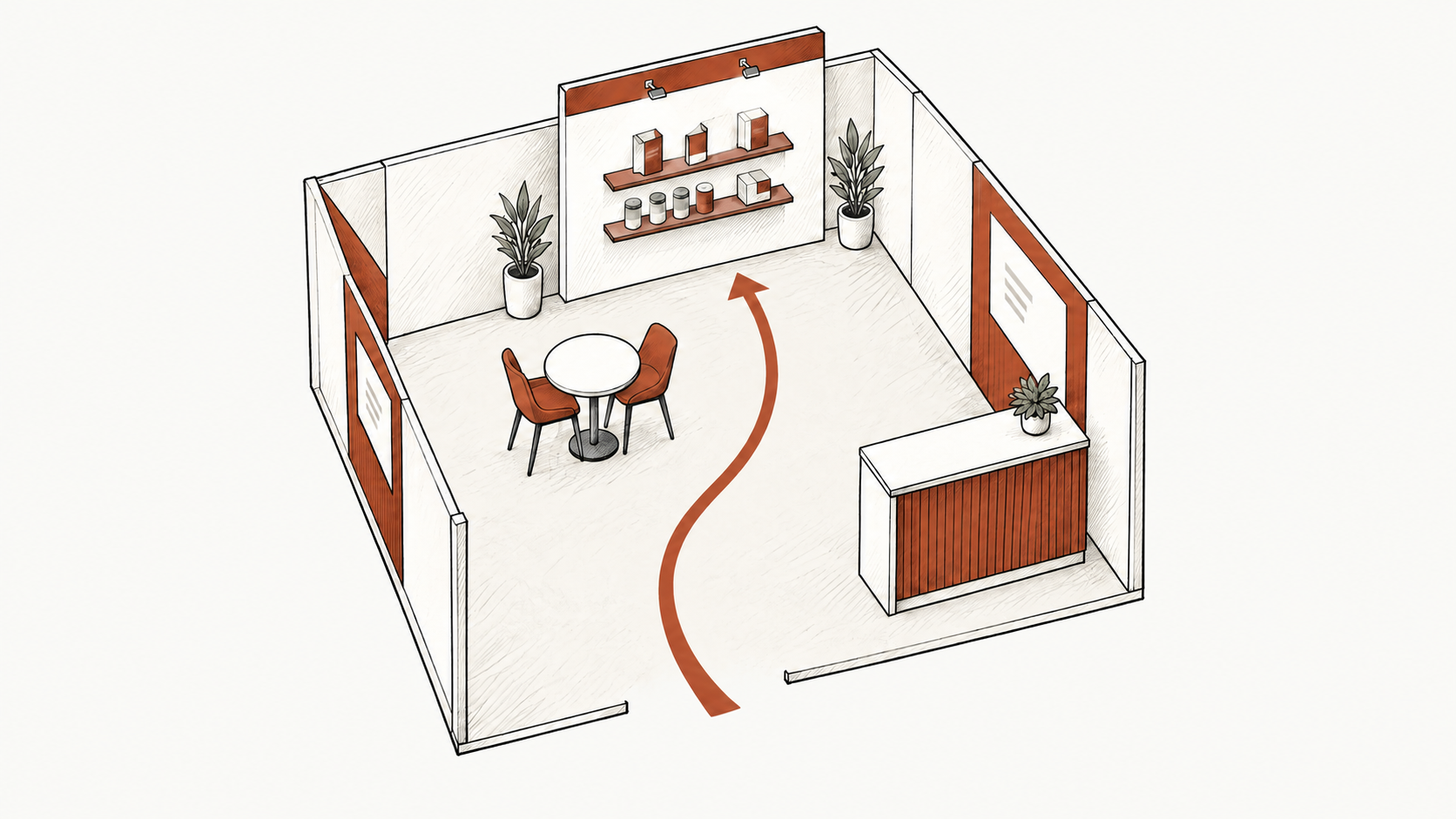
When designing a large trade show booth, the first step is to create a well-thought-out layout that encourages smooth flow.
Smooth traffic flow ensures that visitors can easily enter, explore, and exit your space, providing a more engaging experience. Begin by mapping out key areas such as entry and exit points, product display sections, and interaction zones.
Strategically position these areas to minimize congestion and bottlenecks. For example, you might place interactive elements deeper within the booth to draw visitors further in.
Consider visitor behavior as you design your flow.
People naturally move in a path of least resistance, so align pathways with common traffic patterns. make sure pathways are wide enough for multiple visitors, providing space for both group and individual engagement without obstruction.
In addition, make sure to position staff efficiently throughout the booth area.
A team member should be available at the entrance to warmly welcome visitors and guide them towards highlights of the booth.
Staff stationed at key points, such as product demos or interaction zones, can enhance the flow by encouraging movement and answering questions.
A common mistake when planning a layout is ignoring the booth’s proportions.
Be cautious with overloading the space with too much furniture or display items, which can cause a cramped feeling.
This often leads to a reduced visitor experience as it becomes difficult to navigate the booth.
Balance is vital in maintaining an open and inviting space.
To finalize your layout, conduct a walk-through or role-play exercise, examining potential strengths and weaknesses in the flow.
With a thoughtful approach, your booth will welcome and guide visitors effectively, leaving a positive and lasting impression.
2. Use Branding Elements Strategically
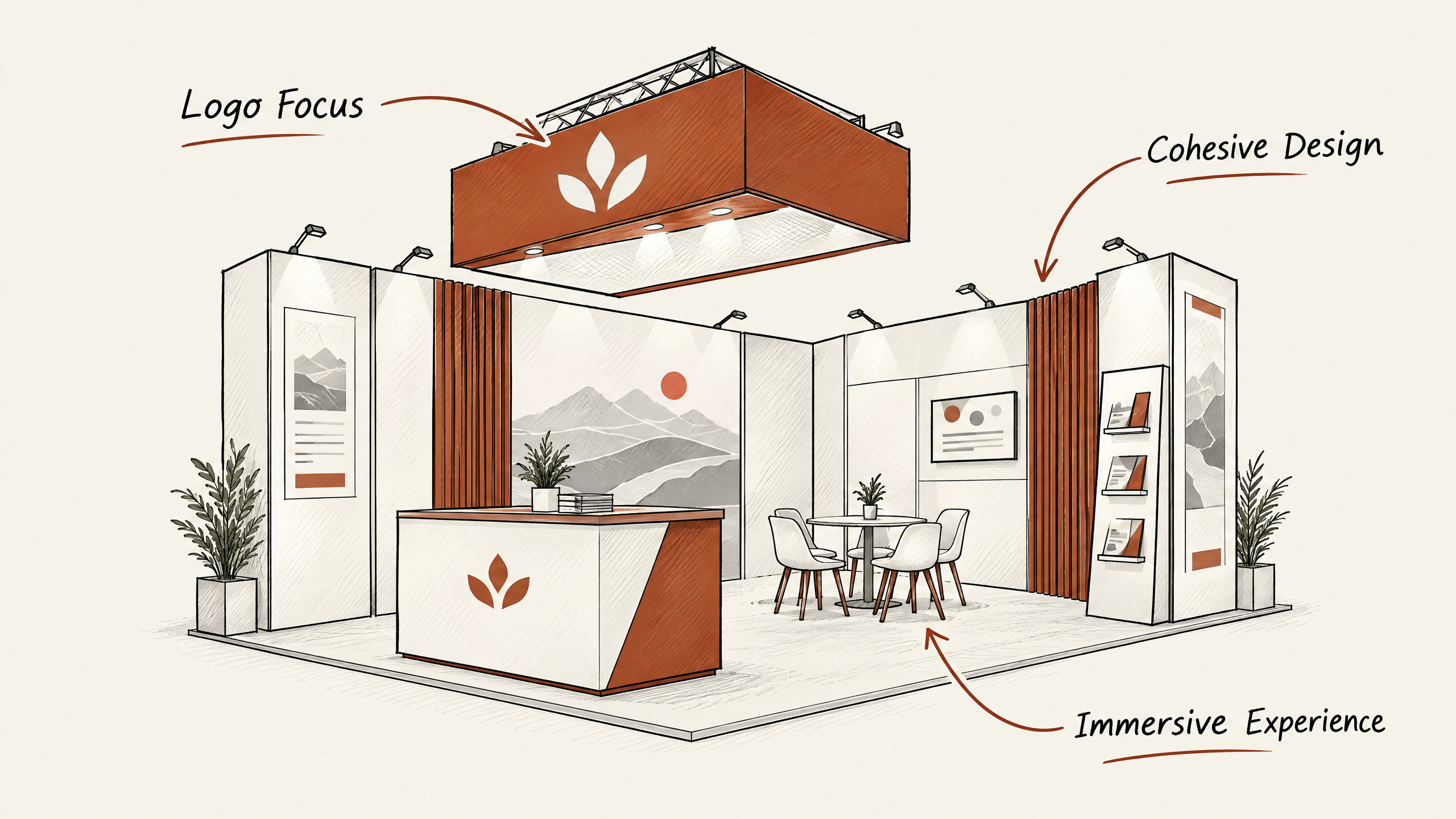
Designing a large trade show booth gives a great opportunity to incorporate powerful branding elements that communicate your company’s identity and message. Effective branding doesn’t mean filling every nook with logos.
Instead, use your space to create a cohesive and immersive brand experience.
Focus on a few key elements that make your brand instantly recognizable.
Start by prioritizing your brand’s visual identity.
Display your logo prominently but tastefully size and placement matter.
Your color scheme should harmonize with the booth’s design and stand out without overwhelming. Large booths offer room for intriguing design elements like modular walls or striking lighting.
Consistency across all materials is necessary.
Customized flooring, banners, and backdrops should all reflect your core branding. Large spaces can accommodate multiple touchpoints.
This allows attendees to engage with your messaging from different angles.
Interactive displays can reinforce your brand narrative. Consider utilizing digital screens to display dynamic content that draws visitors.
Whether it’s video walls or touchscreen displays, these elements should align with and enhance your branding goals.
Avoid clutter by focusing on high-impact elements that resonate with your target audience.
Walk through the booth as if you were a visitor to determine what grabs attention and what fades into the background.
Assess these elements with your team, ensuring everyone is aligned with your branding priorities. Before the show, have a dress rehearsal to test if all displays work as intended.
Aligning branding with overall booth strategy helps to create a unified attendee experience.
For any trade show setup, Exhibitant can provide insight into how best to position your branding elements.
This ensures your booth not only looks impressive but communicates the right message effectively.
3. Get the Most Out of Technology for Engagement
Incorporating modern technology into a large trade show booth can significantly enhance visitor engagement.
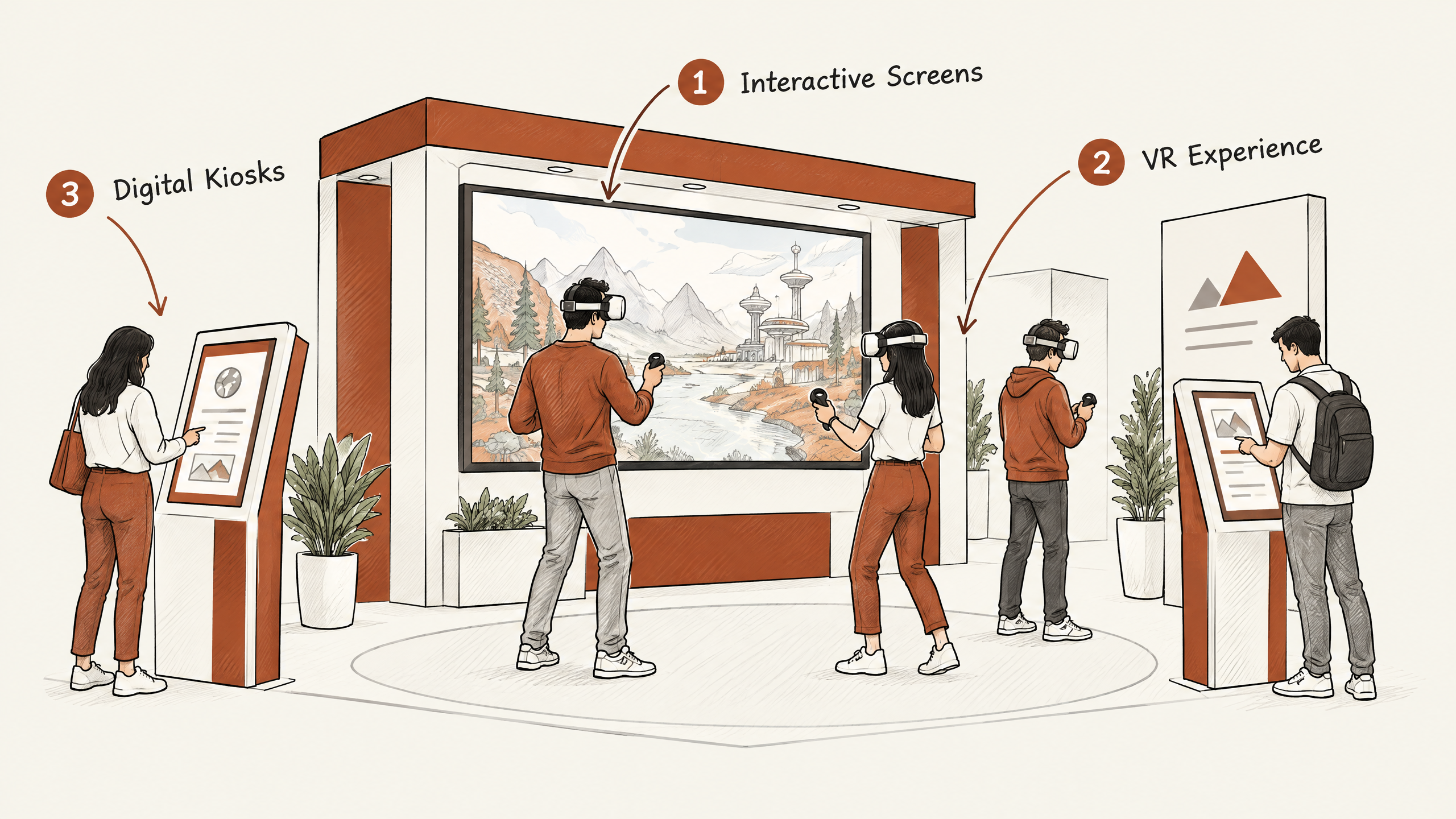
Interactive screens, virtual reality experiences, and digital kiosks are options to attract attention and keep participants engaged. When thinking about integrating technology, focus on tools that provide real value to visitors, like interactive product demonstrations or a digital tour of your service offerings.
Decide on the specific type of technology that aligns best with your marketing goals and budget.
For example, if you’re aiming to show complex products, virtual reality simulations can offer a comprehensive understanding beyond standard descriptions.
These simulations allow visitors to experience products as they were intended to be used, deepening their appreciation and recall.
If budget constraints tighten your choices, consider using your own devices to create an interactive experience. A smartphone app, for instance, can guide visitors through the booth while collecting their data for follow-up.
By ensuring the tech is simple to use and reliable, you can avoid gaps in visitor engagement.
To execute this effectively, assign a team member to manage the technology. They must be well-versed in troubleshooting and guiding visitors.
Provide clear instructions and consider having backup equipment in case of unexpected failures.
This planning will keep your booth running smoothly, so visitors focus on your offerings rather than technical hiccups.
4. Choose Durable and Portable Materials
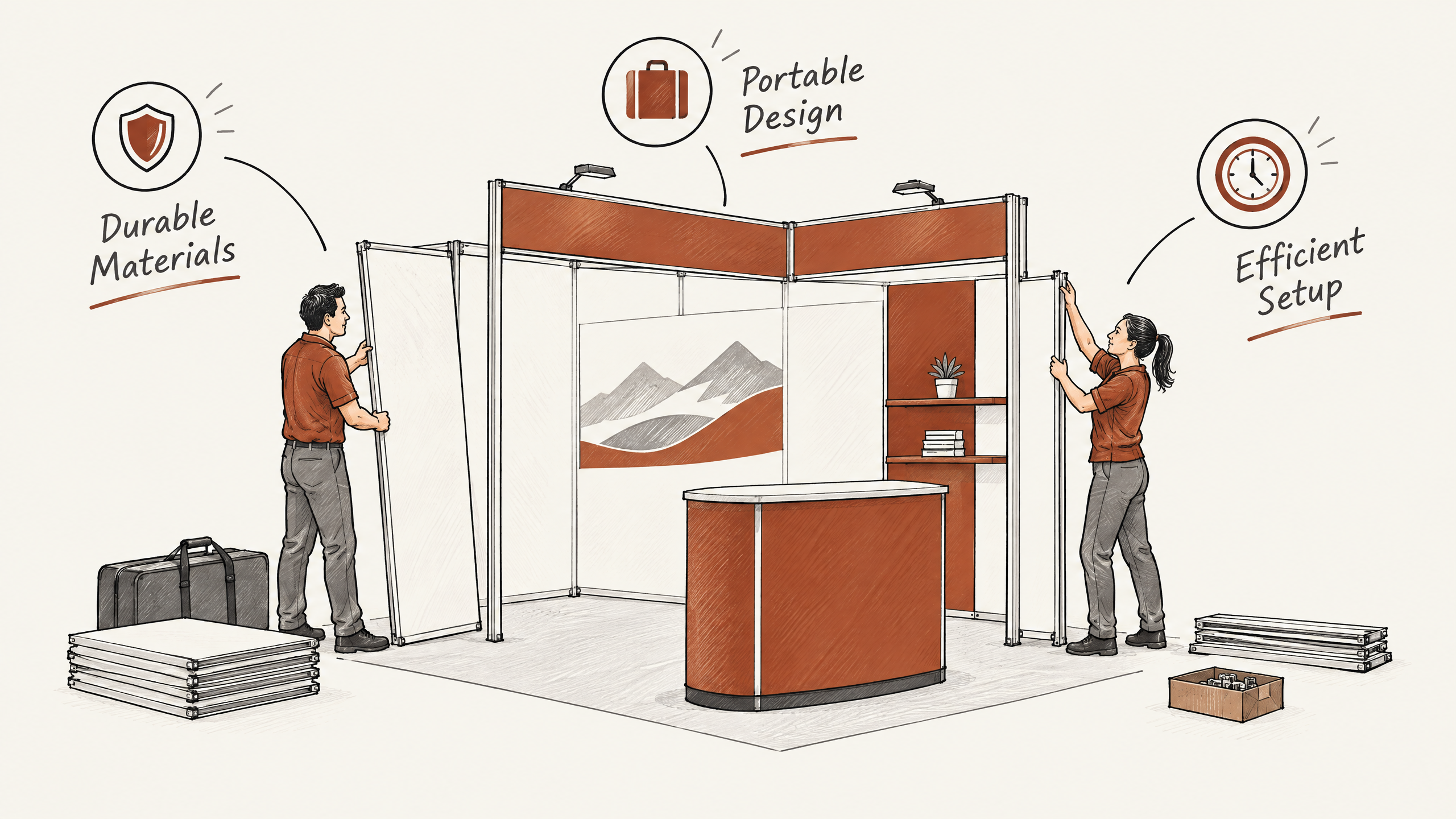
When designing large trade show booths, selecting the right materials is just as crucial as the overall layout. Durable materials make sure your booth withstands the wear and tear of frequent shows.
I recommend starting with a clear understanding of the booth’s lifespan and how many shows you’ll be attending each year.
The more frequent the use, the more you’ll benefit from investing in robustness.
Alongside durability, portability is equally important. Lightweight materials like aluminum frames or modular panels can make a significant difference in setup time and shipping costs.
Imagine transporting a cumbersome, heavy structure repeatedly it’s neither practical nor cost-effective.
Opting for portable options can significantly reduce logistical hassles.
When selecting materials, weigh factors like cost, weight, durability, and ease of assembly. For instance, while fabric graphics might seem less durable compared to rigid panels, modern fabrics are often more sophisticated and resilient than expected.
Keep an eye on material innovations that provide a balance between durability and portability.
A common mistake is overlooking the environmental conditions where you’ll set up your booth. For example, outdoor shows may require materials that can withstand sun, rain, or wind without damage.
If weather is a factor, prioritize materials with weather-resistant qualities to make sure your booth’s longevity.
At Exhibitant, our services include assisting clients in choosing materials that align with their trade show schedule and logistical needs. This service supports practical decisions that save time and resources, allowing businesses to focus on engaging with potential buyers effectively.
5. Designate Space for Private Meetings
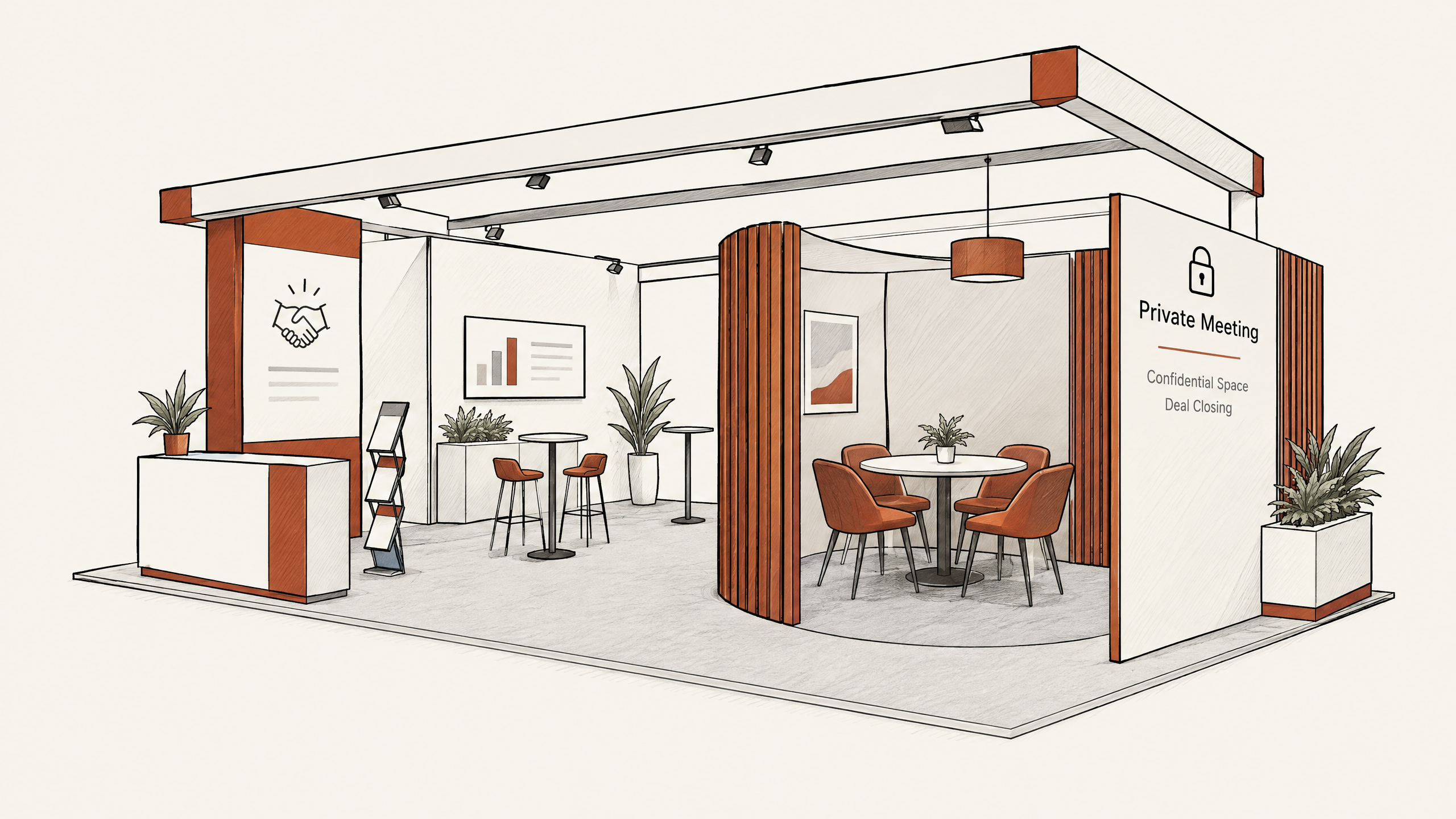
In a large trade show booth, it’s crucial to designate space for private meetings.
Not every interaction should be in the open for all to see, especially when discussing sensitive business information.
A well-thought-out private area can facilitate confidential discussions and create an environment conducive to closing deals.
This setup can give potential clients the privacy they need to feel comfortable.
The first step in creating this space is to decide how many meetings you anticipate during the event.
If you expect a high volume of requests, consider setting aside multiple sections within the booth. A small business might only need a single private area, while larger companies could benefit from having several such spaces.
Second, think about how to physically separate these meeting areas from the public eye. It can be achieved with partitions, curtains, or even soundproof walls.
It’s also important to furnish these areas with functional furniture.
Comfortable seating and a small table can make a world of difference, ensuring that the meeting feels welcoming.
Remember, the ultimate goal is to allow for productive conversations. Common mistakes include leaving this area too open, making noise a distraction, or failing to consider the movement of people in and out of the meeting space.
A useful approach is to also provide some basic amenities like water bottles, a notebook, and pens within these spaces.
This gesture demonstrates thoughtfulness and can create a positive impression.
Finally, provide clear signage and scheduling tools so attendees know how to book and find the private meeting space.
By planning for an organized space, you enhance both your brand’s professionalism and the likelihood of a successful interaction.
6. Use Interactive Demonstration Areas
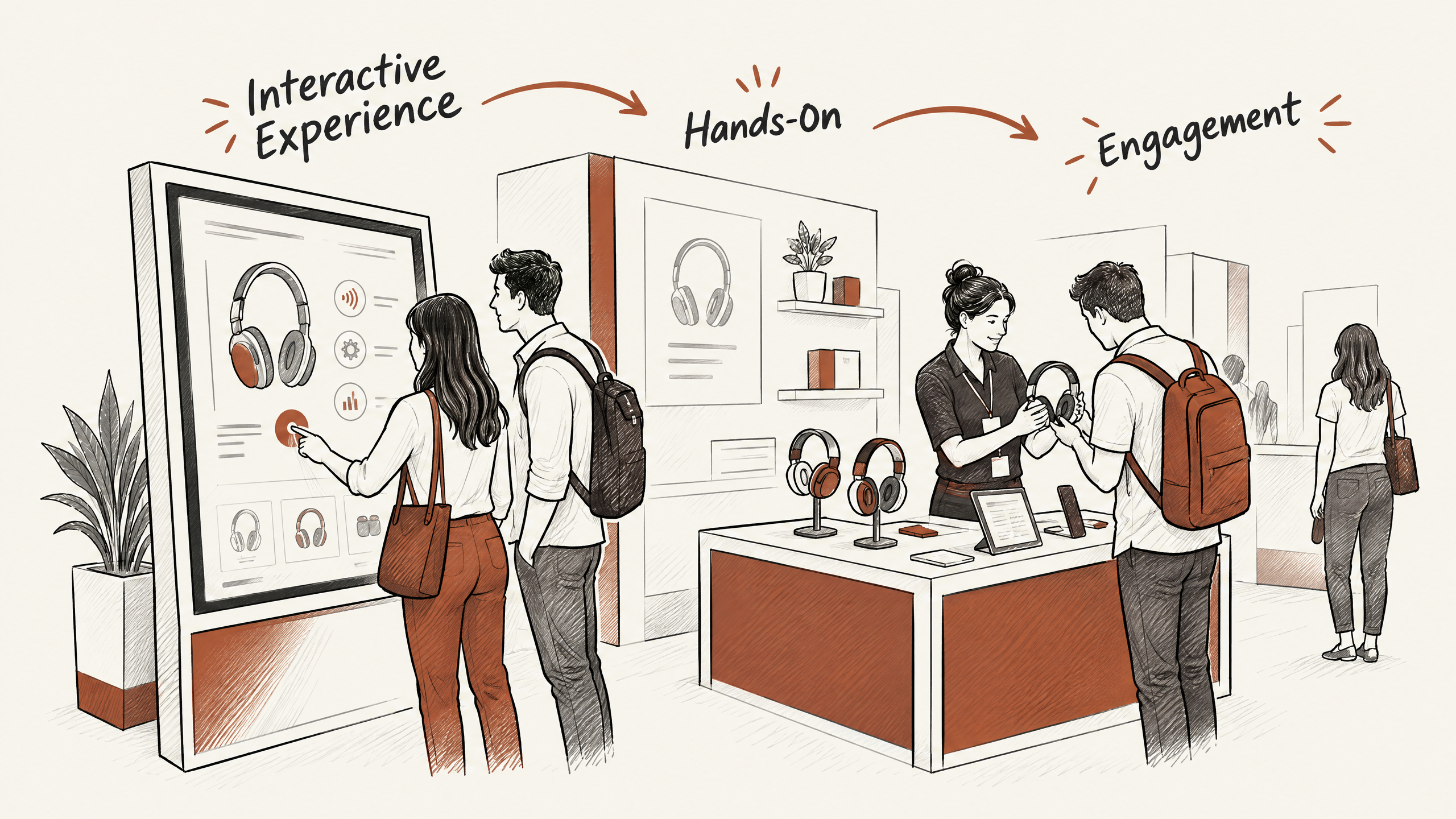
Interactive demonstration areas can transform a large trade show booth from static to dynamic. This engagement offers a unique opportunity to allow attendees to directly experience your products or services.
The key is to blend hands-on activities with educational value, ensuring that each experience is memorable and meaningful.
When planning these areas, think about what will capture your audience’s attention and invite them to participate.
For example, a software company might set up a touchscreen for potential clients to navigate their platforms, while a hardware manufacturer might create a station for assembling or testing components. This approach fosters natural engagement and makes the product or service tangible.
Consider the space and resources needed for effective demonstrations.
Make sure that each demonstration area allows for easy access and accommodates several participants at once.
This might mean partitioning sections of your booth and ensuring ample room for movement.
Discuss with your team what space commitments and staff are essential for smoothly operated demos.
Using interactive demonstration areas carries the benefit of attracting curiosity-led attendees while offering a deeper try what you offer. However, it’s important to anticipate potential drawbacks, like technical difficulties or overcrowding.
Having a plan to manage these challenges ensures the areas remain productive and functional throughout the event.
Finally, make sure there is a clear process for following up with attendees who engage in demonstrations.
Capturing contact information or offering post-demo consultations keeps the momentum going beyond the initial interaction as they could be likely prospects.
7. Improve Lighting for Atmosphere and Focus
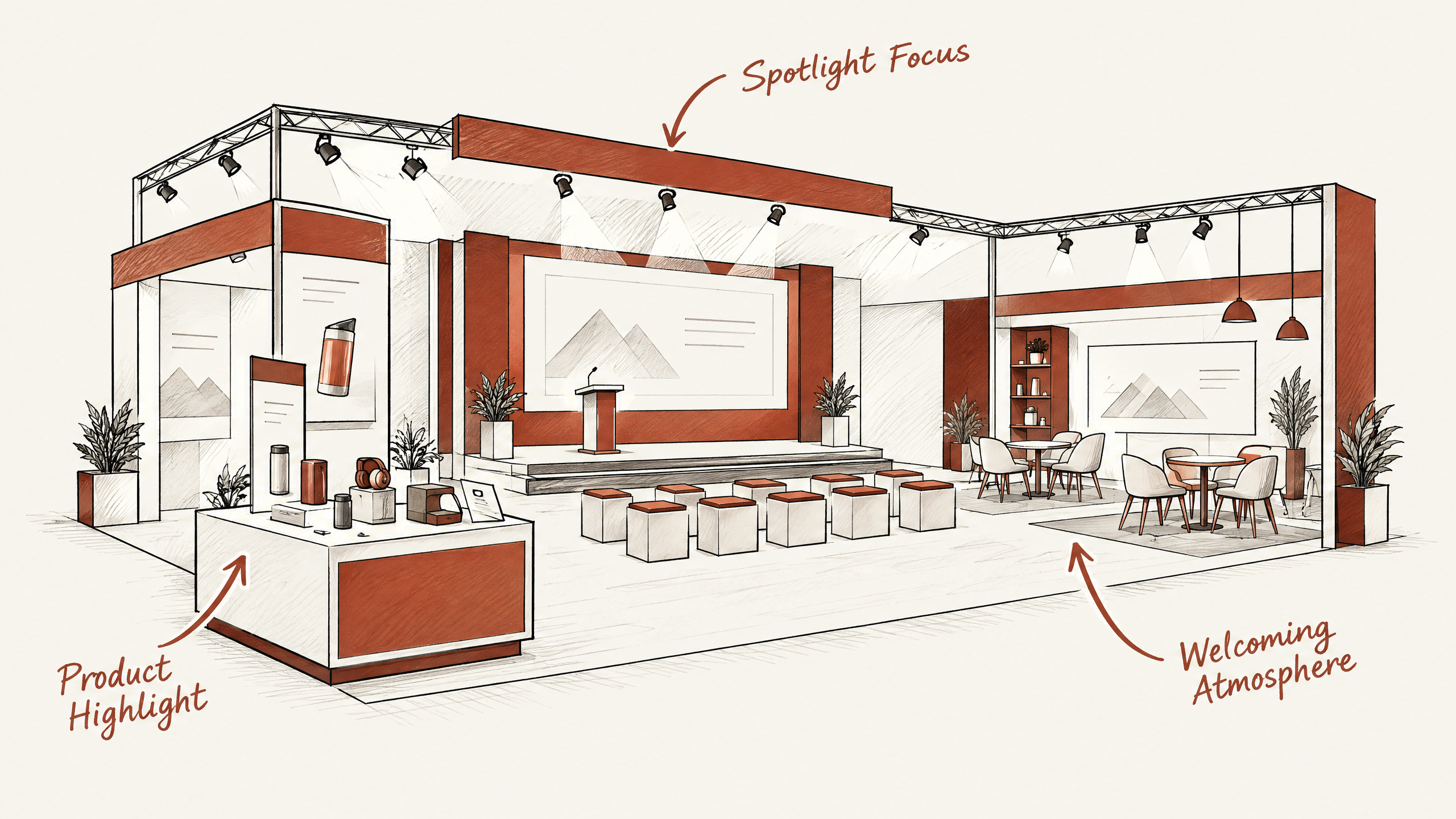
Lighting plays a critical role in creating an inviting atmosphere and directing attendees’ attention to key areas of your booth. Start by analyzing the spaces within your booth that require different lighting types.
For example, accent lighting can highlight specific products, while ambient lighting sets the overall mood.
A well-planned lighting scheme can dramatically impact how visitors experience your booth. Use spotlights to draw focus to new products or important areas, like demo stations.
Ambient lighting, on the other hand, helps create a welcoming environment.
If your booth has an elevated platform or stage for presentations, make sure it’s adequately lit to keep the attention centered where it’s needed most.
Consider the color temperature of your lights, as it influences perception. Warm lighting can make your booth feel cozy and approachable, whereas cool lighting delivers a more modern and professional vibe.
Your selection should align with your brand’s image and the atmosphere you aim to cultivate at the event.
It’s important to test your lighting setup in advance. This will allow you to adjust for any unforeseen factors such as glare or uneven diffusion that might affect the visitors’ experience.
Common pitfalls include overlighting, which can be harsh, and underlighting, which may leave areas looking dull or unwelcoming.
Incorporating programmable lighting effects or displays can add an engaging layer to your booth. They provide dynamic elements that can change the booth’s ambiance throughout the day.
However, keep these effects subtle to avoid overwhelming visitors.
As a rule of thumb, balance is key: your lighting should harmoniously blend with the other elements of your booth, creating a cohesive visual impact.
Final Words
Designing a large trade show booth requires careful attention to detail.
From planning the layout to incorporating modern technology, each step plays a pivotal role in creating a compelling space.
Take the needs of your target audience into account while balancing aesthetics and functionality.
This approach ensures that your trade show booth not only attracts visitors but also serves its purpose efficiently.
Before moving forward, take some time to review all design elements and align them with your overall marketing goals.
By doing so, you can create a booth that is both engaging and strategic.
Whether you’re finalizing interactive areas or refining branding elements, each decision empowers your booth to make a lasting impression.
Reflect on the practical steps presented here and make sure they align with your objectives.
That alignment will help you create a impactful presence at your next trade show.
Need a booth plan?
Turn show goals into a practical exhibit path
Share your footprint, timeline, and priorities. Our team can help shape the booth direction, graphics, and project support.
Keep planning
More exhibit guidance
Keep exploring practical advice on booth planning, marketing, and getting more from your next show.
Tell us about your business, the buyers you want to reach, and what you want to achieve. Whether you need more sales conversations, stronger marketing, or a trade show presence, we’ll help you identify where to focus and what support makes sense. Together, we can shape a practical plan around your priorities, budget, and timeline.
 Lorena G.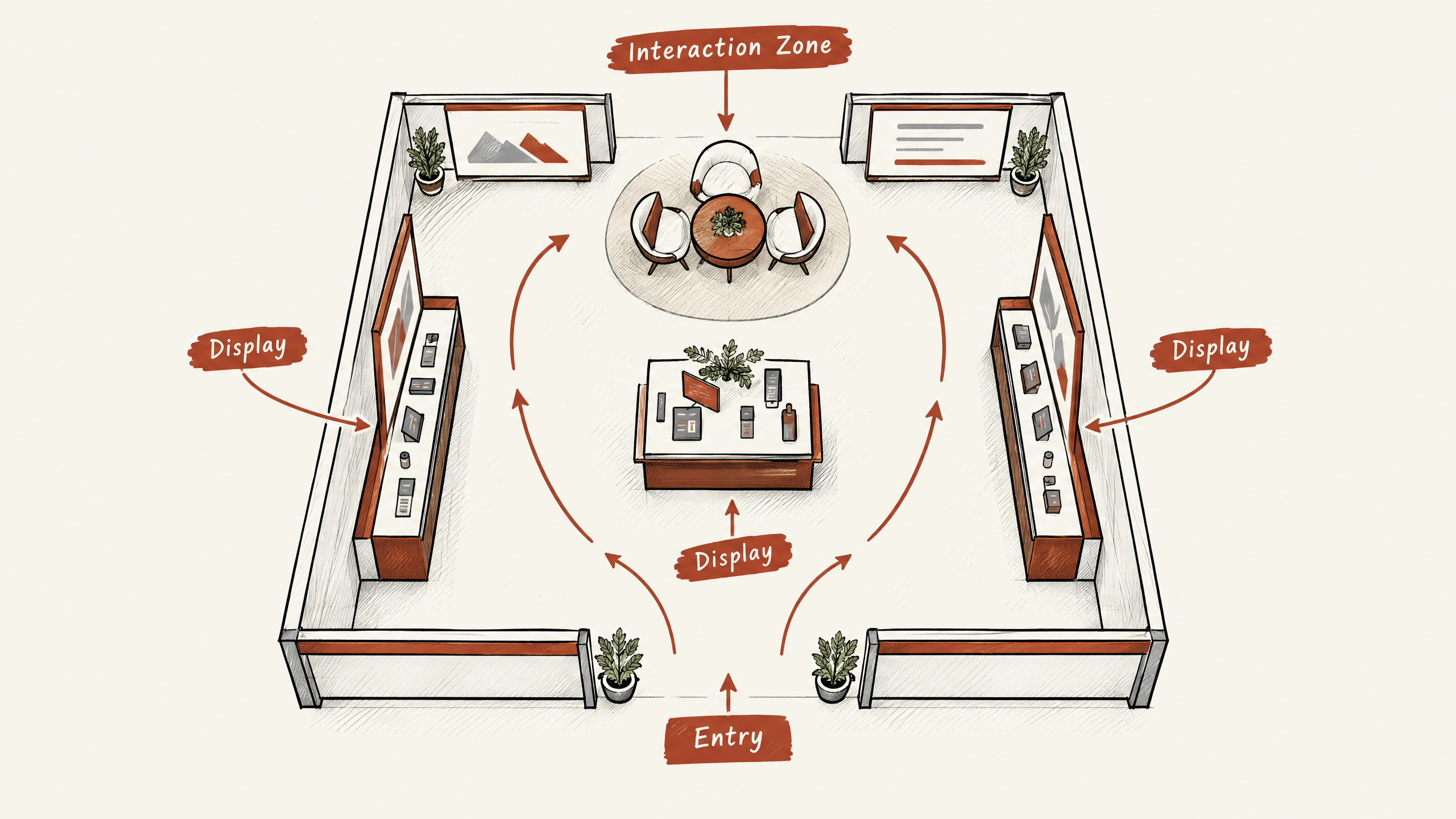
 Louie J.