Planning a trade show booth can be a daunting task, with numerous elements to manage and deadlines to meet.
The process can feel overwhelming, especially when trying to coordinate various aspects smoothly.
However, having a structured production timeline is crucial in transforming your vision into a reality.
From defining your objectives to assigning responsibilities, each step plays a vital role in crafting a successful booth. Missing a single component or failing to keep up with timelines can significantly impact the final result.
I suggest an approach that breaks down these stages, making them more manageable.
Effective planning and clear communication with your team are essential for staying on track.
By thoughtfully developing a timeline, you can navigate potential hurdles before they become problems. It’s about keeping the entire process transparent, allowing every team member to understand their role clearly.
In this article, I will walk you through the seven key steps needed to create an effective booth production timeline.
By the end, you’ll have the confidence to manage every element of your trade show booth with precision and attention to detail.
Key Takeaways:
Establish clear objectives for your trade show booth timeline.
Identify vital tasks and assign responsible team members.
Incorporate buffer times to accommodate unexpected delays.
Leverage technology tools for efficient timeline management.
Regularly review and adjust the timeline as needed.
Now that you know the key steps, it’s time to apply them to your trade show booth planning.
Consider how you will use this timeline with your team.
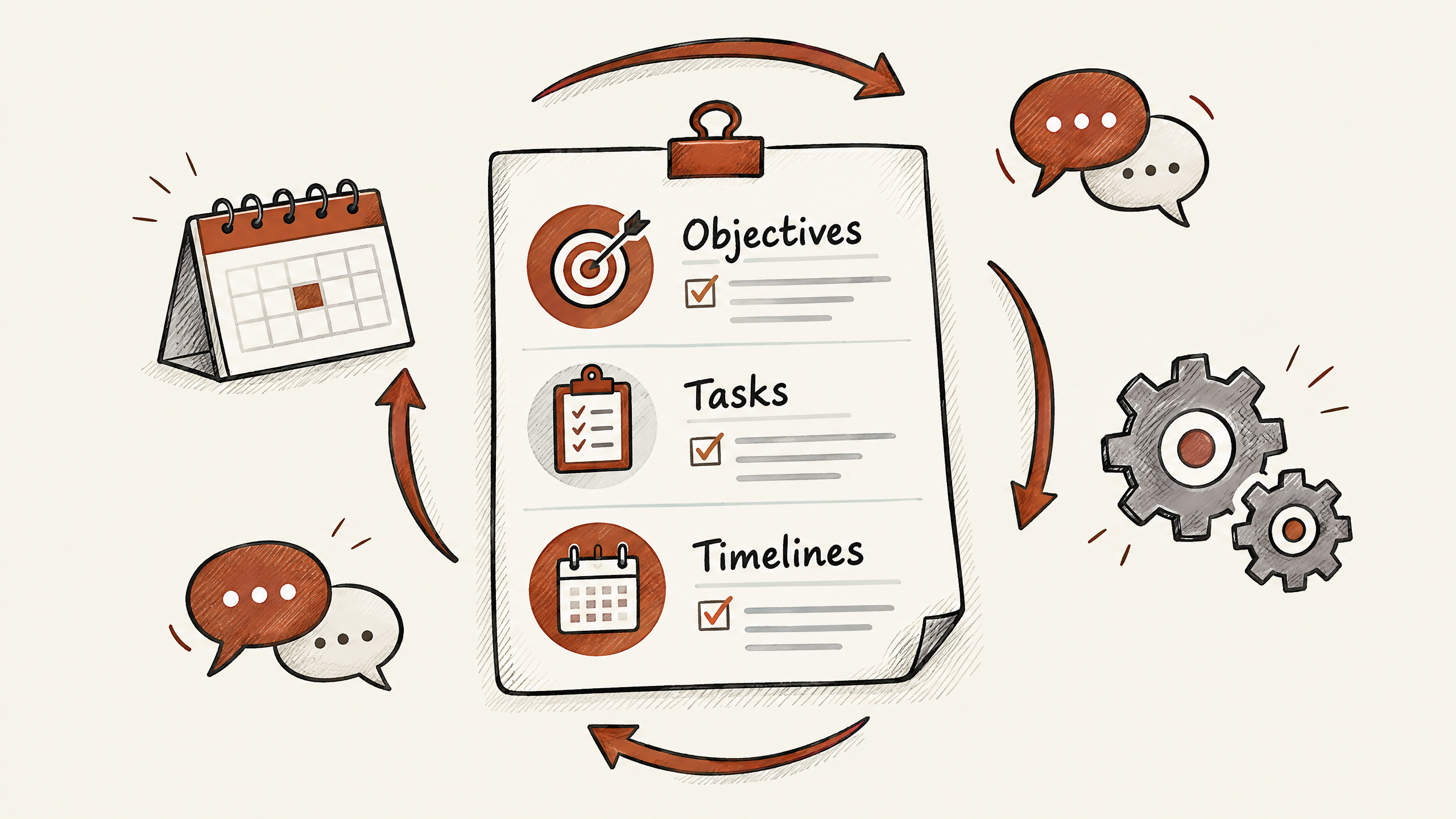
1. Define Your Objectives
Creating a compelling trade show booth starts with a clear understanding of your goals.
Without well-defined objectives, your planning process may lack focus and direction. Whether you’re aiming to generate leads, build brand awareness, or launch a new product, your objectives will shape every decision throughout the planning process.
My first step would be to align your objectives with your broader marketing strategy.
Determine how the trade show fits into your company’s overall goals.
Are you entering a new market or strengthening relationships in an existing one?
Establishing this context will clarify the booth’s purpose and influence its design.
Once you understand the overarching goals, break them down into specific, measurable targets for this event.
Important: Involving key stakeholders in defining your booth objectives is crucial to avoid mismatched expectations and resource waste, ensuring your efforts are effectively coordinated.
For example, aim to acquire a certain number of qualified leads or bookings.
These targets will serve as benchmarks against which you can evaluate your success later.
It’s critical to involve key stakeholders when defining these objectives.
Engage your sales and marketing teams in the discussion to make sure alignment and a shared understanding of what success looks like. A common mistake is to overlook this step, which can lead to mismatched expectations and wasted resources.
In a hypothetical scenario: a B2B software company may set objectives to introduce a new solution to 200 potential leads, aiming for follow-up meetings with at least 30% of them. Specific goals like these guide both design and engagement strategies for the booth, ensuring all team efforts are effectively coordinated.
2. Outline Key Deliverables
Once you’ve defined your trade show objectives, the next step is to clearly outline the key deliverables required to bring your booth vision to life.
These deliverables include every tangible and intangible component involved in your exhibit.
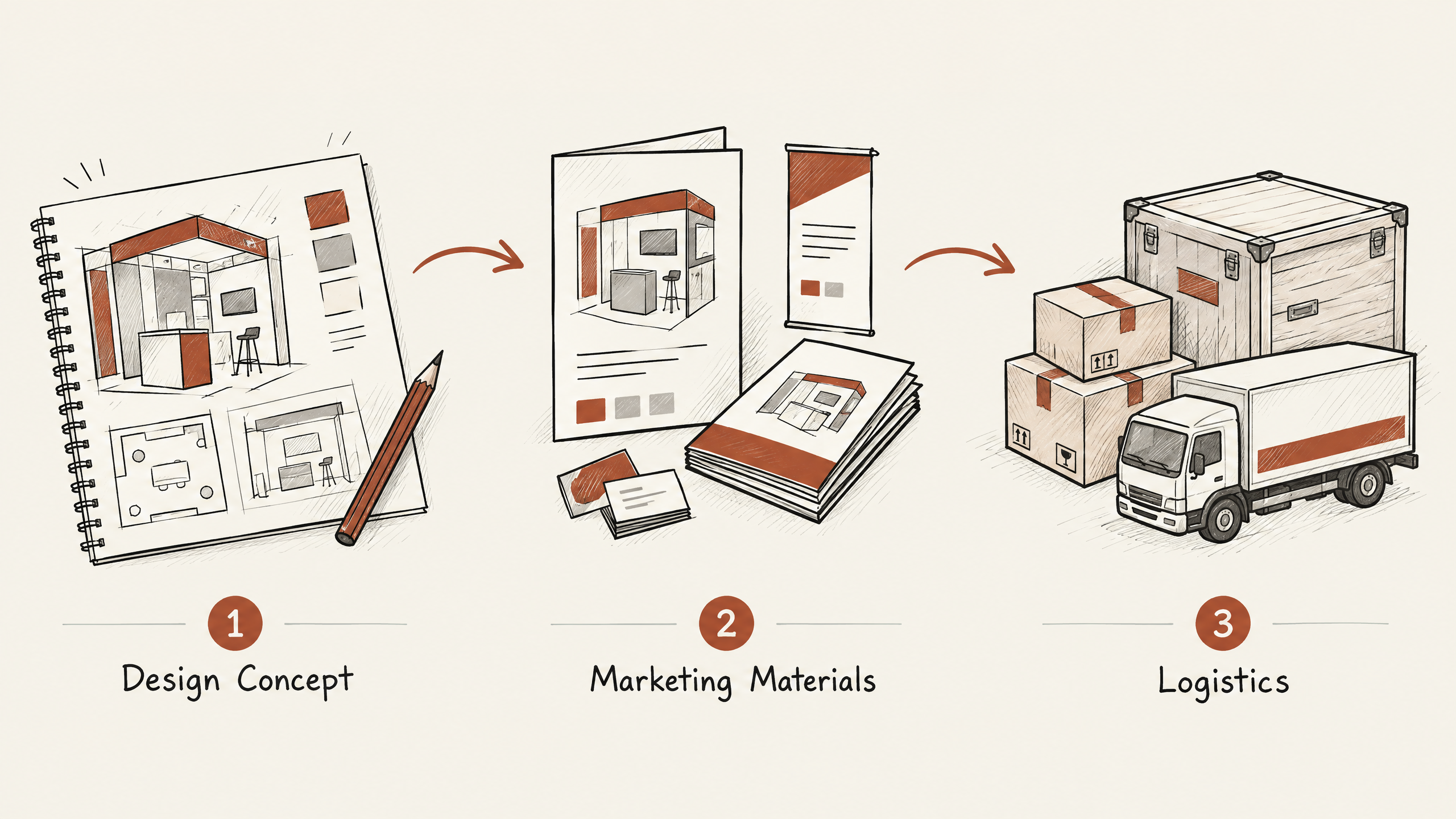
For instance, you need to detail aspects such as booth design, marketing materials, logistics, and staffing.
Being specific about each deliverable helps guide your team and simplify planning.
To get started, list major deliverables like the design concept, build materials, lighting, and interactive elements. Include marketing deliverables such as brochures or digital presentations.
It’s crucial to also think about logistics: booth transport, installation, and dismantling should each be tracked as separate deliverables. By documenting each one, you can establish a clear production timeline and identify dependencies between tasks, which aids in avoiding bottlenecks.
Creating a checklist can further help you track these deliverables.
For instance, you might create a list that includes: design approval, material procurement, graphic printing, and any digital content needed separately. Assign deadlines and review who owns each deliverable.
This approach encourages accountability and ensures all team members understand their roles. In this hypothetical example, assume your trade show is six months away.
Each deliverable should be plotted on your timeline with the final two weeks dedicated to logistics preparation.
One common mistake is underestimating the complexity of deliverables. This can lead to rushed decisions and low-quality output.
Instead, invest time upfront to thoroughly plan each component.
This helps maintain quality and mitigate risk.
Remember, Exhibitant can assist with booth design and execution as needed.
Outlining deliverables effectively sets a strong foundation for the entire project, enabling smoother coordination and execution.
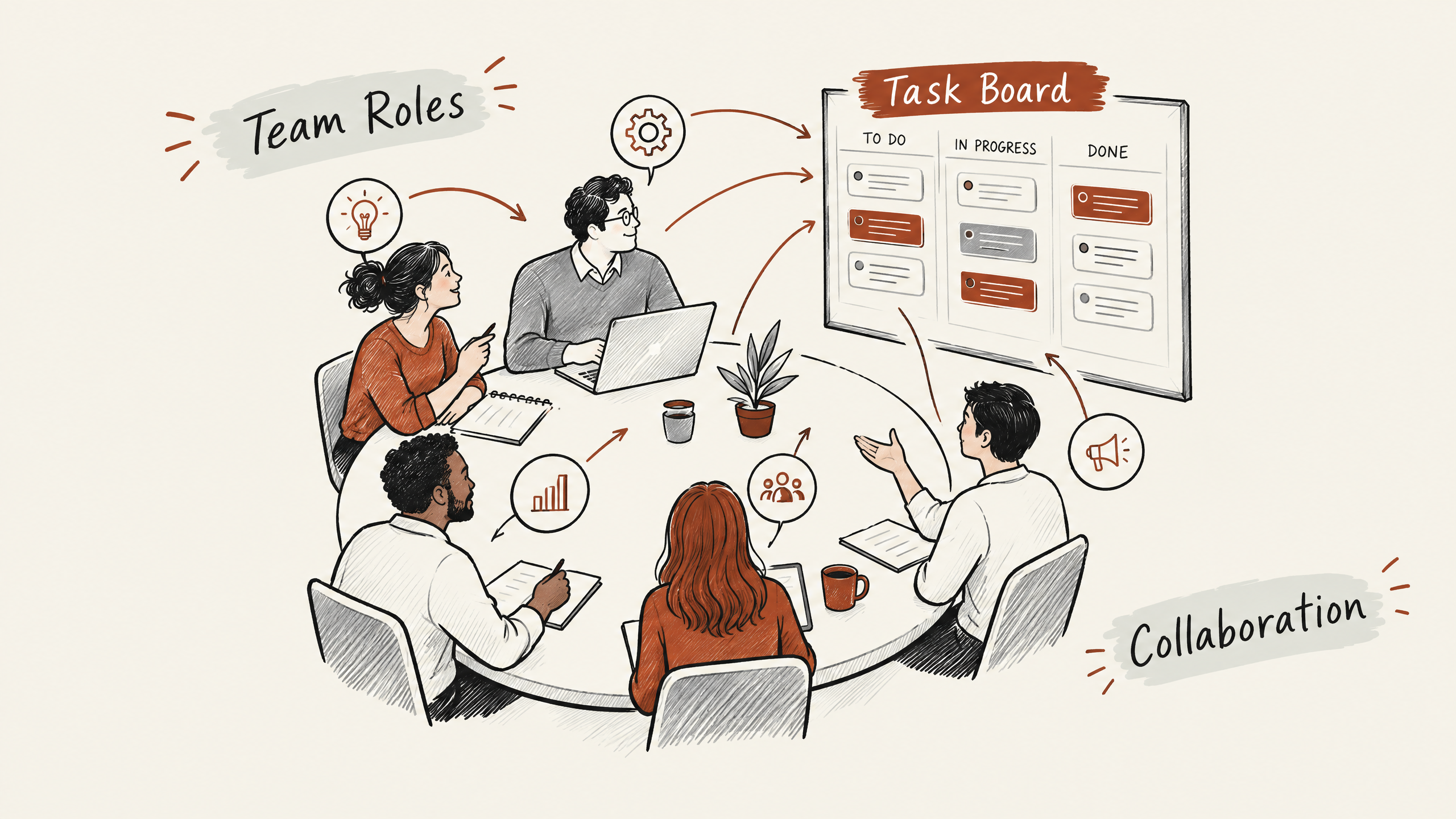
3. Assign Responsibilities
Once you’ve established your trade show’s objectives and deliverables, the next step is to assign specific responsibilities to your team members. This task is crucial because it ensures everyone knows their role, what is expected of them, and helps maintain accountability throughout the project.
Clearly defined roles prevent overlaps in duties, which often lead to confusion and delays.
Allocating tasks can also highlight if additional resources or expertise are needed.
Start by evaluating your team’s strengths and expertise.
Match tasks to individual team members who have relevant experience.
For example, if creating booth graphics is on your list, assign this to someone with strong design skills.
A well-aligned team not only improves efficiency but also contributes to higher-quality outcomes.
Be clear about deadlines and the level of responsibility each person holds.
Creating a simple responsibility matrix can help you visualize task assignments across different project phases.
Here’s how to structure it:
Task Description: Clearly outline what needs to be done.
Responsible Party: Assign a team member in charge of each task.
Supporting Members: Identify other team members who will assist.
Deadline: Specify when the task should be completed.
One common mistake in this process is the assumption that everyone understands their roles and deadlines without explicit communication.
Avoid this pitfall by having a kickoff meeting where every member can discuss their assignments and clarify any uncertainties.
Regular check-ins can help manage progress and address any roadblocks timely.
With roles clearly defined, your team will be equipped to execute the booth production timeline efficiently.
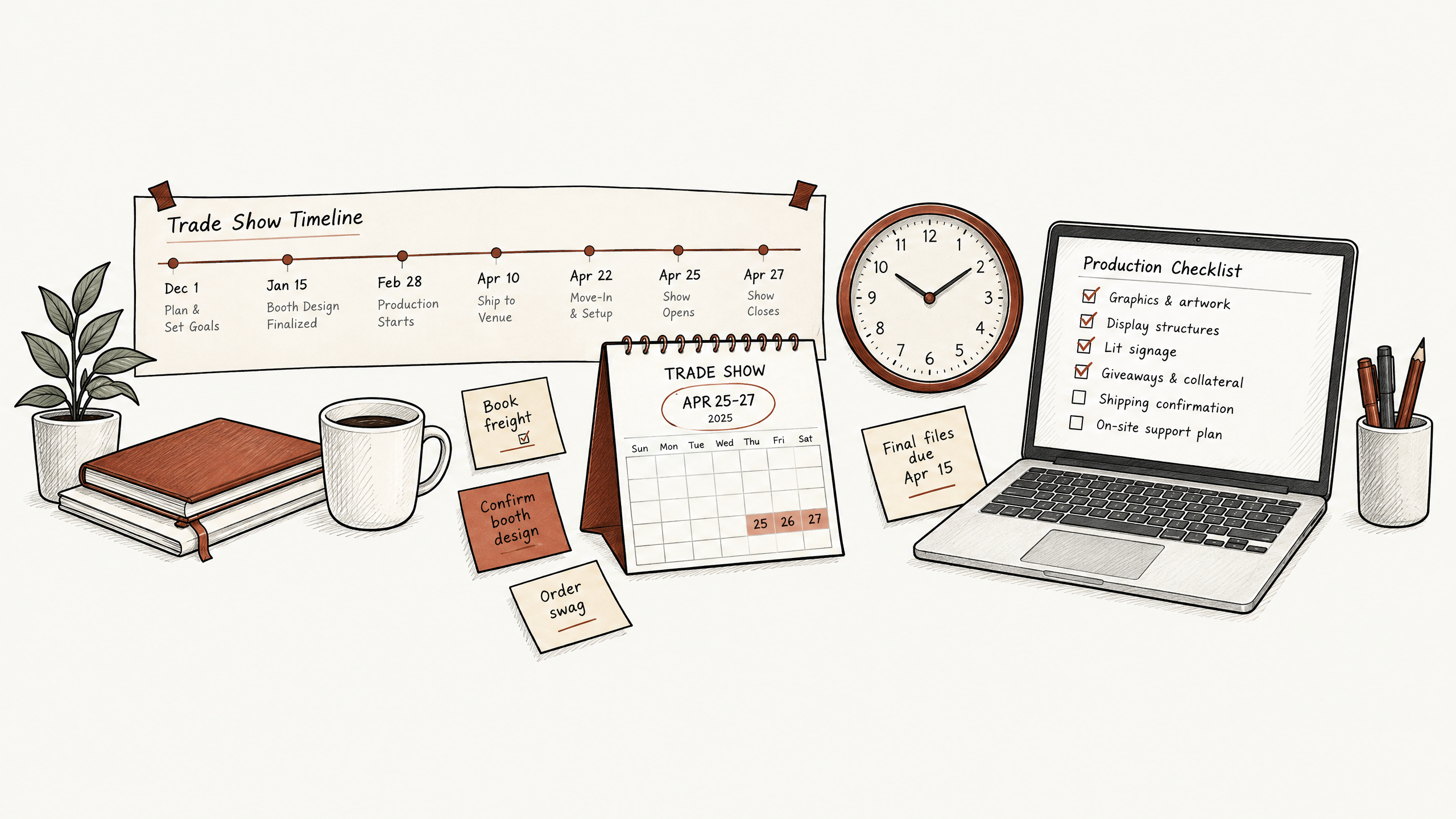
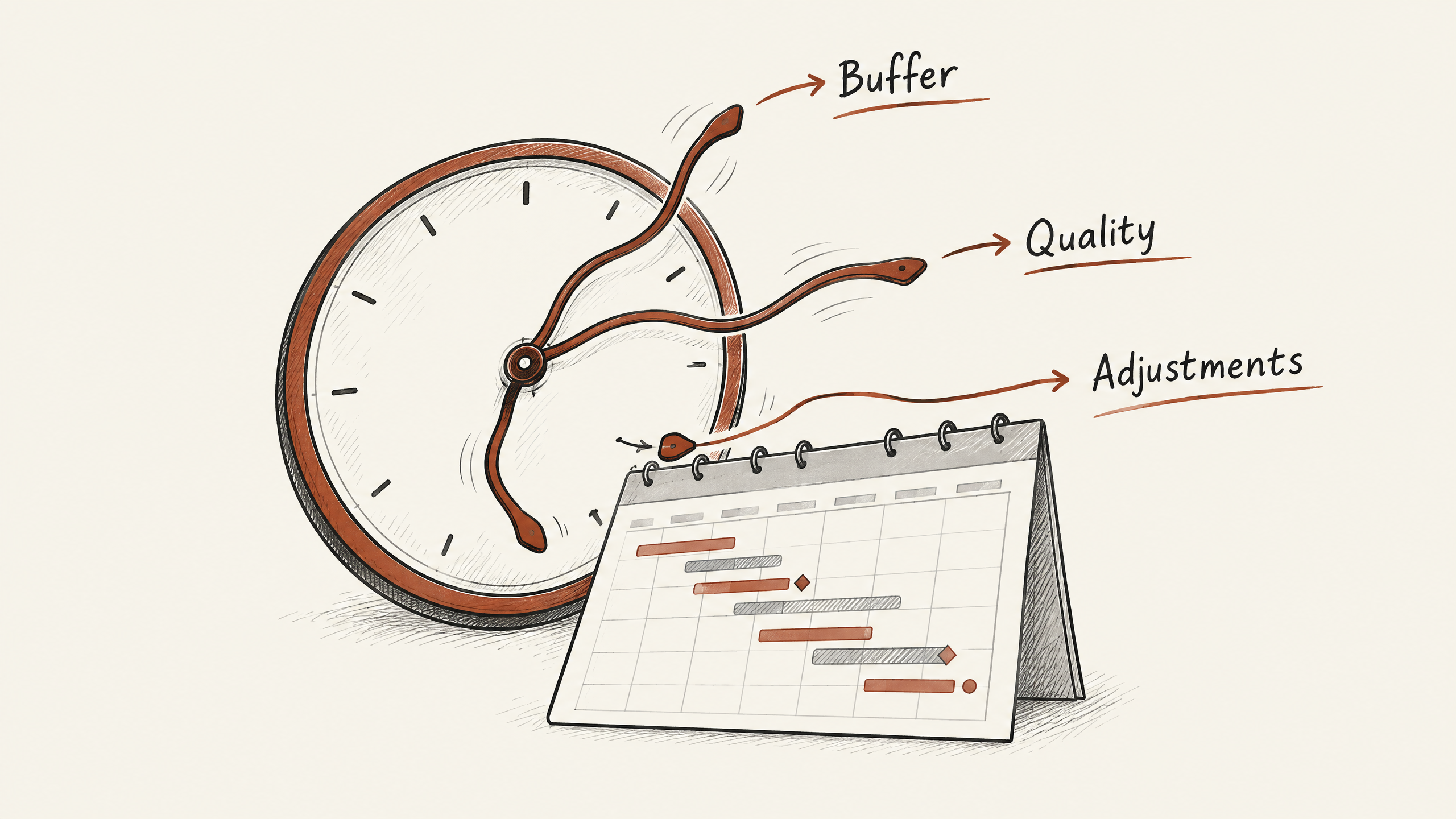
4. Incorporate Buffer Times
When creating a trade show booth production timeline, it’s crucial to incorporate buffer times.
These are extra days or hours built into the schedule to handle unexpected delays like shipping hold-ups or last-minute changes in design. By adding this padding, teams can stay on track and reduce stress, instead of scrambling to catch up when the unforeseen occurs.
In my experience, incorporating at least 10% of the total timeline as buffer time can offer enough leeway.
Suppose your project duration is 10 weeks try adding one week as a buffer.
This practical cushion can smooth out production phases and offer breathing room for revisions.
Buffer times allow you and your team to focus on quality, not just speed, ensuring that decisions and changes can be made thoughtfully.
Do note, however, that overuse of buffer times can lead to inefficiencies. If there’s too much slack, teams may lose the urgency that motivates them.
The objective is to find a balance where buffer times offer a contingency, not an excuse for slow progress.
Engaging in Exhibitant‘s exhibit support services helps align your goals with a realistic timeline, granting peace of mind as important deadlines approach.
A simple checklist to keep in mind when planning your buffer times includes:
Identify stages in the process prone to delays.
Estimate a reasonable buffer based on past experiences.
Communicate these buffers clearly within your team.
Review buffer usage regularly and adjust as needed.
By strategically incorporating buffer times, you create a more resilient timeline and safeguard the project’s success.
5. Use Technology Tools
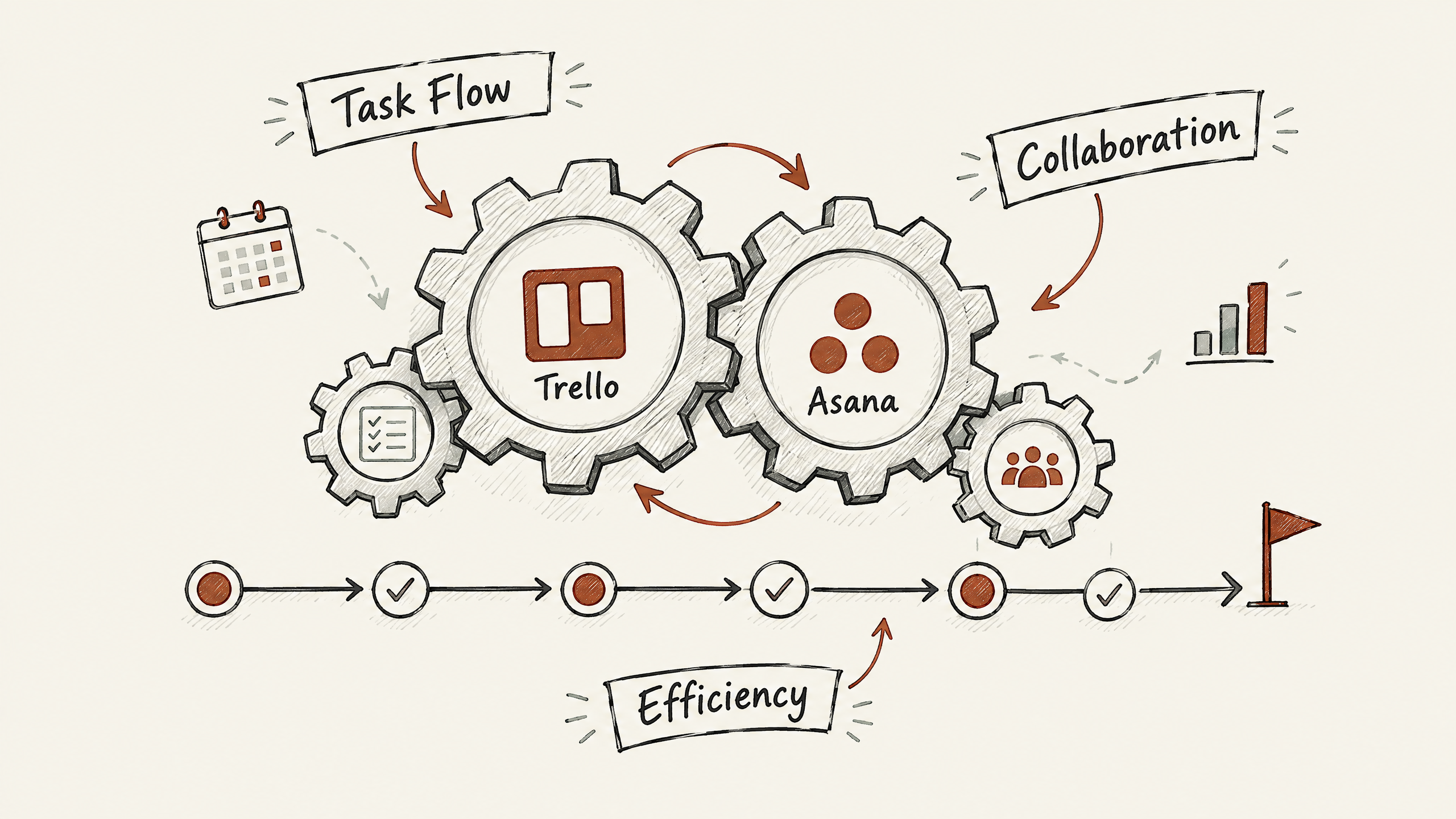
One of the most effective ways to simplify your booth production timeline is by leveraging technology tools.
From project management software to design applications, the right tools can enhance collaboration and increase efficiency.
It’s essential to identify which platforms align with your team’s workflow and objectives. This choice will help manage tasks, track progress, and make sure everyone stays informed.
Project management tools like Trello or Asana can be invaluable for tracking deliverables and deadlines.
By creating boards or lists for various stages of production, you can visualize the timeline and identify any bottlenecks.
Additionally, these tools allow team members to assign tasks, set due dates, and provide updates in real-time.
For the creative aspects of your booth, software like Adobe Creative Cloud or Sketch offers solid features for designing graphics and layouts.
These tools help produce high-quality materials that reflect your brand’s identity.
Pro Tip: To simplify your booth production timeline, integrate project management tools like Trello or Asana to track tasks, deadlines, and collaborate efficiently with your team.
When used collaboratively, team members can easily share and edit files, avoiding miscommunications and version control issues.
Implementing technology tools requires thoughtful integration into your existing processes.
It’s important to provide training and support so that everyone on the team can use the tools effectively.
Consider the learning curve for each tool and plan for any necessary onboarding sessions to make sure smooth adoption.
A potential tradeoff when adopting new technology is the upfront time and cost associated with learning new software.
Weigh this against the long-term benefits of increased productivity and improved collaboration. By carefully selecting and integrating the right tools, you can create a more organized and efficient booth production timeline.
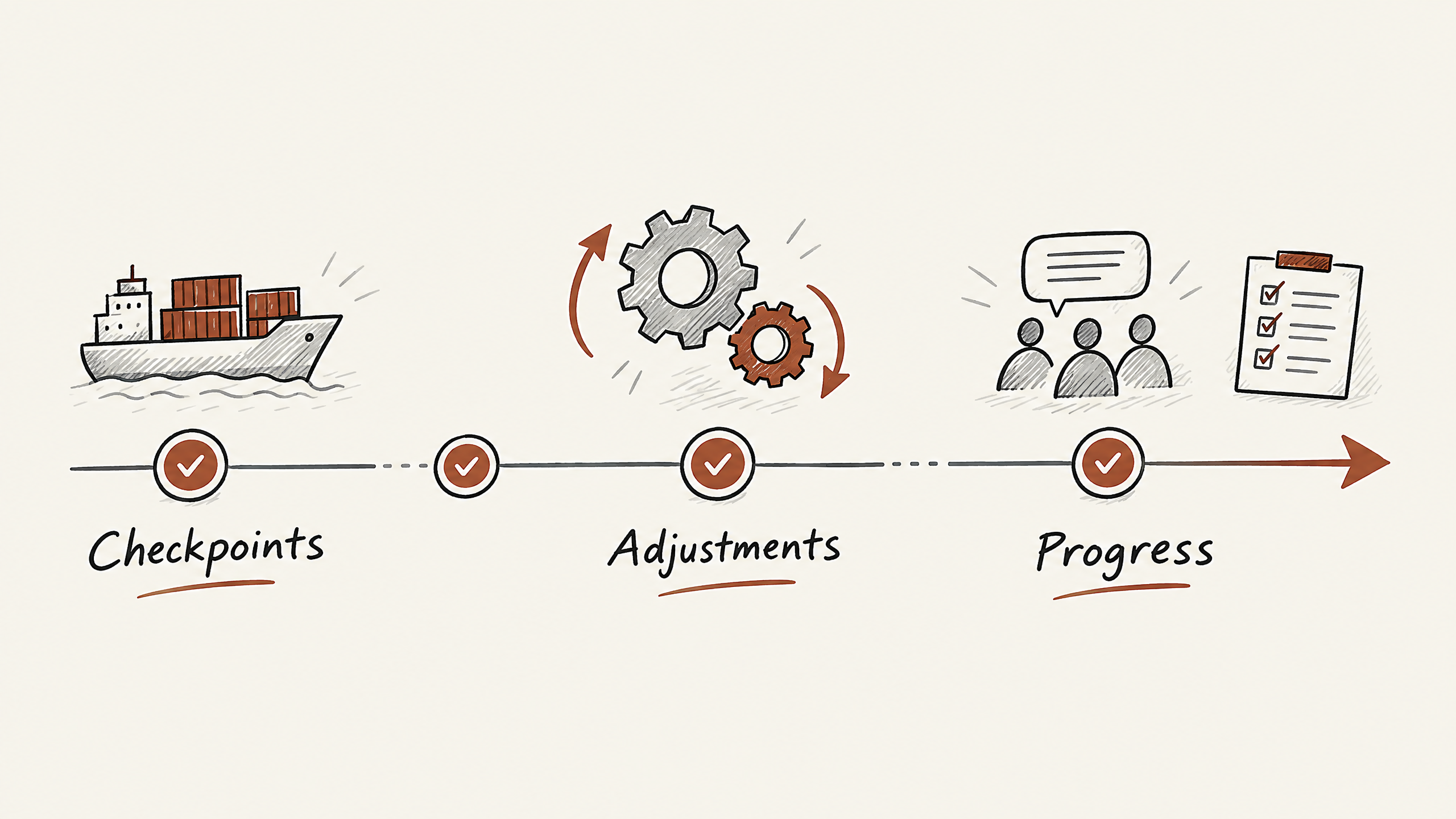
6. Regularly Review and Adjust
Building a trade show booth is a dynamic process that requires ongoing oversight. By regularly reviewing your progress, you can identify potential bottlenecks before they become issues.
Begin by setting periodic checkpoints within your timeline.
These should be aligned with key milestones. At each checkpoint, evaluate whether current tasks are on track and if any adjustments are necessary.
When a task appears delayed, assess the cause and its potential impact on subsequent tasks.
A delay in shipping materials, for instance, might require reallocating resources to other tasks temporarily. Prioritize urgent issues while keeping long-term objectives in sight.
Regular reviews will not only keep the project on pace but also help the team to make informed decisions in real-time.
A practical example: If you’re three weeks into the production phase and the feedback on initial booth graphics indicates major changes are needed, immediate action is critical. Revising the artwork promptly and maintaining communication with designers and printers will help minimize additional delays.
While it might seem like a hassle to adjust plans, this proactive approach will save time and stress in the long run.
Important: You should regularly review your trade show booth progress to identify potential bottlenecks early, allowing you to make informed adjustments and keep your project on track.
Regular adjustments aid in maintaining flexibility.
Use a project management tool to log issues and amendments.
This provides a clear snapshot during review meetings and keeps everyone informed.
In essence, regularly reviewing and adjusting ensures your booth production timeline remains effective, adaptable, and resilient to unforeseen challenges.
7. Communicate with Stakeholders
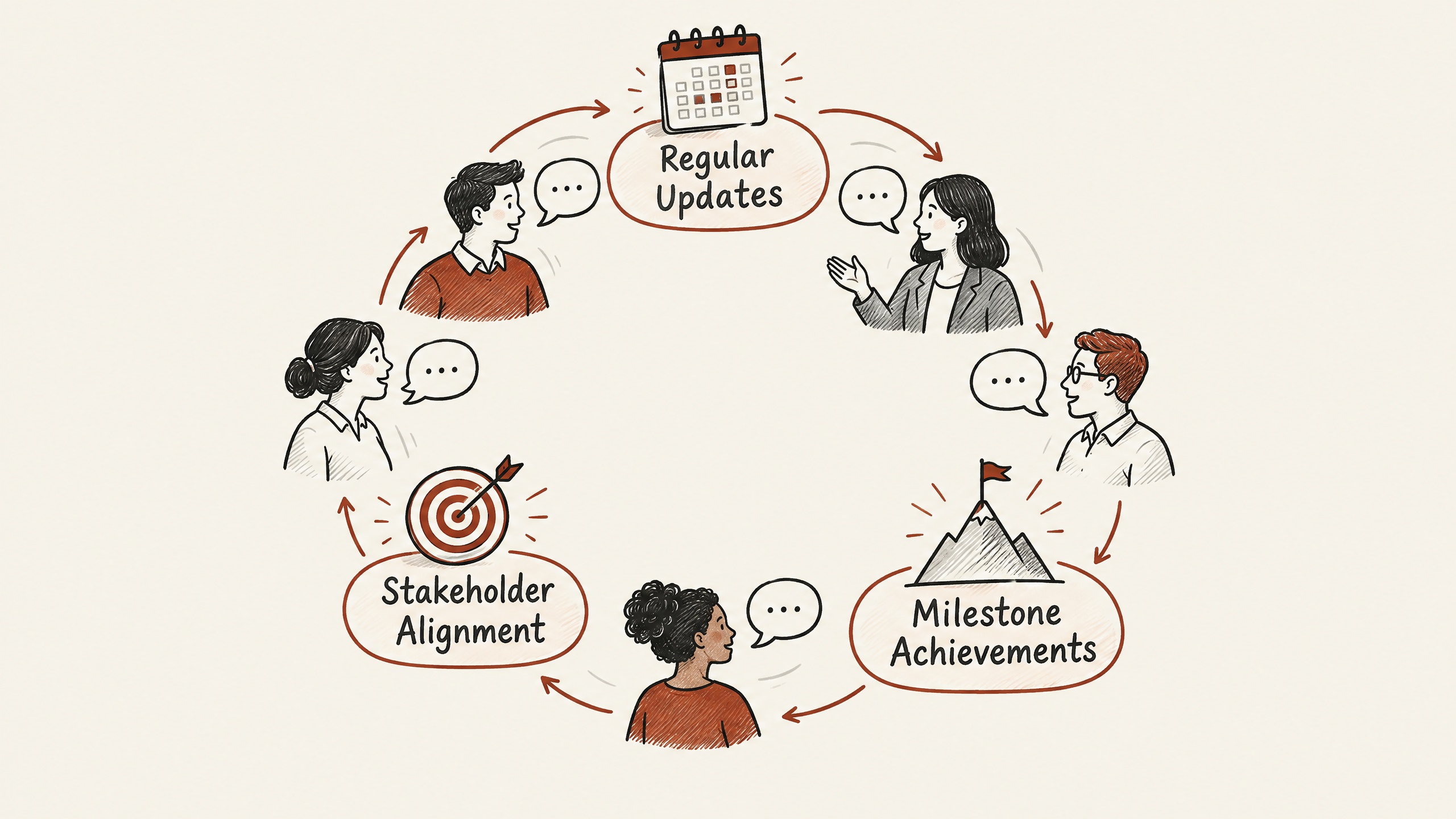
After setting up your trade show booth production timeline, you must keep all stakeholders informed about progress and potential changes.
From internal team members to external partners involved in the project, a clear line of communication is vital.
Regular updates not only keep everyone aligned but also allow you to address concerns proactively.
Set a regular meeting or communication schedule to provide updates on key developments.
These can be weekly or bi-weekly, depending on the project’s complexity and timeline.
Be sure to include milestone achievements and any adjustments. This consistency ensures transparency and maintains trust among all parties involved.
Using a centralized communication platform can help track conversations and centralize information.
Tools like Slack or Microsoft Teams can facilitate quick updates and make it easier for your team to access vital information.
Such platforms also encourage real-time feedback, which can help you address any emerging issues immediately.
While digital tools are effective, don’t underestimate the impact of face-to-face meetings for more comprehensive discussions.
Scheduling strategic in-person sessions (if feasible) can enhance understanding and foster stronger relationships.
This human touch is particularly useful for aligning on complex deliverables or resolving any conflicts.
A common mistake is to assume that stakeholders have retained all the information from previous discussions. Use follow-up emails or meeting notes to summarize what was discussed, decisions made, and next steps.
This practice ensures everyone is on the same page and can refer back to these documents anytime.
Before You Go
Reflecting on these steps, you’ll see just how critical careful planning is to your trade show booth’s success.
By now, you should have a firm grasp on how to set clear objectives, assign tasks, and manage timelines. With your objectives defined, responsibilities allocated, and buffers included, you’re well-prepared to handle any challenges that might arise.
As you wrap up your preparation, remember to keep communication lines open with your team and stakeholders.
Ensuring everyone is on the same page will facilitate a smooth workflow.
Revisit your timeline periodically, adjusting it as needed to accommodate any unexpected changes or new opportunities. Keeping all these elements in check will significantly boost your trade show presence.
Your next step is to integrate these guidelines into your booth planning process.
Doing so will not just meet your immediate goals but also set a framework for future trade shows.
A well-constructed timeline improves efficiency, collaboration, and results, making your trade show a more effective investment for the business.
With this foundation, you’re poised for success in your upcoming events.
Need a booth plan?
Turn show goals into a practical exhibit path
Share your footprint, timeline, and priorities. Our team can help shape the booth direction, graphics, and project support.
Keep planning
More exhibit guidance
Keep exploring practical advice on booth planning, marketing, and getting more from your next show.
Tell us about your business, the buyers you want to reach, and what you want to achieve. Whether you need more sales conversations, stronger marketing, or a trade show presence, we’ll help you identify where to focus and what support makes sense. Together, we can shape a practical plan around your priorities, budget, and timeline.
 Louie J.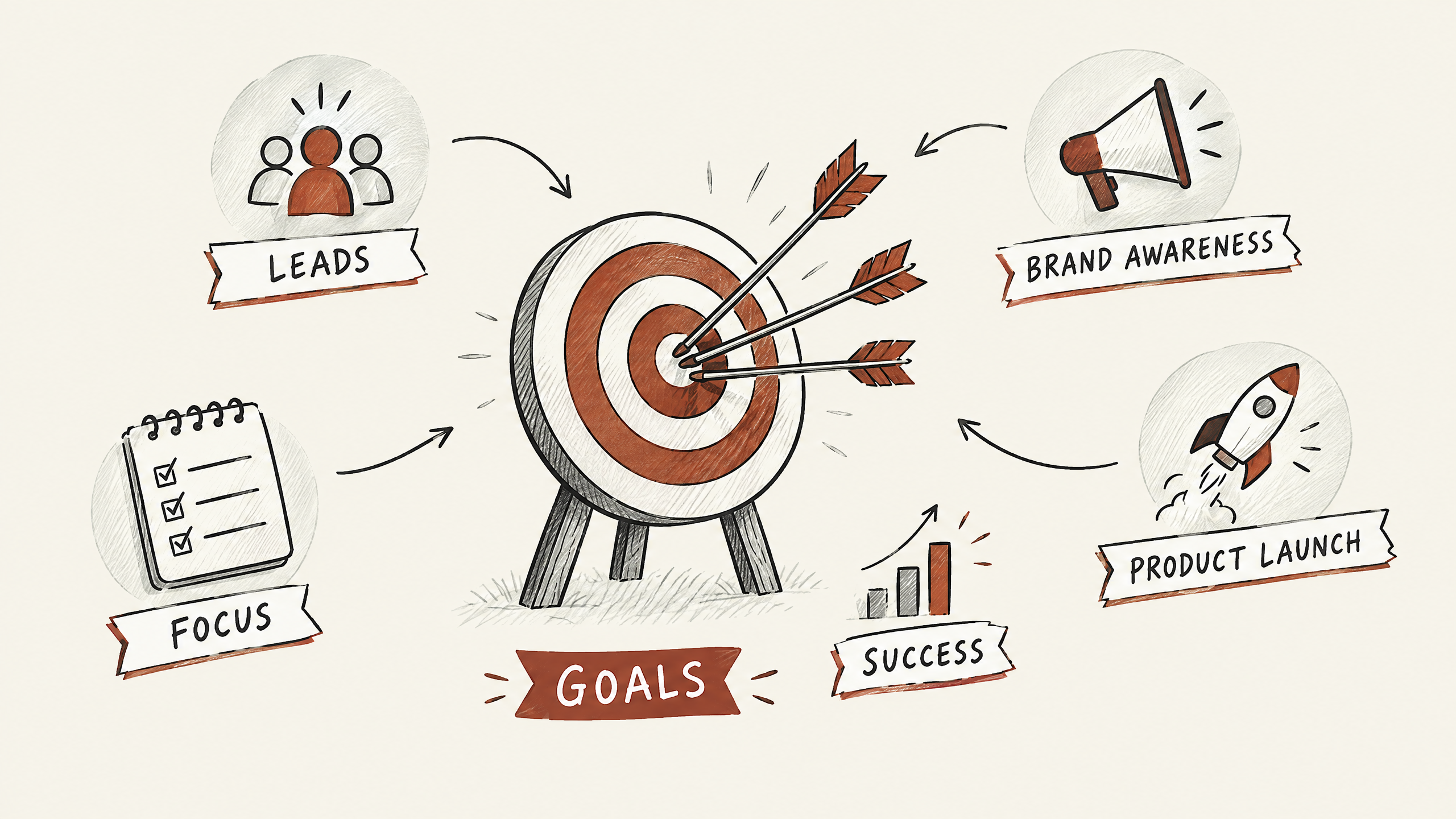
 Lorena G.