 Lorena G.
Navigating the complexities of trade show logistics can be quite a challenge, especially when it comes to understanding drayage costs.
If you’ve ever been surprised by your bill after a show, you’re not alone.
Drayage, or the handling of exhibit materials from the dock to the booth, is a major player in your logistics budget.
To tackle these costs effectively, you need a solid grasp of the factors that influence drayage expenses.
Venue-specific regulations, packing, timing, and vendor negotiations can all impact your bottom line.
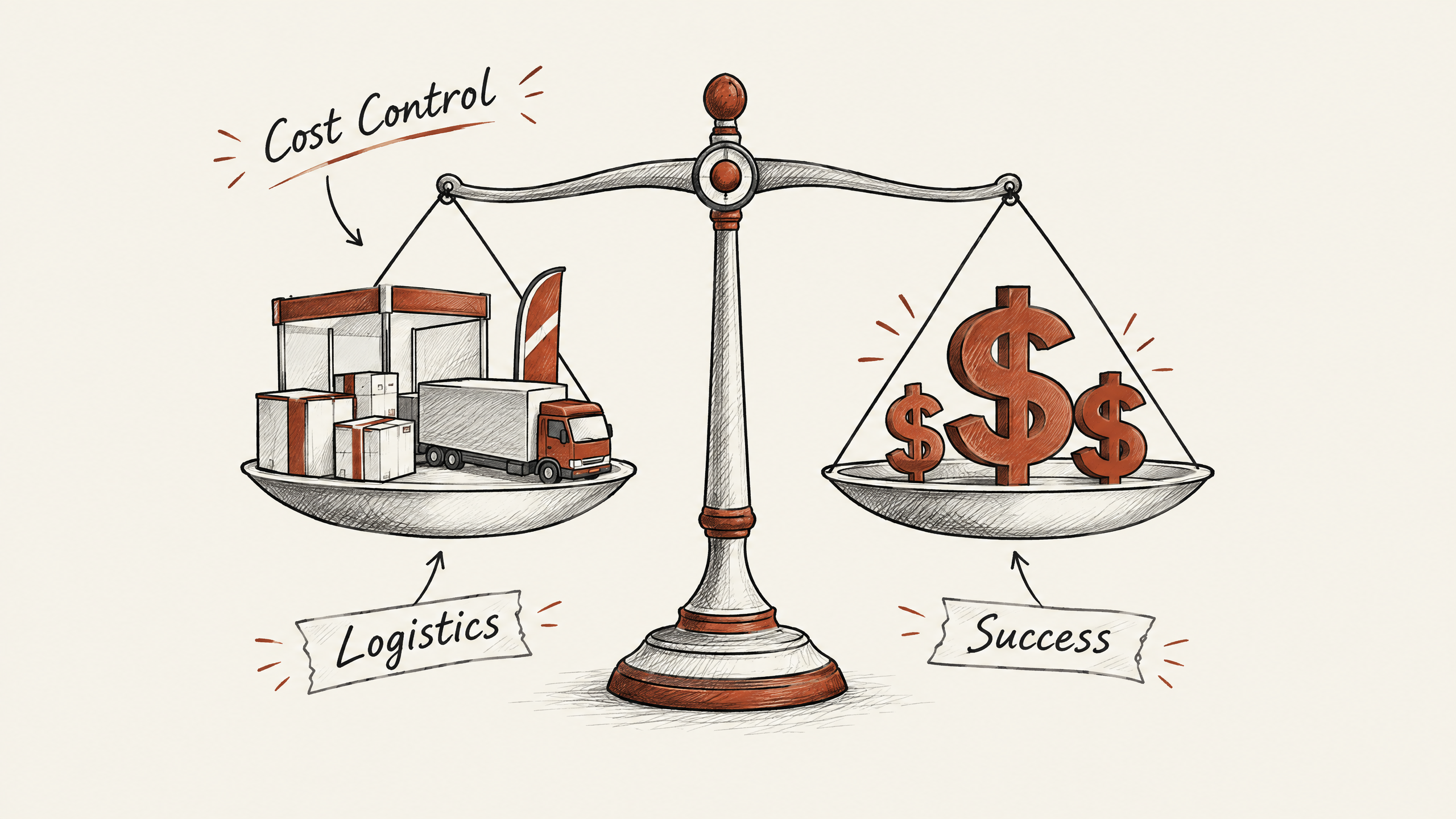
Each of these areas offers opportunities to manage your expenses more efficiently, and in turn, contribute to a more successful event.
Incorporating specific strategies around these factors can help you navigate the often convoluted logistics landscape.
By understanding the unique characteristics of each venue and fine-tuning how you prepare and ship your materials, your team can potentially reduce unexpected costs and logistical headaches.
After reading this article, you’ll be equipped with practical insights and actionable strategies to effectively manage and potentially lower your trade show drayage costs.
From venue rules to contract negotiations, you’ll be better prepared to make informed decisions that align with your event objectives.
- Review venue regulations to anticipate specific drayage fees.
- Prioritize efficient packing to minimize weight and volume costs.
- Schedule timely shipments to avoid premium charges.
- Negotiate contracts early to lock in favorable rates.
- Utilize experienced vendors for streamlined operations.
Look closely at these factors to manage your trade show drayage costs more effectively.
This careful planning can greatly impact your budget and overall success.
1. Understanding Venue-Specific Regulations
When preparing for a trade show, grasping the venue-specific regulations can significantly impact your drayage costs.
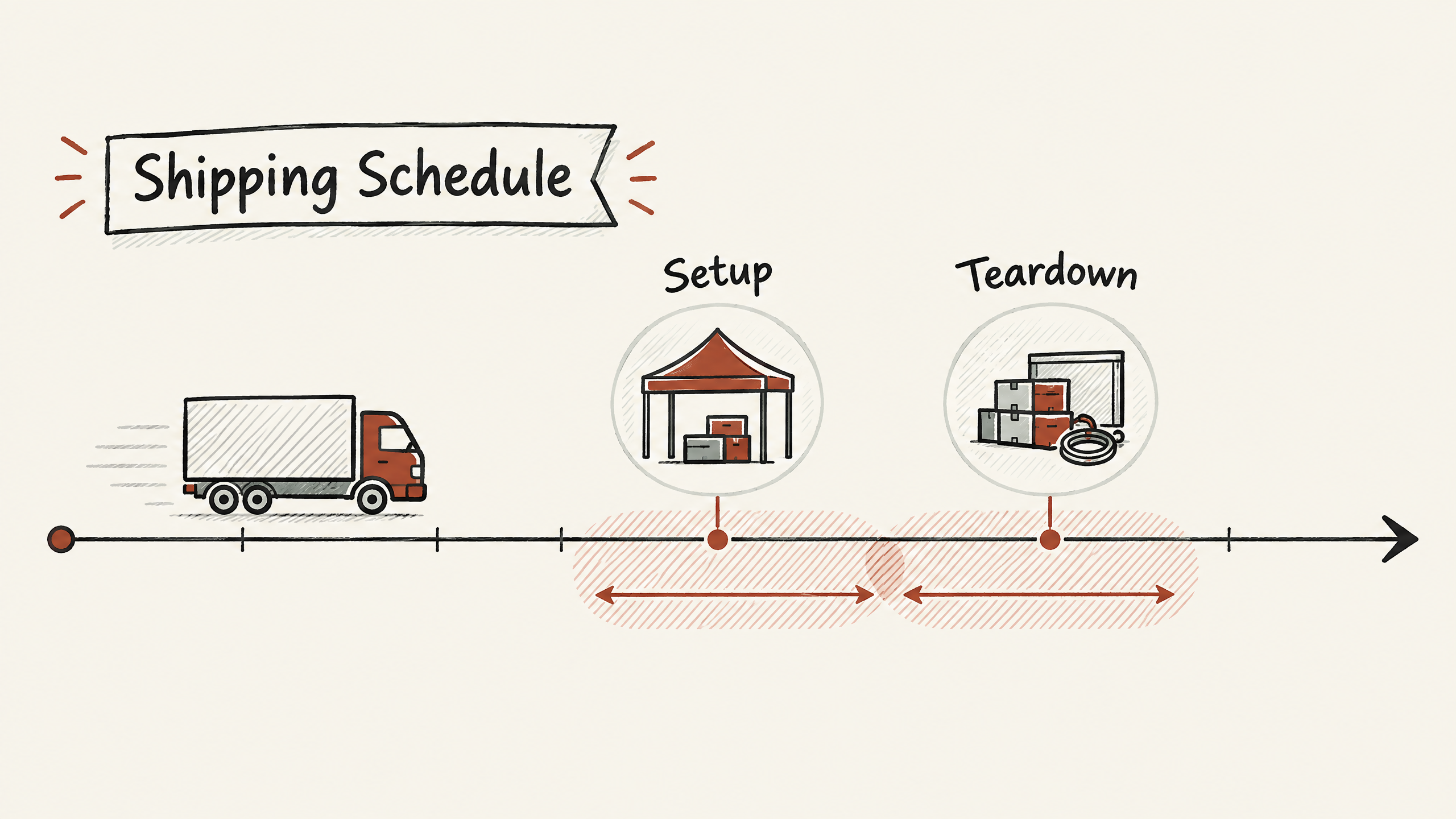
Every venue has its own set of guidelines that you must follow. These regulations can affect how your materials are handled, what equipment you can use, and the time frames for setup and teardown.
Understanding these rules can help you avoid unnecessary expenses and make sure a smooth process.
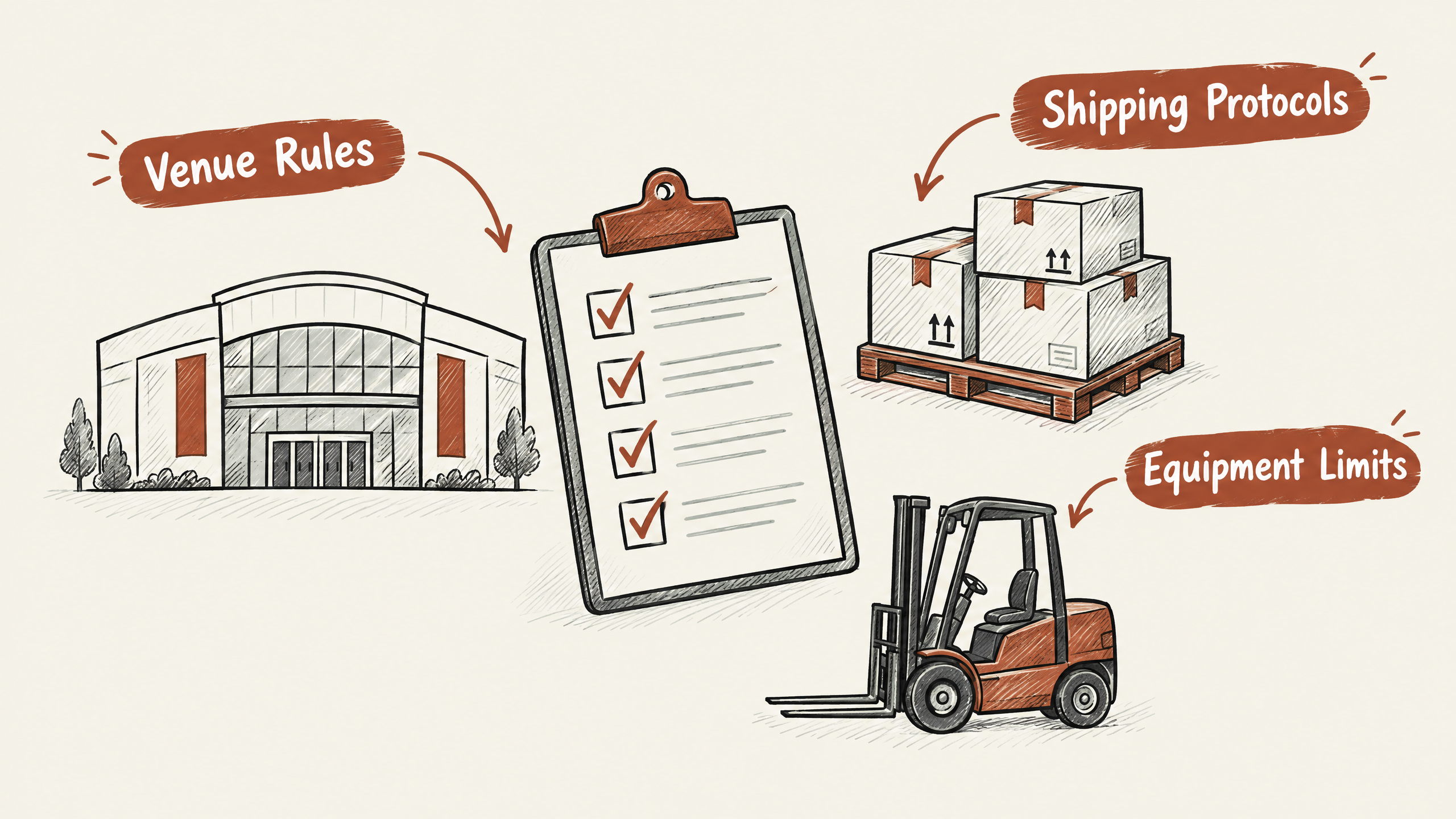
Start by reviewing the exhibitor manual provided by the trade show organizers. This document usually includes critical information about shipping and handling protocols, weight limits, and any specific restrictions on materials or equipment.
For example, some venues have restrictions on the use of certain types of forklifts or equipment, which could affect how you manage your shipments.
Becoming familiar with these restrictions in advance allows your team to plan accordingly and avoid costly surprises.
Failing to comply with venue rules can lead to unexpected fees.
For instance, if your shipment exceeds the weight limit without prior notification, you might incur extra charges or delays in delivery.
Venues can also impose penalties if your materials extend beyond permitted boundaries or occupy unauthorized spaces. It is essential to confirm all measurements and capacities beforehand to avoid these issues.
A common mistake is underestimating the dimensions of oversized materials which can lead to space constraints and additional costs.
Additionally, establish a point of contact with the venue’s logistics team.
This can be invaluable when addressing specific questions or clarifications about the rules.
Direct communication can lead to clearer understanding and quicker resolutions if any challenges arise.
Having this relationship in place can also facilitate smoother interactions on the day of the event, reducing stress and ensuring compliance.
Effectively navigating venue-specific regulations can have a positive impact on your bottom line by minimizing unnecessary costs and ensuring compliance with all necessary guidelines.
This preparation is an essential first step in managing your trade show drayage effectively.
2. Optimizing Packing and Crating
When it comes to trade show logistics, how you pack and crate your exhibit materials plays a crucial role in controlling costs. An ineffective packing strategy can lead to increased drayage fees, potential damage, and expensive rush shipments.
To make sure cost efficiency, focus on both consolidation and protection of your materials.
Consolidation is key because fewer, well-packed crates require less handling and storage space.
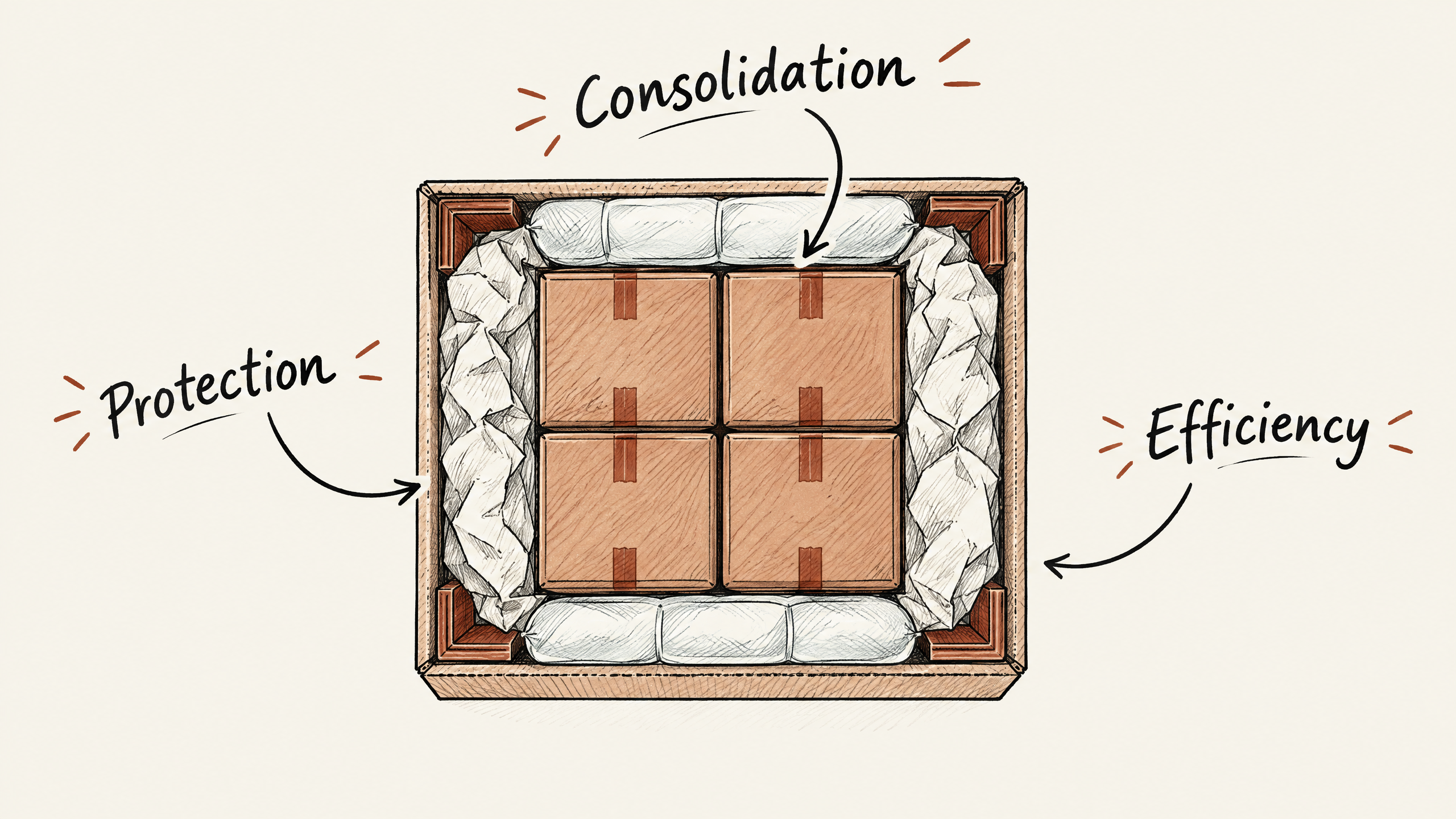
This reduces overall drayage fees.
Try to pack items tightly within containers and avoid overpacking with excessive materials. Use customized crates that precisely fit your products, which can help reduce the total volume and weight.
Protection of your materials is equally important. Well-protected items are less likely to suffer damage, reducing unexpected repair costs or the need for last-minute replacements.
Use appropriate packing materials like bubble wrap, foam padding, and corner protectors to safeguard your display items. Proper labeling also matters: indicating “fragile” and “this side up” guides handlers on how to treat your packages.
Important: Packing your trade show materials efficiently with customized crates and appropriate protection significantly reduces costs related to drayage, damage, and last-minute shipping.
One practical approach is to create an inventory checklist of all items being shipped and categorize them based on fragility and weight.
This helps in deciding what kind of materials are necessary for each type of item.
By planning your packing with precision, you’ll avoid common mistakes like overpacking or overlooking protection, which can lead to higher costs and unnecessary delays.
For best results, engage with professionals who specialize in packing and crating for trade shows. At Exhibitant, our expertise in logistics allows us to offer guidance in designing efficient packing strategies tailored to your specific needs.
We understand that effective packing and crating is more than safe transport; it’s investing in the success of your trade show appearance.

 Louie J.