
Exhibitant insights

Get practical ideas for your next campaign or show

Join our newsletter for advice on reaching B2B buyers, planning outreach, and getting more from trade shows.

B2B lead generation

Ideas for prospect research, outreach, and follow-up.

Trade show exhibits

Tips for booth design, graphics, and show preparation.

Booth Types

6 Factors to Consider When Choosing Your Trade Show Booth Type

Explore key elements to select the perfect trade show booth for your business goals.

Choosing the right trade show booth type can profoundly impact your event’s success.

With countless configurations available, the decision can feel overwhelming. You might be asking yourself, “What factors should guide my choice?”

Here is how I would approach it.

Start by evaluating the specific needs of your exhibit. Different products and marketing goals suggest different booth types.

Your booth size, design flexibility, and branding requirements will all steer your selection process. These elements require detailed consideration to make an informed decision.

A crucial part of this decision involves planning for technological integration.

Trade shows are more tech-savvy than ever, and your booth needs to support this trend.

A suitable booth should accommodate any tech tools you plan to show.

Another key factor is examining the operational costs linked with different booth types, including setup, transportation, and utilities.

Each of these affects your budget differently.

We’ll explore how these factors tie into your booth selection process.

By the end of this article, you’ll be equipped to choose the booth type that best fits your exhibition goals.

Whether optimizing for visibility, cost, or tech features, you’ll know how to align your booth choice with your strategic objectives.

Key Takeaways:
  • Evaluate booth size based on event location and expected foot traffic.
  • Consider modular designs for flexibility in different venues.
  • Assess your branding needs for prominent visibility.
  • Plan for technological integration and interactive elements.
  • Budget for setup, transportation, and additional utilities.

Consider your event location and expected foot traffic when choosing your booth size.

Modular designs offer the flexibility needed for varied venues.

Make sure your booth design supports your branding needs for outstanding visibility.

Incorporate technology and interactive elements to enhance engagement.

Plan your budget to include setup, transportation, and any additional utilities.

1. Evaluate Your Booth Size Needs

Choosing the right booth size can significantly impact your trade show success.

The size of your booth dictates not only the space you have for displays but also how easily potential customers navigate your exhibit.

Start by examining your objectives for the show.
1. Evaluate Your Booth Size Needs — 6 Factors to Consider When Choosing Your Trade Show Booth Type

Are you showcasing a range of products or launching a single innovation?

This will influence how much space you need for effective displays and demonstrations.

Next, consider your target audience. A booth that is too small might limit engagement opportunities, while an oversized one could be unnecessary and inflate costs.

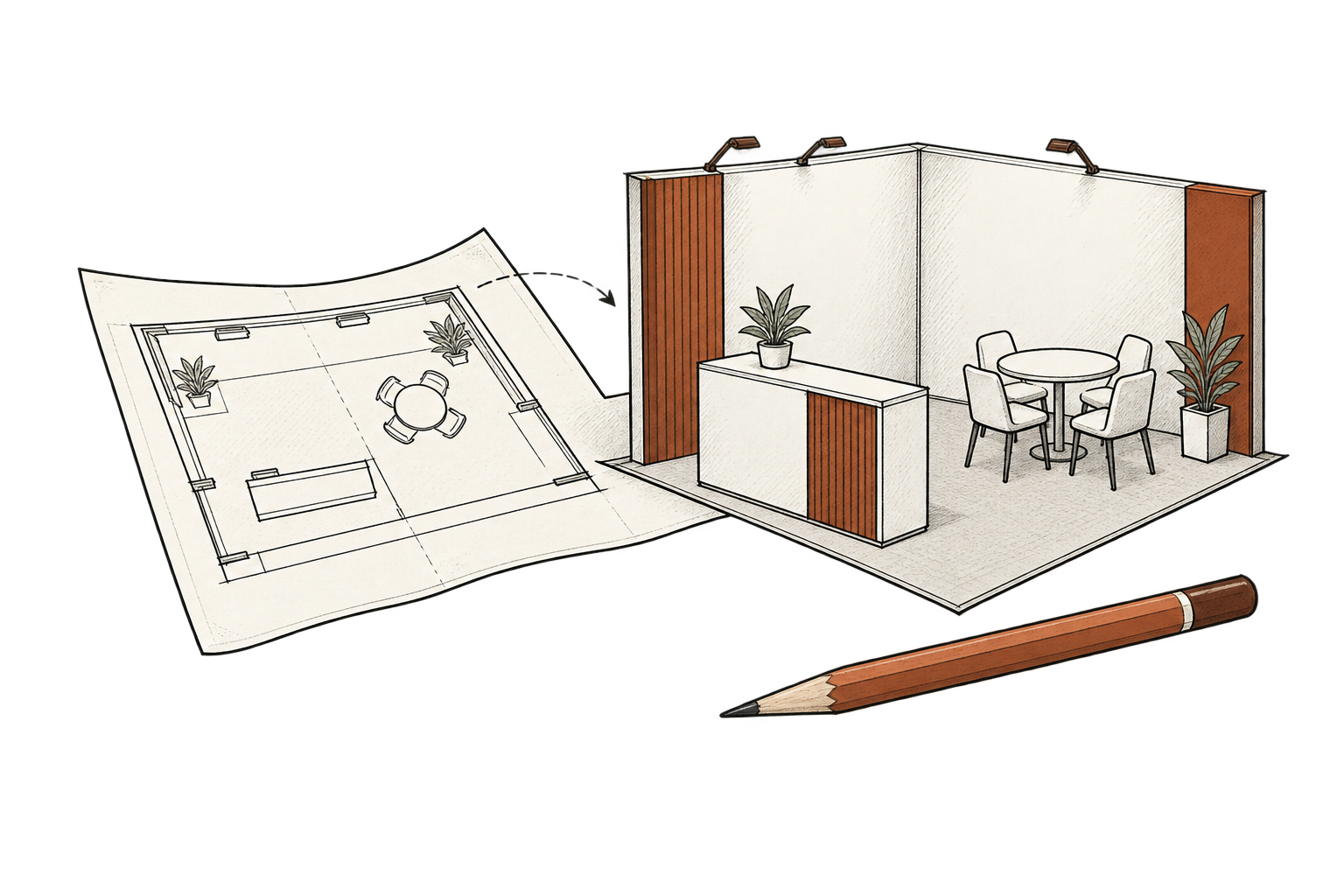
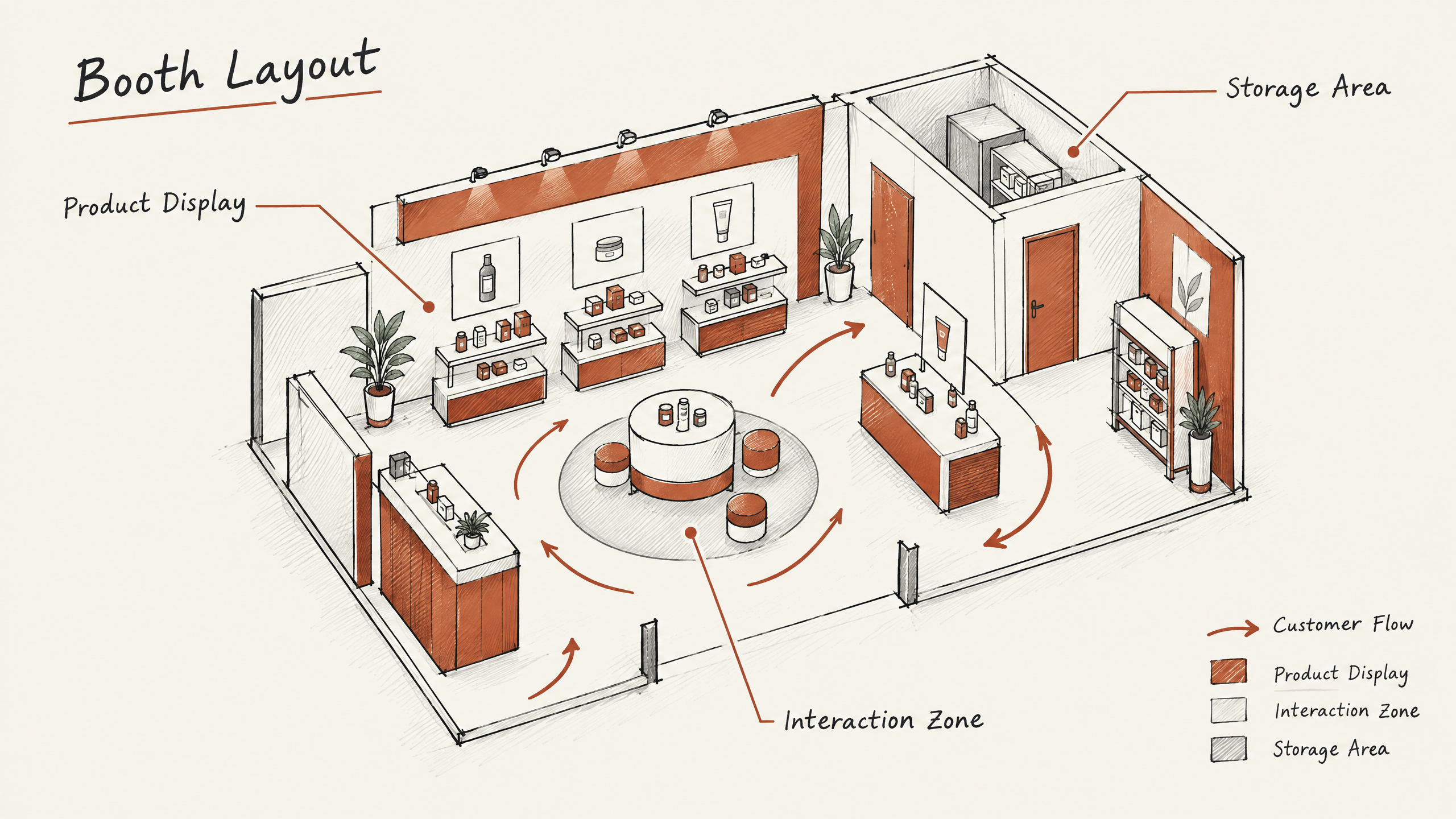
To make an informed decision, create a scale sketch of your booth layout including key elements like product displays, interaction areas, and storage.

This visualization helps you assess the space needed to meet your goals while providing room for attendee flow.

For example, if tasked with promoting a new product line, allocate a significant portion of your booth for large, eye-catching displays.

This adds visual interest and supports your marketing goals.

Be sure to consider any regulatory or venue-specific limitations on booth size and design.

Venues may have restrictions around height, structural stability, and safety, potentially impacting your plans. Confirm these constraints upfront to avoid costly changes later.

A common mistake is basing decisions solely on previous shows without evaluating changes in objectives or products.

What worked in the past may not meet current needs.

Before a final decision, detailed input from your sales team, marketing staff, and upper management ensures alignment with broader business goals.

With careful planning, your booth size will support your strategy, get the most out of engagement, and help achieve your trade show ambitions.

2. Consider the Flexibility of Modular Designs

When planning for a trade show, the flexibility of your booth design is crucial.

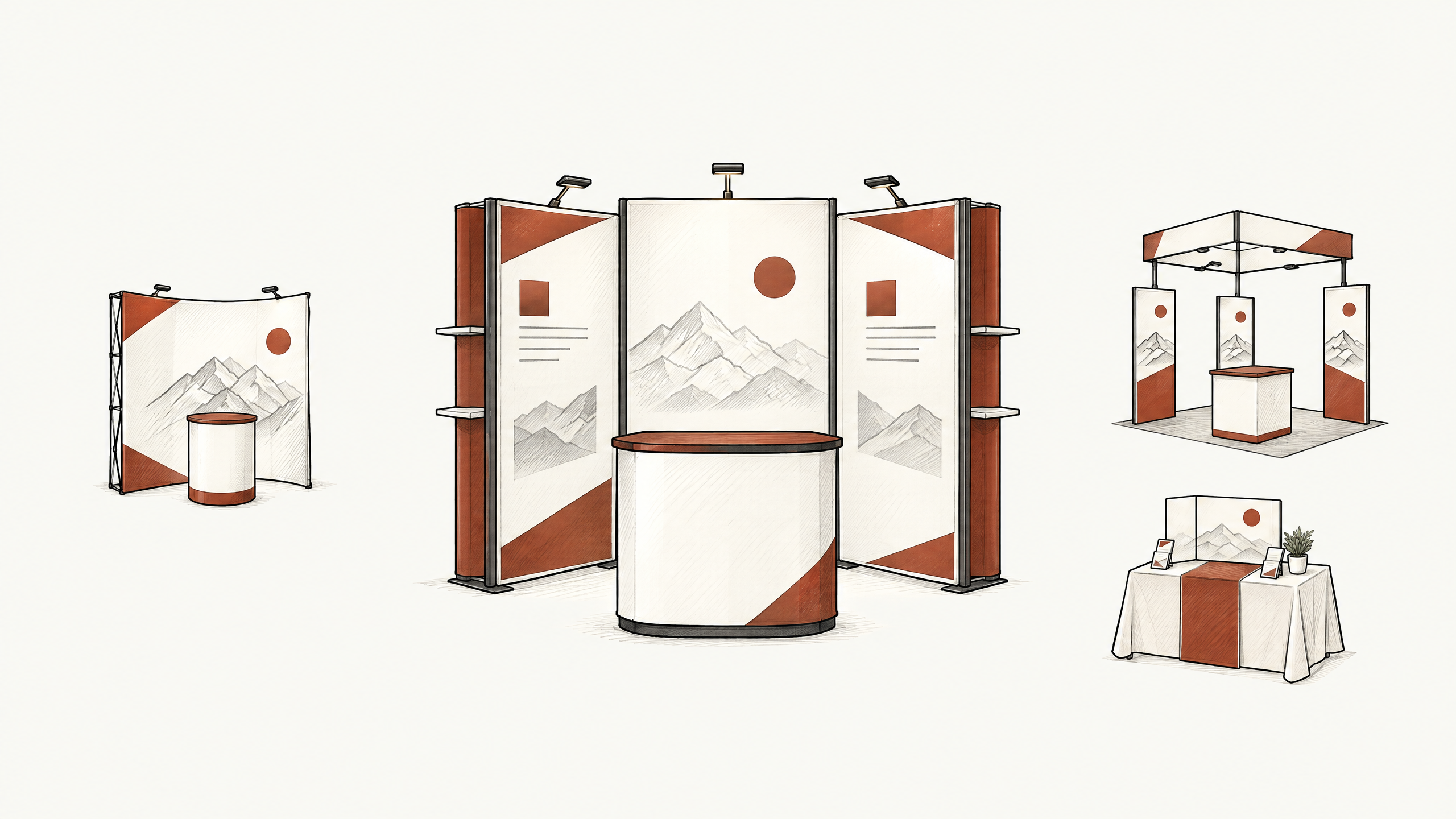
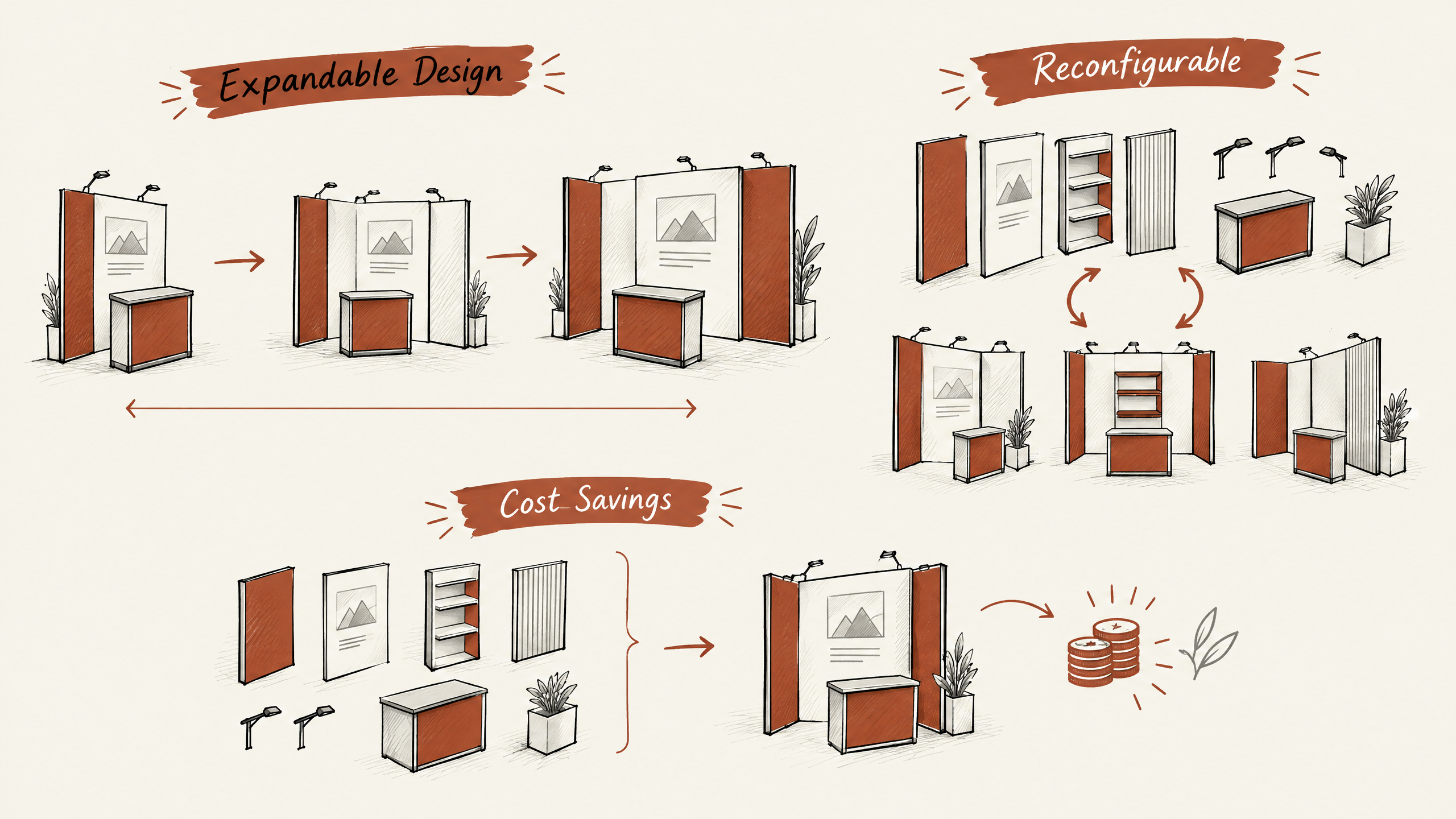
Modular booth designs offer adaptability, which can be a significant advantage in changing trade show environments. They can be expanded, reduced, or reconfigured to fit various show dimensions and layouts, making them an excellent choice if you attend multiple events with different space requirements.

Modular booths are often cost-effective.
2. Consider the Flexibility of Modular Designs — 6 Factors to Consider When Choosing Your Trade Show Booth Type

Their pieces are reusable, allowing for variations without the need to purchase a completely new setup for each event.

Over time, the savings accrued from not needing to build entirely new exhibits can be substantial. Additionally, the ability to rearrange elements means you can always freshen up your booth’s appearance to keep it engaging for repeat attendees.

An important factor to weigh is the ease of assembly. Modular designs are typically designed for straightforward assembly and disassembly, which saves time and reduces labor costs.

This can be particularly important if your team has limited resources or if setup time at the trade show is restricted. However, it’s crucial to plan logistics, such as transportation and handling, as these determine how practical modular components will be in your context.

Let’s look at a hypothetical example.

Important: Modular booth designs save money over time, as their reusable pieces adapt to varying spaces without needing a new setup for each event.

Suppose your company frequently exhibits at local trade shows with different booth dimensions.

By investing in a modular booth, you can configure your setup to be eye-catching regardless of the space available.

This flexibility helps maintain brand consistency despite varied constraints, leading to a cohesive marketing strategy.

When considering modular designs, it’s vital for your team to assess initial costs, potential savings, and the ongoing logistical demands of transporting and configuring the components.

If you can navigate these considerations effectively, modular designs present a solid, adaptable solution for your trade show needs.

Exhibitant is positioned to assist with designing and executing a modular booth that aligns with your brand’s goals.

3. Assess Your Branding and Visibility Requirements

When selecting a trade show booth, it’s crucial to focus on branding and visibility.

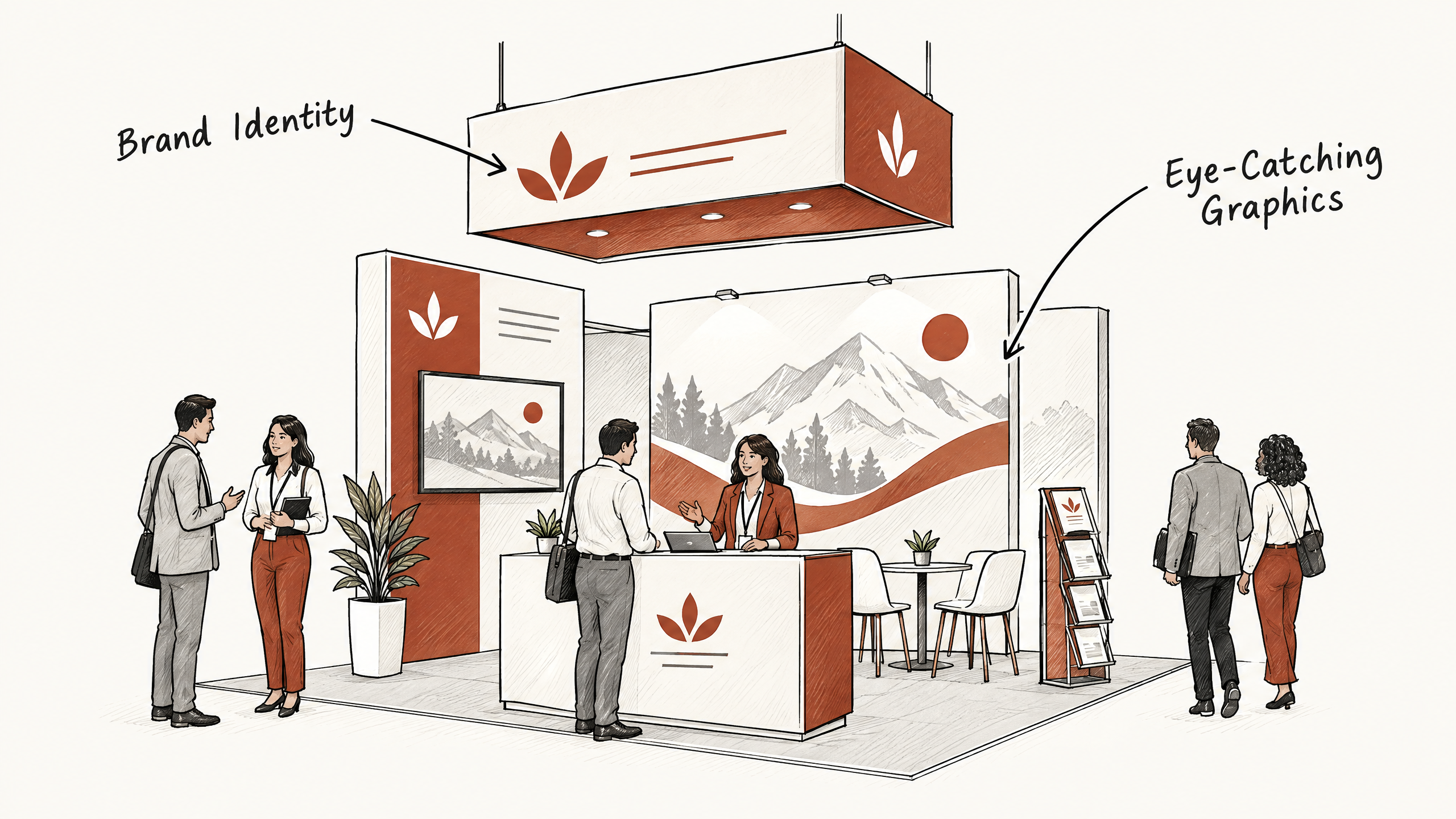
How you present your brand can significantly impact attendee perception. Your booth needs to reflect your brand’s core message while standing out.

If branding feels inconsistent, visitors may struggle to connect with your products.
3. Assess Your Branding and Visibility Requirements — 6 Factors to Consider When Choosing Your Trade Show Booth Type

An effective way to enhance visibility is through the strategic use of colors and graphics.

Choose bold, eye-catching colors and visuals that not only grab attention but align with your brand identity.

High-quality graphics should be visible from a distance, ensuring your booth is noticeable even in a crowded space.

Another critical factor is the use of signage and lighting.

Well-lit signs can make a dramatic difference, especially in a dimly lit exhibition hall.

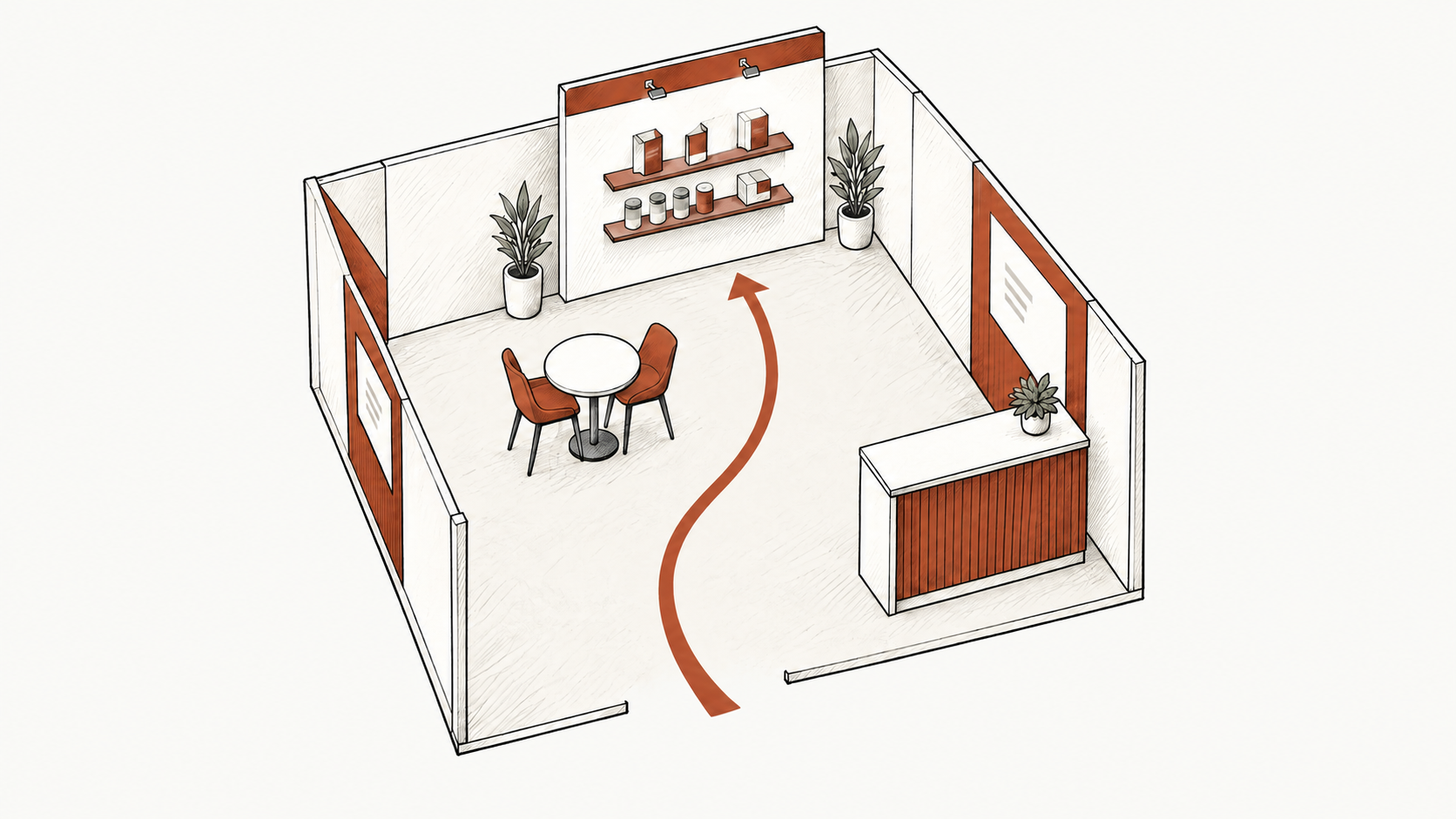
Choose lighting that highlights key elements of your booth, like logos or new products. Proper lighting helps guide the eye to the parts of your booth you want to emphasize, making sure attendees get the full experience of what your brand offers.

On the practical side, remember that overloading your booth with too many elements can be counterproductive.

Focus on key messages and branding elements to avoid overwhelming visitors.

Prioritize clarity and coherence in your messaging by highlighting a few core themes that resonate with your target audience.

This focused approach allows potential customers to easily understand your offer.

One common mistake is ignoring your booth’s height. use it to feature your brand prominently above the main display area. Maximizing vertical space can improve visibility across the event and draw in more visitors who might otherwise overlook your booth.

A simple checklist can help refine your branding and visibility plans:

  • make sure consistency with your brand’s colors and messaging.
  • use lighting effectively to highlight important areas.
  • Prioritize key design elements for clarity.
  • get the most out of vertical height for enhanced visibility.

Remember, creating a visually appealing and cohesive booth can greatly influence how attendees perceive and engage with your brand.

Clear branding, eye-catching visuals, and strategic lighting will work together to make your booth stand out and attract potential clients.
4. Plan for Technological Integration

Technology plays a crucial role in modern trade show booths.

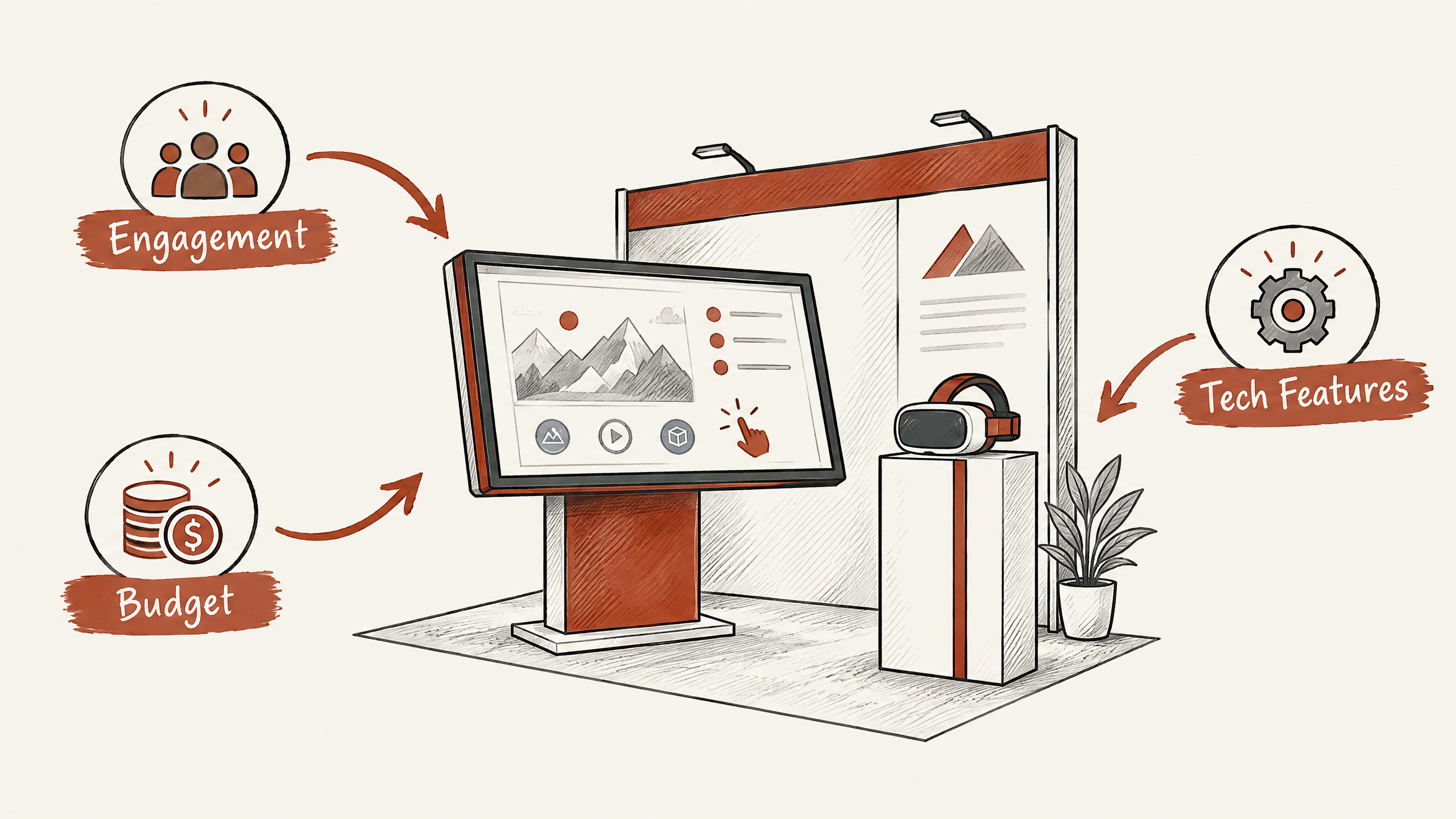
From interactive displays to virtual reality elements, integrating technology can significantly enhance visitor engagement.

When planning for technological integration, you must determine what tech aligns with your marketing goals.

4. Plan for Technological Integration — 6 Factors to Consider When Choosing Your Trade Show Booth Type

For example, if your aim is to create an immersive product experience, consider VR demonstrations or interactive kiosks.

Budget constraints are a major factor.

High-tech solutions often come with added costs, including equipment rental and technical support. Weigh these expenses against the potential impact on your audience to decide if the investment is justifiable.

You may need to prioritize tech features that offer the most significant returns on engagement.

Beyond budget, think about the ease of use.

Complex installations requiring extensive training or troubleshooting can lead to delays. Instead, choose solutions that are straightforward and intuitive for both your staff and attendees.

This ensures that the technology enhances your booth rather than complicating it.

Another consideration is the technological infrastructure of the venue.

Some trade show locations offer solid Wi-Fi and power setups, while others may be limited. Verify these details early to avoid surprises on the exhibit day.

Our Exhibitant team can help assess your booth’s technological integration needs, ensuring you’re well-prepared for your event.

Ownership and logistics are vital parts of the planning process.

Assign specific team members to manage tech pieces and undergo training if necessary.

With a clear understanding of who is responsible for various tech aspects, you make sure a smoother event execution.

This careful planning leads to a more impactful and interactive trade show presence.

5. Factor in Setup, Transportation, and Utility Costs

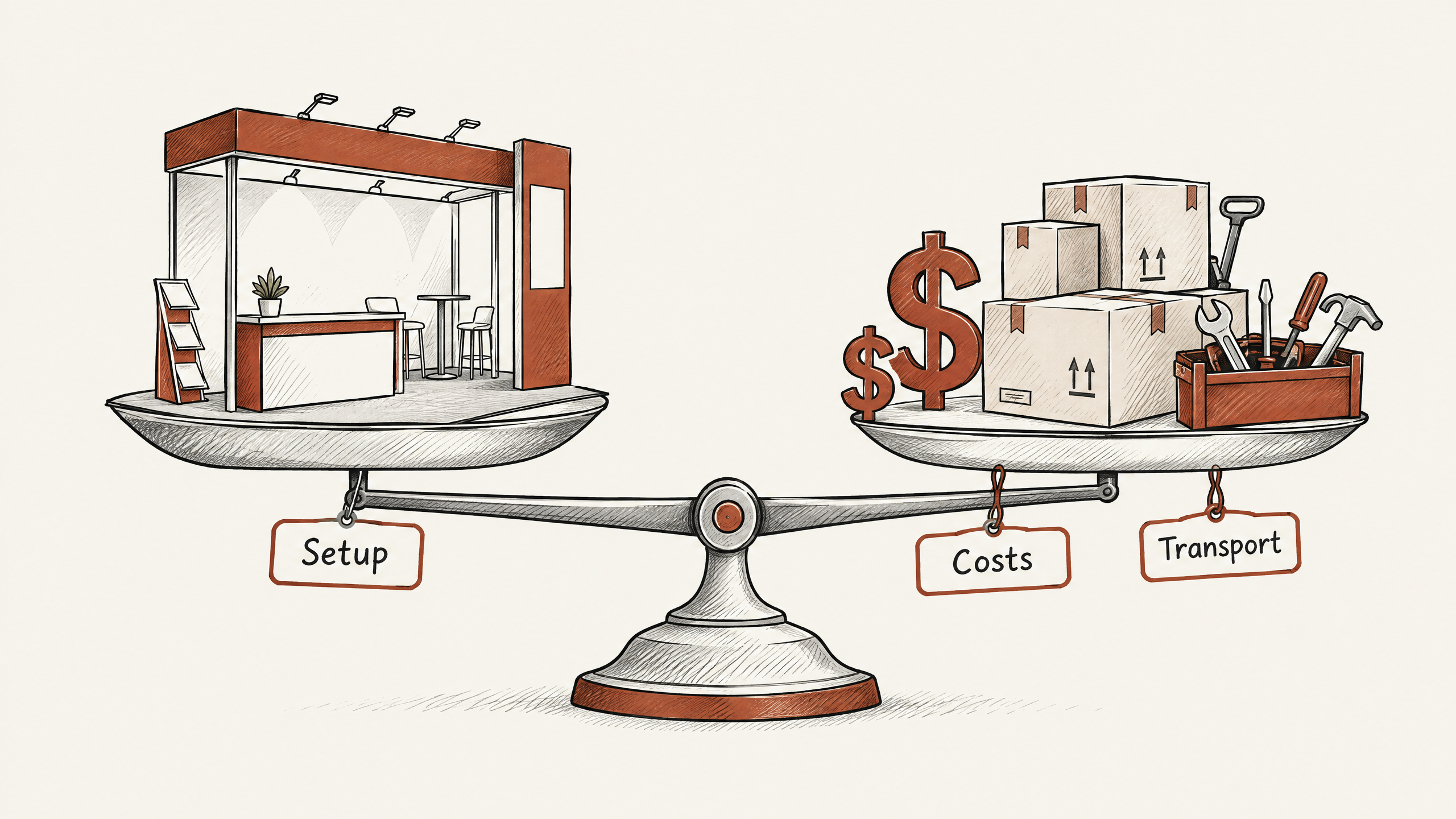
When selecting a trade show booth type, it’s crucial to factor in setup costs.

Each booth design has unique setup requirements that can significantly impact your budget.

For instance, a complex custom booth may require professional assembly, increasing costs and possibly setup time.

5. Factor in Setup, Transportation, and Utility Costs — 6 Factors to Consider When Choosing Your Trade Show Booth Type

In contrast, a portable display might offer easier assembly, reducing labor expenses and allowing your team to handle setup themselves.

Transportation costs also play a key role in your decision.

Larger or bulkier booths may require specialized shipping logistics, leading to increased expenses.

To improve your budget, explore whether a smaller booth with lightweight materials can meet your needs without sacrificing presence. Exploring local storage options can further reduce transportation costs if you exhibit frequently in the same region.

Don’t overlook utility costs like electricity and internet access, which can vary depending on the venue and booth type.

Some booth designs might require additional power for lighting or interactive elements.

Understanding these requirements in advance lets you budget effectively and avoid unexpected charges.

Here’s a simple checklist to guide your cost analysis:

  • Identify potential setup labor expenses and required expertise.
  • Estimate transportation logistics and costs based on booth size and weight.
  • Evaluate the utility needs for your booth’s specific features.

A common mistake is underestimating these costs, leading to budget overruns.

By thoroughly assessing each factor, you’ll make a more informed booth choice that aligns with your financial strategy. Consider starting with a detailed cost breakdown, allowing you to reallocate funds to areas that enhance your overall trade show presence.

6. Analyze Location and Traffic Flow

When selecting a trade show booth type, it’s crucial to analyze location on the show floor.

Your booth’s positioning will significantly impact your visibility and accessibility. High-traffic areas near entrances, exits, or main thoroughfares are usually more desirable.

These spots can lead to increased exposure and engagement with attendees.

6. Analyze Location and Traffic Flow — 6 Factors to Consider When Choosing Your Trade Show Booth Type

However, they may also come with a higher price tag.

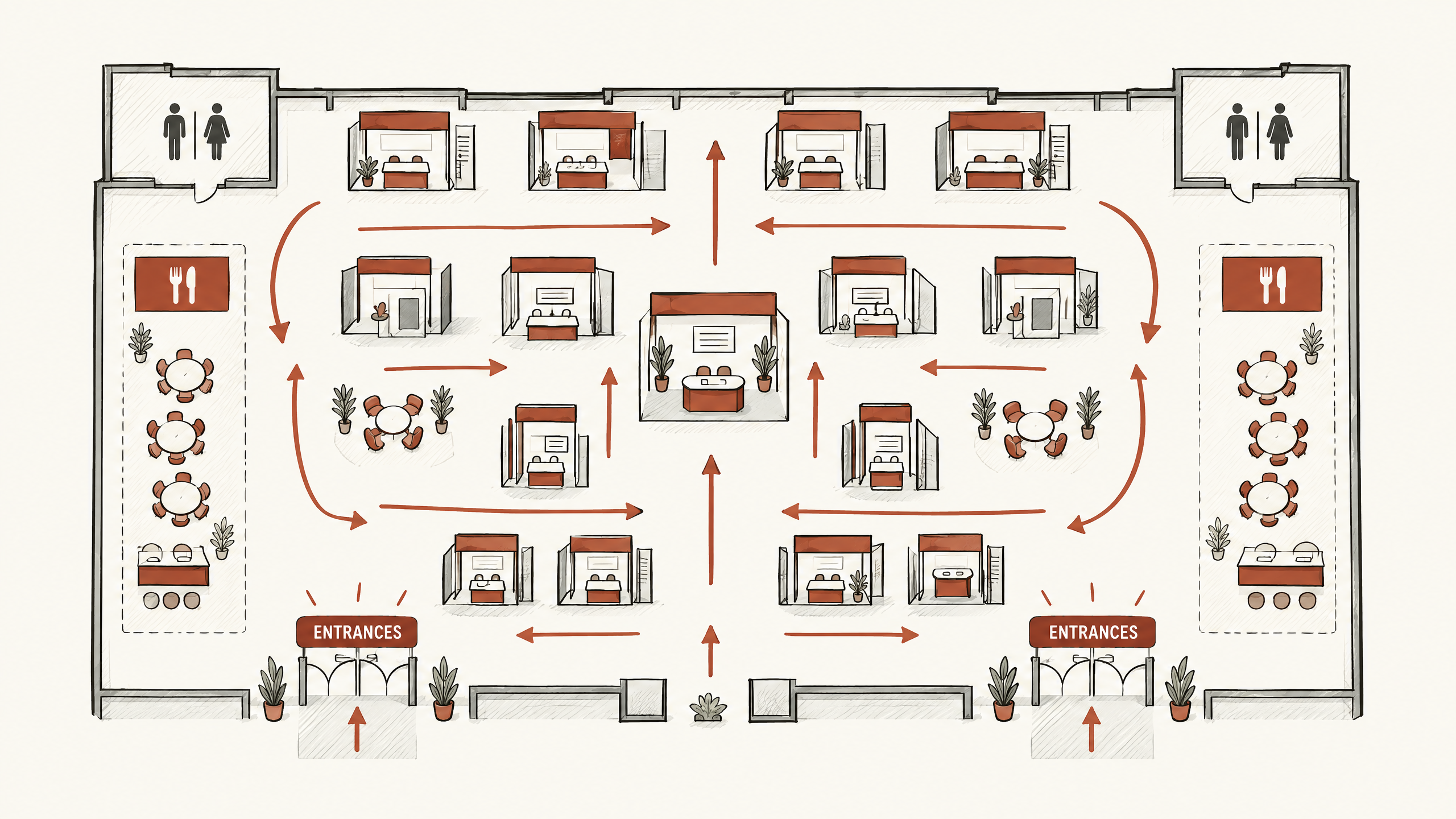
To avoid common pitfalls, carefully examine the floor plan of the trade show in advance.

Identify areas that might have high foot traffic, such as near restrooms, food courts, or popular exhibitors.

Conversely, proximity to walls or low-traffic zones might reduce visibility.

While these less frequented areas might be cheaper, the potential drop in engagement could negate any initial savings.

Also, consider the traffic flow around your booth.

Pro Tip: Prioritize securing a booth in high-traffic areas like entrances or near popular exhibitors to boost visibility, while balancing cost considerations and competitor placement for strategic advantage.

Is there enough space for attendees to navigate comfortably without bottlenecks? The type of booth layout whether inline, corner, or island can facilitate smoother movement of visitors.

For instance, island booths offer four-sided access, which can mitigate congestion and encourage more interactions.

Hypothetically, if your company specializes in new tech gadgets, securing a spot near a tech industry’s key player could attract the right audience.

This strategic proximity leverages the established crowd pull of well-known brands, seamlessly steering attendees toward your offerings.

Compile a list of potential locations on the trade show floor. Balance the expected foot traffic with costs and logistics.

Cross-reference this with insights on competitor positioning to enhance your booth’s strategic advantage.

A well-considered location strategy can amplify your brand’s presence and get the most out of returns on your trade show investment.

Closing Thoughts

Choosing the right trade show booth type goes beyond aesthetics.

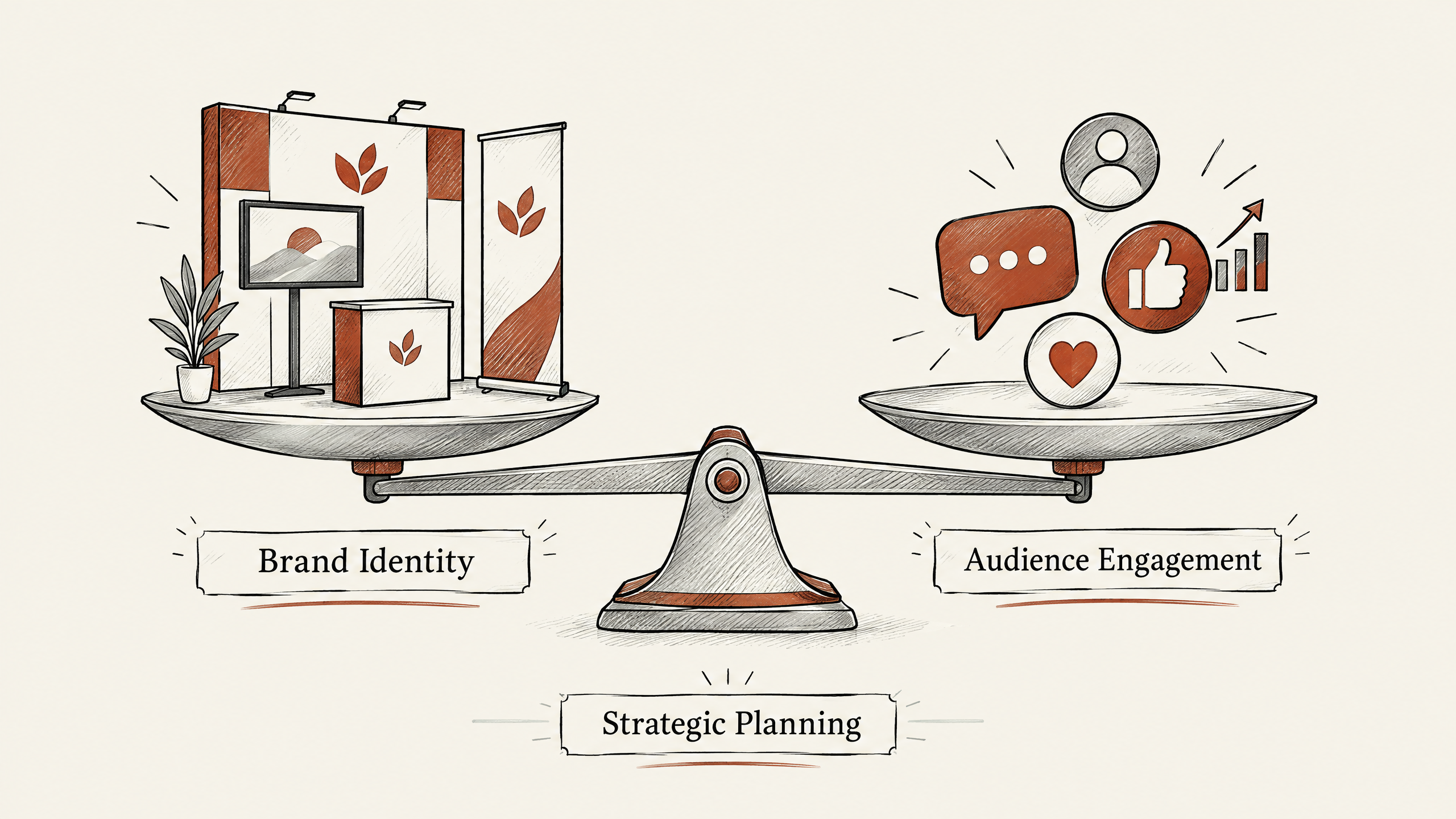
It’s about seamlessly integrating various factors to achieve a harmonious balance that aligns with your business objectives.

Remember, your booth is not just a space; it’s a powerful tool that speaks volumes about your brand.

Closing Thoughts — 6 Factors to Consider When Choosing Your Trade Show Booth Type

The decision-making process starts with understanding your specific needs and constraints, whether they concern booth size, modularity, or technological integration.

Each aspect of the booth contributes significantly to its overall success or failure in engaging an audience and driving business impact.

Having delved into the essential components, your next step is compiling this information into a coherent plan that guides your selection.

Take time to review each factor, perhaps discussing with your team to gather more perspectives.

With careful planning and execution, your trade show booth can be a definitive asset in achieving your marketing goals.

Need a booth plan?

Turn show goals into a practical exhibit path

Share your footprint, timeline, and priorities. Our team can help shape the booth direction, graphics, and project support.

Hand-drawn booth floor plan and exhibit with cedar accents

Contact our team

Tell us who you want to reach

Tell us about your business, the buyers you want to reach, and what you want to achieve. Whether you need more sales conversations, stronger marketing, or a trade show presence, we’ll help you identify where to focus and what support makes sense. Together, we can shape a practical plan around your priorities, budget, and timeline.

info@exhibitant.com

Tell us what you need

A few details will help us make the most of our conversation.