Trade shows can be a goldmine for generating leads, but the key is knowing how to qualify those leads effectively. When you’re in a bustling environment with hundreds of potential contacts, identifying the most promising prospects becomes crucial.
Without a strategy, you risk wasting time on leads that won’t convert.
Thinking ahead and preparing your lead qualification process ensures your team can focus on those who truly fit your business criteria. This not only saves time but also increases the chance of meaningful connections that lead to sales.
Prioritizing quality over quantity is vital to achieving the best results from your trade show efforts.
Many teams overlook the significance of a solid plan here.
Successful lead qualification begins before you even step foot on the trade show floor.
From devising criteria that align with your goals to equipping your team with skills to spot promising leads, every step counts.
Using technology can further enhance your ability to assess opportunities in real-time.
Smart planning doesn’t stop at the event but extends into how you gather insights for improvement.
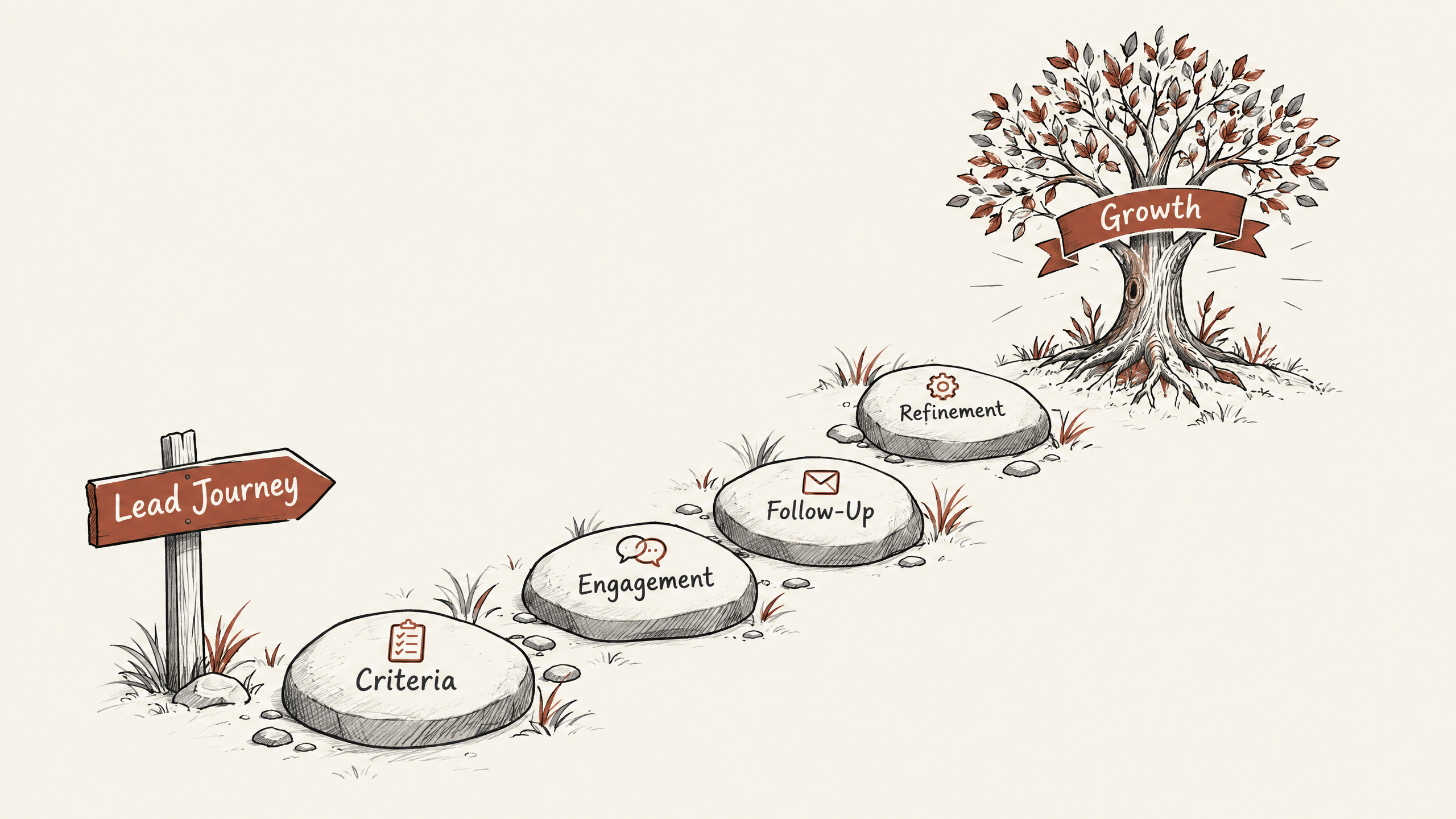
In this article, I will walk you through six essential strategies that will enhance your lead qualification process at trade shows.
You will be ready to make informed decisions about which leads to pursue and how to follow up effectively.
This will get the most out of your trade show ROI and make sure no valuable opportunities slip through the cracks.
Key Takeaways:
Use clear criteria to identify high-quality leads quickly.
Train your team to ask targeted qualifying questions.
Leverage technology for real-time lead scoring.
Set up a follow-up plan before the show.
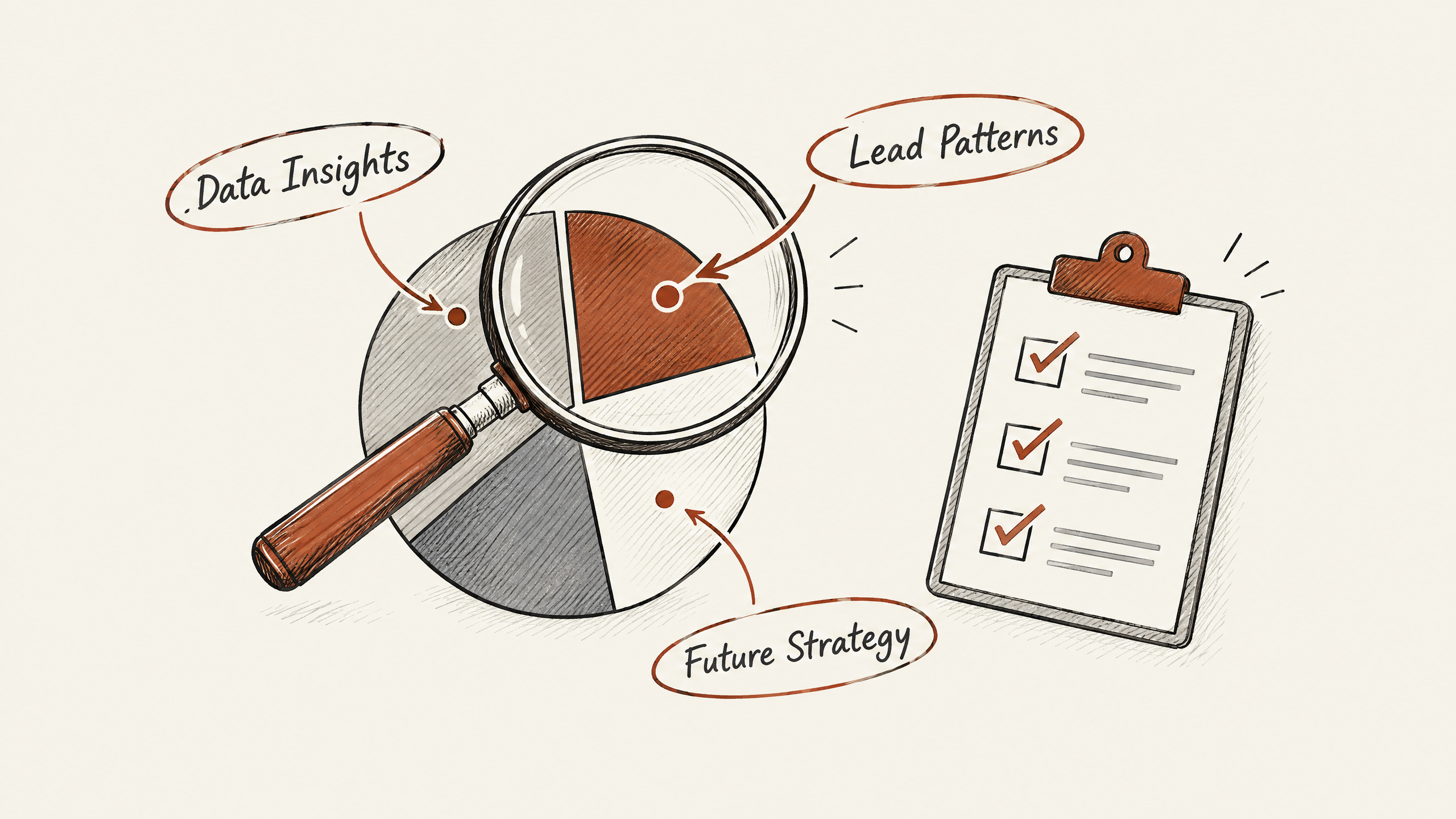
Analyze lead data post-show to improve strategies.
To make the most of your trade show experience, make sure you have clear criteria and a follow-up plan ready before the event.
After the show, take time to analyze lead data to refine your future strategies.
1. Define Your Lead Qualification Criteria
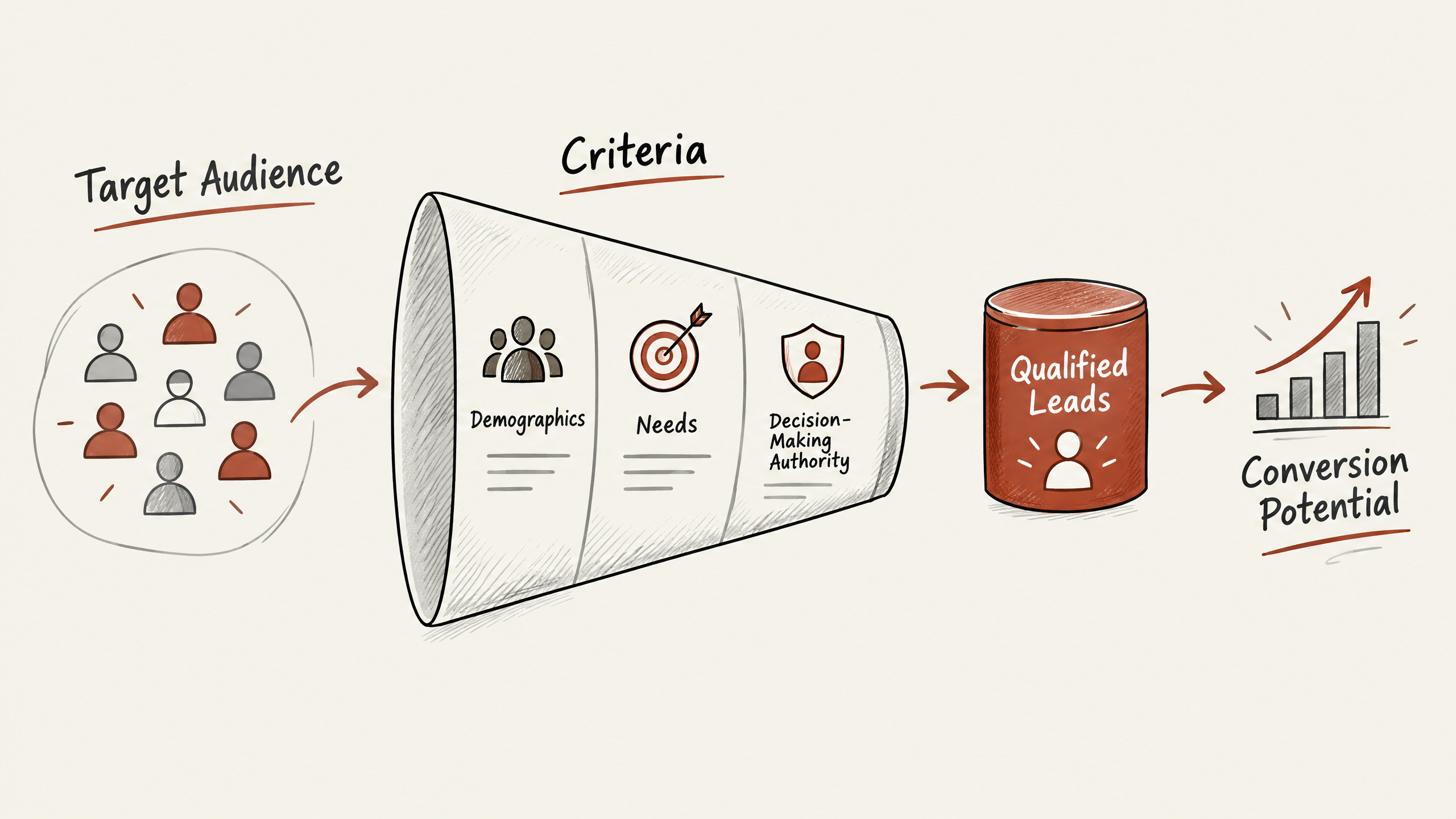
To effectively capture leads at trade shows, the first step is to establish clear and detailed lead qualification criteria. This ensures your team can quickly and accurately identify which prospects are worth pursuing further.
Defining these criteria involves understanding your target audience, including their demographics, needs, and pain points. By having a precise profile of your ideal lead, you simplify the qualification process.
Start by mapping out your customer segments and their unique characteristics.
For example, your criteria might include company size, industry, budget, or decision-making authority.
Once these characteristics are listed, identify which ones indicate a strong potential for conversion.
This approach helps focus your team on high-value interactions; saving time and maximizing resources while avoiding the pursuit of weak leads.
A common mistake is to either have too broad or too narrow criteria.
Too broad means your team will spend time on leads unlikely to convert, while too narrow may exclude potential opportunities. A balanced approach ensures that your criteria are neither too rigid nor too relaxed.
Reviewing past conversion data can help pinpoint the most impactful attributes for qualification.
Let’s look at a hypothetical scenario: Assume your company specializes in cloud-based solutions for mid-sized tech firms.
Your lead criteria could include companies with 100-500 employees, annual revenues of over $10 million, and a need for scalable IT solutions.
With these criteria, your team can efficiently identify and engage with the right prospects at the trade show, enhancing your chances of successful lead conversion.
2. Train Your Team to Identify Quality Leads
Your trade show team’s ability to identify quality leads is crucial for maximizing your trade show’s success.
A well-trained team can make the difference between gathering valuable contacts and ending up with a list of unqualified prospects.
Start by ensuring everyone on your team understands the lead qualification criteria you’ve set. This includes knowing what distinguishes a high-quality lead from a general attendee.
One effective method is to conduct pre-show training sessions that focus on the key qualifications for your audience.
Use role-playing exercises to simulate trade show interactions, helping team members practice qualifying questions in real-time.
They should learn to ask open-ended questions that tie into your criteria, locating details that reveal a lead’s buying intent or decision-making power.
An example could be asking “What challenges are you facing in your current operations?” rather than “Are you interested in our product?”.
This approach uncovers deeper pain points and aligns with your qualifying criteria.
Important: Training your team to ask open-ended questions and actively listen to prospects’ needs can significantly enhance the quality of leads gathered at trade shows.
Emphasize the importance of active listening, so your team truly hears the prospect’s needs and can gauge their fit.
It’s also important to address common mistakes, such as failing to recognize buying signals or spending too long on low-potential leads.
Encourage your team to use their time wisely, focusing efforts where they’re most likely to convert contacts into customers.
After the show, team debriefs can highlight what worked and what didn’t, providing insights for future training enhancements.
Incorporating feedback from the team after each event is a valuable way to refine your training program. At Exhibitant, we encourage an ongoing learning process that keeps your team sharp and ready for the next show, boosting the quality and quantity of leads captured effectively.
3. Use Technology for Real-Time Scoring
Using technology to score leads in real time can greatly enhance the effectiveness of your trade show efforts.
Many teams often rely on traditional methods or post-event analysis, but technology allows you to assess leads on-site.
This immediate feedback enables your team to focus on the highest quality leads and tailor interactions accordingly.
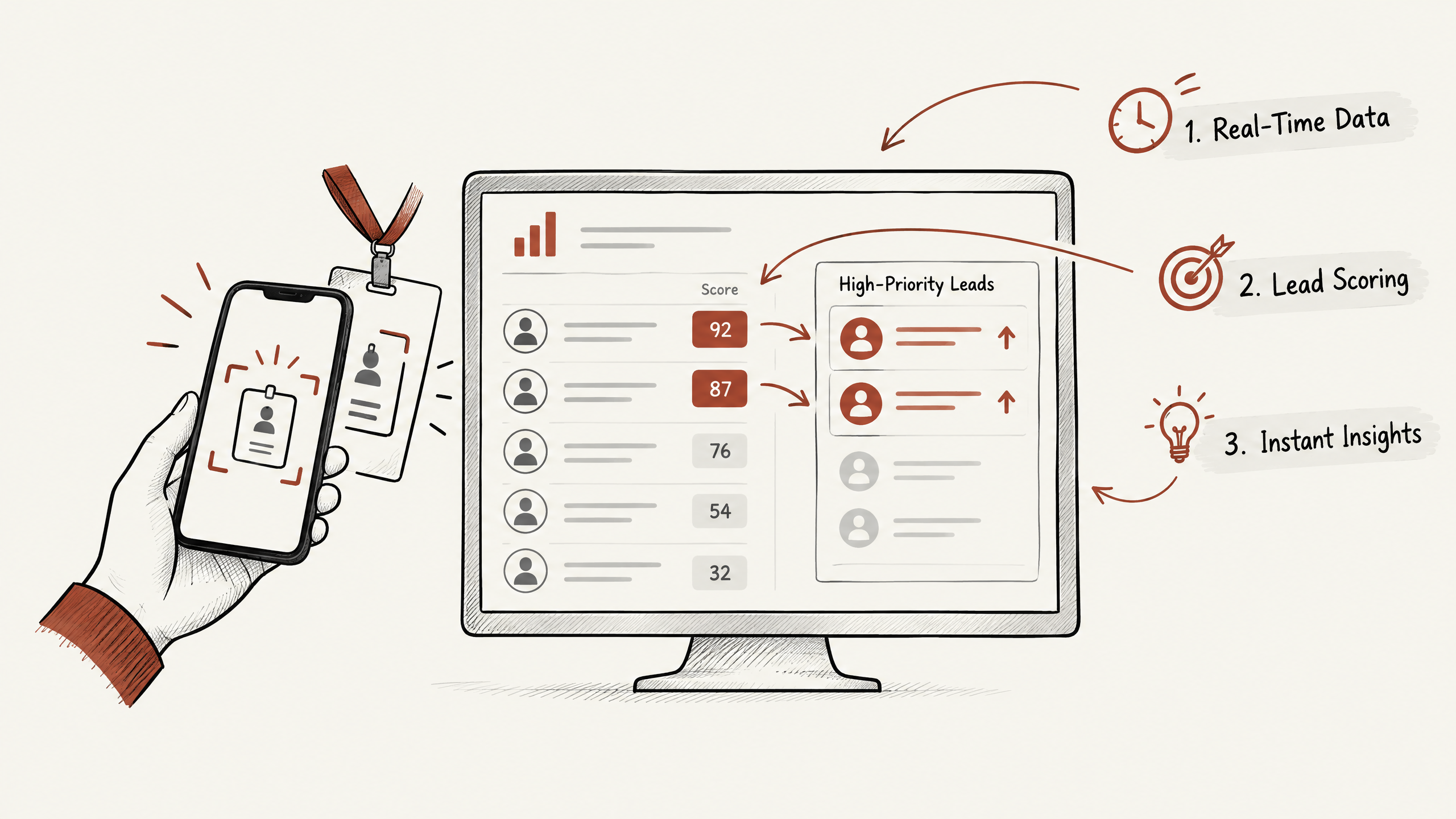
A popular approach to real-time scoring is through the use of digital tools like CRM-integrated apps. These applications are designed to collect and analyze data quickly.
For instance, your team can use mobile apps to scan badges or collect inputs during conversations.
This data is then scored automatically, helping you prioritize high-potential prospects for follow-up.
Implementing a solid scoring system requires careful planning.
Start by defining the criteria that indicate a lead’s quality.
These may include a prospect’s purchasing authority, interest level, or alignment with your product offerings.
Configure your technology to reflect these factors so that your team receives an accurate and actionable performance indicator.
A common mistake is neglecting the setup and integration of these tools before a trade show.
To avoid this pitfall, test your systems well in advance and train your team on its functions. This preparation ensures that everyone understands how leads are being scored and what to do next with that information.
In a hypothetical scenario, let’s assume your team gathers information from 100 leads at a trade show. With real-time scoring, you can immediately identify the top 20 leads who demonstrated a significant interest in your product.
This allows your team to target these individuals for personalized attention and faster follow-up, increasing the chance of conversion.
Using technology for real-time lead scoring is a strategic choice that can set your team apart.
By ensuring efficient processing and prioritization of leads on-site, you boost your chances of successful engagement and post-event conversion.
4. Improve Booth Engagement to Gather Insights
When aiming to refine lead qualification, the way your team engages with attendees at your booth is critical.
Creating opportunities for meaningful interactions and conversations is essential to uncover potential leads’ specific interests and challenges.
Designing booth activities that invite participation can help your team gather the insights needed for effective qualification.
This approach can include having interactive demonstrations, engaging displays, or even a Q&A session. These activities get attendees involved and make it easier for your team to collect valuable information.
One mistake teams often make is not prepping specific questions that guide conversations toward identifying a lead’s buying intent.
By crafting a set of targeted engagement questions, you steer discussions to reveal details like the attendee’s potential budget, decision-making power, and pain points.
For example, asking “What challenges are you currently facing in your supply chain?” can offer direct feedback on their needs, helping determine how your product or solution might fit.
It’s also important to brief your team on the kind of leads that align with your qualification criteria. This alignment helps them focus on gathering relevant details during conversations.
Pro Tip: To enhance your booth engagement, prepare targeted questions to uncover attendees’ specific needs, decision-making power, and buying intent, aligning with your lead qualification criteria.
For instance, if a company’s primary criteria involve a specific buying timeline, your team can ask questions to reveal this information. Providing them with lead scoring sheets can further develop consistent assessments on what constitutes a strong lead.
An integral part of leveraging booth engagement for insights is balancing meaningful conversation with efficiency.
Not every interaction needs to be an in-depth discussion sometimes, quick interactions with precise questions are just as effective.
Your team should know when to dig deeper or when a quick qualification suffices.
At Exhibitant, we specialize in enhancing booth engagement strategies, helping your team get the most out of interactions to qualify leads better.
Using our insights and solutions, your team can drive more targeted leads into the sales pipeline, setting the stage for impactful follow-up strategies and long-term business relationships.
5. Plan Effective Follow-Up Strategies
Your team’s trade show success doesn’t end with capturing leads at the event. An effective follow-up strategy is crucial to converting those leads into potential clients.
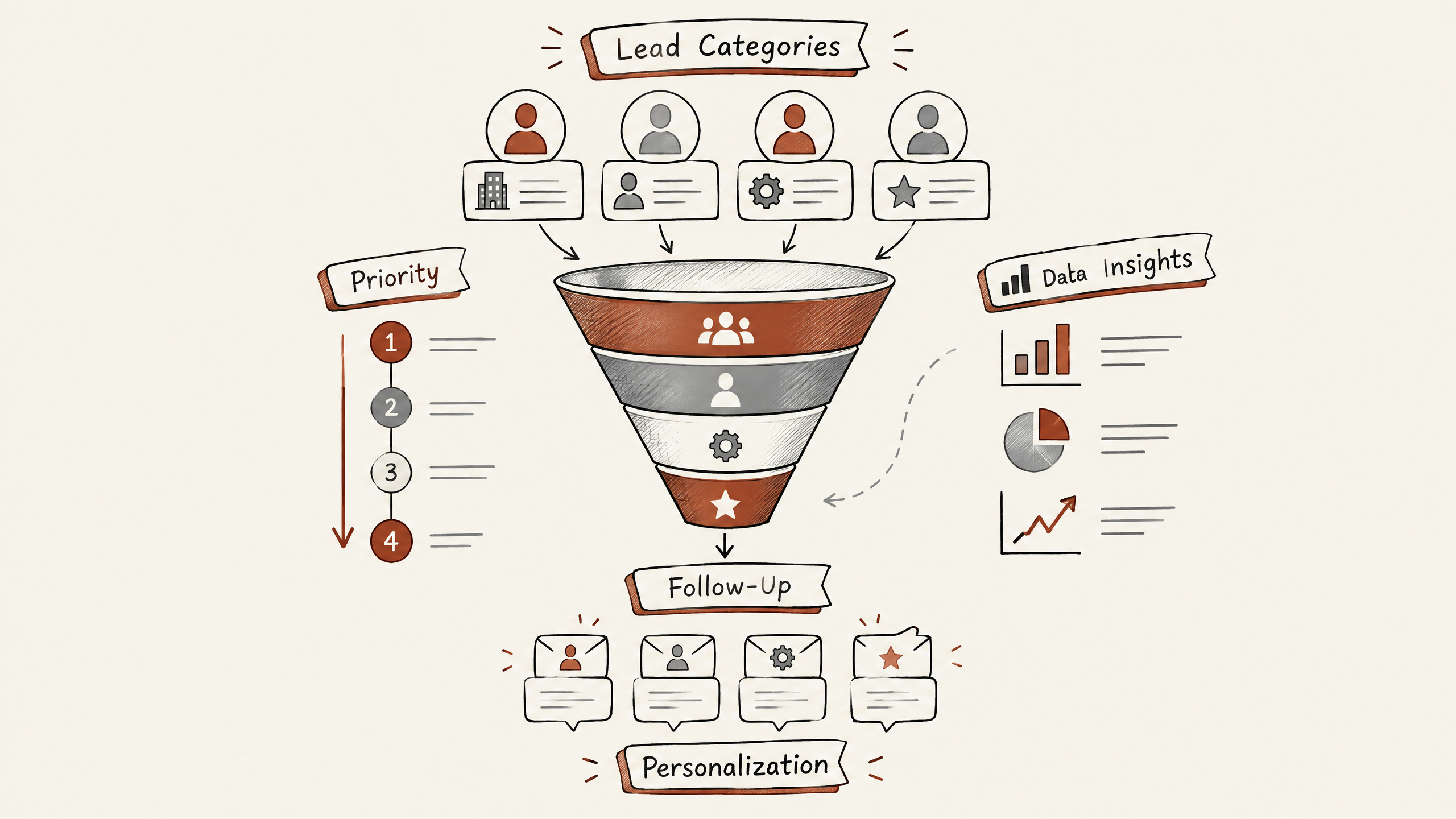
Your first step should be to categorize leads based on priority. This involves reviewing each lead’s score, interest, and potential value to your business.
High-priority leads should be contacted within a few days, whereas lower-priority leads can follow a more extended timeline.
Creating personalized follow-ups will significantly impact your results.
When your outreach is tailored to the lead’s specific interests and needs, the engagement is far more meaningful.
Use data collected from the trade show (such as conversation notes or scoring insights) to guide your messaging.
A personal touch, like referencing a particular discussion or product that piqued the lead’s interest, can set your follow-up apart.
Decide on the right communication channel for each tier of leads.
For instance, high-priority leads may warrant a phone call, while email might be sufficient for others.
Timing is crucial here: a fast, relevant response keeps your company fresh in the lead’s mind while showing responsiveness. Should a prospect express interest in scheduling a demo or meeting, have a clear set of options ready to simplify the process.
A common mistake to avoid is overly aggressive follow-ups.
Bombarding a potential client can damage your brand’s reputation.
Instead, balance persistence with patience to maintain a positive relationship.
A structured schedule and checklist of follow-up actions will keep your team synchronized.
A mix of touchpoints, spaced out wisely, can nurture leads without overwhelming them.
Here’s a hypothetical scenario to illustrate: assume your company met 100 potential leads at a trade show.
Of these, 30 ranked as high-priority based on interest and potential contract size. These leads receive a personalized email within two days, followed by a phone call a week later to discuss their needs further.
The other 70, deemed lower-priority, enter a nurturing email campaign, with follow-ups spaced over the next month.
This setup ensures no opportunity is missed while supporting diverse lead engagement needs.
make sure all actions are coordinated across your sales and marketing teams to maintain consistency and efficiency.
Every interaction should aim to push the lead further down the funnel, whether by educating them, solving their pain points, or demonstrating the value of your solution. A successful follow-up strategy is not just about reaching out; it’s about building a relationship that leads to a successful partnership.
6. Analyze and Refine Your Approach
After a trade show concludes, you’ll find yourself with a wealth of data to sift through.
It’s crucial to dedicate time to carefully analyze this information to understand what worked and what didn’t.
Start by examining the lead quality metrics: how many leads converted into customers, and what characteristics did they share? These insights can help you refine your lead qualification criteria for future events.
Identify patterns in the data that indicate successful interaction strategies.
Were specific booth activities or staff interactions more likely to produce qualified leads?
Assessing these trends allows you to strategically focus efforts and allocate resources more efficiently in the future.
Compare performance against benchmarks set beforehand to gauge success.
It’s also important to hold a debrief session with your team post-event.
Important: After a trade show, take the time to analyze lead quality metrics and team feedback to refine future lead qualification criteria and interaction strategies.
Encourage team members to share their observations and experiences. Did they encounter common hurdles in the lead qualification process?
Were there unexpected challenges or opportunities?
This qualitative input can be invaluable for adjusting your approach to lead qualification at future trade shows.
Finally, refine your strategy based on both quantitative and qualitative data.
The tradeoff here is between maintaining a consistent approach and adapting to valuable lessons learned.
Regular refinement ensures that your lead qualification process becomes more effective over time and that your resources are optimized for greater efficiency when targeting potential buyers at trade shows. Establishing a feedback loop helps to create a dynamic approach, leading to better outcomes and more meaningful connections at future events.
Wrapping Up
With a clear understanding of the strategies for lead qualification at trade shows, you are now equipped to enhance your approach.
Each step, from defining criteria to analyzing results, plays a vital role in ensuring that your lead capture process is efficient and effective.
By focusing on training, technology, and engagement, you can gather valuable insights about potential leads. Planning and executing effective follow-up strategies further solidifies your efforts, leading to lasting business relationships.
As your team prepares for the next trade show, reviewing and refining these strategies should be a top priority.
This ongoing process will not only refine your qualification methods but also yield stronger results over time.
Taking deliberate steps now will prepare you to capture and convert high-quality leads effectively.
Need a booth plan?
Turn show goals into a practical exhibit path
Share your footprint, timeline, and priorities. Our team can help shape the booth direction, graphics, and project support.
Keep planning
More exhibit guidance
Keep exploring practical advice on booth planning, marketing, and getting more from your next show.
Tell us about your business, the buyers you want to reach, and what you want to achieve. Whether you need more sales conversations, stronger marketing, or a trade show presence, we’ll help you identify where to focus and what support makes sense. Together, we can shape a practical plan around your priorities, budget, and timeline.

 Louie J.



 Lorena G.