 Lorena G.
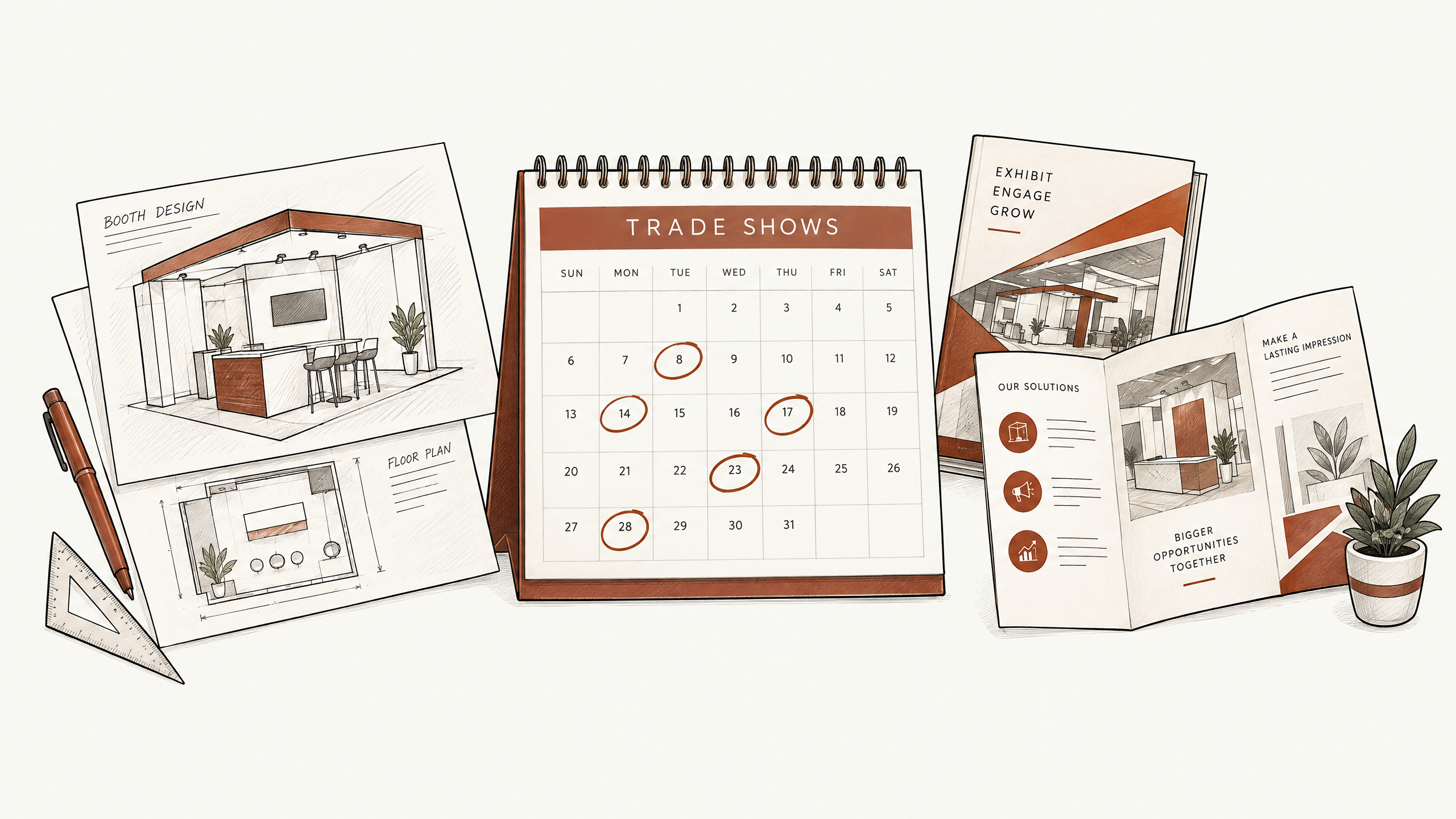
Every trade show exhibitor knows that successful participation hinges not only on innovation but also on timing.
As an exhibitor, you face numerous deadlines that, if missed, can severely impact your presence and effectiveness at the show. Meeting these deadlines is crucial to make sure that everything from your booth design to your marketing campaigns are well-prepared.
Planning for a trade show can be overwhelming, but having a deadline-driven plan can make all the difference. This plan keeps you ahead of the curve while avoiding last-minute stress.
I recommend starting your timeline as soon as you’re confirmed for the event to stay on track.
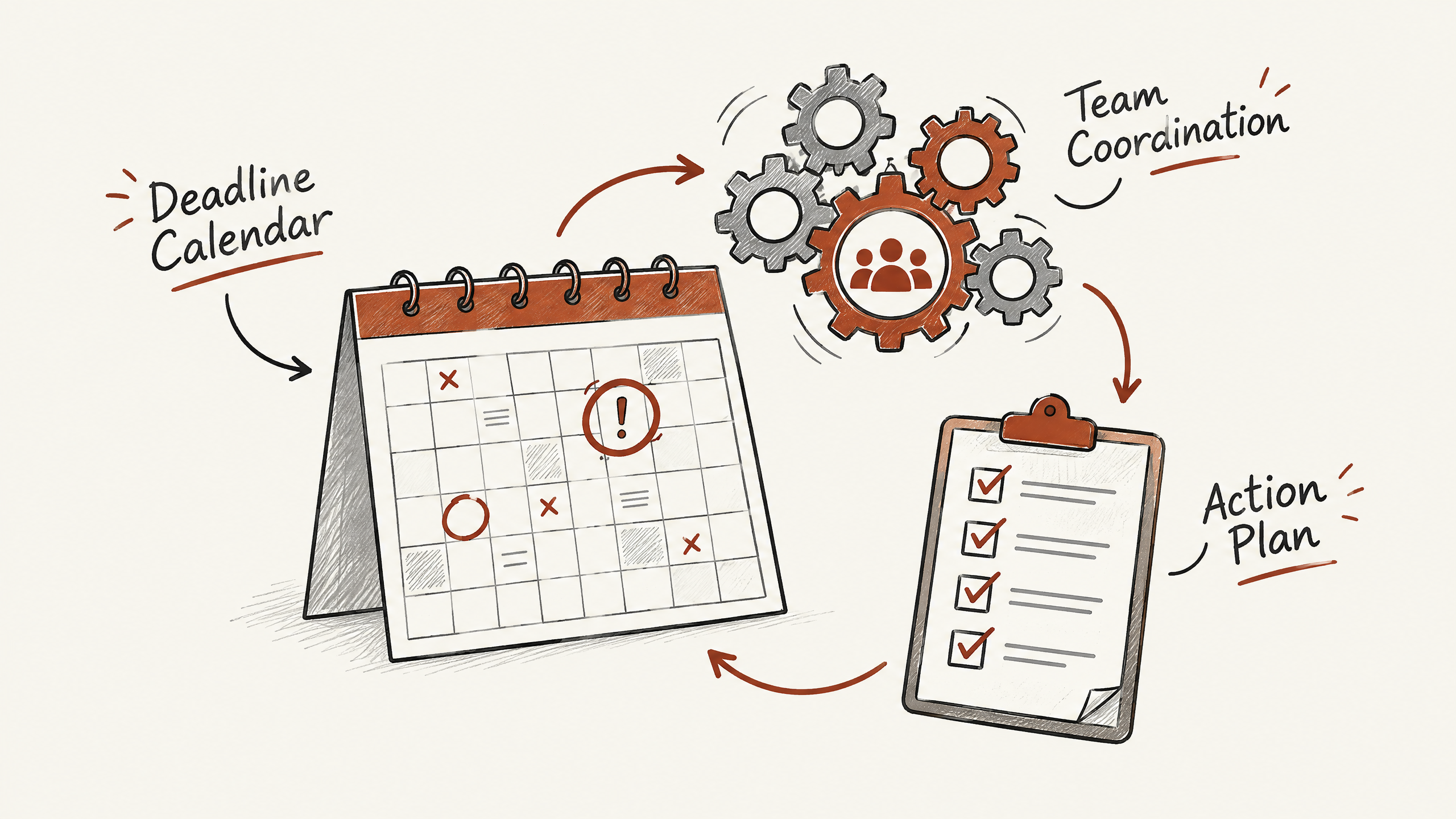
Your trade show strategy needs synchronization of several critical tasks.
From finalizing your booth design to planning post-show follow-ups, each task comes with its own set of deadlines. Missing any of these can lead to complications that could have otherwise been avoided.
You’ll be able to approach your trade show with confidence if you know the key deadlines you must meet. By prioritizing these deadlines, you’ll make sure a streamlined preparation process.
In this guide, I will walk you through each critical deadline, helping you make informed and timely decisions for a successful trade show experience.
- Set booth design deadlines to avoid last-minute changes.
- Confirm logistics early to secure best rates.
- Submit attendee registration to avoid higher fees.
- Plan marketing campaigns to align with show dates.
- Schedule post-show follow-ups for effective lead conversion.
Getting these deadlines right will keep your trade show plans on track.
Preparing in advance ensures you won’t face last-minute surprises.
1. Finalize Booth Design
The booth design is a critical element in defining your brand presence at a trade show.
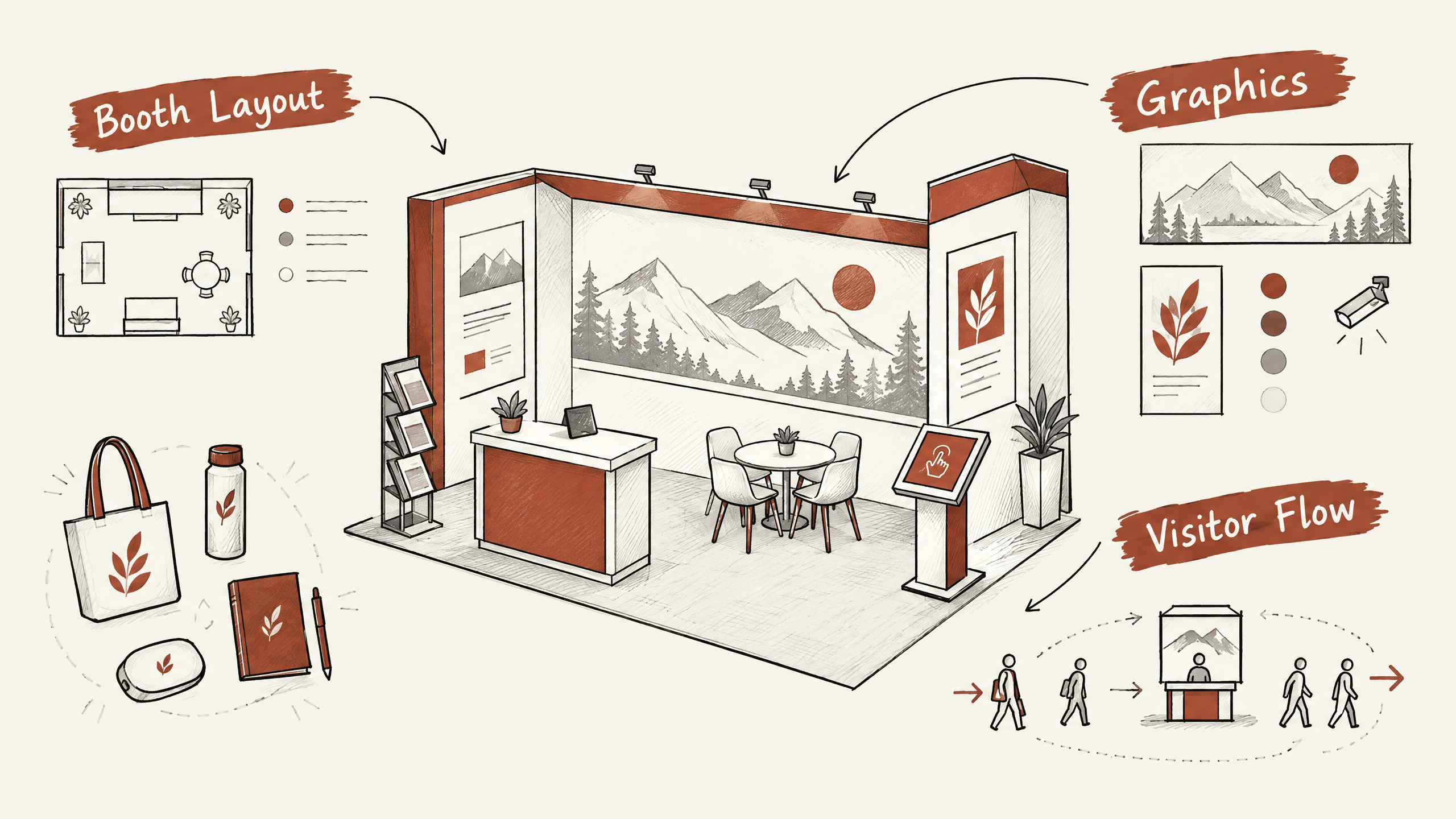
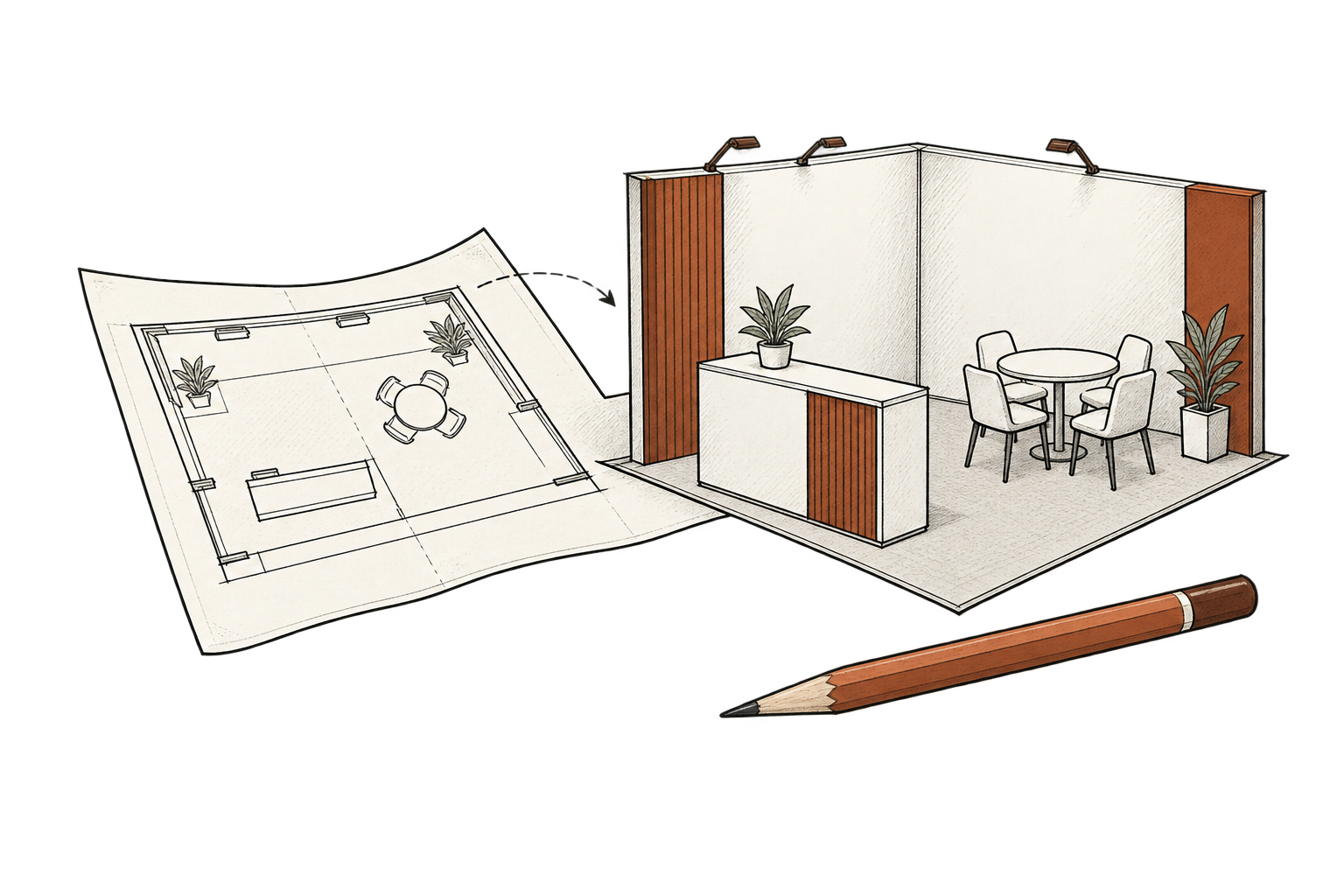
It’s not just about looking good; the design must align with your marketing objectives and attract the right visitors. Finalizing this element involves deciding on elements like layout, graphics, and interactive features well ahead of the show.
Start by establishing clear objectives for your booth.
Ask: What is the primary message you wish to convey?
Which products or services will you highlight? Knowing this will guide your design decisions, ensuring every element serves a purpose.
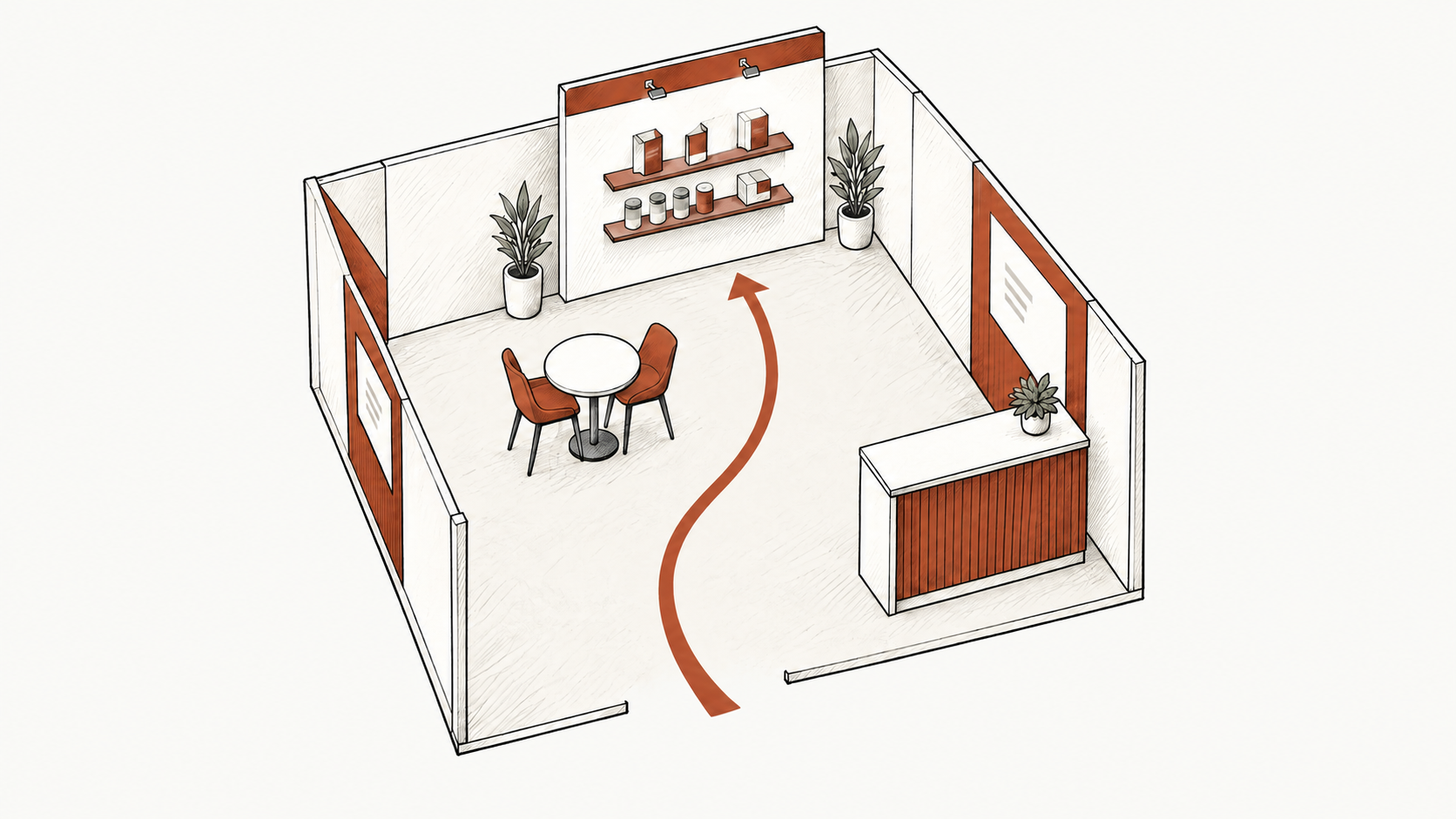
Next, map out key components of your booth. Consider the flow and accessibility of your space.
Will visitors be able to easily move through your booth?
Is there a designated area for product demonstrations or meetings?
These logistical considerations are crucial.
Avoid common mistakes like overloading the booth with too much information or neglecting the need for inviting spaces where conversations can happen.
An organized, visually appealing booth that guides visitors naturally can be a big improvement. Checklists can help: list all necessary elements and cross-check as you plan.
Consider the timeline for design approvals. Internal stakeholders may need to review and sign off, so factor in time for revisions.
This helps prevent last-minute stress, allowing your team to focus on execution closer to the show.
Finalize your design far enough in advance to accommodate potential delays in production or shipping.
Your next step is the collaboration between designers, marketers, and sales staff.
These teams should be in sync, as their insights can refine the booth design. Interaction at this stage is crucial to make sure all team objectives are met, and deadlines don’t slip.
2. Book Logistics Services
When preparing for a trade show, organizing logistics should be a priority after finalizing your booth design.
Early booking of logistics services can help avoid rushed decisions and possible cost increases.
Coordinate with freight companies or specialized trade show logistic providers several months before the event.
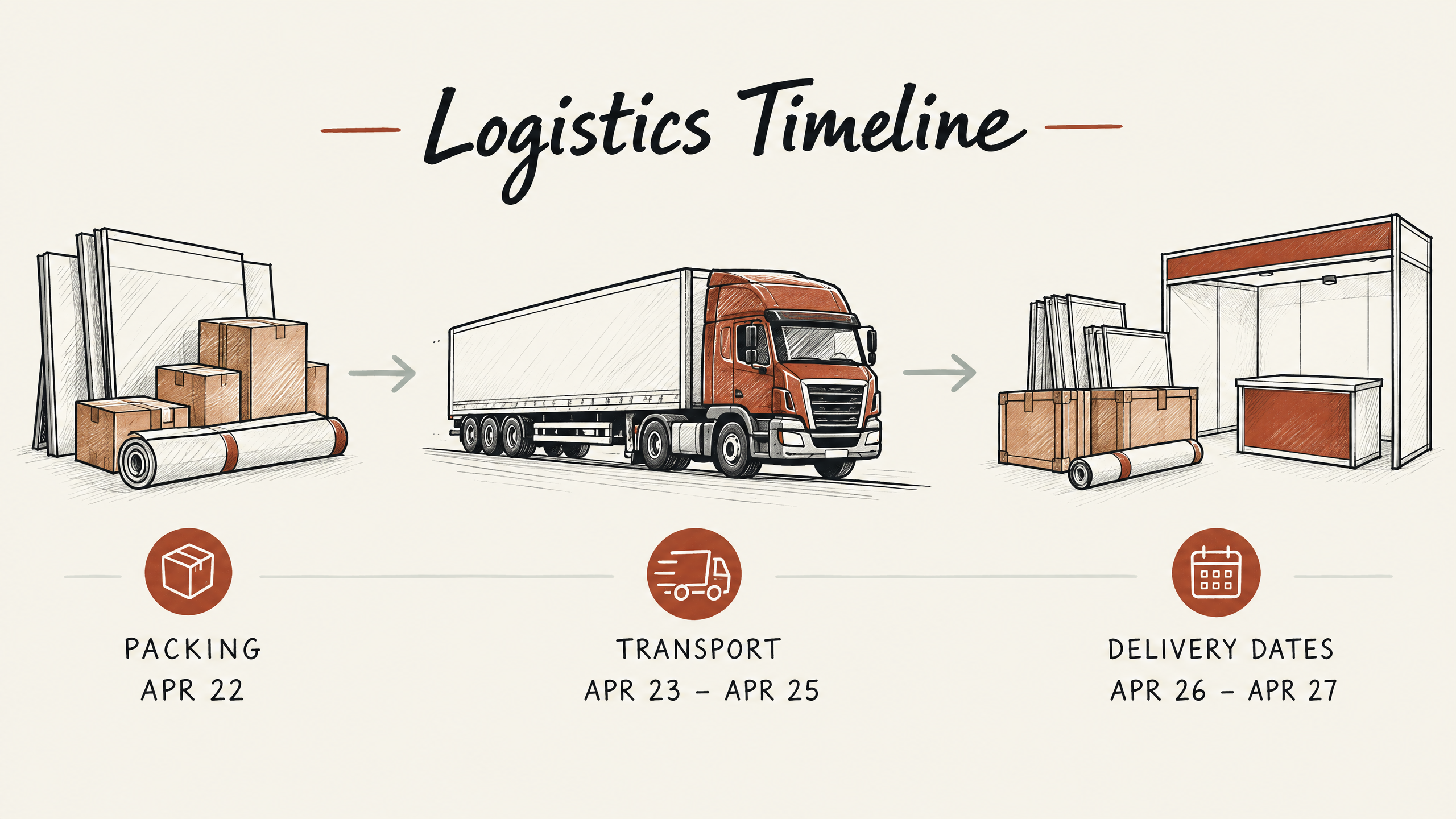
Confirm the dates to make sure all materials arrive at the venue on time.
Drafting a detailed logistics timeline can simplify the process. Start by creating a list of all items to be transported, including booth components, marketing materials, and product samples.
An effective timeline will accommodate any potential delays or complications that may arise. As a guideline, plan for at least a one-week buffer for each leg of transportation services.
Another practical step is to outline and compare different logistics providers. Look for providers who specialize in trade shows, as they often offer services tailored to such events.
They understand the typical timelines and restrictions, especially when it comes to navigating venue-specific regulations.
A key consideration is balancing cost with the reliability and reputation of the provider.
Important: Book your logistics services several months in advance to avoid costly delays and make sure smooth transport of your trade show materials.
Don’t overlook the paperwork and permits required for shipping.
Failure to manage these can result in costly delays or complications.
Discuss with your chosen logistics partner to make sure you meet all requirements. Secure the necessary documentation well before your materials are shipped to the venue.
This foresight can prevent last-minute issues.
Remember, effective logistics planning isn’t just about getting your materials to the venue.
It also involves considering the return journey. Align your bookings not only for the delivery to the trade show but also for when the event ends.
This comprehensive approach ensures a smooth experience from beginning to end.
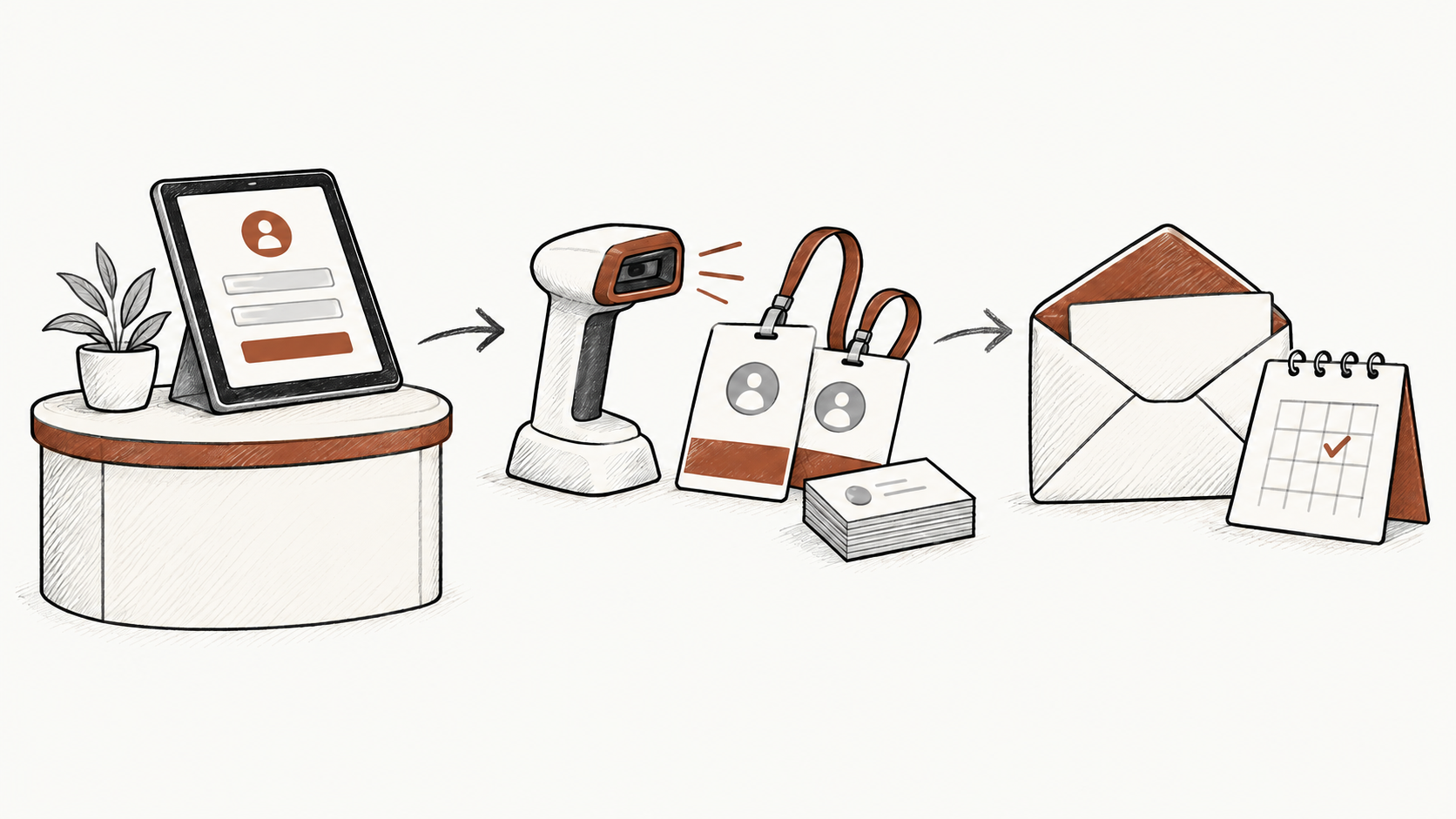
3. Register Attendees
Registering your team for a trade show might seem straightforward, but it’s a critical step that involves both timing and detail.
Missing an early registration deadline could lead to higher fees or even missing out on the event if space runs out.
I recommend marking these key dates on your team’s calendar as soon as they become available.
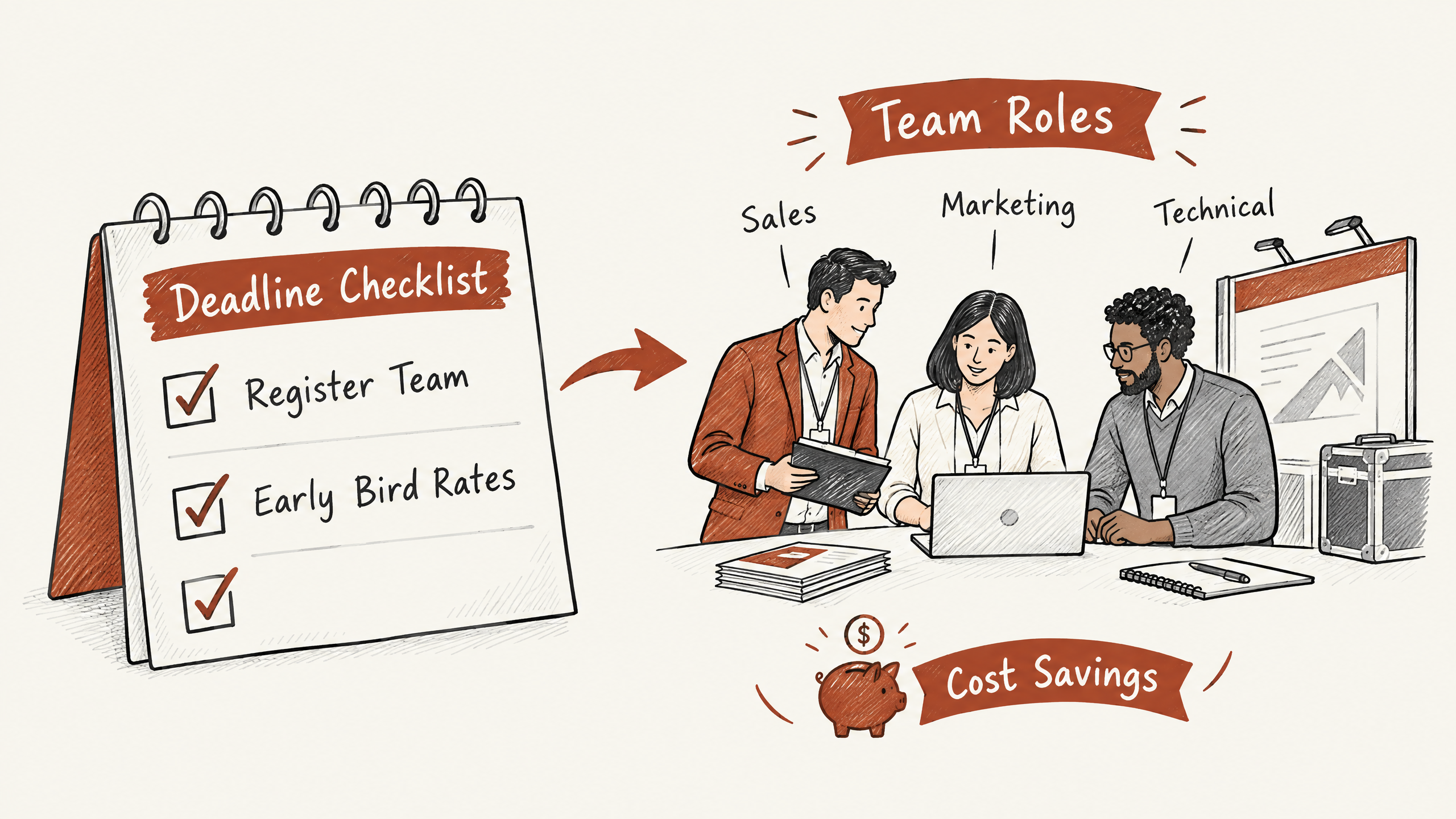
This may involve early bird rates that bring cost savings, essential for any organization’s budget planning.
Once the deadline is known, decide who will represent your company based on their roles and responsibilities.
A balanced team often includes members from sales, marketing, and technical support, each able to effectively engage different types of attendees. Work backward from the registration deadline to set internal timelines for decision-making and budget approvals.
Start these discussions early enough that you can complete the registration forms without scrambling at the last minute.
When filling out the registration forms, make sure accuracy in all entries. Incorrect or incomplete registrations could slow your check-in process or disrupt show preparations.
Some trade shows require additional materials, such as proof of vaccination or personal IDs. Have these documents ready well in advance.
A missed document can lead to unnecessary stress or registration delays.
If your team is responsible for registering clients or guests, coordinate communication clearly.
Notify them of registration requirements and deadlines as early as possible.
This step ensures that everyone is on the same page, avoiding any last-minute surprises or missed opportunities for engagement. It’s always helpful to assign one team member to handle questions and confirmations, ensuring a smooth process.
Exhibitant offers resources to assist with organizing attendee registration at trade shows, easing the workload for your team.
Use available tools and checklists to keep everything running smoothly.
By approaching attendee registration with precision and foresight, you’ll prevent hiccups that could impact trade show performance.
 Louie J.