 Lorena G.
When preparing for a trade show, managing crate logistics may not seem glamorous, but it’s crucial to a successful event. How you handle your crates can significantly impact your setup time and budget.
Proper logistics can prevent unexpected mishaps and delays.
It’s essential to take a strategic approach to crate management.
Assigning adequate attention to label clarity, crate selection, and timeline coordination can alleviate last-minute stress. Early planning will allow for smooth transitions from shipment to setup and back again.
The choice of crate matters as much as timing. Wrong crates could expose your items to risk or add unnecessary costs.
A thoughtfully chosen crate protects your valuable exhibition materials and optimizes space.
By the end of this article, you’ll be equipped to manage crate logistics effectively.
I will guide you through planning, labeling, inspecting, and more.
Each step can significantly improve the overall efficiency of your trade show experience.
- Plan crate logistics early to avoid last-minute issues.
- Label crates clearly for easy identification and handling.
- Choose the right shipping method for crate size and weight.
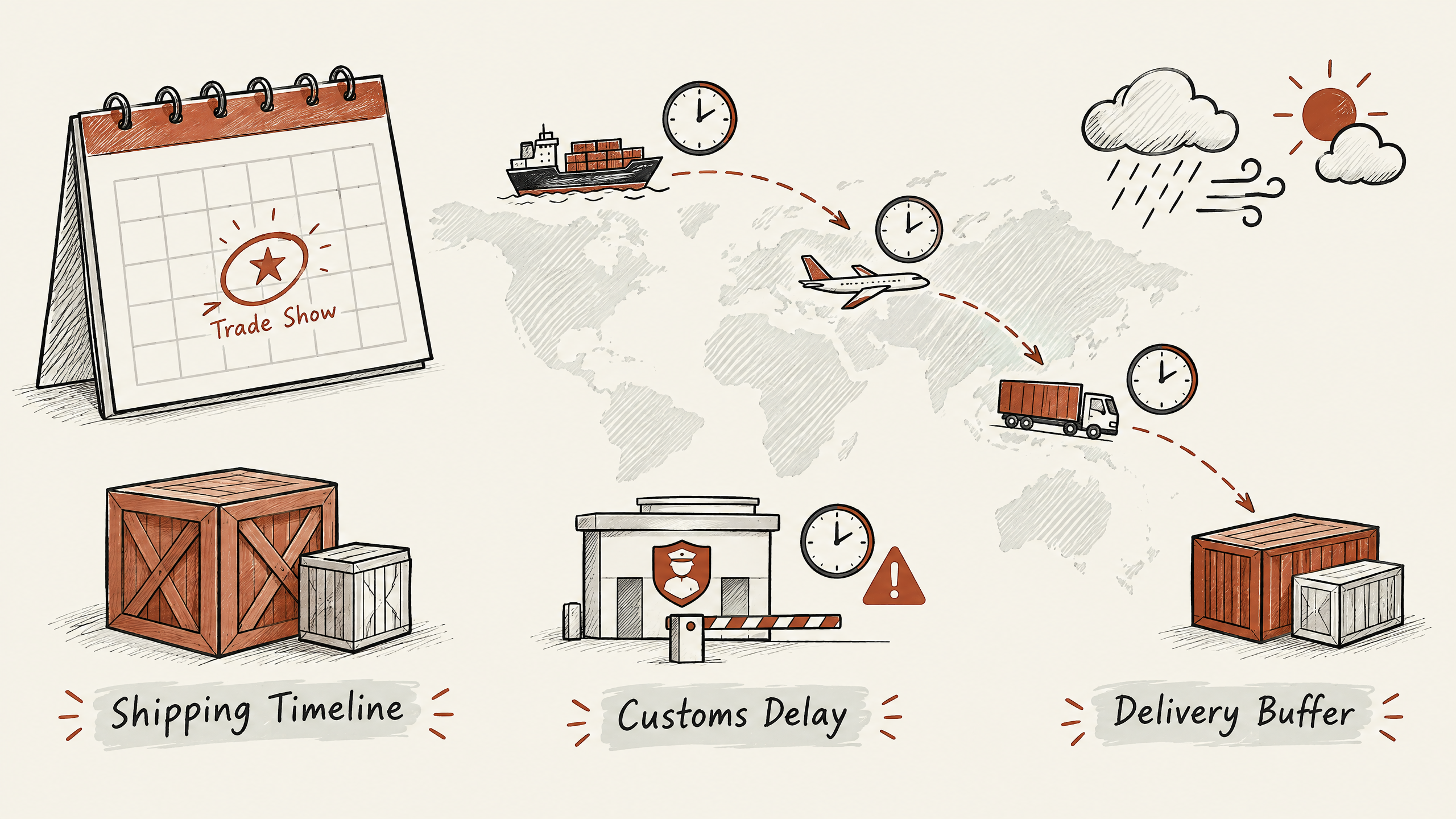
- Coordinate delivery schedules to align with event timelines.
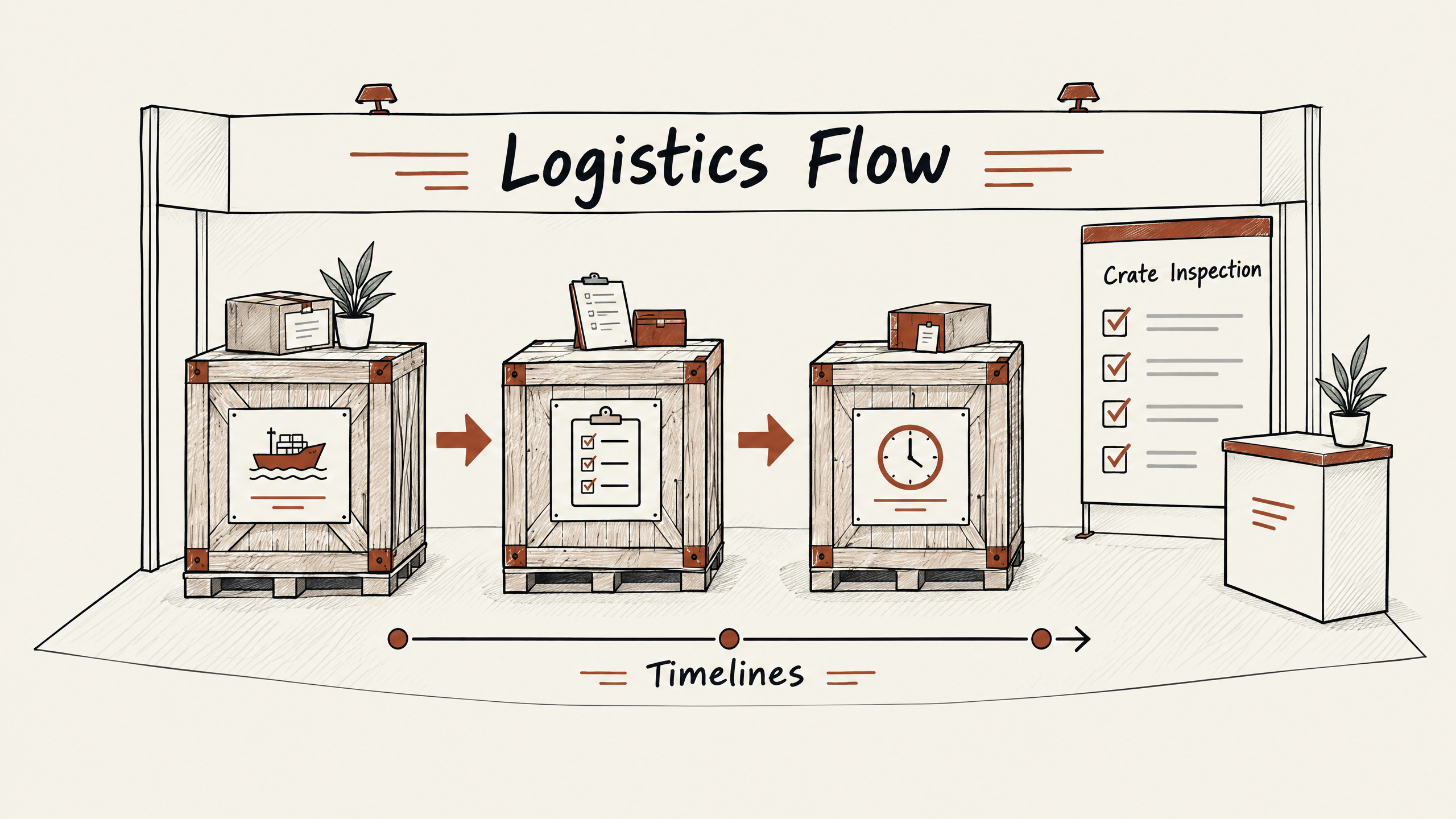
- Inspect crates for damage before and after the event.
Starting with careful crate logistics planning can save you from unexpected headaches later on.
Use the tips above to make sure your trade show operations run smoothly and efficiently.
1. Plan Your Crate Logistics Early
Starting early with your crate logistics can be the key to success for your trade show participation.
Waiting until the last moment often leads to rushed decisions and unnecessary costs. To avoid such pitfalls, I recommend that you begin the planning process well in advance.
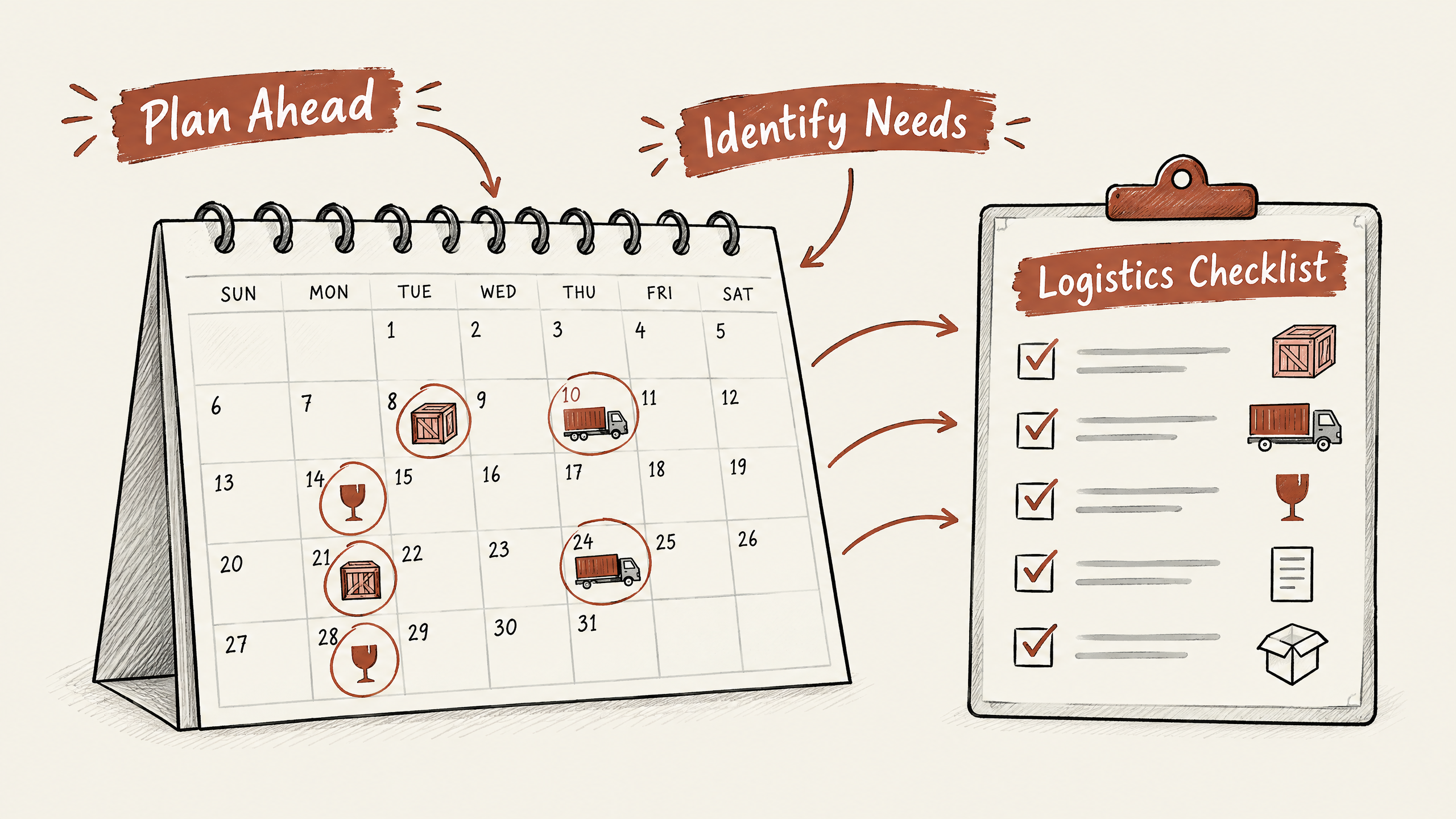
Ideally, allocate ample time to research your shipping options and understand the specific requirements of your show venue.
This proactive approach not only helps you identify the best solutions for your needs but also provides a buffer for unexpected challenges.
When planning logistics, it’s crucial to identify the contents that need special handling.
Whether it’s fragile items or oversized components, knowing what you’ll be transporting can inform your choices about crate types and protective materials.
Additionally, review the show’s guidelines to make sure you comply with regulations or restrictions regarding weight, packaging, and hazardous materials. Skipping this step could result in delays, fines, or even the loss of your materials.
Another aspect worth considering early on is the budget allocation for crate logistics.
Shipping costs can vary significantly based on factors such as distance, crate size, and delivery speed.
By planning well in advance, you can compare quotes from different logistics providers and choose one that aligns with your budgetary constraints without compromising on quality and reliability.
Be sure to consider any potential hidden fees, such as storage or peak-time delivery charges.
This helps you set realistic expectations and ensures no unpleasant surprises come trade show day.
Effectively planning crate logistics also involves involving the right stakeholders from the start.
Communication with your internal teams, such as procurement and inventory management, ensures that everyone is aligned on timelines and responsibilities.
Regular check-ins and updates can help track progress and address any issues early.
Establishing clear ownership and communication pathways can be instrumental in maintaining a smooth and coordinated logistics operation, ultimately contributing to a successful trade show experience.
2. Select the Right Crate for Your Needs
Choosing the right crate is crucial in protecting your exhibits and ensuring smooth logistics. It’s important to assess the specific needs of your trade show materials before making a decision.
This involves understanding the size, weight, and fragility of your items. For instance, if your displays include fragile or high-value equipment, you might opt for a custom-built crate with reinforced support and padding.
Various materials are available for crates, including wood, plastic, and metal. Each has its own benefits.
Wood crates are cost-effective and easily customizable, but they may not be suitable for shipping heavy or delicate items over long distances. Plastic crates, on the other hand, offer greater durability and resistance to moisture.
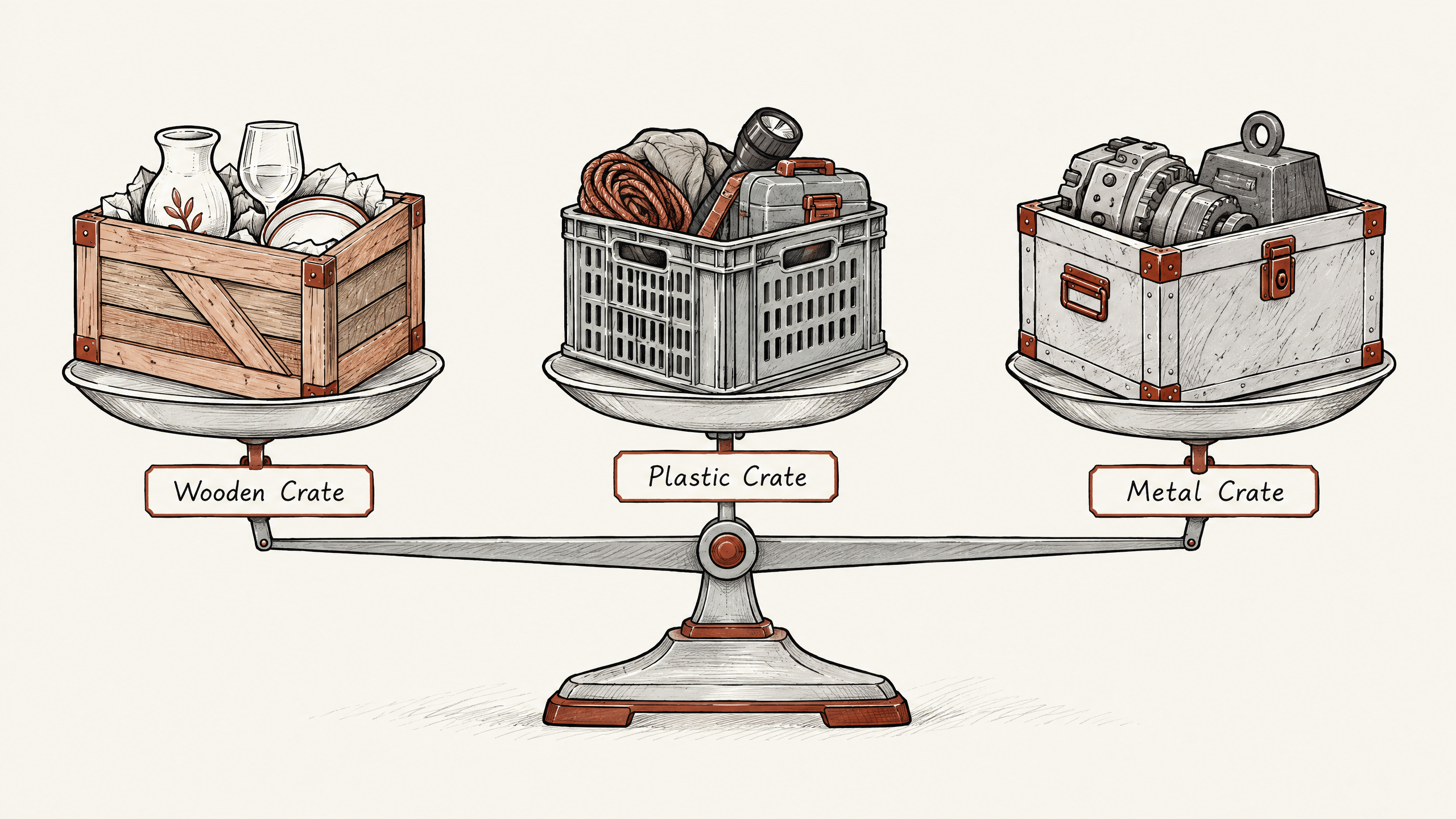
They are ideal for environments where exposure to elements might be a concern.
Consider practical criteria such as stackability, ease of handling, and compliance with regulations. For example, some trade shows have specific requirements for crate dimensions or the materials used, so understanding these guidelines ahead of time can prevent logistical headaches.
Standardized sizes can also facilitate smoother coordination with shipping carriers.
A common mistake is selecting crates purely based on cost without evaluating the potential impact on the safety of your contents.
Spending slightly more on a durable crate might save you from potential damages and repair costs down the line.
Remember that the right crate not only serves to protect but also streamlines the logistical process.
Suppose you’re shipping a mix of heavy and delicate items. In that case, splitting them into two differently engineered crates might be wiser than cramming everything into a single large one.
This approach minimizes risk and often makes handling more efficient.
3. Label Crates Clearly and Consistently
Clear and consistent labeling is crucial to avoid confusion during trade show logistics.
Without proper labels, your team might face unnecessary delays and misplaced items.
A well-labeled crate ensures that everyone handling your exhibit knows what’s inside and where it needs to go.
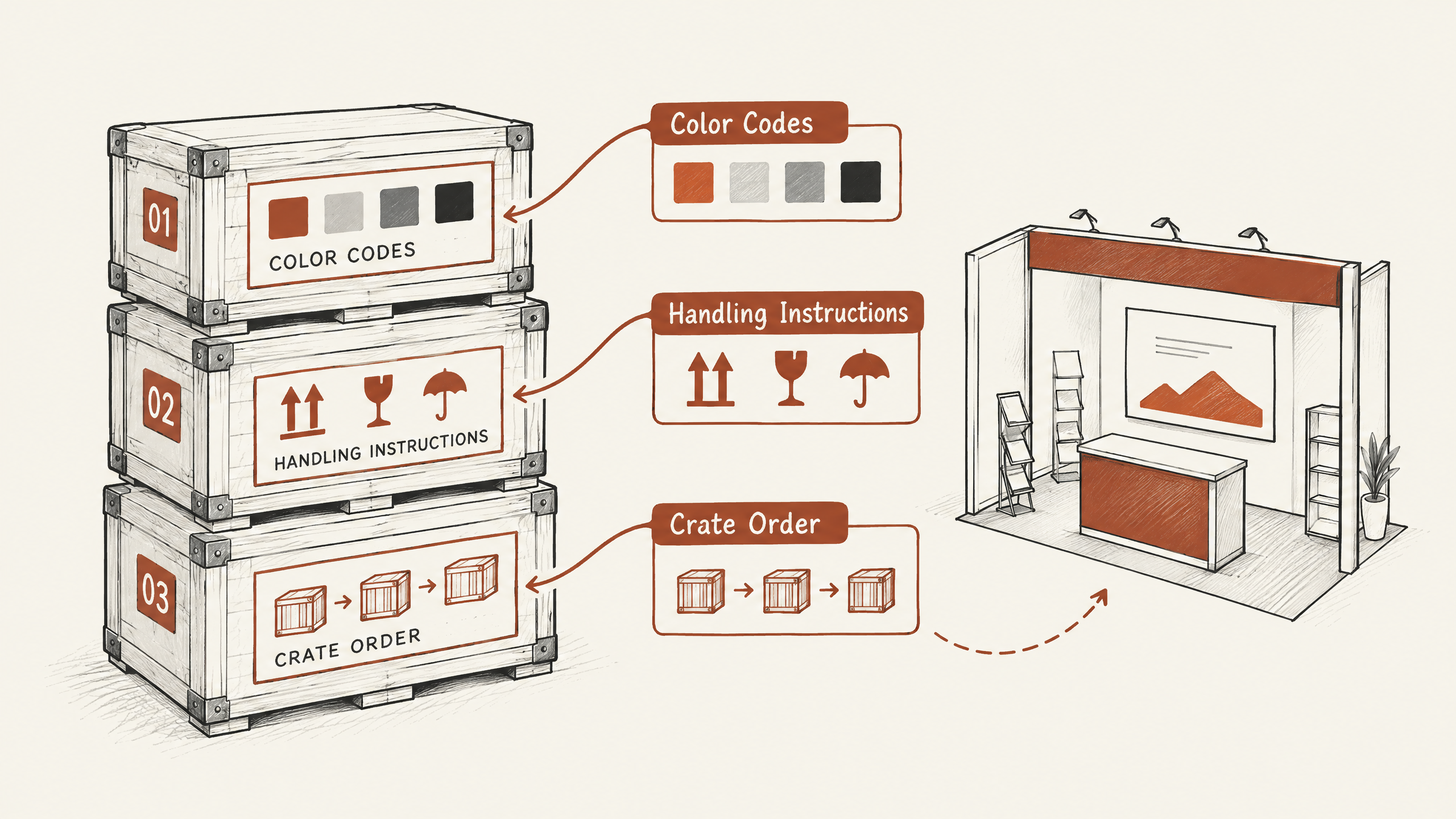
Start by using standardized labeling systems. This means having a uniform format for all crate labels, including the company name, booth number, and handling instructions.
For example, if your company requires multiple crates, label them as “1 of 5”, “2 of 5”, and so on.
This helps easily identify the total number of crates and the order they should be unpacked.
Color-coding can be an effective method in your labeling strategy.
Use different colors to designate various sections of your exhibit, such as display materials, marketing collateral, or electrical equipment.
A quick glance at these colors can inform a team member about the content and priority level of each crate.
Pay special attention to including any specific handling instructions on the labels.
If certain crates contain fragile items, make sure that this is clearly marked with “Fragile” or “Handle with Care”.
Bolding these instructions on the label can alert handlers and prevent potential damage.
However, labeling isn’t just about writing on a box.
Using durable labels that withstand transportation and handling is equally important.
Traditional paper labels may tear or become unreadable, so consider using waterproof or laminated options for durability.
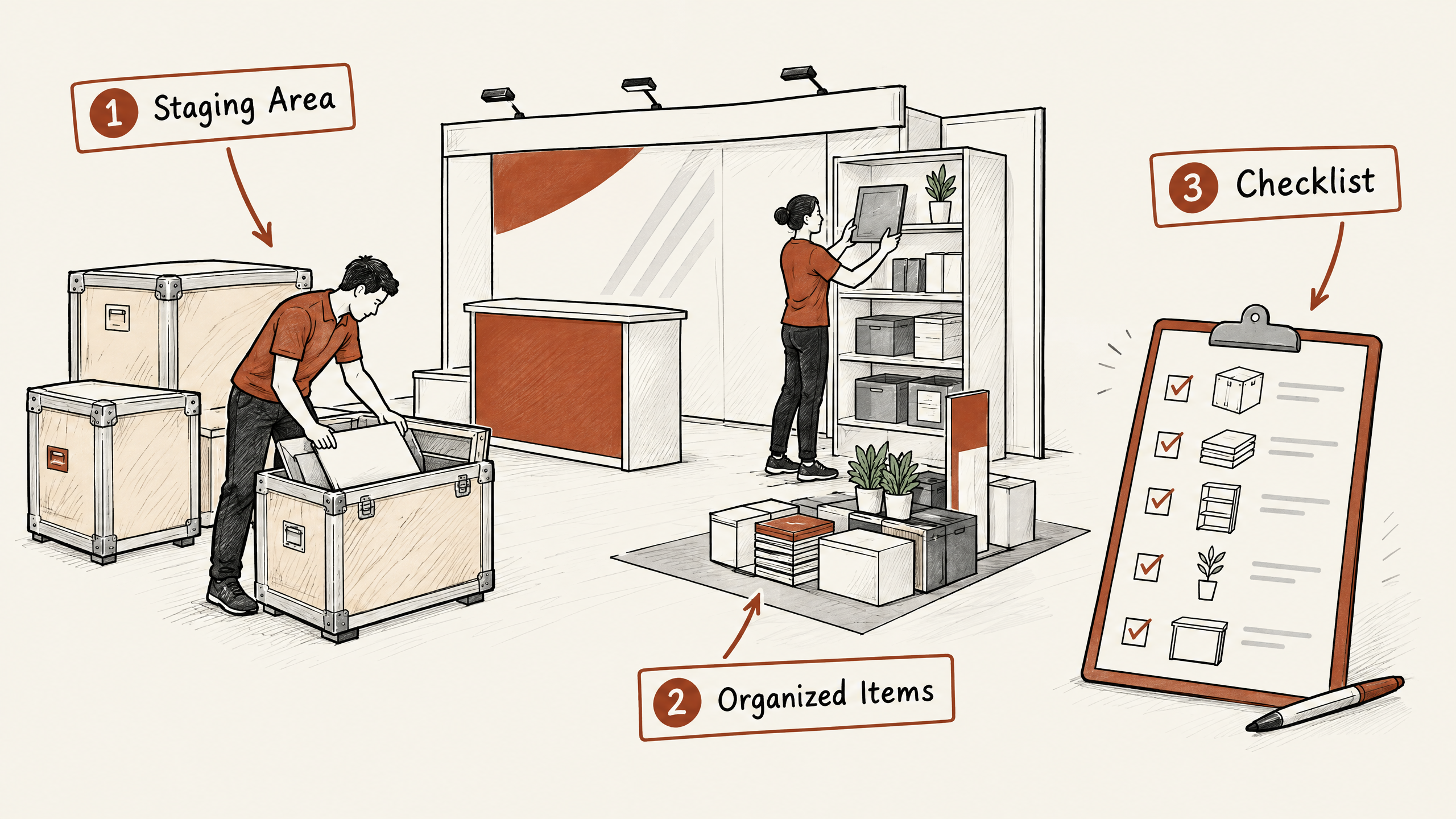
To assist your team, develop a labeling checklist that includes all components necessary for each crate.
This ensures that nothing is missed during the labeling process and contributes to a smooth logistics operation.
If this feels overwhelming, Exhibitant can provide guidance and resources to simplify your trade show logistics.



 Louie J.