
Exhibitant insights

Get practical ideas for your next campaign or show

Join our newsletter for advice on reaching B2B buyers, planning outreach, and getting more from trade shows.

B2B lead generation

Ideas for prospect research, outreach, and follow-up.

Trade show exhibits

Tips for booth design, graphics, and show preparation.

Booth Planning

7 Proven Strategies for Effective Trade Show Booth Flow

Optimize your trade show booth flow with these seven practical strategies for enhanced engagement and results.

Designing an effective trade show booth setup is crucial for engaging visitors and enhancing their overall experience. A well-planned booth flow not only draws in attendees but also ensures they spend meaningful time exploring what your stall has to offer.

As someone who has spent years focusing on booth planning, I can tell you that creating an inviting and efficient space can make a world of difference.

Perhaps you’re wondering how to balance open spaces and focal points or how to train your booth staff to handle the influx of visitors. These are exactly the kind of decisions that can affect not only visitor traffic but also how visitors perceive your brand.

Getting these details right requires planning and foresight.

One key element in booth planning is recognizing the importance of interactive zones. Engagement activities captivate your audience while also guiding them through your booth.

Similarly, clear signage can be instrumental in directing guests and keeping the flow smooth.

These strategies require an understanding of visitor behavior and a willingness to adapt your approach as needed.

In this article, I will walk you through seven proven strategies for optimizing your booth layout and visitor interactions. By the end, you’ll be equipped with the tools needed to create a booth that fosters both engagement and efficiency.

Key Takeaways:
  • Leverage strategic booth layout to guide visitor movement.
  • Incorporate interactive elements to boost engagement.
  • Use clear signage for easy navigation.
  • Balance open spaces with focal points.
  • Ensure seamless technology integration to enhance experience.

Consider how a strategic layout, engaging interactive elements, and easy-to-read signage can transform visitor flow and attention.

Make sure your booth balances open spaces and focal points while integrating technology seamlessly to enhance the visitor experience.

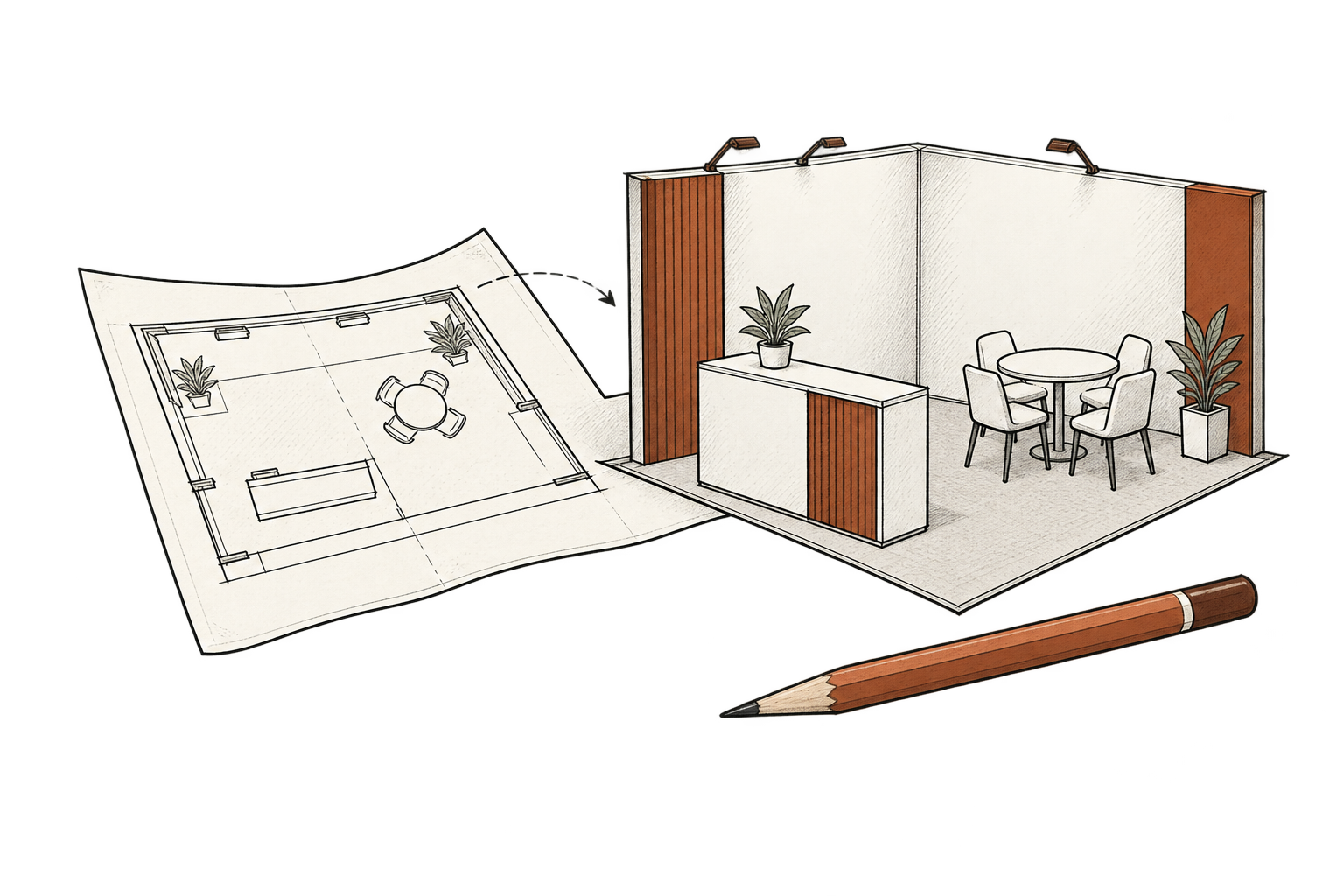
1. Plan Your Booth Layout

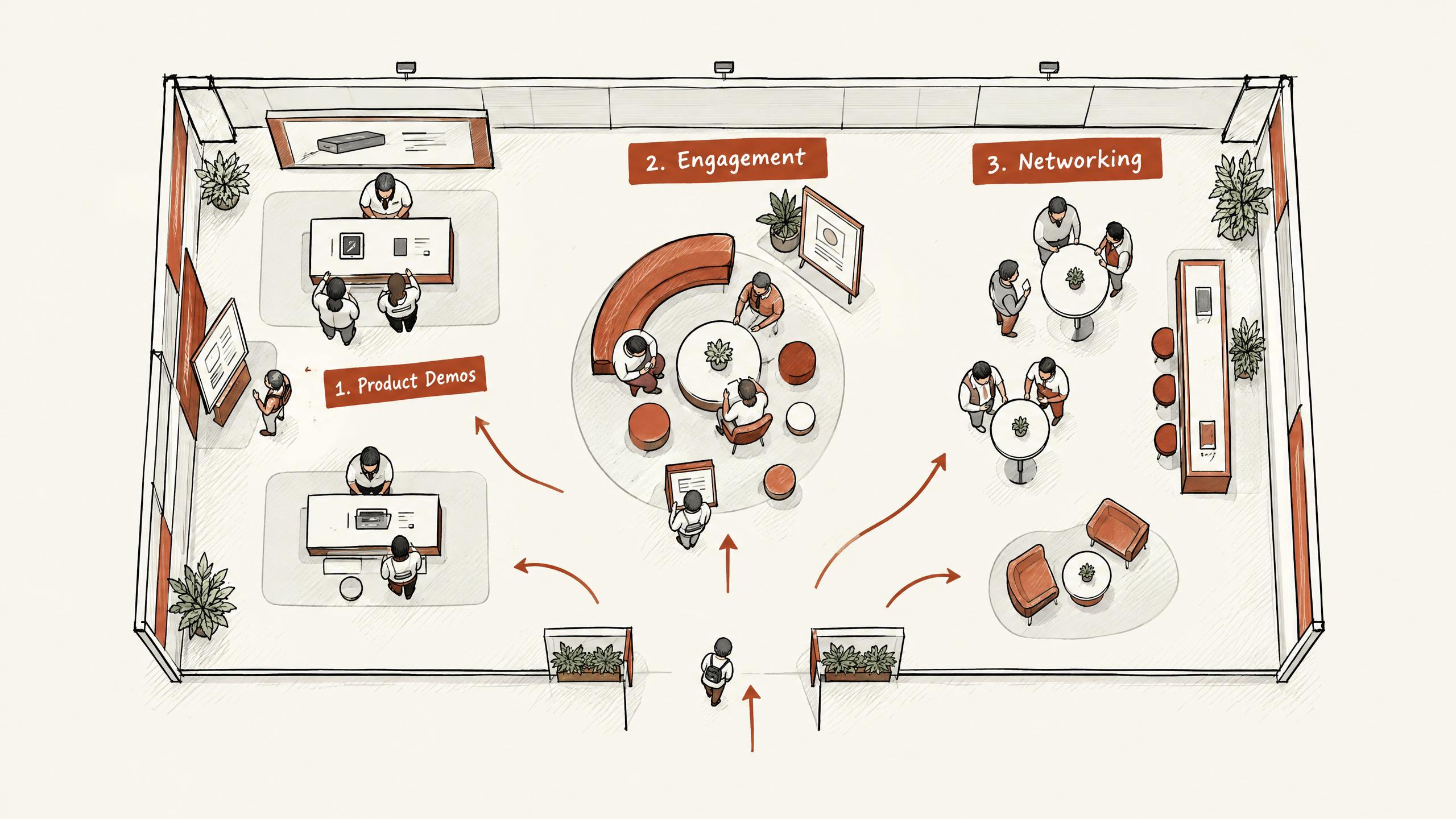
Effective booth flow begins with a carefully thought-out layout, ensuring that visitors can navigate smoothly and absorb your key messages.

When planning your layout, think about how attendees will move through your space.

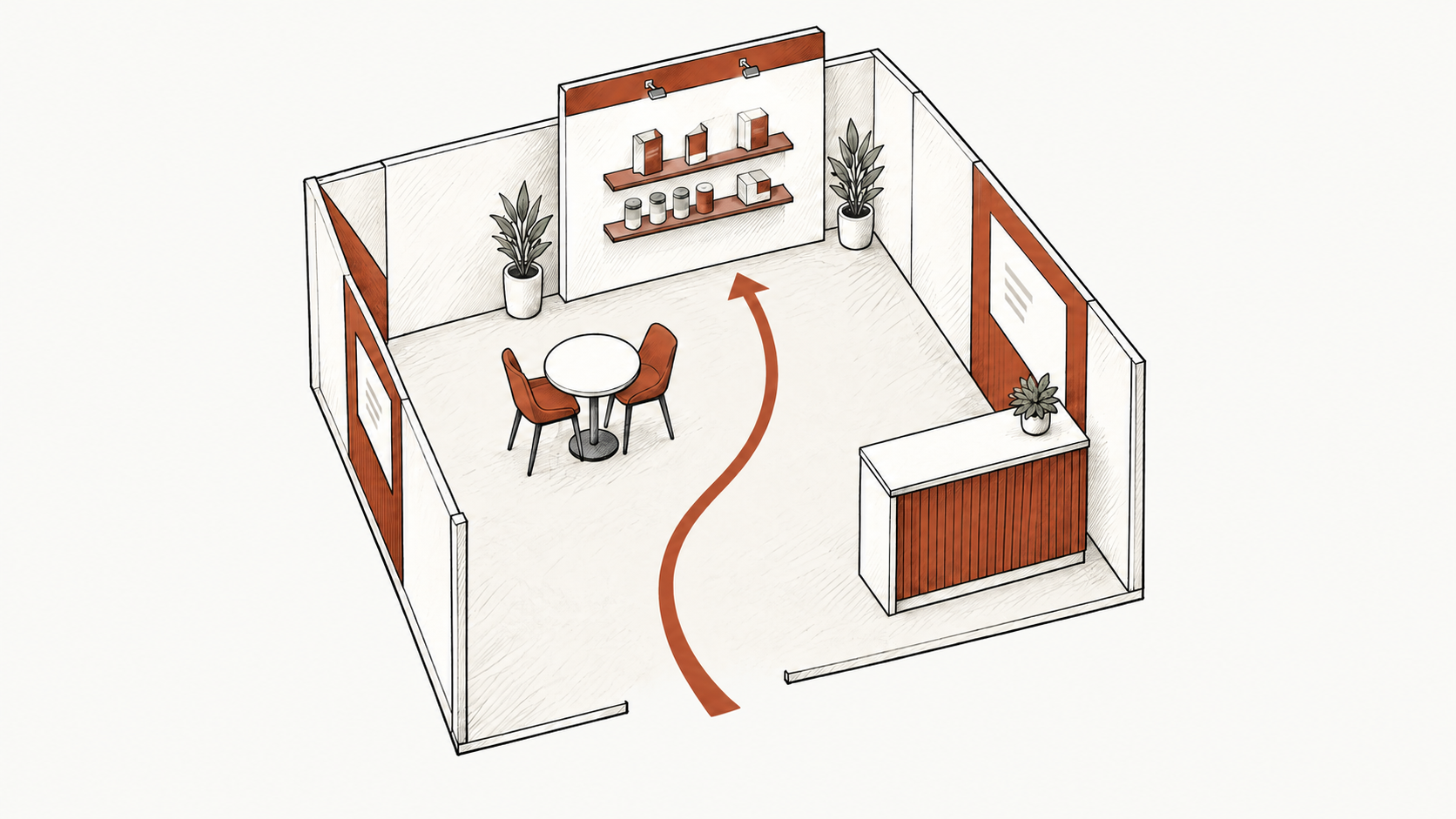
A well-designed pathway directs traffic and encourages engagement with your exhibits, maximizing every inch of your booth.
1. Plan Your Booth Layout — 7 Proven Strategies for Effective Trade Show Booth Flow

Start by identifying the main objectives for your booth.

Is the focus on showcasing new products, or is it more about building relationships?

Prioritize these goals as you design the layout.

For instance, if your primary goal is product demonstration, allocate more space for a demonstration area that attracts and retains visitors’ attention. Creating zones based on visitor interests or product categories can simplify the experience and make sure attendees find what engages them most.

It’s essential to balance visitor accessibility with maximum visibility for your products or services.

Position taller elements, like banners or large displays, around the edges to avoid blocking sightlines.

This strategy ensures your booth remains open and inviting while still prominently featuring your key messages.

Important: Position taller elements like banners or large displays around the edges to maintain open sightlines, ensuring your booth remains inviting and highlights key messages effectively.

Plan for multiple entry points if space allows, letting visitors flow in and out freely without congestion.

Exhibitant can assist by providing customized design solutions that align with your goals, from initial sketch to detailed setup.

Our team ensures your booth layout facilitates easy navigation and highlights the areas most important to your brand.

Lastly, don’t underestimate the impact of adjacent booths.

Consider how neighboring exhibits could affect your layout.

Avoid placing key elements where they may face another booth’s back or restrictive barriers. A mindful approach to your layout harnesses space effectively and prepares your trade show team for a successful event.

Use this planning phase to think ahead, giving you ample time to iterate and refine the design before final execution.

2. Create Engaging Interactive Zones

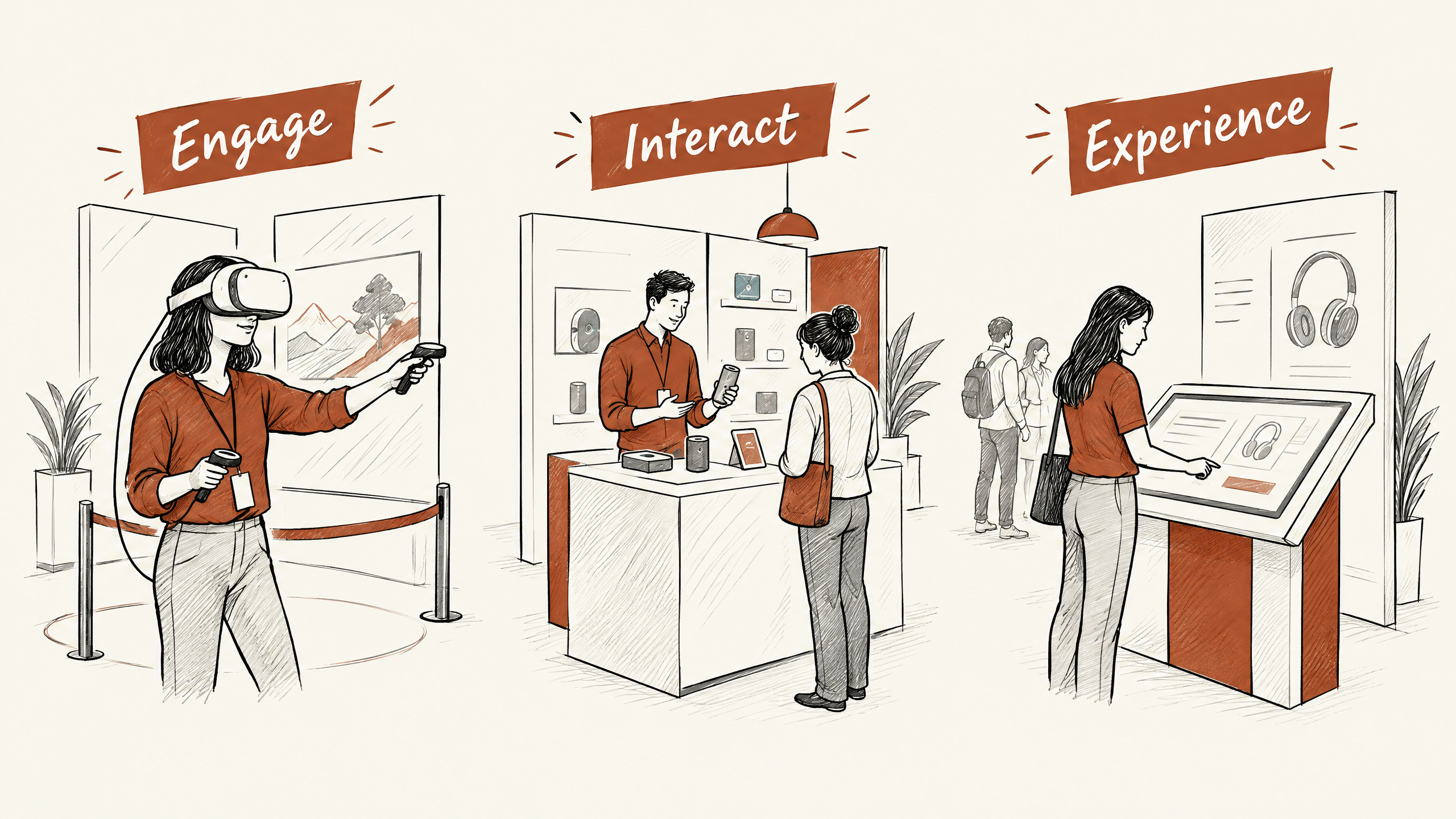
Interactive zones are a vital element in trade show booths, and they hold the power to draw attendees in.

By creating engaging experiences, you encourage visitors to spend more time at your booth, which can lead to meaningful connections and conversions.

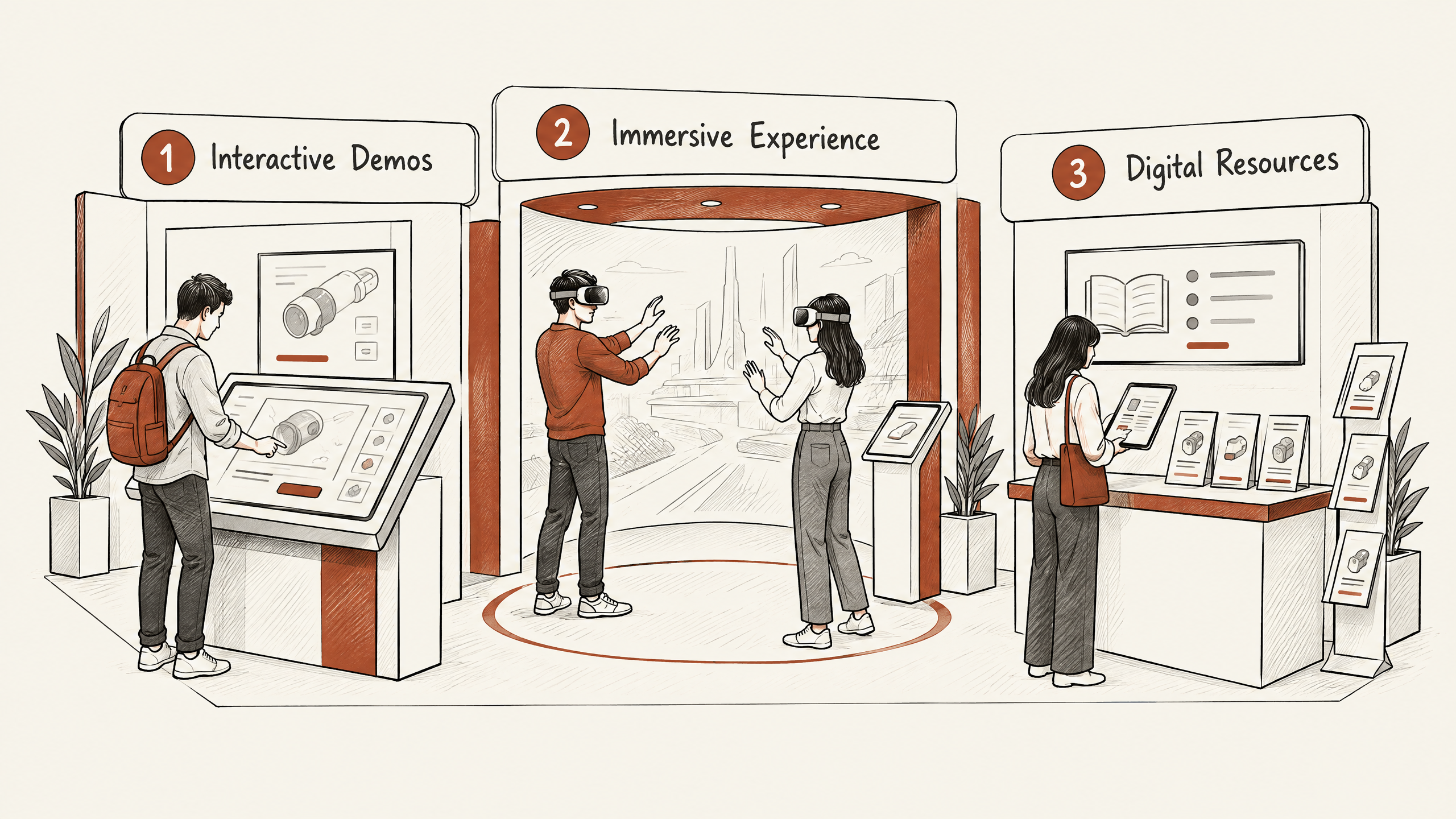
Interactive zones could include live demos, product showcases, or even a hands-on experience with your products or services.
2. Create Engaging Interactive Zones — 7 Proven Strategies for Effective Trade Show Booth Flow

The goal is to make these zones visually appealing and interactive enough to hold interest.

This active participation keeps your brand at the forefront of attendees’ minds long after the event.

When designing interactive zones, you need to tailor them to fit your brand’s identity and objectives.

For example, if you run a tech company, you might consider setting up a virtual reality experience that highlights your latest technology. This not only grabs attention but also allows potential clients to explore how the technology works in a real-world scenario.

If your company is in the culinary industry, offering tasting sessions where participants get to try your latest flavors can create a lasting impression.

Embedding interactivity requires strategic planning.

First, identify what will engage your target audience.

Consider their interests and preferences when designing these zones.

A hands-on experience will be more effective for a physically interactive product, while a digital demonstration might be suitable for software or services that can’t be physically interacted with. Collaborate with your team to make sure that the experience is smooth and leaves visitors with a positive impression.

Be aware of potential challenges when creating interactive zones.

Limited space can be a constraint, so design experiences that get the most out of engagement without occupying the entire booth. make sure smooth traffic flow around these zones to avoid congestion. Staff should be well-prepared to assist visitors and facilitate these interactive engagements.

One common mistake is making these zones too complex; simplicity often leads to better user experience. If visitors get frustrated, they may walk away.

By finely tuning your interactive zones, you enhance the overall visitor experience and make your booth a memorable stop.

A successful interactive area directly impacts the number of quality leads you collect, making the extra planning worth the effort. Start by brainstorming which interactive element would best show your product, and align it with your marketing goals for the event.

3. Use Clear Signage to Guide Visitors

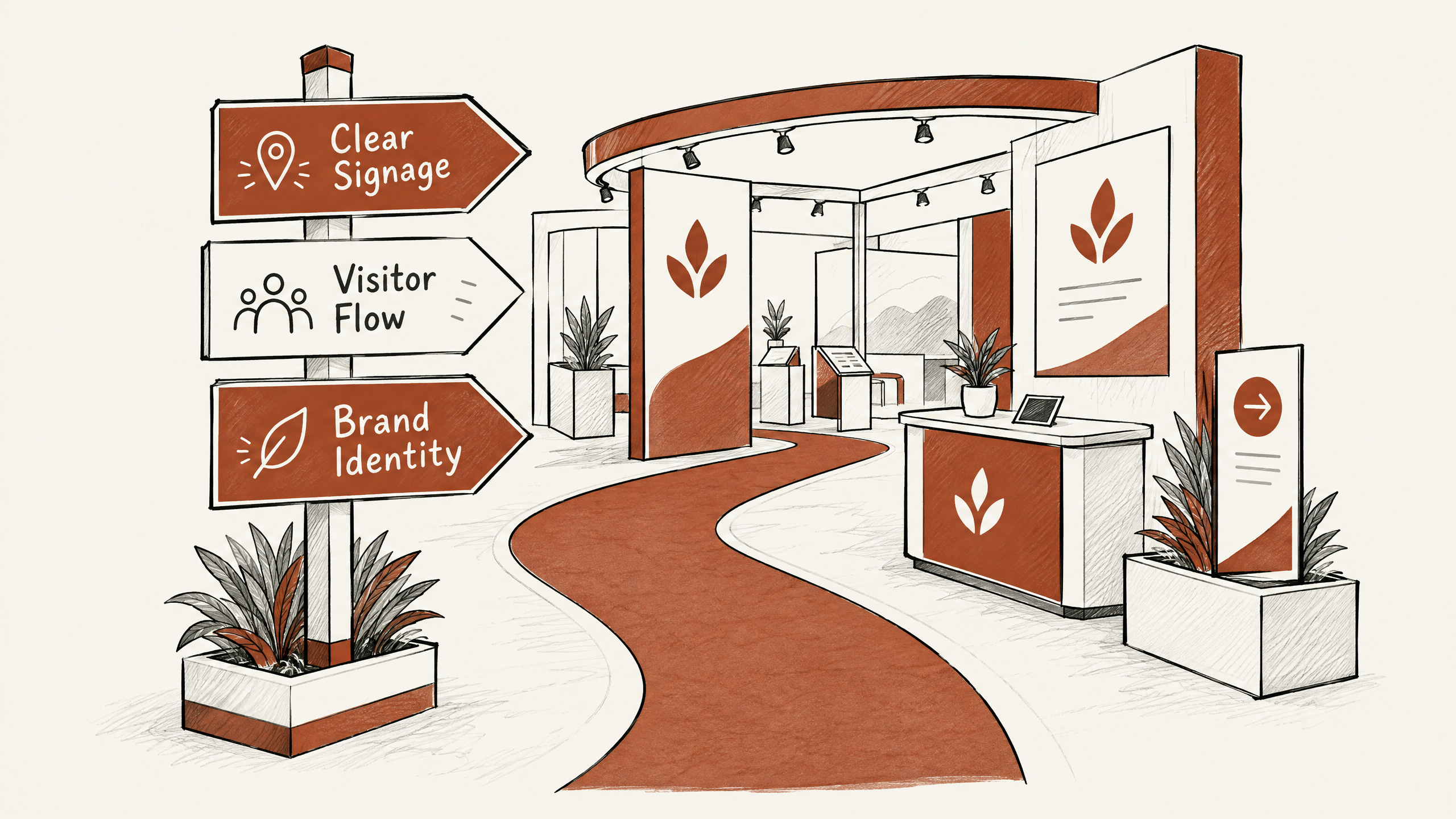
Clear signage is essential for directing visitor flow in a trade show booth.

It not only provides information but also helps to create a path that guides attendees through your space.

The effectiveness of signage can significantly impact how visitors perceive and interact with your exhibit. You want people to understand precisely where to go and what to do, minimizing confusion and maximizing engagement.
3. Use Clear Signage to Guide Visitors — 7 Proven Strategies for Effective Trade Show Booth Flow

First, create signage that reflects your brand’s messaging consistently. Use colors, fonts, and language that align with your marketing materials.

This consistency not only reinforces brand identity but also instills a sense of confidence and reliability among your visitors.

For example, if your brand is known for innovation, make sure that your graphics and messaging convey that tone.

Next, position your signage strategically.

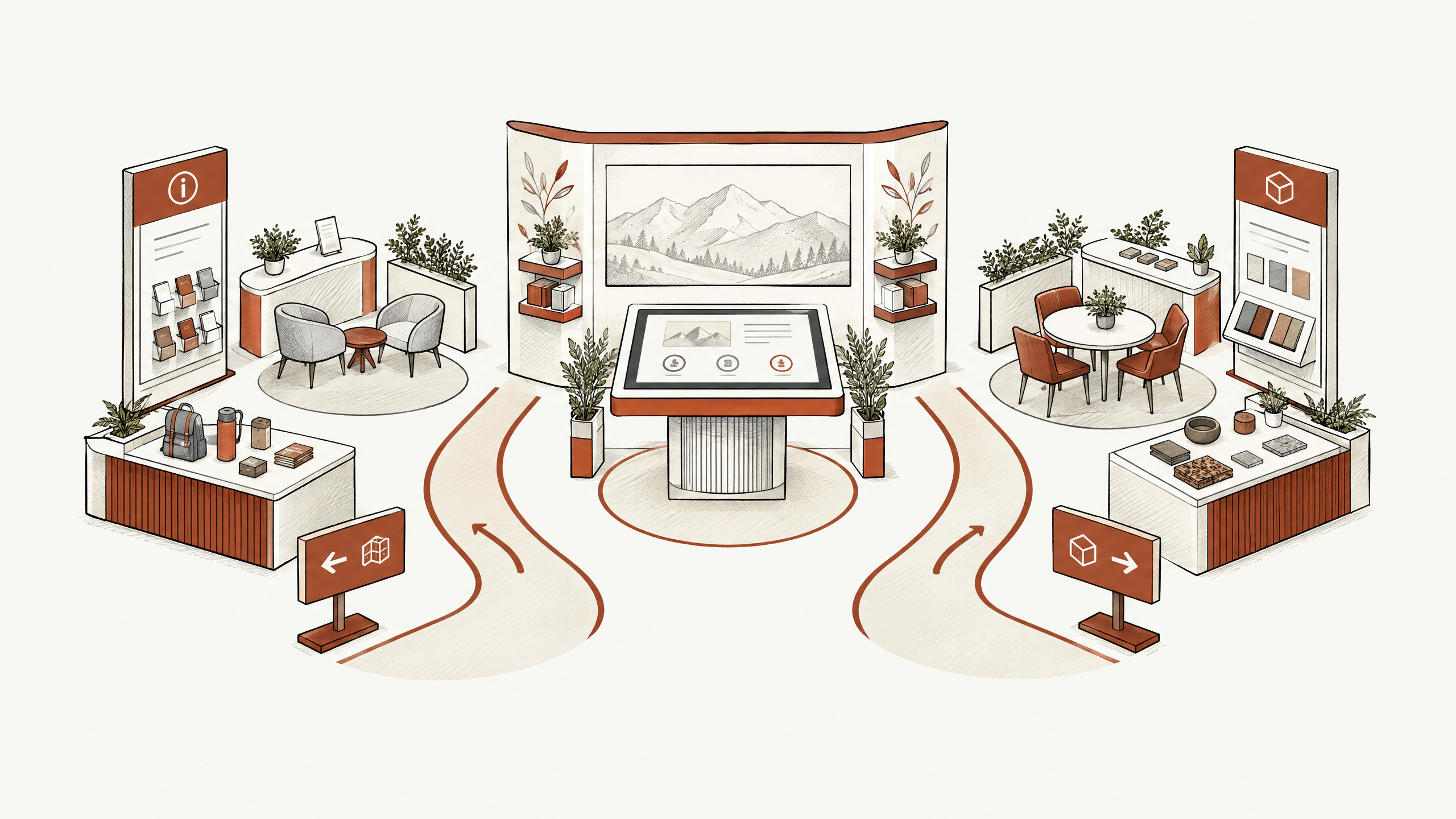
Place larger signs in high-visibility areas, such as entrances and key decision points, to highlight critical messages.

Smaller signs can be used to navigate specific areas within the booth.

Avoid clutter and keep messaging succinct no more than a few words per sign. Visitors will not read lengthy text while walking through multiple exhibits.

Pro Tip: To get the most out of engagement and guide visitors effectively, make sure your booth signage uses consistent branding, strategic placement, succinct messaging, and interactive elements like QR codes for easy information access.

Incorporating signs with multimedia elements can also enhance visitor experience. Using digital displays or interactive touchscreens can make information more dynamic.

This approach is particularly beneficial for attracting attention to special promotions or product demonstrations.

However, make sure that digital elements are intuitive and simple for attendees to use.

Complicated interfaces can deter, rather than attract, engagement.

Remember that signage isn’t just about wayfinding; it’s also about enhancing visitor engagement. Signs that encourage interaction, such as QR codes for quick information access, can create more memorable experiences.

Exhibitant can assist in designing signage as part of our comprehensive trade show planning services, helping your booth stand out and drive engagement.

Finally, test your signage before the event begins. Walk through the booth as if you were a visitor.

Pay attention to any areas where the flow stalls or bottlenecks. This trial run will help identify potential improvements, ensuring you create the most streamlined and effective visitor journey possible.
4. Balance Open Spaces and Focal Points

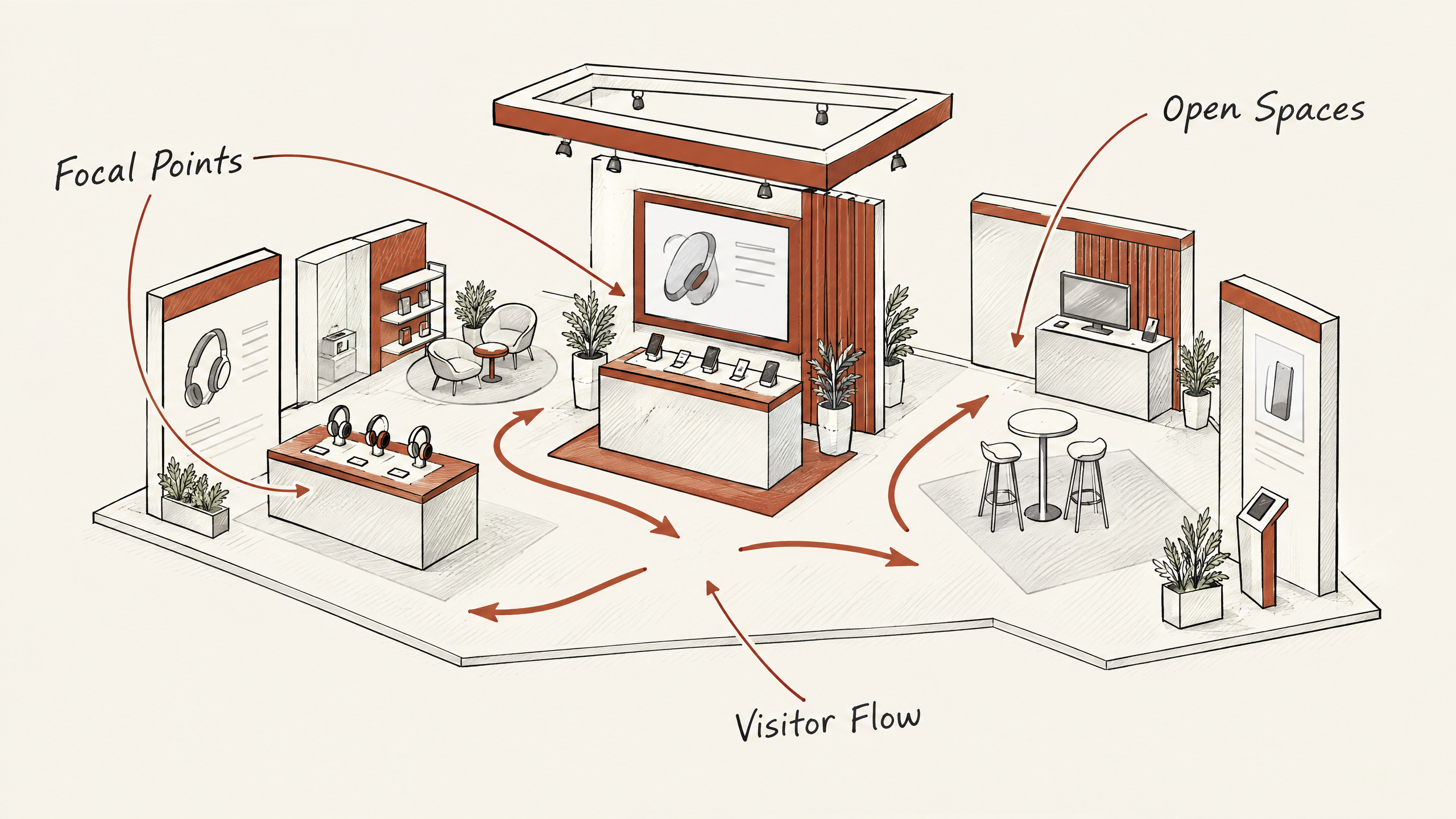
One key decision in designing your trade show booth is how to balance open spaces and focal points. This balance influences both the flow and engagement within your booth.

An effective trade show booth should invite attendees to explore without overwhelming them. Too much open space could make a booth feel empty and uninviting, while too many focal points can lead to clutter and confusion.

To strike this balance, start by defining the main attractions or features that will serve as the focal points within your booth.

4. Balance Open Spaces and Focal Points — 7 Proven Strategies for Effective Trade Show Booth Flow

These could include product displays, demo stations, or interactive elements. Strategically position these focal points such that they capture visitors’ attention but do not obstruct the flow.

Use dividing elements or partitions if needed to create distinct areas or zones without closing off space.

Maintain open pathways that allow for easy navigation between focal points. Clear walkways make sure that attendees can move comfortably and linger where needed.

A common mistake is to block or narrow pathways with unnecessary items or clutter, which disrupts the flow and turns visitors away. Mindful placement and spacing will create a welcoming environment that encourages exploration.

Consider visibility when arranging your booth. make sure that each focal point is visible from different angles so that attendees can naturally gravitate towards them.

Use vertical elements like banners or elevated displays to draw the eye upward and create interest without consuming floor space. As a rule of thumb, keep focal points low enough to be interactive but high enough to catch the crowd’s attention.

In your booth planning, aim to create a harmonious design that smoothly blends open spaces with engaging focal points.

Test different configurations beforehand if possible, to see how they impact flow and visibility. By thoughtfully balancing these elements, you can create an inviting and dynamic booth environment that facilitates meaningful interactions.

5. Integrate Smooth Technology

Incorporating technology into your trade show booth can significantly enhance the visitor experience, but it’s essential to do it thoughtfully and purposefully.

Start by identifying the specific needs of your audience and determining how technology can address those needs.

This could involve demonstrating products through interactive screens or providing digital brochures that visitors can download on their devices.

5. Integrate Smooth Technology — 7 Proven Strategies for Effective Trade Show Booth Flow

Selecting the right type of technology is crucial.

Consider technologies like touchscreens, augmented reality, or virtual reality, depending on the complexity of your product or service. For instance, virtual reality can be a powerful tool for a company showcasing a new architectural design, allowing visitors to immerse themselves in a building that hasn’t been constructed yet.

It’s important that the integration of technology feels natural rather than forced. The technology should enhance and not overwhelm the booth’s overall flow.

Arrange digital displays in a way that naturally guides the visitor through the space, complementing the physical elements of your booth rather than creating physical or visual clutter.

The practical steps to integrate technology include collaborating with a team that understands both technical requirements and trade show dynamics. Timeline planning is vital: coordinate with tech providers early for testing and troubleshooting. make sure adequate power and connectivity, and train staff to use the tech efficiently.

A common mistake is over-reliance on technology without a backup plan. Technology can fail, so always have traditional methods of engagement and communication as a backup.

This ensures that your booth remains functional and inviting, even if tech issues arise.

6. Train Your Booth Staff Effectively

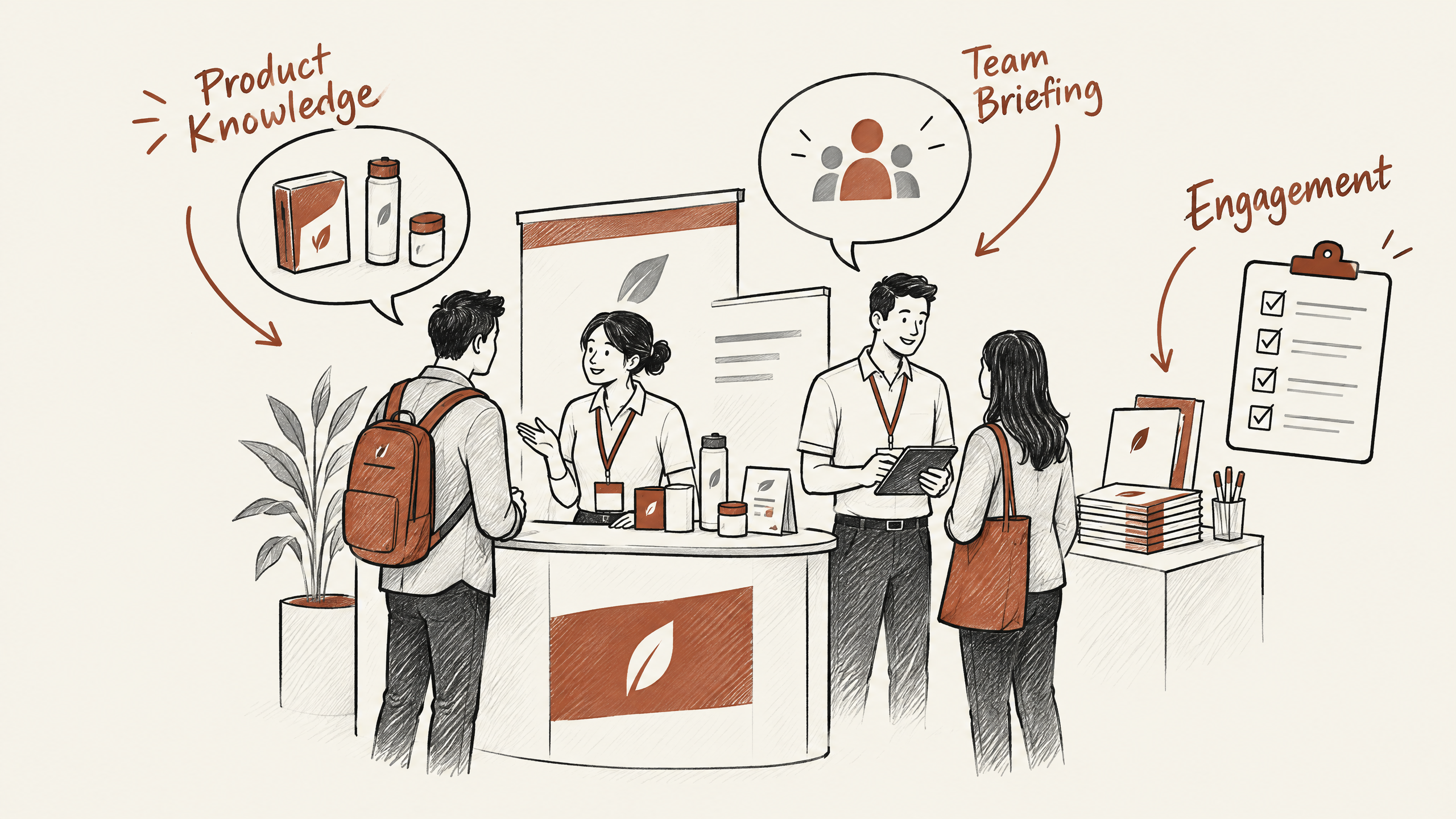
To make sure your trade show booth runs smoothly, it’s crucial that your staff is well-prepared and knowledgeable. The first step in achieving this is to provide them with a clear understanding of your brand’s message and goals.

Have a pre-show briefing to discuss the specific objectives and how each team member can contribute. This helps prevent confusion and ensures everyone is working towards the same target.

Next, equip your staff with product knowledge so they can confidently answer questions and engage with visitors. This not only builds credibility but also enhances the visitor’s experience.

6. Train Your Booth Staff Effectively — 7 Proven Strategies for Effective Trade Show Booth Flow

Conduct training sessions where your team can familiarize themselves with product details and rehearse potential interactions.

An informed staff can turn inquiries into meaningful conversations and opportunities.

Role-playing is another tool that can be valuable in preparing staff for unexpected situations. Simulate common scenarios and challenges they may encounter at the booth, such as how to manage a difficult visitor or clarify product misconceptions.

This practice helps improve communication skills and boosts confidence, preparing your team for real-world interactions.

Important: Ensuring your booth staff is well-prepared with thorough product knowledge and positive engagement strategies is vital for transforming visitor interactions into valuable opportunities.

Additionally, make sure your team knows how to work with any booth technology used for presentations, lead capturing, or demonstrations. Familiarity with these tools is essential for a smooth operation.

Schedule practice runs with the technology to address potential technical issues and to make sure smooth execution during the event.

Finally, stress the importance of a positive attitude and proactive approach.

Encourage your team to be approachable, engage visitors actively, and focus on creating a welcoming environment.

A well-trained, enthusiastic team can dramatically improve both visitor satisfaction and the overall success of your booth.

7. Gather and Analyze Visitor Feedback

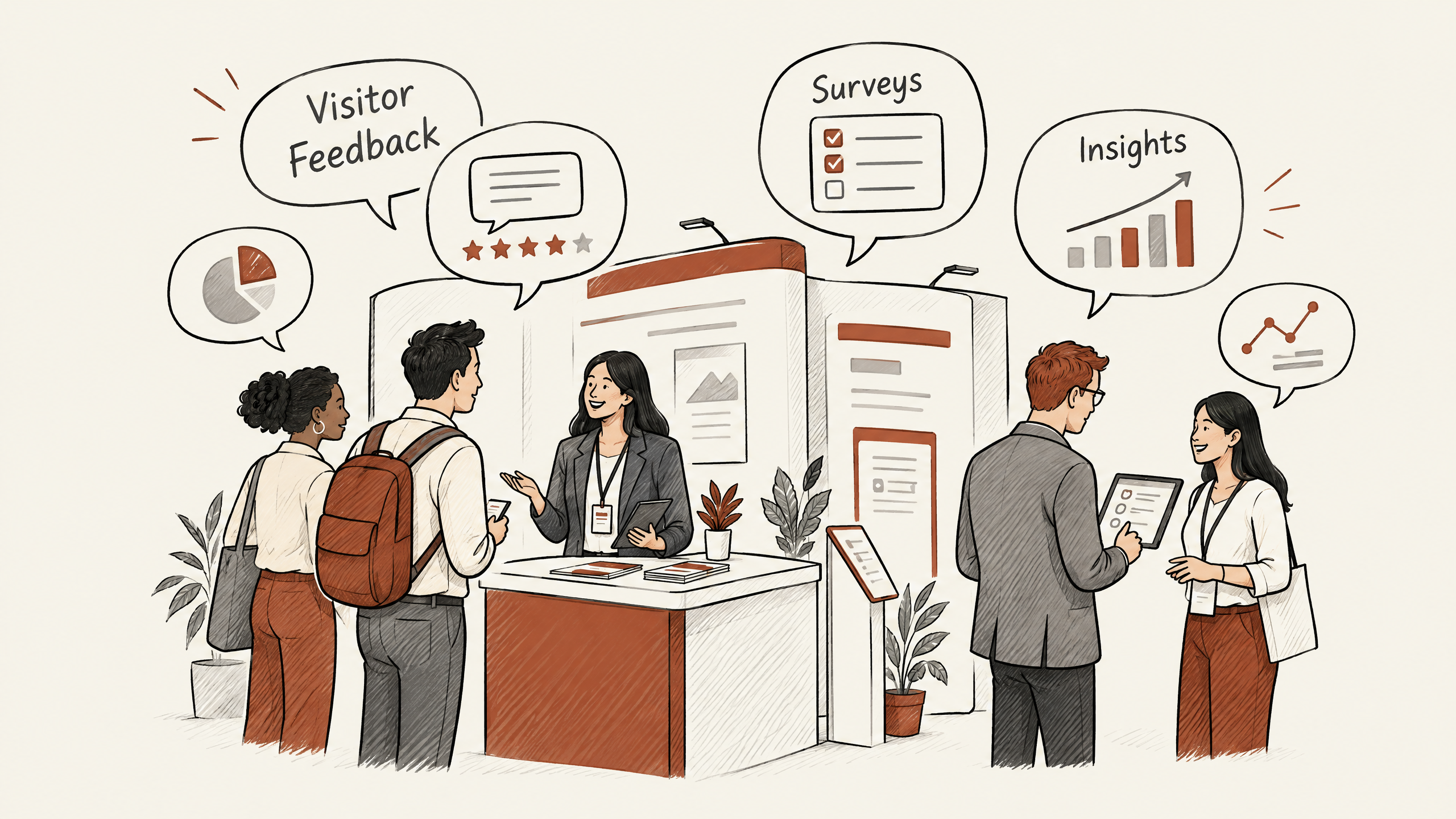
Collecting visitor feedback is a crucial step in refining your booth strategy.

By understanding the perspectives of those who visit your booth, you can make informed adjustments for future events. Start by deploying a mix of methods to gather this information effectively.

Surveys are a popular tool for capturing detailed feedback. Develop short, targeted surveys that attendees can complete on the spot or digitally after their visit.

7. Gather and Analyze Visitor Feedback — 7 Proven Strategies for Effective Trade Show Booth Flow

Questions should address specific aspects of the booth experience, such as clarity of information, level of engagement, and quality of interaction with staff.

An alternative approach is the post-event interviews with selected visitors.

These can provide deeper insights into their experience and allow you to ask follow-up questions. make sure that these interviews are concise and respect participants’ time and privacy.

Once you have collected the feedback, focus on analyzing the data to identify common themes and areas for improvement. Look for patterns in the feedback that point to specific strengths and weaknesses in your booth flow and design.

Consider the possibility that the feedback may not always be positive.

Pro Tip: Consider implementing quick, targeted post-visit surveys digitally while memories are fresh, helping you gather detailed insights to refine your booth strategy for future events.

Negative feedback can provide valuable insights if managed properly.

Be prepared to act on the feedback you receive, using it to make concrete improvements to your booth layout, signage, or interactive zones.

Timing is another important consideration.

Gather feedback quickly after the event, while memories are fresh, and allow time for analysis before your next show.

This cycle of continuous improvement will help you establish a stronger presence with each new exhibition you attend.

Final Words

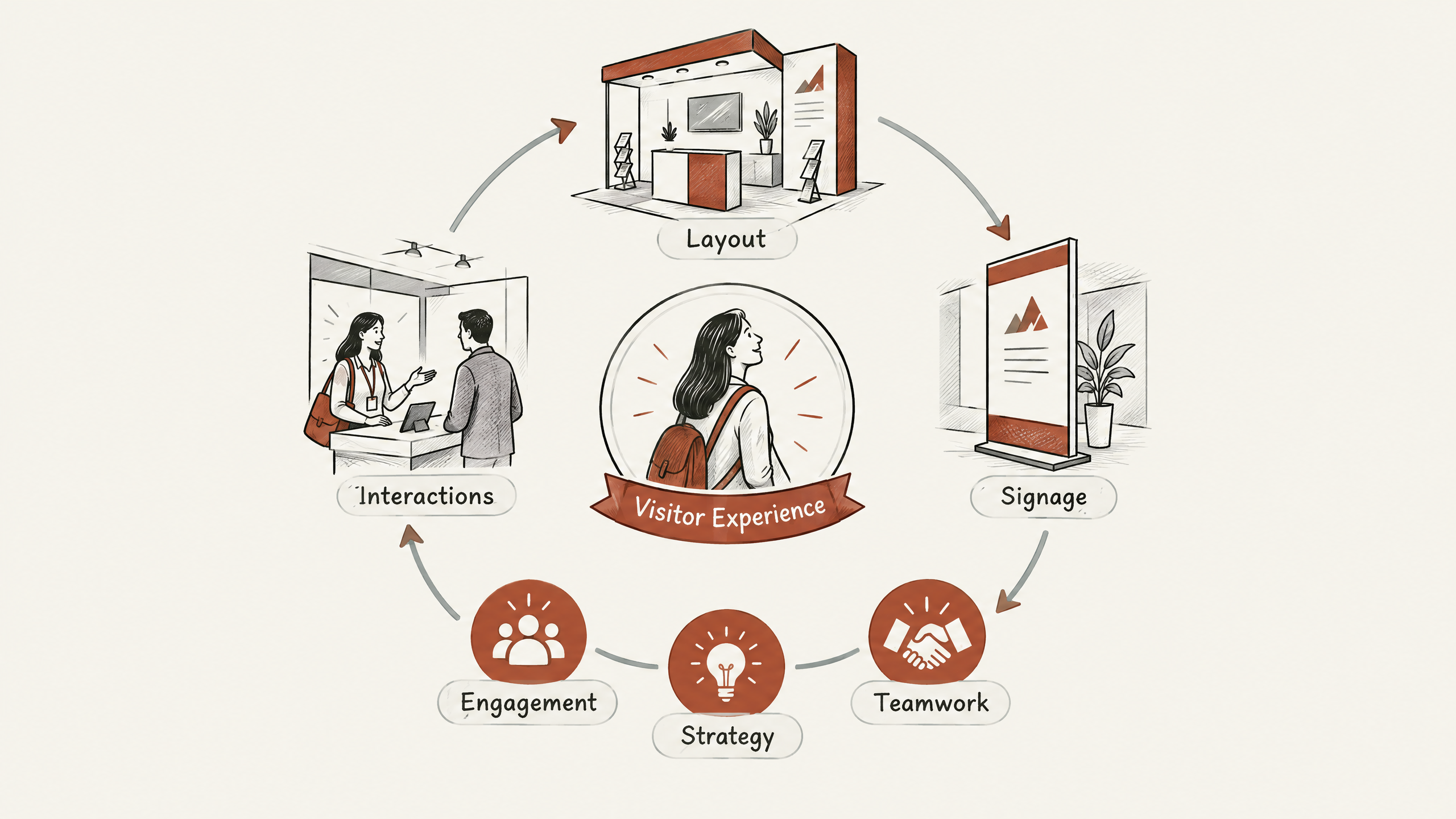
As we wrap up these seven strategies, it’s clear that a well-thought-out trade show booth flow can significantly enhance the visitor experience and boost engagement.

Each element, from booth layout to staff interactions, contributes to how effectively attendees connect with your company and its offerings.

Start by revisiting these strategies and identifying which areas need the most attention in your current planning process.

Final Words — 7 Proven Strategies for Effective Trade Show Booth Flow

Whether it’s focusing on interactive zones or improving signage, the goal is to create a welcoming environment that encourages meaningful interactions.

Once you’ve prioritized the areas for improvement, assemble your team to discuss actionable steps. Establish clear timelines and assign ownership to make sure every aspect of your booth setup is handled efficiently.

With careful execution, you will be better positioned to attract and retain visitor interest, ultimately driving more substantial business results from your trade show participation.

Need a booth plan?

Turn show goals into a practical exhibit path

Share your footprint, timeline, and priorities. Our team can help shape the booth direction, graphics, and project support.

Hand-drawn booth floor plan and exhibit with cedar accents

Contact our team

Tell us who you want to reach

Tell us about your business, the buyers you want to reach, and what you want to achieve. Whether you need more sales conversations, stronger marketing, or a trade show presence, we’ll help you identify where to focus and what support makes sense. Together, we can shape a practical plan around your priorities, budget, and timeline.

info@exhibitant.com

Tell us what you need

A few details will help us make the most of our conversation.