 Louie J.
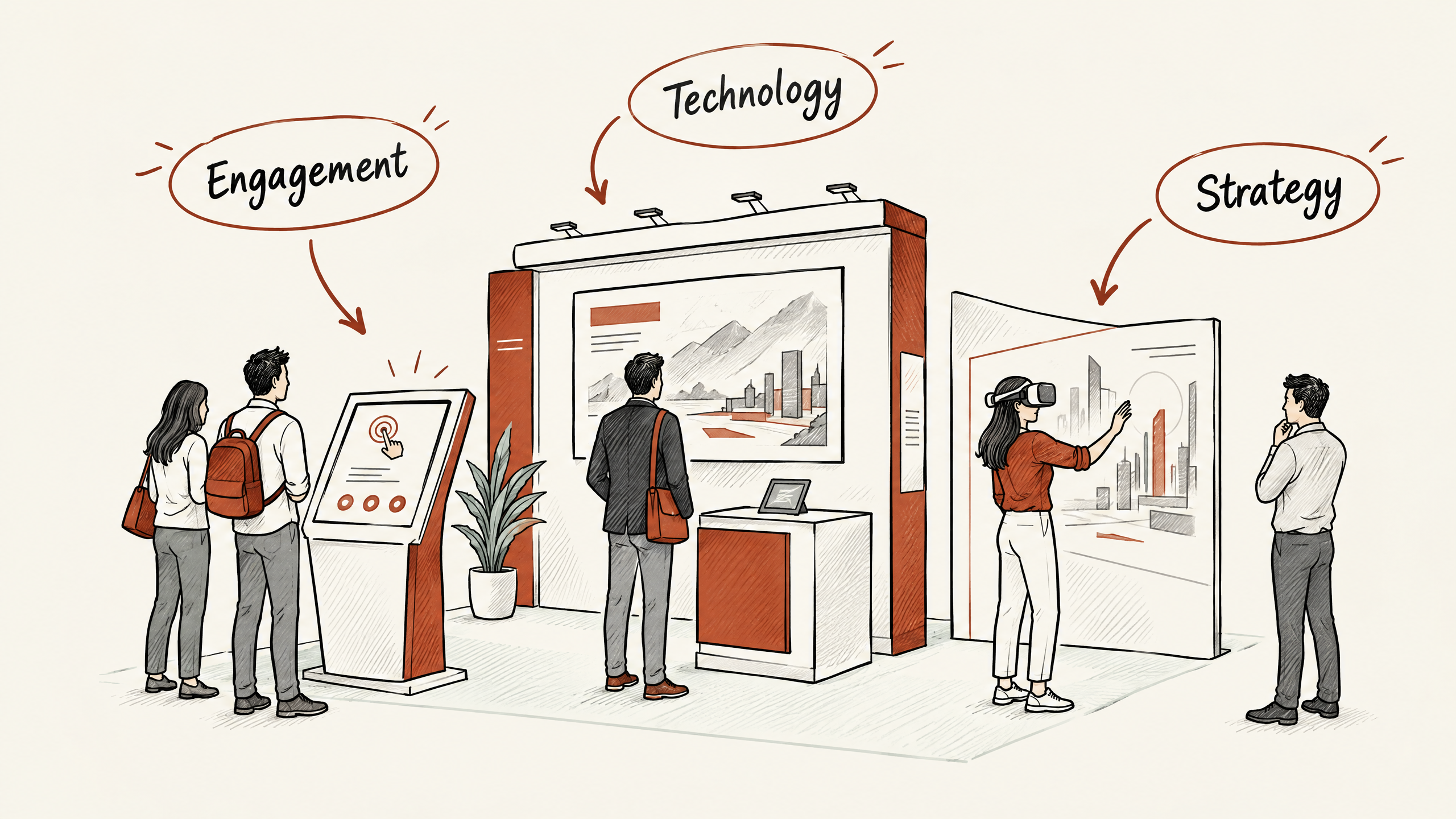
Choosing the right display products for a trade show is crucial to grabbing attention.
The right tools can help you make a lasting impact. Let’s look at some options that can enhance your booth’s engagement and visitor interaction.
Here is how I would approach it.
Start by evaluating your specific goals for the event.
This will guide you in selecting display products that align with your objectives and attract the crowd you want to reach.
Trade shows are a fantastic opportunity to show your brand and connect with potential clients.
With so many products available, knowing which ones to invest in can feel overwhelming. I can walk you through six creative display options to drive engagement.
By the end of this article, you’ll be able to decide which combination of display products best fits your needs. Let’s explore the potential of interactive kiosks, LED displays, and more to boost your trade show presence.
- Use interactive kiosks for dynamic presentations and data collection.
- Incorporate LED displays for vibrant, eye-catching visuals.
- Leverage virtual reality to offer immersive experiences.
- Utilize modular displays for flexible booth configurations.
- Choose portable displays for easy transport and setup.
Use these creative display products to enhance trade show engagement with potential clients.
Think about which options best suit your team’s goals and space requirements.
1. Interactive Kiosks: Captivate and Collect
Interactive kiosks can significantly enhance your trade show presence by engaging attendees and facilitating data collection.
These kiosks serve as both information hubs and engagement tools, allowing visitors to explore your products or services in a hands-on manner.
Utilizing interactive elements like touchscreens, games, or quizzes can draw in foot traffic and keep your booth buzzing with activity.
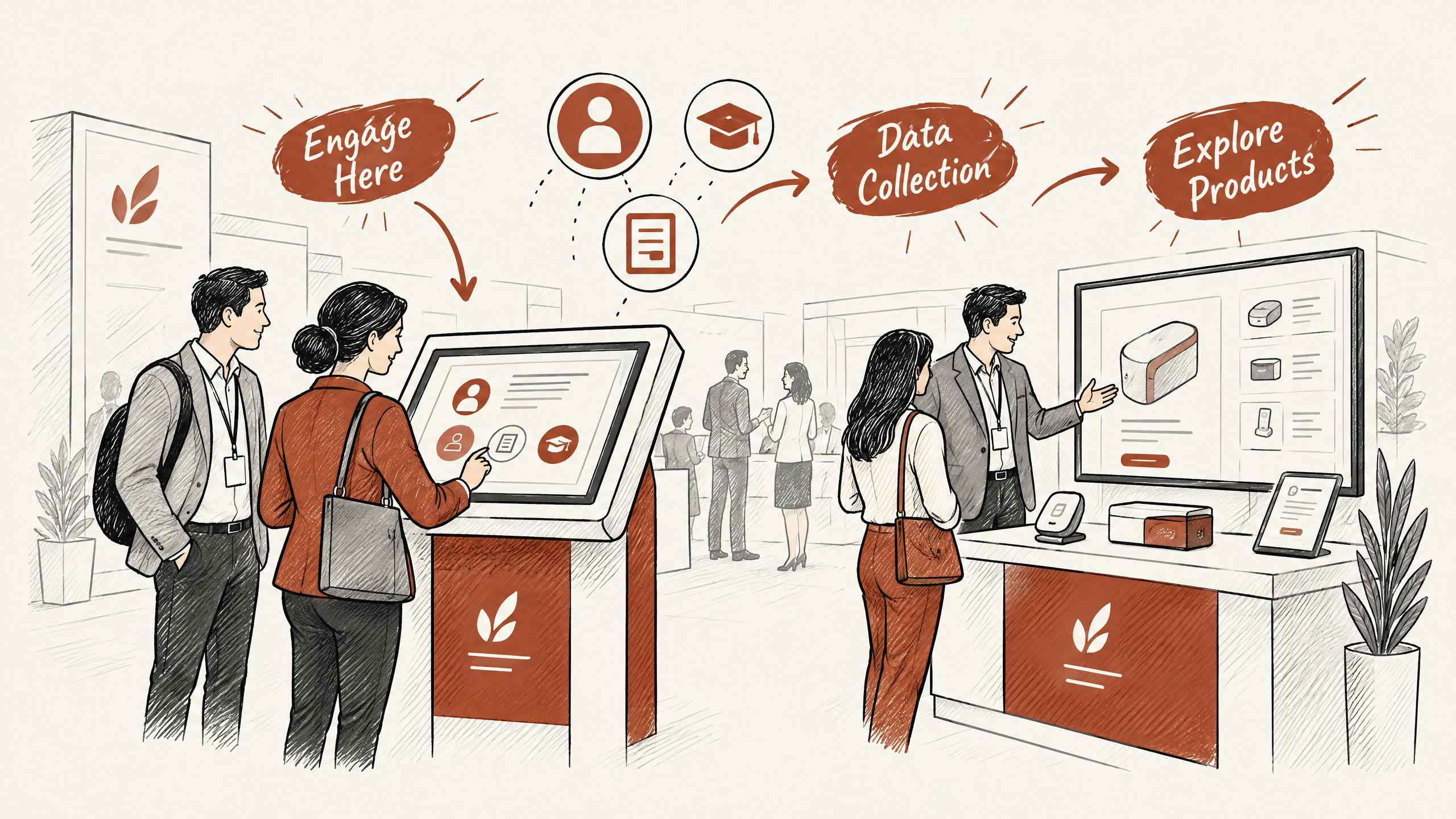
To effectively use interactive kiosks, it’s crucial to define your engagement goals.
Are you aiming to gather leads, educate potential customers, or demonstrate a product?
By setting clear objectives, you can tailor the kiosk content to meet those needs. A software company might install a kiosk for users to demo their latest application.
This setup showcases its capabilities and collects contact information from interested attendees.
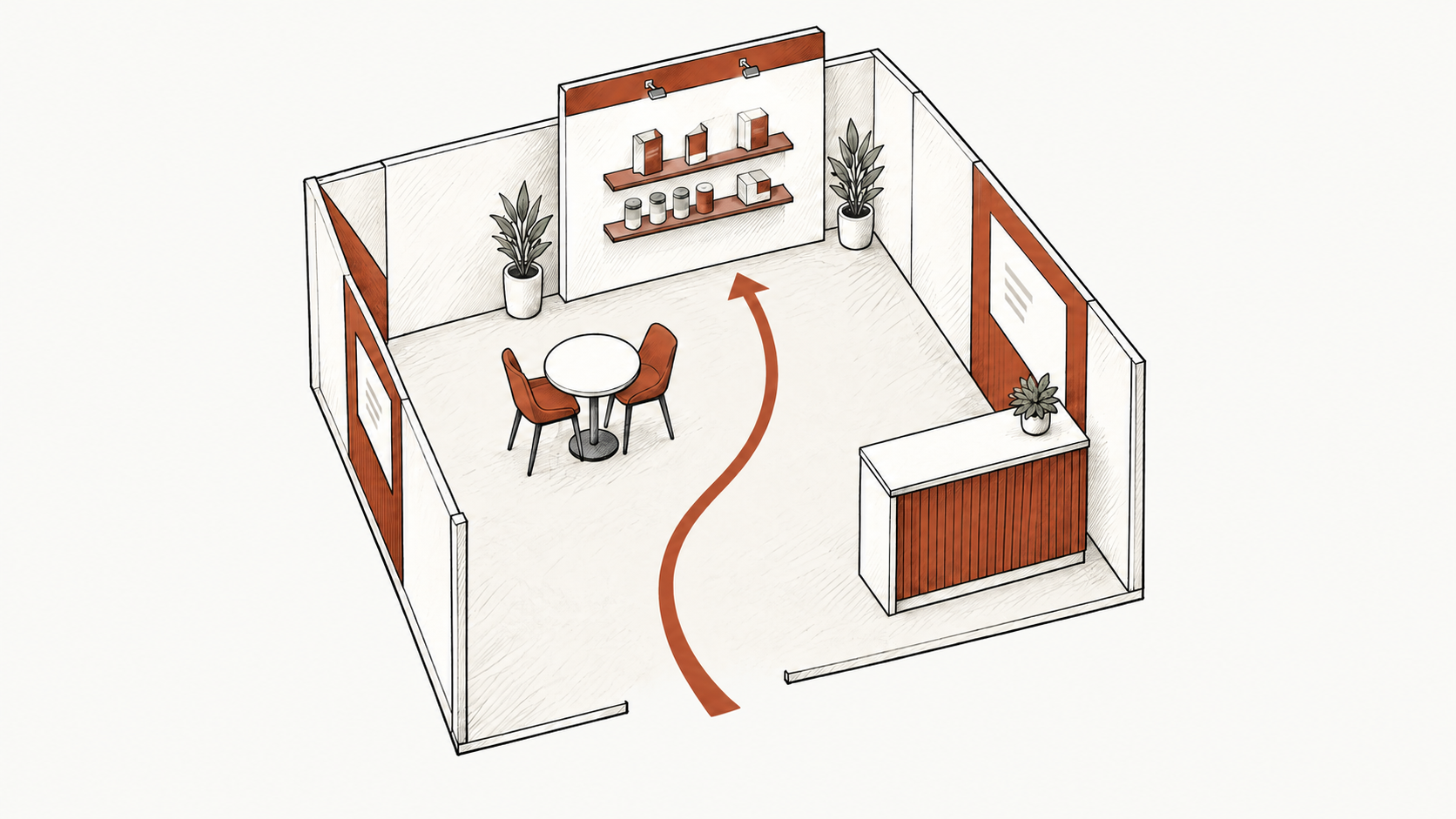
Next, consider the placement of your kiosks within your booth. Strategically positioned kiosks at entry points can attract curious passersby, while kiosks placed deeper inside can encourage prolonged engagement.
It’s important to create a layout that invites exploration, rather than overwhelming attendees immediately.
Having a logical flow to your booth’s design will make sure maximum interaction.
However, a common mistake is overloading kiosks with excessive information or complex navigation.
Keep the interface intuitive and user-friendly, focusing on the most compelling aspects of your offerings.
This simplicity ensures that visitors easily absorb key messages without frustration, increasing the likelihood of meaningful engagement.
In a hypothetical scenario, let’s assume a hypothetical budget of $10,000 for exhibit products.
Allocating a portion to rent or purchase interactive kiosks is a wise decision. These kiosks can often deliver a high return on investment by generating leads and leaving a lasting impression on attendees.
By combining strategic placement, clear goals, and user-friendly design, interactive kiosks become a powerful tool in your trade show arsenal.
2. LED Displays: Illuminate Your Message
LED displays have become a staple at trade shows, offering vibrant colors and dynamic content that can instantly capture attention. Whether it’s a bold statement or a subtle branding element, an LED display can enhance your booth’s visual appeal.
With options ranging from floor-standing screens to flexible LED panels, you can tailor the size and shape to fit your specific needs.
When choosing an LED display, you should consider the resolution and brightness.
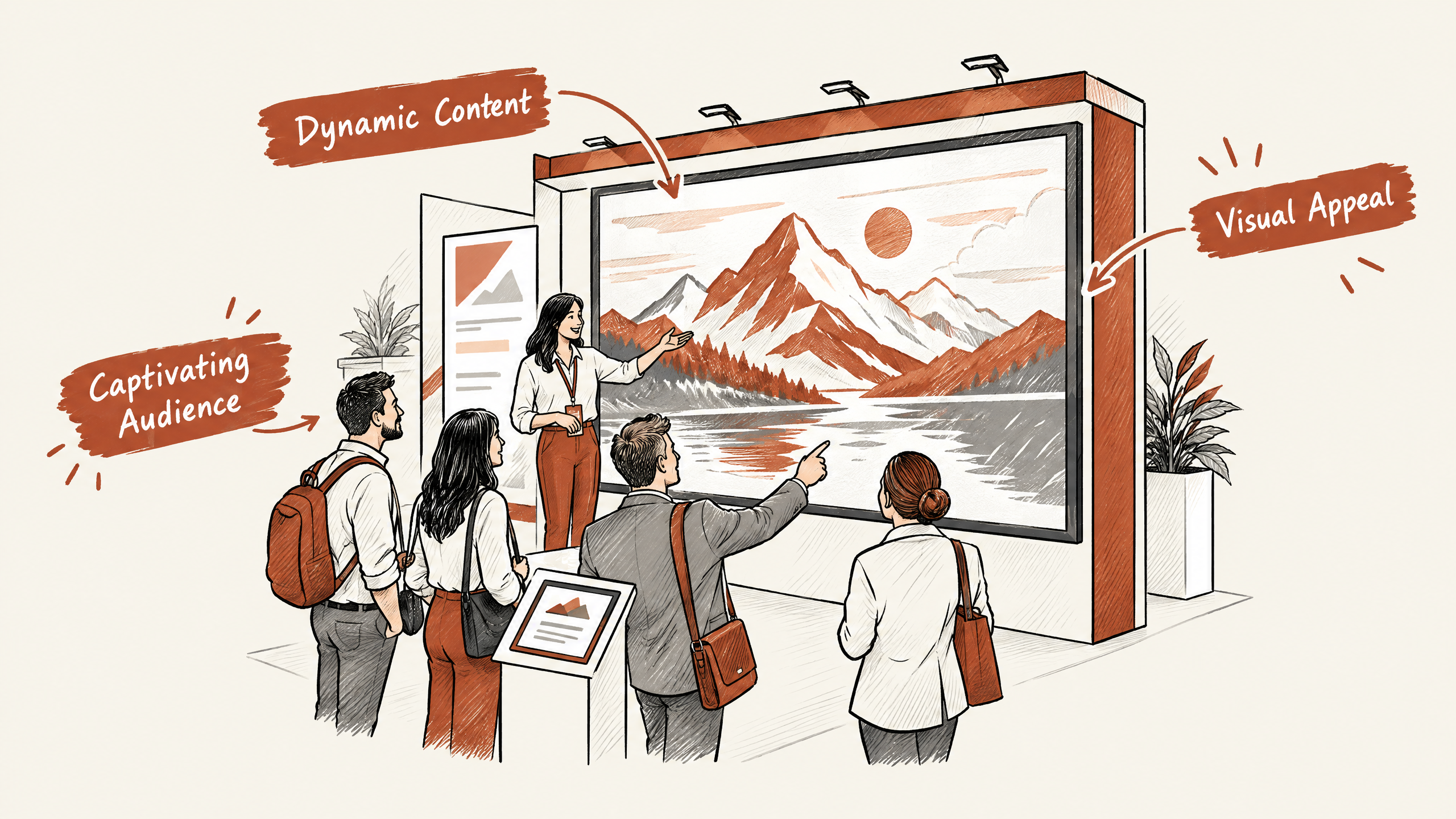
A high-resolution screen with adequate brightness is crucial, especially in well-lit environments common to trade shows. Ensuring that your display remains eye-catching despite surrounding competition is vital for drawing potential leads.
An important feature of LED displays is their ability to integrate dynamic content, such as videos or animations, which can engage visitors on a deeper level.
Treat your LED content as a living part of your exhibit, updating it to reflect the changing conversations and trends during the event.
This flexibility allows for immediate adjustments and keeps your booth relevant throughout the show.
Content ownership and planning are critical.
I recommend designating someone on your marketing team to oversee the display content, ensuring it aligns with your broader brand messaging.
Establish clear approval processes before the show to simplify efforts.
One potential downside to LED displays is their cost. While they provide a significant impact, they are an investment.
Thankfully, Exhibitant can assist in finding cost-effective solutions that suit your budget while maintaining quality engagement capabilities.
As a hypothetical scenario, imagine a company showcasing their latest tech product at a major industry event.
Using an LED wall to loop short demo video clips with bold branding can continuously attract and inform attendees.
This approach leads to increased on-site interest and conversations.
Your LED display should be the visual anchor of your trade show presence, ensuring your message is both illuminated and memorable.
3. Virtual Reality: Create Immersive Experiences
Virtual reality (VR) offers a unique opportunity to engage trade show attendees with interactive, immersive content.
Unlike traditional displays, VR provides a 360-degree environment that can transport users to another world, allowing them to experience your products or services in an entirely new way.
Integrating VR into your exhibit can make your booth a standout, drawing curious visitors eager to explore an exciting experience.
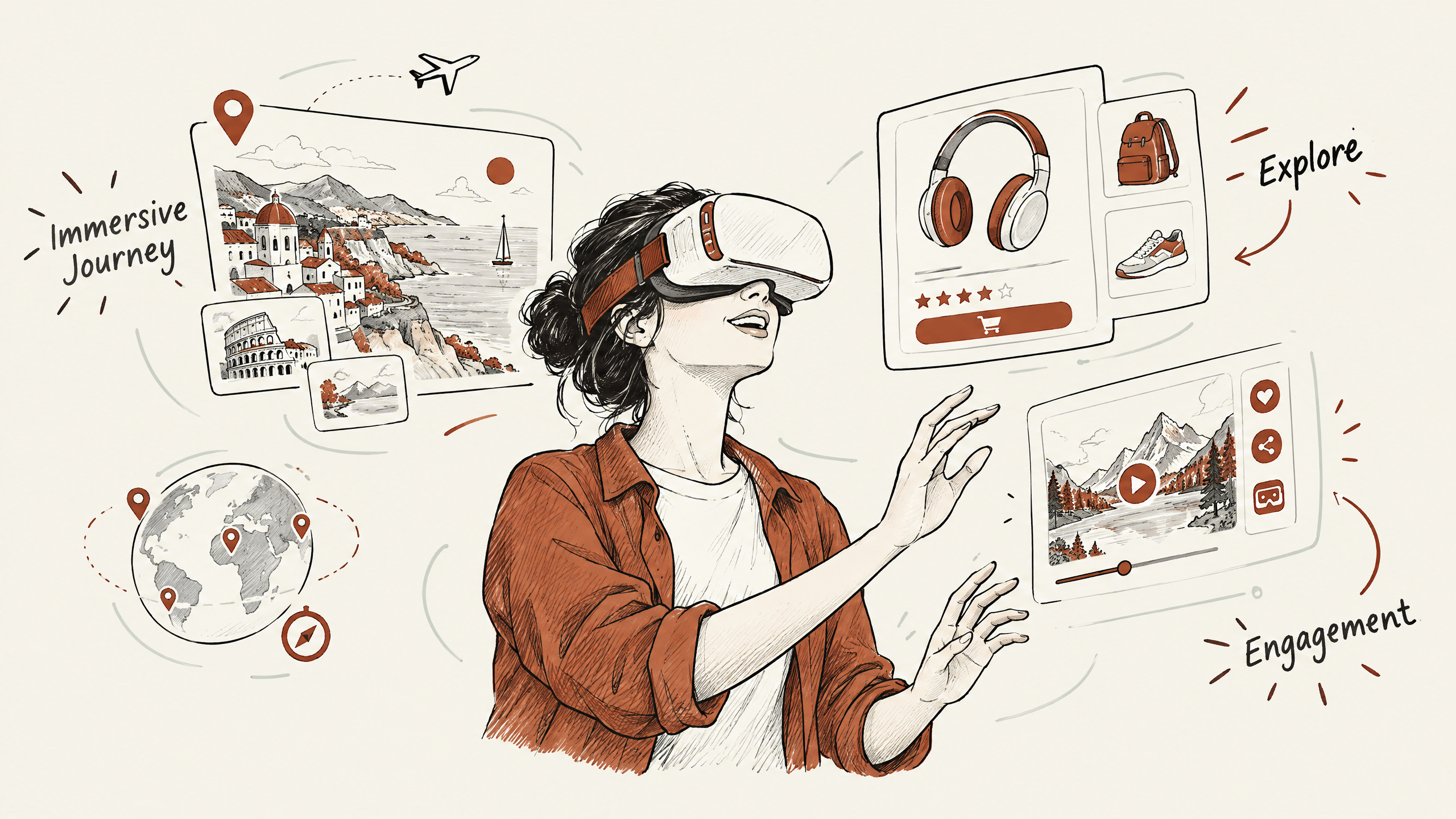
To effectively incorporate VR, determine what type of immersive content best represents your brand.
This could be a virtual product tour, a behind-the-scenes look at your company, or a simulated experience that connects them with your brand’s core values.
For example, a company selling travel products might offer a virtual reality journey through a picturesque landscape, bringing their travel offerings to life.
When planning your VR content, consider the practicalities of setup and execution.
Choose VR systems that are portable and easy to install, especially if space is limited. make sure that staff members are well-trained in guiding attendees through the experience seamlessly. It’s also essential to set expectations clearly.
Communicate any necessary physical requirements or limitations of the experience to prevent any misunderstandings or discomfort.
While VR can be a major draw, a potential challenge is ensuring high throughput of users without significant wait times. To manage interest, you can set up multiple stations or offer shorter, punchier experiences that capture attention quickly.
Regularly sanitize equipment like headsets and controllers to maintain hygiene and make sure every visitor has a safe and enjoyable experience.
With its ability to captivate attention and provide a memorable experience, VR can be a powerful tool in your trade show arsenal.
Proper planning and execution will make sure that your investment in VR technology pays off, leaving a lasting impression on your audience.
 Lorena G.